
Research article · 2025 · Full text
International Journal of Agriculture and Food ScienceFormulation and Nutritional Analysis of Herbal Shrikhand
Volume 7(10) · Pages 390–392 · DOI: 10.33545/2664844x.2025.v7.i10f.898 ↗
Research areasFood Science and Nutritional StudiesPsidium guajava Extracts and ApplicationsNatural Antidiabetic Agents Studies
Abstract
Author-writtenShrikhand is a traditional fermented product with a classic, pleasant sweet-sour taste. The present study was aimed at incorporating hibiscus flower extract and honey without losing its nutritive value. AB 437 DVS culture was selected over Lactobacillus fermentum and Lactobacillus paracasei for the preparation of curd. Incorporation of hibiscus flower extract acts as a natural colouring agent and also a rich source of antioxidants. Honey is considered as a natural therapeutic agent by its anti-inflammatory, antimicrobial and antioxidant properties. Shrikhand with 3.5% hibiscus extract and 46% honey was considered optimal with a high overall acceptability score of 8.2. The sensory attributes like colour and appearance, sweetness, body and texture, and overall acceptability were judged using a 9-point hedonic scale. The antioxidant activity of herbal Shrikhand, honey, and hibiscus flower extract was studied. The total solids, fat, sucrose, protein, and ash content of herbal Shrikhand were 58%, 10%, 74.63%, 9%, and 0.33%, respectively. The pigment from flowers of Hibiscus rosa-sinensis Linn had a strong antioxidant ability, and its antioxidant activity was improved with the higher concentration, so it will be a promising natural antioxidant and functional food.
Summary
Source-checkedPlain-language reading of the full paper, prepared with AI and checked against the text. Each point links to the authors' own words.
Why it matters
- Shrikhand is a traditional, nutrient-dense fermented dairy dessert made by mixing chakka with sugar. View evidence ↗
- Excessive sugar consumption is linked to health issues such as type 2 diabetes, hypertension, and cardiovascular disease. View evidence ↗
- Hibiscus rosa-sinensis flowers contain pigments with strong antioxidant properties and a specific nutritional profile including 15.7% fiber. View evidence ↗
The question
- The study aimed to develop a herbal shrikhand by finding an optimal combination of honey and sugar. View evidence ↗
What they did
- The researchers used Amul toned milk (3% fat and 8.5% SNF) and AB 437 DVS culture to prepare the chakka. View evidence ↗
- Hibiscus extract was prepared by heating 2g of petal powder in 100mL of distilled water at 60°C for one hour. View evidence ↗
- A 9-point hedonic scale was used to evaluate the product's sweetness, body and texture, color and appearance, and overall acceptability. View evidence ↗
What they found
- The optimal sweetness and overall acceptability for the honey concentration was found to be 46%. View evidence ↗
- The optimal formulation consisted of 46% honey and 3.5% hibiscus extract, achieving an overall acceptability score of 8.2. View evidence ↗
- The highest score for color and appearance (8.4) was achieved with 46% honey and 3% hibiscus extract. View evidence ↗
- The best body and texture score (7.7) was observed in the sample containing 46% honey and 2.5% hibiscus extract. View evidence ↗
- The optimized product's chemical composition included 74.63% sucrose, 55% total solids, 32% fat, 45% moisture, and 0.33% ash. View evidence ↗
- At 517 nm, the antioxidant activity was measured at 84% for hibiscus flower extract and 15% for honey. View evidence ↗
What it means
- The authors conclude that adding honey and hibiscus flower extract improves the nutritional value, flavor, color, and overall acceptability of Shrikhand. View evidence ↗
- The study suggests that honey can serve as a natural sugar substitute and hibiscus extract as a natural antioxidant and coloring agent. View evidence ↗
- The researchers were unable to determine the antioxidant content of the final Herbal Shrikhand due to its granular texture. View evidence ↗
Visual summary
3 visualsIllustrations explain the paper; charts are replotted from the paper's own table values.
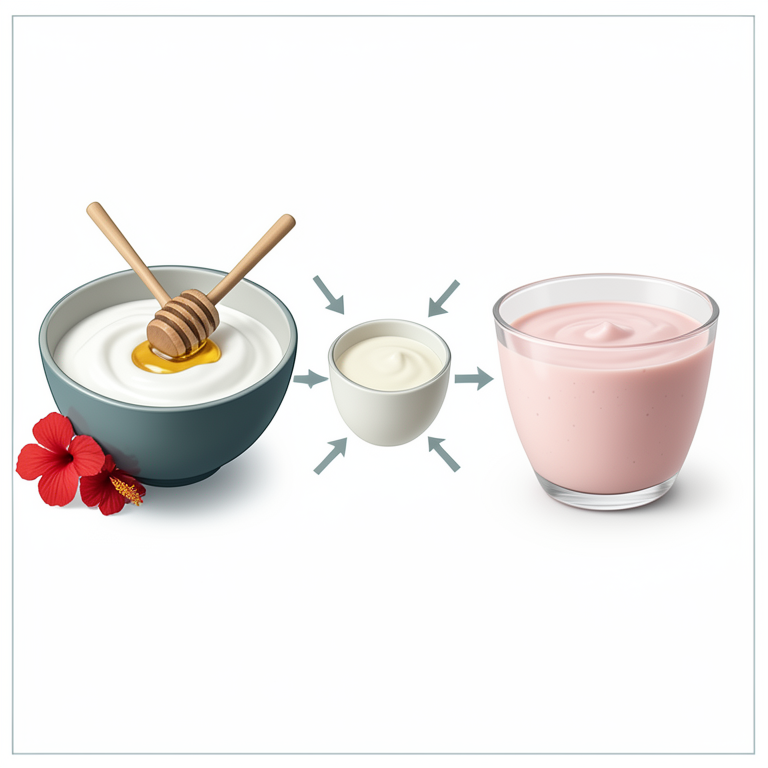
Herbal Shrikhand Formulation Concept
AI-generated conceptual illustration (Hibiscus flowers, honey, and thick strained yogurt (chakka)). It explains the idea and does not show study data.
View source evidence ↗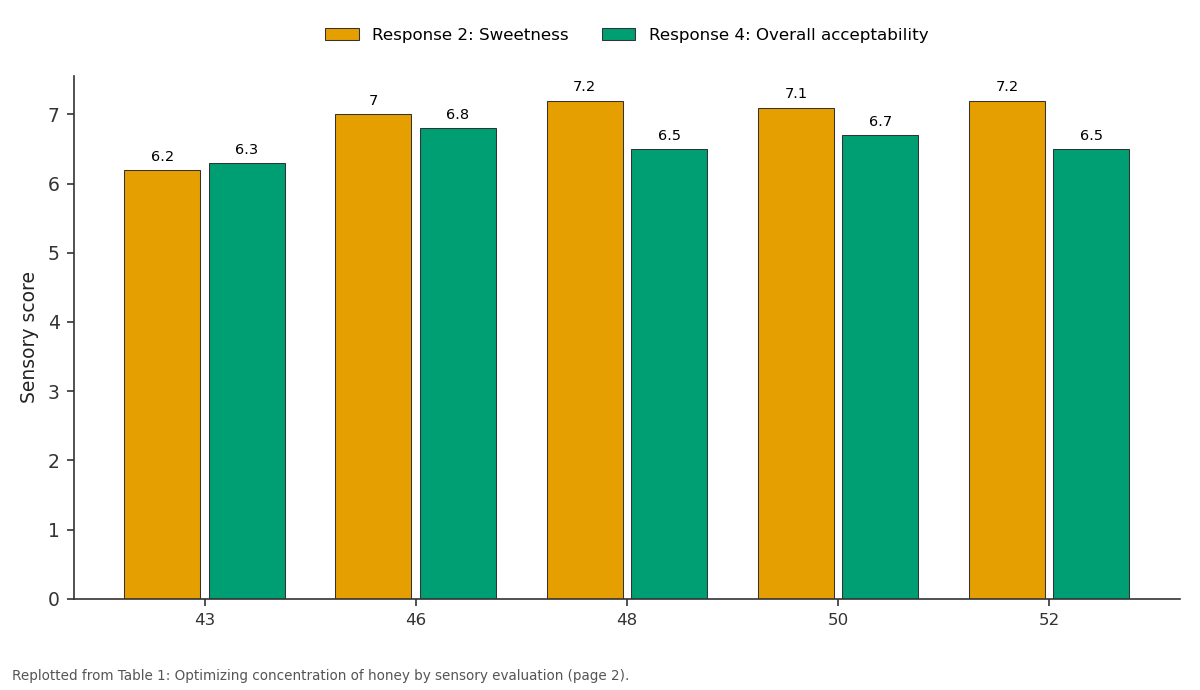
Response 2: Sweetness and Response 4: Overall acceptability: 43 vs 46 vs 48 vs 50 vs 52
Replotted from Table 1 (page 2) of the original paper. Every bar is the paper's own table value.
View source evidence ↗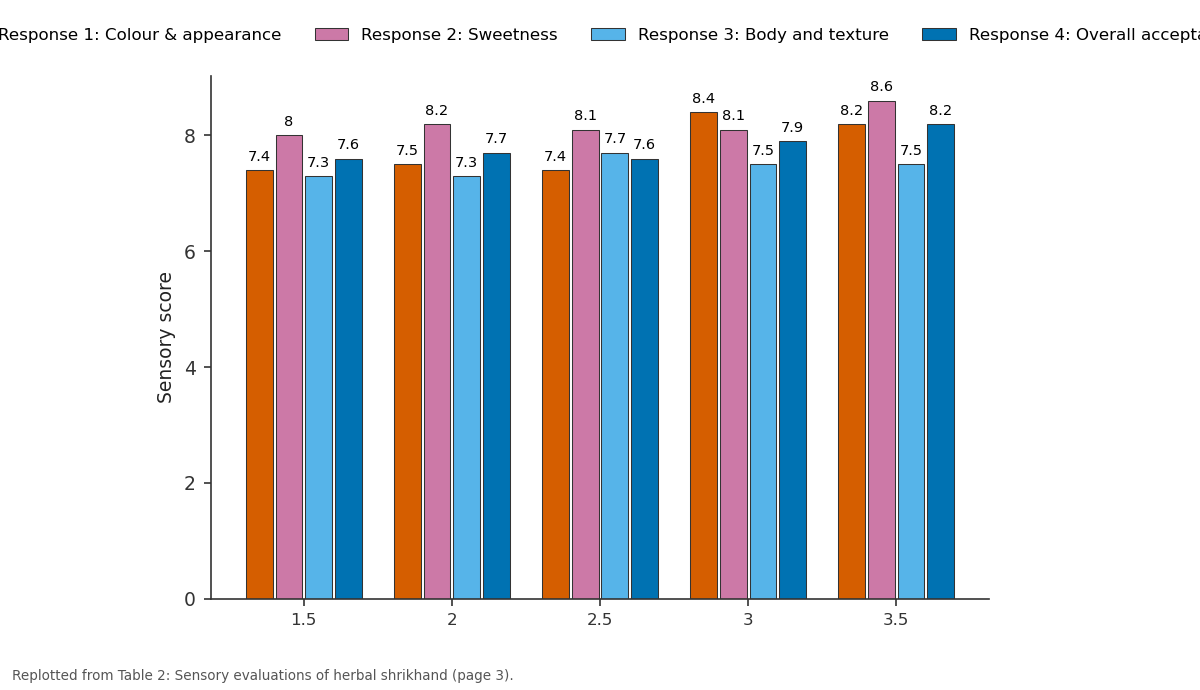
Response 1: Colour & appearance and Response 2: Sweetness and more: 1.5 vs 2 vs 2.5 vs 3 vs 3.5
Replotted from Table 2 (page 3) of the original paper. Every bar is the paper's own table value.
View source evidence ↗Figures & tables
From the original paper Table 1
 Table 2
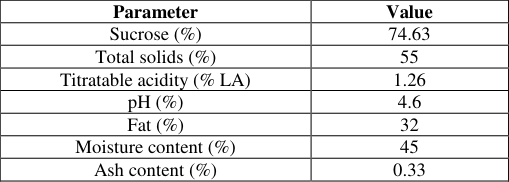 Table 3
 Table 4
Introduction
Fermented milk products are highly popular with remarkable therapeutic and anticarcinogenic properties (Boghra and Mathur, 2000). Since it is a probiotic product, fermenting milk with lactic acid bacteria is one of the oldest and most effective ways to preserve milk and its important ingredients. (Kongo and Malcata, 2016). Through the inhibition of opportunistic bacterial development, probiotic microorganisms can modify the human gut microbiota. Probiotics strengthen immunity, promote intestinal health, and lessen the severity of some allergic reactions. (Khaneghaha et al.2020). Shrikhand is a highly nutritive fermented dairy product with characteristics flavour, sweetish sour taste, palatable nature with remarkable therapeutic value It's made by blending chakka with sugar. However, over consumption of sugar can lead to hypertension, type 2 diabetes, cardiovascular disease, and dental cavities (WHO, 2003;Grembecka, 2015). This research focuses on substitute sugar in Shrikhand with a better alternative like honey. Honey was an important source of carbohydrates and a small number of other compounds such as phenolics, proteins, amino acids, minerals, vitamins, pigments and organic acids. Honey sugars contain 70% monosaccharide, 10-15% disaccharides and oligosaccharides composed of glucose and fructose (Laid Boukraa et al., 2012). Honey contains a wide variety of substances that can function as prebiotics, which are substances that increase the growth and activity of good bacteria to help with the GI tract (Kolayli Sevgi, 2012). Bioactive compounds (phytochemicals) found in plants have many uses in the therapeutic, pharmaceutical, and food industries (Beltran Guerrero et al., 2015). The pigment from flowers of Hibiscus rosa-sinensis Linn had a strong antioxidant ability and contains 3.9% protein, 3.9% fat, 86.3% carbohydrate and 15.7% Fiber (KrishtiVincenta, et al., 2016). Hibiscus rosa-sinensis is a genus of family Malvaceae. The plant has been used as powerful antioxidant, anti-inflamatory, cardioprotective, antidiabetic, hepatoprotective and anticancer agent. H. rosa-sinensis contain numerous phytochemicals such as quercetin glycoside, riboflavin, niacin, anthocianin, anthocianidine, malvalic acid, gentisic acid and lauric acid (Khan et al., 2017).
Apart from all these health benefits, the anthocyanin pigment of Hibiscus rosa-sinensis exert a pleasant colour to the product. The present study aims to formulate herbal shrikhand with suitable combination of sugar and honey.
Materials and Methods
Materials and Methods
Materials
This study was conducted at College of Dairy Science and technology, Pookode. Amul toned milk (3 % fat & 8.5 % SNF) was used for the preparation of chakka. AB 437 DVS culture was selected for the study. Dabur honey obtained from local market and hibiscus was obtained from Dairy hostel surroundings. The Chemicals were procured from Sigma-Aldrich (Bengaluru, India).
Preparation of hibiscus flower extract
Hibiscus flowers were collected and the petals were separated from stamens and calices and left to shade dry until they became brittle. The dried petals were ground in a blender to a fine powder which was collected in an air tight container and stored at 4 °C. A quantity of 2 g of hibiscus petal powder was added to 100 mL of distilled water in a 250 mL Erlenmeyer flask and heated for 1 h at 60 °C. The mixture was filtered to remove debris using Whatmann No.1 filter paper. The filtrate was centrifuged at 7000 rpm for 15 min to remove fine debris (Razack et al., 2020).
Preparation of Herbal Shrikhand
Chakka was prepared as per the method mentioned by Dinker Singh and Jai Singh, 2014. Herbal shrikhand was formulated using different combinations of hibiscus flower extract and honey (Fig. 1).
Proximate Analysis
Proximate analysis of the sample was carried out as per the procedures followed by standard AOAC methods. Moisture content (AOAC,2005), Fat % (AOAC,1997), Titratable acidity of shrikhand (AOAC,2000) and the reducing sugars (AOAC 2000) were determined.
Antioxidant activity
The free radical scavenging ability of the extract was determined using DPPH according to the method of Burtis and Bucar, 2000. Freshly prepared 1 ml DPPH solution (0.004% w/v in 99 % ethanol) was added to a 3 ml of sample (100 ug/ml ethanol). The mixture was incubated at room temperature in the dark for 20 minutes. After incubation, the mixture was vortexed and the absorbance was read at 517 nm using a spectrophotometer. Ascorbic acid was used as reference and 99 % ethanol was used as blank. The DPPH free radical scavenging activity was measured using the following formula: DPPH radical scavenging activity (%) = 𝑩-𝑺𝑩 × 100 B= Optical density of control S= Optical density of sample
Sensory Evaluation
Sensory evaluation for Herbal Shrikhand was carried out by using 9 -point hedonic scale for Colour and appearance, Sweetness, Body and Texture and overall acceptability.
Microbial Analysis
Standard plate count of Shrikhand was determined by using Tryptone dextrose extract agar (TDA), coliform count by Violet Red Bile Agar (VRBA) and yeast and mould count by Potato Dextrose Agar (PDA).
Result and Discussion
Result and Discussion
Colour and appearance
The maximum score of 8.4 was obtained for sample D having 46% honey and 3 % Hibiscus flower extract. The minimum score of 7.4 was obtained for sample A and C having 46 % honey and 1.5 % and 2.5 % hibiscus flower extract. While increasing the concentration of hibiscus flower extract, the product developed dark violet colour. A light-yellow colour was imparted to Herbal shrikhand during the addition of honey. Together with honey, the product attained a peach shade during the addition of 3.5 % of hibiscus flower extract.
Sweetness
The maximum score of 8.6 was obtained for sample E having 46 % honey and 3.5 % hibiscus flower extract. The minimum score of 8 was obtained for sample A during the addition of 46 % honey and 1.5 % hibiscus flower extract. Since the sweetness factor of honey is higher than sugar, less quantity was enough to get the required sweetness. At higher concentration of honey, the product exhibited slight sour taste and was not acceptable. The pleasant and optimum sweetness was obtained at 46 % of honey.
Body and texture
The maximum score of 7.7 was obtained for sample C having 46 % honey and 2.5 % hibiscus flower extract. The minimum score was obtained for sample A and B having 46 % honey and 1.5 % and 2 % hibiscus flower extract. The consistency of the product increased with increasing concentration of honey and suitable consistency was obtained at 46 % of honey. While increasing the concentration of hibiscus flower extract, the body became thinner. Values of sensory evaluation for concentration of honey and combination of honey and hibiscus flower extract were given in Table 1 and Table 2.
| Trial no | Concentration of honey (%)* | Concentration of hibiscus flower extract (%) | Response 1: Colour & appearance | Response 2: Sweetness | Response 3: Body and texture | Response 4: Overall acceptability |
|---|---|---|---|---|---|---|
| A | 46 | 1.5 | 7.4 | 8 | 7.3 | 7.6 |
| B | 46 | 2 | 7.5 | 8.2 | 7.3 | 7.7 |
| C | 46 | 2.5 | 7.4 | 8.1 | 7.7 | 7.6 |
| D | 46 | 3 | 8.4 | 8.1 | 7.5 | 7.9 |
| E | 46 | 3.5 | 8.2 | 8.6 | 7.5 | 8.2 |
Table text extracted from the original PDF; superscript letters are shown inline. The original table image is below.
View original table image
| Trial no | Concentration of honey | Response 1: Colour & appearance | Response 2: Sweetness | Response 3: Body and texture | Response 4: Overall acceptability |
|---|---|---|---|---|---|
| 1 | 43 | 6.1 | 6.2 | 6 | 6.3 |
| 2 | 46 | 6.9 | 7 | 7.5 | 6.8 |
| 3 | 48 | 6.2 | 7.2 | 6.4 | 6.5 |
| 4 | 50 | 6 | 7.1 | 6 | 6.7 |
| 5 | 52 | 6.1 | 7.2 | 5.9 | 6.5 |
Table text extracted from the original PDF; superscript letters are shown inline. The original table image is below.
View original table image
Antioxidant activity
The antioxidant activity of hibiscus flower extract was 84 % and honey was 15 % at 517 nm. Due to the granular texture of product, it was not possible to find out the antioxidant content in Herbal Shrikhand. The results of microbial analysis are presented in the Table .4. per FSSAI standards, maximum coliform count is 50/g and yeast and mould count is 100/g. There is no observable growth of coliform in the given sample but it shows the presence of yeast and mould. It may get in to the product from utensils and atmosphere.
Microbial analysis
Microbial analysis
Conclusion
From the research it can be summarized that incorporation of honey and hibiscus flower extract in Shrikhand leads to improved colour and flavour, overall acceptability and nutritive value of Shrikhand. This study also indicates the potential application of hibiscus flower extract as a natural source of colouring agent and antioxidant and honey as a natural sugar substitute.
Figures and tables from the paper
| Parameter | Value |
|---|---|
| Sucrose (%) | 74.63 |
| Total solids (%) | 55 |
| Titratable acidity (% LA) | 1.26 |
| pH (%) | 4.6 |
| Fat (%) | 32 |
| Moisture content (%) | 45 |
| Ash content (%) | 0.33 |
Table text extracted from the original PDF; superscript letters are shown inline. The original table image is below.
View original table image
References
5 in the original paper- Singh D, Singh SD, Singh SJ. Shrikhand: A delicious and healthful traditional Indian fermented dairy dessert. Indian Dairyman. 2014;66(10):52-57.
- Boghra VR, Mathur ON. Physico-chemical status of major milk constituents and minerals at various stages of shrikhand preparation. Indian J Dairy Sci. 2000;53(5):362-368.
- Khaneghah AM, Abhari K, Eş I, Soares MB, Oliveira RB, Hosseini H, Sant'Ana AS. Interactions between probiotics and pathogenic microorganisms in hosts and foods: A review. Trends Food Sci Technol. 2020;95:205-218.
- Razack SA, Suresh A, Sriram S, Ramakrishnan G, Sadanandham S, Veerasamy M, et al. Green synthesis of iron oxide nanoparticles using Hibiscus rosa-sinensis for fortifying wheat biscuits. SN Appl Sci. 2020;2(5):898.
- Khan IM, Rahman R, Mushtaq A, Rezgui M. Hibiscus rosa-sinensis L. (Malvaceae): Distribution, chemistry and uses. Int J Chem Biochem Sci. 2017;12:147-151.