
Research article · 2025 · Full text
International Journal of Agriculture and Food ScienceEffect of mycorrhiza and liquid boron fertilizer on growth, flowering and yield of brinjal (Solanum melongena L.)” in sandy loam of Sri Ganganagar district in Rajasthan
Volume 7(10) · Pages 316–319 · DOI: 10.33545/2664844x.2025.v7.i10e.889 ↗
Research areasAgricultural Science and FertilizationCrop Yield and Soil FertilityAgronomic Practices and Intercropping Systems
Abstract
Author-writtenThe experiment entitled “Effect of Mycorrhiza and Liquid Boron Fertilizer on Growth and Yield of Brinjal (Solanum melongena L.)” was conducted at the Department of Horticulture, Faculty of Agriculture, Tantia University, Sri Ganganagar during Kharif 2024. The study aimed to evaluate the effect of Mycorrhiza and Liquid Boron fertilizer on growth and yield parameters of brinjal. Seven treatments were laid out in a Randomized Block Design with three replications. The results indicated that T3 (Mycorrhiza 250 g/plot) recorded maximum values for all growth and yield parameters, while the control (T7) recorded the lowest. The plant height (cm) was recorded (39.97 cm) highest in T3 (Mycorrhiza 250 g/plot) and lowest (21.44 cm) in T7 (Control), The no. of branches was recorded (7.49) highest in T3 (Mycorrhiza 250 g/plot) and lowest (4.08) in T7 (Control), The no. of leaves was recorded (41.33) highest in T3 (Mycorrhiza 250 g/plot) and lowest (23.11) in T7 (Control), The stem diameter (cm) was recorded (17.56 cm) highest in T3 (Mycorrhiza 250 g/plot) and lowest (13.11 cm) in T7 (Control). The average fruit weight (gm) was recorded (122.11 g) highest in T3 (Mycorrhiza 250 g/plot) and lowest (89.15 g) in T7 (Control), The no. of fruits/plant was recorded (39.52) highest in T3 (Mycorrhiza 250 g/plot) and lowest (21.17) in T7 (Control), The fruit yield per plant (kg) was recorded (2.56 kg) highest in T3 (Mycorrhiza 250 g/plot) and lowest (1.42 kg) in T7 (Control), The fruit yield (q/ha.) was recorded (81.92) highest in T3 (Mycorrhiza 250 g/plot) and lowest (48.31) in T7 (Control). The study revealed that Mycorrhiza application significantly improved growth and yield performance of brinjal plants.
Summary
Source-checkedPlain-language reading of the full paper, prepared with AI and checked against the text. Each point links to the authors' own words.
Why it matters
- Brinjal, also known as eggplant or aubergine, is a member of the solanaceae plant family. View evidence ↗
- The plant is valued for its medicinal properties, including the use of its leaves for vitamin C and its fruit for laxative and anti-inflammatory effects. View evidence ↗
- Boron deficiency in plants can restrict water absorption and carbohydrate metabolism, leading to sterility and reduced fruit yield. View evidence ↗
The question
- The researchers aimed to determine how the application of Mycorrhiza and liquid boron fertilizer affects the growth and yield of brinjal. View evidence ↗
What they did
- The study was conducted during the Kharif 2024 season at Tantia University in Sri Ganganagar, Rajasthan. View evidence ↗
- The experiment used a Randomized Block Design consisting of seven different treatments, each with three replications. View evidence ↗
- Treatments included three levels of Mycorrhiza (150, 200, and 250 g/plot), three levels of liquid boron fertilizer (1, 2, and 3 ml/liter water), and a control group. View evidence ↗
- The researchers measured growth parameters (height, branches, leaves, and stem diameter) and yield parameters (fruit weight, fruit number, and yield per plant and plot). View evidence ↗
What they found
- The highest plant height was 39.97 cm in the T3 group (Mycorrhiza 250 g/plot), compared to the lowest of 21.44 cm in the control group (T7). View evidence ↗
- The T3 treatment (Mycorrhiza 250 g/plot) produced the most branches (7.49), while the control group (T7) produced the fewest (4.08). View evidence ↗
- The highest number of leaves (41.33) was observed in the T3 group (Mycorrhiza 250 g/plot), and the lowest (23.11) in the control group (T7). View evidence ↗
- Stem diameter was greatest in the T3 group (17.56 cm) and smallest in the control group (13.11 cm). View evidence ↗
What it means
- The authors recommend applying Mycorrhiza at 250 g/plot to improve the growth and productivity of brinjal in the semi-arid conditions of Sri Ganganagar, Rajasthan. View evidence ↗
- The authors conclude that using biofertilizers like Mycorrhiza can sustainably increase productivity and reduce reliance on chemical fertilizers. View evidence ↗
Visual summary
3 visualsIllustrations explain the paper; charts are replotted from the paper's own table values.
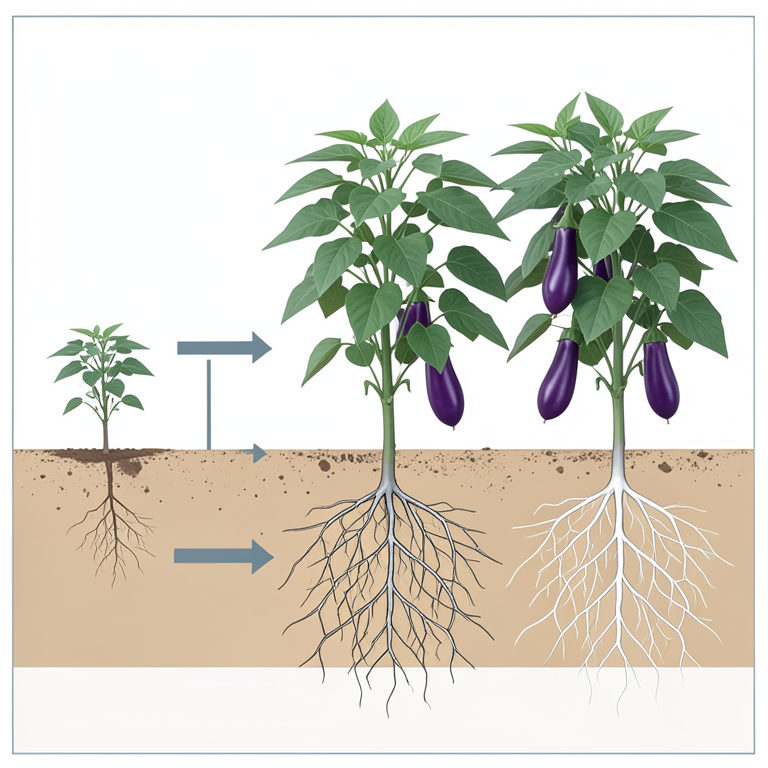
Experimental Treatment Layout
AI-generated conceptual illustration (brinjal plants (Solanum melongena L.) in sandy loam soil). It explains the idea and does not show study data.
View source evidence ↗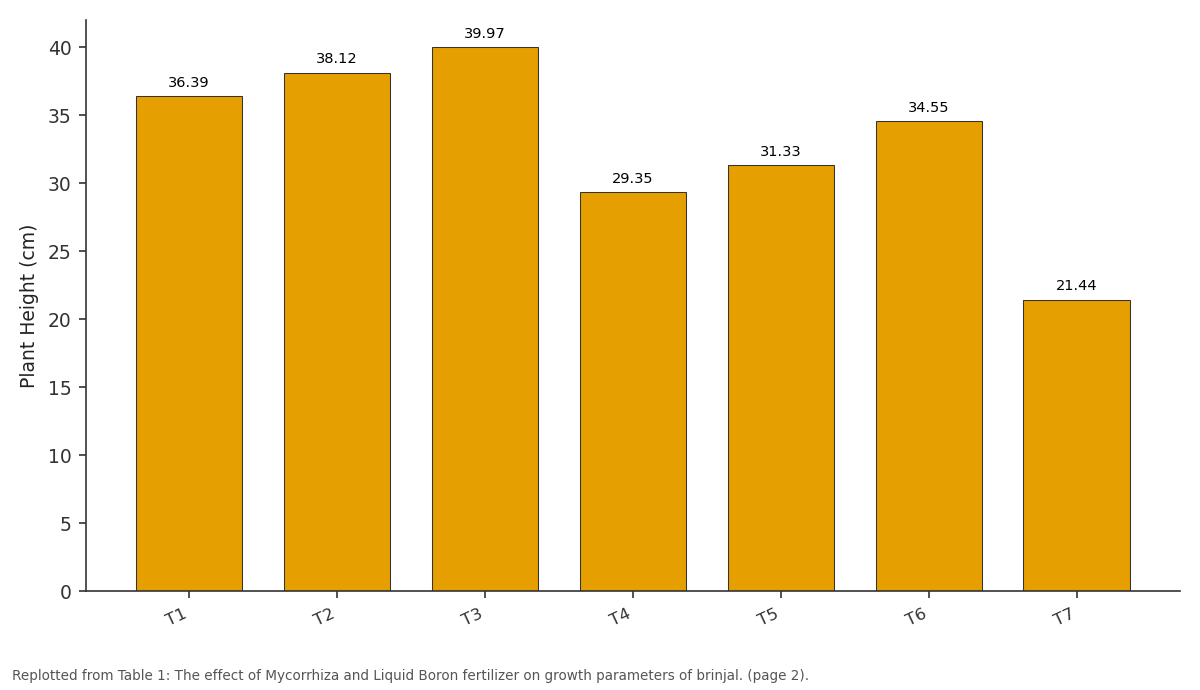
Plant Height (cm): T1 vs T2 vs T3 vs T4 vs T5
Replotted from Table 1 (page 2) of the original paper. Every bar is the paper's own table value.
View source evidence ↗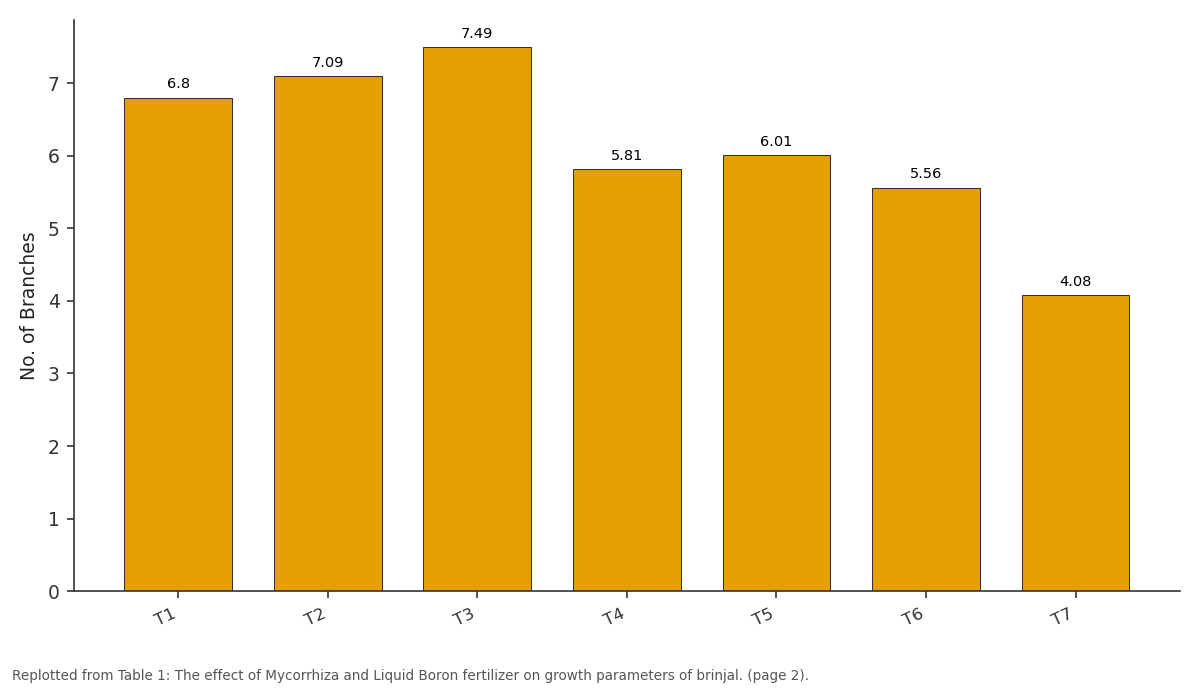
No. of Branches: T1 vs T2 vs T3 vs T4 vs T5
Replotted from Table 1 (page 2) of the original paper. Every bar is the paper's own table value.
View source evidence ↗Figures & tables
From the original paper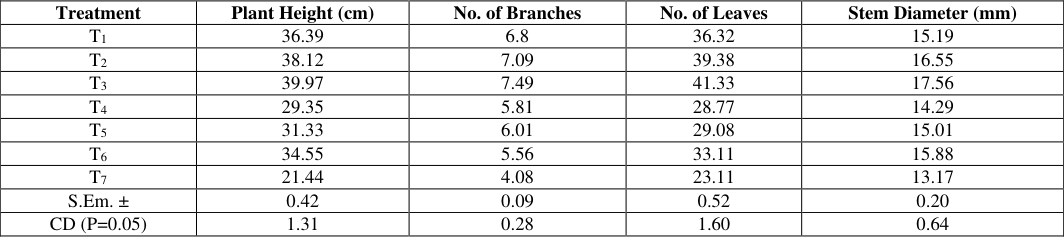 Table 1
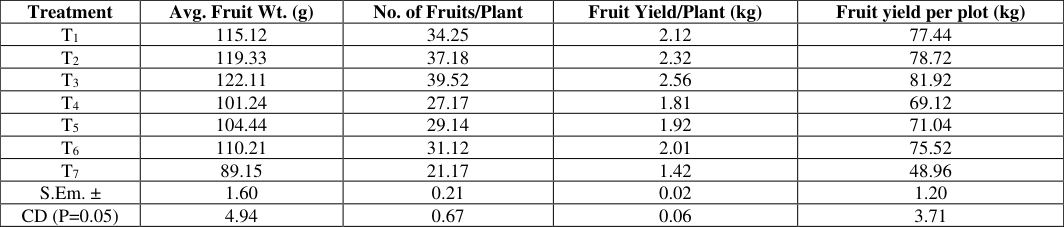 Table 2
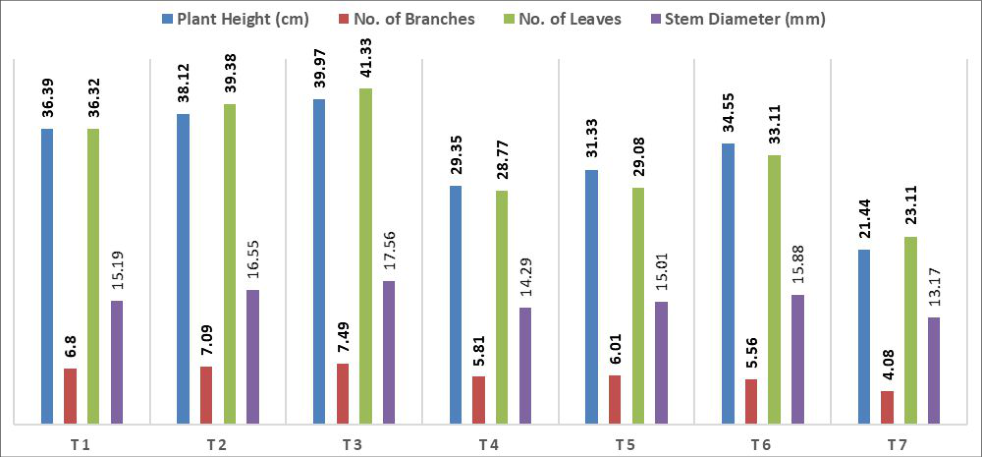 Figure 1
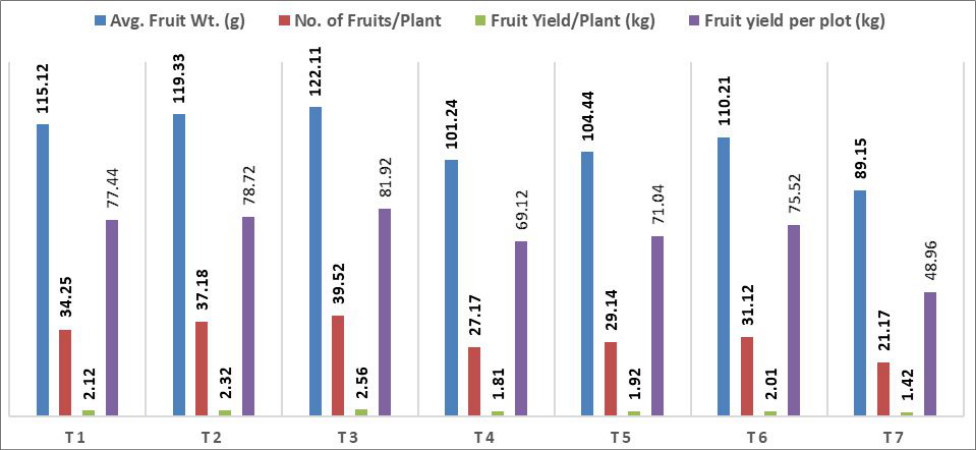 Figure 2
Introduction
Brinjal (Solanum melongena L.) is a plant of the family solanaceae. It is also known as eggplant or aubergine. The green leaves of plant are the main source of the supply of antiascorbic acid (vitamin-C). It is used in Ayurveda as appetizer, aphrodisiac and cardiotonic and fruit exhibits laxative property and provides relief from inflammation. The unripe fruit of brinjal primarily used as cooked vegetable for the preparation of various dishes. It has got much potential as raw material in pickle making and dehydration industry. The white brinjal is said to be good for diabetic patients. It can also cure toothache and liver complains (Chouhan, 1981). Brinjal is also used for the treatment of bronchitis, asthma, dysentery, etc. it is also helpful for decreasing the level of blood cholesterol. Brinjal is low in energy (30 kcal/100 g), protein (1.4%) and vitamin C (5 mg/100 g), but is a very good source of dietary fiber, potassium, calcium, manganese, copper and vitamin A and B also possess antioxidant ability (Anonymous, 2012) [6] . The foremost challenge to the existence of mankind has always been to produce adequate quantity of food from the available acreage to meet the requirements of ever expending world population. The rate of yield gain in crop improvement programme must match the rate of population growth so, as to avoid malnutrition and hunger. It can be grown in wide range of agroclimatic zones, which provides a tremendous scope and potential for cultivation of this crop. However, low productivity of this crop has created the necessity to breed new high yielding varieties and improved technique, which may fulfill the needs of the growers and enhance the productivity. Vegetables are being cultivated in an area of 49 million hectares with the production potential of 487 million tons in the world. India is the second largest producer of vegetables in the world, accounting for 10 percent of the world's production. The maximum number of vegetable crops are grown in India due to diversity of agroclimatic conditions. In India vegetables occupy nearly 10.23 million hectares with a production of 17.82 million tons in the year 2016-2017 (Anonymous, 2021) [4] . This accounts for 2.8 percent of total cropped area in the world. In India, Brinjal is cultivated in an area of about 0.728 million hectares with the production of 12.66 million tons and the productivity of 17.39 metric tons per hectare (Anonymous, 2021) [4] . However, Brinjal is producing almost all state and West Bengal is the largest producer of Brinjal followed by Maharashtra and Bihar. In Rajasthan, Brinjal cultivated under 5,138 ha area with 23,356 metric tons production (Anonymous, 2021) [4] . Boron also plays an important role in flowering and fruit formation Nonnecke, 1989). Several studies have been already conducted on effect of boron on flowering and fruit setting in tomato and potato. Boron deficiency symptoms will often appear in the form of thickened wilted, or curled leaves, a thickened, cracked, or water-soaked condition of petioles and stems, and discoloration, cracking or rotting of fruit, tubers or roots. (Tisdale et al., 1985). Boron deficiency may cause sterility i.e. less fruits per plant attributing lower yield (Islam and Anwar, 1994) [8] . Deficiency of B causes restriction of water absorption and carbohydrate metabolism, which ultimate affects fruit and seed formation and thus reduces yield. In fertilizer schedule, an inclusion of B often decides the success and failure of the crops. This emphasizes the need for a judicial use of B fertilizer. Information in our country to that end is practically meager.
Materials and Methods
The experiment was conducted during Kharif 2024 at the Department of Horticulture, Faculty of Agriculture, Tantia University, Sri Ganganagar, Rajasthan. The experimental design was Randomized Block Design (RBD) with seven treatments and three replications.
Experimental Site
Department of Horticulture, Faculty of Agriculture, Tantia University, Sri Ganganagar, 335002, Rajasthan, which is situated at 24°34' N latitude and 73°40' E longitudes at an elevation of 583.5 meters above mean sea level. The field topography of the experimental site was fairly leveled with an adequate surface drainage and the field soil was having clay loam texture.
Treatments
Treatments
Symbols
Symbols
Results and Discussion
The results of the field experiment carried out on "Effect of Mycorrhiza and Liquid Boron Fertilizer on Growth, Flowering and Yield of Brinjal (Solanum melongena L.)" in 2024-25 at the experimental field of the present experiment was conducted at Department of Horticulture, faculty of Agriculture, Tantia University, Sri Ganganagar, 335001, Rajasthan are presented in this chapter. The data pertaining to the effect of different treatments on growth, flowering and yield parameters were statistically analysis for test of significance of the results. In addition to tabular presentation, data also depicted through graphs for better understanding wherever necessary. The analysis of variance for different characters is given in the appendices.
Growth parameter
Growth parameter
Discussion
The study revealed that Mycorrhiza and Liquid Boron fertilizers significantly enhanced the growth and yield performance of brinjal. The treatment T3 (Mycorrhiza 250 g/plot) exhibited the highest growth and yield values, mainly due to improved nutrient uptake and root-soil interactions. Boron also contributed to better fruit set and weight, but Mycorrhiza proved more effective overall.
Conclusion
It was concluded that Mycorrhiza and Liquid Boron fertilizer treatments significantly improved growth and yield performance of brinjal. Among all treatments, T3 (Mycorrhiza 250 g/plot) recorded the maximum plant height, number of branches, leaves, stem diameter, fruit weight, number of fruits, and overall yield. Hence, Mycorrhiza 250 g/plot may be recommended for better growth and higher productivity of brinjal under semi-arid conditions of Sri Ganganagar, Rajasthan.
Figures and tables from the paper
| Treatment | Plant Height (cm) | No. of Branches | No. of Leaves | Stem Diameter (mm) |
|---|---|---|---|---|
| T1 | 36.39 | 6.8 | 36.32 | 15.19 |
| T2 | 38.12 | 7.09 | 39.38 | 16.55 |
| T3 | 39.97 | 7.49 | 41.33 | 17.56 |
| T4 | 29.35 | 5.81 | 28.77 | 14.29 |
| T5 | 31.33 | 6.01 | 29.08 | 15.01 |
| T6 | 34.55 | 5.56 | 33.11 | 15.88 |
| T7 | 21.44 | 4.08 | 23.11 | 13.17 |
| S.Em. ± | 0.42 | 0.09 | 0.52 | 0.20 |
| CD (P=0.05) | 1.31 | 0.28 | 1.60 | 0.64 |
Table text extracted from the original PDF; superscript letters are shown inline. The original table image is below.
View original table image
| Treatment | Avg. Fruit Wt. (g) | No. of Fruits/Plant | Fruit Yield/Plant (kg) | Fruit yield per plot (kg) |
|---|---|---|---|---|
| T1 | 115.12 | 34.25 | 2.12 | 77.44 |
| T2 | 119.33 | 37.18 | 2.32 | 78.72 |
| T3 | 122.11 | 39.52 | 2.56 | 81.92 |
| T4 | 101.24 | 27.17 | 1.81 | 69.12 |
| T5 | 104.44 | 29.14 | 1.92 | 71.04 |
| T6 | 110.21 | 31.12 | 2.01 | 75.52 |
| T7 | 89.15 | 21.17 | 1.42 | 48.96 |
| S.Em. ± | 1.60 | 0.21 | 0.02 | 1.20 |
| CD (P=0.05) | 4.94 | 0.67 | 0.06 | 3.71 |
Table text extracted from the original PDF; superscript letters are shown inline. The original table image is below.
View original table image
References
27 in the original paper- Ali S, Javed HU, Rehman RNU, Sabir IA, Naeem MS, Siddiqui MZ, Saeed DA, Nawaz M, Muhammad A. Foliar application of some macro and micro nutrients improves tomato growth, flowering and yield. Int J Biol Sci. 2013;3(10):280-287.
- Al-Karaki GN. Nursery inoculation of tomato with arbuscular mycorrhizal fungi and subsequent performance under irrigation with saline water. Sci Hortic. 2006;3(2):109-113.
- Anisa NA, Markose BL, Joseph S. Effect of biofertilizers on yield attributing characters and yield of okra. Sci J. 2016;1(3):142-145.
- Anonymous. Department of Horticulture. Area and production of crops; 2021. Available from: https://agriculture.rajasthan.gov.in/content/agriculture/e n/Directorate-of-Horticulture-dep/area-production.html
- Anonymous. National Horticulture Board. Annual Report 2021. p.60.
- Anonymous. KAU-Agri Infotech Portal. Brinjal production information; 2012. Available from: http://www.celkau.in/Crop/Vegetables/Brinjal/brinjal.as px
- Babaeian M, Heidari M, Ghanbari A. Effect of water stress and foliar micronutrient application on physiological characteristics and nutrient uptake in sunflower (Helianthus annuus L.). Iran J Crop Sci. 2010;12(4):377-391.
- Islam MS, Anwar MN. Production technologies of vegetable crops: recommendation and future plan. In: Workshop on Transfer of Technology of CDP Crops under Research Extension Linkage Programme, BARI, Gazipur; 1994. p.20-27.
- Jyolsna VK, Usha M. Boron nutrition of tomato (Lycopersicon esculentum L.) grown in the laterite soils of southern Kerala. J Trop Agric. 2008;46(1-2):73-75.
- Kadari IA, Dheware EM, Waghamre BD, Mingire SS, Dhawale KN. Influence of micronutrients and biofertilizers on growth, yield and quality attributes of tomato (Lycopersicon esculentum Mill.). Green Farming. 2015;6(1):74-76.
- Kalroo W, Laghari AM, Depar MS, Chandio AS, Pathan AK, Samoon HA, Meghwar BL. Impact of foliar spray of zinc on fruit yield of chillies (Capsicum annuum L.). Life Sci Int J. 2014;8(1-4):2944-2949.
- Karuppaiah P. Foliar application of micronutrients on growth, flowering and yield characters of brinjal cv. Annamalai. Agric Res Technol Open Access J. 2005;5(2):605-608.
- Kumar A, Singh RK, Parmar AS. Effect of foliar application of micronutrients on yield characters and yield of tomato (Lycopersicon esculentum Mill.). J Multidiscip Adv Res. 2012;1(2):10-14.
- Marschner H. Mineral nutrition of higher plants. 2nd ed. London: Academic Press; 1995.
- Azad T-6 with foliar application of zinc and boron. Int J Bioresour Stress Manag. 2015;6(5):598-601.
- Mehraj H, Taufique M, Mandal MSH, Sikder RK, Uddin AFM. Foliar feeding of micronutrient mixtures on growth and yield of okra (Abelmoschus esculentus (L.)). Am Eurasian J Agric Environ Sci. 2015;15(11):2124-2129.
- Milev G. Effect of foliar fertilization on nodulation and grain yield of pea (Pisum sativum L.). Turk J Agric Nat Sci. 2014;1:668-672.
- Moghazy AM, Saed SM, Awad ESM. Influence of boron foliar spraying with compost and mineral fertilizers on growth, green pods and seed yield of pea. Nat Sci. 2014;12(7):50-57.
- Sharma A, Sharma RP. Effects of boron and lime on productivity of garden pea under acidic soils in northwestern Himalayas. Commun Soil Sci Plant Anal. 2016;47(3):291-297.
- Shil NC, Naser HM, Brahma S, Yousuf MN, Rashid MH. Response of chilli (Capsicum annuum L.) to zinc and boron application. Bangladesh J Agric Res. 2013;38(1):49-59.
- Sidhya P, Pandit MK, Bairagi S, Shyamal MM. Effect of mycorrhiza inoculation, organic manure and inorganic fertilizers on growth and yield of okra. J Crop Weed. 2015;11(Special Issue):10-13.
- Singh NK, Sharma TR, Bisen NK, Deshmukh KK. Optimization of quantity of foliar spray of boron and zinc in chilli for Kymore plateau and Satpura hills of Madhya Pradesh. Veg Sci. 2014;41(1):66-67.
- Tisdale SL, Nelson WL, Beaton JD. Soil fertility and fertilizers. 4th ed. New York: Macmillan; 1985. p.754.
- Torrey JC. The induction of lateral shoots by IAA and decapitation. Am J Bot. 1950;37:557-564.
- Umalaxmi T, Rubina K, Dipa K, Sajal P, Kallol B. Integrated nutrient management on the growth, quality, and yield of brinjal in lower Gangetic plain of India. J Prog Agric. 2015;6(2):1-4.
- Vadiraj BA, Siddagangangaiah, Poti N. Effect of vermicompost on the growth and yield of turmeric. South Indian Hortic. 1998;46(3):176-179.
- Yadav PVS, Abha T, Sharma NK. Effect of zinc and boron application on growth, flowering and fruiting of tomato. Haryana J Hortic Sci. 2001;30(1-2):105-107.