
Research article · 2025 · Full text
International Journal of Agriculture and Food ScienceAgro-Morphological Variability of Black Pepper (Piper nigrum L., Piperaceae) in the Wayand Highlands of Kerala, India
Volume 7(10) · Pages 03–08 · DOI: 10.33545/2664844x.2025.v7.i10a.845 ↗
Research areasPiperaceae Chemical and Biological StudiesBanana Cultivation and ResearchGenetic and Environmental Crop Studies
Abstract
Author-writtenPiper nigrum L., known as the “King of Spices,” is a chief cash crop of Kerala, with the Wayanad highlands functioning as one of the principal cultivation zones. This research endeavour is conducted to document the agro-morphological variability of black pepper varieties and note usual cultivation practices in selected locations of Wayanad district, Kerala. Field-based surveys were conducted in five major black pepper-growing regions of Wayanad—Pulpally, Kakkavayal, Kammana, Kalpetta, and Mananthavadi—using a descriptive, cross-sectional design. Data were collected through direct farmer interactions, structured questionnaires, and on-field observations. Data were summarized using descriptive statistics to assess the variability in varietal distribution, support systems, and management practices. A wide diversity of black pepper varieties was documented, including traditional landraces (Karimunda, Valankotta, Neelamundi, Koombukkal) and improved hybrids (Panniyur-1, Panniyur-2, Aswathy, Preethi, Suvarna, Super Gold, Shakthi, Wayanadan-2). Thekkan, Uthirankotta, Shakthi, and Munthirimundi were the most preferred, while Panniyur-1, Panniyur-2, and Bolt were least favoured. Predominant supporting plants included Areca catechu, Cocos nucifera, and Gliricidia maculata, along with Colubrina spp., Erythrina variegata, and Swietenia macrophylla. Major constraints reported were labour scarcity, climate change, flooding, and fluctuating market prices. The most frequently observed diseases were quick wilt, charcoal rot, root rot, stem blight, bacterial wilt, anthracnose, and leaf spot. Common cultivation practices included layering, bush pepper cultivation, the Vietnam model, and multistorey cropping. The study highlights significant agro-morphological variability, varietal preferences, and cultivation strategies in Wayanad’s black pepper sector. The findings provide a baseline for future conservation, sustainable production, and farmer-cantered improvements in black pepper cultivation.
Summary
Source-checkedPlain-language reading of the full paper, prepared with AI and checked against the text. Each point links to the authors' own words.
Why it matters
- Black pepper (Piper nigrum L.), often called the 'King of Spices,' is a primary cash crop in Kerala, India, with the Wayanad highlands serving as a key production area. View evidence ↗
- The crop is vital to Kerala's rural economy because it is a critical agricultural export that supports the livelihoods of thousands of small-scale farmers. View evidence ↗
- Beyond economics, black pepper is used in traditional medicine systems like Ayurveda, Siddha, and Unani to treat respiratory, gastrointestinal, and febrile conditions. View evidence ↗
The question
- The study aimed to document the agro-morphological variability of black pepper varieties and the common cultivation practices used in selected areas of the Wayanad district. View evidence ↗
What they did
- Researchers used a descriptive, cross-sectional design to conduct field surveys in five major growing regions: Pulpally, Kakkavayal, Kammana, Kalpetta, and Mananthavadi. View evidence ↗
- Primary data were gathered through field observations, direct interactions, and structured questionnaires given to six selected farmers from the study locations. View evidence ↗
- Descriptive statistics were used to analyze variability in management practices, support systems, and the distribution of varieties. View evidence ↗
What they found
- The study identified a broad range of local and high-quality varieties, including landraces such as Karimunda, Neelamundi, and Malabar XL. View evidence ↗
- Farmers most preferred the Thekkan, Uthirankotta, Shakthi, and Munthirimundi varieties for their adaptability, while Panniyur-1, Panniyur-2, and Bolt were the least preferred due to poor local performance. View evidence ↗
- The primary plants used as supports (rootstocks) for black pepper were Areca catechu, Cocos nucifera, and Gliricidia maculata. View evidence ↗
- Farmers reported that productivity is negatively impacted by several major constraints, including labor shortages, climate change, flooding, landslides, and unstable market prices. View evidence ↗
- Quick wilt and charcoal rot were the most frequently observed diseases across multiple sites in the Wayanad pepper fields. View evidence ↗
- Documented cultivation strategies included multistorey cropping, the Vietnam model, bush pepper cultivation, and layering for propagation. View evidence ↗
What it means
- The authors conclude that ensuring sustainable productivity requires farmer-centered varietal improvements, climate-resilient innovations, and integrated disease management. View evidence ↗
Visual summary
1 visualsIllustrations explain the paper; they do not show study data.
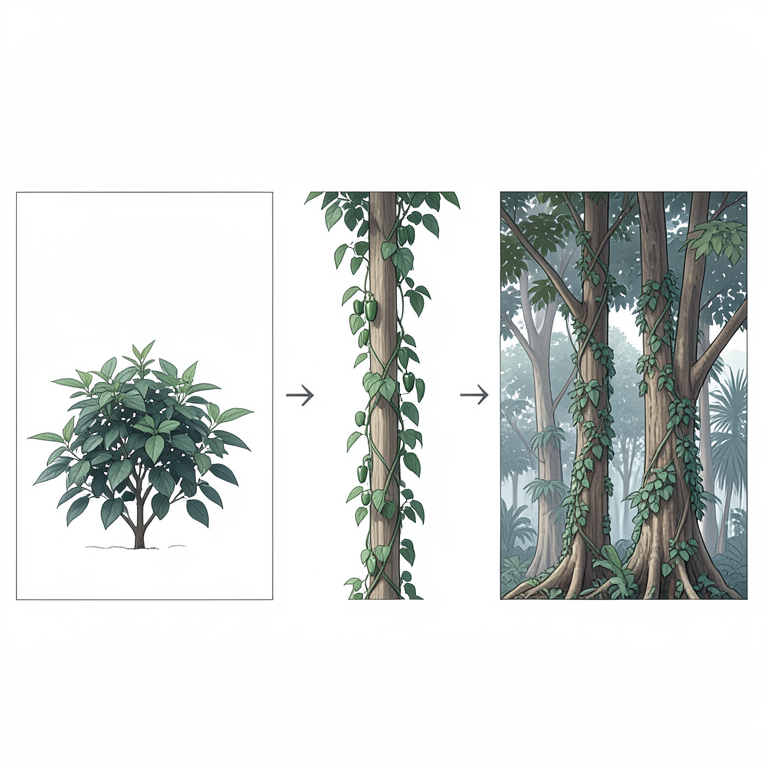
Cultivation Methods
AI-generated conceptual illustration (Black pepper plants (Piper nigrum)). It explains the idea and does not show study data.
View source evidence ↗Figures & tables
From the original paper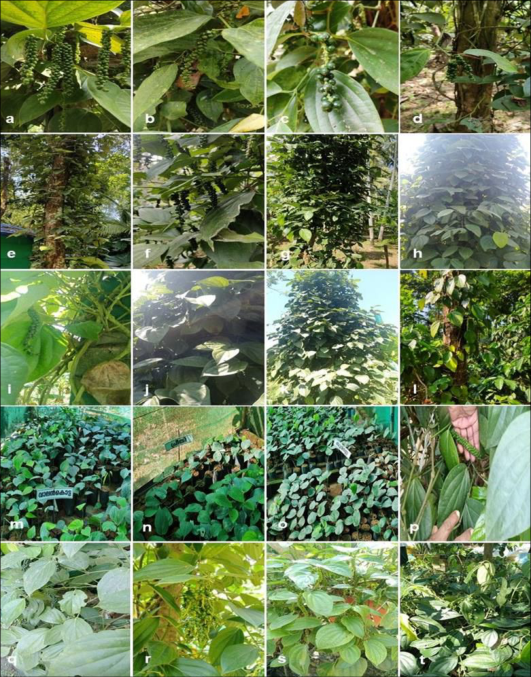 Figure 1
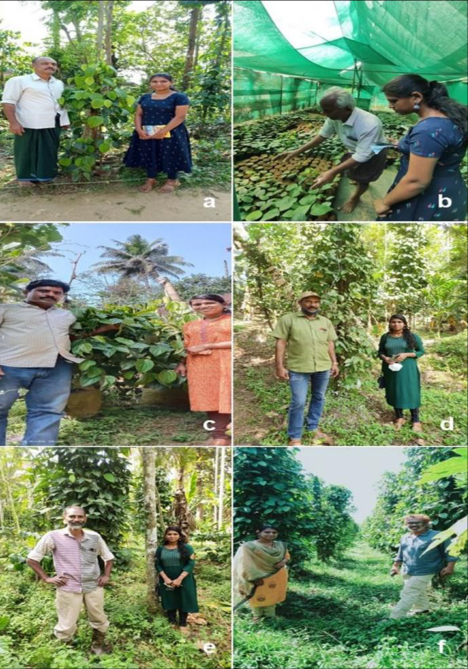 Fig. 2
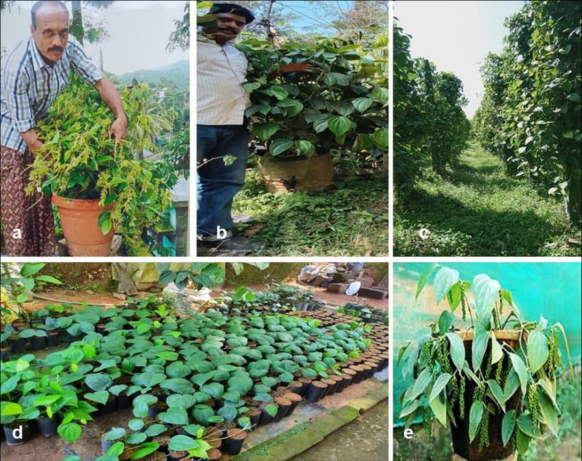 Fig. 3
Introduction
Black pepper (Piper nigrum L.), Piperaceae, has persisted as one of the most treasured commodities in transnational trade for centuries [1,2] . Originating in the tropical forests of the Western Ghats of India, it was among the primitive spices to magnetize Arab, Roman, and later European merchants, persuading the progression of seafaring commerce and colonial expansion [1,2,3] . Even today, black pepper endures to be a keystone of the intercontinental spice market, interposing considerably to the global spice wealth. India remains one of the leading producers and exporters, with Kerala much-admired as the time-honored home of pepper agribusiness [2,3] . Within Kerala, the Wayanad district subjugate an undivided rank as a major production epicenter, due to their expedient climate, rich soils, and conventional farming know-how. The spice not only exemplifies an imperative agricultural export but also aids the livelihoods of thousands of smallholder farmers, making it vital to the rural economy of the state [3,4,5] . Moreover, pepper cultivation in Kerala has robust socio-cultural and ancient roots, characterizing both agricultural heritage and economic flexibility [5,6,7] . Beyond its economic value, black pepper has long been esteemed for its ethnobotanical and restorative properties. In traditional medicine systems such as Ayurveda, Siddha, and Unani, pepper fruits are used as stimulants, carminatives, and cure for respiratory ailments, gastrointestinal disorders, and febrile conditions [8,9,10] .
Folk practices in Kerala and other parts of South India often incorporate pepper in home remedies for colds, coughs, indigestion, and general weakness, underlining its role as a household therapeutic agent [10,11,12,13] . Contemporary pharmacological conclusions have further endorsed these benefits, signifying that pepper presents antimicrobial, antiinflammatory, antioxidant, hepatoprotective, and neuroprotective activities [12,13,14] . Its major alkaloid, piperine, is particularly well-studied for its bioenhancing property, whereby it surges the bioavailability of several drugs and nutraceuticals, making it an important adjunct in pharmaceutical formulations [14,15] . Recent research has also reported anticancer, antidiabetic, and immunomodulatory potentials of piperine and other phytoconstituents, underscoring the plant's relevance in contemporary healthcare. In addition, pepper continues to hold cultural and culinary significance; it is a staple spice in Indian cuisine and a symbol of Kerala's spice heritage [16,17] . Together, these attributes demonstrate that black pepper is not only an agricultural commodity but also a medicinal and cultural resource of enduring global relevance. The cultivation of black pepper in Wayanad is strongly influenced by diverse agro-climatic conditions and farmerdriven practices that shape both productivity and sustainability [18] . Farmers in the region maintain a wide range of local varieties and landraces, each with distinct agro-morphological traits that contribute to yield potential, stress tolerance, and adaptability [6,7] . At the same time, cultivation methods such as shade regulation, organic manuring, intercropping, and staking systems vary considerably between farms, reflecting a blend of traditional knowledge and practical innovation [6,8,10] . Documenting this variability is essential, as it not only highlights the agrobiodiversity of the crop but also provides insights into the resilience and economic viability of different farming approaches. In this context, the present study was designed to survey the diversity of black pepper varieties cultivated by farmers in the Wayanad, and to record the common cultivation practices adopted in the region. By integrating agro-morphological characterization with farmer-level practices, this work aims to generate baseline information that could support varietal selection, conservation strategies, and sustainable spice production in Kerala.
Subjects and Methods
Study area: The present investigation was conducted in Wayanad district, Kerala, a region renowned for its tropical climate, lush vegetation, and cultural heritage. Wayanad spans an area of 2131 km 2 , of which approximately 40% is under forest cover and more than 51% is devoted to cultivation. The district is an important center of cash crop production, particularly black pepper, coffee, and other spices, contributing significantly to foreign exchange earnings. The Kabani River, an east-flowing tributary of the Cauvery, serves as a major water resource sustaining the agricultural landscape. For this study, surveys were carried out in five representative locations within the district, namely Pulpally, Kakkavayal, Kammana, Kalpetta, and Mananthavadi, which are known for extensive black pepper cultivation.
Data collection
Primary data were collected through direct farmer interactions, field observations, and structured questionnaires administered to six selected farmers representing the study locations. The information gathered included details of black pepper varieties under cultivation, preferred cultivation practices, and farmer perceptions regarding yield and adaptability. Secondary data were obtained through relevant literature, reports, and published sources to supplement field-based findings [19] .
Results
The investigation divulged substantial agro-morphological assortment among black pepper varieties cultivated across the study settings. A wide range of local and better-quality types were authenticated, comprising Karimunda, Balankotta, Agali, Koombukkal, Valankotta, Cheruvalli, Moolanthiri, Upputhiriyan, Neelamundi, Chumalanamban, Cholamundi, Jeeva, Vykha, Muthumani, Vanamundi, Malamundi, Pamban, Paurnami, Palod-2, and Malabar XL. Among the recently improved hybrid categories, Panniyur-2, Aswathy, Preethi, Suvarna, Super Gold, Wayanadan-2, and Shakthi were detailed (Fig. 1). Of these, Thekkan, Uthirankotta, Shakthi, and Munthirimundi transpired as the most favoured varieties due to their malleability and greater recognition among farmers, although Panniyur-1, Panniyur-2, and Bolt were testified as the least preferred varieties owing to moderated performance and susceptibility under local conditions. The inspection also emphasized the supporting plants (rootstocks) most commonly employed in pepper cultivation. Areca catechu, Cocos nucifera, and Gliricidia maculata were the principal support plants recorded across the study area. Supplementary supportive species included Colubrina spp., Erythrina variegata, and Swietenia macrophylla, expended in particular locations contingent on accessibility and farmer liking. Major encounters consistently reported by farmers included labour shortage, climate change, destabilized market prices, flooding, and landslides, all of which diametrically influence pepper productivity. These constrictions were perceived across different sites, with slight variations in intensity depending on topography and accessibility. The most common diseases observed in pepper plantations were quick wilt (Phytophthora foot rot), charcoal/ root rot, stem blight, spike shedding, bacterial wilt, anthracnose, and leaf spot disease. Among these, quick wilt and charcoal rot were evidenced most recurrently and across multiple sites, specifying their widespread prevalence in Wayanad pepper fields. In addition to varietal and disease observations, several cultivation practices were documented. Farmers employed methods such as layering for propagation, bush pepper cultivation, the Vietnam model, and multistorey cropping systems (Fig. 2,3). These practices reflect a combination of traditional and adaptive strategies aimed at sustaining pepper productivity under varying agro-climatic conditions.
Discussion
The survey clearly demonstrates significant agromorphological diversity among black pepper varieties cultivated across the locations, backed by both local and improved genotypes that differ in morphology, physiology, and adaptability, with newly bred hybrids further enriching this variation [20,21,22] . Extensive research in regional germplasm collections and field surveys shows moderate to high variability in morphological traits such as leaf shape, shoot color, spike length, berry size, and branching among black pepper cultivars. Studies conducted in the Western Ghats grouped varieties into genetically distinct clusters, explaining why local adaptability and farmer preference vary extensively. Morphological differences are underpinned by genetic divergence, highlighting the importance of both indigenous landraces and advanced hybrids in breeding programs [20,21,22] . Farmer surveys and performance trials consistently show that Thekkan, Uthirankotta, Shakthi, and Munthirimundi are preferred for their environmental adaptability and stable yields under local conditions; conversely, varieties such as Panniyur-1, Panniyur-2, and Bolt are less popular due to their susceptibility to disease and declining productivity in the target regions. The pattern matches broad empirical observations from genetic evaluations and on-farm trials, where compatibility with agro-ecology and disease resistance drive farmer choices [23,24] . Research consistently identifies A. catechu, C. nucifera, and G. maculata as dominant support species for pepper due to their structural compatibility, microclimate modification, and accessibility. Studies on rootstock selection emphasize how support plants also impact nutrient uptake, root interaction, and overall pepper performance. Additionally, species like Colubrina spp., E. variegata, and S. macrophylla are chosen in regionspecific contexts, reflecting farmer preferences and biodiversity consideration [24,25,26] . Recent regional assessments highlight labour scarcity, climate instability, fluctuating market prices, flooding, and landslides as the most pressing challenges impacting pepper productivity. Climate-driven shifts, especially increased frequency of floods and landslides, are consistently cited by farmers and researchers as key constraints in traditional pepper-growing zones.
Market instability and poor labour availability further compound vulnerability, making productivity and profitability unpredictable despite genetic improvements [26,27] . Disease prevalence is a serious constraint, with quick wilt (Phytophthora foot rot) and charcoal rot recognized as the most widespread and devastating, alongside anthracnose, leaf spot, stem blight, bacterial wilt, and spike sheddingoften exacerbated by changing climate and soil moisture regimes [26,27] . In response to these challenges, a spectrum of cultivation practices has been documented, including layering for vegetative propagation, bush pepper approaches for space efficiency, the Vietnam model that integrates improved irrigation and mulching, and multistorey cropping systems-all adaptive strategies proven by agronomic research to sustain productivity under changing agroclimatic conditions. [28,29,31] Farmers employ diverse and dynamic methods such as layering propagation, bush pepper cultivation, the Vietnam model, and multistorey cropping, which are validated through agronomic research in Asian contexts. The Vietnam model emphasizes improved irrigation, mulching, and soil treatments to reduce disease and optimize productivity, while bush pepper systems are recognized for their land-use efficiency and adaptability under smallholder conditions. Layering is preferred for vegetative propagation and maintaining genetic fidelity in farmer-led innovation [28,29,30,31] . Together, these adaptive cultivation strategies demonstrate how farmer-led innovations, supported by agronomic research, can buffer pepper production against climatic, biological, and economic uncertainties while sustaining long-term productivity and resilience.
Conclusion
The study underscores the considerable varietal diversity, disease prevalence, and adaptive cultivation practices shaping black pepper cultivation in Wayanad. Collectively, these findings highlight the critical need for integrated disease management, climate-resilient agronomic innovations, and farmer-centered varietal improvement to ensure sustainable productivity in traditional peppergrowing systems.
Acknowledgement
AcknowledgementThe authors gratefully acknowledge the valuable cooperation and insights of the farmers who generously shared their time, knowledge, and field experiences for this study.
Figures and tables from the paper
References
30 in the original paper- Khan AU, Talucder MSA, Das M, Noreen S, Pane YS. Prospect of the black pepper (Piper nigrum L.) as natural product used to an herbal medicine. Open Access Maced J Med Sci. 2021;9:563-73. https://doi.org/10.3889/oamjms.2021.7113
- Varghese R, Ray J. Sustainability of black pepper production: a critical analysis of physicochemical soil parameters concerning variables in pepper fields of south India. Deleted J. 2024;44(4):788-801. https://doi.org/10.1016/j.ecofro.2024.01.005
- Salehi B, Zakaria ZA, Gyawali R, Ibrahim SA, Rajkovic J, Shinwari ZK, et al. Piper species: a comprehensive review on their phytochemistry, biological activities and applications. Molecules. 2019;24(7):1364. https://doi.org/10.3390/molecules24071364
- Ashokkumar K, Murugan M, Dhanya MK, et al. Phytochemistry and therapeutic potential of black pepper [Piper nigrum (L.)] essential oil and piperine: a review. Clin Phytosci. 2021;7:52. https://doi.org/10.1186/s40816-021-00292-2
- Tomson KS, Kuruvila A, Ajithkumar B. Climate risk in Wayanad district: an empirical analysis. J Trop Agric. 2023;61(1):123-6.
- Takooree H, Aumeeruddy MZ, Rengasamy KRR, Venugopala KN, Jeewon R, Zengin G, et al. A systematic review on black pepper (Piper nigrum L.): from folk uses to pharmacological applications. Crit Rev Food Sci Nutr. 2019;59(sup1):S210-43. https://doi.org/10.1080/10408398.2019.1565489
- Hema M, Kumar R, Singh NP. Volatile price and declining profitability of black pepper in India: disquieting future. Agric Econ Res Rev. 2007;20(1):6176.
- Periferakis A, Troumpata L, Periferakis K, Adalis G, Periferakis A, Georgatos-Garcia S, et al. Traditional ethnomedical and ethnobotanical applications and uses of Piper nigrum. Rom J Mil Med. 2025;128(4):286-303. https://doi.org/10.55453/rjmm.2025.128.4.3
- Wulandari W. Review: black pepper (Piper nigrum L.) botanical aspects, chemical content, pharmacological activities. Int J Pharm Sci Med. 2021;6(1):83-91. https://doi.org/10.47760/ijpsm.2021.v06i01.007
- Jan U, Kalam MA, Wani NN, Ayoub M, Farooq SF, Yaqoob F. Filfil Siyāh (Piper nigrum): medicinal importance in perspective of Unani medicine and pharmacological studies. J Pharmacogn Phytochem. 2024;13(2):652-6. https://doi.org/10.22271/phyto.2024.v13.i2d.14907
- Hussain J, Sali V, Vasanthi H. Variations in the piperine content in three varieties of pepper and mapping its anti-inflammatory potential by molecular docking. Nat Resour Hum Health. 2022;3(1):59-66. https://doi.org/10.53365/nrfhh/150494
- Tiwari A, Mahadik KR, Gabhe SY. Piperine: a comprehensive review of methods of isolation, purification, and biological properties. Med Drug Discov. 2020;7:100027. https://doi.org/10.1016/j.medidd.2020.100027
- Rashedinia M, Mojarad M, Khodaei F, Sahragard A, Khoshnoud MJ, Zarshenas MM. The effect of a traditional preparation containing Piper nigrum L. and Bunium persicum (Boiss.) B.Fedtsch. on immobility stress-induced memory loss in mice. Biomed Res Int. 2021:5577594. https://doi.org/10.1155/2021/5577594
- Zahin M, Bokhari NA, Ahmad I, Husain FM, Althubiani AS, Alruways MW, et al. Antioxidant, antibacterial, and antimutagenic activity of Piper nigrum seeds extracts. Saudi J Biol Sci. 2021;28(9):5094-105. https://doi.org/10.1016/j.sjbs.2021.05.030
- Tripathi AK, Ray AK, Mishra SK. Molecular and pharmacological aspects of piperine as a potential molecule for disease prevention and management: evidence from clinical trials. Beni-Suef Univ J Basic Appl Sci. 2022;11(1):16. https://doi.org/10.1186/s43088-022-00196-1
- Wu N, Yin X, Cui C, Zhao M, Sun C, Jin L, et al. Structural modification, total synthesis, and biological activity of natural product piperine: a review. J Funct Foods. 2025;128:106827. https://doi.org/10.1016/j.jff.2025.106827
- Preethy TT. Performance, diversity analysis and character association of black pepper (Piper nigrum L.) accessions in high altitude regions of Kerala. J Spices Aromat Crops. 2018;27(1):17-21.
- Eliyas M, Sumathi P. Factors influencing the adoption of recommended package of practices by pepper growers of Wayanad district, Kerala. Int J Farm Sci. 2019;9(1):17. https://doi.org/10.5958/22500499.2019.00015.6
- Prayoga GI, Ropalia R, Aini SN, Mustikarini ED, Rosalin Y. Diversity of black pepper plant (Piper nigrum) in Bangka Island (Indonesia) based on agromorphological characters. Biodiversitas. 2020;21(2). https://doi.org/10.13057/biodiv/d210230
- Reshma P, Sreekala GS, Deepa SN, Stephen R. Genetic diversity assessment of black pepper (Piper nigrum L.) cultivars of Western Ghats. Plant Sci Today. 2024;11(sp3). https://doi.org/10.14719/pst.4816
- Wimalarathna NA, Wickramasuriya AM, Metschina D, Cauz-Santos LA, Bandupriya D, Ariyawansa KGSU, et al. Genetic diversity and population structure of Piper nigrum accessions based on next-generation SNP markers. PLoS One. 2024;19(6):e0305990. https://doi.org/10.1371/journal.pone.0305990
- Bhat DS, Hegde L, Narayanpur V, Hegde NK, Shet RM, Rajashekhara E. Evaluation of farmer's cultivars of black pepper (Piper nigrum L.) in hill zone (Zone-9) of Karnataka under areca-based cropping system. Pharma Innov J. 2023;12(11):2154-9.
- Perez-Cordoba MJ, Diez-Diaz M, De Luis A, CastellZeising V, Rodriguez-Burruezo A, Fita A. Comparison of pepper accessions acting as rootstocks: a case with low P inputs. Not Bot Horti Agrobo. 2024;52(2):13812. https://doi.org/10.15835/nbha52213812
- Ahmod MM, Ahmed M, Moonmoon S, Rahman MM. Unveiling black pepper diversity: a morphological characterization of genotypes in Sylhet, Bangladesh. J Spices Aromat Crops. 2024;33(1):106-12.
- Singh LS, Eswaramoorthy V, Niral V, Sheeja TE, Shivaumar MS, et al. Study on qualitative, quality and DNA finger printing profile of identified black pepper germplasm under lower Brahmaputra valley zone of Assam conditions of north east region, India. Plant Arch. 2024;25(1). https://doi.org/10.51470/plantarchives.2025.v25.supple ment-1.322
- Sarma MAYR. Diseases of black pepper (Piper nigrum L.) and their management. J Spices Aromat Crops. 1995;4(1):17-23. Available from: https://updatepublishing.com/journal/index.php/josac/ar ticle/view/4343
- Ahamedemujtaba V, Atheena PV, Bhat AI, Krishnamurthy KS, Srinivasan V. Symptoms of piper yellow mottle virus in black pepper as influenced by temperature and relative humidity. Virus Dis. 2021;32(2):305-13. https://doi.org/10.1007/s13337021-00686-3
- Vieira GHS, Santos GMD, Lo Monaco PaV, Neto AC, Hadadde IR. Black pepper response to different irrigations depths. Rev Gest Soc Ambient. 2024;18(9):e08446. https://doi.org/10.24857/rgsa.v18n9-183
- Ferreira TR, Sallin VP, Neto BC, Crasque J, Pires A, Rodrigues PS, et al. Morphophysiological responses of black pepper to recurrent water deficit. Photosynthetica. 2024;62(3):292-301. https://doi.org/10.32615/ps.2024.030
- Bhuyan MHMB, Rahman SML, Sarker JC. Explicating proper multiplication method for black pepper propagation in Bangladesh. Adv Agric Biol. 2015;4(2):75-8. https://doi.org/10.15192/pscp.aab.2015.4.2.7578