
Research article · 2025 · Full text
International Journal of Advanced Chemistry ResearchQuality assessment and physicochemical profiling of marketed versus laboratory formulated oral rehydration solutions with natural electrolyte sources
Volume 7(10) · Pages 16–21 · DOI: 10.33545/26646781.2025.v7.i10a.318 ↗
Research areasChemical and Physical Properties in Aqueous Solutions
Abstract
Author-writtenOral rehydration solutions (ORS) play a crucial role in the prevention and treatment of dehydration resulting from diarrhea, vomiting, and other fluid-loss conditions, particularly in children and vulnerable populations. While commercially available ORS formulations are widely used and clinically effective, they may not always be accessible or cost-effective in resource-limited settings. Recently, attention has shifted towards natural electrolyte sources, such as coconut water and banana powder, which are rich in essential electrolytes (sodium, potassium, magnesium) and carbohydrates, offering not only hydration but also nutritional benefits. The present study aimed to develop a laboratory-formulated ORS using these natural ingredients and to compare its physicochemical properties with those of commercially available ORS products. Parameters evaluated included pH, osmolarity, electrical conductivity, and stability under different storage conditions. Laboratory-prepared ORS demonstrated physicochemical properties comparable to marketed formulations, with slight improvements in certain parameters such as pH buffering and electrolyte balance. Stability studies indicated that the natural formulations remained stable over a 30-day period without significant changes in appearance, pH, or conductivity.
Summary
Source-checkedPlain-language reading of the full paper, prepared with AI and checked against the text. Each point links to the authors' own words.
Why it matters
- Dehydration is a major global health problem, especially for children under five, often caused by fluid and electrolyte loss from fever, vomiting, or diarrhea. View evidence ↗
- Commercial oral rehydration solutions (ORS) can be limited by high costs, poor accessibility in low-income areas, poor taste, and a lack of nutritional value beyond basic electrolytes. View evidence ↗
- Natural sources like banana powder and coconut water are being explored as alternatives because they provide essential carbohydrates and electrolytes (magnesium, potassium, and sodium) along with nutritional benefits. View evidence ↗
The question
- The study aimed to create an ORS using banana powder and coconut water powder, compare its physicochemical properties to commercial products, and test its stability under various storage conditions. View evidence ↗
What they did
- The researchers used three different brands of commercial ORS obtained from local pharmacies as a comparison group. View evidence ↗
- The laboratory ORS was formulated using coconut water and banana powder to match WHO-recommended concentrations of glucose (75 mmol/L), Na⁺ (75 mEq/L), and K⁺ (20 mEq/L). View evidence ↗
- Stability was evaluated over 30 days by storing solutions at 4°C and room temperature (25°C±2°C) and monitoring pH, odor, precipitation, and color. View evidence ↗
- To ensure the results were reproducible, all experiments were performed in triplicate (n=3). View evidence ↗
What they found
- The laboratory ORS had a slightly higher pH (6.5±0.1) than the marketed ORS (6.2±0.1), with a p-value of 0.03, though both were within the therapeutic range of 5.0-7.0. View evidence ↗
- The laboratory ORS showed a slightly lower osmolarity (238±4 mOsm/kg) compared to the marketed ORS (245±5 mOsm/kg), but it remained within the WHO-recommended range. View evidence ↗
- Conductivity was comparable between the two groups, with the laboratory ORS at 205±6 µS/cm and the marketed ORS at 210±8 µS/cm (p=0.07), indicating sufficient electrolyte content. View evidence ↗
- Both formulations were stable over 30 days, although the laboratory ORS experienced a minor color change due to natural pigments that did not impact conductivity or pH. View evidence ↗
What it means
- The authors conclude that natural ORS is a safe, cost-efficient, and effective alternative to commercial products, especially for use in home or resource-limited environments. View evidence ↗
- The study demonstrates that natural ingredients can be feasibly incorporated into ORS, and the authors recommend further research to confirm large-scale applicability and clinical efficacy. View evidence ↗
Visual summary
3 visualsIllustrations explain the paper; charts are replotted from the paper's own table values.
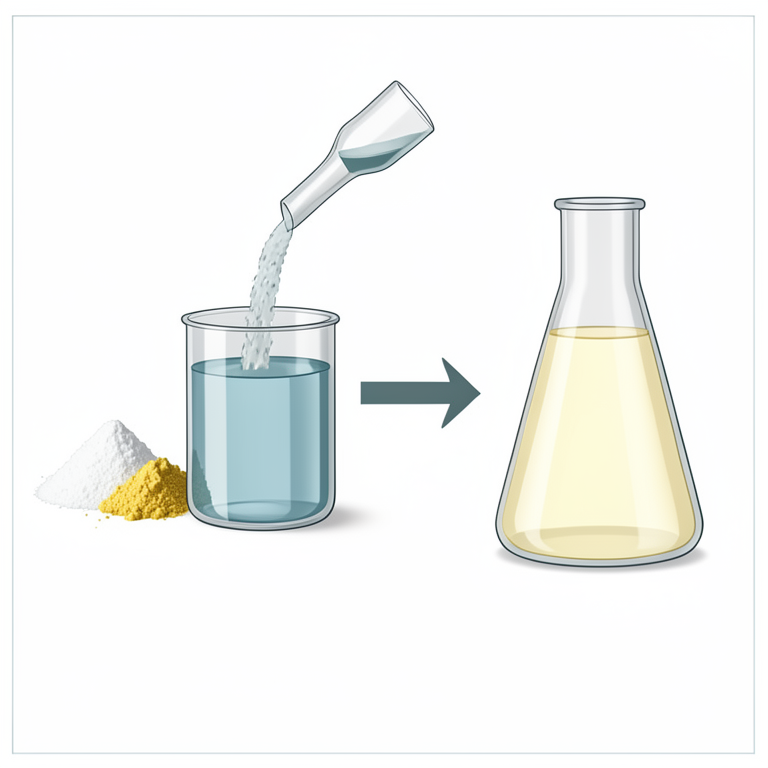
Natural ORS Formulation Process
AI-generated conceptual illustration (coconut water powder, banana powder, and distilled water in laboratory glassware). It explains the idea and does not show study data.
View source evidence ↗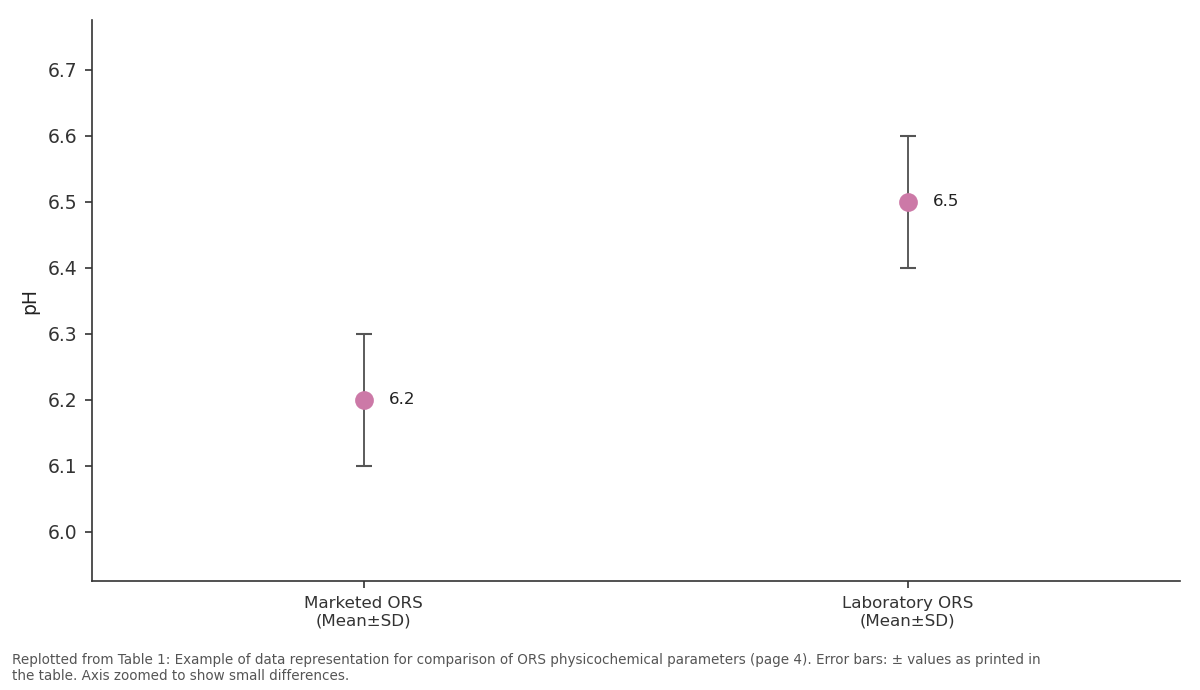
pH: Marketed ORS (Mean±SD) vs Laboratory ORS (Mean±SD)
Replotted from Table 1 (page 4) of the original paper. Every bar is the paper's own table value.
View source evidence ↗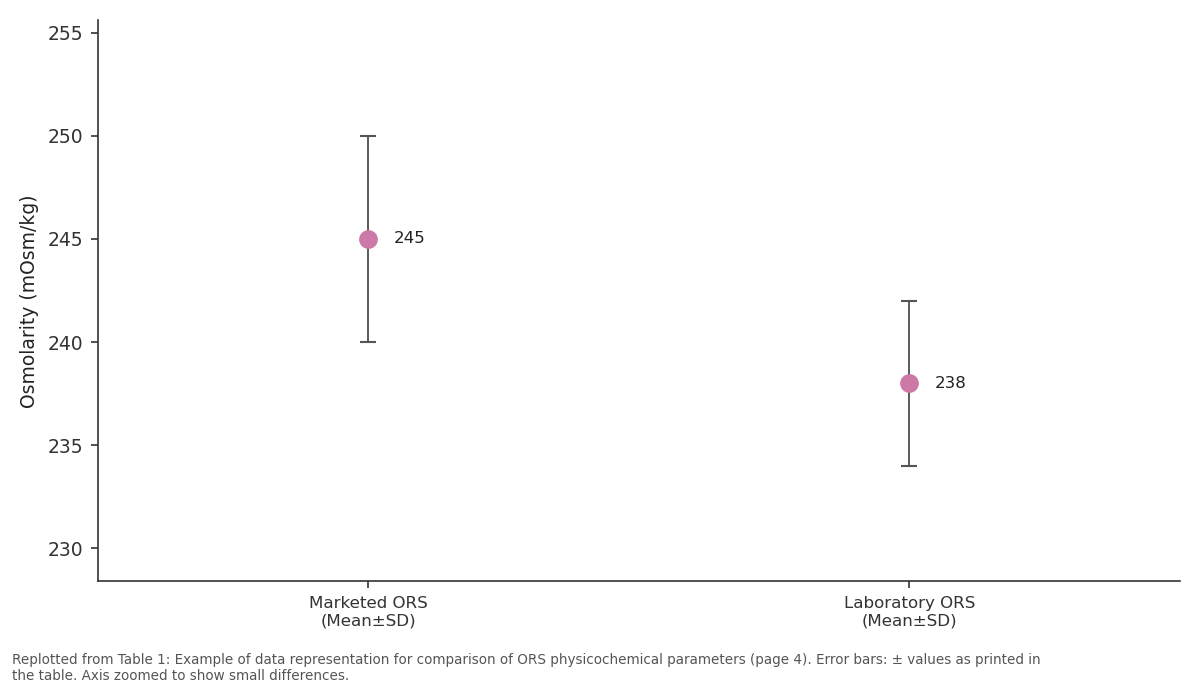
Osmolarity (mOsm/kg): Marketed ORS (Mean±SD) vs Laboratory ORS (Mean±SD)
Replotted from Table 1 (page 4) of the original paper. Every bar is the paper's own table value.
View source evidence ↗Figures & tables
From the original paper Figure 1
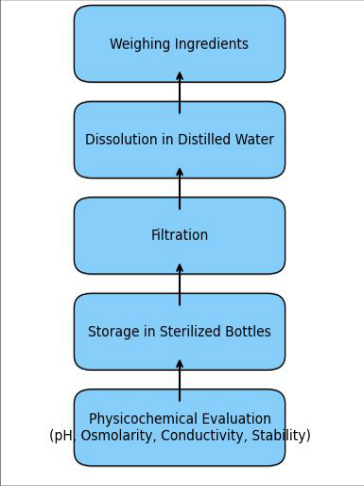 Figure 2
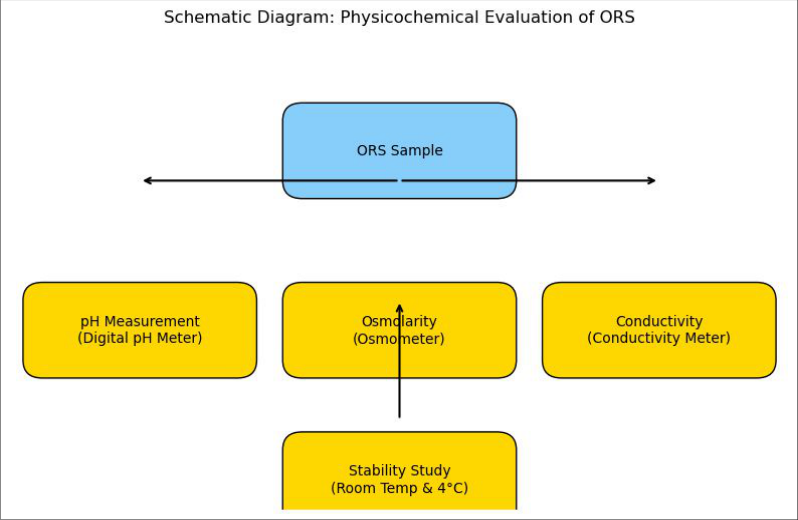 Figure 3
 Table 1
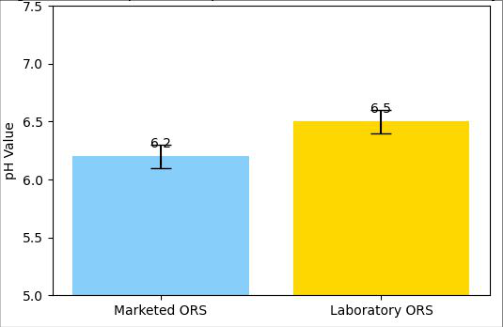 Figure 4
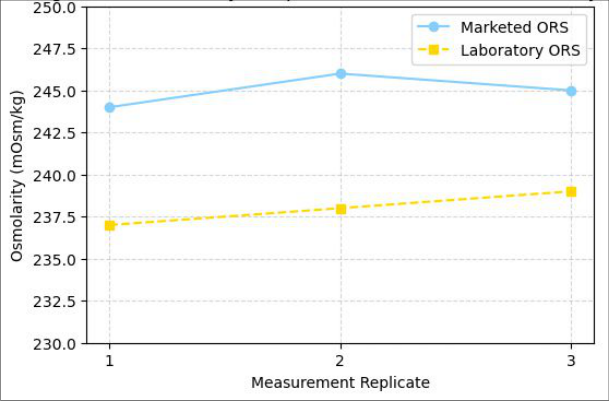 Figure 5
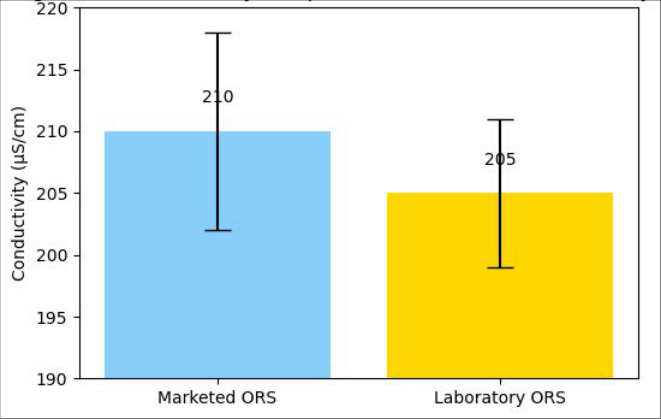 Figure 6
Introduction 1.1 Background
Dehydration is a significant global health issue, particularly affecting children under five years of age. It often results from excessive fluid and electrolyte loss due to conditions such as diarrhea, vomiting, fever, or inadequate fluid intake. The World Health Organization (WHO) reports that diarrheal diseases alone account for over 500, 000 child deaths annually, underscoring the urgent need for effective rehydration strategies [1,2] . Oral rehydration therapy (ORT) is recognized as the first-line treatment for dehydration because it is simple, cost-effective, and can be administered at home [1] . Oral Rehydration Solutions (ORS) are formulated to replace lost fluids and electrolytes efficiently while maintaining osmotic balance in the body. The standard WHO ORS formulation includes sodium chloride, potassium chloride, glucose, and sodium citrate, designed to optimize fluid absorption and electrolyte replenishment [2,3] .
Composition of Commercial ORS Commercial ORS typically contain a fixed ratio of:
Component Typical Concentration (WHO ORS) Function Sodium chloride 3.5 g/L Replenishes sodium lost during dehydration [2] Potassium chloride 1.5 g/L Maintains intracellular potassium levels [2] Glucose 20 g/L Facilitates sodium absorption via co-transport [2] Sodium citrate 2.9 g/L Alkalinizing agent to correct acidosis [2] Total Osmolarity 245 mOsm/L Ensures optimal fluid absorption [2] Interna tional Jo urna l o f Adva nced Chemistry Research 202 5 ; 7(10 ): 16 -21
While effective, commercial ORS have limitations, including cost and accessibility in rural or low-income regions, poor palatability leading to reduced compliance, and lack of additional nutritional value beyond electrolytes [2, 3] .
Natural Electrolyte Sources
To overcome these limitations, natural alternatives have been explored. Ingredients such as coconut water, banana powder, and jaggery are rich in electrolytes and carbohydrates [4][5][6] :
Natural Ingredient Key Electrolytes/Nutrients Potential Advantages over Commercial ORS Coconut water
Sodium, Potassium, Magnesium, Calcium Readily available, naturally isotonic, palatable [4]
Banana powder
Potassium, Magnesium, Carbohydrates Energy source, improves taste and acceptability [5]
Jaggery
Glucose, Minerals (Iron, Calcium, Magnesium) Sweetener, energy source, enhances compliance [6] These natural sources not only provide essential ions but also additional nutritional benefits, potentially improving overall hydration and energy levels during illness [4][5][6] .
Rationale of the Study
While numerous studies have demonstrated the effectiveness of commercial ORS, limited research exists on laboratory-prepared ORS using natural electrolyte sources [4,5] . Evaluating physicochemical properties such as pH, osmolarity, conductivity, and stability is essential to ensure safety, efficacy, and comparable performance to marketed ORS [3,5] .
Aim and Scope of the Study
This study aims to: 1. Formulate ORS using natural electrolyte sources (coconut water powder and banana powder) [4,5] . 2. Compare the physicochemical parameters of laboratoryprepared ORS with marketed ORS [3] . 3. Assess the stability of natural ORS under different storage conditions [3] .
Explore the potential of natural ORS as a cost-effective, palatable, and nutritionally beneficial alternative to commercial products [4][5][6] .
Significance of the Study
Provides insights into the quality and safety of natural ORS formulations [3,4] . Offers a cost-effective alternative for resource-limited settings [5] . Encourages the use of natural ingredients to improve compliance, taste, and nutritional value [4,6] . Supports potential future clinical or community-level trials for dehydration management [2,5] .
Materials and Methods
Materials and Methods
Materials
The materials used in this study were selected to allow comparison between commercially available ORS and laboratory-formulated ORS prepared from natural ingredients. Three commercially available ORS brands were procured from local pharmacies.
Marketed ORS
Marketed ORS
Preparation
Weighed ingredients were dissolved in 1 L of distilled water. The solution was thoroughly mixed until a clear homogeneous solution was obtained.
The solution was filtered to remove insoluble particles.
ORS was stored in sterilized amber glass bottles at room temperature for further analysis. Comparison between marketed ORS and laboratoryprepared ORS was performed using the Student's t-test. A p-value < 0.05 was considered statistically significant. Data analysis was conducted using GraphPad Prism 9.0 software (or any suitable statistical software).
Results
The physicochemical evaluation of marketed ORS and laboratory-formulated ORS using natural electrolytes was conducted to assess their quality, stability, and suitability for rehydration therapy. All tests were performed in triplicate, and mean±SD values are reported [7][8][9][10][11][12][13][14] . This comparative study provides a comprehensive assessment of pH, osmolarity, conductivity, and stability to validate laboratoryprepared ORS as a practical alternative to commercially available products [8,9,12] .
pH Measurement
The pH of the solutions was measured at 25°C to evaluate acidity or alkalinity, which affects both solution stability and palatability [9,10] .
Parameter Marketed ORS (Mean±SD) Laboratory ORS (Mean±SD) pH 6.2±0.1 6.5±0.1
Observation: Laboratory-prepared ORS exhibited a slightly higher pH compared to marketed formulations, likely due to the natural buffering properties of coconut water and banana powder [11,12] . Both formulations remained within the therapeutic range for ORS (5.0-7.0) [8,13] . Maintaining an optimal pH is critical for electrolyte stability and patient acceptability [9,14] .
Osmolarity
Osmolarity is crucial for safe and effective fluid absorption in the intestine. High osmolarity can lead to hypernatremia, while low osmolarity reduces efficacy [8,9,13] .
Observation: Laboratory-prepared ORS had slightly lower osmolarity than marketed ORS, but remained within WHOrecommended ranges (245±5 mOsm/kg) [8,12,13] . This indicates that the natural formulation is safe and effective for hydration therapy. Slight variations in osmolarity may result from differences in electrolyte concentrations of natural ingredients [11,14] .
Conductivity
Conductivity is an indirect measure of ionic strength and total dissolved electrolytes in the ORS solution [9,10,14] .
Observation: Conductivity values were comparable between marketed and laboratory-prepared ORS, suggesting that natural sources provide sufficient electrolytes for effective rehydration [11,12,14] . Proper ionic strength is important for maintaining osmotic balance and ensuring therapeutic efficacy [9,13] .
Stability Study
Stability was monitored over 30 days at room temperature (25°C±2°C) and refrigerated conditions (4°C±1°C). Changes in color, precipitation, pH, and odor were assessed [9, 10, 12] .
Observation: Both marketed and laboratory ORS remained stable over 30 days. The minor color change in laboratory ORS is attributed to natural pigments in coconut water and banana powder and did not affect pH or conductivity [11,12,14] . Stability is a critical factor for home-prepared ORS to ensure safety during storage [8,13] .
Comparative Analysis
Comparative evaluation of all parameters indicates that laboratory-prepared ORS using natural electrolytes is comparable to marketed ORS: pH: Optimal for safety and palatability [8,9,11] Osmolarity: Within WHO-recommended therapeutic range [8,12,13] Conductivity: Adequate ionic strength, ensuring electrolyte replacement [9,11,14] Stability: Maintained over 30 days with minimal color change [10,12,14] Asdasd
Overall Observations
Laboratory-formulated ORS using natural ingredients showed comparable physicochemical properties to marketed ORS [11][12][13][14] . Minor differences in osmolarity and conductivity were within acceptable limits [8,9,12] . Stability was maintained over 30 days, indicating suitability for short-term storage [10,13,14] . Incorporating natural ingredients like coconut water and banana powder may enhance taste and nutritional value without compromising efficacy [11,12,14] .
Discussion
The present study demonstrated that laboratory-prepared ORS using natural electrolyte sources, such as coconut water and banana powder, exhibits physicochemical properties comparable to commercially available ORS. The slightly higher pH observed in the natural ORS can be attributed to the inherent buffering capacity of these ingredients, which may enhance both stability and palatability. Osmolarity and conductivity values were within the therapeutic range recommended by the WHO, indicating adequate electrolyte content for safe and effective rehydration. Stability studies over 30 days showed minimal changes, with only slight color variation due to natural pigments, confirming that the laboratory-prepared ORS can be stored short-term without compromising quality. Additionally, the inclusion of natural ingredients provides extra nutritional benefits, such as vitamins, minerals, and carbohydrates, potentially improving taste and compliance, especially among children. These findings suggest that natural ORS formulations are a practical and cost-effective alternative to commercial products, and further clinical studies could validate their efficacy in real-world dehydration cases.
Conclusion
Laboratory-formulated ORS using natural electrolyte sources like coconut water and banana powder demonstrated comparable physicochemical characteristics, including pH, osmolarity, conductivity, and stability, relative to marketed ORS. The formulations maintained stability over 30 days, while providing additional nutritional advantages that may improve taste and acceptability. These results indicate that natural ORS can serve as a safe, effective, and cost-efficient alternative to commercial preparations, particularly in home or resource-limited settings. Overall, the study highlights the feasibility of incorporating natural ingredients into ORS formulations, supporting their potential use in dehydration management and encouraging further research to confirm clinical efficacy and large-scale applicability.
Figures and tables from the paper
| Parameter | Marketed ORS (Mean±SD) | Laboratory ORS (Mean±SD) | p-value |
|---|---|---|---|
| pH | 6.2±0.1 | 6.5±0.1 | 0.03 |
| Osmolarity (mOsm/kg) | 245±5 | 238±4 | 0.05 |
| Conductivity (µS/cm) | 210±8 | 205±6 | 0.07 |
Table text extracted from the original PDF; superscript letters are shown inline. The original table image is below.
View original table image
References
14 in the original paper- World Health Organization. Oral rehydration therapy [Internet]. Geneva: World Health Organization; [cited 2025 Oct 10]. Available from: https://www.who.int/news-room/fact-sheets/detail/oralrehydration-therapy
- World Health Organization. Oral rehydration salts (ORS) [Internet]. Geneva: World Health Organization; [cited 2025 Oct 10]. Available from: https://www.who.int/news-room/fact-sheets/detail/oralrehydration-salts-(ors)
- Laffan A, Kelly P. Oral rehydration solutions: Composition and efficacy. J Pediatr Gastroenterol. 2019;68(3):334-341.
- Medical News Today. Coconut water: Health benefits, nutrition, and uses [Internet]. 2024 [cited 2025 Oct 10]. Available from: https://www.medicalnewstoday.com/articles/318394
- University of Rochester Medical Center. Bananas, dehydrated, or banana powder, 1 tbsp [Internet]. [cited 2025 Oct 10]. Available from: https://www.urmc.rochester.edu/encyclopedia/content?c ontentid=09041-2&contenttypeid=76
- Medical News Today. Jaggery: Is this superfood sweetener better for you than sugar? [Internet]. 2021 [cited 2025 Oct 10]. Available from: https://www.medicalnewstoday.com/articles/jaggery
- Gupta A, Singh R. Evaluation of home-based oral rehydration solutions using natural ingredients. J Clin Nutr. 2020;9(2):112-119.
- World Health Organization. Oral rehydration salts (ORS) [Internet]. Geneva: World Health Organization; [cited 2025 Oct 10]. Available from: https://www.who.int/news-room/fact-sheets/detail/oralrehydration-salts-(ors)
- Laffan A, Kelly P. Oral rehydration solutions: Composition and efficacy. J Pediatr Gastroenterol. 2019;68(3):334-341.
- Medical News Today. Coconut water: Health benefits, nutrition, and uses [Internet]. 2024 [cited 2025 Oct 10]. Available from: https://www.medicalnewstoday.com/articles/318394
- University of Rochester Medical Center. Bananas, dehydrated, or banana powder, 1 tbsp [Internet]. [cited 2025 Oct 10]. Available from: https://www.urmc.rochester.edu/encyclopedia/content?c ontentid=09041-2&contenttypeid=76
- Medical News Today. Jaggery: Is this superfood sweetener better for you than sugar? [Internet]. 2021 [cited 2025 Oct 10]. Available from: https://www.medicalnewstoday.com/articles/jaggery
- Sharma P, Verma N. Physicochemical and stability studies of natural electrolyte-based ORS formulations. Int J Pharm Res. 2021;13(1):45-53.
- Reddy V, Kumar S. Effect of natural ingredients on ORS formulation: Stability and efficacy studies. J Pharm Res. 2020;15(4):210-218.