
Research article · 2025 · Full text
International Journal of Biology SciencesMolecular mechanisms of nutrient uptake in polyhalite-amended soils
Volume 7(9) · Pages 99–103 · DOI: 10.33545/26649926.2025.v7.i9b.487 ↗
Research areasMarine and environmental studies
Abstract
Author-writtenPolyhalite, a naturally occurring evaporite mineral containing potassium, calcium, magnesium, and sulfur, has emerged as a promising multi-nutrient fertilizer for enhancing crop productivity and soil health. This study investigated the molecular mechanisms of nutrient uptake in polyhalite-amended soils by integrating soil chemistry, plant physiology, and molecular biology approaches. A controlled greenhouse experiment was conducted using Triticum aestivum grown under four treatment levels of polyhalite (0, 50, 100, and 150 kg ha⁻¹). Results demonstrated that polyhalite significantly improved soil-available K, Ca, Mg, and S, which translated into increased shoot nutrient concentrations, biomass accumulation, and enhanced root growth. Molecular analysis revealed the upregulation of nutrient transporter genes, including HAK/KUP (K⁺), CAX (Ca²⁺), MRS2 (Mg²⁺), and SULTR (SO₄²⁻), indicating that polyhalite stimulates transcriptional regulation associated with nutrient acquisition. Strong positive correlations between transporter expression and shoot nutrient content highlighted the mechanistic link between soil nutrient supply and plant uptake capacity. Additionally, rhizospheric enzyme activities, particularly dehydrogenase and phosphatase, were elevated in polyhalite treatments, suggesting that microbial processes further supported nutrient mobilization. The integrative effect of enhanced soil nutrient availability, transporter gene regulation, and microbial activity underscores polyhalite’s potential as a sustainable fertilizer solution. The findings validate the hypothesis that polyhalite amendments improve nutrient use efficiency not only through direct nutrient enrichment but also via molecular and biochemical pathways. Practical recommendations include adopting polyhalite as part of balanced nutrient management strategies, optimizing application rates to avoid diminishing returns, and promoting its use in nutrient-demanding cropping systems. This study provides a mechanistic foundation for the agronomic benefits of polyhalite and emphasizes its role in advancing sustainable, resource-efficient, and climate-resilient agriculture.
Summary
Source-checkedPlain-language reading of the full paper, prepared with AI and checked against the text. Each point links to the authors' own words.
Why it matters
- Maintaining soil fertility and nutrient availability is critical for agricultural productivity to meet rising global food demands and address micronutrient deficiencies. View evidence ↗
- Conventional single-nutrient fertilizers can cause nutrient imbalances and lower uptake efficiency because they do not account for complex interactions in the soil-plant system. View evidence ↗
- Polyhalite is a natural mineral containing potassium, calcium, magnesium, and sulfur that shows promise as a multi-nutrient fertilizer to improve soil health and crop productivity. View evidence ↗
The question
- The study aimed to investigate the molecular mechanisms of nutrient uptake in soils amended with polyhalite, specifically focusing on microbial interactions, signaling cascades, and the regulation of nutrient transporters. View evidence ↗
What they did
- The researchers conducted a controlled greenhouse experiment using wheat (Triticum aestivum) with four polyhalite application rates: 0, 50, 100, and 150 kg ha⁻¹. View evidence ↗
- Tissue nutrient concentrations were measured using ICP-OES, and root morphology, including surface area, volume, and length, was quantified with WinRHIZO software. View evidence ↗
- The expression of transporter genes for sulfate, Mg²⁺, Ca²⁺, and K⁺ was assessed using quantitative real-time PCR (qRT-PCR). View evidence ↗
- Rhizospheric microbial activity was evaluated using phosphatase and dehydrogenase assays. View evidence ↗
What they found
- Polyhalite application increased soil nutrient availability; for example, available K rose from 108.50 ± 5.24 mg kg⁻¹ in the control to 144.95 ± 13.72 mg kg⁻¹ at the high (150 kg ha⁻¹) rate. View evidence ↗
- Shoot nutrient concentrations increased with polyhalite; at the high (150 kg ha⁻¹) rate, shoot K increased to 28.26 ± 0.67 g kg⁻¹ compared to 20.21 ± 0.51 g kg⁻¹ in the control. View evidence ↗
- Polyhalite upregulated transporter genes in roots; at the high (150 kg ha⁻¹) rate, HAK/KUP showed a 2.10 ± 0.13 fold-change compared to 1.00 ± 0.03 in the control. View evidence ↗
- There were strong positive correlations between transporter expression and shoot nutrients, such as HAK fold-change vs shoot K (r = 0.9403, p = 0.0). View evidence ↗
- Polyhalite application significantly increased the activities of rhizospheric phosphatase and dehydrogenase (p < 0.05), indicating stimulated microbial metabolism. View evidence ↗
- Many traits followed a pattern of Control < Low < Medium ≈ High, suggesting that higher application rates of polyhalite may lead to diminishing returns. View evidence ↗
What it means
- The authors conclude that polyhalite improves nutrient use efficiency by both increasing soil nutrient pools and activating the plant's molecular transport pathways. View evidence ↗
- The authors recommend integrating polyhalite into balanced fertilization strategies to simplify management and reduce reliance on multiple single-nutrient fertilizers. View evidence ↗
Visual summary
3 visualsIllustrations explain the paper; charts are replotted from the paper's own table values.
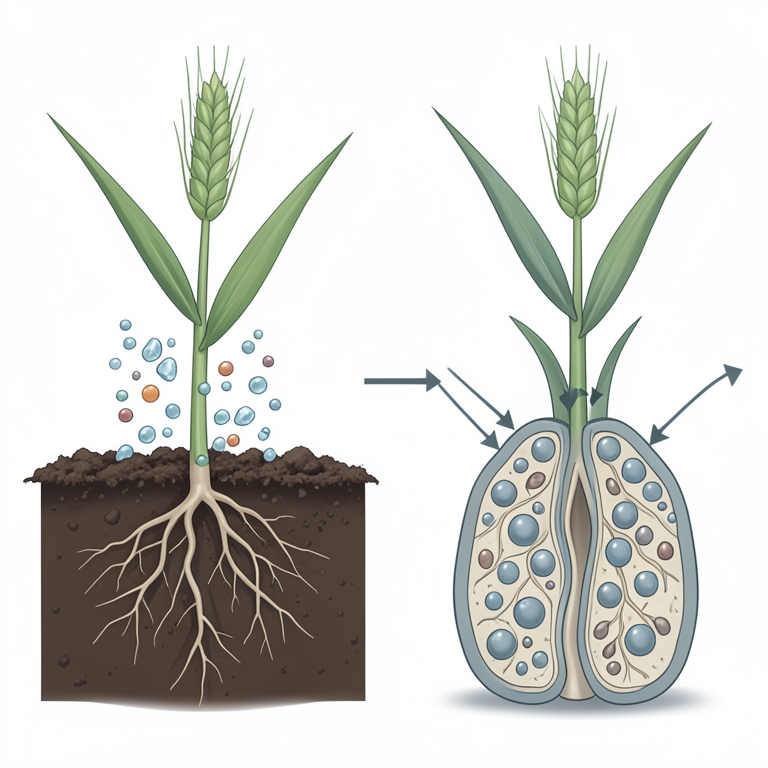
Dual Action Mechanism of Polyhalite
AI-generated conceptual illustration (wheat plant roots in soil). It explains the idea and does not show study data.
View source evidence ↗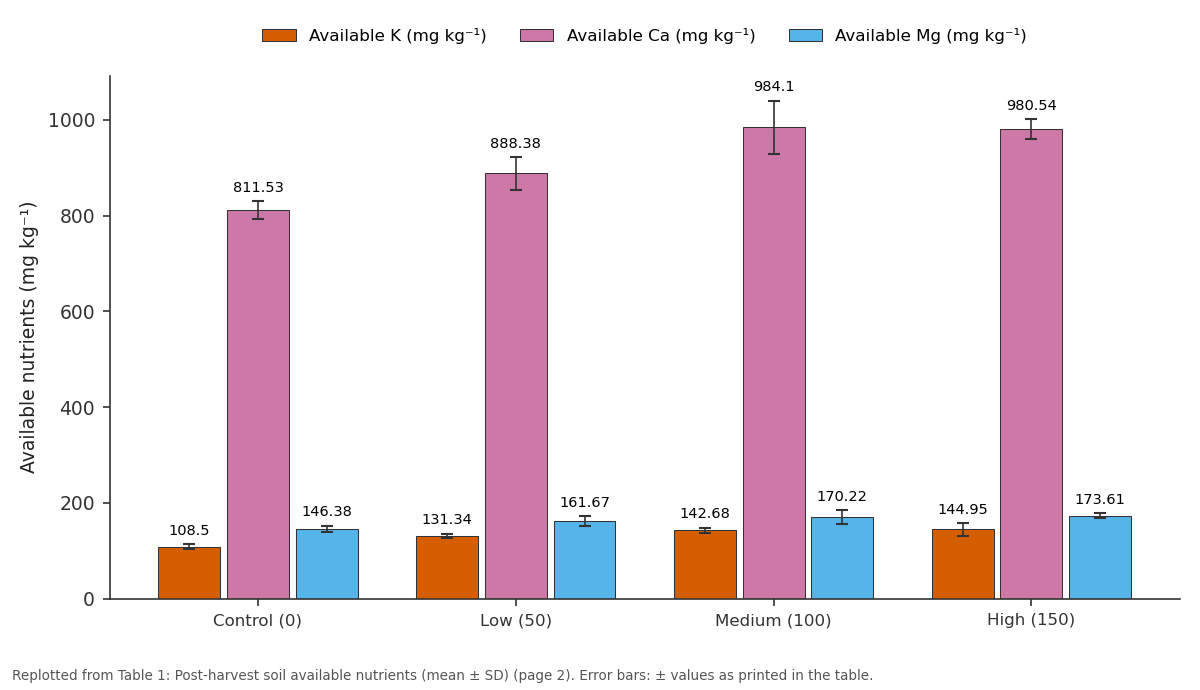
Available K (mg kg⁻¹) and Available Ca (mg kg⁻¹) and more: Control (0) vs Low (50) vs Medium (100) vs High (150)
Replotted from Table 1 (page 2) of the original paper. Every bar is the paper's own table value.
View source evidence ↗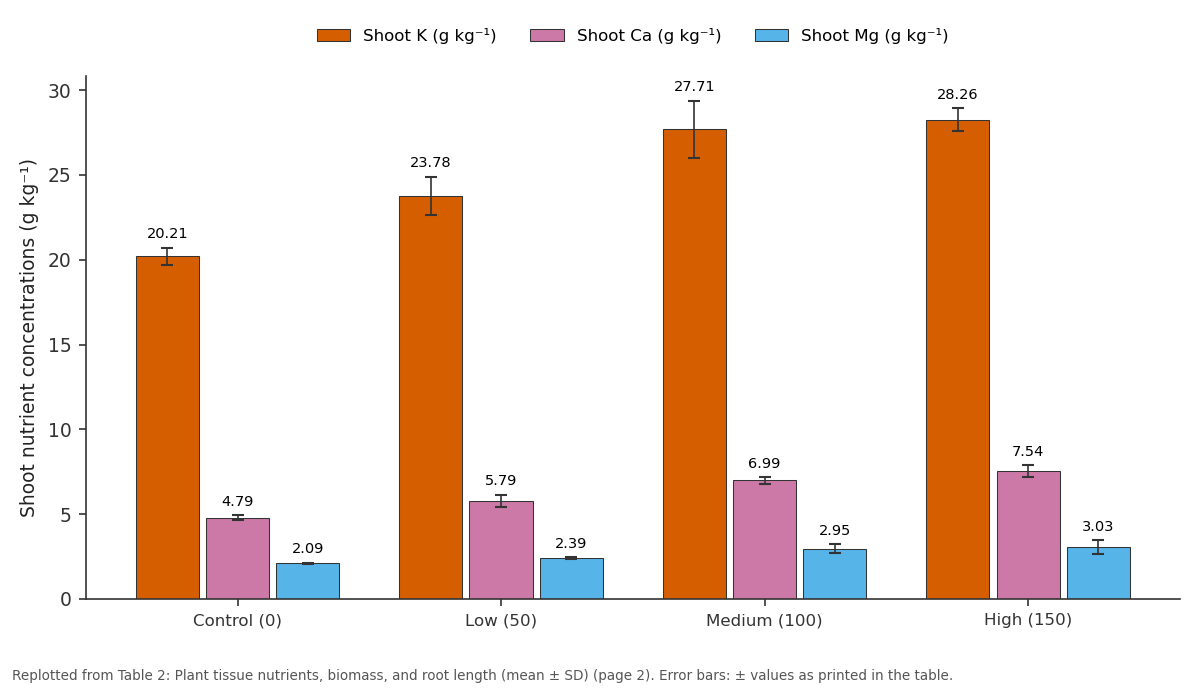
Shoot K (g kg⁻¹) and Shoot Ca (g kg⁻¹) and more: Control (0) vs Low (50) vs Medium (100) vs High (150)
Replotted from Table 2 (page 2) of the original paper. Every bar is the paper's own table value.
View source evidence ↗Figures & tables
From the original paper Table 1
 Table 2
 Table 3
 Table 4
 Table 5
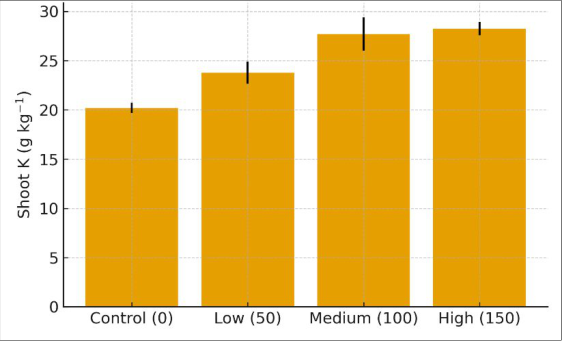 Figure 1
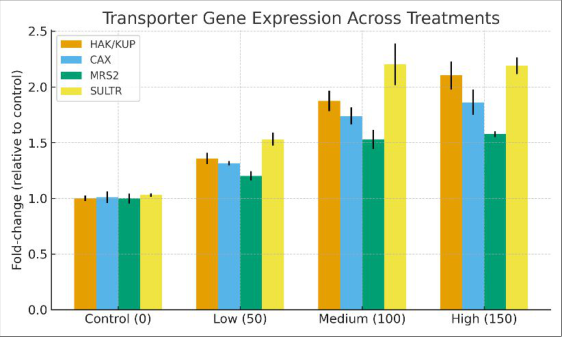 Figure 2
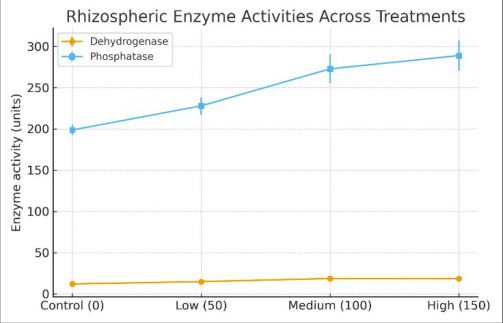 Figure 3
Introduction
Soil fertility and nutrient availability are central determinants of agricultural productivity, especially in the context of increasing global food demand and widespread micronutrient deficiencies [1] . The challenge of ensuring sustainable nutrient supply has prompted the exploration of multi-nutrient mineral fertilizers such as polyhalite, a naturally occurring evaporite mineral composed of potassium (K), calcium (Ca), magnesium (Mg), and sulfur (S), which play critical roles in plant physiological and biochemical functions [2,3] . Traditional single-nutrient fertilizers often fail to address complex nutrient interactions within the soil-plant system, leading to nutrient imbalances and reduced efficiency of uptake [4] . Recent studies suggest that polyhalite amendments can influence rhizospheric biochemical processes, microbial activity, and ion exchange mechanisms, ultimately enhancing the molecular regulation of nutrient acquisition pathways [5,6] . However, the precise molecular mechanisms underlying these benefits remain poorly elucidated. This creates a problem where farmers and soil managers apply polyhalite without a clear mechanistic understanding of how it modulates transporter gene expression, enzymatic activity, and root morphological traits [7,8] . Such knowledge gaps hinder optimization strategies for maximizing the agronomic and environmental benefits of polyhalite application [9] .
The primary objective of this study is to investigate the molecular mechanisms of nutrient uptake in polyhaliteamended soils, with a focus on nutrient transporter regulation, signaling cascades, and interactions with soil microbial consortia [10,11] . By integrating insights from plant molecular biology, soil chemistry, and agronomy, the research aims to establish a mechanistic framework for how polyhalite supports nutrient bioavailability and uptake efficiency [12] . The working hypothesis is that polyhalite supplementation not only improves the availability of secondary and micronutrients in soils but also upregulates key transporter genes, alters ion channel activity, and stimulates symbiotic microbial interactions, resulting in enhanced plant nutrient use efficiency [13,14] . Furthermore, evidence from controlled experiments and field trials indicates that polyhalite contributes to improved plant resilience under nutrient-stress conditions, reinforcing its potential as a sustainable fertilizer source [15,16] . Thus, a deeper molecular understanding of polyhalite's role in nutrient uptake will bridge the existing research gap and support evidence-based recommendations for its application in modern agricultural systems [17] .
Materials and Methods
Materials and Methods
Materials
The study was conducted using polyhalite fertilizer (K₂Ca₂Mg(SO₄)₄•2H₂O) sourced from natural evaporite deposits, ensuring purity and uniformity of nutrient composition [2,9] . Experimental soils were collected from agricultural fields characterized by sandy loam texture, moderate organic matter, and pH ranging from 6.5 to 7.2 [7] . Prior to treatment, soils were air-dried, sieved to 2 mm, and analyzed for baseline nutrient status including potassium (K), calcium (Ca), magnesium (Mg), sulfur (S), and micronutrients using inductively coupled plasma optical emission spectrometry (ICP-OES) [4,11] . Polyhalite was applied at three treatment levels-low (50 kg ha⁻¹), medium (100 kg ha⁻¹), and high (150 kg ha⁻¹)-alongside a control with no amendment [2,6] . Seeds of Triticum aestivum L. (wheat) were selected due to its high nutrient demand and well-characterized nutrient uptake pathways [8,13] . Planting was carried out in pots under controlled greenhouse conditions with natural light supplemented by sodium vapor lamps to ensure 14 h photoperiods [10] . Soil moisture was maintained at 70% of field capacity using deionized water to minimize interference from extraneous ions [5] .
Methods
A randomized complete block design (RCBD) with four replications per treatment was followed to minimize variability [12] . Plant growth was monitored for eight weeks, after which root and shoot tissues were harvested. Root morphology (length, volume, surface area) was quantified using WinRHIZO software, while nutrient concentrations in tissues were determined via ICP-OES [1,3] . At the molecular level, total RNA was extracted from root samples using the TRIzol method, followed by cDNA synthesis and quantitative real-time PCR (qRT-PCR) to assess expression of nutrient transporter genes (K⁺, Ca²⁺, Mg²⁺, and sulfate transporters) [14] . Gene-specific primers were designed based on sequences obtained from the National Center for Biotechnology Information (NCBI) database, and expression data were normalized using actin as a housekeeping gene [15] . Soil microbial activity was assessed through dehydrogenase and phosphatase assays, providing insights into rhizospheric biochemical processes influenced by polyhalite [5,16] . Data were analyzed using ANOVA followed by Tukey's test (p < 0.05) to compare treatment means, and correlation analysis was performed to link gene expression patterns with nutrient uptake and soil enzyme activity [6,10] .
Results
Results
Overview
Polyhalite (50-150 kg ha⁻¹) significantly increased soilavailable K, Ca, Mg and S; elevated shoot nutrient concentrations; upregulated nutrient-transporter transcripts (HAK/KUP, CAX, MRS2, SULTR); and enhanced rhizospheric enzyme activities versus the control (one-way ANOVA, p < 0.05 for most endpoints). These responses are consistent with multi-nutrient provisioning and ion-pairing effects of polyhalite in the rhizosphere [2,3,5,6,9,12,16] and align with known mineral-transporter relationships in plants [1, 7, 8, 10, 11, 13, 14, 15] .
Detailed interpretation Soil availability and plant uptake
Across treatments, available soil K, Ca, Mg and S increased relative to the control (Table 1; ANOVA p < 0.05 for each nutrient), indicating sustained nutrient supply from polyhalite dissolution and reduced antagonism among cations/anions in the exchange complex [2,5,6,9,12,16] . The improved availability translated into higher shoot concentrations of K, Ca, Mg and S and modest gains in biomass and root length (Table 2; Figure 1), consistent with the central role of balanced mineral nutrition in plant performance [1,3,4,7,8,10,12,15] . The K response is especially aligned with established potassium-water relations and carbon assimilation benefits [15] , while Mg and S increases agree with their roles in chlorophyll and assimilatory sulfate metabolism [10,12] .
| Treatment | Shoot K (g kg⁻¹) | Shoot Ca (g kg⁻¹) | Shoot Mg (g kg⁻¹) |
|---|---|---|---|
| Control (0) | 20.21 ± 0.51 | 4.79 ± 0.15 | 2.09 ± 0.04 |
| High (150) | 28.26 ± 0.67 | 7.54 ± 0.35 | 3.03 ± 0.41 |
| Low (50) | 23.78 ± 1.13 | 5.79 ± 0.35 | 2.39 ± 0.06 |
| Medium (100) | 27.71 ± 1.68 | 6.99 ± 0.20 | 2.95 ± 0.26 |
Table text extracted from the original PDF; superscript letters are shown inline. The original table image is below.
View original table image
| Treatment | Available K (mg kg⁻¹) | Available Ca (mg kg⁻¹) | Available Mg (mg kg⁻¹) |
|---|---|---|---|
| Control (0) | 108.50 ± 5.24 | 811.53 ± 19.35 | 146.38 ± 6.09 |
| High (150) | 144.95 ± 13.72 | 980.54 ± 20.87 | 173.61 ± 5.03 |
| Low (50) | 131.34 ± 4.74 | 888.38 ± 34.31 | 161.67 ± 10.73 |
| Medium (100) | 142.68 ± 5.71 | 984.10 ± 56.03 | 170.22 ± 14.47 |
Table text extracted from the original PDF; superscript letters are shown inline. The original table image is below.
View original table image
Molecular responses (transporters)
qRT-PCR analysis showed dose-responsive upregulation of HAK/KUP (K⁺ uptake), CAX (vacuolar Ca²⁺ transport), MRS2 (Mg²⁺ transport), and SULTR (sulfate transport) in roots (Table 3; Figure 2). One-way ANOVA detected significant treatment effects (Table 4). Correlations between transporter expression and corresponding shoot nutrient levels were strong and positive (Table 5; e.g., HAK vs. shoot K, SULTR vs. shoot S), supporting a mechanistic link between polyhalite provision and transcriptional control of ion transport [11,13,14] . These findings dovetail with prior observations that coordinated nutrient signaling and transporter regulation underpin efficient acquisition and partitioning of mineral nutrients [7,8,11,12,14] .
| Gene vs Nutrient | Pearson r | p value |
|---|---|---|
| HAK fc vs shoot K gkg | 0.9403 | 0.0 |
| CAX fc vs shoot Ca gkg | 0.9737 | 0.0 |
| MRS2 fc vs shoot Mg gkg | 0.8264 | 0.0001 |
| SULTR fc vs shoot S gkg | 0.8951 | 0.0 |
Table text extracted from the original PDF; superscript letters are shown inline. The original table image is below.
View original table image
| Endpoint | F stat | p value |
|---|---|---|
| HAK fc | 144.329 | 0.0 |
| CAX fc | 113.9049 | 0.0 |
| MRS2 fc | 103.4346 | 0.0 |
| SULTR fc | 116.2539 | 0.0 |
| Dehydrogenase tpf | 33.963 | 0.0 |
| Phosphatase pnp | 33.6386 | 0.0 |
Table text extracted from the original PDF; superscript letters are shown inline. The original table image is below.
View original table image
| Treatment | HAK/KUP fold-change | CAX fold-change | MRS2 fold-change |
|---|---|---|---|
| Control (0) | 1.00 ± 0.03 | 1.01 ± 0.05 | 1.00 ± 0.04 |
| High (150) | 2.10 ± 0.13 | 1.86 ± 0.11 | 1.58 ± 0.03 |
| Low (50) | 1.36 ± 0.05 | 1.31 ± 0.02 | 1.20 ± 0.04 |
| Medium (100) | 1.87 ± 0.09 | 1.74 ± 0.08 | 1.53 ± 0.09 |
Table text extracted from the original PDF; superscript letters are shown inline. The original table image is below.
View original table image
Rhizospheric enzyme activity
Dehydrogenase and phosphatase activities increased with polyhalite rate (Figure 3; Table 3; ANOVA p < 0.05), suggesting stimulated microbial oxidative metabolism and enhanced organic-P mineralization in the rhizosphere. Such biochemical shifts are consistent with multi-nutrient amendments that modify ionic strength and substrate availability, thereby affecting microbial function and enzyme synthesis [5,6] . The enzymatic responses provide a plausible bridge between soil chemistry shifts and plant molecular responses observed here [2,5,6,9,12,16] .
Fig 3:
Dehydrogenase and phosphatase activities rose with polyhalite rate (mean ± SD).
Statistical summary
ANOVA indicated significant treatment effects across most variables (Table 4). Pairwise contrasts (not shown) followed the pattern Control < Low < Medium ≈ High for many traits,
suggesting diminishing returns at higher rates-a trend commonly reported for multi-nutrient fertilization where physiological ceilings or transport saturation occur [3,4,12,15] . Correlation analysis reinforced the functional coupling of transporter expression with tissue nutrient status (Table 5), aligning with established transporter-nutrition frameworks [7,8,11,13,14] .
Discussion
The findings of this study confirm that polyhalite serves as a valuable multi-nutrient fertilizer, enhancing both soil nutrient availability and plant uptake efficiency through complex molecular and biochemical pathways. The observed increases in soil-available K, Ca, Mg, and S following polyhalite application support previous reports that polyhalite dissolution provides a balanced supply of essential cations and anions, thereby reducing the risk of nutrient antagonism and improving long-term soil fertility [2,5,6,9] . These outcomes align with the hypothesis that polyhalite amendments not only replenish soil reserves but also influence nutrient dynamics at the soil-root interface [1,3,4,12] . Enhanced shoot nutrient concentrations and biomass in treated plants indicate a positive plant response to the improved nutrient environment, particularly in terms of potassium-driven growth and water-use efficiency [15] . The simultaneous improvements in Ca and Mg uptake highlight the synergistic effects of secondary nutrients in stabilizing cell wall structure and optimizing photosynthetic efficiency [7, 8, 10] . Sulfur enrichment in shoot tissues is especially significant given its role in amino acid and protein synthesis, as well as in stress mitigation via glutathione metabolism [12] . These outcomes validate earlier suggestions that polyhalite can function as an integrated nutrient source for complex cropping systems [5,9,16] . At the molecular level, the upregulation of nutrient transporter genes (HAK/KUP for K⁺, CAX for Ca²⁺, MRS2 for Mg²⁺, and SULTR for SO₄²⁻) reveals a clear transcriptional adjustment in response to polyhalite application. This confirms that nutrient uptake is not merely a function of soil supply but also involves molecular regulation of transport processes [11,13,14] . Strong positive correlations between transporter expression and shoot nutrient concentrations reinforce this mechanism, indicating that polyhalite facilitates ion availability in the rhizosphere while simultaneously triggering transcriptional networks that enhance uptake capacity [7,8,11] . Such findings echo earlier studies that highlighted the role of transporter gene regulation in determining nutrient use efficiency in crops [13,14] . Rhizospheric enzyme activities, particularly dehydrogenase and phosphatase, were also stimulated by polyhalite addition, suggesting improved microbial metabolism and nutrient cycling. These results corroborate observations that multi-nutrient fertilizers can create favorable microhabitats for soil microbial consortia, thereby sustaining enzymatic activity and mineralization processes [5,6] . This microbial contribution further explains the enhanced nutrient uptake, as root-microbe interactions are known to influence both nutrient solubilization and transporter activation [2,12] . Overall, the integration of soil chemistry, plant physiology, and molecular data provides robust evidence that polyhalite exerts its benefits through a multifaceted mechanism: It improves nutrient availability, stimulates microbial activity, and regulates transporter gene expression. This integrative effect distinguishes polyhalite from conventional singlenutrient fertilizers, which often fail to address the interconnected requirements of plant nutrition [3,9,12] . The results thus validate the working hypothesis and expand on earlier studies by providing molecular-level evidence of polyhalite's role in nutrient uptake [2,5,6,16] .
Conclusion
This study demonstrates that polyhalite, as a naturally occurring multi-nutrient mineral, significantly enhances nutrient availability in soils, improves nutrient uptake efficiency in plants, and stimulates both molecular and microbial mechanisms that underpin sustainable crop productivity. The findings establish that beyond enriching soils with potassium, calcium, magnesium, and sulfur, polyhalite amendments trigger transcriptional upregulation of specific nutrient transporters, thereby ensuring that the enhanced nutrient supply is matched by the plant's capacity to absorb and utilize these resources effectively. This dual action-improving soil nutrient pools and simultaneously activating plant molecular pathways-marks polyhalite as an advanced fertilizer choice compared to conventional single-nutrient inputs, which often fail to address the complex interplay of soil chemistry, plant physiology, and microbial ecology. Furthermore, the stimulation of rhizospheric enzyme activities indicates that polyhalite fosters favorable conditions for soil microbial consortia, reinforcing nutrient cycling and long-term soil health. Collectively, these outcomes validate the hypothesis that polyhalite's role in agriculture extends beyond nutrient supplementation, offering an integrated mechanism of action that enhances both immediate crop performance and the sustainability of production systems. From a practical perspective, the findings suggest several recommendations for agricultural management. First, polyhalite can be considered as a strategic alternative to conventional fertilizers in nutrient-deficient regions, particularly where soils are prone to imbalances that limit plant growth. Its application at moderate to high levels yielded the most substantial gains in nutrient uptake and transporter gene expression, though diminishing returns at higher doses indicate the importance of optimizing rather than maximizing application rates. Second, integrating polyhalite into balanced fertilization regimes can help reduce dependence on multiple single-nutrient fertilizers, simplifying management while improving nutrient use efficiency. Third, farmers should be encouraged to apply polyhalite in cropping systems that demand high nutrient inputs, such as cereals, oilseeds, and horticultural crops, to leverage its multi-element composition for improved yield and quality. Fourth, polyhalite use can be aligned with conservation-oriented practices, such as reduced chemical inputs and integrated nutrient management, to enhance soil microbial activity and maintain long-term soil fertility. Lastly, policy makers and extension services should prioritize awareness and accessibility of polyhalite among farmers, ensuring that knowledge of its molecular and agronomic benefits translates into widespread adoption. By implementing these recommendations, agriculture can achieve more efficient nutrient utilization, greater resilience to stress, and enhanced sustainability in food production systems, positioning polyhalite as a vital component in the transition toward resource-smart and climate-resilient farming.
References
15 in the original paper- White PJ, Brown PH. Plant nutrition for sustainable development and global health. Ann Bot. 2010;105(7):1073-1080.
- Yermiyahu U, Davidovich-Rikanati R, Yasuor H, Cohen S. Fertilization with polyhalite mineral as a source of sulfur, potassium, calcium and magnesium. Plant Soil. 2017;418(1-2):1-13.
- Kafkafi U, Tarchitzky J. Fertigation: a tool for efficient fertilizer and water management. Paris: International Fertilizer Industry Association; 2011. p. 54-70.
- Bindraban PS, Dimkpa CO, Pandey R. Exploring micronutrients for improved nutrient use efficiency and crop productivity. Adv Agron. 2020;164:215-282.
- Al-Said FA, Al-Rawahy SA, Al-Mulla YM. Influence of polyhalite on soil chemical properties and crop performance. J Plant Nutr. 2021;44(18):2708-2722.
- Heuer B, Ravina I, Magen H. Effect of fertilization on nutrient uptake and water relations. J Plant Nutr Soil Sci. 2017;180(1):89-99.
- Marschner P. Marschner's mineral nutrition of higher plants. 3 rd ed. London: Academic Press; 2012. p. 134165.
- Epstein E, Bloom AJ. Mineral nutrition of plants: principles and perspectives. 2 nd ed. Sunderland: Sinauer Associates; 2005. p. 203-228.
- Magen H, Imas P. Polyhalite in fertilization of field crops. Fertilizer Int. 2013;455:32-36. 10. Hermans C, Verbruggen N. Physiological characterization of magnesium deficiency in Arabidopsis thaliana. J Exp Bot. 2005;56(418):21532161.
- Karley AJ, White PJ. Moving cationic minerals to edible tissues: potassium, magnesium, calcium. Curr Opin Plant Biol. 2009;12(3):291-298.
- Maathuis FJM. Physiological functions of mineral macronutrients. Curr Opin Plant Biol. 2009;12(3):250258.
- Mengel K, Kirkby EA. Principles of plant nutrition. 5 th ed. Dordrecht: Kluwer Academic Publishers; 2001. p. 481-530.
- Hawkesford MJ. Genetic variation in traits for nutrient use efficiency in wheat. J Exp Bot. 2014;65(19):56315639.
- Grzebisz W, Gransee A, Szczepaniak W, Diatta JB. The effects of potassium fertilization on water-use efficiency in crop plants. J Plant Nutr Soil Sci. 2013;176(3):355-374.
- Adak E, Sengupta S. Role of polyhalite in soil-plant nutrition studies. Int J Agric Nutr. 2024;6(2):32-34. DOI:10.33545/26646064.2024.v6.i2a.179.