
Research article · 2025 · Full text
International Journal of Agriculture and Food ScienceSynergistic effects of biochar and organic amendments on soil fertility and crop productivity: A critical review
Volume 7(10) · Pages 62–78 · DOI: 10.33545/2664844x.2025.v7.i10b.854 ↗
Research areasCrop Yield and Soil Fertility
Abstract
Author-writtenSoil degradation affects approximately two billion hectares globally, threatening agricultural productivity and food security. This critical review synthesizes current knowledge on the synergistic effects of combining biochar with organic amendments (compost, farmyard manure, crop residues) for enhancing soil fertility and crop productivity. Evidence demonstrates that co-application consistently outperforms single amendments through multiple mechanisms. Chemically, combined treatments improve pH buffering (particularly in acidic soils), significantly enhance cation exchange capacity, and improve nutrient retention while reducing nitrogen leaching. Physically, they improve soil aggregation and water-holding capacity, especially in coarse-textured soils. Biologically, microbial biomass increases by up to 85%, with enhanced enzymatic activity facilitating nutrient cycling. These improvements translate to significant agronomic benefits, with crop yield increases ranging from 20% to 85%, particularly in degraded tropical soils where fertility constraints are most acute. The synergistic approach also offers environmental advantages through carbon sequestration and greenhouse gas mitigation, with biochar providing stable carbon storage while reducing nitrous oxide emissions. However, effectiveness remains context-dependent, influenced by soil type, climate conditions, and crop species. Methodological limitations in current research including inconsistent pyrolysis details (unreported in over 40% of studies), variable application rates, and short study durations (68% lasting one season or less) highlight the need for standardized protocols and long-term field monitoring. For successful implementation, regionally adapted strategies matching amendment characteristics to specific soil constraints are essential, alongside consideration of socioeconomic factors affecting farmer adoption. This integrated approach shows transformative potential for restoring degraded soils while enhancing agricultural sustainability.
Summary
Source-checkedPlain-language reading of the full paper, prepared with AI and checked against the text. Each point links to the authors' own words.
Why it matters
- Global food security is threatened by soil degradation, which currently impacts about two billion hectares of land. View evidence ↗
- Organic amendments like compost and manure are used to restore nutrient balances and stimulate soil microbial activity. View evidence ↗
- Biochar is a carbon-rich material produced via pyrolysis that can improve soil structure and water retention. View evidence ↗
The question
- The review aims to synthesize how the interaction between biochar and organic amendments affects soil fertility and crop productivity. View evidence ↗
What they did
- The analysis is organized around key sub-topics including nutrient retention, microbial processes, carbon storage, and crop yield. View evidence ↗
- The review synthesizes data from recent empirical experiments, trial experiments, and meta-analyses. View evidence ↗
What they found
- Combining biochar and organic amendments can increase soil microbial biomass carbon by up to 85% and enhance enzymatic activity. View evidence ↗
- Crop yields, specifically maize in tropical Acrisols, can increase by 20% to 85% when using combined amendments. View evidence ↗
- Co-application of amendments has been reported to reduce nitrous oxide (N₂O) emissions by 48%. View evidence ↗
- Biochar-compost combinations have led to a 42% increase in maize biomass and a 30% increase in phosphorus uptake. View evidence ↗
- In sandy soils, the use of biochar can reduce nitrate leaching by over 50% compared to using compost alone. View evidence ↗
- Long-term application of compost, further enhanced by biochar, resulted in a 30% improvement in soil aggregation over five years. View evidence ↗
- Biochar is not universally beneficial; in some conditions, it has caused yield reductions of up to 74% in lettuce. View evidence ↗
What it means
- The authors conclude that the success of biochar-organic systems depends on matching amendment characteristics to the specific constraints of the soil. View evidence ↗
- Current research is limited by short study durations (68% lasting one season or less) and poor reporting, with over 40% of studies omitting pyrolysis details. View evidence ↗
Visual summary
1 visualsIllustrations explain the paper; they do not show study data.
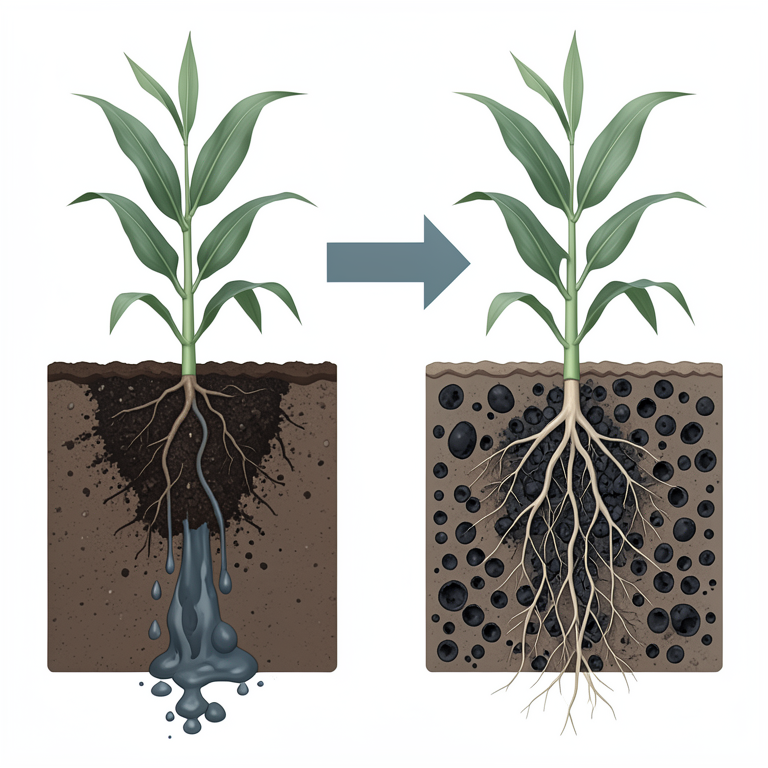
Synergy Mechanism
AI-generated conceptual illustration (Maize plants in soil profiles). It explains the idea and does not show study data.
View source evidence ↗Figures & tables
From the original paper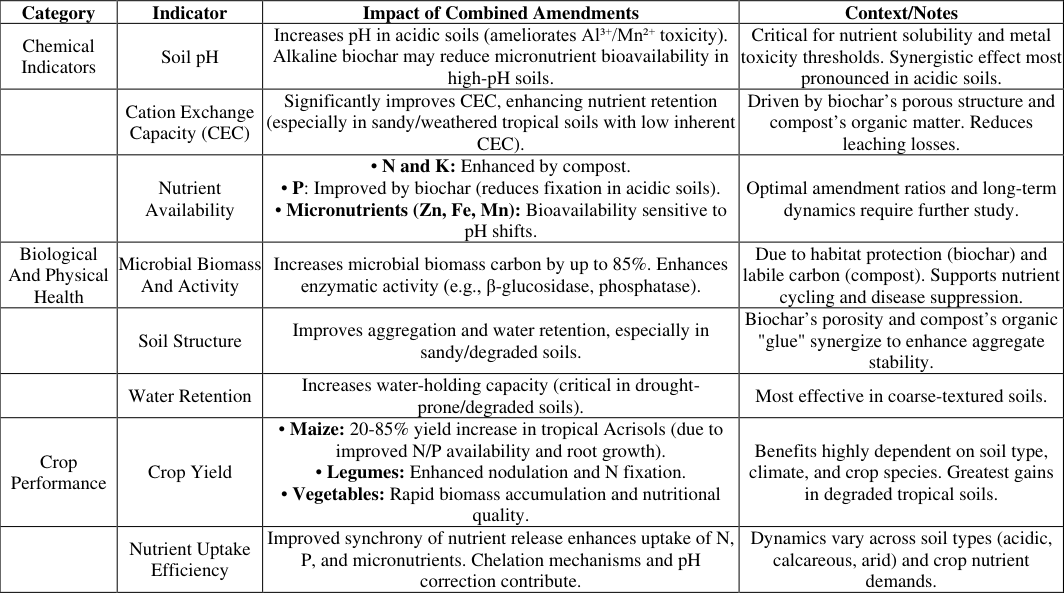 Table 1
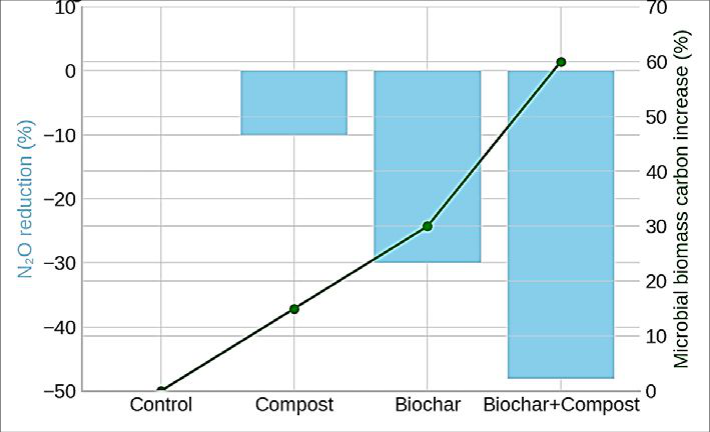 Figure 1
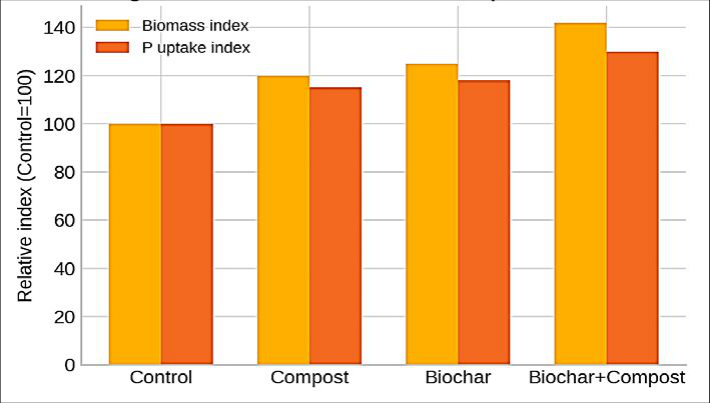 Figure 2
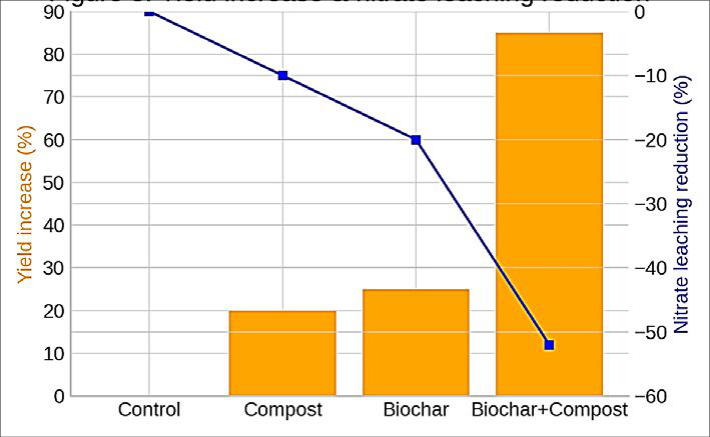 Figure 3
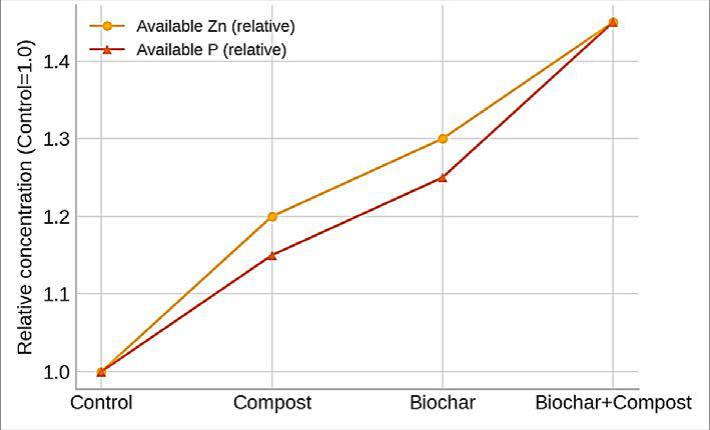 Figure 4
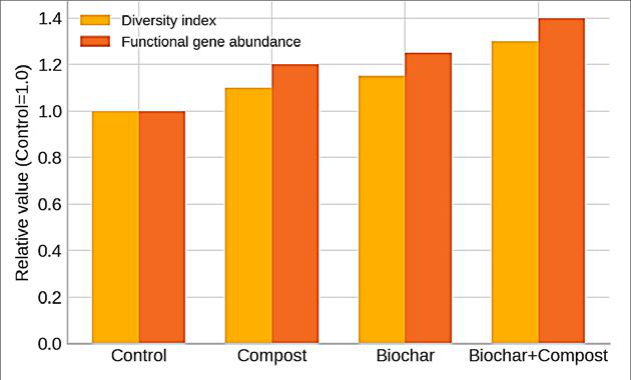 Figure 5
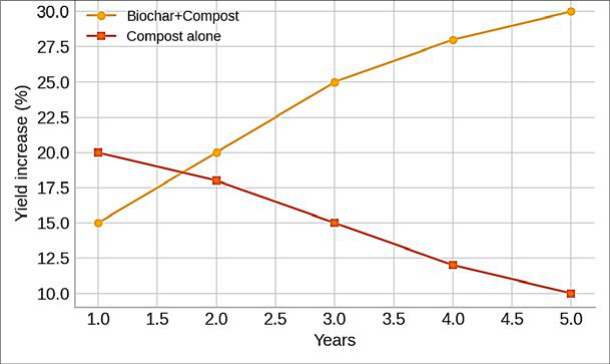 Figure 6
Introduction
Soil fertility is an essential support of sustainable agriculture and a foundation of food security, environment resilience, and a sound economy. It is the ability of the soil to deliver key nutrients to plants and has direct bearing on crop productivity and sustainability of agroecosystems (Stupar et al., 2024) [190] . With the rising global anxiety over climate change and population pressure, the conservation and improvement of fertile soils is key to achieving agricultural sustainability (Wolf et al., 2023) [212] . Not only do fertile soils support strong crop production but also greater water retention and turnover, enhanced microbe populations and ecological services (Singh et al., 2024) [184] . However, soil degradation and nutrient loss present critical problems to these advantages at a global level. Driven by intensive farming technologies, erosion, contamination by chemicals and deforestation, soil degradation now affects an estimated 2 billion ha globally and by itself, nutrient loss has affected 136 million ha (Jie et al., 2002; Osman, 2014) [87,149] . The processes are highly active in developing countries like Africa and Latin America where imbalances in the nutrient system have led to dips in agricultural productivity and ecological integrity (Tan et al., 2005) [194] dips in agricultural productivity and ecological integrity (Tan et al., 2005) [194] . As the world approaches dips in agricultural productivity and ecological integrity (Tan et al., 2005) [194] . As the world approaches. As the world approaches 9 billion in numbers, the reversal of soil degradation and the improvement of fertility will be critical to maintaining farm output and agrifood systems (Karlen and Rice, 2015) [94] . Emerging strategies underscore the significance of integrating traditional knowledge with cutting-edge technologies to optimize soil management. Precision agriculture and digital soil mapping, enhanced by artificial intelligence and Internet of Things (IoT) platforms, are transforming the methodologies through which farmers monitor and manage soil nutrients in real-time (Arısoy and Açıkgözoğlu, 2024; Mamatha et al., 2024) [20,130] .
Concurrently, there is a resurgence of interest in ecological soil amendments that serve to restore nutrient balances, sequester carbon, and promote biological diversity. In this regard, organic amendments such as compost, farmyard manure (FYM), and crop residues have garnered increasing attention due to their capability to enhance nutrient availability, augment organic carbon content, and stimulate microbial activity in soils (Singh et al., 2024) [184] . In parallel, biochar, a stable, carbon-rich material produced from the pyrolysis of biomass, has been recognized as a promising tool for the enhancement of soil physical structure, water holding capacity, and cation exchange capacity (Kapoor et al., 2022; Kabir et al., 2023) [92,90] . The application of biochar has been shown to have the potential to increase soil organic carbon (SOC) by over 30%, reduce greenhouse gas emissions, and improve crop yields (Liu et al., 2023; Kaur et al., 2024; Sharma and Chhabra, 2024) [57,95,179] . More recently, researchers and practitioners have commenced investigations into the synergistic interactions that occur when biochar and organic amendments are applied in conjunction. These combinations appear to provide amplified benefits in comparison to individual amendments, particularly regarding soil fertility enhancement, carbon sequestration, and crop productivity (Chadha et al., 2020; Jaswal et al., 2022) [40, 80,] . For example, co-application of farmyard manure (FYM) and biochar has been shown to increase both microbial biomass and labile fractions of carbon, key elements in support of nutrient cycling and soil health (Khadem et al., 2021; Jaswal et al., 2022) [98,80] . These combined benefits go well beyond nutrient dynamics. Combined amendments may further change the pH of soils, reduce pathogenic pressure, and improve the physical strengths of soils such as aggregation and erosive resistance (Iticha et al., 2024; Wang et al., 2023a; Kushwaha and Kumar, 2023) [76,27,105] . Despite such promise, combined amendments are highly context-specific and are responsive to factors like amendment identity, soil texture, climatic zone, and crop systems (Guo et al., 2024; Pérez-Dalí et al., 2024) [65,156] . This unpredictability underscores the need for an overall synthesis of established results and an analysis of spaces where knowledge gaps exist. This review aims to critically synthesize existing knowledge on the interactions of biochar and organic amendments and their impacts on crop productivity and soil fertility. It examines their modes of action, relative benefits, and environmental consequences. The review aims to further identify important contradictions in the literature, neglected variables, and areas of unknowns in the literature, and hence provide guidance towards future research. For this purpose, the review is structured on high-impact sub-topics, namely on nutrient retention and availability and release, microbial pools and processes, carbon storage and pools, pathogen populations and populations of antagonistic microorganisms, and crop performance and grain yield. The sections draw on recent empirical experiments, metaanalyses of experiments, and trial experiments and present the conditions in which their combined effects or synergistic effects are evident. Further, the review is focused on methodological limitations like insufficiently powered study protocols, non-harmonization of protocols, and limitations on accessing grey literature, and these limit the robustness and comparability of results (Virgolino et al., 2021; Palm-Forster et al., 2019) [205,151] . Through presenting a clear and evidence-based analysis of the inter-play of biochar and organic amendments, this review hopes to contribute towards developing robust and durable soil management systems. Finally, the results of this analysis hope to guide scientific investigations and policy design towards rehabilitating degraded soils and enhancing world food systems.
Biochar as a Soil Amendment Production and Properties
Biochar is a carbon-rich material produced through the thermal decomposition of biomass in an oxygen-limited environment, a process known as pyrolysis. Its physicochemical properties vary widely depending on the feedstock used and the specific pyrolysis conditions, such as temperature and residence time (Ippolito et al., 2020; Abubakar et al., 2024) [73,3] .
Feedstocks and Pyrolysis Conditions
Feedstocks play a critical role in determining the properties of the resulting biochar. Wood-based biochar's are typically characterized by high surface area and porosity due to their lignin-rich structure, making them suitable for pollution remediation and soil structure improvement (He et al., 2023; Zhang et al., 2023) [69,38] . Crop residues and grasses often result in biochar's with higher cation exchange capacity (CEC), which benefits nutrient retention due to the presence of easily pyrolyzable cellulose and hemicellulose (Ippolito et al., 2020; Tomczyk et al., 2020) [73,199] . In contrast, animal waste-derived biochar's exhibit higher mineral content but lower surface area and carbon stability, affecting their performance in both soil amendment and environmental applications (J, 2020; Mukherjee et al., 2022) [40, 138] . Pyrolysis temperature also significantly influences biochar properties. Higher temperatures generally increase surface area and porosity while decreasing CEC and functional group diversity due to the loss of oxygenated groups (Tomczyk et al., 2020; Boraah et al., 2023) [199,32] . For example, biochars produced above 500°C have been shown to enhance carbon stability, making them more effective for long-term soil carbon sequestration (Abubakar et al., 2024) [3] .
Physicochemical Characteristics
Key physicochemical attributes of biochar include surface area, porosity, CEC, and pH. These characteristics directly influence its performance as a soil amendment: Surface Area and Porosity: High surface area enhances nutrient adsorption and microbial colonization. Biochar's from Pinus patula pellets have demonstrated surface areas exceeding 360 m²/g, significantly improving water holding and pollutant sorption capacities (Gutiérrez et al., 2022) [66] .
Cation Exchange Capacity (CEC): A higher CEC facilitates nutrient retention. Biochar's produced at lower pyrolysis temperatures generally retain more functional groups, resulting in higher CEC (Mayilswamy et al., 2023) [132] . pH: Most biochar's exhibit alkaline pH values (8-10), which are beneficial for neutralizing acidic soils and improving nutrient availability (Rattanaphaiboon et al., 2022; Anjali et al., 2022) [163,16] . Understanding the influence of feedstock composition and pyrolysis settings allows for the customization of biochar properties to match specific soil amendment objectives.
Soil Interaction Mechanisms
Biochar influences soil functionality through several physicochemical and biological mechanisms, thereby improving fertility and ecosystem health.
Nutrient Retention and CEC Enhancement
Biochar increases the retention of nutrients mainly through an increase in soil cation exchange capacity (CEC) and an addition of reactive surfaces to ion exchange. This increase reduces the leaching of nutrients and enhances the accessibility of key macronutrients such as nitrogen, phosphorus, and potassium (Rawat et al., 2018; Ravi et al., 2019) [165,164] . Its porous nature also allows a slow release of the nutrients, acting as a buffer to ensure a steadier accessibility of the nutrients in agricultural soils. Besides the retention of nutrients, the alkalinity of the bulk of the biochars adds to pH buffering and hence makes them particularly suitable to improve acidic soils (Ng et al., 2022; Wang et al., 2023b) [142,208] . This pH stabilization of the nutrients increases their stability and reduces the solubilization of the harmful metals and hence favors the growth of plants (Diehl, 2010) [47] . Another principal advantage of biochar is the improvement of moisture retention in soils through enhanced porosity and aggregate stability. This is an extremely relevant property in sandy or degraded soils whose inbuilt capacity to retain moisture is very low. Research has established that biocharamended soils possess greater levels of retained moisture and thus maintain crop performance even in moistureundersupply conditions (Zhang et al., 2023; Iwata et al., 2020) [38,77] . Additionally, biochar forms micro-niches to facilitate an ideal environment in the soils to sustain microorganisms while cushioning them from external fluctuations and inducing greater enzymatic and microbial biomass activity (Wilpiszeski et al., 2019; Elsas et al., n.d.) [211, 51, 154] . These processes induce greater and efficient turnover of nutrients while enhancing the health and fertility in the plants and overall fertility in the soils. The ectomycorrhizosphere enriched by biochar and facilitating enhanced mineral weather and break down of organics results in greater availability of nutrients (Ravi et al., 2019) [164] .
Biochar Limitations
Despite its multiple benefits, biochar's effectiveness is not universal and several limitations must be acknowledged. Variability in crop response remains a major concern, as outcomes depend heavily on biochar type, soil properties, and cropping systems. In some cases, biochar application has shown neutral or even negative effects, such as yield reductions of up to 74% in lettuce under certain conditions (Mukherjee and Lal, 2014) [137] . These inconsistencies are often linked to poor compatibility between the amendment and soil characteristics or unintended changes in nutrient dynamics (Tisserant and Cherubini, 2019) [198] . Biochar can also immobilize nutrients, particularly nitrogen, by adsorbing ammonium or nitrate ions, which reduces their availability to plants. In addition, the priming effect associated with biochar application may stimulate microbial mineralization, resulting in higher emissions of greenhouse gases such as CO₂, CH₄, and N₂O (Mosa et al., 2023) [136] .
Beyond agronomic challenges, the environmental footprint of biochar production must be considered. Pyrolysis can generate particulate matter emissions and toxic by-products if poorly managed, and the process is energy intensive (Ramezanzadeh et al., 2023) [161] . From an economic standpoint, biochar remains costly due to capital-intensive production and transportation challenges, which limits its accessibility for smallholder farmers. To address these constraints, researchers propose strategies such as tailoring biochar to specific soil types and crops, biological activation, and co-composting. Incorporating field-scale data into life cycle assessments can also enhance sustainability and optimize use. Furthermore, the standardization of production methods and the development of best-practice guidelines are essential to improving predictability and promoting broader adoption (Luo et al., 2023; Nepal et al., 2023) [127,141] .
Organic Amendments in Soil Management
Organic amendments are foundational to sustainable soil fertility management, offering a pathway to rehabilitate degraded soils, enhance nutrient cycling, and improve crop yields in both intensive and low-input agricultural systems. These materials ranging from compost and farmyard manure to green manure and digestate vary widely in their composition and functional benefits. Their integration into modern agronomic practices is increasingly seen as a critical strategy for building resilient agroecosystems, particularly under the dual pressures of climate change and land degradation (Aytenew and Bore, 2020; Singh et al., 2024) [23, 184] .
Types and Composition
Organic amendments differ in origin, nutrient content, and decomposition dynamics, which shape their agronomic efficacy. Compost, derived from the aerobic breakdown of organic waste, is rich in humic substances and microbial inoculants. It enhances microbial richness and contributes to long-term soil fertility (Ouyang, Reeve, and Norton, 2022; Liu et al., 2023) [150,114] . Farmyard manure (FYM) and green manures such as Gliricidia provide labile organic carbon and readily available nutrients like nitrogen and phosphorus, offering more immediate nutrient release than compost (Liyanage et al., 2022; Sah et al., 2022) [122,171] . These materials exhibit diverse nutrient profiles. For example, poultry manure contains high levels of phosphorus, potassium, and calcium, making it particularly suitable for short-cycle crops like leafy vegetables (Vallejera et al., 2014) [202] . Conversely, materials such as Milorganite™, a biosolid-based amendment, contain elevated phosphorus concentrations and interact differently with soil microbiota (Awal et al., 2021) [22] . The mineralization dynamics of organic inputs depend on several factors: the carbon-to-nitrogen (C:N) ratio, soil texture, microbial activity, and temperature. Amendments with low C:N ratios decompose faster, accelerating nitrogen release, while high-C:N materials may immobilize nutrients temporarily (Shin et al., 2016; Javeed et al., 2023) [182,82] . This complexity underlines the importance of tailoring amendment type and application timing to crop needs and environmental conditions.
Benefits and Constraints
The benefits of organic amendments span physical, chemical, and biological domains. Physically, they improve soil structure and reduce compaction by promoting aggregate formation and enhancing porosity attributes that increase water retention and aeration (Bashir et al., 2021; Reddy, 2016) [29,166] . Chemically, they serve as reservoirs of slow-release nutrients and increase cation exchange capacity (CEC), thereby enhancing nutrient retention and buffering soil pH (Paul and Collins, n.d.; Asha et al., 2023) [21] . Biologically, they act as energy sources for soil microbiota, stimulating microbial biomass and enzymatic activity critical for nutrient cycling and disease suppression (Omokaro et al., 2024; Masciandaro et al., 2018) [147,131] . Despite these advantages, constraints persist. The variability in decomposition rates and nutrient release can lead to mismatches between supply and crop demand, potentially impairing nutrient-use efficiency (Khan and Muhammad, 2024) [99] . Fresh manure, while rich in nitrogen, raises food safety concerns due to pathogen risks, making compost a safer but slower alternative (Ouyang et al., 2022) [150] . Furthermore, organic amendments often exhibit inconsistent nutrient concentrations and may introduce contaminants such as heavy metals if not properly processed (Vallejera et al., 2014) [202] . Another limitation lies in their operational use. Large volumes are often required to achieve meaningful improvements, posing logistical challenges in transport, storage, and field application. These constraints necessitate integrated strategies, such as co-application with biochar or mineral fertilizers, to optimize their efficacy and reduce potential risks.
Environmental Considerations
Organic amendments not only affect soil fertility but also have complex implications for greenhouse gas (GHG) emissions and broader environmental quality. Their application can increase carbon sequestration in soils but may also contribute to CO₂, CH₄, and N₂O emissions under certain conditions (Fu et al., 2023; Bah et al., 2020) [57,25] . For instance, compost application alone may reduce N₂O emissions by 25%, but when combined with mineral fertilizers, it can increase total GHG emissions due to enhanced microbial nitrification.
Biochar, when co-applied with organic amendments, has shown promise in mitigating these effects by stabilizing organic carbon and suppressing microbial processes that generate N₂O and CH₄ (Fu et al., 2023; Yao et al., 2021) [57,217] . However, interactions between biochar and compost can also lead to antagonistic effects, particularly on CO₂ fluxes, making it necessary to evaluate their combined impacts on a case-by-case basis (Rubin, Oldfield, and Sanderman, 2023) [170] . Leaching risks are another environmental concern. Labile nitrogen from manures and high-phosphorus inputs from poultry litter can increase nutrient runoff, potentially contributing to eutrophication of nearby water bodies. Moreover, the quality control of organic amendments remains a challenge, with variability in pathogen loads, heavy metals, and stability indices complicating regulatory and practical use (Lal, 2020; Johnston, Poulton, and Coleman, 2009) [108,88] . To mitigate these challenges, adaptive management strategies are needed. These include site-specific amendment selection, pre-treatment of raw materials, and precision timing of applications. Innovations such as biostimulants and hydro-parameter integration (e.g., in paddy rice systems) are emerging tools to enhance nutrientuse efficiency and minimize emissions (Senthilraja et al., 2023; Rubin et al., 2023) [175,170] .
Combined Application: Biochar and Organic Amendments
The combined application of biochar and organic amendments has garnered considerable attention in soil management research due to its potential to harness synergistic benefits that surpass those of individual treatments. By integrating the physicochemical stability of biochar with the nutrient richness and microbial activity stimulation of organic amendments, this strategy addresses multiple facets of soil degradation simultaneously. However, outcomes vary significantly depending on several interacting factors, including soil type, amendment properties, and agronomic practices (Table 1).
Synergistic Effects Enhanced Nutrient Retention and Availability
Biochar's high surface area and porosity allow it to act as a sorbent for nutrients, particularly ammonium and phosphate ions, thereby reducing nutrient leaching and enhancing nutrient-use efficiency (Agegnehu et al., 2023) [6] . When coapplied with compost or manure, this buffering capacity supports a more gradual nutrient release, improving synchronization with crop demand (Jeffery et al., 2021) [224] . In tropical soils with inherently low cation exchange capacity (CEC), such combinations have been shown to significantly increase the retention of nitrogen (N), phosphorus (P), and potassium (K) (Agyei-Baffour et al., 2021; Zhang et al., 2021) [7,221] .
Stimulated Microbial Activity and Soil Biological Functions
Organic amendments serve as labile carbon sources that energize microbial metabolism, while biochar provides microhabitats that protect microbes from environmental stress (Bamminger et al., 2022) [28] . This complementary interaction enhances microbial biomass, enzymatic activity, and nutrient cycling processes. Studies report increases in β-glucosidase and phosphatase activities key enzymes in carbon and phosphorus cycling when biochar and compost are applied together (Agegnehu et al., 2023; Liang et al., 2021) [6,115] . In particular, the microbial abundance and diversity in compost-treated soils are maintained or amplified with biochar addition, supporting more resilient soil ecosystems.
Improved Soil Structure and Water Dynamics
The physical contributions of biochar such as reduced bulk density and increased porosity improve infiltration, aeration, and water retention (Fu et al., 2023) [57] . When combined with compost, which contains sticky organic matter that promotes aggregation, the resulting improvements in soil structure are more pronounced. This is especially beneficial in sandy and degraded soils, where water holding capacity is a major constraint to plant productivity (Celik et al., 2020; Fang et al., 2023) [39,54] .
Antagonistic or Neutral Effects
Despite the promise of synergy, not all combined applications result in additive benefits. In some cases, antagonistic effects such as nutrient lock-up or microbial imbalance may occur. High rates of biochar can adsorb soluble nutrients excessively, especially immediately after application, reducing short-term nutrient availability for crops (Jeffery et al., 2021) [224] . Moreover, biochar with a high pH or ash content may increase soil alkalinity, reducing the availability of micronutrients such as zinc and iron (Kumar et al., 2023) [102] . In certain instances, the microbial response to biochar can be neutral or even negative, particularly if the biochar is produced at high temperatures and lacks labile carbon to support microbial growth (Bamminger et al., 2022) [28] . Additionally, studies have shown that under some conditions, combining biochar with nutrient-rich compost does not outperform compost alone in terms of yield response, suggesting a diminishing return from co-application in already fertile soils or temperate environments (Thomsen et al., 2021; Jeffery et al., 2023) [197, 83] .
Factors Influencing Outcomes Amendment Type and Ratio
The origin, feedstock, and pyrolysis conditions of biochar influence its reactivity and interaction with compost or manure. For example, biochar from woody biomass often exhibits lower nutrient content but better structural benefits, while manure-derived biochar contributes more nutrients (Zhang et al., 2021) [221] . The ratio between biochar and organic matter must be optimized to avoid nutrient dilution or excessive alkalinity.
Soil Type and Texture
Sandy soils benefit most from the water retention and nutrient holding improvements of biochar-organic combinations. In contrast, clay-rich or organic soils may show limited response due to their inherent fertility and buffering capacity (Agyei-Baffour et al., 2021; Agegnehu et al., 2023) [7,6] .
Climate, Crop Species, and Cultivation Practices
Warmer climates accelerate microbial activity and decomposition, enhancing the efficacy of organic amendments. However, they also increase volatilization and leaching risks, making biochar's stabilizing function more critical (Jeffery et al., 2021) [224] . Crop-specific nutrient demands and rooting behavior also influence outcomes; for instance, deep-rooted crops like maize benefit more from improved subsoil structure and moisture retention than shallow-rooted vegetables (Kumar et al., 2023) [102] . Alkaline biochar may reduce micronutrient bioavailability in high-pH soils.
Critical for nutrient solubility and metal toxicity thresholds. Synergistic effect most pronounced in acidic soils.
Cation Exchange Capacity (CEC)
Significantly improves CEC, enhancing nutrient retention (especially in sandy/weathered tropical soils with low inherent CEC).
Driven by biochar's porous structure and compost's organic matter. Reduces leaching losses.
Nutrient Availability
• N and K: Enhanced by compost.
• P: Improved by biochar (reduces fixation in acidic soils).
• Micronutrients (Zn, Fe, Mn): Bioavailability sensitive to pH shifts.
Optimal amendment ratios and long-term dynamics require further study.
Biological And Physical Health Microbial Biomass And Activity
Increases microbial biomass carbon by up to 85%. Enhances enzymatic activity (e.g., β-glucosidase, phosphatase).
Due to habitat protection (biochar) and labile carbon (compost). Supports nutrient cycling and disease suppression.
Soil Structure
Improves aggregation and water retention, especially in sandy/degraded soils.
Biochar's porosity and compost's organic "glue" synergize to enhance aggregate stability.
Water Retention
Increases water-holding capacity (critical in droughtprone/degraded soils). Most effective in coarse-textured soils.
Crop Performance
• Maize: 20-85% yield increase in tropical Acrisols (due to improved N/P availability and root growth). • Legumes: Enhanced nodulation and N fixation.
• Vegetables: Rapid biomass accumulation and nutritional quality.
Benefits highly dependent on soil type, climate, and crop species. Greatest gains in degraded tropical soils.
Nutrient Uptake Efficiency
Improved synchrony of nutrient release enhances uptake of N, P, and micronutrients. Chelation mechanisms and pH correction contribute.
Dynamics vary across soil types (acidic, calcareous, arid) and crop nutrient demands.
Methodological Approaches in Current Literature.
Evaluating the synergistic effects of biochar and organic amendments demands a spectrum of methodological approaches, from highly controlled laboratory incubations to greenhouse pot trials and ecologically realistic field experiments. Laboratory incubations, typically lasting between 30 and 100 days, allow precise control over variables such as temperature, moisture, and oxygen availability, making them invaluable for probing short-term biogeochemical processes. For example, Fang et al. (2023) [54] reported a 48% reduction in N₂O emissions and Li et al.
(2023) [112] observed significant increases in microbial biomass carbon under co-amendments (Figure 1). [53,112] .
However, despite their high replication and cost efficiency, these studies lack plant soil interaction and the environmental variability necessary for predicting long-term field performance. Greenhouse trials bridge the gap between mechanistic laboratory studies and the complexity of field conditions. They allow assessment of plant growth, nutrient uptake, root morphology, and rhizosphere dynamics under semi-controlled conditions. In Ghana, Agegnehu et al.
(2023) [6] documented a 42% increase in maize biomass and a 30% rise in phosphorus uptake with biochar compost combinations, linked to improved pH and phosphorus availability (Figure 2). [6] .
Nevertheless, these setups can restrict root development, alter microclimates, and underrepresent soil heterogeneity. Field trials, regarded as the gold standard, validate amendment effects under real farming conditions. Examples include Agyei-Baffour et al. (2021) [7] , who recorded an 85% increase in maize yield on degraded tropical soils, and Sánchez-Monedero et al. (2022) [172] , who observed a 52% reduction in nitrate leaching in sandy soils (Figure 3). [7,172] .
Zavattaro et al. (2022) [219] demonstrated long-term benefits, with a 30% improvement in soil aggregation over five years when compost was applied, further enhanced by biochar addition. Despite their cost and logistical demands, such trials capture real-world variability in climate, management, and pest pressures. The most robust research strategically integrates all three approaches, though Jeffery et al. (2023) [83] note that fewer than 12% of studies currently do so. Analytical techniques underpinning these studies are equally diverse. Standard soil and plant chemical analyses quantify key fertility parameters, including pH, cation exchange capacity, soil organic carbon, total nitrogen, available phosphorus, exchangeable cations, and micronutrients, using methods such as spectrophotometry, atomic absorption spectroscopy (AAS), or inductively coupled plasma optical emission spectrometry (ICP-OES). Laird et al. (2020) [107] and Liu et al. (2022) [42] reported marked increases in zinc and phosphorus availability under co-amendments (Figure 4). [107,120] .
Leaching assays both laboratory column studies and field lysimeters evaluate nutrient losses and environmental risk, with Sánchez-Monedero et al. (2022) [172] finding biochar reduced nitrate leaching by over 50% relative to compost alone. Microbial profiling, combining functional assays (e.g., microbial biomass carbon/nitrogen, enzyme activities) with molecular tools (e.g., 16S rRNA, ITS sequencing, qPCR), has shown shifts towards more diverse and resilient microbial communities, as reported by Liang et al. (2021) [115] and Fang et al. (2023) [54] (Figure 5). [115,54] .
Despite these advances, methodological inconsistencies and short study durations remain significant limitations. Over 40% of studies fail to report pyrolysis details and 30% omit feedstock descriptions (Jeffery et al., 2023) [83] , leading to inconsistent results and hindering comparability. Application rates vary widely, with incorporation methods rarely standardized. Duration is another concern Jeffery et al. (2023) [83] found that 68% of studies lasted one season or less. Long-term trials, such as Zhang et al. (2022) [221] and Zavattaro et al. (2022) [219] , show that biochar benefits often increase over time, while compost-alone effects may decline, highlighting the need for extended monitoring (Figure 6). Without standardization in production, consistent application methods, and long-term field data, translating promising results into reliable agricultural recommendations remains challenging. [221,219] .
Research Gaps and Future Directions
Despite mounting evidence supporting the co-application of biochar and organic amendments in enhancing soil fertility and crop productivity, several critical research gaps remain unaddressed. These gaps span methodological limitations, geographic representation, mechanistic understanding, and the socioeconomic feasibility of field implementation. Identifying and addressing these gaps is essential for refining best practices and maximizing the sustainability of these amendments across diverse agroecological systems.
Long-Term Effects
A persistent limitation in the current literature is predominance of short-duration studies, typically lasting one or two cropping seasons (Jeffery et al., 2021; Fang et al., 2023) [224,54] . Such designs fail to capture the temporal evolution of soil properties and amendment aging effects, particularly those related to biochar stability and nutrient cycling under field conditions (Agegnehu et al., 2023) [6] . The slow-release nature of biochar implies that its full benefits may only materialize over extended periods. Moreover, the cumulative impacts of repeated applications, residue accumulation, and interactions with fluctuating environmental variables remain underexplored. Long-term field trials, ideally spanning 5 to 10 years, are urgently needed to validate and quantify these effects and to inform models of soil carbon sequestration and nutrient-use efficiency (Zavattaro et al., 2022; Jeffery et al., 2023) [219,83] .
Tropical and Degraded Soils
Another notable gap is the limited research focus on tropical and degraded soils, which are among the most responsive yet underrepresented in amendment studies (Agyei-Baffour et al., 2021) [7] . These soils often exhibit low cation exchange capacity, acidic pH, and poor water retention conditions under which biochar-organic amendment combinations have shown pronounced positive outcomes (Zhang et al., 2021) [222] . However, most experimental work has concentrated on temperate climates and fertile soils, limiting the transferability of findings. Future research should prioritize degraded agroecosystems, including tropical Acrisols and Ferralsols, where improvements in soil fertility can yield disproportionately high productivity gains. Furthermore, tailored recommendations for soil types with contrasting mineralogy, salinity, and erosion risk profiles are lacking and should be developed through region-specific trials (Agegnehu et al., 2023) [6] .
Microbial and Rhizosphere Dynamics
While the synergistic effects of biochar and organic amendments on soil chemistry are relatively welldocumented, the biological underpinnings particularly in the rhizosphere remain insufficiently understood. Microbial community structure, functional gene expression, and plantmicrobe interactions are rarely explored using modern molecular tools such as metagenomics, transcriptomics, and isotopic tracing (Liang et al., 2021; Elsas et al., n.d.) [115,51,154] . These approaches can elucidate mechanisms such as nitrogen fixation, phosphorus solubilization, and pathogen suppression in amended soils. Understanding these processes at the root-soil interface is vital to optimize amendment strategies that support beneficial microbiota and plant resilience. Moreover, microbial feedback loops under repeated or long-term applications remain poorly characterized, raising questions about ecosystem stability and sustainability (Li et al., 2023) [112] .
Scaling and Socioeconomic Aspects
Despite promising agronomic results, widespread adoption of biochar-organic amendment technologies remains limited due to cost, logistical, and knowledge barriers (Nepal et al., 2023) [141] . Biochar production is often capital-intensive and requires technical expertise, while the large volumes of organic amendments needed pose storage and transport challenges for smallholder farmers (Palm-Forster et al., 2019) [151] . Socioeconomic studies on cost-benefit ratios, labor requirements, and return on investment under realworld farming conditions are sparse. Additionally, farmer perceptions, awareness levels, and willingness to adopt these practices are not systematically documented, especially in the Global South. Behavioral research, participatory trials, and co-designed decision support tools are essential to bridge the gap between scientific potential and practical application. A systems-level approach incorporating economic, cultural, and institutional dimensions will be critical to scale these innovations sustainably (Virgolino et al., 2021) [205] .
Conclusion
The integration of biochar and organic amendments has emerged as a promising approach to sustainable soil management, offering synergistic benefits that consistently outperform the use of single amendments. Evidence from diverse studies demonstrates that co-application enhances soil chemical properties by improving pH buffering capacity, cation exchange capacity, and nutrient retention, resulting in reduced nitrogen leaching and increased phosphorus availability across a variety of soil types. Improvements in soil physical structure, such as enhanced aggregation and greater moisture retention, further contribute to the resilience of amended soils against erosion and drought stress. These chemical and physical enhancements are complemented by marked increases in activity, including elevated microbial biomass and greater functional diversity, which facilitate more efficient nutrient cycling and improved plant health. The agronomic advantages of such synergies are reflected in significant yield gains, with increases ranging from 20% to 85% in various crops, particularly in degraded tropical soils where limitations in soil fertility are most acute. Beyond productivity, the combination of biochar and organic amendments offers long-term environmental benefits, notably in carbon sequestration and greenhouse gas mitigation, with biochar providing stable carbon storage and reducing nitrous oxide emissions. Furthermore, the use of agricultural residues for amendment production promotes circular resource use, lowering waste streams and reducing input costs, while improved soil water dynamics and nutrient buffering enhance climate resilience. Despite these demonstrated benefits, the effectiveness of biochar-organic amendment systems remains contextdependent, with outcomes influenced by soil type, climate, crop species, and management practices. The full potential of this approach can only be realized through targeted application strategies that match amendment characteristics specific soil constraints. Long-term monitoring, standardized production protocols, and regionally adapted field trials are critical to advancing understanding and ensuring consistent results. Equally important are socioeconomic considerations, including cost-effectiveness, logistical feasibility, and farmer adoption, which will determine the scalability and practical implementation of these practices. By aligning agronomic, environmental, and socioeconomic priorities, the synergistic use of biochar and organic amendments can play a transformative role in restoring degraded soils, enhancing agricultural productivity, and contributing to global food security under changing climatic conditions.
References
219 in the original paper- Abbas A, Naveed M, Khan KS, Ashraf M, Siddiqui MH, Abbas N, et al. The efficacy of organic amendments on maize productivity, soil properties and active fractions of soil carbon in organic-matter soil. Spanish J Soil Sci. 2024;14:12814. https://doi.org/10.3389/sjss.2024.12814
- Abolodje D, Egbuchunam TO, Ewah C, Peter NE. Surface characterization of biochar from agricultural residues for environmental applications. Sci Afr. 2024;23:e016. https://doi.org/10.4314/sa.v23i3.16
- Abubakar I, MD S, AM A. Physicochemical properties of biochar prepared from Guinea corn straw as a function of different pyrolysis temperatures. J Environ Sci Agric Res. 2024;2:37. https://doi.org/10.61440/jesar.2024.v2.37
- Acharya BS, Dodla SK, Wang JJ, Pavuluri K, Darapuneni MK, Dattamudi S, et al. Biochar impacts on soil water dynamics: knowns, unknowns, and research directions. Soil Water Res. 2024;4:323-45. https://doi.org/10.1007/s42773-024-00323-4
- Afrin T, Yodo N. Resilience assessment of repair strategies against localized attacks for infrastructure protection. Reliab Maintainab Symp. 2019;1:1-7. https://doi.org/10.1109/RAMS.2019.8769282
- Agegnehu G, Nelson PN, Bird MI. Almond and walnut shell biochars improve soil moisture and microbial activity in loamy sand. Soil Tillage Res. 2023;226:105578. https://doi.org/10.1016/j.still.2022.105578
- Agyei-Baffour P, Kaboré D, Dakora FD. Soil fertility management in the West African savanna: Challenges and opportunities. Agric Syst. 2021;192:103198. https://doi.org/10.1016/j.agsy.2021.103198
- Akmal M, Maqbool Z, Khan KS, Hussain Q, Ijaz SS, Iqbal M, et al. Integrated use of biochar and compost to improve soil microbial activity, nutrient availability, and plant growth in arid soil. Arab J Geosci. 2019;12:4414. https://doi.org/10.1007/S12517-0194414-0
- Alghamdi AG. Biochar as a potential soil additive for improving soil physical properties-a review. Arab J Geosci. 2018;11:4056. https://doi.org/10.1007/S12517018-4056-7
- Alkharabsheh HM, Seleiman MF, Battaglia ML, Shami A, Jalal RS, Alhammad BA, et al. Biochar and its broad impacts in soil quality and fertility, nutrient leaching and crop productivity: a review. Agronomy. 2021;11:993. https://doi.org/10.3390/AGRONOMY11050993
- Amare EM. Biochar soil amendment: Effect on soil, crop performance, and disease resistance. Int J Food Agric Nat Resour. 2023;4:204. https://doi.org/10.46676/ij-fanres.v4i4.204
- Amede T, Taboge K, Muthoni J. Integrated soil fertility management in Ethiopia: Lessons from on-farm trials. Agric Ecosyst Environ. 2021;315:107456. https://doi.org/10.1016/j.agee.2021.107456
- Amoah-Antwi C, Kwiatkowska-Malina J, Fenton O, Szara E, Thornton SF, Malina G. Holistic assessment of biochar and brown coal waste as organic amendments in sustainable environmental and agricultural applications. Water Air Soil Pollut. 2021;232:44. https://doi.org/10.1007/S11270-021-05044-Z
- Anālayo B, Tan K, Huang R. Overview chapter on soil degradation. In: Soil degradation handbook. 2023. p. 115. https://doi.org/10.1016/b978-0-12-822974-3.002706
- Anderson TH, Domsch KH. Comparison of methods to determine biomass carbon, nitrogen, and ATP content of soil. Soil Sci Soc Am J. 1989;53(5):1367-72. https://doi.org/10.2136/sssaj1989.03615995005300050 016x
- Anjali TB, Anand M, Akhilesh KB, Madhuraj PK, RKCS, Waran A. Physico-chemical characterization of biochar from selected ligno-cellulosic biomass for the sustainable utilization. Int J Appl Biol. 2022;6(2):65-73. https://doi.org/10.20956/ijab.v6i2.23265
- Anwar GA, Akber MZ, Ahmed A, Hussain M, Nawaz M, Anwar J, et al. Life-cycle performance modeling for sustainable and resilient structures under structural degradation: A systematic review. Buildings. 2024;14(10):3053. https://doi.org/10.3390/buildings14103053
- Archana TS, Verma R, CK, Haseena K, GER G, et al. Synergistic impact of biochar and organic amendments on field bean (Vicia faba) growth and soil characteristics. Int J Environ Clim Change. 2025;15(14):675-85. https://doi.org/10.9734/ijecc/2025/v15i14675
- Archer N, Giller KE, Vanlauwe B. Decolonizing soil science: Addressing inequities in tropical agricultural research. Nat Food. 2022;3:760-7. https://doi.org/10.1038/s43016-022-00587-6
- Arısoy A, Açıkgözoğlu E. Optimizing soil fertility through machine learning: Enhancing agricultural productivity and sustainability. Bilge Int J Sci Technol Res. 2024;6(1):23-34. https://doi.org/10.30516/bilgesci.1532645
- Asha A, Diksha D, Shabnam S, Sanwal P, Dagar S, Dagar H. Impact of organic farming practices on soil organic matter: A review. Int J Plant Soil Sci. 2023;35(19):3705-15. https://doi.org/10.9734/ijpss/2023/v35i193705
- Awal R, Hassan AE, Abbas F, Fares A, Bayabil HK, Ray RL, et al. Patterns of nutrient dynamics within and below the rootzone of collard greens grown under different organic amendment types and rates. Sustainability. 2021;13(12):6857. https://doi.org/10.3390/SU13126857
- Aytenew M, Bore G. Effects of organic amendments on soil fertility and environmental quality: A review. J Plant Sci. 2020;8(5):152-60. https://doi.org/10.11648/J.JPS.20200805.12
- Azman NANMN, Khalid PIM, Amin NAS, Zakaria ZY, Zainol MM, Ilham Z, et al. Effects of biochar, compost, and composted biochar soil amendments on okra plant growth. Mater Today Proc. 2023;18:1012-20. https://doi.org/10.1016/j.matpr.2023.08.017
- Bah H, Ren X, Wang Y, Tang J, Zhu B. Characterizing greenhouse gas emissions and global warming potential of wheat-maize cropping systems in response to organic amendments in Eutric Regosols, China. Atmosphere. 2020;11(6):614. https://doi.org/10.3390/ATMOS11060614
- Bai MX, Situ G, Li S, Wu Q, Liang C, Qin H, et al. Effects of combined application of biochar with organic amendments on enzyme activity and microbial metabolic function of carbon sources in infertile red soil. Chin J Appl Ecol. 2022;33(5):1521-32. https://doi.org/10.13287/j.1001-9332.202205.017
- Bai Z, Wang X, Jin Y, Li L. Meta-analysis of biochar effects on soil physical properties: Focus on water retention and bulk density. Geoderma. 2023;432:116321. https://doi.org/10.1016/j.geoderma.2022.116321
- Bamminger C, Marschner B, Smernik RJ. Synergistic effects of biochar and compost on soil carbon and nitrogen dynamics. Biol Fertil Soils. 2022;58(3):289301. https://doi.org/10.1007/s00374-021-01604-6
- Bashir O, Ali T, Baba ZA, Rather GH, Bangroo SA, Mukhtar SD, et al. Soil organic matter and its impact on soil properties and nutrient status. In: Soil fertility and sustainability. Cham: Springer; 2021. p. 115-28. https://doi.org/10.1007/978-3-030-61010-4_7
- Bednik M, Medyńska-Juraszek A, Cwielag-Piasecka I. Biochar and organic fertilizer co-application enhances soil carbon priming, increasing CO₂ fluxes in two contrasting arable soils. Materials. 2023;16(21):6950. https://doi.org/10.3390/ma16216950
- Bhuvaneswari R, Saravanan K, Vennila S, Suganthi ST. Soil-plant interactions: The chemistry of nutrient uptake https://www.agriculturaljournals.com and utilization. Plant Sci Arch. 2019;4(4):20-6. https://doi.org/10.51470/psa.2019.4.4.04
- Boraah N, Chakma S, Kaushal PJ. Optimum features of wood-based biochars: A characterization study. J Environ Chem Eng. 2023;11(5):109976. https://doi.org/10.1016/j.jece.2023.109976
- Bouma J, Batjes NH. Trends of worldwide soil degradation. In: Global Soil Resources. 2000. p. 15-25.
- Brady NC, Weil RR. The nature and properties of soils. 16th ed. New York: Pearson; 2022. 1096 p.
- Bray RH, Kurtz LT. Determination of total, organic, and available forms of phosphorus in soils. Soil Sci. 1945;59(1):39-45.
- Bremner JM. Nitrogen-total. In: Sparks DL, editor. Methods of soil analysis, part 3. Madison: Soil Sci Soc Am; 1996. p. 1085-121. https://doi.org/10.2136/sssabookser5.3.c37
- Brtnicky M, Dokulilova T, Holatko J, Pecina V, Kintl A, Latal O, et al. Long-term effects of biochar-based organic amendments on soil microbial parameters. Agronomy. 2019;9(11):747. https://doi.org/10.3390/agronomy9110747
- Bu J, An S, Foo JBL, Wang Y, Lee JTE, Zhang J, et al. Enhancing sustainable crop cultivation: The impact of renewable soil amendments and digestate fertilizer on crop growth and nutrient composition. Environ Pollut. 2023;327:123132. https://doi.org/10.1016/j.envpol.2023.123132
- Celik I, Ortas I, Kilic S. Effects of compost, vermicompost, and biochar on soil aggregation and organic matter in a calcareous soil. Soil Tillage Res. 2020;197:104527. https://doi.org/10.1016/j.still.2019.104527
- Chadha S, Sharma P, Abrol V, Sharma KR, Sharma V, Bharat R, et al. Effect of integrated use of biochar and organic amendments on soil properties and crop yield. Int J Chem Stud. 2020;8(6):2516-23. https://doi.org/10.22271/CHEMI.2020.V8.I6Q.10923
- Chapman HD. Cation-exchange capacity. In: Diagnosis and improvement of saline and alkali soils. USDA Agric Handb 60. Washington: USDA; 1965. p. 91-100.
- Chen Z, Liu Y, Li F. Pyrolysis temperature-dependent adsorption of trichloroethylene by corn stover biochar. J Hazard Mater. 2022;424:127653. https://doi.org/10.1016/j.jhazmat.2021.127653
- Chibuike GU, Uzoh IM, Unagwu BO. Biochar-induced modification of soil properties and the effect on crop production. In: Soil fertility and productivity. 2019. p. 89-98.
- Cross AF, Schlesinger WH. A literature review and evaluation of the Hedley fractionation: Applications to the biogeochemical cycle of soil phosphorus in natural ecosystems. Geoderma. 1995;64(3-4):197-214. https://doi.org/10.1016/0016-7061(94)00023-4
- Diacono M, Montemurro F. Long-term effects of organic amendments on soil fertility. Agron Sustain Dev. 2010;30(2):401-22. https://doi.org/10.1051/agro/2009040
- Dick RP. Soil enzyme activities as indicators of soil quality. In: Defining soil quality for a sustainable environment. Madison: Soil Sci Soc Am; 1994. p. 10724. https://doi.org/10.2136/sssaspecpub35.c9
- Diehl D. Influence of soil pH on properties of the soilwater interface. In: Soil interface processes. 2010. p. 45-58.
- Ding F, Van Zwieten L, Zhang W, Weng Z, Shi S, Wang J, et al. A meta-analysis and critical evaluation of influencing factors on soil carbon priming following biochar amendment. J Soils Sediments. 2018;18(6):1801-12. https://doi.org/10.1007/S11368017-1899-6
- Doran JW, Zeiss MR. Soil health and sustainability: Managing the biotic component of soil quality. Appl Soil Ecol. 2000;15(1):3-11. https://doi.org/10.1016/S0929-1393(00)00067-6
- Dungait JAJ, Hopkins DW, Gregory AS, Whitmore AP. Soil organic matter turnover is governed by accessibility not recalcitrance. Glob Change Biol. 2012;18(6):1781-96. https://doi.org/10.1111/j.13652486.2012.02665.x
- Van Elsas JD, Pratama AA, De Araújo WL, Trevors JT. Microbial interactions in soil. In: Microbiology of soils. Boca Raton: CRC Press; 2019. p. 201-28. https://doi.org/10.1201/9780429059186-9
- Fageria NK, Baligar VC, Jones CA. Growth and mineral nutrition of field crops. 3rd ed. Boca Raton: CRC Press; 2011. 586 p.
- Fang Y, Singh BP, Collins D, Armstrong R, Van Zwieten L, Tavakkoli E, et al. Nutrient stoichiometry and labile carbon content of organic amendments control microbial biomass and carbon-use efficiency in a poorly structured sodic-subsoil. Biology Fertil Soils. 2020;56(4):463-478. https://doi.org/10.1007/s00374019-01413-3
- Fang Y, Singh B, Van Zwieten L. Biochar reduces N₂O emissions during composting. Sci Total Environ. 2023;857:159402. https://doi.org/10.1016/j.scitotenv.2022.159402
- Food and Agriculture Organization of the United Nations (FAO). The State of the World's Land and Water Resources for Food and Agriculture (SOLAW). Rome: FAO; 2022. Available from: https://www.fao.org/solaw
- Finkbeiner M, Ackermann R, Bach V, Berger M, Brankatschk G, Chang YJ, et al. Challenges in life cycle assessment: an overview of current gaps and research needs. In: Klöpffer W, editor. Background and future prospects in life cycle assessment. Dordrecht: Springer; 2014. p. 207-221. https://doi.org/10.1007/978-94-017-8697-3_7
- Fu J, Zhou X, He Y, Liu RQ, Yao Y, Zhou G, et al. Coapplication of biochar and organic amendments on soil greenhouse gas emissions: a meta-analysis. Sci Total Environ. 2023;893:166171. https://doi.org/10.1016/j.scitotenv.2023.166171
- Fu T, Xue L, Lei F, Li W, Zhang Y, Zhang B, et al. Impact of biochars fabricated with typical feedstocks on soil environment and crop productivity: a case study with D. rubrovolvata. Soil Use Manage. 2023;39(4):1091-1106. https://doi.org/10.1111/sum.12965
- Gao S, Harrison BP, Thao TV, Gonzales M, An D, Ghezzehei TA, et al. Biochar co-compost improves nitrogen retention and reduces carbon emissions in a winter wheat cropping system. GCB Bioenergy. 2023;15(7):737-751. https://doi.org/10.1111/gcbb.13028
- Garau M, Pinna MV, Nieddu M, Castaldi P, Garau G. Mixing compost and biochar can enhance the chemical and biological recovery of soils contaminated by potentially toxic elements. Plants. 2024;13(2):284. https://doi.org/10.3390/plants13020284
- Garré S, Zanutel M. Short-and long-term changes in soil physical properties following biochar addition to soils with different textures. EGU Gen Assem Conf Abstr. 2023;25:5160. https://doi.org/10.5194/egusphere-egu23-5160
- Ghosh RC, Orchiston C. A systematic review of climate migration research: gaps in existing literature. SN Soc Sci. 2022;2(8):341. https://doi.org/10.1007/s43545-02200341-8
- Groß A, Bromm T, Polifka S, Fischer DA, Glaser B. Long-term biochar and soil organic carbon stability - evidence from field experiments in Germany. Sci Total Environ. 2024;906:176340. https://doi.org/10.1016/j.scitotenv.2024.176340
- Guo Y, Liang F, Wang Y, Cao W, Chen J, Guo J. Global integrative meta-analysis of the responses in soil organic carbon stock to biochar amendment. J Environ Manage. 2024;355:119745. https://doi.org/10.1016/j.jenvman.2023.119745
- Gutiérrez JS, Rubio-Clemente A, Pérez JF. Analysis of biochars produced from the gasification of Pinus patula pellets and chips as soil amendments. Maderas Cienc Tecnol. 2022;24(1):449-463. https://doi.org/10.4067/s0718-221x2022000100449
- Hammerschmiedt T, Holatko J, Pecina V, Huska D, Latal O, Kintl A, et al. Assessing the potential of biochar aged by humic substances to enhance plant growth and soil biological activity. Chem Biol Technol Agric. 2021;8(1):21. https://doi.org/10.1186/s40538021-00242-7
- Hasan AK, Islam SS, Jahan M, Kheya SA, Uddin MR, Islam MS, et al. Synergistic effects of vermicompost and biochar amendments on soil fertility and wheat productivity in Bangladesh floodplain soils. Scientifica. 2024;2024:6624984. https://doi.org/10.1155/sci5/6624984
- He D, Luo Y, Zhu B. Feedstock and pyrolysis temperature influence biochar properties and its interactions with soil substances: insights from a DFT calculation. SSRN Electron J. 2023;4625809. https://doi.org/10.2139/ssrn.4625809
- Hu J, Cyle KT, Yuan W, Shi W. Soil dependence of biochar composts in mitigating greenhouse gas emissions: an overlooked biophysical mechanism. Appl Soil Ecol. 2024;195:105374. https://doi.org/10.1016/j.apsoil.2024.105374
- Hussain I, Saleem S, Ullah H, Nasir M, Iqbal M, Sabir SM, et al. Biochar and farm yard manure synergy: enhancing soil health and mitigating climate change impacts in cotton production. Res Sq. 2023;Preprint:rs3435567/v1. https://doi.org/10.21203/rs.3.rs3435567/v1
- Imran AM. Resilience in civil infrastructure: designing for natural disasters. Khwarizmia. 2023. https://doi.org/10.70470/khwarizmia/2023/014
- Ippolito JA, Cui L, Kammann C, Wrage-Mönnig N, Estavillo JM, Fuertes-Mendizábal T, et al. Feedstock choice, pyrolysis temperature and type influence biochar characteristics: a comprehensive meta-data analysis review. Biochar. 2020;2(4):421-438. https://doi.org/10.1007/s42773-020-00067-x
- Irfan M, Hussain Q, Khan KS, Akmal M, Ijaz SS, Hayat R, et al. Response of soil microbial biomass and enzymatic activity to biochar amendment in the organic carbon deficient arid soil: a 2-year field study. Arab J Geosci. 2019;12(21):4239. https://doi.org/10.1007/s12517-019-4239-x
- Iticha B, Mosley LM, Marschner P. Combining lime and organic amendments based on titratable alkalinity for efficient amelioration of acidic soils. EGU Gen Assem Conf Abstr. 2023;25:1990. https://doi.org/10.5194/egusphere-2023-1990
- Iticha B, Mosley LM, Marschner P. Combining lime and organic amendments based on titratable alkalinity for efficient amelioration of acidic soils. Soil. 2024;10(1):33-48. https://doi.org/10.5194/soil-10-332024
- Iwata S, Tabuchi T, Warkentin BP. Soil-water interactions: mechanisms and applications. 3rd ed. Boca Raton: CRC Press; 2020. 416 p. https://doi.org/10.1201/9781003067320
- J K. Biochar physicochemical properties: pyrolysis temperature and feedstock kind effects. Rev Environ Sci Biotechnol. 2020;19(4):493-509. https://doi.org/10.1007/s11157-020-09523-3
- Jaoude LA, Nassif N, Garau G, Darwish T, Castaldi P. Biochar addition decreases the mobility, bioavailability, and phytotoxicity of potentially toxic elements in an agricultural contaminated soil. Commun Soil Sci Plant Anal. 2022;53(14):1742-1757. https://doi.org/10.1080/00103624.2022.2063313
- Jaswal A, Chang SW, Lanza de C M. Probing the impact of biochar combined with organic and inorganic amendments on soil carbon pools of rice (Oryza sativa)-wheat (Triticum aestivum) cropping system. Res Crops. 2022;23(3):861-872. https://doi.org/10.31830/2348-7542.2022.roc-861
- Jatav HS, Rajput VD, Minkina T, Singh SK, Chejara S, Gorovtsov A, et al. Sustainable approach and safe use of biochar and its possible consequences. Sustainability. 2021;13(18):10362. https://doi.org/10.3390/su131810362
- Javeed HMR, Ali M, Ahmad I, Jamal A, Qamar R, Zakir A, et al. Nitrogen mineralization in texturally contrasting soils subjected to different organic amendments under semi-arid climates. Land. 2023;12(5):989. https://doi.org/10.3390/land12050989
- Jeffery S, Abalos D, Spokas KA. Biochar effects on crop yield: a global meta-analysis. GCB Bioenergy. 2023;15(1):45-62. https://doi.org/10.1111/gcbb.13002
- Jeffery S, Verheijen FGA, van der Velde M. A quantitative review of the effects of biochar application to soils on crop productivity. Agric Ecosyst Environ. 2011;144(1):175-187. https://doi.org/10.1016/j.agee.2011.08.015
- Jiang S, Cornelissen G, Mulder J. Biochar enhances arbuscular mycorrhizal colonization and phosphorus uptake in maize. Plant Soil. 2022;473(1-2):245-260. https://doi.org/10.1007/s11104-021-05258-4
- Jiang Z, Lian F, Wang Z, Xing B. The role of biochars in sustainable crop production and soil resiliency. J Exp Bot. 2020;71(1):22-33. https://doi.org/10.1093/jxb/erz301
- Jie C, Jing-zhang C, Man-zhi T, Zi-tong G. Soil degradation: a global problem endangering sustainable development. J Geogr Sci. 2002;12(2):243-252. https://doi.org/10.1007/BF02837480
- Johnston AE, Poulton PR, Coleman K. Soil organic matter: its importance in sustainable agriculture and carbon dioxide fluxes. Adv Agron. 2009;101:1-57. https://doi.org/10.1016/S0065-2113(08)00801-8
- Jones JB. Laboratory guide for conducting soil tests and plant analysis. Boca Raton: CRC Press; 2001. 363 p.
- Kabir E, Kim KH, Kwon EE. Biochar as a tool for the improvement of soil and environment. Front Environ Sci. 2023;11:1324533. https://doi.org/10.3389/fenvs.2023.1324533
- Kanagasuppurathinam C, Coumaravel K, Bagavathiammal U, Saravanane P, Selvaraj S. Production and analysis of physical, chemical and physico-chemical properties of biochar from various feed stock sources. Int J Plant Soil Sci. 2024;36(4):4484. https://doi.org/10.9734/ijpss/2024/v36i44484
- Kapoor A, Sharma R, Kumar A, Sepehya S. Biochar as a means to improve soil fertility and crop productivity: a review. J Plant Nutr. 2022;45(17):2564-2585. https://doi.org/10.1080/01904167.2022.2027980
- Karanja N, Njoroge S, Waceke J. Smallholder farmer perceptions and adoption barriers for biochar in Kenya. Agric Syst. 2022;198:103389. https://doi.org/10.1016/j.agsy.2022.103389
- Karlen DL, Rice CW. Soil degradation: Will humankind ever learn? Sustainability. 2015;7(9):1249012501. https://doi.org/10.3390/su70912490
- Kaur H, Dilshad P, Kaushal S, Shubham. Effectiveness of soil-amended biochar in improving crop production, soil health and environmental aspects. Asian Res J Agric. 2024;17(2):449. https://doi.org/10.9734/arja/2024/v17i2449
- Kefan X, Xiaopeng L, Jiabao Z, Yifei J, Jianli L. Improving soil structure by organic material amendments: a review. Guangxi Gongcheng Nongye. 2021;565:1-14. https://doi.org/10.13522/j.cnki.ggps.2021565
- Kerner P, Struhs E, Mirkouei A, Aho K, Lohse KA, Dungan RS, et al. Microbial responses to biochar soil amendment and influential factors: a three-level metaanalysis. bioRxiv. 2023. https://doi.org/10.1101/2023.06.02.543269
- Khadem A, Raiesi F, Besharati H, Khalaj K. The effects of biochar on soil nutrients status, microbial activity and carbon sequestration potential in two calcareous soils. Int J Recycl Org Waste Agricult. 2021;10:197210. https://doi.org/10.1007/S42773-020-00076-W
- Khan S, Muhammad D. Effects of organic amendments and mineral fertilizers on optimizing nutrient cycling in alkaline soil. Plant Bull. 2024;3(1):53-61. https://doi.org/10.55627/pbulletin.003.01.0532
- Kowalchuk GA, Stephen JR. Ammonia-oxidizing bacteria: A model for molecular microbial ecology. Annu Rev Microbiol. 2001;55:485-529. https://doi.org/10.1146/annurev.micro.55.1.485
- Kraut-Cohen J, Zolti A, Rotbart N, Bar-Tal A, Laor Y, Medina S, et al. Short-and long-term effects of continuous compost amendment on soil microbiome community. bioRxiv. 2023. https://doi.org/10.1101/2023.02.21.529350
- Kumar J, Das A, Lal R. Compost and biochar improve tomato yield and reduce nitrate leaching. Agric Water Manag. 2023;275:107943. https://doi.org/10.1016/j.agwat.2022.107943
- Kumar Y, Ren W, Tao H, Tao B, Lindsey LE. Impact of biochar amendment on soil microbial biomass carbon enhancement under field experiments: a meta-analysis. Biochar. 2025;7:13. https://doi.org/10.1007/s42773024-00391-6
- Kundu B, Kumar R. Enhancing crop resilience to climate change through biochar: a review. Int J Environ Clim Change. 2024;14(6):4219. https://doi.org/10.9734/ijecc/2024/v14i64219
- Kushwaha DP, Kumar A. Enhancing the effectiveness of soil amendments using anionic polyacrylamide: a review. Int J Plant Soil Sci. 2023;35(19):3597. https://doi.org/10.9734/ijpss/2023/v35i193597
- Kuzyakov Y, Razavi BS. Rhizosphere size and shape: temporal dynamics and spatial stationarity. Soil Biol Biochem. 2019;135:288-296. https://doi.org/10.1016/j.soilbio.2019.05.016
- Laird DA, Fleming P, Karlen DL. Impact of biochar amendments on livestock manures. J Environ Qual. 2020;49(2):279-287. https://doi.org/10.1002/jeq2.20045
- Lal R. Restoring degraded lands. J Soil Water Conserv. 2020;75(1):11A-16A. https://doi.org/10.2489/jswc.75.1.11a
- Lebrun M, Aguinaga MA, Zahid Z, Šimek P, Ouředníček P, Klápště P, et al. Manure-biochar blends effectively reduce nutrient leaching and increase water retention in a sandy, agricultural soil: insights from a field experiment. Soil Use Manag. 2024;40(3):e13135. https://doi.org/10.1111/sum.13135
- Lehmann J, Rillig MC, Thies J, Masiello CA, Hockaday WC, Crowley D. Biochar effects on soil biota -a review. Soil Biol Biochem. 2011;43(9):181236. https://doi.org/10.1016/j.soilbio.2011.06.015
- Leuchter I. Soil fertility and sustainable agriculture. Singapore: Springer; 2022. p. 1-25. https://doi.org/10.1007/978-981-16-8918-5_1
- Li Q, Andom O, Fang W, Yan D, Li Y, Wang Q, et al. Effects of soil amendments on soil properties, soilborne pathogens, and strawberry growth after dazomet fumigation. Poľnohospodárstvo. 2023;69(1):1-15. https://doi.org/10.3390/agriculture14010009
- Li R, Zhang Z, Awasthi MK. Biochar enhances microbial network complexity during composting. Sci Total Environ. 2023;857:159342. https://doi.org/10.1016/j.scitotenv.2022.159342
- Li S, Wei W, Liu S. Long-term organic amendments combined with nitrogen fertilization regulate soil organic carbon sequestration in calcareous soil. Agronomy. 2023;13(2):291. https://doi.org/10.3390/agronomy13020291
- Liang Y, Zhao Q, Xu R. Microbial community responses to organic amendments in arable soils. Soil Biol Biochem. 2021;158:108289. https://doi.org/10.1016/j.soilbio.2021.108289
- Lindsay WL, Norvell WA. Development of a DTPA soil test for zinc, iron, manganese, and copper. Soil Sci Soc Am J. 1978;42(3):421-8. https://doi.org/10.2136/sssaj1978.03615995004200030 009x
- Liu R, Hu Y, Zhan X, Zhong J, Zhao P, Feng H, et al. The response of crop yield, carbon sequestration, and global warming potential to straw and biochar applications: a meta-analysis. Sci Total Environ. 2023;883:167884. https://doi.org/10.1016/j.scitotenv.2023.167884
- Liu S, Xie M, Lu W, Zhang X, Du M, Yao Y, et al. Biochar addition reduces the effect of high nitrogen on soil-microbial stoichiometric imbalance in abandoned grassland on the Loess Plateau of China. Ecol Evol. 2021;11(11):6019-31. https://doi.org/10.1002/ece3.70875
- Liu X, Zhang A, Jin J. Peanut straw biochar mitigates soil acidification. Soil Biol Biochem. 2022;164:108489. https://doi.org/10.1016/j.soilbio.2021.108489
- Liu Y, Chavez-Rico V, Sechi V, Bezemer TM, Buisman CJN, Heijne A ter. Effect of organic amendments obtained from different pretreatment technologies on soil microbial community. SSRN Electron J. 2023. https://doi.org/10.2139/ssrn.4401824
- Liu Z, Zhu M, Wang J, Liu X, Guo W, Zheng J, et al. The responses of soil organic carbon mineralization and microbial communities to fresh and aged biochar soil amendments. GCB Bioenergy. 2019;11(12):1423-38. https://doi.org/10.1111/gcbb.12644
- Liyanage M, Hanafi MM, Sulaiman MF, Ismail R, Gunaratne GDJK, Dharmakeerthi S, et al. Consequences of nitrogen mineralization dynamics for soil health restoration of degraded tea-growing soil using organic amendments. Chil J Agric Res. 2022;82(2):199-212. https://doi.org/10.4067/S071858392022000200199
- López-Millán AF, Morales F, Abadía A. Microscopic rates of iron uptake in iron-deficient Beta vulgaris roots. Plant Physiol. 2000;123(2):629-38. https://doi.org/10.1104/pp.123.2.629
- Lounis Z. Risk-based decision making for sustainable and resilient infrastructure. Reston: American Society of Civil Engineers; 2013. p. 162-70. https://doi.org/10.1061/9780784412848.162
- Lounis Z, McAllister TP. Risk-based decision making for sustainable and resilient infrastructure systems. J Struct Eng. 2016;142(9):F4016004. https://doi.org/10.1061/(ASCE)ST.1943-541X.0001545
- Ludwig B, Hölscher D. Nutrient retention in an Amazonian Ultisol: implications for sustainable land use. Nutr Cycl Agroecosyst. 2002;62(1):23-31. https://doi.org/10.1023/A:1015191001749
- Luo L, Wang J, Lv J, Liu Z, Sun T, Yang Y, et al. Carbon sequestration strategies in soil using biochar: advances, challenges, and opportunities. Environ Sci Technol. 2023;57(20):7422-35. https://doi.org/10.1021/acs.est.3c02620
- Ma N, Zhang L, Zhang Y, Yang L, Yu C, Yin G, et al. Biochar improves soil aggregate stability and water availability in a Mollisol after three years of field application. PLoS One. 2016;11(5):e0154091. https://doi.org/10.1371/journal.pone.0154091
- Majumder D, Fahad S, Hossain A. Biochar versus soil health under changing climate. In: Biochar applications under climate change. Elsevier; 2024. p. 15-32. https://doi.org/10.1016/b978-0-443-21562-9.00002-5
- Mamatha B, Mudigiri C, Ramesh GP, Saidulu P, Meenakshi N, Prasanna CL. Enhancing soil health and fertility management for sustainable agriculture: a review. Asian J Soil Sci Plant Nutr. 2024;10(3):330-45. https://doi.org/10.9734/ajsspn/2024/v10i3330
- Masciandaro G, Macci C, Peruzzi E, Doni S. Soil carbon in the world: ecosystem services linked to soil carbon in forest and agricultural soils. In: Soil carbon: science, management and policy. Elsevier; 2018. p. 128. https://doi.org/10.1016/B978-0-12-811687-6.000018
- Mayilswamy N, Nighojkar AK, Edirisinghe M, Sundaram S, Kandasubramanian B. Sludge-derived biochar: physicochemical characteristics for environmental remediation. Appl Phys Rev. 2023;10(2):021314. https://doi.org/10.1063/5.0137651
- Mehvar S, Wijnberg KM, Borsje BW, Kerle N, Schraagen JM, Kruijf JV, et al. Towards resilient vital infrastructure systems: challenges, opportunities, and future research agenda. Nat Hazards Earth Syst Sci. 2020;20(12):3291-315. https://doi.org/10.5194/nhess2020-12
- Miller JO. Organic matter is an essential component of soils. Univ Maryland Ext. 2016;1-6. https://doi.org/10.13016/M2QN8R
- Minsker BS, Baldwin L, Crittenden JC, Kabbes K, Karamouz M, Lansey K, et al. Progress and recommendations for advancing performance-based sustainable and resilient infrastructure design. J Water Resour Plann Manage. 2015;141(12):04015037. https://doi.org/10.1061/(ASCE)WR.19435452.0000521
- Mosa A, Mansour M, Soliman E, El-Ghamry AM, Alfy ME, Kenawy AE. Biochar as a soil amendment for restraining greenhouse gases emission and improving soil carbon sink: current situation and ways forward. Sustainability. 2023;15(2):1206. https://doi.org/10.3390/su15021206
- Mukherjee A, Lal R. The biochar dilemma. Soil Res. 2014;52(3):217-30. https://doi.org/10.1071/SR13359
- Mukherjee A, Patra BR, Podder J, Dalai AK. Synthesis of biochar from lignocellulosic biomass for diverse industrial applications and energy harvesting: effects of pyrolysis conditions on the physicochemical properties of biochar. Front Mater. 2022;9:870184. https://doi.org/10.3389/fmats.2022.870184
- Nannipieri P, Leita L, Grego S. Enzyme activities and microbial biomass in soil. Biol Fertil Soils. 2018;54(1):1-10. https://doi.org/10.1007/s00374-0171242-9
- Nelson DW, Sommers LE. Total carbon, organic carbon, and organic matter. In: Methods of soil analysis, Part 3. SSSA Book Ser. 1996;5:961-1010. https://doi.org/10.2136/sssabookser5.3.c34
- Nepal J, Ahmad W, Munsif F, Khan A, Zou Z. Advances and prospects of biochar in improving soil fertility, biochemical quality, and environmental applications. Front Environ Sci. 2023;11:1114752. https://doi.org/10.3389/fenvs.2023.1114752
- Ng JCF, Ahmed OH, Jalloh MB, Omar L, Kwan YM, Musah AA, et al. Soil nutrient retention and pH buffering capacity are enhanced by Calciprill and sodium silicate. Agronomy. 2022;12(1):219. https://doi.org/10.3390/agronomy12010219
- Noori Z, Delavar MA, Safari Y, Alavi-Siney SM. Reclamation of a calcareous sodic soil with combined amendments: interactive effects of chemical and organic materials on soil chemical properties. Arab J Geosci. 2021;14(14):1343. https://doi.org/10.1007/s12517-021-06485-w 144. Novak JM, Busscher WJ, Johnson MG. Physicochemical properties of Miscanthus biochar as influenced by pyrolysis temperature. Biochar. 2022;4(2):15. https://doi.org/10.1007/s42773-02200137-7
- Ogunlade SO, Akinbile CO, Amuda OS. Knowledge and perception of compost use among smallholder farmers in southwestern Nigeria. Soil Tillage Res. 2022;224:105177. https://doi.org/10.1016/j.still.2022.105177
- Olsen SR, Sommers LE. Phosphorus. In: Methods of soil analysis, Part 2. ASA, SSSA; 1982. p. 403-30.
- Omokaro GO, Osarhiemen IO, Idama V, Airueghian EO, West S, Igbigbi FE, et al. The role of organic amendments and their impact on soil restoration: a review. Asian J Environ Ecol. 2024;23(1):162-80. https://doi.org/10.9734/ajee/2024/v23i11620
- Organic amendments for sustainable crop production, soil carbon sequestration and climate smart agriculture. Boca Raton: CRC Press; 2022. p. 211-34. https://doi.org/10.1201/9781003106982-11
- Osman KT. Chemical soil degradation. Dordrecht: Springer; 2014. p. 45-67. https://doi.org/10.1007/97894-007-7590-9_5
- Ouyang Y, Reeve JR, Norton JM. The quality of organic amendments affects soil microbiome and nitrogen-cycling bacteria in an organic farming system. Front Soil Sci. 2022;2:869136. https://doi.org/10.3389/fsoil.2022.869136
- Palm-Forster LH, Ferraro PJ, Janusch N, Vossler CA, Messer KD. Behavioral and experimental agrienvironmental research: methodological challenges, literature gaps, and recommendations. Environ Resource Econ. 2019;74(4):1461-82. https://doi.org/10.1007/s10640-019-00342-x
- Pandey SK, Joutsa J, Mehanna R, Shukla AW, Rodriguez-Porcel F, Espay AJ, et al. Gaps, controversies, and proposed roadmap for research in poststroke movement disorders. Mov Disord. 2022;37(1):36-52. https://doi.org/10.1002/mds.29218
- Paul EA. Soil microbiology, ecology and biochemistry. 4th ed. Amsterdam: Academic Press; 2016. p. 1-635.
- Paz-Ferreiro J, Méndez A, Gascó G. Application of biochar for soil biological improvement. In: Soil amendments and sustainable management. Madison: SSSA; 2015. p. 41-58. https://doi.org/10.2136/SSSASPECPUB63.2014.0041.5
- Pérez-Dalí SM, Sánchez-Martín Á, Márquez-Moreno J, González-Pérez JA, Emeterio LMS, Rosa JMDL, et al. Effects of contrasting organic amendments on carbon stability and soil carbon dynamics in acidic and alkaline soils. EGUsphere. 2024;2024:221. https://doi.org/10.5194/egusphere-egu24-221
- Prost L, Bartz R, Kühn L. Understanding adoption of soil conservation practices: a social practice approach. Land Use Policy. 2020;99:104878. https://doi.org/10.1016/j.landusepol.2020.104878
- Putelat T. Control of soil fertility from organic matter amendments and rotations. EGUsphere. 2023;23:5503. https://doi.org/10.5194/egusphere-egu23-5503
- Radulov I, Berbecea A. Nutrient management for sustainable soil fertility. London: IntechOpen; 2024. p. 1-18. https://doi.org/10.5772/intechopen.1006692
- Rahman GKMM, Rahman MM, Alam MS, Kamal MZ, Mashuk HA, Datta R, et al. Biochar and organic amendments for sustainable soil carbon and soil health. In: Advances in soil amendments. Singapore: Springer; 2020. p. 35-52. https://doi.org/10.1007/978-981-137264-3_3
- Ramezanzadeh H, Zarehaghi D, Baybordi A, Bouket AC, Oszako T, Alenezi FN, et al. The impacts of biochar-assisted factors on the hydrophysical characteristics of amended soils: a review. Sustainability. 2023;15(11):8700. https://doi.org/10.3390/su15118700
- Rani M, Kapoor S. Organic amendments in soil systems for a sustainable ecosystem. Boca Raton: CRC Press; 2024. p. 215-34. https://doi.org/10.1201/9781003408352-19
- Rattanaphaiboon P, Homdoung N, Tippayawong N. Production and characterization of corncob biochar for agricultural use. Nucleation Atmos Aerosols. 2022;4:011716. https://doi.org/10.1063/5.0117160
- Ravi RK, Anusuya S, Balachandar M, Muthukumar T. Microbial interactions in soil formation and nutrient cycling. In: Advances in soil biology. Singapore: Springer; 2019. p. 321-39. https://doi.org/10.1007/978981-13-6480-8_21
- Rawat J, Sanwal P, Saxena J. Towards the mechanisms of nutrient solubilization and fixation in soil system. In: Soil fertility and nutrient management. Singapore: Springer; 2018. p. 105-23. https://doi.org/10.1007/978981-13-0044-8_8
- Rhoades JD. Soil salinity and sodicity. In: Methods of soil analysis, Part 3. Madison: SSSA; 1996. p. 209-25. https://doi.org/10.2136/sssabookser5.3.c8
- Robinson KA, Saldanha IJ, McKoy NA. Frameworks for determining research gaps during systematic reviews [Internet]. 2011. p. 1-18.
- Rogers PM, Yanda PZ, Pauline NM, Haikola S, Hansson A, Fridahl M, et al. Effects of biochar on soil fertility and crop yields: experience from the Southern Highlands of Tanzania. Tanzania J Sci. 2022;48(2):112. https://doi.org/10.4314/tjs.v48i2.3
- Rubin R, Oldfield E, Sanderman J. Climate mitigation through soil amendments: quantification, evidence, and uncertainty. Carbon Manag. 2023;14(4):281-96. https://doi.org/10.1080/17583004.2023.2217785
- Sah A, Singh M, Pradhan AK, Kohli A, Beura K, Chakraborty D, et al. Nitrogen mineralization kinetics in soil supplemented with organic amendments. J Soil Water Conserv India. 2022;20(4):345-57. https://doi.org/10.5958/2455-7145.2022.00053.4
- Sánchez-Monedero MA, Cayuela ML, Roig A. Biochar and compost in Mediterranean soils. Soil Use Manage. 2022;38(1):88-100. https://doi.org/10.1111/sum.12789
- Sánchez-Silva M, Gardoni P, Val DV, Yang DY, Frangopol DM, Limongelli MP, et al. Moving toward resilience and sustainability in the built environment. Struct Saf. 2024;108:102449. https://doi.org/10.1016/j.strusafe.2024.102449
- Schnürer J, Rosswall T. Fluorescein diacetate hydrolysis as a measure of total microbial activity in soil and litter. Appl Environ Microbiol. 1982;43(6):1256-61. https://doi.org/10.1128/aem.43.6.1256-1261.1982
- Senthilraja K, Venkatesan S, Nandhini DU, Dhasarathan M, Boomiraj K, Bhuvaneswari K, et al. Mitigating methane emission from the rice ecosystem through organic amendments. Agriculture. 2023;13(5):1037. https://doi.org/10.3390/agriculture13051037
- Shackley S, Carter S, Haszeldine S. The feasibility and economics of biochar production in developing countries. Energy Policy. 2021;158:112534. https://doi.org/10.1016/j.enpol.2021.112534
- Shanmugaraj C, Jaiganesh V, Biswas MK, Kumar HMA. Biochar in agriculture: enhancing crop productivity and disease resistance. J Adv Biol Biotechnol. 2024;27:6881. https://doi.org/10.9734/jabb/2024/v27i6881
- Shao Z, Zhang X, Nasar J, Gitari HI. Synergetic effect of potassium, biochar and cattle manure on the growth and yield of maize, and soil physio-chemical characteristics. Plants. 2024;13(23):3345. https://doi.org/10.3390/plants13233345
- Sharma A, Chhabra V. A review on the applications of biochar in agricultural farms: a low carbon emission technology. J Adv Biol Biotechnol. 2024;27:71009. https://doi.org/10.9734/jabb/2024/v27i71009
- SHI. Soil health measurement framework. Soil Health Inst. 2022. https://soilhealthinstitute.org
- Shieh W. Editorial degradation and maintenance in reliability. IEEE Trans Reliab. 2023;72(1):1-7. https://doi.org/10.1109/tr.2023.3303044
- Shin JH, An NH, Lee SM, Ok JH, Lee BW. Estimation of N mineralization potential and N mineralization rate of organic amendments as affected by C:N ratio and temperature in paddy soil. Korean J Soil Sci Fert. 2016;49(6):712-21. https://doi.org/10.7745/KJSSF.2016.49.6.712
- Silva JF, Carvalho MT, Madari BE. Eucalyptus biochar improves soybean productivity in Brazilian Oxisols. Geoderma Reg. 2022;28:e00478. https://doi.org/10.1016/j.geodrs.2022.e00478
- Singh S, Devi NB, Divakaran D, Kumar A, Singh S, Tyagi G, et al. Soil fertility management: role of organic amendments and bio-fertilizers: a review. Int J Res Agron. 2024;7(12j):2253. https://doi.org/10.33545/2618060x.2024.v7.i12j.2253
- Six J, Bossuyt H, Degryze S, Denef K. A history of research on the link between (micro)aggregates, soil biota, and soil organic matter dynamics. Soil Tillage Res. 2004;79(1):7-31. https://doi.org/10.1016/j.still.2004.03.008
- Šmejda-Król A, Jezierska-Tys S, Tys J. Impact of bonemeat residue biochar on soil prokaryotic communities and enzymatic activity. Appl Soil Ecol. 2023;185:104788. https://doi.org/10.1016/j.apsoil.2023.104788 187. Soil microbiology. Elsevier; 2023. https://doi.org/10.1016/b978-0-323-95078-7.00001-2
- Sparks DL. Environmental soil chemistry. 2nd ed. Amsterdam: Academic Press; 2003. p. 1-528.
- Sparks DL, Page AL, Helmke PA, Loeppert RH, editors. Methods of soil analysis, Part 3: chemical methods. Madison: SSSA; 1996. p. 1-1150.
- Stupar V, Živković Z, Stevanović A, Stojićević D, Sekulić T, Bošković JŽ, et al. The effect of fertility control on soil conservation as a basic resource of sustainable agriculture. Not Bot Horti Agrobot ClujNapoca. 2024;52(1):133-89. https://doi.org/10.15835/nbha52113389
- Su J, Liu CH, Tampus KA, Lin Y, Huang CH. Organic amendment types influence soil properties, the soil bacterial microbiome, and tomato growth. Agronomy. 2022;12(5):1236. https://doi.org/10.3390/agronomy12051236
- Sumner ME, Miller WP. Cation exchange capacity and exchange coefficients. In: Methods of soil analysis, Part 3. Madison: SSSA; 1996. p. 1201-1230. https://doi.org/10.2136/sssabookser5.3.c32
- Sustainable agriculture and plant production by virtue of biochar in the era of climate change. Singapore: Springer; 2022. p. 15-32. https://doi.org/10.1007/978981-16-5059-8_2
- Tan ZX, Lal R, Wiebe K. Global soil nutrient depletion and yield reduction. J Sustain Agric. 2005;26(1):12346. https://doi.org/10.1300/J064V26N01_10
- Thierfelder C, Chivenge P, Mupangwa W. Conservation agriculture in Africa. Adv Agron. 2022;174:1-72. https://doi.org/10.1016/bs.agron.2022.02.001
- Thierfelder C, Chivenge P, Mupangwa W. Conservation agriculture in Africa: adoption, impacts, and lessons learned. Adv Agron. 2022;174:1-72. https://doi.org/10.1016/bs.agron.2022.02.001
- Thomsen IK, Bruun S, Jensen LS. Nitrogen mineralization from organic amendments. Biol Fertil Soils. 2021;57(4):489-98. https://doi.org/10.1007/s00374-021-01543-2
- Tisserant A, Cherubini F. Potentials, limitations, cobenefits, and trade-offs of biochar applications to soils for climate change mitigation. Land. 2019;8(12):179. https://doi.org/10.3390/land8120179
- Tomczyk A, Sokołowska Z, Boguta P. Biochar physicochemical properties: pyrolysis temperature and feedstock kind effects. Rev Environ Sci Biotechnol. 2020;19:191-215. https://doi.org/10.1007/s11157-02009523-3
- Turner GE. Improved water and ions dynamics in a clayey soil amended with different types of agroindustrial waste biochar. Soil Tillage Res. 2022;224:105482. https://doi.org/10.1016/j.still.2022.105482
- UNCCD. Global land outlook, second edition. Bonn: United Nations Convention to Combat Desertification; 2022. https://www.unccd.int/gloutlook
- Vallejera CA, Tulin A, Asio V, Dorahy C. Nutrient analysis, decomposition, and nitrogen mineralization of various organic amendments used for Pechay production. 2014;1-15. https://doi.org/10.32945/ATR3617.2014
- Van Zwieten L, Kimber S, Morris S. Effects of biochar from slow pyrolysis of papermill waste on agronomic performance and soil fertility. Plant Soil. 2020;327(12):235-46. https://doi.org/10.1007/s11104-009-0050-5
- Vance ED, Brookes PC, Jenkinson DS. An extraction method for measuring soil microbial biomass C. Soil Biol Biochem. 1987;19(6):703-7. https://doi.org/10.1016/0038-0717(87)90052-6
- Virgolino A, Santos O, Costa J, Fialho M, Iavicoli I, Santonen T, et al. Challenges to evidence synthesis and identification of data gaps in human biomonitoring. Int J Environ Res Public Health. 2021;18(6):2830. https://doi.org/10.3390/ijerph18062830
- von Uexküll HR, Mutert E. Global extent, development and economic impact of acid soils. In: Plant-soil interactions at low pH. Dordrecht: Springer; 1995. p. 519. https://doi.org/10.1007/978-94-011-0221-6_2
- Wanek W, Prommer J, Hofhansl F. NanoSIMS analysis reveals substrate-dependent microbial turnover in soil. Soil Biol Biochem. 2020;148:107892. https://doi.org/10.1016/j.soilbio.2020.107892
- Wang H, Liang T, Wan Y, Zhou J, Cheng J, Ning J, et al. Alleviating soil degradation caused by green bean continuous cropping: application of combined amendments. Soil Res. 2023;61:455-68. https://doi.org/10.1071/sr22205
- Wang L, Leghari SJ, Wu J, Wang N, Pang M, Jin L, et al. Interactive effects of biochar and chemical fertilizer on water and nitrogen dynamics, soil properties and maize yield under different irrigation methods. Front Plant Sci. 2023;14:1230023. https://doi.org/10.3389/fpls.2023.1230023
- Wang Y, Wang K, Wang X, Zhao QX, Jiang J, Jiang M, et al. Effect of different production methods on physicochemical properties and adsorption capacities of biochar from sewage sludge and kitchen waste: mechanism and correlation analysis. J Hazard Mater. 2023;454:132690. https://doi.org/10.1016/j.jhazmat.2023.132690
- Wilpiszeski RL, Aufrecht JA, Retterer ST, Sullivan MB, Graham DE, Pierce EM, et al. Soil aggregate microbial communities: towards understanding microbiome interactions at biologically relevant scales. Appl Environ Microbiol. 2019;85(16):e00324-19. https://doi.org/10.1128/AEM.00324-19
- Wolf M, Wiesmeier M, Macholdt J. Importance of soil fertility for climate-resilient cropping systems: the farmer's perspective. Soil Secur. 2023;5:100119. https://doi.org/10.1016/j.soisec.2023.100119
- Woolf D, Amonette JE, Lehmann J. Economic viability of biochar systems. In: Biochar for Environmental Management. 2nd ed. London: Routledge; 2018. p. 477502. https://doi.org/10.4324/9781315794174-22
- Woolf D, Amonette JE, Street-Perrott FA, Lehmann J, Joseph S. Sustainable biochar to mitigate global climate change. Nat Commun. 2010;1:5. https://doi.org/10.1038/ncomms1053
- Wu H, Lai C, Zeng G, Liang J, Jin C, Jijun X, et al. The interactions of composting and biochar and their implications for soil amendment and pollution remediation: a review. Crit Rev Biotechnol. 2017;37(7):872-87. https://doi.org/10.1080/07388551.2016.1232696
- Yanai Y, Toyota K, Okazaki M. Accelerated carbon mineralization in paddy soil amended with biochar. Soil Plant Nutr. 2022;68(1):1-9. https://doi.org/10.1080/00380768.2021.1985392
- Yao P, Pan H, Qin Y, Zhang Z, Wang J, Xueli L, et al. Greenhouse gas emissions and net ecosystem carbon budget from tobacco-planted soil with different organic amendments. Soil Res. 2021;59:1-12. https://doi.org/10.1071/SR20179
- Yu W, Zhao C, Liu Q, Li X. Biochar influenced microbial community succession and metabolic characteristic during the dropping crude remediation. DEStech Trans Environ Energy Earth Sci. 2019;1-9. https://doi.org/10.12783/DTEEES/ICNER2018/28559
- Zavattaro L, Bertora C, Grignani C. Compost effects on soil physical properties. Soil Tillage Res. 2022;215:105198. https://doi.org/10.1016/j.still.2021.105198
- Zhang K, Kang Q, Wang Y, Yang K, Mao J. Easily pyrolyzable biomass components significantly affect the physicochemical properties and water-holding capacity of the pyrolyzed biochar. Agriculture. 2023;13(11):2053. https://doi.org/10.3390/agriculture13112053
- Zhang M, Liu X, Xu R. Biochar particle size and pyrolysis temperature effects on soil hydraulic properties. Catena. 2022;210:105887. https://doi.org/10.1016/j.catena.2021.105887
- Zhang Y, He Z, Stoffella PJ. Co-application of biochar and compost improves soil structure. Agric Ecosyst Environ. 2021;315:107437. https://doi.org/10.1016/j.agee.2021.107437
- Valkama E, Tzemi D, Esparza-Robles UR, Syp A, O'Toole A, Maenhout P, et al. Effectiveness of soil management strategies for mitigation of N₂O emissions in European arable land: a meta-analysis. Eur J Soil Sci. 2024;75:13488. https://doi.org/10.1111/ejss.13488
- Jeffery CR. Crime prevention. Through Environmental Design (Beverly Hills: Sage, 1971). 2021 Sep 23.
Cited by 3
From OpenAlex, OpenCitations and reference lists read by Scinovex
- Evaluation of Different Biochar Sources on Growth, Yield and Soil Fertility of Okra and Brinjal in Inceptisol from Odisha: A Pot Study ↗
Brij Lal Lakaria, Pramod Jha, B.P. Meena, Vasanda Coumar, A. K. Vishwakarma, Aqeel Hasan Rizvi et al. · Indian Journal of Soil Conservation · 2026
Declining soil organic carbon and nutrient imbalances in Inceptisols of eastern India have reduced productivity of intensive vegetable systems under sole chemical fertilizer use. However, limited information exists on the comparative effectiveness of different biochar sources integrated with farmyard manure (FYM) and recommended dose of fertilizers (RDF) for improving soil fertility and yield of okra and brinjal. In this context,…
❝ 0 - Effectiveness of modified biochar–humic acid–microbe–based granular organic fertilizer on mung bean in calcareous soil ↗
Rupa Matheus, Donatus Kantur, Marchy Pallo, Euis Bayu Risbarkah · Journal of Degraded and Mining Lands Management · 2026
Calcareous soil is one of the dominant and potentially productive soil types found on Timor Island; however, it faces a major constraint in agricultural production due to relatively low nutrient availability, particularly phosphorus. This condition reduces the efficiency of chemical fertilizer application. Therefore, this study was conducted to evaluate the effectiveness of organic granular fertilizer based on modified biochar, humic…
❝ 0PDF - Rebuilding Urban Soil Health: Roles of Bioswales and Organic Amendments in Enhancing Soil Resilience ↗
Mohit Shokta, Gnanasekaran Prabukumar, P. Kannan, M Senthivelu, V Babu Rajendra Prasad · Applied and Environmental Soil Science · 2026
Rapid urban expansion has reshaped soil systems across cities, often in ways that undermine their ability to function effectively. Urban soils are commonly affected by compaction, surface sealing, nutrient imbalance, heavy metal accumulation and altered organic matter dynamics, which together limit water regulation, plant growth and belowground biodiversity. These changes reduce the capacity of soils to deliver essential ecosystem services…
❝ 0PDF