
Research article · 2025 · Full text
International Journal of Agriculture and Food ScienceEffect of hot water blanching on enzyme inactivation and physicochemical properties of ber fruit (Ziziphus mauritiana Lamk)
Volume 7(9) · Pages 902–908 · DOI: 10.33545/2664844x.2025.v7.i9l.842 ↗
Research areasZiziphus Jujuba Studies and ApplicationsGABA and Rice Research
Abstract
Author-writtenBlanching was performed to inactivate the enzyme using hot water blanching and effects on the enzymatic activity, physical properties (mass, length, width, thickness, bulk density, true density, and porosity) and chemical properties (moisture content, total sugar, ascorbic acid and TSS) of raw ber fruit were studied. The blanching effects of ber fruit was performed with hot water blanching (2, 4, 6, 8 and 10 min) with 100°C temperature. More than 95% of peroxidase (POD) activity was lost within the 100°C at 6 min in hot water blanching. The mass, length, width, thickness, bulk density, true density, and porosity of blanched ber fruit changed from 15.10 to 15.78 g, 30.72 to 32.27 mm, 20.94 to 23.07 mm, 20.28 to 22.25 mm, 660.12 to 642.92 kg/m3, 1263.85 to 1295.56 kg/m3 and 47.77 to 50.38% in hot water blanching for 6 minutes. The moisture content, total sugar, ascorbic acid and TSS of blanched ber fruit change from 76.51 to 77.80%wb, 27.62 to 21.34%, 228.3 to 159.3 mg/100g and 16.27 to 14.83 °Brix in hot water blanching for 6 minutes.
Summary
Source-checkedPlain-language reading of the full paper, prepared with AI and checked against the text. Each point links to the authors' own words.
Why it matters
- Ber (Ziziphus mauritiana Lamk.) is a tropical fruit rich in Vitamin C and B complex, often called the 'poor man's apple' because of its high nutritional value. View evidence ↗
- Ber fruits are highly perishable with a short shelf-life of 4 to 12 days at ambient temperatures (25-35°C). View evidence ↗
- Blanching serves as a critical first step in fruit preservation methods such as canning, freezing, and dehydration. View evidence ↗
The question
- The study aimed to determine the time required to inactivate enzymes and evaluate how hot water blanching affects the physicochemical properties of ber fruits. View evidence ↗
What they did
- The researchers used ripe 'Umran' variety ber fruits sourced from a horticulture farm in Godhra. View evidence ↗
- Samples of 100 g of matured fruit were blanched in 100°C water (1:10 w/w ratio) for durations of 2, 4, 6, 8, and 10 minutes. View evidence ↗
- Physical dimensions were measured for 100 random fruits, moisture was determined by oven drying at 105°C for 24 hours, and chemical properties were measured using titration and other standard methods. View evidence ↗
What they found
- Blanching at 100°C for 6 minutes resulted in the loss of more than 95% of peroxidase (POD) enzyme activity. View evidence ↗
- The mass of the fruit significantly increased from 15.10 g to 15.81 g (P<0.01) due to water absorption during blanching. View evidence ↗
- Blanching caused significant increases (P<0.01) in fruit length (30.71 to 32.53 mm), width (20.94 to 23.10 mm), and thickness (20.28 to 22.27 mm). View evidence ↗
- Blanching significantly altered density and porosity (P<0.01), decreasing bulk density (660.12 to 635.52 kg/m3) while increasing true density (1263.85 to 1298.11 kg/m3) and porosity (47.77 to 51.04). View evidence ↗
- Moisture content significantly increased from 76.51% to 77.84% wb (P<0.01) during the blanching process. View evidence ↗
- Ascorbic acid content significantly decreased from 228.33 to 114.33 mg/100g (P<0.01) during blanching. View evidence ↗
- Both total sugar (27.62% to 20.39%) and total soluble solids (16.27 to 11.91 °Brix) significantly decreased (P<0.01) during blanching. View evidence ↗
- The pH of the fruit, which started at approximately 7.3, did not change significantly during the blanching period, varying between 6.9 and 7.4. View evidence ↗
What it means
- The authors concluded that blanching for 6 minutes at 100°C is the optimal treatment to maximize the retention of ascorbic acid and total sugar while reducing peroxidase activity to less than 10%. View evidence ↗
Visual summary
1 visualsIllustrations explain the paper; they do not show study data.
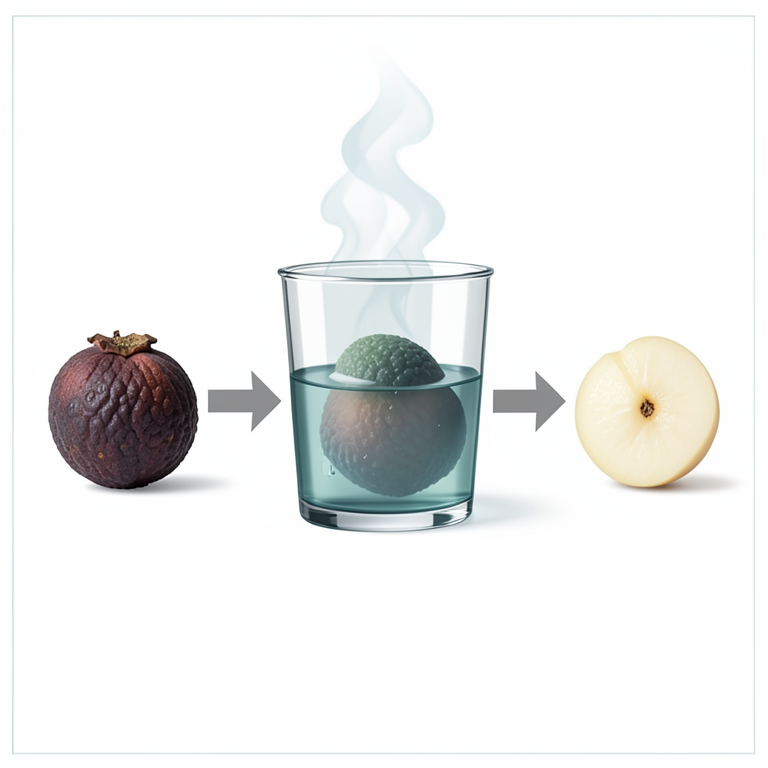
Blanching Optimization Process
AI-generated conceptual illustration (Ber fruit (Ziziphus mauritiana Lamk)). It explains the idea and does not show study data.
View source evidence ↗Figures & tables
From the original paper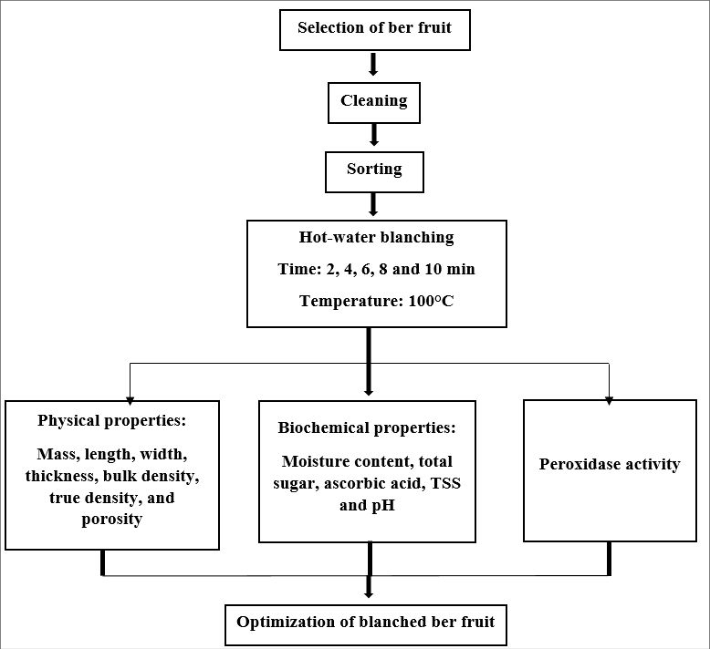 Figure 1
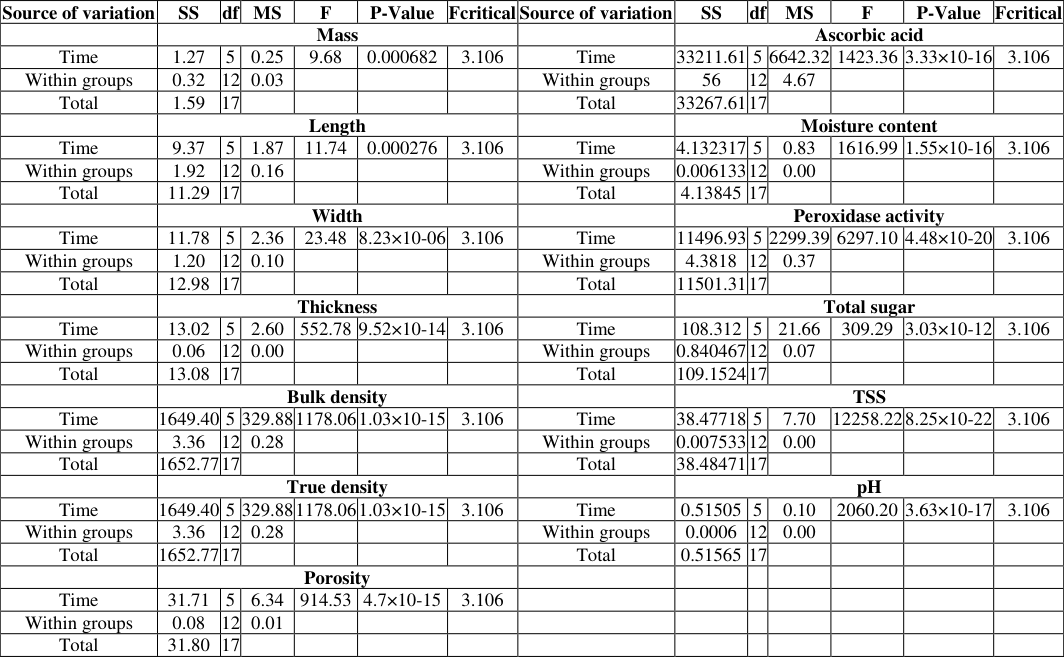 Table 1
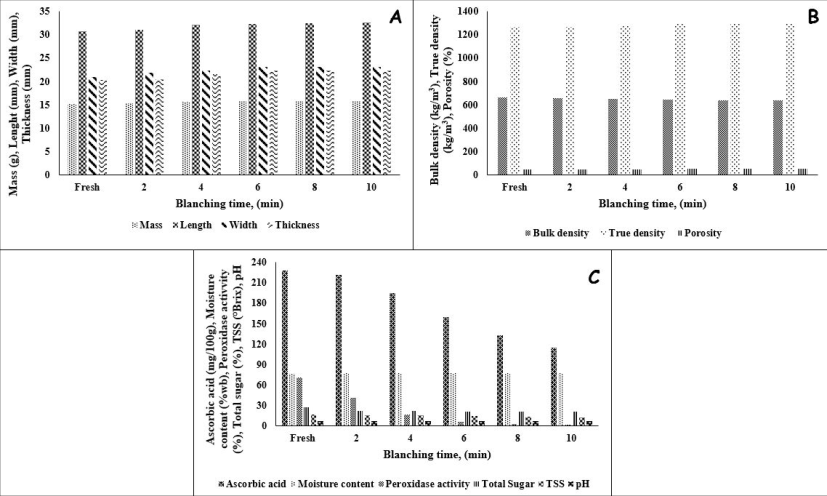 Figure 2
Introduction
Fruits are generally protective foods as they provide essential vitamins, minerals, and fibers for human. They provide good health effects and reduce the cause of cardio-vascular diseases, cancer, and various degenerative diseases. Phytochemicals in fruits acts as strong antioxidant potential in scavenging free radicals which has great attention to the scientists (Kaur and Miani, 2001; Engwa, 2018; Chaudhary et al., 2023; Swallah et al., 2020) [16,8,7,35] . Ber (Ziziphus mauritiana Lamk.) is one of the tropical fruits generally belongs to the family Rhamnaceae and grown in northern hemispherical region (Hussain et al., 2021; Guo et al., 2024) [14,13] . In India, generally two domesticated varieties of ber are Ziziphus mauritiana Lamk. (Indian ber or jujube) and Ziziphus jujube Mill. (Chinese or common jujube). Both varieties are grown in northwest of India and in the arid parts of South India (Ali et al., 2001; Meghwal et al., 2007) [4,22] . Generally, Ber (Ziziphus Mauritiana Lamk.) is cultivated as it is highly rich in Vitamin C and B complex and is regarded as poor man's apple due to its high nutritional value (Gajbhiya et al., 2003; Vilas, 2019; Akter & Rahman, 2019) [9,37,3] , low production cost (Singh et al., 2007) [33] , easy availability, delicious and nutritious as compared to an apple. It provides fortification to the diet (Prasad, 2005; Adilah et al., 2023) [28,2] . As it is grown in warm climate and therefore it had different names and languages in different countries. Some of them are Chinese date, Berra, Putrea, Kul, Baher, Beri, Nakhi, Dara, Kunar, Gob, madadebara, Iradi, Kulvali, Widara, Nabig, Than, Epal, Siam, Bidaru, Zi, Zee-pen, Berwarter, Ilanda, Masaka, Bogori, Indian Plum, Indian Cherry. In India, it is generally adapted as ber in Gujrati, Hindi, Marathi, Punjabi, Sindhi and Urdu languages. These fruits are perishable and have short shelf-life at ambient temperature (25-35°C). Generally, they are kept for 4 to 12 days without loss of organoleptic quality depending on their cultivar and storage conditions (Pareek et al., 2009) [26] . It is difficult to transport ripen fruits and results in large post-harvest losses (Kudachikar et al., 2000) [18] . Perishable foods are classified as fresh fruits having moisture content more than 80 percent (Orsat et al., 2006) [6] .
Ber has more protein, phosphorous, calcium, carotene and vitamin C as compared to apple and also predominates oranges in phosphorous, iron and vitamin C (Pareek, 2001; Gill and Bal, 2006) [25,12] . Ber too have medicinal properties as its seeds, roots and stem are used for medicinal purposes. Leaves of ber possess antimicrobial activity and wound healing properties. It also has antifungal properties (Adamu et al., 2006) [1] and anti-cancer properties (Mishra et al., 2011) [23] . For any fruit, the pre-treatment and preservation method are mostly important to increase its shelf life so in this study we have uses blanching as a pre-treatment and drying as a preservation method. Blanching is a traditional and wellpracticed method used in food industry. Increasing product quality was focused on early technological developments. Later, the product throughput, energy efficiency, and waste effluent reduction are taken for consideration. Blanching is the first step in preservation of fruits by canning, freezing and dehydration which consist of a partial cooking usually in steam or hot water.
Materials and Methods
Materials and Methods
Selection of ber fruit
Fruit variety of ber namely 'Umran', was procured at ripe stage from the horticulture farm, CHESS, Vejalpur, Godhra.
Umran is late maturing variety. The fruits obtained were thoroughly cleaned and screened to remove decayed, rotten, and damaged fruits and other foreign material. The fruits were washed under running water to remove dirt and dust. The fruits were washed with distilled water before blanching process.
Experimental procedure
The representation of blanching experiment process shown in Fig. 1. The blanching study was pointed in researching time to inactivate the enzymatic action and impact of hot water blanching on physico-synthetic properties of ber fruits. The independent variables were selected based on previous work reported by Khurdiya, (1980) [17] on ber variety and preliminary trials were conducted. 100 g of matured ber fruit sample were soaked in water at 100°C temperature with sample to water ratio of 1:10 w/w and blanched for 2, 4, 6, 8 and 10 min followed by draining of water and placing the sample on a blotting paper to absorb free surface moisture. Hot water blanching experiments were done in triplicates. Determination of Physico-chemical properties was done after blanching to check the blanching effect on physico-chemical properties. A digital balance (M/S Shimadhu Corporation, Japan) with measurement precision of ± 0.001 g was used for weighing the sample. The three major perpendicular dimensions of the 100 randomly selected ber fruits were measured using a digital vernier caliper (M/S Mitutoyo Measuring Instrument (Suzhou) Co. Ltd., China) having precision of ± 0.002mm.
The bulk density of ber fruit was determined using standard procedure reported by Kumar (2006) [19] ber fruits were taken and put them in to wooden box and noted the weight of ber fruits and volume of wooden box. The calculation of bulk density is shown in Eq.1. The volume of toluene dislodged was found by submerging a mass of ber fruits in the toluene (Singh & Goswami, 1996) [32] . The true density was calculated by using Eq.2. The porosity was calculated using the relationship was given by (Mohsenin, 1970) [24] as per Eq.3.
Bulk density (𝑘𝑔 𝑚
True density(kg 𝑚 3 ⁄ ) = mass of sample volume of sample
Determination of biochemical characteristics Moisture content
The samples were oven dried at 105°C for 24 h in uncovered pre-weighed petri dishes (Ranganna, 2000) [30] .
The ber fruit samples were taken in the petri dishes and kept into the hot air oven. The drying air temperature in the chamber was estimated straightforwardly utilizing thermocouple-based temperature pointer gave in the unit. Subsequent to drying, petri dishes were covered with a top and cooled in desiccators containing silica gel prior to gauging (Ranganna, 2000) [30] .
Ascorbic acid, Total sugar, TSS, pH
The ascorbic acid and total sugar of the sample was determined by 2, 6-dichlorophenolindophenol visual titration method and Lane and Eynon method respectively, followed by TSS and pH also measured by using refractometer and digital pH meter as described by Ranganna (1986) [29] .
Determination of Peroxidase Enzymatic Activity
A little part was taken in a test cylinder to a profundity of around 1 inch. 10 ml of guaiacol (0.5%) and 10 ml of hydrogen peroxide (0.08%) was added. [31,10,11] . The residual activity was estimated using the Eq.4.
Residual activity (%) = absorbance of fresh sample-absorbance after blanching absorbance of fresh sample × 100 (4)
Results and Discussion Physico-Chemical Properties of Fresh Ber Fruit
The various physical properties of ber fruit like mass, length, width and thickness varied from 14. 20
Variation in physical characteristics of blanched ber fruit Mass:
The initial ber fruit mass about 15.10 g in fresh fruit. The ber mass significantly increased from 15.10 to 15.81 g in hot water blanching (P<0.01). It can be observed from Fig. 2 that the mass of blanched samples increased with increase in blanching time at constant temperature on 100°C. It can be observed from Table 1 that F value for time of hot water blanching was 9.67 at P values of 0.00068 against FCritical value of 3.10 indicating the change in mass was also significant (P<0.01). The increment is mass is clear because of the assimilation of water by the ber fruits in hot water blanching. Comparative expansion in mass was reported in sweet corn by Kachhadiya et al., (2018) [15] and in sweet potato slices by Pathan et al., (2025) [27] .
| Source of variation | SS | df | MS | F | P-Value | Fcritical | Source of variation | SS | df | MS | F | P-Value | Fcritical |
|---|---|---|---|---|---|---|---|---|---|---|---|---|---|
| Mass | Ascorbic acid | ||||||||||||
| Time | 1.27 | 5 | 0.25 | 9.68 | 0.000682 | 3.106 | Time | 33211.61 | 5 | 6642.32 | 1423.36 | 3.33×10⁻¹⁶ | 3.106 |
| Within groups | 0.32 | 12 | 0.03 | Within groups | 56 | 12 | 4.67 | ||||||
| Total | 1.59 | 17 | Total | 33267.61 | 17 | ||||||||
| Length | Moisture content | ||||||||||||
| Time | 9.37 | 5 | 1.87 | 11.74 | 0.000276 | 3.106 | Time | 4.132317 | 5 | 0.83 | 1616.99 | 1.55×10⁻¹⁶ | 3.106 |
| Within groups | 1.92 | 12 | 0.16 | Within groups | 0.006133 | 12 | 0.00 | ||||||
| Total | 11.29 | 17 | Total | 4.13845 | 17 | ||||||||
| Width | Peroxidase activity | ||||||||||||
| Time | 11.78 | 5 | 2.36 | 23.48 | 8.23×10-06 | 3.106 | Time | 11496.93 | 5 | 2299.39 | 6297.10 | 4.48×10⁻²⁰ | 3.106 |
| Within groups | 1.20 | 12 | 0.10 | Within groups | 4.3818 | 12 | 0.37 | ||||||
| Total | 12.98 | 17 | Total | 11501.31 | 17 | ||||||||
| Thickness | Total sugar | ||||||||||||
| Time | 13.02 | 5 | 2.60 | 552.78 | 9.52×10⁻¹⁴ | 3.106 | Time | 108.312 | 5 | 21.66 | 309.29 | 3.03×10⁻¹² | 3.106 |
| Within groups | 0.06 | 12 | 0.00 | Within groups | 0.840467 | 12 | 0.07 | ||||||
| Total | 13.08 | 17 | Total | 109.1524 | 17 | ||||||||
| Bulk density | TSS | ||||||||||||
| Time | 1649.40 | 5 | 329.88 | 1178.06 | 1.03×10⁻¹⁵ | 3.106 | Time | 38.47718 | 5 | 7.70 | 12258.22 | 8.25×10⁻²² | 3.106 |
| Within groups | 3.36 | 12 | 0.28 | Within groups | 0.007533 | 12 | 0.00 | ||||||
| Total | 1652.77 | 17 | Total | 38.48471 | 17 | ||||||||
| True density | pH | ||||||||||||
| Time | 1649.40 | 5 | 329.88 | 1178.06 | 1.03×10⁻¹⁵ | 3.106 | Time | 0.51505 | 5 | 0.10 | 2060.20 | 3.63×10⁻¹⁷ | 3.106 |
| Within groups | 3.36 | 12 | 0.28 | Within groups | 0.0006 | 12 | 0.00 | ||||||
| Total | 1652.77 | 17 | Total | 0.51565 | 17 | ||||||||
| Porosity | |||||||||||||
| Time | 31.71 | 5 | 6.34 | 914.53 | 4.7×10⁻¹⁵ | 3.106 | |||||||
| Within groups | 0.08 | 12 | 0.01 | ||||||||||
| Total | 31.80 | 17 |
Table text extracted from the original PDF; superscript letters are shown inline. The original table image is below.
View original table image
Length
The initial length was about 30.71 mm in fresh ber fruit. The ber fruit significantly increased from 30.71 to 32.53 mm in hot-water blanching (P<0.01). It can be observed from Fig. 2 that the length of blanched samples increased with increase in blanching time at constant temperature on 100°C. It can be observed from Table 1 that F value for time of hot water blanching was 11.74 at P value of 0.00027 against FCritical value of 3.10 indicating the change in length was also significant (P<0.01). The increment is length is obvious because of the assimilation of water by the ber fruits in hot water blanching in much the same way. Comparative expansion in mass was reported in sweet corn by Kachhadiya et al., (2018) [15] and in sweet potato slices by Pathan et al., (2025) [27] .
Width
The initial width was about 20.94 mm in fresh ber fruit. The ber fruit significantly increased from 20.94 to 23.10 mm in hot-water blanching (P<0.01). It can be observed from Fig. 2 that the width of blanched samples increased with increase in blanching time at constant temperature on 100°C. It can be observed from Table 1 that F value for time of hot water blanching was 23.48 at p values of 8.23×10 -06 against FCritical value of 3.10 indicating the change in width was also significant (P<0.001). The increment is width is obvious because of the ingestion of water by the ber fruits. Comparative expansion in mass was reported in sweet corn by Kachhadiya et al., (2018) [15] and in sweet potato slices by Pathan et al., (2025) [27] .
Thickness
The initial thickness was about 20.28 mm in fresh ber fruit. The ber fruit significantly increased from 20.28 to 22.27 mm in hot-water blanching (P<0.01). It can be observed from Fig. 2 that the width of blanched samples increased with increase in blanching time at constant temperature on 100°C. It can be observed from Table 1 that F value for time of hot water blanching was 552.78 at p value of 9.52×10 -14 against FCritical value of 3.10 indicating the change in thickness was also significant (P<0.01). The increment is thickness is additionally apparent because of the assimilation of water by the ber fruits. Comparable expansion in thickness was likewise detailed by (Kachhadiya et al., 2018) [15] .
Bulk Density
The initial bulk density was about 660.12 kg/m 3 in fresh ber fruit. The bulk density significantly decreased from 660.12 to 635.52 kg/m 3 in hot water blanching (P<0.01). It can be observed from Fig. 2 that the bulk density of blanched samples decreased with increase in blanching time at constant temperature on 100°C.
It can be observed from Table 1 that F value for time of hot water blanching was 1178.05 at P values of 1.03×10 -15 against FCritical value of 3.10 indicating the change in bulk density was also significant (P<0.01). The lessening bulk density is likewise obvious because of the expansion in volume because of retention of moisture by the ber fruits. Comparable outcome in bulk density was likewise detailed by (Kachhadiya et al., 2018) [15] .
True density
The initial true density was about 1263.85 kg/m 3 in fresh ber fruit. The true density significantly increased from 1263.85 to 1298.11 kg/m 3 in hot water blanching (P<0.01). It can be observed from Fig. 2 that the true density of blanched samples increased with increase in blanching time at constant temperature on 100°C. It can be observed from Table 1 that F value for time of hot water blanching was 1178.05 at P value of 1.03×10 -15 against FCritical value of 3.10 indicating the change in true density was also significant (P<0.01). The expanded true density is obvious because of the retention of moisture by the ber fruits. Comparative outcome in evident thickness was likewise revealed by (Kachhadiya et al., 2018) [15] .
Porosity
The initial porosity was about 47.77 in fresh ber fruit. The porosity significantly increased from 47.77 to 51.04 in hot water blanching (P<0.01). It can be observed from Fig. 2 that the porosity of blanched samples increased with increase in blanching time at constant temperature on 100°C. It can be observed from Table 1 that F value for time of hot water blanching was 914.53 at P value of 4.7×10 -15 against FCritical value of 3.10 indicating the change in porosity was also significant (P<0.01). The increase in porosity is evident due to decrease in bulk density in hot water blanched samples, which indicates increase in void space due to increase in size of ber fruit.
Effect of Blanching on Biochemical Characteristics Moisture content
The initial moisture content was about 76.51%wb in fresh ber fruit. The ber fruit moisture content significantly increased from 76.51 to 77.84% wb in hot-water blanching (P<0.01). It can be observed from Fig. 2 that the moisture content of hot water blanched samples increased with increase in blanching time at constant temperature on 100°C. It can be observed from Table 1 that F value for time of hot water blanching was 1616.99 at P value of 1.55×10 -16 against FCritical value of 3.10 indicating the change in moisture content was also significant (P<0.01). The increment is moisture content is clear because of the retention of water by the ber fruits. Comparable aftereffect of expansion in moisture content in hot water blanching was likewise announced by (Mcdaniel et al., 1988 and Kachhadiya et al., 2018) [21,15] .
Ascorbic acid
Ascorbic acid content decreased in all the samples during blanching as compared to fresh sample. The initial ascorbic acid was about 228.33 mg/100g in fresh ber fruit. The ascorbic acid significantly decreased from 228.33 to 114.33 mg/100g in hot water blanching (P<0.01). It can be observed from Fig. 2 that the ascorbic acid of blanched samples decreased with increase in blanching time at constant temperature on 100°C. It can be observed from Table 1 that F value for time of hot water blanching was 1423.35 at P value of 3.33×10 -16 against FCritical value of 3.10 indicating the change in ascorbic acid was also significant (P<0.01). The reduction is ascorbic acid is obvious because of the retention of dampness (water movement) by the ber fruits. Comparative lessening in ascorbic acid was additionally revealed by (Kachhadiya et al., 2018) [15] .
Total sugar
The initial content of total sugar was 27.62% in fresh ber fruit. Total sugar significantly decreased from 27.62 to 20.39% in hot water blanching (P<0.01). It can be observed from Fig. 2 that the total sugar of blanched samples decreased with increase in blanching time at constant temperature on 100°C. It can be observed from Table 1 that F value for time of hot water blanching was 309.29 at P values of 3.03×10 -12 against FCritical value of 3.10 indicating the change in total sugar was also significant (P<0.01). The deficiency of water-solvent sugars may be connected with the filtering of sugar during blanching (Song et al., 2013) [34] .
Total soluble solid
The initial TSS was about 16.27 °Brix in fresh ber fruit. The TSS significantly decreased from 16.27 to 11.91 °Brix in hot water blanching (P<0.01). It can be observed from Fig. 2 that the TSS of blanched samples decreased with increase in blanching time at constant temperature on 100°C. It can be observed from Table 1 that F value for time of hot water blanching was 12258.22 at P value of 8.25×10 -22 against FCritical value of 3.10 indicating the change in TSS was also significant (P<0.01). The decrease in TSS may be due to passing of sample through heat treatment during blanching so that leaching of total soluble solid occurred. (Trongpanich et al., 2000) [36] .
pH
The initial pH was about 7.3 in fresh ber fruit. The pH varied from 6.9 to 7.4 in hot water blanching was not significantly changed in blanching period. It can be observed from Figure 2 that the change in pH was not significant. It can be observed from Table 1 that F value for time of hot water blanching was 2060.2 at P values of 3.63×10 -17 against FCritical value of 3.10 indicates the change in pH was not significant.
Peroxidase activity
The impacts of hot water blanching treatment on enzymatic exercises are introduced in Fig. 2. Remaining action of peroxidase protein in ber fruits decreased with expansion on schedule of high temp water blanching therapy. More than 95% of peroxidase (POD) movement was lost inside the first 100°C at 6 min in steaming hot water whitening. It is prescribed to decrease the marker compound action by 90% for choosing the suitability of blanching technique and advancement of nature of non-purified item (Bahceci et al., 2005) [5] . It tends to be additionally seen from Fig. 2 that ideal degree of time for heated water blanching were 100°C at 6 min (P<0.01). It can be observed from Fig. 2 that the peroxidase activity of blanched samples decreased with increase in blanching time at constant temperature on 100°C. It can be observed from Table 1 that F value for time of hot water blanching were 6297.1 at P value of 4.48×10 -20 against FCritical value of 3.105875 indicating the change in peroxidase activity was also significant (P<0.01).
Optimization of blanching samples
Blanched samples were optimized based on maximum ascorbic acid content, total sugar, TSS and inactivated enzymes and 10% level of peroxidase activity. In hot water blanching time 6 minute at temperature 100°C sample was related due to maximum ascorbic acid content, total sugar and less than 10% of peroxidase activity. The optimized sample from blanching experiment was considered for the further drying process.
References
36 in the original paper- Adamu HM, Abayeh OJ, Ibok NNE, Kafu SE. Antifungal activity of extracts of some Cassia, Detarium and Ziziphus species against dermatophytes [Internet]. 2006 [cited YYYY Mon DD]. Available from: http://hdl.handle.net/123456789/8004
- Adilah HN, Saleh MI, Az-Zahra NDA, Cho E, Sinaga E. Total phenolic and total flavonoid content, antioxidant activity, and nutritional profile of Ziziphus mauritiana fruit juice. Int J Biol Phys Chem Stud. 2023;5(1):1-8.
- Akter A, Rahman H. Characterization of Ber (Ziziphus mauritiana) genotypes. J Agric Sci Technol. 2019;8:1123.
- Azam-Ali S, Bonkoungou E, Bowe C, DeKock C, Godara A, Williams JT. Fruits for the future-2 (Revised edition), Ber and other jujubes. Southampton: International Centre for Underutilised Crops, University of Southampton; 2001.
- Bahçeci KS, Serpen A, Gökmen V, Acar J. Study of lipoxygenase and peroxidase as indicator enzymes in green beans: change of enzyme activity, ascorbic acid and chlorophylls during frozen storage. J Food Eng. 2005;66(2):187-92. DOI: 10.1016/j.jfoodeng.2004.03.004
- Changrue V, Raghavan VG, Orsat V, Vijaya Raghavan G. Microwave drying of fruits and vegetables. Stewart Postharvest Rev. 2006;2(6):1-7. DOI: 10.2212/spr.2006.6.4
- Chaudhary P, Janmeda P, Docea AO, Yeskaliyeva B, Abdull Razis AF, Modu B, et al. Oxidative stress, free radicals and antioxidants: potential crosstalk in the pathophysiology of human diseases. Front Chem. 2023;11:1158198.
- Engwa GA. Free radicals and the role of plant phytochemicals as antioxidants against oxidative stressrelated diseases. In: Phytochemicals: source of antioxidants and role in disease prevention. BoD-Books on Demand; 2018. p. 49-74.
- Gajbhiye VT, Sinha P, Gupta S, Singh CP, Gupta RK. Efficacy and persistence of carbendazim following preand post-harvest application in Ber (Ziziphus mauritiana Lamk.). Ann Plant Prot Sci. 2003;11(1):139-42.
- Gandhi R, Kumar N, Mistry A. Physicochemical characterization of steam blanched parijat (Nyctanthes arbor-tristis L.) leaves. Pharma Innov J. 2023;12(8):2261-9.
- Gandhi R, Kumar N, Tiwari BK. Physicochemical characteristics of Parijat (Nyctanthes arbour-tristis L.) leaves during microwave blanching. J Microw Power Electromagn Energy. 2025;59(1):75-89.
- Gill KS, Bal JS. Influence of pruning severity and time on yield and fruit quality of ber cv. Umran. Indian J Hortic. 2006;63(2):162-5.
- Guo M, Bi G, Wang H, Ren H, Chen J, Lian Q, et al. Genomes of autotetraploid wild and cultivated Ziziphus mauritiana reveal polyploid evolution and crop domestication. Plant Physiol. 2024;196(4):2701-20.
- Hussain SZ, Naseer B, Qadri T, Fatima T, Bhat TA. Ber/Jujube (Ziziphus mauritiana): morphology, taxonomy, composition and health benefits. In: Fruits grown in highland regions of the Himalayas: nutritional and health benefits. Cham: Springer International Publishing; 2021. p. 157-68.
- Kachhadiya S, Kumar N, Seth N. Process kinetics on physico-chemical and peroxidase activity for different blanching methods of sweet corn. J Food Sci Technol. 2018;55(12):4823-32. DOI: 10.1007/s13197-018-34163
- Kaur C, Maini SB. Fruits and vegetables. Health foods for new millennium. Indian Hortic. 2001;45(4):29-32.
- Kudachikar VB, Ramana KVR, Eipeson WE. Pre-and post-harvest factors influencing the shelf life of ber (Zizyphus mauritiana Lamx)-a review [Internet]. Indian Food Packer. 2000;54(1):81-90. Available from: http://ir.cftri.res.in/id/eprint/4912
- Kumar M. Studies on suitability of ber fruits for preparation of different products [dissertation]. Hisar: Chaudhary Charan Singh Haryana Agricultural University; 2006.
- Kumar S. Screening of Ziziphus mauritiana Lam. for wound healing and antioxidant activities in rats [dissertation]. Bengaluru: RGUHS; 2006.
- McDaniel MR, Montgomery MW, Latham D, Lundahl DS. Evaluation of high temperature-short time (HTST) blanched frozen sweet corn. J Food Sci. 1988;53(3):760-4. DOI: 10.1111/j.1365-2621.1988.tb08950.x
- Meghwal PR, Khan MA, Tewari JC. Growing Ber (Ziziphus mauritiana Lam.) for sustainable income and employment in arid and semi-arid regions. Jodhpur: ICAR-Central Arid Zone Research Institute (CAZRI); 2007.
- Mishra T, Khullar M, Bhatia A. Anticancer potential of aqueous ethanol seed extract of Ziziphus mauritiana against cancer cell lines and Ehrlich ascites carcinoma. Evid Based Complement Alternat Med. 2011;2011:765029. DOI: 10.1155/2011/765029
- Mohsenin NN. Physical properties of plant and animal materials. New York: Gordon and Breach; 1970.
- Pareek OP. Ber. Southampton: International Centre for Underutilised Crops; 2001.
- Pareek S, Kitinoja L, Kaushik RA, Paliwal R. Postharvest physiology and storage of ber. Stewart Postharvest Rev. 2009;5(5):1-10.
- Pathan M, Parmar P, Gandhi R, Kumar N. Effects of blanching parameters and partial drying on the physicochemical properties of sweet potato slices. J Agric Eng. 2025;62(2):364.
- Prasad RN. Effect of N and P on growth, yield and quality of ber grown under rainfed conditions of Indian arid zone. Indian J Hortic. 2005;62(4):404-6.
- Ranganna S. Handbook of analysis and quality control for fruit and vegetable products. New Delhi: Tata McGraw-Hill; 1986.
- Ranganna S. Handbook of analysis and quality control for fruit and vegetable products. 6th ed. New Delhi: Tata McGraw-Hill; 2000.
- Sheu SC, Chen AO. Lipoxygenase as blanching index for frozen vegetable soybeans. J Food Sci. 1991;56(2):448-51. DOI: 10.1111/j.13652621.1991.tb05300.x
- Singh KK, Goswami TK. Physical properties of cumin seed. J Agric Eng Res. 1996;64(2):93-8. DOI: 10.1006/jaer.1996.0049
- Singh M, Kumar S, Arora S. Osmo-mechanical drying kinetics of ber. Indian J Hortic. 2007;64(4):402-5.
- Song JF, Liu CQ, Li DJ, Meng LL. Effect of cooking methods on total phenolic and carotenoid amounts and DPPH radical scavenging activity of fresh and frozen sweet corn (Zea mays) kernels. Czech J Food Sci. 2013;31(6):607-12. DOI: 10.17221/396/2012-CJFS
- Swallah MS, Sun H, Affoh R, Fu H, Yu H. Antioxidant potential overviews of secondary metabolites (polyphenols) in fruits. Int J Food Sci. 2020;2020:9081686.
- Trongpanich K, Stonsoavapak S, Hengsawadi D, Lowitoon N. A comparative study on pretreatment processes of canned whole kernel sweet corn. Agric Nat Resour. 2002;36(1):63-8.
- Vilas MWA. Evaluation of Ber (Zizyphus mauritiana Lamk.) genotypes for morphological and physicochemical characters [dissertation]. Rahuri: Mahatma Phule Krishi Vidyapeeth; 2019.