
Research article · 2025 · Full text
International Journal of Agriculture and Food ScienceCashew nut industry in India: Production, processing and marketing
Volume 7(9) · Pages 326–333 · DOI: 10.33545/2664844x.2025.v7.i9d.763 ↗
Research areasGinkgo biloba and Cashew Applications
Abstract
Author-writtenCashew (Anacardium occidentale) holds global significance as one of the most important plantation crops, contributing substantially to rural employment, industrial development, and India’s foreign exchange earnings. Introduced by the Portuguese in the 16th century, cashew has evolved into a major agro-based industry, with India now ranking as the second-largest producer and processor worldwide. This paper comprehensively examines the cashew sector in India, covering its history, global and domestic production trends, cost of cultivation, profitability, processing techniques, marketing channels, products and by-products, SWOT analysis, and institutional support. Findings reveal that despite cashew’s profitability and its role in livelihood security, challenges such as low orchard productivity, high processing costs, and dependence on imported raw nuts persist. At the same time, opportunities exist in mechanization, product diversification, and value addition, supported by agencies like the Directorate of Cashew Nut and Cocoa Development (DCCD) and the Cashew Export Promotion Council of India (CEPCI). Strengthening productivity, enhancing processing efficiency, and expanding value-added products will be crucial for sustaining India’s competitiveness in the global cashew industry.
Summary
Source-checkedPlain-language reading of the full paper, prepared with AI and checked against the text. Each point links to the authors' own words.
Why it matters
- Cashew is a globally significant plantation crop that supports rural employment, industrial growth, and foreign exchange earnings for India. View evidence ↗
- The global market for cashews is valued at roughly USD 12 billion, primarily fueled by increased kernel consumption. View evidence ↗
- A significant disparity exists in the supply chain where farmers receive a much smaller portion of the final consumer price for value-added products. View evidence ↗
The question
- The paper aims to provide a comprehensive examination of the Indian cashew sector, including production trends, costs, profitability, processing, and marketing. View evidence ↗
What they did
- The review utilizes data from specific regions, such as South Goa for establishment costs and Ratnagiri district for marketing channel price spreads. View evidence ↗
- The study employs a SWOT analysis to identify the strengths, weaknesses, opportunities, and threats facing the Indian cashew industry. View evidence ↗
What they found
- Between 2021 and 2023, global cashew production was approximately 3.94 million metric tons, with India contributing about 20% of this total. View evidence ↗
- In India from 2013-14 to 2023-24, cultivation area increased from 1,010.8 to 1,199.1 thousand ha and production rose from 753.2 to 794.9 thousand MT, though productivity declined from 745.1 to 674 kg/ha. View evidence ↗
- The average cost to establish a cashew plantation is ₹1,72,538.67/ha, with the highest expense occurring in the first year at ₹51,905.50/ha. View evidence ↗
- Across farm categories, the average yield is 883.25 kg/ha for nuts and 13,000 kg/ha for apples, with an average net return of ₹66,342.49/ha and an input-output ratio of 1:1.69. View evidence ↗
- Medium-sized farms are the most profitable, achieving the highest yields (914 kg/ha) and the best input-output ratio (1:1.83). View evidence ↗
What it means
- The authors recommend prioritizing high-yielding varieties, better crop management, and processing mechanization to increase productivity and reduce costs. View evidence ↗
- Profitability can be enhanced by diversifying value-added products from cashew apples and shell liquid (CNSL) and by strengthening direct marketing channels for farmers. View evidence ↗
- The industry is limited by low mechanization, which increases costs, and inadequate infrastructure that disadvantages producers. View evidence ↗
Visual summary
3 visualsIllustrations explain the paper; charts are replotted from the paper's own table values.
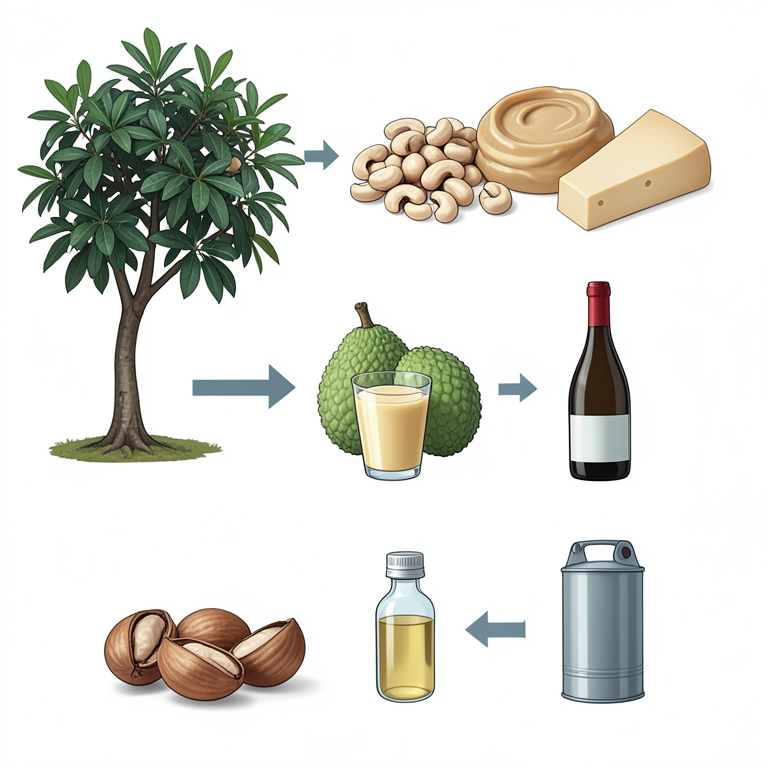
Cashew Value Addition
AI-generated conceptual illustration (Cashew tree (Anacardium occidentale) and its derived products). It explains the idea and does not show study data.
View source evidence ↗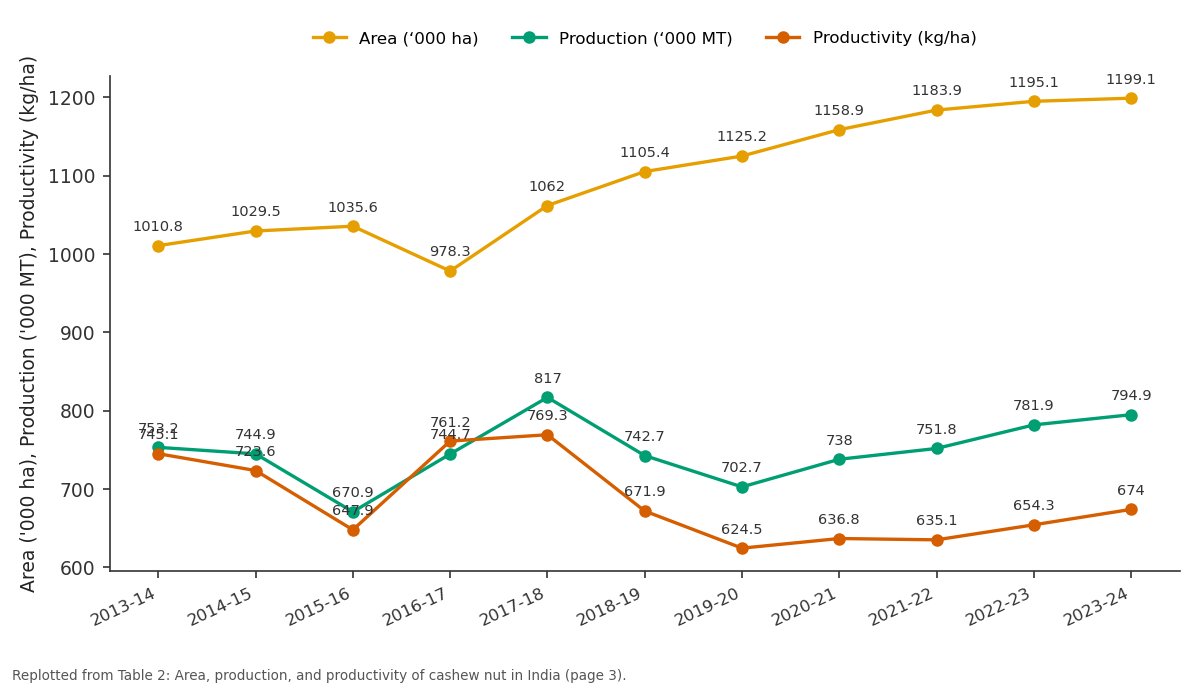
Area (‘000 ha) and Production (‘000 MT) and more: 2013-14 vs 2014-15 vs 2015-16 vs 2016-17 vs 2017-18
Replotted from Table 2 (page 3) of the original paper. Every bar is the paper's own table value.
View source evidence ↗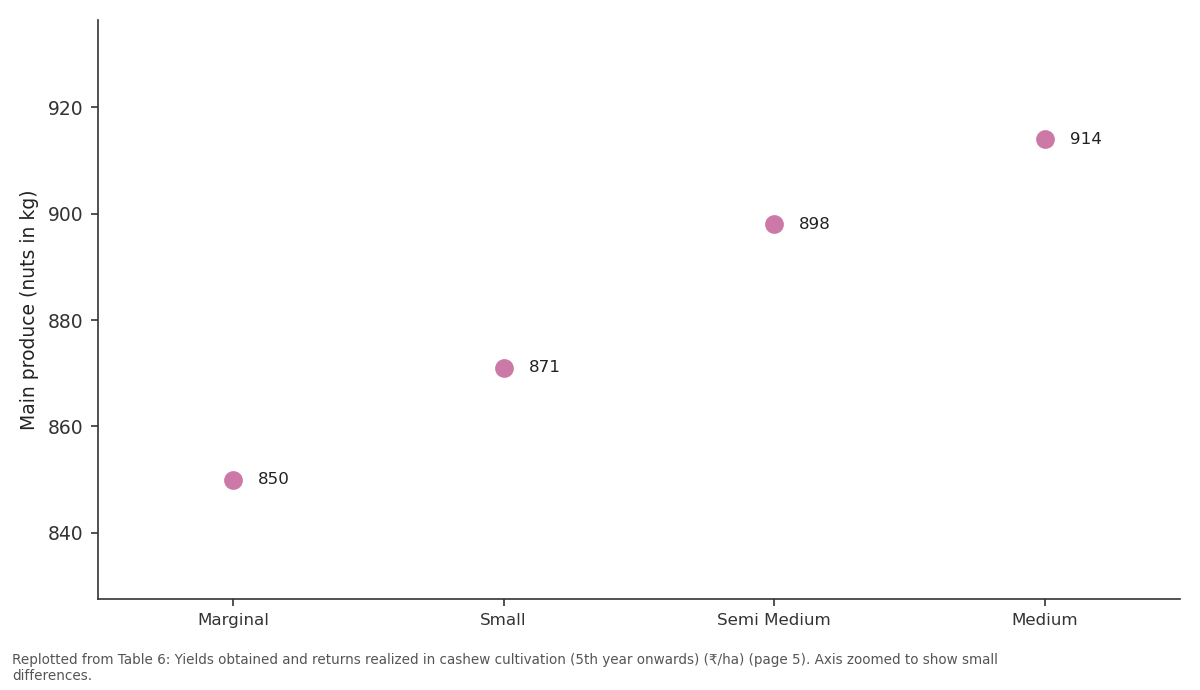
Main produce (nuts in kg): Marginal vs Small vs Semi Medium vs Medium
Replotted from Table 6 (page 5) of the original paper. Every bar is the paper's own table value.
View source evidence ↗Figures & tables
From the original paper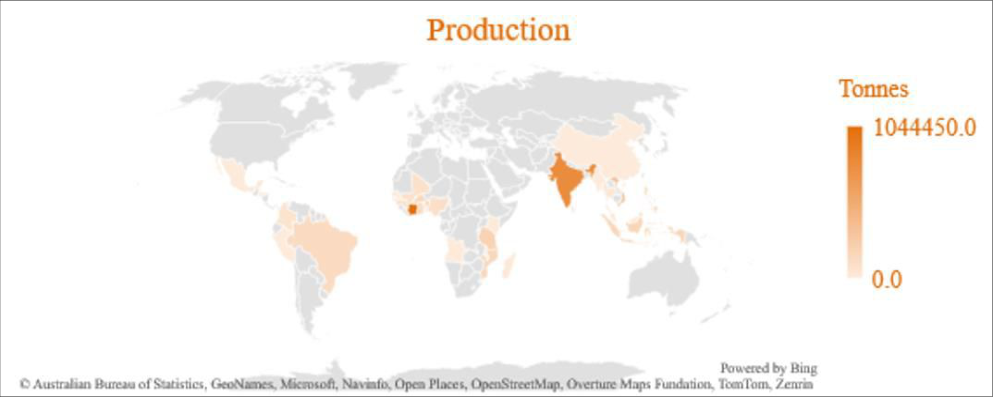 Figure 1
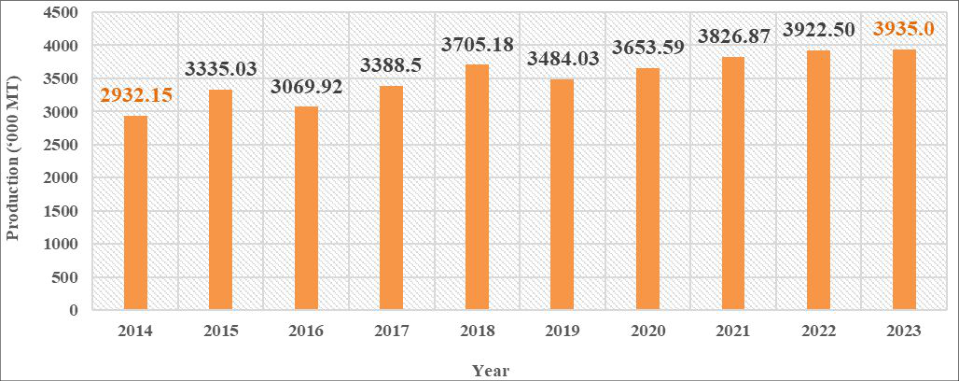 Figure 2
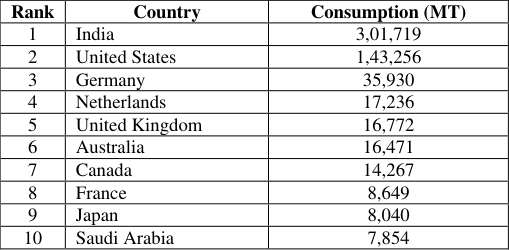 Table 1
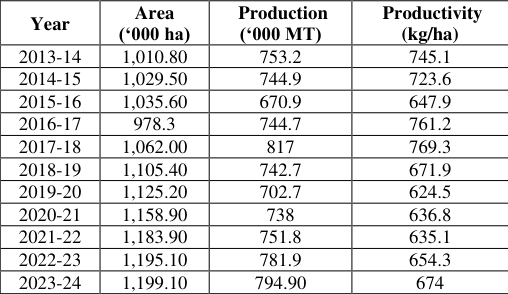 Table 2
 Figure 3
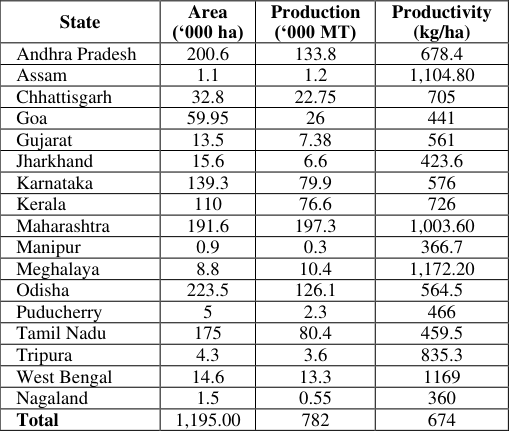 Table 3
 Table 4
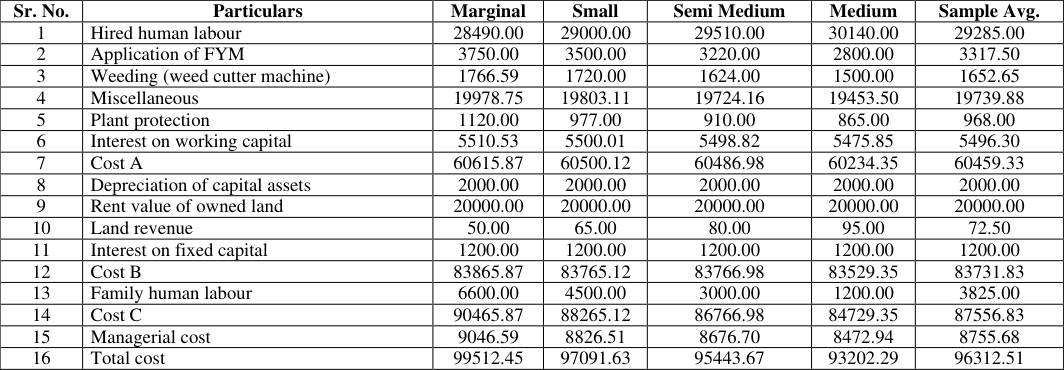 Table 5
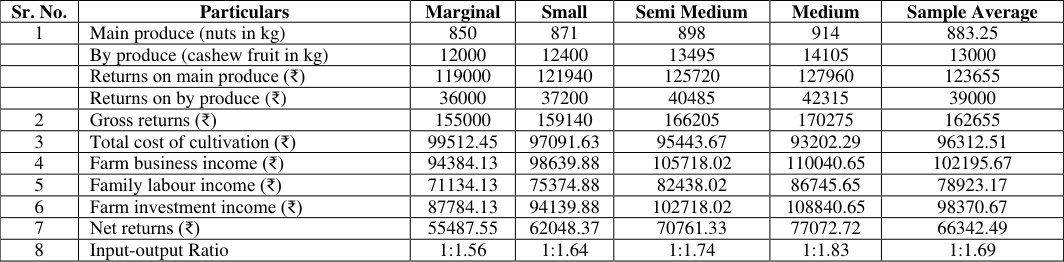 Table 6
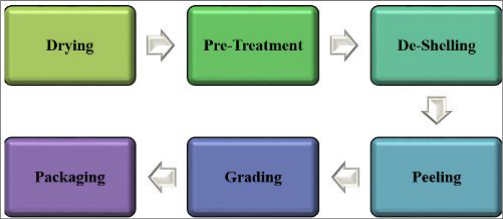 Figure 4
 Table 7
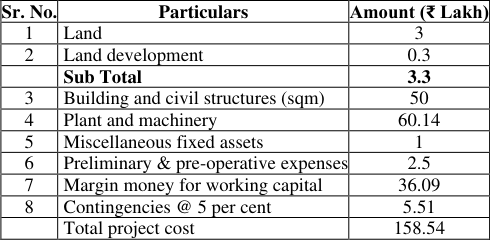 Table 8
 Table 9
 Table 10
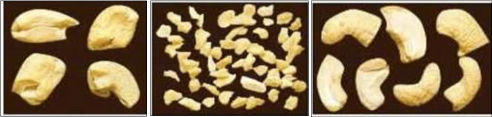 Figure 5
Introduction
Anacardium occidentale, commonly known as the cashew tree, is a tropical evergreen species belonging to the family Anacardiaceae. Native to South America, it is now cultivated extensively across many tropical regions for its valuable nut and cashew apple. According to Yousafzai et al. (2022) [14] , cashews rank third globally in nut production and are traded worldwide, with around 32 countries engaged in commercial production. The global cashew market is valued at approximately USD 12 billion, driven primarily by the rising consumption of cashew kernels. Increasing health awareness and higher disposable incomes in emerging economies such as China, Vietnam, and India have further contributed to this growth (Pattanayak et al., 2023) [13] . Indian cashews are globally recognized for their superior texture and quality (Directorate of Cashew nut and Cocoa Development, 2023). To enhance revenue generation, employment opportunities, profitability, food security, and global competitiveness, it is essential to prioritize the systematic cultivation and promotion of cashew production. However, farmers often receive a much smaller share of the final price compared to what consumers pay for value-added products. A lack of effective collaboration among farmers, processors, and intermediaries within the supply chain has restricted farmers' share of returns, highlighting the need for improved market integration and cooperative strategies (Das et al., 2021) [6] .
History
The cashew tree, native to northern South America, was introduced to India by the Portuguese in the 16th century primarily for soil erosion control along the coastal belt. The crop adapted well to Indian conditions and spread along the west and east coasts, particularly in Kerala, Tamil Nadu, Karnataka, and Andhra Pradesh. Commercial-scale cultivation began in the early 1960s, transforming cashew into an exportoriented commodity that generates significant foreign exchange. Cashew nut processing as an industry started in the 1920s when Roch Victorian established operations in Quilon [12] .
Use of cashew nut
Cashew kernels are a major snack and ingredient in confectionery, bakery products, and health foods. Their high content of unsaturated fatty acids makes them beneficial for cardiovascular health. By-products such as Cashew Nut Shell Liquid (CNSL) are extensively used in industrial applications, including resins, brake linings, and coatings. The cashew apple is processed into juice, jams, and fermented beverages, providing additional value streams (Kumar et al., 2012) [12] .
Global scenario of cashew nut
Global scenario of cashew nut
Top cashew-consuming countries
Global consumption of cashews is led by India, which accounts for the largest share with 301,719 MT, followed by the United States (143,256 MT) and Germany (35,930 MT).
Other major consumers include European countries, Australia, Canada, and Japan, indicating a strong international demand for cashew kernels (World Atlas, 2023).
Indian scenario of cashew nut
Cashew is cultivated across 17 states in India, primarily along the coastal belts. Major growing regions include Maharashtra, Goa, Karnataka, and Kerala on the west coast, and Tamil Nadu, Andhra Pradesh, Odisha, and West Bengal on the east coast. In recent years, cultivation has expanded to non-traditional areas such as the Bastar region of Chhattisgarh, the plains of Karnataka, Gujarat, and Jharkhand. The cashew industry is one of the oldest agrobased industries in the country, employing over one million workers, the majority of whom are women from socioeconomically weaker sections. This sector plays a significant role in rural livelihood security and contributes to the country's foreign exchange earnings through kernel exports (CMIE, 2024; CEPCI, 2025) [5,4] .
Area, production, and productivity of cashew nut in India
Table 2 presents the trends in area, production, and productivity of cashew nut in India over the past decade (2013-14 to 2023-24). The area under cashew cultivation has shown a gradual increase from 1,010.8 thousand ha in 2013-14 to 1,199.1 thousand ha in 2023-24. Production has fluctuated but shows a slight upward movement, rising from 753.2 thousand MT to 794.9 thousand MT over the same period. Productivity, however, has been inconsistent, declining from 745.1 kg/ha in 2013-14 to 674 kg/ha in 2023-24, suggesting the need for interventions such as improved varieties, better crop management, and mechanization (CMIE, 2024) [5] . have the lowest productivity levels (<400 kg/ha) (DCCD, 2024) [8] . The establishment cost of cashew cultivation includes the cost of planting seedlings in the investment year (1 st year) and the maintenance costs during the 2 nd , 3 rd , and 4 th years, until the plantation starts flowering. These costs are then annualized from the 5 th year onwards using an amortization rate of 10% to estimate the annual cost of cultivation over the orchard's productive lifespan. [11] .
| Year | Area (‘000 ha) | Production (‘000 MT) | Productivity (kg/ha) |
|---|---|---|---|
| 2013-14 | 1,010.80 | 753.2 | 745.1 |
| 2014-15 | 1,029.50 | 744.9 | 723.6 |
| 2015-16 | 1,035.60 | 670.9 | 647.9 |
| 2016-17 | 978.3 | 744.7 | 761.2 |
| 2017-18 | 1,062.00 | 817 | 769.3 |
| 2018-19 | 1,105.40 | 742.7 | 671.9 |
| 2019-20 | 1,125.20 | 702.7 | 624.5 |
| 2020-21 | 1,158.90 | 738 | 636.8 |
| 2021-22 | 1,183.90 | 751.8 | 635.1 |
| 2022-23 | 1,195.10 | 781.9 | 654.3 |
| 2023-24 | 1,199.10 | 794.90 | 674 |
Table text extracted from the original PDF; superscript letters are shown inline. The original table image is below.
View original table image
State-wise area, production, and productivity of cashew nut in India
State-wise area, production, and productivity of cashew nut in India
The annual cost of cultivation of cashew plantations (from 5 th year onwards) in South Goa district is presented in Table 5. Hired human labour accounted for the highest cost component across all farm-size categories, ranging from ₹28,490/ha in marginal farms to ₹30,140/ha in medium farms, contributing about 30-32% of total costs. This was followed by the rental value of owned land (≈₹20,000/ha, ~21%) and miscellaneous costs (≈₹19,740/ha, ~20%). The average total cost of cultivation was ₹96,312.51/ha, with the following cost structure: This breakdown highlights that labour and land costs are the most significant contributors, indicating potential for cost reduction through mechanization and better resource management (Kaviraj, 2023) [11] . 6 summarizes the yield, gross and net returns, and profitability indicators for cashew nut cultivation from the fifth year onwards in South Goa district. Average yield of cashew nut (main produce) was 883.25 kg/ha, while cashew apple (by-produce) averaged 13,000 kg/ha across farm categories. The average gross return was ₹1,62,655/ha, resulting in an average net return of ₹66,342.49/ha and an input-output ratio of 1:1.69, indicating that cashew cultivation is profitable.
| Sr. No. | Particulars | Marginal | Small | Semi Medium | Medium | Sample Avg. |
|---|---|---|---|---|---|---|
| 1 | Hired human labour | 28490.00 | 29000.00 | 29510.00 | 30140.00 | 29285.00 |
| 2 | Application of FYM | 3750.00 | 3500.00 | 3220.00 | 2800.00 | 3317.50 |
| 3 | Weeding (weed cutter machine) | 1766.59 | 1720.00 | 1624.00 | 1500.00 | 1652.65 |
| 4 | Miscellaneous | 19978.75 | 19803.11 | 19724.16 | 19453.50 | 19739.88 |
| 5 | Plant protection | 1120.00 | 977.00 | 910.00 | 865.00 | 968.00 |
| 6 | Interest on working capital | 5510.53 | 5500.01 | 5498.82 | 5475.85 | 5496.30 |
| 7 | Cost A | 60615.87 | 60500.12 | 60486.98 | 60234.35 | 60459.33 |
| 8 | Depreciation of capital assets | 2000.00 | 2000.00 | 2000.00 | 2000.00 | 2000.00 |
| 9 | Rent value of owned land | 20000.00 | 20000.00 | 20000.00 | 20000.00 | 20000.00 |
| 10 | Land revenue | 50.00 | 65.00 | 80.00 | 95.00 | 72.50 |
| 11 | Interest on fixed capital | 1200.00 | 1200.00 | 1200.00 | 1200.00 | 1200.00 |
| 12 | Cost B | 83865.87 | 83765.12 | 83766.98 | 83529.35 | 83731.83 |
| 13 | Family human labour | 6600.00 | 4500.00 | 3000.00 | 1200.00 | 3825.00 |
| 14 | Cost C | 90465.87 | 88265.12 | 86766.98 | 84729.35 | 87556.83 |
| 15 | Managerial cost | 9046.59 | 8826.51 | 8676.70 | 8472.94 | 8755.68 |
| 16 | Total cost | 99512.45 | 97091.63 | 95443.67 | 93202.29 | 96312.51 |
Table text extracted from the original PDF; superscript letters are shown inline. The original table image is below.
View original table image
Medium farmers recorded the highest yields (914 kg/ha), gross returns (₹1,70,275/ha), and net returns (₹77,072.72/ha), achieving the most favorable input-output ratio (1:1.83). This suggests that economies of scale positively influence profitability in cashew cultivation. Farm business income, family labour income, and farm investment income followed a similar pattern, with medium farms showing the highest values, reflecting their better resource utilization and returns (Kaviraj, 2023) [11] .
Processing of cashew nut
India pioneered cashew nut processing and was the first country to export cashew kernels to the global market. Raw cashew nuts (RCN) collected from farms are quickly processed to preserve quality. Farmers separate the nut from the cashew apple and sun-dry them before sale. The processing industry then converts raw nuts into kernels through a series of well-defined steps (Anon., 2019) [2] .
Drying
Drying is the first step after procurement. Raw cashew nuts are dried to a maximum moisture content of 9% to prevent deterioration during storage. This can be done on clean concrete floors, tarpaulins, or using modern electric drying machines. Well-dried nuts are packed in jute sacks for warehousing and year-round use. Steaming also concentrates the corrosive cashew nut shell liquid (CNSL) into a jelly-like form, protecting workers' hands.
Pre-Treatment
Pre-Treatment
De-Shelling
De-shelling separates kernels from shells and aims to maximize whole kernels while minimizing breakage. Shells are removed using manual tools or mechanized machines, with manual separation often required due to incomplete machine efficiency. Protective measures include applying vegetable oils or wearing gloves to prevent skin irritation from CNSL. Kernels are categorized into whole, broken, and rejects. Shells and residual CNSL are repurposed as fuel, biofuel, or processed further, enhancing sustainability.
Oven drying and humidification
Kernels undergo thermal shock, alternating drying and humidification, to loosen the testa without damaging the kernel. Special ovens (Borma) or thermal shock chambers combine these steps efficiently, facilitating subsequent peeling.
Peeling
Peeling removes the testa from the kernel using mechanized machines and manual methods. Mechanized peeling uses friction and air pressure but may leave residues, requiring manual finishing. Thermal shock effectiveness and kernel peelability influence peeling efficiency, with mechanized peeling resulting in more broken kernels than manual methods.
Grading
Grading classifies kernels by color, shape, and size. Color categories include white (W), scorched (S), and desert (D), while shape categories include whole (W), butts (B), splits (S), pieces (P), and baby bits (BB). Size is expressed in nuts per pound (180, 210, 240, 320, 450). For example, WW180 refers to a White Whole kernel of size 180. After grading, kernels are conditioned to 3.5-4% moisture to prevent breakage or clumping, fumigated to control pests, and packed according to buyer requirements. Vacuum packing with CO₂ and nitrogen extends shelf life, while tin packaging is preferred in Gulf countries. Packaging facilities must comply with international food safety standards to ensure quality and export readiness.
8. Project cost of a small-scale cashew processing unit Table 8 presents the estimated cost for establishing a smallscale cashew processing unit with a total project cost of ₹158.54 lakh. Major cost components include building and civil structures (₹50.00 lakh) and plant and machinery (₹60.14 lakh), which together account for over 69% of the total investment. Land acquisition and development represent a relatively small share (₹3.30 lakh), while margin money for working capital (₹36.09 lakh) and contingencies (₹5.51 lakh) ensure smooth operations and provision for unforeseen expenses (Anon., 2021) [3] .
| Sr. No. | Particulars | Amount (₹ Lakh) |
|---|---|---|
| 1 | Land | 3 |
| 2 | Land development | 0.3 |
| Sub Total | 3.3 | |
| 3 | Building and civil structures (sqm) | 50 |
| 4 | Plant and machinery | 60.14 |
| 5 | Miscellaneous fixed assets | 1 |
| 6 | Preliminary & pre-operative expenses | 2.5 |
| 7 | Margin money for working capital | 36.09 |
| 8 | Contingencies @ 5 per cent | 5.51 |
| Total project cost | 158.54 |
Table text extracted from the original PDF; superscript letters are shown inline. The original table image is below.
View original table image
Figures and tables from the paper
| Rank | Country | Consumption (MT) |
|---|---|---|
| 1 | India | 3,01,719 |
| 2 | United States | 1,43,256 |
| 3 | Germany | 35,930 |
| 4 | Netherlands | 17,236 |
| 5 | United Kingdom | 16,772 |
| 6 | Australia | 16,471 |
| 7 | Canada | 14,267 |
| 8 | France | 8,649 |
| 9 | Japan | 8,040 |
| 10 | Saudi Arabia | 7,854 |
Table text extracted from the original PDF; superscript letters are shown inline. The original table image is below.
View original table image
| State | Area (‘000 ha) | Production (‘000 MT) | Productivity (kg/ha) |
|---|---|---|---|
| Andhra Pradesh | 200.6 | 133.8 | 678.4 |
| Assam | 1.1 | 1.2 | 1,104.80 |
| Chhattisgarh | 32.8 | 22.75 | 705 |
| Goa | 59.95 | 26 | 441 |
| Gujarat | 13.5 | 7.38 | 561 |
| Jharkhand | 15.6 | 6.6 | 423.6 |
| Karnataka | 139.3 | 79.9 | 576 |
| Kerala | 110 | 76.6 | 726 |
| Maharashtra | 191.6 | 197.3 | 1,003.60 |
| Manipur | 0.9 | 0.3 | 366.7 |
| Meghalaya | 8.8 | 10.4 | 1,172.20 |
| Odisha | 223.5 | 126.1 | 564.5 |
| Puducherry | 5 | 2.3 | 466 |
| Tamil Nadu | 175 | 80.4 | 459.5 |
| Tripura | 4.3 | 3.6 | 835.3 |
| West Bengal | 14.6 | 13.3 | 1169 |
| Nagaland | 1.5 | 0.55 | 360 |
| Total | 1,195.00 | 782 | 674 |
Table text extracted from the original PDF; superscript letters are shown inline. The original table image is below.
View original table image
| Sr. No. | Particulars | Marginal | Small | Semi Medium | Medium | Sample Avg. |
|---|---|---|---|---|---|---|
| 1 | Initial investment (1st Year) | 52345 | 51815.5 | 51742.5 | 51719 | 51905.5 |
| 2 | 2nd Year | 39949.67 | 39655.33 | 39029 | 38620.67 | 39313.67 |
| 3 | 3rd Year | 41227 | 40222 | 40145.33 | 39782.67 | 40344.25 |
| 4 | 4th Year | 41799 | 40849 | 40974 | 40279 | 40975.25 |
| Total establishment cost | 175320.67 | 172541.83 | 171890.83 | 170401.34 | 172538.67 |
Table text extracted from the original PDF; superscript letters are shown inline. The original table image is below.
View original table image
| Sr. No. | Particulars | Marginal | Small | Semi Medium | Medium | Sample Average |
|---|---|---|---|---|---|---|
| 1 | Main produce (nuts in kg) | 850 | 871 | 898 | 914 | 883.25 |
| By produce (cashew fruit in kg) | 12000 | 12400 | 13495 | 14105 | 13000 | |
| Returns on main produce (₹) | 119000 | 121940 | 125720 | 127960 | 123655 | |
| Returns on by produce (₹) | 36000 | 37200 | 40485 | 42315 | 39000 | |
| 2 | Gross returns (₹) | 155000 | 159140 | 166205 | 170275 | 162655 |
| 3 | Total cost of cultivation (₹) | 99512.45 | 97091.63 | 95443.67 | 93202.29 | 96312.51 |
| 4 | Farm business income (₹) | 94384.13 | 98639.88 | 105718.02 | 110040.65 | 102195.67 |
| 5 | Family labour income (₹) | 71134.13 | 75374.88 | 82438.02 | 86745.65 | 78923.17 |
| 6 | Farm investment income (₹) | 87784.13 | 94139.88 | 102718.02 | 108840.65 | 98370.67 |
| 7 | Net returns (₹) | 55487.55 | 62048.37 | 70761.33 | 77072.72 | 66342.49 |
| 8 | Input-output Ratio | 1:1.56 | 1:1.64 | 1:1.74 | 1:1.83 | 1:1.69 |
Table text extracted from the original PDF; superscript letters are shown inline. The original table image is below.
View original table image
| Grading parameter | Grading designation |
|---|---|
| Colour | White (W), Scorched (S), Dessert (D) |
| Shape | Whole (W), Butts (B), Splits (S), Pieces |
| Size (nuts/pound) | 180, 210, 240, 320, 450 |
Table text extracted from the original PDF; superscript letters are shown inline. The original table image is below.
View original table image
| Channel I | Grower →Village merchant →Wholesaler →Processor |
|---|---|
| Channel II | Grower →Itinerant Merchant →Factory agent →Processor |
| Channel III | Grower →Village merchant →Processor |
| Channel IV | Grower →Wholesaler →Processor |
| Channel V | Grower →Processor |
Table text extracted from the original PDF; superscript letters are shown inline. The original table image is below.
View original table image
| Sr. No. | Particulars | Channel I | Channel II | Channel III | Channel IV | Channel V |
|---|---|---|---|---|---|---|
| (₹ / %) | (₹ / %) | (₹ / %) | (₹ / %) | (₹ / %) | ||
| 1 | Price received by the grower | 12866.67 / 92.14% | 11833.33 / 84.74% | 12866.67 / 92.14% | 13773.67 / 98.63% | 13965 / 100.00% |
| 2 | Marketing cost of the grower | 38.39 / 0.27% | 19.28 / 0.14% | 38.39 / 0.27% | 42.96 / 0.31% | 42.99 / 0.31% |
| 3 | Net price received by the grower | 12828.28 / 91.86% | 11814.05 / 84.60% | 12828.28 / 91.86% | 13730.71 / 98.32% | 13922.01 / 99.69% |
| 4 | Purchase price of the itinerant | - | 11833.33 / 84.74% | - | - | - |
| 5 | Cost incurred by the itinerant | - | 42.19 / 0.30% | - | - | - |
| 6 | Profit margin of the itinerant | - | 1557.81 / 11.16% | - | - | - |
| 7 | Purchase price of the village | 12866.67 / 92.14% | - | 12866.67 / 92.14% | - | - |
Table text extracted from the original PDF; superscript letters are shown inline. The original table image is below.
View original table image
References
15 in the original paper- Akhare AS, Kshirsagar PJ, Torane SR. Marketing of raw cashew nut in Konkan region: An economic analysis. Int J Agric Extension Soc Dev. 2024;7(2):120126.
- Anonymous. Guidebook on the Cashew Processing Process. 2019. Available from: www.comcashew.com
- Anonymous. Small Scale Cashew Processing Unit. 2021. Available from: https://mkuy.apicol.nic.in
- Cashew Export Promotion Council of India (CEPCI). Information about Cashew Export Promotion Council of India. 2025. Available from: www.cepci.com
- Centre for Monitoring Indian Economy (CMIE). All India Area, Production and Yield of Cashew nut. 2024. Available from: www.cmie.com
- Das SK, Mishra RK. Growth rate of area, production and productivity of cashew nut in Odisha. J Ecofriendly Agric. 2021;16(2):116-120. https://doi.org/10.5958/2582-2683.2021.00021.6
- Directorate of Cashewnut & Cocoa Development (DCCD). Information about Directorate of Cashewnut & Cocoa Development. 2025. Available from: www.dccd.in
- Directorate of Cashewnut and Cocoa Development (DCCD), Department of Agriculture, Cooperation and Farmers Welfare, Ministry of Agriculture and Farmers Welfare, Government of India. 2023. Available from: https://www.dccd.gov.in/Content.aspx?mid=2&tid=1
- FAOSTAT. Crops and Livestock Products. 2024. Available from: www.fao.org
- Ganeshan P, Prabhakaran G, Nedumaran G. Cashew production benefits and opportunities in India. Mayyan Int J Commerce. 2022;1(1):7-15.
- Kaviraj GD, Kumar S, Rai AK. An economic analysis of cost, returns and profitability in production of cashew nut in South Goa district of Goa. Int J Environ Climate Change. 2024;13(9):2041-8.
- Kumar N, Ponnuswami V, Jeeva S, Ravindran C, Kalaivanan D. Cashew industry in India: An overview. Chron Hortic. 2012;52(1):27-33.
- Pattanayak KP, Mallik B, Tripathy S, Rao SK, Padhy C. Cost-return structure and farmers' opinions on cashew nut cultivation: A comparative study of small and large scale farmers from India. Rev Gestão Soc Ambient. 2023;18(4). doi:10.24857/rgsa.v18n4-067
- Yousafzai I, Sonnad JS, Yeledhalli RA, Akbar N, Kakar N. Pattern of foreign trade and export competitiveness of Indian cashew. Int J Foreign Trade Int Bus. 2022;4(2):29-33.
- Ganesan P, Prabhakaran G, Nedumaran G. Cashew production benefits and opportunities in India. Mayyan Int J Commerce. 2022;1(1):7-15.
Cited by 1
From OpenAlex, OpenCitations and reference lists read by Scinovex
- Stored product insect diversity in groundnuts and cashews at processing facilities ↗
SVS Gopala Swamy, GV Suneel Kumar, B. V. S. Prasad · The Pharma Innovation · 2026
Processed groundnuts (Arachis hypogaea L.) and cashews (Anacardium occidentale L.) are high-value commodities central to India’s agricultural export economy, yet they remain highly susceptible to stored product insects (SPIs). This study investigated the incidence and composition of SPIs within processing value chains in Andhra Pradesh. Analysis of samples using standardized protocols revealed a high prevalence of infestation, with 80% of