
Research article · 2025 · Full text
International Journal of Agriculture and Food ScienceEvaluation of Antagonists Against Rhizoctonia solani Causing Foot Rot in Broccoli
Volume 7(9) · Pages 385–387 · DOI: 10.33545/2664844x.2025.v7.i9e.769 ↗
Research areasPlant Disease Resistance and GeneticsPlant Disease Management TechniquesHumic Substances and Bio-Organic Studies
Abstract
Author-writtendBroccoli (Brassica oleracea L. var. italica) is a nutritionally rich crop with increasing global demand, yet its productivity is severely constrained by soil-borne pathogens such as Rhizoctonia solani, the causal agent of foot and root rot. Chemical fungicides, while widely used, face limitations due to resistance development, environmental risks, and regulatory concerns, highlighting the need for sustainable alternatives. The present study evaluated the antagonistic potential of Trichoderma harzianum, T. viride, and Bacillus subtilis against seven isolates of R. solani under in vitro conditions. Antagonists were isolated from broccoli field soils and tested using dual culture and paper disc methods on Czapek’s sucrose nitrate agar medium. Results revealed significant variability in pathogen inhibition across isolates and antagonists. T. harzianum demonstrated the highest mean mycelial growth inhibition (63.04%), followed by T. viride (57.66%) and B. subtilis (49.78%). Maximum inhibition was recorded in R Isolate-006, where T. harzianum achieved 69.42% suppression and T. viride 67.28%. Conversely, the lowest inhibition was observed in R Isolate-005, with B. subtilis showing only 42.35% suppression. The findings confirm that T. harzianum consistently exhibited superior antagonistic activity, suggesting its potential as a promising biocontrol agent against R. solani. These results align with earlier reports of Trichoderma spp. exhibiting mechanisms such as mycoparasitism, antibiosis, and competition, thereby supporting their integration into eco-friendly disease management strategies. Further research on formulation development and field-level validation is essential to translate these laboratory findings into practical applications for sustainable broccoli production.
Summary
Source-checkedPlain-language reading of the full paper, prepared with AI and checked against the text. Each point links to the authors' own words.
Why it matters
- Broccoli is a nutritionally valuable crop with growing global demand, but its productivity is limited by foot and root rot caused by the soil-borne pathogen Rhizoctonia solani. View evidence ↗
- While chemical fungicides are commonly used for disease control, they are limited by environmental risks, regulatory issues, and the development of pathogen resistance, creating a need for sustainable alternatives. View evidence ↗
- Microbial antagonists, particularly those from the genera Trichoderma, Pseudomonas, and Bacillus, are important for the biological control of plant pathogens. View evidence ↗
The question
- The study aimed to evaluate the in vitro antagonistic potential of Trichoderma harzianum, T. viride, and Bacillus subtilis against seven different isolates of R. solani. View evidence ↗
What they did
- Trichoderma and Bacillus species were isolated from ten non-rhizosphere soil samples collected from broccoli fields in Chitali Putali village, Jalna district. View evidence ↗
- The antagonistic properties of the isolated microbes were tested against seven R. solani isolates using Czapek's dox medium in Petri dishes. View evidence ↗
- For the growth inhibition tests, Petri dishes were incubated at 28 ± 1°C for a period of 7 days. View evidence ↗
- Bacillus sp. was tested using a paper disc method involving 5 mm Whatman filter paper discs dipped in the Bacillus filtrate. View evidence ↗
What they found
- T. harzianum was the most effective antagonist with a mean inhibition rate of 63.04%, followed by T. viride (57.66%) and B. subtilis (49.78%). View evidence ↗
- The highest level of pathogen suppression occurred in R-Isolate-006, where T. harzianum achieved 69.42% inhibition and T. viride achieved 67.28%. View evidence ↗
- The lowest inhibition recorded in the study was 42.35% by B. subtilis against R Isolate-005. View evidence ↗
- Although B. subtilis was the least effective of the three tested antagonists, it still provided moderate suppression of the R. solani isolates. View evidence ↗
What it means
- The authors conclude that T. harzianum is a promising biocontrol agent against R. solani due to its consistently superior antagonistic activity. View evidence ↗
- The study demonstrates that the tested biocontrol agents have potential for the management of root rot diseases. View evidence ↗
- The authors state that field-level validation and the development of formulations are necessary to move these laboratory results into practical agricultural use. View evidence ↗
- Future research is needed to more comprehensively investigate the interactions between host plants and microorganisms within various pathosystems. View evidence ↗
Visual summary
1 visualsIllustrations explain the paper; they do not show study data.
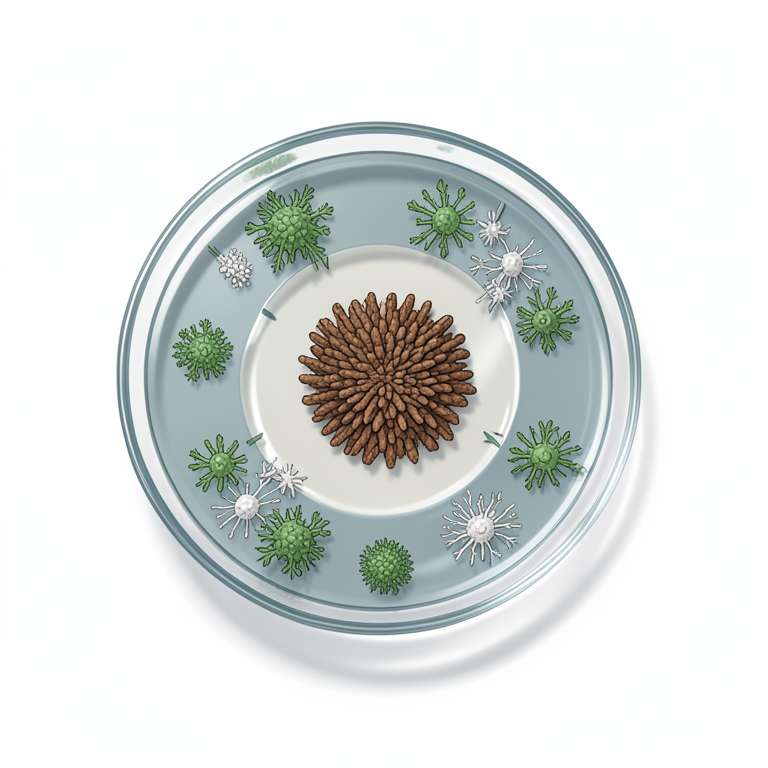
Experimental Setup Concept
AI-generated conceptual illustration (Rhizoctonia solani fungus and antagonistic microbes in a Petri dish). It explains the idea and does not show study data.
View source evidence ↗Figures & tables
From the original paper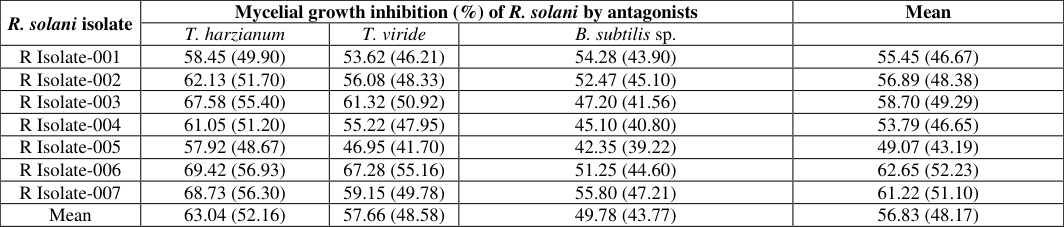 Table 1
Introduction
Broccoli (Brassica oleracea L. var. italica) has emerged as one of the most important vegetable crops worldwide due to its exceptional nutritional value and increasing market demand (Siomos et al., 2022) [15] . The crop is rich in vitamins A and C, minerals, fiber, and bioactive compounds, including glucosinolates and sulforaphane, which provide protective effects against cancer, diabetes, stroke, and myocardial infarction (Mittal et al., 2025) [12] . Broccoli is a high-value crop with the potential to double farmers' income through organic farming practices. The crop's by-products offer sustainable applications in developing agrochemicals, nanoparticles, and functional foods, supporting zero-waste solutions with economic benefits (Han et al., 2021) [5] . Chemical fungicides remain essential for crop disease control, but face significant limitations, including resistance development, environmental impacts, and regulatory challenges. Fungicide resistance can develop in virtually any pathogen through mechanisms such as target site alterations, efflux pump activation, and mutations (Janssen et al., 2024). This resistance poses a threat to effective crop protection across major fungicide classes, including benzimidazoles, sterol demethylation inhibitors, and succinate dehydrogenase inhibitors (Yin et al., 2023) [18] . The discovery of new fungicides faces mounting regulatory hurdles and increasing costs, though innovation continues, particularly in novel modes of action for oomycete control (Leadbeater, 2016) [9] . Resistance management strategies include rotating different modes of action, limiting applications of site-specific fungicides, and implementing Integrated Pest Management programs (Yin et al., 2023) [18] . Microbial antagonists play a crucial role in the biological control of plant pathogens, with Trichoderma, Pseudomonas, and Bacillus being the most prominent genera (Mahapatra et al., 2024) [11] .
Trichoderma species establish symbiotic relationships with plant roots and employ multiple mechanisms, including resource competition, production of antifungal metabolites, stimulation of plant defense mechanisms, and mycoparasitic interactions that directly attack pathogenic fungi (Elango et al., 2024) [3] . These biological control agents support sustainable disease management strategies and offer environmentally friendly alternatives to chemical pesticides, with proven effectiveness in laboratory, greenhouse, and field applications (Bansode, et al., 2022) [1] .
Materials and Methods
Isolation of Trichoderma and Bacillus spp.: Ten nonrhizosphere soil samples were collected from the agricultural fields of Chitali Putali village in the Jalna district to isolate Trichoderma and Bacillus spp. The soil samples were collected randomly and diagonally from a broccoli field and were used for the enumeration of fungi following the Soil Plate Method (Warcup 1950; Parkinson 1973) [13,17] on Martin's peptone dextrose agar medium. For the isolation of Bacillus bacteria, Thornton's standardized medium was utilized following the Soil Dilution and Plate Count Method (Waksman 1927) [16] . The Petri dishes were incubated at 28 ± 1°C for 5 days, and the recording of colonies for various microorganisms continued for 15 days or until no new colonies developed.
Test for Antagonism
Trichoderma spp. and Bacillus sp. isolated from infested soil were assessed for their antagonistic properties against seven isolates of R. solani on Czapek's dox medium in Petri dishes. A 5mm diameter piece of R. solani was transferred to the center of a Czapek's dox medium Petri dish, and circular pieces of T. harzianum and T. viride, grown on PDA, were placed at equidistant points near the periphery of the dishes. The Petri dishes were incubated at 28 ± 1°C for 7 days, and observations were made to record the growth inhibition of R. solani. For the Bacillus sp. paper disc plate method (Loo et al. 1945) [10] was implemented as follows. Circular discs (5 mm in diameter) made from Whatman filter paper (No. 42) were cut and dipped in the filtrate of Bacillus sp. These discs were then placed 2 cm inward from the periphery of Petri dishes at three equidistant points, with the inoculum of the pathogen (R. solani) positioned at the center. The inoculated dishes were kept in an incubator at a temperature of 28±1°C for 7 days, during which observations were made to measure the inhibition zone of R. solani.
Result and Discussion
Isolation of Trichoderma and Bacillus spp. A notable population of T. harzianum, T. viride, and various other fungal colonies was observed, alongside a similarly significant population of B. subtilis and other bacterial colonies. The results presented in Table 1 indicate that all three antagonists effectively inhibited the mycelial growth of the seven isolates of Rhizoctonia solani. Among these antagonists, Trichoderma harzianum demonstrated the highest mean inhibition rate at 63.04%, followed by T. viride at 57.66% and Bacillus subtilis at 49.78%. This suggests that T. harzianum was the most effective antagonist against the tested isolates. At the isolate level, the highest inhibition was measured in R-Isolate-006, with 69.42% inhibition by T. harzianum and 67.28% by T. viride. Conversely, the lowest inhibition was recorded in R Isolate-005, with only 42.35% inhibition by B. subtilis. Overall, the mean values indicate that while B. subtilis was comparatively less effective, but it still exhibited moderate suppression of the pathogen. Several studies have demonstrated the effectiveness of Trichoderma and Bacillus species as biocontrol agents against Rhizoctonia solani. Atef (2008) [1] found that combining T. harzianum and B. subtilis was more effective than using each agent alone for controlling wheat root rot, with the combination improving biochemical parameters in treated seedlings. Seema & Devaki (2012) [14] and Bansode et al (2022) [2] evaluated multiple biocontrol agents against R. solani, reporting that T. viride achieved 70% growth inhibition, T. harzianum 67%, and B. subtilis 50% in dual culture assays. The antagonistic effect was attributed to hyphal interactions causing pathogen lysis. Grosch et al. (2006) [4] selected six Trichoderma isolates, identified as T. reesei and T. viride, which significantly reduced Rhizoctonia symptoms in potato sprouts and controlled dry mass loss in lettuce under both controlled and field conditions. Interestingly, Kim et al. (2008) [2] demonstrated that certain Bacillus isolates could antagonize Trichoderma species, with isolates M27 and RM29 strongly inhibiting mycelial growth of T. harzianum, T. koningii, and T. viridescens.
| R. solani isolate | Mycelial growth inhibition (%) of R. solani by antagonists | — | — | Mean |
|---|---|---|---|---|
| T. harzianum | T. viride | B. subtilis sp. | ||
| R Isolate-001 | 58.45 (49.90) | 53.62 (46.21) | 54.28 (43.90) | 55.45 (46.67) |
| R Isolate-002 | 62.13 (51.70) | 56.08 (48.33) | 52.47 (45.10) | 56.89 (48.38) |
| R Isolate-003 | 67.58 (55.40) | 61.32 (50.92) | 47.20 (41.56) | 58.70 (49.29) |
| R Isolate-004 | 61.05 (51.20) | 55.22 (47.95) | 45.10 (40.80) | 53.79 (46.65) |
| R Isolate-005 | 57.92 (48.67) | 46.95 (41.70) | 42.35 (39.22) | 49.07 (43.19) |
| R Isolate-006 | 69.42 (56.93) | 67.28 (55.16) | 51.25 (44.60) | 62.65 (52.23) |
| R Isolate-007 | 68.73 (56.30) | 59.15 (49.78) | 55.80 (47.21) | 61.22 (51.10) |
| Mean | 63.04 (52.16) | 57.66 (48.58) | 49.78 (43.77) | 56.83 (48.17) |
Table text extracted from the original PDF; superscript letters are shown inline. The original table image is below.
View original table image
Conclusion
This study demonstrates that these biocontrol agents have potential for managing root rot diseases. Future research should focus on more comprehensive investigations into the relationships within various pathosystems and the interactions between microorganisms and host plants. Such studies are essential for developing effective biocontrol strategies for specific plant diseases.
Acknowledgement
Acknow2edgementThe author expresses gratitude to our esteemed research supervisors for their invaluable guidance and the provision of essential laboratory facilities throughout this project.
References
18 in the original paper- Atef NM. Bacillus subtilis and Trichoderma harzianum as wheat inoculants for biocontrol of Rhizoctonia solani. Aust J Basic Appl Sci. 2008;2(4):1411-1417.
- Bansode KD, Urdukhe YR, Mogle UP. Effect of Trichoderma viride, T. harzianum and Penicillium digitatum on guava fruit decaying pathogens. Bioinfolet Q J Life Sci. 2022;19(3):315-318.
- Elango S, Shahni YS, Padamini R, Hazarika S, Wongamthing R, Oraon S, et al. Harnessing microbial antagonists for biological control of plant pathogens: a global perspective. Microbiol Res J Int. 2024;34(5):117.
- Grosch R, Scherwinski K, Lottmann J, Berg G. Fungal antagonists of the plant pathogen Rhizoctonia solani: selection, control efficacy and influence on the indigenous microbial community. Mycol Res. 2006;110(12):1464-1474.
- Han F, Liu Y, Fang Z, Yang L, Zhuang M, Zhang Y, et al. Advances in genetics and molecular breeding of broccoli. Horticulturae. 2021;7(9):280.
- Hernández-Castillo FD, Castillo-Reyes F, TucuchPérez MA, Arredondo-Valdes R. Biological efficacy of Trichoderma spp. and Bacillus spp. in the management of plant diseases. In: Organic Agriculture [Internet]. IntechOpen; 2020. Available from: https://doi.org/10.5772/intechopen.91043
- Islam T, Danishuddin N, Tamanna NT, Matin MN, Barai HR, Haque MA. Resistance mechanisms of plant pathogenic fungi to fungicide, environmental impacts of fungicides, and sustainable solutions. Plants. 2024;13(19):2737.
- Kim WG, Weon HY, Seok SJ, Lee KH. In vitro antagonistic characteristics of Bacilli isolates against Trichoderma spp. and three species of mushrooms. Mycobiology. 2008;36(4):266.
- Leadbeater A. Recent developments and challenges in chemical disease control -a review. Plant Prot Sci. 2015;51(4):163-169.
- Loo YH, Skell PS, Thornberry HH, Ehrlich J, McGuire JM, Savage GM, et al. Assay of streptomycin by the paper-disc plate method. J Bacteriol. 1945;50(6):701-9.
- Mahapatra B, Ghosh D, Mukhopadhyay R. Biocontrol potential of Trichoderma and Pseudomonas: a review. Int J Adv Biochem Res. 2024;8(4S):129-132.
- Mittal R, Rasane P, Gunjal M, Singh J. Brassica oleracea as a functional crop: phytochemical potential and sustainable applications. J Sci Food Agric [Internet]. 2025. Available from: https://doi.org/10.1002/jsfa.14193
- Parkinson D. Techniques for the study of soil fungi. Bull Ecol Res Comm. 1973;(17):29-36.
- Seema M, Devaki NS. In vitro evaluation of biological control agents against Rhizoctonia solani. Int J Agric Technol. 2012;8:233-240.
- Siomos AS, Koularmanis K, Tsouvaltzis P. The impacts of the emerging climate change on broccoli (Brassica oleracea L. var. italica Plenck.) crop. Horticulturae. 2022;8(11):1032.
- Waksman SA. Principles of soil microbiology. Baltimore: Williams & Wilkins; 1927.
- Warcup JH. The soil-plate method for isolation of fungi from soil. Nature. 1950;166(4211):117-118.
- Yin Y, Miao J, Shao W, Liu X, Zhao Y, Ma Z. Fungicide resistance: progress in understanding mechanism, monitoring, and management. Phytopathology. 2023;113(4):707-718.