
Research article · 2025 · Full text
International Journal of Biology SciencesRespiratory distress and lung function among stone crushing unit workers
Volume 7(9) · Pages 46–51 · DOI: 10.33545/26649926.2025.v7.i9a.478 ↗
Research areasOccupational Health and Safety Research
Abstract
Author-writtenStone-crushing although an important industrial sector in India has continuously been associated with health and safety related issues. The exposures from the dust emanated by various mechanical process such as drilling, dressing and loading, can trigger health issues ranging from minor symptoms to severe diseases and even cancers if worsened. In this view, the present study aimed at assessment of respiratory distress and lung function profile of the workers (n=46; aged 44.47±1.18y). The interview method was used to collect the information from the workers regarding their demographic, lifestyle and health related concerns. The lung function was assessed using spirometer using standard methodology. The results of the study revealed that the majority of workers had complaints of cough, breathlessness, dust particles in sputum and wheezing. Blocked and stuffed nose, loss -of- appetite and tiredness and joint pains were the other health complaints reported by the workers. The lung function stratified according to activities revealed a significant decline in lung function in those employed in drilling followed by the dressers and loaders. The workers were also categorized as having moderate (n=24), severe (n=14) and very severe COPD according to the lung function parameters as per the GOLD guidelines. Body Mass Index, years of smoking, Brinkmann index, duration of work and work schedule emerged as significant predictors of decline in lung function the present study is a risk assessment in regard to safeguarding the health of workers employed in such units. The results of this study can help in implementation of surveillance and establishing precautionary approaches for making such workplaces to be better and safer in terms of health of those employed.
Summary
Source-checkedPlain-language reading of the full paper, prepared with AI and checked against the text. Each point links to the authors' own words.
Why it matters
- Dust generated during mechanical processes like drilling, dressing, and loading in stone-crushing units can cause health problems ranging from minor symptoms to severe diseases and cancer. View evidence ↗
- Free silica or silicon dioxide is a primary component of the dust found in stone-crushing environments. View evidence ↗
- There is a lack of baseline data regarding occupational exposure and health impacts in the Punjab region of India. View evidence ↗
The question
- The study aimed to assess the lung function profile and respiratory distress of 46 workers with an average age of 44.47±1.18 years. View evidence ↗
What they did
- The researchers used a cross-sectional study design approved by an Institutional Ethics Committee. View evidence ↗
- Participants were unrelated individuals from five stone-crushing units located in the Gurdaspur and Pathankot districts of Punjab. View evidence ↗
- Lung function was measured using a Spiro Excel spirometer to record Forced Vital Capacity (FVC), Forced Expiratory Volume per second (FEV1), and the FEV1/FVC ratio. View evidence ↗
- Workers were classified into Chronic Obstructive Pulmonary Disease (COPD) categories based on the 2010 GOLD guidelines. View evidence ↗
What they found
- Most workers reported respiratory symptoms, specifically wheezing, breathlessness, cough, and the presence of dust particles in their sputum. View evidence ↗
- Workers employed in drilling showed a significant decline in FEV1 and percent FEV1 (approximately 1.37 fold) compared to those in loading (1.35 fold). View evidence ↗
- Compared to moderate COPD cases, FEV1 was significantly lower in severe cases (1.54 times decrease) and very severe cases (2.41 times decrease). View evidence ↗
- Significant predictors for the decline of FEV1 included Body Mass Index (BMI), Body Surface Area (BSA), COPD category, specific work activities, and alcohol use. View evidence ↗
- The FEV1/FVC ratio was significantly affected by work schedule, work duration, the Brinkmann index, COPD category, and BSA. View evidence ↗
What it means
- The authors conclude there is an urgent need to educate both employers and employees on the importance of periodic health and lung function monitoring. View evidence ↗
- The authors highlight that the lack of recommended precautionary measures during unit setup and the failure to use protective gear contribute to adverse health outcomes for workers. View evidence ↗
Visual summary
1 visualsIllustrations explain the paper; they do not show study data.
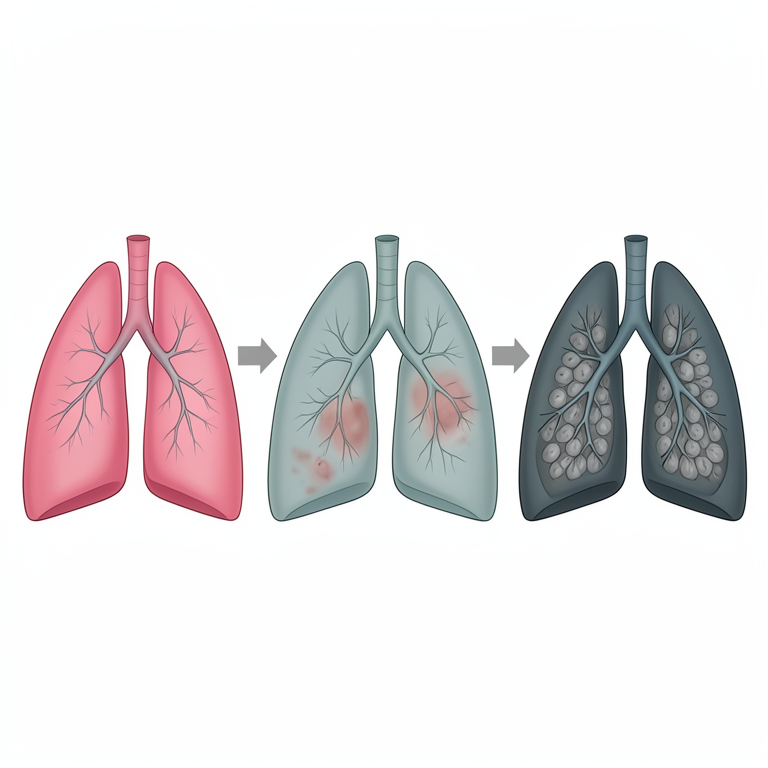
Lung Function Decline by Activity and Severity
AI-generated conceptual illustration (human lungs). It explains the idea and does not show study data.
View source evidence ↗Figures & tables
From the original paper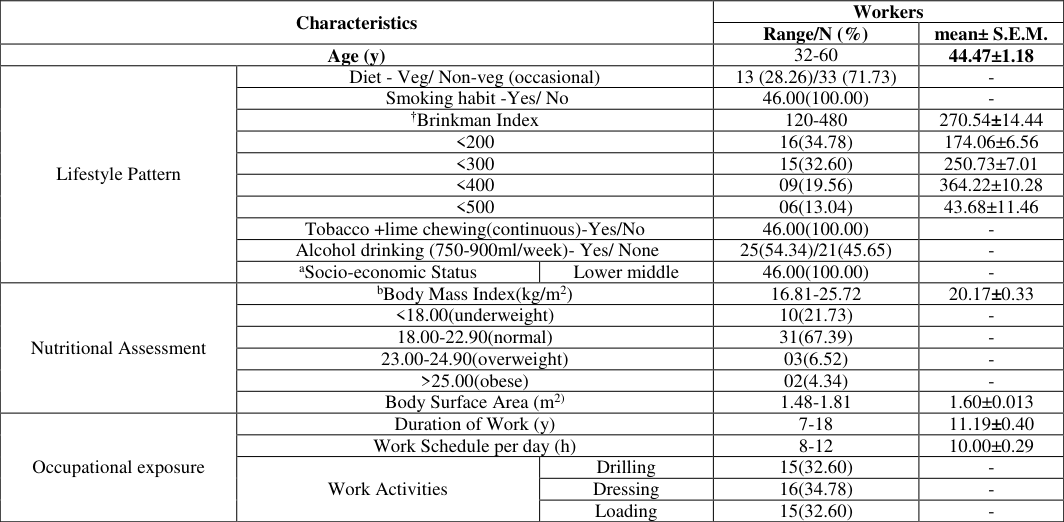 Table 1
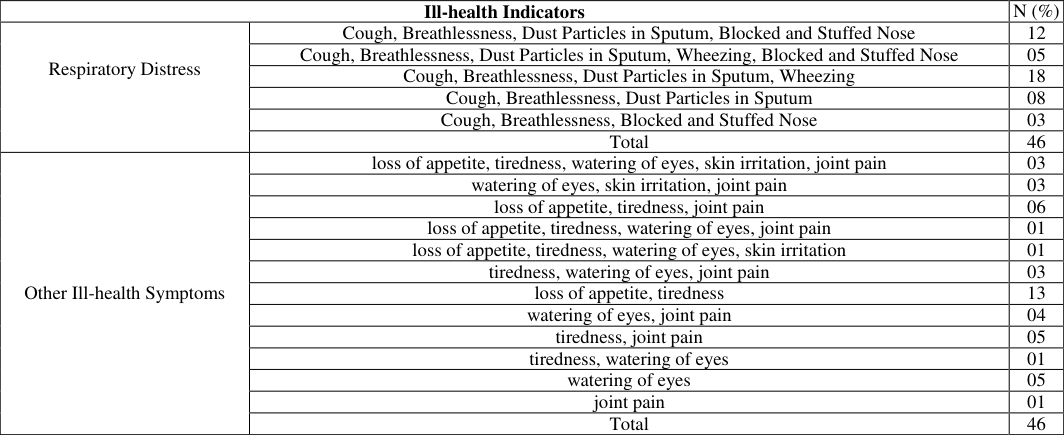 Table 2
 Table 3
 Table 4
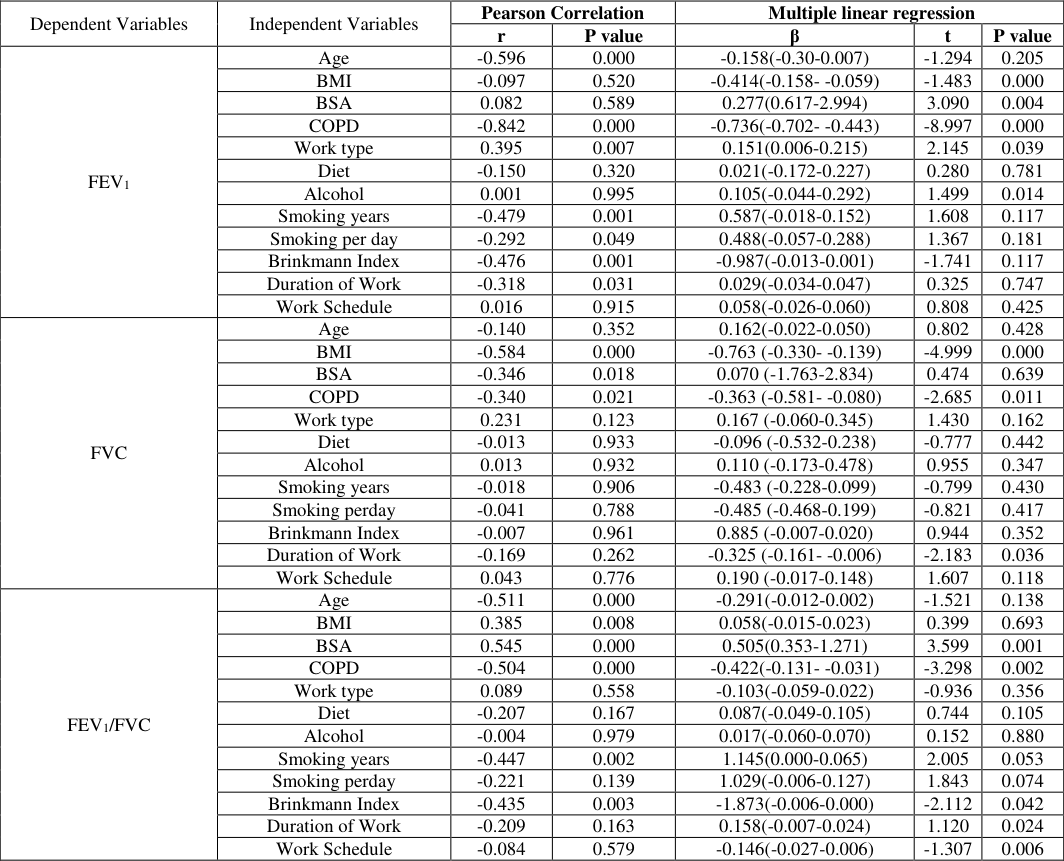 Table 5
Introduction
The construction industry caters to the need of raw material for construction and infrastructural development. In India the construction industry has been on a high-growth trajectory with about 1.5 times the country's overall development and mainly employs With scarce use of the protective measures, the workers at stone crushing units and residents near stone crushing units, the general environmental and occupational exposure coexists potentiating their vulnerability to ill-health from inhalation, dermal absorption ingestion or sedimentation of the dust particles. A few earlier studies from different units within India (Sobti and Bhardwaj, 1991; Kaur and Gandhi, 2011 a, b; Sivacoumar et al., 2001) [33,16,32] and abroad documented the potential environmental and health impacts because of exposure from this sector, the baseline exposure-situation from Punjab is rather sparse. Therefore, in the present study in situ pulmonary function test assessment to identify those with respiratory insufficiency and at risk for Chronic Obstructive Pulmonary Disease (COPD) was carried out in those engaged in different work activities at the stonecrushing units in the Gurdaspur and Pathankot districts of Punjab.
Materials and Methods
Study Design: The present study is a cross-sectional study conducted after approval from the Institutional Ethics Committee. The study group comprised unrelated individuals surveyed after written, informed voluntary consent from five stone-crushing units in Gurdaspur (32̊ 03'N, 7527'E) and Pathankot (32° 17' N, 75° 42' E) districts of Punjab.
Study Participants:
The proprietors/owners of the units were requested for permission to contact regularlyemployed workers at the stone crushing units. A face-toface interview method was used to collect demographic, work-related, health and reproductive history of the study participants on a specifically designed questionnaire. The Exclusion criteria were those undergoing any treatment(s) or medication(s) and those below 18 years of age. For inclusion in the study, criteria comprised unrelated (males) adults working at the stone-crushing units for more than five years.
Nutritional Status Assessment: Using a steel tape height (cm) and a weighing machine, weight (kg) were recorded as recommended by Weiner and Lourie (1981) [36] . To assess the nutritional status, Body Mass Index (BMI in kg/m 2 ) was calculated by dividing the weight (kg) by square of height (m 2 ).
Pulmonary Function Assessment-
The pulmonary function testing carried by using a spirometer (Spiro Excel, Medicaid Systems, India) and a record for each worker was maintained for forced expiratory volume per second (FEV1; l), Forced Vital capacity (FVC; l), Forced Expiratory Ratio (FEV1 /FVC), predicted values of FEV1 and FVC from the software and of body surface area (BSA, m 2 ). The workers were then categorized into different COPD categories as per the GOLD (Global Initiative for Chronic Obstructive Lung Disease) guidelines (2010). Statistical analysis: Demographic variables, occupational information and health effects are given as ranges (minmax), numbers and percentages. The continuous study characteristics and the lung function parameters are presented as mean ±S.E.M. One way Analysis of Variance (ANOVA) was performed for multiple comparisons of the lung function parameters between work activity types and COPD categories. Pearson correlation analysis checked for any association between lung function and confounding variables. To identify the predictors of decline in lung function multiple linear regression analysis was performed. All the statistical analysis was done using the SPSS (version 16). The p value ≤0.05 was considered for significance.
Results
Male workers (n=46; male) at stone-crushing units for 7-18y (11.19± 0.40y) and aged 32-60y (44.47±1.18y) comprised the study participants (Table 1). On the basis of education level, occupation and monthly income (Kumar), workers had low middle socio-economic status. BMI (16.81-25.72kg/m 2 ) revealed 21.73%underweight and 4.34% obese and the BSA was 1.60± 0.01 m 2 (range 1.48-1.81m 2 ). Brinkmann index (multiplying number of bidis (Indian rolled cigarettes) smoked with years of smoking) ranged from 120-480 (270.54±14.44).The main occupational activities of the workers were stone-drilling (32.60%),dressing (34.78%) and -loading (32.60%) with a daily work schedule of 8-12h (10.00±0.29h). Occasional alcohol drinking was prevalent among 54.34% while all smoked and chewed tobacco. The workers mostly complained of respiratory distress (Table 2) from workplace exposure. Cough, breathlessness, dust particles in sputum and wheezing were self-reported by 39.13%; 26.08% had the first three complaints and of blocked and stuffed nose, whereas in addition to these, 10.56% also had problem of wheezing. The other major complaints included loss -of-appetite and tiredness (28.26%) and joint pains (13.04%). Lung-function (Table 3) was lowest in the drillers followed by that in dressers and loaders. The FEV1 (p=0.016) and the per cent FEV 1 (p=0.008) were significantly decreased ( ̴ 1.37 folds) in drillers compared to the loaders (1.35 fold) fold significantly decreased FEV1 (p=0.018) and % predicted FEV1(0.010) was observed in dressers in comparison to the loaders (Table 4). As a function of COPD categories (Table 4) the FEV1 and the FEV1/FVC values were decreased in very severe cases than those severe and moderate COPD cases. The FVC values were almost similar in severe and very severe categories but were decreased from those in moderate cases. The % predicted values of FEV1, FVC as well as FEV1/FVC were all lower in very severe cases followed by severe and moderate cases. The FEV1 was decreased significantly 1.54 times in severe COPD cases (p=0.000) and 2.41 times in very severe COPD cases (p=0.000) in comparison to the moderate COPD cases. FEV1 was also significantly (p=0.004) 1.56 fold decreased in very severe COPD cases compared to the severe COPD cases. The FVC values were significantly decreased 1.25 fold (p=0.010) in severe COPD cases when compared to the moderate cases. The per cent predicted values of FEV1/FVC decreased significantly in very severe COPD cases in comparison to severe (p=0.031) and moderate COPD cases (p=0.001). The correlation analysis (Table 5) revealed a negatively significant association of age (p=0.000), COPD categories (p=0.000), smoking per day (p=0.049), years of smoking (p=0.001) and brinkmann index (p=0.001) with FEV1, though the work type at the workplace was positively (p=0.007) associated to FEV1. BMI (p=0.000), BSA (p=0.018) and COPD categories (p=0.021) were negatively correlated to FVC. The FEV1/FVC was observed to be negatively associated to age (p=0.000), COPD categories (p=0.000), years of smoking (p=0.002) and brinkmann index (p=0.003) though was positively correlated to BMI and BSA. To assess for any predictors of decline in lung function, multiple linear regression analysis (Table5) was done. BMI (p=0.000), BSA (p=0.004), COPD (p=0.000), work activities at workplace (p=0.039) and alcohol were observed to be significant predictors of decline in FEV1. The predictors of decline in FVC values were BMI (p=0.000), COPD (p=0.011), work duration (p=0.036). The FEV1/FVC ratio was significantly influenced by BSA (p=0.001), COPD (p=0.002), years of smoking (p=0.053), brinkmann index (p=0.042), duration of work (p=0.024) and work schedule (p=0.006).
| Dependent Variables | Independent Variables | Pearson Correlation | — | Multiple linear regression | — | — |
|---|---|---|---|---|---|---|
| r | P value | β | t | P value | ||
| FEV1 | Age | -0.596 | 0.000 | -0.158(-0.30-0.007) | -1.294 | 0.205 |
| BMI | -0.097 | 0.520 | -0.414(-0.158- -0.059) | -1.483 | 0.000 | |
| BSA | 0.082 | 0.589 | 0.277(0.617-2.994) | 3.090 | 0.004 | |
| COPD | -0.842 | 0.000 | -0.736(-0.702- -0.443) | -8.997 | 0.000 | |
| Work type | 0.395 | 0.007 | 0.151(0.006-0.215) | 2.145 | 0.039 | |
| Diet | -0.150 | 0.320 | 0.021(-0.172-0.227) | 0.280 | 0.781 | |
| Alcohol | 0.001 | 0.995 | 0.105(-0.044-0.292) | 1.499 | 0.014 | |
| Smoking years | -0.479 | 0.001 | 0.587(-0.018-0.152) | 1.608 | 0.117 | |
| Smoking per day | -0.292 | 0.049 | 0.488(-0.057-0.288) | 1.367 | 0.181 | |
| Brinkmann Index | -0.476 | 0.001 | -0.987(-0.013-0.001) | -1.741 | 0.117 | |
| Duration of Work | -0.318 | 0.031 | 0.029(-0.034-0.047) | 0.325 | 0.747 | |
| Work Schedule | 0.016 | 0.915 | 0.058(-0.026-0.060) | 0.808 | 0.425 | |
| FVC | Age | -0.140 | 0.352 | 0.162(-0.022-0.050) | 0.802 | 0.428 |
| BMI | -0.584 | 0.000 | -0.763 (-0.330- -0.139) | -4.999 | 0.000 | |
| BSA | -0.346 | 0.018 | 0.070 (-1.763-2.834) | 0.474 | 0.639 | |
| COPD | -0.340 | 0.021 | -0.363 (-0.581- -0.080) | -2.685 | 0.011 | |
| Work type | 0.231 | 0.123 | 0.167 (-0.060-0.345) | 1.430 | 0.162 | |
| Diet | -0.013 | 0.933 | -0.096 (-0.532-0.238) | -0.777 | 0.442 | |
| Alcohol | 0.013 | 0.932 | 0.110 (-0.173-0.478) | 0.955 | 0.347 | |
| Smoking years | -0.018 | 0.906 | -0.483 (-0.228-0.099) | -0.799 | 0.430 | |
| Smoking perday | -0.041 | 0.788 | -0.485 (-0.468-0.199) | -0.821 | 0.417 | |
| Brinkmann Index | -0.007 | 0.961 | 0.885 (-0.007-0.020) | 0.944 | 0.352 | |
| Duration of Work | -0.169 | 0.262 | -0.325 (-0.161- -0.006) | -2.183 | 0.036 | |
| Work Schedule | 0.043 | 0.776 | 0.190 (-0.017-0.148) | 1.607 | 0.118 | |
| FEV1/FVC | Age | -0.511 | 0.000 | -0.291(-0.012-0.002) | -1.521 | 0.138 |
| BMI | 0.385 | 0.008 | 0.058(-0.015-0.023) | 0.399 | 0.693 | |
| BSA | 0.545 | 0.000 | 0.505(0.353-1.271) | 3.599 | 0.001 | |
| COPD | -0.504 | 0.000 | -0.422(-0.131- -0.031) | -3.298 | 0.002 | |
| Work type | 0.089 | 0.558 | -0.103(-0.059-0.022) | -0.936 | 0.356 | |
| Diet | -0.207 | 0.167 | 0.087(-0.049-0.105) | 0.744 | 0.105 | |
| Alcohol | -0.004 | 0.979 | 0.017(-0.060-0.070) | 0.152 | 0.880 | |
| Smoking years | -0.447 | 0.002 | 1.145(0.000-0.065) | 2.005 | 0.053 | |
| Smoking perday | -0.221 | 0.139 | 1.029(-0.006-0.127) | 1.843 | 0.074 | |
| Brinkmann Index | -0.435 | 0.003 | -1.873(-0.006-0.000) | -2.112 | 0.042 | |
| Duration of Work | -0.209 | 0.163 | 0.158(-0.007-0.024) | 1.120 | 0.024 | |
| Work Schedule | -0.084 | 0.579 | -0.146(-0.027-0.006) | -1.307 | 0.006 |
Table text extracted from the original PDF; superscript letters are shown inline. The original table image is below.
View original table image
| Pulmonary Function Parameters | COPD Categories | — | — | Total |
|---|---|---|---|---|
| Moderate(N=24) | Severe(N=14) | Very Severe(N=08) | ||
| FEV1 | 2.15***±0.08a | 1.39**±0.05b/c | 0.89±0.14b/d | 1.70±0.08 |
| FVC | 3.29**±0.10a | 2.63±0.16b | 2.83±0.33 | 3.01±0.10 |
| FEV1/ FVC | 0.63±0.01 | 0.57±0.03 | 0.42±0.08 | 0.58±0.02 |
| % FEV1 predicted | 62.66±2.12 | 43.28±1.14 | 28.12±1.52 | 50.76±2.32 |
| %FVC predicted | 79.98±2.37 | 68.24±5.26 | 72.82±9.14 | 75.16±2.61 |
| %FEV1/ FVC predicted | 0.79***±0.01a | 0.73*±0.04a1 | 0.54±0.10b | 0.73±0.02 |
Table text extracted from the original PDF; superscript letters are shown inline. The original table image is below.
View original table image
| Pulmonary Function Parameters | Work Categories | — | — | Total |
|---|---|---|---|---|
| Drilling (N=15) | Dressing (N=16) | Loading (N=15) | ||
| FEV1 | 1.51±0.14a1 | 1.53±0.11a | 2.08**±0.15b | 1.70±0.08 |
| FVC | 2.85±0.19 | 2.93±0.18 | 3.25±0.14 | 3.01±0.10 |
| FEV1/ FVC | 0.57±0.04 | 0.56±0.03 | 0.60±0.03 | 0.58±0.02 |
| % FEV1 predicted | 45.12±1.08a1 | 45.97±3.03a | 61.50**±3.68b | 50.76±2.32 |
| %FVC predicted | 71.08±4.96 | 74.02±5.08 | 80.46±3.11 | 75.16±2.61 |
| %FEV1/ FVC predicted | 0.72±0.05 | 0.71±0.04 | 0.76±0.04 | 0.73±0.02 |
Table text extracted from the original PDF; superscript letters are shown inline. The original table image is below.
View original table image
| Ill-health Indicators | — | N (%) |
|---|---|---|
| Respiratory Distress | Cough, Breathlessness, Dust Particles in Sputum, Blocked and Stuffed Nose | 12 |
| Cough, Breathlessness, Dust Particles in Sputum, Wheezing, Blocked and Stuffed Nose | 05 | |
| Cough, Breathlessness, Dust Particles in Sputum, Wheezing | 18 | |
| Cough, Breathlessness, Dust Particles in Sputum | 08 | |
| Cough, Breathlessness, Blocked and Stuffed Nose | 03 | |
| Total | 46 | |
| Other Ill-health Symptoms | loss of appetite, tiredness, watering of eyes, skin irritation, joint pain | 03 |
| watering of eyes, skin irritation, joint pain | 03 | |
| loss of appetite, tiredness, joint pain | 06 | |
| loss of appetite, tiredness, watering of eyes, joint pain | 01 | |
| loss of appetite, tiredness, watering of eyes, skin irritation | 01 | |
| tiredness, watering of eyes, joint pain | 03 | |
| loss of appetite, tiredness | 13 | |
| watering of eyes, joint pain | 04 | |
| tiredness, joint pain | 05 | |
| tiredness, watering of eyes | 01 | |
| watering of eyes | 05 | |
| joint pain | 01 | |
| Total | 46 |
Table text extracted from the original PDF; superscript letters are shown inline. The original table image is below.
View original table image
| Characteristics | — | — | Workers | — |
|---|---|---|---|---|
| Range/N (%) | mean± S.E.M. | |||
| Age (y) | 32-60 | 44.47±1.18 | ||
| Lifestyle Pattern | Diet - Veg/ Non-veg (occasional) | 13 (28.26)/33 (71.73) | - | |
| Smoking habit -Yes/ No | 46.00(100.00) | - | ||
| †Brinkman Index | 120-480 | 270.54±14.44 | ||
| <200 | 16(34.78) | 174.06±6.56 | ||
| <300 | 15(32.60) | 250.73±7.01 | ||
| <400 | 09(19.56) | 364.22±10.28 | ||
| <500 | 06(13.04) | 43.68±11.46 | ||
| Tobacco +lime chewing(continuous)-Yes/No | 46.00(100.00) | - | ||
| Alcohol drinking (750-900ml/week)- Yes/ None | 25(54.34)/21(45.65) | - | ||
| aSocio-economic Status | Lower middle | 46.00(100.00) | - | |
| Nutritional Assessment | bBody Mass Index(kg/m2) | 16.81-25.72 | 20.17±0.33 | |
| <18.00(underweight) | 10(21.73) | - | ||
| 18.00-22.90(normal) | 31(67.39) | - | ||
| 23.00-24.90(overweight) | 03(6.52) | - | ||
| >25.00(obese) | 02(4.34) | - | ||
| Body Surface Area (m2) | 1.48-1.81 | 1.60±0.013 | ||
| Occupational exposure | Duration of Work (y) | 7-18 | 11.19±0.40 | |
| Work Schedule per day (h) | 8-12 | 10.00±0.29 | ||
| Work Activities | Drilling | 15(32.60) | - | |
| Dressing | 16(34.78) | - | ||
| Loading | 15(32.60) | - |
Table text extracted from the original PDF; superscript letters are shown inline. The original table image is below.
View original table image
Discussion
As stated in literature, the present study also showed that stone-crushing is associated with a high frequency of respiratory symptoms and other ill-health effects. The lung function of workers helped to characterize the workers as having chronic obstructive pulmonary disease probably from aggravation from exposure to irritants at the workplace. Dust at stone-crushing was reported to have components of heavy metals viz. lead, chromium, cadmium, selenium, nickel, iron and titanium with silica as a major component (Sobti and Bhardwaj, 1991; Golbabaei et al., 2004; Gottesfeld et al., 2008;Ugbogu et al., 2009) [33,6,8,35] . There is also ample evidence that occupational exposures from vapors, gas, dust, and fumes are risk factors for COPD (Omland et al., 2014) [29] . Silica dust induced pathological changes which could cause development of COPD (Hnizdo and Vallyathan, 2003) [11] probably from chronic inflammation, bronchitis and emphysema as reported in response to inhalant oxidants generated by smoking and other environmental exposures (Olivieri and Scoditti, 2005; Sangani and Ghio, 2011) [30,31] . Cell injury/ cytotoxicity in lung tissues can obstruct air flow (Miller and Zachary, 2017) [23] . The multi-causal nature of COPD results from the interaction of various risk factors at workplace or from lifestyles can pre-empt generation of reactive oxygen/ nitrogen species, secretion of proinflammatory factors, cytokines, chemokines, elastase, (Li et al., 1996; Li et al., 1997) and fibrogenic factors. Besides smoking, air pollution, infections, socioeconomic status or host factors (genes, airway hyper-responsiveness, or lung growth have also been independently related to an increased risk for COPD. All the workers had respiratory distress and declined lung function with characteristics of moderate, severe or very severe COPD. Despite this, the workers did not consult any physicians and were not on any treatments. Determinants of declined lung function were Workplace exposure, different activities of crushing, smoking and BMI. In literature also, occupational consequences have been reported to include significant decrease in the mean values and percent predicted values of lung function in construction workers, with increased impairment from duration of dust-exposure at construction site (Jhoncy et al., 2011) [15] . Quarry workers in Ebonyi State, Nigeria reported respiratory problems of chest pain, occasional cough, shortness of breath, wheezing and decline in lung function with a significant inverse correlation of FEV1 with duration of exposure (Nwibo et al., 2012) [28] . Significant reduction in mean values of FVC, FEV1, FVC/FEV1 per cent, PEF, and FEF25-75 per cent was reported in quarry workers in Andhra Pradesh and reduction of pulmonary function showed positive correlation with duration of work (Kumar et al., 2014) [20] . Other health issues in workers engaged at a stone crusher in Bhopal were musculoskeletal problems, generalized weakness and breathing difficulties with respiratory problems higher in those >5y of occupational exposure (Narkhede et al., 2012).Both quarry (Ugbogu et al., 2009; Golbabaei et al., 2004) [35,6] and stone-crusher (Sivacoumar et al., 2006) [32] workers have self-reported cough, shortness of breath, eyeirritation and watering, blocked/stuffed nose, dry/sore throat, tiredness and joint/muscle pains as also reported by the present study participants. Besides employees, the environmental and occupational exposures can compromise the health conditions of those living nearby such units. Inhalation in airways can induce an inflammatory reaction, fibrosis which can defective oxygen diffusion and lung function impairement (Jhoncy et al., 2011) [15] . Decreased pulmonary function has the potential to progress to lung damage and lung disease. Inhalation of dust particles for long periods reportedly caused silicosis (Sivacoumar et al., 2006) [32] , pneumoconiosis (Green et al., 2008) and chronic obstructive pulmonary disease (Iftikhar et al., 2009) [12] . Inhalable particulate matter (PM) can impair lung function and cause respiratory damage, which in severe cases can lead to lung cancer (Sivacoumar et al., 2006) [32] . The processes at stonecrushing units release dust rich in crystalline silica; its exposure is linked to chronic lung disease, tuberculosis, chronic renal disease and also the autoimmune diseases of rheumatoid arthritis (Gottesfeld et al., 2008) [8] . Therefore, the results of the present study support evidence in literature linking exposure to occupational hazards with adverse effects. These may initiate as asymptomatic physiological and biochemical changes and progress onto severe lung disease (Ilyas et al., 2010; Nwibo et al., 2012) [28] and mortality (Nwibo et al., 2012) [28] . Impaired pulmonary function and respiratory distress have been observed in the workers at stone-crushing units in the present study. All of these have symptomatology and decreased ling-functions characteristics of various stages of chronic obstructive pulmonary disease. A dire need to sensitize the employer/employee duo has been observed though during the course of the study, appropriate counsel has been given for periodic general health and lung-function monitoring. The absence of precautionary measures in setting-up of stone-crushing units as per recommendations and non-use of adequate protective gear are other notables which can have health consequences on workers.
References
35 in the original paper- Bahrami AR, Golbabai F, Mahjub H, Qorbani F, Aliabadi M, Barqi M. Determination of exposure to respirable quartz in the stone crushing units at Azendarian-West of Iran. Industrial Health. 2008;46:404-408.
- Brook RD, Rajagopalan S, Pope CA, Brook JR, et al. American Heart Association Council on Epidemiology and Prevention, Council on the Kidney in Cardiovascular Disease, and Council on Nutrition, Physical Activity and Metabolism. Particulate matter air pollution and cardiovascular disease: An update to the scientific statement from the American Heart Association. Circulation. 2010;121(21):2331-2378.
- Chattopadhyay BP, Gangopadhyay PK, Bandopadhyay TS, Alam J. Comparison of pulmonary function test abnormalities between stone crushing dust exposed and non-exposed agricultural workers. Environmental Health and Preventive Medicine. 2006;11:191-198.
- Demircigil GC, Coskun E, Vidinli N, Erbay Y, Yilmaz M, Cimrin A, Schins RP, Borm PJ, Burgaz S. Increased micronucleus frequencies in surrogate and target cells from workers exposed to crystalline silica-containing dust. Mutagenesis. 2010;25:1-7.
- Du Y, Xu X, Chu M, Guo Y, Wang J. Air particulate matter and cardiovascular disease: the epidemiological, biomedical and clinical evidence. Journal of Thoracic Disease. 2016;8(1):E8-E19.
- Golbabaei F, Barghi MA, Sakhaei M. Evaluation of workers' exposure to total, respirable and silica dust and the related health symptoms in Senjedak stone quarry, Iran. Industrial Health. 2004;42(1):29-33.
- Global Initiative for Chronic Obstructive Lung Disease (GOLD). Global strategy for the diagnosis, management, and prevention of chronic obstructive pulmonary disease. 2010:1-117. Available from: http://www.goldcopd.org/uploads/users/files/GOLDRep ort_April112011
- Gottesfeld P, Balakrishnan K, Rineheart R. Reduction of respirable silica following the introduction of water spray applications in Indian stone crusher mills. International Journal of Occupational and Environmental Health. 2008;14:94-103.
- Green DA, McAlpine G, Semple S, Cowie H, Seaton A. Mineral dust exposure in young Indian adults: an effect on lung growth? Occupational and Environmental Medicine. 2008;65:1-6.
- Tiwary G, Gangopadhyay PK. A review on the occupational health and social security of unorganized workers in the construction industry. Indian Journal of Occupational and Environmental Medicine. 2011;15(1):18-24.
- Hnizdo E, Vallyathan V. Chronic obstructive pulmonary disease due to occupational exposure to silica dust: a review of epidemiological and pathological evidence. Occupational and Environmental Medicine. 2003;60:237-243.
- Iftikhar B, Khan MH, Hussain H, Iqbal M, Jadoon GS. Relationship between silica dust exposure and chronic obstructive pulmonary disease in workers of dust generating industries of district Peshawar. Gomal Journal of Medical Sciences. 2009;7(1):46-50.
- Ilahi I, Khan A, Ali M, Ullah U, Ali J. Effects of stone dust exposure on some liver and kidney related serum parameters of stone crush plant workers. Journal of Biology and Life Science. 2012;3(1):211-219.
- Ilyas M, Rasheed F. Health and environment related issues in stone crushing in Pakistan. 10th Round Regional Research Competition of South Asia Network of Economic Research Institutes. 2010:1-15.
- Jhoncy SS, Ajay KT, Dhanyakumar G, Prabhu RN, Samuel V. Effect of occupational exposure to dust on pulmonary function in workers associated with building demolition. Biomedical Research. 2011;22(2):241-247.
- Kojima S, Sakakibara H, Motani S, Hirose K, Mizuno F, Ito M, Hashimoto S. Effects of smoking and age on chronic obstructive pulmonary disease in Japan. Journal of Epidemiology. 2005;15(4):113-117.
- Krishnakumar P, Indumathi T. Social issues and risk bearing capacity of migrant workers of construction industry in Erode District. Indian Journal of Applied Research. 2015;5(12):386-388.
- Kumar CK, Reddy M, Singh SB, Krishna B, Sasikala P, Shravya Keerthi G, Siva Kumar AV, Kareem SK. Deterioration of pulmonary function in stone quarry workers. Biomedical Research. 2014;25(2):261-266.
- Kumar N, Gupta N, Kishore J. Kuppuswamy's socioeconomic scale: updating income ranges for the year 2012. Indian Journal of Public Health. 2012;56(1):103-104.
- Kyung SY, Jeong SH. Particulate-matter related respiratory diseases. Tuberculosis and Respiratory Diseases. 2020;83(2):116-121.
- Miller MA, Zachary JF. Mechanisms and morphology of cellular injury, adaptation, and death. In: Pathologic Basis of Veterinary Disease. 2017:2-43.e19.
- Misra A, Chowbey P, Makkar BM, Vikram NK, Wasir JS, Chadha D, et al. Consensus statement for diagnosis of obesity, abdominal obesity and the metabolic syndrome for Asian Indians and recommendations for physical activity, medical and surgical management. Journal of the Association of Physicians of India. 2009;57:163-169.
- Narkhede V, Likhar S, Mishra MK. Morbidity profile of stone crusher workers with special reference to respiratory morbidity -a cross-sectional study. National Journal of Community Medicine. 2012;3(3):368-371.
- National Sample Survey Organisation. Informal sector and conditions of employment in India 2004-05, NSS 61st Round. Ministry of Statistics and Programme Implementation, Government of India. 2007:60-61.
- Neuberger M, Moshammer H, Schwebstaub L. Suspended particulates and lung health. Wiener Klinische Wochenschrift. 2004;116(Suppl 1):8-12.
- Nwibo AN, Ugwuja EI, Nwambeke NO, Emelumadu OF, Ogbonnaya LU. Pulmonary problems among quarry workers of stone crushing industrial site at Umuoghara, Ebonyi State, Nigeria. International Journal of Occupational and Environmental Medicine. 2012;3(4):178-185.
- Omland Ø, Würtz ET, Aasen TB, Blanc P, Brisman JB, Miller MR, Pedersen OF, Schlünssen V, Sigsgaard T, Ulrik CS, Viskum S. Occupational chronic obstructive pulmonary disease: a systematic literature review. Scandinavian Journal of Work, Environment and Health. 2014;40(1):19-35.
- Olivieri D, Scoditti E. Impact of environmental factors on lung defences. European Respiratory Review. 2005;14:51-56.
- Sangani RG, Ghio AJ. Lung injury after cigarette smoking is particle related. International Journal of COPD. 2011;6:191-198.
- Sivacoumar R, Jayabalou R, Swarnalatha S, Balakrishnan K. Particulate matter from stone crushing industry: size distribution and health effects. Journal of Environmental Engineering. 2006;132:405-414.
- Sobti RC, Bhardwaj DK. Cytogenetic damage and occupational exposure. I. Exposure to stone dust. Environmental Research. 1991;56:25-30.
- Tseng E, Ho WC, Lin MH, Cheng TJ, Chen PC, Lin HH. Chronic exposure to particulate matter and risk of cardiovascular mortality: cohort study from Taiwan. BMC Public Health. 2015;15:936.
- Ugbogu OC, Ohakwe J, Foltescu V. Occurrence of respiratory and skin problems among manual stonequarrying workers. Mera: African Journal of Respiratory Medicine. 2009;7:23-26.
- Weiner JS, Lourie JA. Human biology: a guide to field methods. In: Practical Human Biology. New York: Academic Press; 1991:1-230.
- WHO Expert Consultation. Appropriate body-mass index for Asian populations and its implications for policy and intervention strategies. The Lancet. 2004;363:157-163.