
Research article · 2025 · Full text
International Journal of Agriculture and Food ScienceFormulation and development of high protein, gluten free soda crackers enchriched with Pithecellobium Dulce aril powder
Volume 7(9) · Pages 238–243 · DOI: 10.33545/2664844x.2025.v7.i9c.751 ↗
Research areasbiodegradable polymer synthesis and properties
Abstract
Author-writtenThis study developed and evaluated gluten-free soda crackers enriched with Pithecellobium Dulce (Manila tamarind) aril powder. The crackers, formulated with a blend of gluten-free flours and P. dulce powder, showed improved nutritional profiles, including increased protein, crude fiber, and reduced glycemic index. Physical properties and sensory qualities were also enhanced, with samples T2 and T3 receiving high scores for color, aroma, crunchiness, taste, and overall acceptability. The addition of P. dulce aril powder improved the nutritional and sensory qualities of the crackers, making them a nutritious and acceptable alternative to traditional gluten-containing crackers. This study highlights the potential of P. dulce as a valuable ingredient in gluten-free baking, offering a convenient and nutritious food product for individuals with celiac disease or gluten intolerance.
Summary
Source-checkedPlain-language reading of the full paper, prepared with AI and checked against the text. Each point links to the authors' own words.
Why it matters
- There is a rising demand for gluten-free food products because more people are experiencing gluten-related disorders like gluten intolerance and celiac disease. View evidence ↗
- Manila tamarind (Pithecellobium Dulce) is a fruit containing essential vitamins, minerals, antioxidants, and anti-inflammatory compounds. View evidence ↗
- Manila tamarind is highly perishable, which leads to significant losses after harvest. View evidence ↗
The question
- The study aimed to develop gluten-free soda crackers enriched with P. dulce aril powder and evaluate their nutritional, sensory, and physicochemical properties. View evidence ↗
What they did
- The crackers were made using a composite flour blend consisting of rice, buckwheat, soy, and sweet potato flours. View evidence ↗
- Five sample types were tested: a wheat-based control (T0) and four gluten-free versions (T1-T4) with increasing amounts of P. dulce aril powder (2.5g, 5g, 7.5g, and 10g). View evidence ↗
What they found
- Protein content increased as more P. dulce aril powder was added, rising from 2.73±0.09% in the control to 9.77±1.30% in sample T4. View evidence ↗
- Crude fiber content increased with the addition of P. dulce aril powder, from 1.55±0.15% in the control to 6.22±1.50% in T4. View evidence ↗
- Carbohydrate levels decreased as P. dulce aril powder was added, dropping from 83.76±0.11% in the control to 64.97±0.73% in T4. View evidence ↗
- The thickness of the crackers decreased from 4mm in the control (T0) to 3mm in sample T4. View evidence ↗
- Texture analysis indicated that sample T2 possessed the highest values for hardness, fracturability, adhesiveness, springiness, cohesiveness, chewiness, and resilience. View evidence ↗
- Sample T2 received the highest sensory scores across all categories, including taste, aroma, and overall acceptability. View evidence ↗
What it means
- The authors conclude that P. dulce aril powder is a promising functional ingredient for creating healthy, nutritious gluten-free snacks. View evidence ↗
- The authors suggest further research to test P. dulce aril powder in other foods and to evaluate its long-term storage stability. View evidence ↗
Visual summary
1 visualsIllustrations explain the paper; they do not show study data.
Experimental Design
AI-generated conceptual illustration (Gluten-free soda crackers and Pithecellobium dulce aril powder). It explains the idea and does not show study data.
View source evidence ↗Figures & tables
From the original paper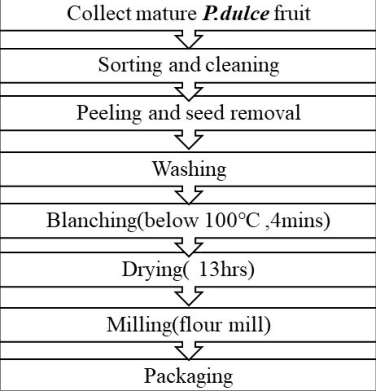 Figure 1
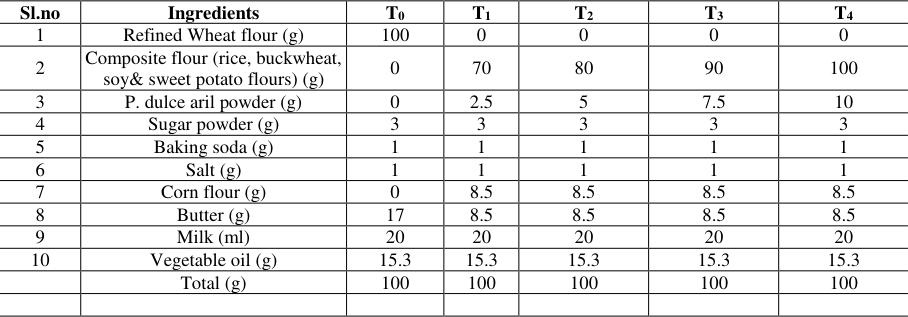 Table 1
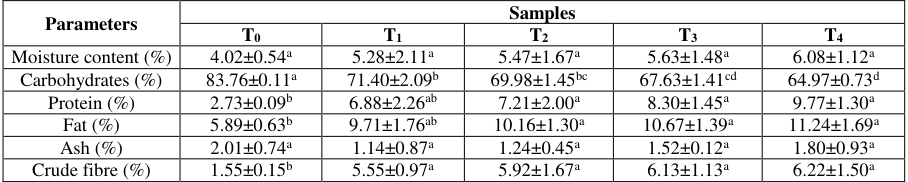 Table 2
 Table 3
 Table 4
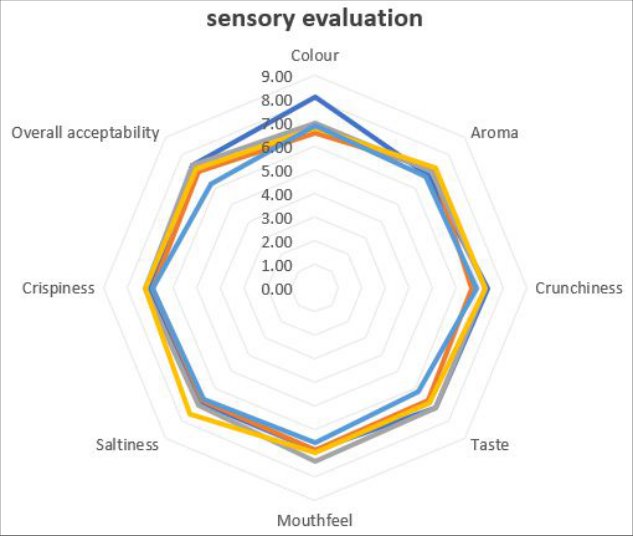 Figure 2
Introduction
The demand for gluten-free products has been increasing rapidly due to the growing prevalence of gluten-related disorders, such as celiac disease and gluten intolerance. Gluten-free soda crackers are one such product that can be manufactured using a blend of gluten-free flours. However, the addition of other grains and ingredients can enhance the nutritional value, taste, and health benefits of these crackers. Nutrition and taste must go hand in hand if one is to lead a healthy lifestyle. Crackers are thin and crisp products baked from unsweetened and unleavened dough. Based on the ingredients and production methods. the difference of baked cracker before and after baking to the thickness of cracker dough, is an important indicator of cracker quality. Sedej et al. (2011) [22] prepared gluten-free crackers with buckwheat in either refined (8.34% protein) or wholegrain (10.5% protein) forms and compared the antioxidant properties with wheat cracker. Crackers made from buckwheat exhibited higher total phenolic and total tocopherols contents and DPPH radical scavenging activity in contrast to the wheat cracker. Pithecellobium Dulce, also known as Manila tamarind, is a fruit rich in nutraceutical properties, including antioxidants, anti-inflammatory compounds, and essential vitamins and minerals. Despite its nutritional benefits, the fruit is highly perishable, resulting in significant post-harvest losses. The incorporation of P. dulce fruit powder into gluten-free crackers can enhance their nutritional value and acceptability. The use of composite flour, including buckwheat, soy, sweet potato, and rice flour, can provide a balanced mix of nutrients and improve the texture and taste of gluten-free crackers. Buckwheat flour is a good source of protein and antioxidants, while soy flour is rich in protein and isoflavones. Sweet potato flour is rich in starch, protein, vitamins, and minerals, and contains bioactive phytochemicals that exert antioxidant. Rice flour is a good substitute for wheat flour and can be used as a thickening agent in recipes. Gluten free soda crackers are one such product manufactured using the technique. However, the addition of other grains in the product enhance the nutritive value of the composite flour (buckwheat, soy, sweet potato& rice flour) along with the taste and health benefits. Nutrition and taste must go hand in hand if one is to lead a healthy lifestyle.
Taking all these points into consideration the following research was taken up with the objective of studying the physicochemical properties of P. dulce, aril and to develop P. dulce fruit powder. The development of gluten-free soda crackers enriched with P. dulce fruit powder can provide a nutritious and acceptable food product for individuals with gluten intolerance or celiac disease. The objectives of this research are to evaluate the physicochemical properties of P. dulce aril, develop a gluten-free cracker product enriched with P. dulce fruit powder, and assess the nutritional, sensory, and quality attributes of the developed crackers.
Composite flour
Buckwheat flour: The incorporation of buckwheat can be justified in composite flour based crackers as it has beneficial nutraceutical properties and its gluten-free nature can play important role in preventing celiac problem. It's adds diversity of texture, taste and appearance to food products. Soya flour: Soya flour is made from soya beans after the oil has been extracted. Soya flour is a source of protein and contains a small amount of the emulsifier lecithin. Soya flour is a valuable ingredient in some dietary and gluten-free biscuits.
Sweet potato flour: Sweet potatoes are rich in starch, protein, vitamins, minerals, and fiber. Moreover, they contain bioactive phytochemicals such as polyphenols that exert antioxidant and anticancer effects. Sweet potato flour can enhance flavor and texture, increase nutritional value, and improve dough structure and crispiness.
Rice flour: Rice flour is a particularly good substitute for wheat flour, which some people believe irritates their digestive system. Rice flour is also used as a thickening agent in recipes that are refrigerated or frozen. Rice flour can be used as a thickener for soups, stews, gravies, and sauces. It creates a smooth, silky texture without imparting strong flavors. This study will contribute to the development of nutritious and acceptable gluten-free products, utilizing P. dulce as a valuable ingredient. The findings will have implications for the food industry, particularly in the development of products catering to individuals with gluten-related disorders. By exploring the potential of P. dulce fruit powder in gluten-free baking, this research aims to provide a new perspective on the development of healthy and nutritious food products. The significance of this study lies in its potential to address the growing demand for gluten-free products and to provide a nutritious and acceptable food option for individuals with gluten intolerance or celiac disease. The study's findings will also contribute to the growing body of research on the nutritional and health benefits of P. dulce and its potential applications in food product development.
Objectives
This study was planned with the objectives 1. To develop and standardize high protein gluten-free soda crackers incorporated with Pithecellobium Dulce aril powder. 2. To evaluate physicochemical properties of the soda crackers. 3. To evaluate Sensory and Microbial properties of the soda crackers.
Materials and Methods
The present research study was conducted in the Dr. NTR College of Food science and Technology, ANGRAU, Bapatla. The study was conducted on "Formulation and Development of High Protein, Gluten Free Soda Crackers Enchriched With Pithecellobium Dulce Aril Powder Gluten free soda crackers incorporated with monkey pod aril powder and analysed for their Physico-chemical properties, cooking properties and sensory properties. The details of the materials and methodologies adopted in this study is presented below:
The main ingredients used in the development of gluten free soda cracker incorporated with P.dulce aril powder are Rice flour, buckwheat flour, soy flour, sweet potato flour were procured from local market.
Procedure for the preparation of P.dulce Aril powder
The P. dulce fruits underwent a series of processing steps to prepare them for use. Initially, the fruits were sorted and cleaned to remove dirt, stones, straws, grit, and other foreign particles. The fruits were then peeled and deseeded to remove the outer layer and seeds. After peeling and deseeding, the pods were washed with clean water to remove any remaining dirt, debris, and contaminants. The pods were then blanched in hot water (below 100°C) for 4 minutes to preserve their color. Following blanching, the pods were dried in a hot air oven for 13 hours. The dried pods were then milled into a fine powder using a laboratory-scale flour mill. Finally, the powder was packaged in airtight packaging covers to maintain its quality and freshness.
Processing of P.dulce aril Powder
Processing of P.dulce aril Powder
The Thickness for the T0 (Control), T1, T2 and T3, T4 of 4, 3.7, 3.5, 3.2, 3mm respectively. Control sample have more thickness compared with T1, T2, T3 & T4 due to presence of more wheat flour which is rich in gluten protein in control sample compared to other samples.
Basic product formulations of Gluten free soda crackers incorporated with P. dulce aril powder
The basic formulation for preparation of Gluten free soda crackers incorporated with P. dulce powder is presented in Table : 1. five types of samples (T0, T1, T2, T3 and T4) had significant difference in monkey pod aril powder, composite flour (rice flour, buckwheat flour, soy flour, sweet potato flour). The P. dulce aril powder content increased gradually 2.5g, 5g, 7.5g and 10g in the Samples T1, T2, T3 and T4 respectively. The composite flour content was increased from 70g, 85g, 90g and 100g in the sample T1, T2, T3 and T4 respectively. T0 = Control sample wheat flour only; T1= gluten free soda crackers with 70% composite flour only, 2.5% of aril powder; T2= gluten free soda crackers with 80% composite flour, 5% of aril powder and T3= gluten free soda crackers with 90% composite flour, 7.5% aril powder and; T4= gluten free soda crackers with composite flour, % aril powder. The proximate analysis of the gluten-free soda crackers showed significant variations in moisture content, fat content, ash content, crude fiber, carbohydrates, and protein content.
Proximate analysis of the formulated gluten free soda cracker incorporated with p. dulce aril powder
Proximate analysis of the formulated gluten free soda cracker incorporated with p. dulce aril powder
Moisture content
The moisture content increased with the addition of P. dulce aril powder, ranging from 4.02% in the control sample to 6.08% in T4. This could be due to the higher water absorption capacity of the composite flour.
Fat content
The fat content increased with the addition of P. dulce aril powder, ranging from 5.89±0.63%, in the control sample to 11.24±1.69% in T4. This could be due to the higher fat content of the P. dulce aril powder.
Ash content
The ash content varied among the samples, with the control sample having the highest ash content (2.01±0.74%,) and T1 having the lowest ash content (1.14%±0.87%). This could be due to the differences in the mineral content of the composite flour.
Crude fiber
The crude fiber content increased with the incorporated with P. dulce aril powder, ranging from 1.55±0.15%, in the control sample to 6.22±1.50% in T4. This could be due to the higher fiber content of the P. dulce aril powder.
Carbohydrates
The carbohydrate content decreased with the addition of P. dulce aril powder, ranging from 83.76±0.11% in the control sample to 64.97±0.73% in T4. This could be due to replacement of buckwheat flour(pseudo cereal) proportionally in composite flour.
Protein content:
The protein content increased with the addition of P. dulce aril powder, ranging from 2.73±0.09% in the control sample to 9.77±1.30% in T4. This could be due to the higher protein content of the P. dulce aril powder.
Physical Analysis
The physical analysis of the gluten-free soda crackers showed significant variations in texture profile analysis and color. a. Texture profile analysis: The texture profile analysis showed that T2 had the highest hardness, fracturability, adhesiveness, springiness, cohesiveness, chewiness, and resilience values. This could be due to the optimal combination of composite flour and P. dulce aril powder in T2. The color acceptability was highest for the control sample, while the crumb color slightly decreased for T1, T2, T3, and T4. This could be due to the differences in the color of the composite flour and P. dulce aril powder.
T4 sample
The acceptability of developed gluten free soda crackers incorporated with p. dulce aril powder was evaluated by a testing panel. The hedonic scale was used to determine the acceptability. The sensory panel was comprised of 15 semitrained members including 10 females and 5 males in the age group of 20-40 years and10 untrained members including 6 females and 4 males. The members were not professional sensory analysts but they were made acquainted with the use of composite scoring scale and the texture parameters to be used for sensory analysis. The attributes evaluated were color, aroma taste, crunchiness, mouth feel, saltiness, crispiness and overall acceptability. Perceived intensities were scored on a hedonic scale The sensory analysis of the gluten-free soda crackers showed that T2 had the highest scores for color, aroma, crunchiness, taste, mouthfeel, saltiness, crispiness, and overall acceptability. This could be due to the optimal combination of composite flour and P. dulce aril powder in T2.
Conclusion
The study successfully demonstrated the formulation and development of high-protein, gluten-free soda crackers enriched with Pithecellobium Dulce aril powder. The incorporation of P. dulce aril powder significantly improved the nutritional profile of the crackers, including increased protein and fiber content, and reduced glycemic index. Samples T2 and T3 exhibited superior physical and sensory properties, making them the most preferred among the test samples. The study highlights the potential of P. dulce aril powder as a functional ingredient in gluten-free product formulations, providing a promising avenue for developing nutritious and healthy snack options for individuals with gluten intolerance and health-conscious consumers. Further research is recommended to explore the application of P. dulce aril powder in other food products and assess its longterm storage stability and consumer acceptance. Furthermore, the study's results suggest that the addition of P. dulce aril powder not only enhances the nutritional profile of the crackers but also improves their sensory qualities. This is a crucial factor in determining consumer acceptance and preference.
In conclusion, the study demonstrates the potential of Pithecellobium Dulce aril powder as a valuable ingredient in the development of gluten-free food products.
The successful development of high-protein, gluten-free soda crackers enriched with P. dulce aril powder paves the way for expanding the use of underutilized plant resources in developing health-promoting food products, ultimately contributing to improved public health and well-being.
Figures and tables from the paper
| Sl.no | Ingredients | T0 | T1 | T2 | T3 | T4 |
|---|---|---|---|---|---|---|
| 1 | Refined Wheat flour (g) | 100 | 0 | 0 | 0 | 0 |
| 2 | Composite flour (rice, buckwheat, soy& sweet potato flours) (g) | 0 | 70 | 80 | 90 | 100 |
| 3 | P. dulce aril powder (g) | 0 | 2.5 | 5 | 7.5 | 10 |
| 4 | Sugar powder (g) | 3 | 3 | 3 | 3 | 3 |
| 5 | Baking soda (g) | 1 | 1 | 1 | 1 | 1 |
| 6 | Salt (g) | 1 | 1 | 1 | 1 | 1 |
| 7 | Corn flour (g) | 0 | 8.5 | 8.5 | 8.5 | 8.5 |
| 8 | Butter (g) | 17 | 8.5 | 8.5 | 8.5 | 8.5 |
| 9 | Milk (ml) | 20 | 20 | 20 | 20 | 20 |
| 10 | Vegetable oil (g) | 15.3 | 15.3 | 15.3 | 15.3 | 15.3 |
| Total (g) | 100 | 100 | 100 | 100 | 100 | |
Table text extracted from the original PDF; superscript letters are shown inline. The original table image is below.
View original table image
| Parameters | Samples | — | — | — | — |
|---|---|---|---|---|---|
| T0 | T1 | T2 | T3 | T4 | |
| Moisture content (%) | 4.02±0.54a | 5.28±2.11a | 5.47±1.67a | 5.63±1.48a | 6.08±1.12a |
| Carbohydrates (%) | 83.76±0.11a | 71.40±2.09b | 69.98±1.45bc | 67.63±1.41cd | 64.97±0.73d |
| Protein (%) | 2.73±0.09b | 6.88±2.26ab | 7.21±2.00a | 8.30±1.45a | 9.77±1.30a |
| Fat (%) | 5.89±0.63b | 9.71±1.76ab | 10.16±1.30a | 10.67±1.39a | 11.24±1.69a |
| Ash (%) | 2.01±0.74a | 1.14±0.87a | 1.24±0.45a | 1.52±0.12a | 1.80±0.93a |
| Crude fibre (%) | 1.55±0.15b | 5.55±0.97a | 5.92±1.67a | 6.13±1.13a | 6.22±1.50a |
Table text extracted from the original PDF; superscript letters are shown inline. The original table image is below.
View original table image
| Treatment | Hardness | Fracturability | Adhesiveness | Springiness | Cohesiveness | Gumminess | chewiness | Resilience |
|---|---|---|---|---|---|---|---|---|
| T0 | 251.932 | 0 | -2.482 | 0.621 | 0.838 | 211.007 | 311.08 | 0.853 |
| T1 | 4.709 | 824.515 | 0 | 0.292 | 0.517 | 2.433 | 0.711 | 0.437 |
| T2 | 91.551 | 4943.38 | -0.315 | 0.369 | 0.611 | 55.939 | 20.654 | 0.661 |
| T3 | 5.503 | 792.80 | 0 | 0.385 | 0.220 | 1.209 | 0.465 | 0.155 |
| T4 | 6.512 | 1965.45 | 0 | 0.185 | 0.146 | 0.948 | 0.175 | 0.111 |
Table text extracted from the original PDF; superscript letters are shown inline. The original table image is below.
View original table image
| SAMPLES | L* | a* | b* |
|---|---|---|---|
| T0 | 53.62±0.35 a | 13.47±1.07 a | 15.45±0.98 a |
| T1 | 46.94±5.90 a | 11.11±1.11b | 10.61±3.58 b |
| T2 | 46.23±2.20 a | 10.98±0.23 b | 7.67±0.83 b |
| T3 | 48.41±0.97 a | 10.51±0.15 b | 10.78±0.74 b |
| T4 | 46.92±0.63 a | 10.01±0.09 b | 8.46±0.11 b |
Table text extracted from the original PDF; superscript letters are shown inline. The original table image is below.
View original table image
References
22 in the original paper- Alvarez-Jubete L, Arendt EK, Gallagher E. Nutritive value and chemical composition of pseudo-cereals as gluten-free ingredients. International Journal of Food Sciences and Nutrition. 2009;60(S4):240-257.
- Daniel R, Felicidad R, Marina V, Carolina PM, MartinDiana AB. Development of healthy gluten-free crackers from white and brown tef (Eragrostis tef Zucc.) flours. Heliyon. 2019;5:e02598.
- Kohli D, Jain A, Singh O, Kumar S. Gluten free approach of biscuits preparation. Journal of Agriculture and Food Research. 2023;14:100683.
- Rao GN, Nagender A, Satyanarayana A, Rao DG. Preparation, chemical composition and storage studies of quamachil (Pithecellobium Dulce L.) aril powder. J Food Sci Technol. 2009;48(1):90-95.
- Hepziban W, Vajida J, Balaji M. Studies on antibacterial activity of Pithecellobium Dulce (Roxb.) Benth against food pathogens Gram negative bacteria. International Journal of Novel Trends in Pharmaceutical Science. 2017;7(3):76-80.
- Alibasic H, Junuzovic H, Selimovic A, Selimovic A, Brcina T. Chemical composition and sensory properties of gluten-free crackers with buckwheat sourdough. International Journal for Research in Applied Sciences and Biotechnology. 2020;7(4):2349-8889.
- Jothi JS, Hashem S, Rana MR, Rahman MRT, Shams Ud-Din M. Effect of gluten-free composition flour on physio-chemical and sensory properties of cracker biscuits. Journal of Scientific Research Science. 2014;6(3):521-530.
- Hamid MA, Zean FS, Hong YC, Sugianto. Effect of okara on physiochemical and sensory properties of soda crackers. Bulletin of Culinary Art and Hospitality. 2023;3(1):5-12.
- Kumar M, Nehra K, Duhan JS. Phytochemical analysis and antimicrobial efficacy of leaf extracts of Pithecellobium Dulce. Asian Journal of Pharmaceutical and Clinical Research. 2013;6(1):97-101.
- Hussain N, Ali M, Hussain S, Mehmood K, Nasir M. Development of buckwheat cookies supplemented with wheat flour. International Journal of Food Science and Technology. 2013;2:144-147.
- Akubor PI, Onogwu OC, Okereke GO, Damak AMA. Production and quality evaluation of gluten free biscuits from maize and soybean blends. European Journal of Nutritional & Food Safety. 2023;15(8):59-79.
- Ponmozhi M, Geetha M, Saravanakumar M, Suganyadevi P. Extraction of anthocyanin and analysing its antioxidant properties from Pithecellobium Dulce fruit pericarp. Asian Journal of Pharmaceutical and Clinical Research. 2011;4(Suppl 1):63-66.
- Pushpitha S, Reddy MK, Ramya CH, Pavithra Y, Manasa V, Vamsi G. Development and incorporation of Pithecellobium Dulce fruit powder in multi grain pasta. The Pharma Innovation Journal. 2021;10(6):635-41.
- Rao GN, Nagender A, Satyanarayana A, Rao DG. Preparation, chemical composition and storage studies of quamachil (Pithecellobium Dulce L.) aril powder. J Food Sci Tech Mysore. 2011;48:90-95.
- Murugesan S, Lakshmanan DK, Arumugam V, Alexander RA. Nutritional and therapeutic benefits of medicinal plant Pithecellobium Dulce (Fabaceae): a review. 2019;9(7):130-139.
- Sharoba AM, Abd El-Salam AM, Hoda H, Hafez H. Production and evaluation of gluten free biscuits as functional foods for celiac disease patients. Journal of Agro Alimentary Processes and Technologies. 2014;20(3):203-214.
- Turk Aslan S, Isik F. Effects of pseudocereal flours addition on chemical and physical properties of glutenfree crackers. Food Science and Technology. 2022;42:e52521.
- Sneha D, Prashanth S, Vamshi, Narender G. Systematic review of Pithecellobium Dulce (Roxb) Benth: a traditional medicinal herb. Journal for Innovative Development in Pharmaceutical and Technical Science. 2020;3(5):2581-6934.
- Soedirga LC, Cornelia M, Vania. Development of gluten free biscuits made from composite flour of cassava (Manihot esculenta Crantz) and cowpea (Vigna unguiculata L.). Food Research. 2021;5(4):336-341.
- Subashini V, Geetha S, Vinitha M. Standardization and evaluation of gluten free biscuits. International Journal of Multidisciplinary Research in Arts, Science & Commerce. 2021;1(2):1-11.
- Gao Y, Janes ME, Chaiya B, Brennan MA, Brennan CS, Prinyawiwatkul W. Gluten-free bakery and pasta products: prevalence and quality improvement. International Journal of Food Science & Technology. 2017;53(1):19-32.
- Sedej I, Sakač M, Mandić A, Mišan AČ, Pestoric M, Šimurina O, et al. Quality assessment of gluten-free crackers based on buckwheat flour. LWT -Food Science and Technology. 2011;44(3):694-699. doi:10.1016/j.lwt.2010.11.010