
Research article · 2025 · Full text
International Journal of Agriculture and Food ScienceDairy cooperatives: Growth of farmers’ income in India -a review
Volume 7(9) · Pages 45–48 · DOI: 10.33545/2664844x.2025.v7.i9a.731 ↗
Research areasAgricultural Economics and Practices
Abstract
Author-writtenDairy cooperatives have become an important way to improve the lives of people in rural areas and reach the goal of doubling farmers' income in India. These farmer-owned institutions are based on the Anand Pattern. They cut out middlemen, make sure milk prices are fair, and offer support services like veterinary care, training, and access to inputs. The Amul model, which has been copied all over India, has helped small and marginal farmers a lot, with some reports of their income doubling or more. Cooperatives help to increase milk production, raise prices, empower women, and create jobs in rural areas. Example from Gujarat, Karnataka, Bihar, Punjab, and Rajasthan shows how this works. Research indicates that members of cooperative organizations consistently experience higher earnings, increased income stability, and enhanced productivity compared to non-members. But there are still problems like politicization, a lack of infrastructure, low animal productivity, and limits on how to govern. For income growth to happen on a large scale, it is important to strengthen the autonomy, capacity, and infrastructure of dairy cooperatives in India.
Summary
Source-checkedPlain-language reading of the full paper, prepared with AI and checked against the text. Each point links to the authors' own words.
Why it matters
- Indian agricultural policy aims to double farmers' income to combat rural poverty and despair caused by declining agricultural revenues. View evidence ↗
- The dairy sector is critical to the Indian economy, contributing approximately 28% to the GDP and supporting millions of small and marginal farmers. View evidence ↗
The question
- The review aims to analyze how dairy cooperatives increase farmers' incomes in India and contribute to the national goal of doubling those incomes. View evidence ↗
What they did
- The review examines the 'Anand Pattern,' a three-tier structure consisting of Village Dairy Cooperative Societies, District Cooperative Milk Producers' Unions, and State Cooperative Milk Federations. View evidence ↗
- The analysis utilizes examples and case studies from several Indian states, including Gujarat, Karnataka, Bihar, Punjab, and Rajasthan. View evidence ↗
What they found
- In the Amul cooperative, member farmers' average daily income from milk increased from approximately ₹1,000 to ₹4,000–5,000 between 2010 and 2017. View evidence ↗
- Women in Bihar's dairy cooperatives saw their average annual dairy income rise from nearly zero to ₹25,000–30,000, accounting for over half of their total household income. View evidence ↗
- Cooperative support enabled some women farmers to switch from local cows producing 2 liters per day to crossbred cows producing 6 liters per day. View evidence ↗
- In Punjab, cooperatives and producer companies paid farmers 8-10% more than middlemen, with cooperative members earning ₹3,500 more per year per milch animal than non-members. View evidence ↗
- The most effective cooperative system in India purchases 25 to 26 million liters of milk per day and supports approximately 36 lakh farmers. View evidence ↗
- Karnataka's Nandini brand operates 15 district unions and over 16,000 village societies, purchasing roughly 10 million liters of milk daily. View evidence ↗
- A government price incentive of ₹5 per liter in Karnataka has led to increased milk output. View evidence ↗
- In 2023–24, the Rajasthan Cooperative Dairy Federation (RCDF) sold approximately 30 lakh liters of milk per day through more than 20 district unions. View evidence ↗
What it means
- The authors conclude that achieving widespread income doubling requires reforms in governance, capacity building, supportive policies, and investments in infrastructure and productivity. View evidence ↗
- The effectiveness of cooperatives is limited by politicization, bureaucratic control, uneven management capacities, and a lack of professional skills. View evidence ↗
- Profitability is hindered by animal productivity that remains far below global standards, as well as infrastructure gaps and financial constraints. View evidence ↗
Visual summary
1 visualsIllustrations explain the paper; they do not show study data.
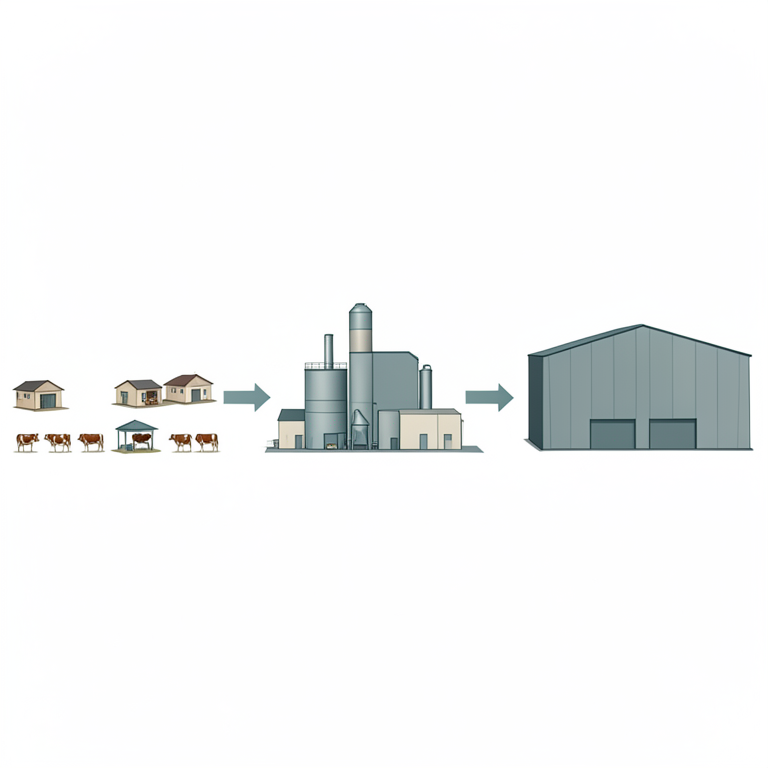
Three-Tier Cooperative Structure
AI-generated conceptual illustration (Indian dairy cows and milk collection centers). It explains the idea and does not show study data.
View source evidence ↗Figures & tables
From the original paper Table 1
Introduction
Doubling farmers' income (DFI) is one of the principal aims of Indian agricultural policy, targeted for realization in next few years. This ambitious objective was instigated by the diminished agricultural revenues in India, which exacerbate rural poverty and farmer despair. In this vital situation dairy farming and milk industry use to play a vital role as almost 28% of dairy sector contributes largest section of Indian GDP as almost of 28% and it improves the livelihood of millions of small and marginal farmers (Vekariya et al., 2021). Moreover, dairy co-operatives especially Amul plays a major role to India's "White Revolution," converting the nation from a milk-deficient state to the world's foremost milk producer (Bellur et al., 1990) [3] . These farmer-owned entities acquire, process, and distribute milk, guaranteeing equitable rates for farmers by removing predatory intermediaries (Gulati and Juneja, 2023) [4] . Cooperatives are structured to distribute earnings to their producermembers and provide support services, therefore directly influencing farmer incomes (Malik et al., 2024). This scholarly analysis analyzes the impact of dairy cooperatives on increasing farmers' incomes in India, emphasizing their contribution to the objective of doubling farmers' income.
Consequently, dairy farming accounted for as much as 22.5% of the income for a typical household in rural villages. (Kurien, 2007) [12] .
The Amul Model (Anand Pattern) of Dairy Cooperatives
AMUL or Anand Milk Union Limited initially started in Kaira [Anand], Gujarat; however, later on this model was acted as flagship of Indian Dairy cooperative movement. The AMUL structure is briefly described in table Village cooperative societies pool milk, create economies of scale, and provide services like veterinary first aid, feed supply, and artificial insemination, benefiting even small farmers and marginalized groups.
2.
District Cooperative Milk Producers' Union (Milk Union)
District Milk Union federates village societies into a cluster, owns dairy processing plants, provides technical support, manages logistics, and is governed by elected representatives, returning profits to farmers.
State Cooperative Milk Federation
State Cooperative Milk Federations are district unions in a state federating into a common brand, responsible for marketing milk and dairy products, and coordinating inter-district milk movement. These federations capture the highest consumer price and control the full value chain.
The three-tier federal cooperative framework in milk production aligns incentives with lower levels, enabling higher-tier organizations to support them farmers.
Benefits of AMUL model (Kaur, 2014; Kurien, 2007) [6,12] • Elimination of middle man therefore, protects farmers from price exploitation, and distributes bonuses or dividends. • Provides a reliable market for small farmers by assuring daily milk acquisitions, so securing a consistent income, enhancing liquidity, and alleviating rural poverty and indebtedness via regular cash flow. There is still a lot of space for growth, however, since this is just around 5% of Punjab's overall milk output (Kumar and Sharma, 2019) [10] .
Rajasthan is now one of the biggest milk-producing states, and a key part of it is its cooperative network, which is known as Saras under the Rajasthan Cooperative Dairy Federation (RCDF). In 2023-24, RCDF sells roughly 30 lakh liters of milk per day and collaborates with more than 20 district unions. There is a lot of per capita availability in state, which suggests it has a surplus. In eastern Rajasthan, studies indicated that cooperative members manufactured and worked in dairy significantly more than those who weren't members. People in even the most rural corners of Rajasthan were trying to make cooperatives stronger, which is why this happened. (Anbu, 2020) [1] . Bihar has been behind in the White Revolution in the past, but in the last few years, cooperatives have greatly increased milk output and farmer earnings. Farmers wanted to build their dairy enterprises because cooperatives not only boosted the prices they obtained for their goods, but they also made it simpler for them to acquire financing and veterinary care. People reported that by 2015, Bihar's dairy co-ops had enabled thousands of women in rural areas find work and generate more money (Anbu, 2020) [1] . There are prominent cooperatives in Tamil Nadu, Kerala, and Maharashtra. Aavin (Chennai) sells roughly 30 lakh liters of milk per day (LLPD) in 2023-24 and serves majority of the state. In Kerala, Milma is recognized for creating high-quality dairy products that people love to use at home. Maharashtra has both commercial and cooperative dairies. In the eastern states of West Bengal and Odisha, cooperatives weren't particularly strong at initially, but they have been becoming stronger due to new initiatives. (Rajendran and Mohanty, 2004; Kumar et al., 2013) [9] .
Impact on Farmers' Income and Livelihoods 1. The price of milk and gross income are both higher:
Dairy cooperatives pay farmers more for their milk, which means they make more money. Kumar et al.
(2018) [8] did research in Bihar and found that farmers who are members of a cooperative make more money because they get a higher net price for each liter. The income of small-scale farmers who joined cooperatives went up the most, which is a sign of a pro-poor effect. Data from Rajasthan and Bihar also showed that members of dairy co-ops made more money each month than people who weren't members. Early studies in Bihar and Rajasthan also found a difference in revenue: cooperative suppliers in Rajasthan made more money from dairy (Meena et al., 2010). The trend is clear: being a member of a cooperative greatly increases dairy-related income by making sure that members get good pay and can sell their products all year long. 2. More milk and more work: Cooperatives play a significant role in milk production, as they provide inputs like AI, feed, and medical care to their members, as well as training. This leads to increased milk production and employment. Research in Bihar and Karnataka has shown that cooperative members obtain more milk from each cow than those not members.
Cooperatives also educate farmers on better methods, such as timely vaccinations and sanitary milking. They also influence production by reducing costs per unit, which can lead to double income. In addition to price effects, cooperatives also improve the manufacturing process, which can lead to increased profits even if prices remain constant. Overall, cooperatives contribute to a more sustainable and profitable dairy industry (Meena et al., 2010).
Lowering risk and ensuring sure income remains steady:
Cooperatives help farmers' incomes stay more stable by making sure they buy things every day and using pooled pricing (Ma et al., 2023) [13] . They keep things consistent by turning extra milk into powder for the lean season and sending farmers their payments on time through bank transfers. Farmers who sell through formal channels are less likely to lose money than those who sell through informal channels. Direct payment, which co-ops started using before businesses, makes farmers creditworthy and keeps them from paying high interest rates. Cooperatives also help farmers plan and invest better, which protects them from market and credit risks and leads to higher income over time.
Jobs and Women's Empowerment: Dairy co-ops in
rural communities have grown since the 1990s, providing women with greater financial stability and choices. Research shows that women in these co-ops earn more and spend more on their families' well-being, leading to better diet and education (Kumari and Malhotra, 2016) [11] . Additionally, dairy co-ops recruit young people for jobs like drivers and milk testers, reducing unemployment in rural areas.
Getting to the Doubling Income Goal:
The Amul case demonstrates how cooperatives can help farmers earn more money in seven years. The Doubling Farmers Income (DFI) committee of the NITI Aayog suggests that to double farmers' earnings in 6 to 7 years, incomes need to expand by 10% a year. Dairy, a significant part of the national economy, has seen a 6% annual increase in milk prices and volume between 2016 and 2022.
Cooperatives are aiming to increase milk production by 60%, implementing initiatives like the Rashtriya Gokul Mission and increasing artificial insemination through cooperative and government vet networks.
Examples of success and case studies
To show the above effects in a more concrete way, we point out a few specific case studies where dairy cooperatives have made a big difference in the lives and incomes of farmers:
Case Study 1 Amul, a cooperative founded in 1946, has significantly impacted smallholder farmers in villages around Anand, Gujarat, by increasing their incomes and providing regular dividends. Between 2010 and 2017, the average income of an Amul member farmer rose by four times due to increased milk prices and product diversification. Farmers who previously earned about ₹1,000 a day from milk now earn ₹4,000-5,000 a day. Amul's presence has also led to social progress, such as better schools, increased empowerment of women, and even additional businesses like cattle feed factories run by the union. The case demonstrates that it is possible to double incomes and even go beyond that with the right institutional framework. More than 70,000 villages in India have since adopted the "Amul Pattern." (Kaur, 2014) [6] .
Case Study 2
Women's Dairy Cooperative Societies in Bihar: Giving women more power and more money. In the later stages of Operation Flood, one of the most interesting things that happened in Bihar was the promotion of all-women dairy cooperatives in a rural area that was socially conservative. The Shri Krishna Mahila Milk Producer Cooperative Society in the Muzzaffarpur district is one such example. This society was started in the early 2000s as part of NDDB's Women Dairy Project. At first, 32 women poured 40 liters of milk each day. In less than ten years, it had more than 150 women members who poured more than 500 liters a day. An impact evaluation found that these women's average annual income from dairy went from almost nothing (many of them hadn't sold their milk at all, only using it for home consumption or selling it informally) to about ₹25,000-30,000, which was more than half of their total household income. For a lot of people, this was the first time they made money on their own. Because they worked together, they were able to buy a milk chiller with a government grant, which stopped spills from happening. It also set up regular vet camps and feed on credit. As a result, a number of women switched from local cows that gave them about 2 liters of milk per day to crossbred cows that gave them about 6 liters of milk per day. This directly increased production and income. Researchers Kumari and Malhotra (2016) [11] found that in these women-led co-ops, household nutrition improved (some milk was kept for children that would have been sold cheaply), and women said they had more say in household financial decisions because they were bringing in money [68]. This case shows dairy co-ops can double incomes in a way that includes everyone, which improves the health of the whole family when women have more money. There are now more than 4,000 women-only cooperative societies in Bihar's COMFED, and they have helped Bihar's dairy industry grow from a low point.
Case Study 3
A study in Punjab compared traditional cooperatives and newer private-sector Producer Companies to determine which provided farmers more money (Kaur and Singla 2024). Both institutions paid farmers 8-10% more for milk than independent farmers who sold to middlemen. Members of the cooperatives made about ₹3,500 more per year per milch animal in the cooperative and ₹4,100 more in the PC than non-members in the same area. The study suggests that institutional innovation is key to raising farmers' incomes and suggests policy support for both forms.
Challenges
Dairy cooperatives in India face several constraints that limit their effectiveness and potential to boost farmer incomes. These include political and governance issues, uneven performance and management capacities, market competition and globalization, and lack of professional management skills. The politicization and bureaucratic control of cooperatives can erode farmers' trust and financial health. Reforming cooperative laws and implementing management training programs can help improve human resource capacity and compete with private companies. Additionally, enhancing product quality and variety is crucial to maintain market share and tap into export markets and premium domestic segments. Indian dairying faces challenges such as low animal productivity, input constraints, infrastructure gaps, taxation, and financial constraints. The average milk yield is far below global standards, limiting profit generation for farmers. Cooperatives are working to address this through better breeding services, feed, and healthcare. Infrastructure gaps, such as chilling centers, hamper cooperative expansion in areas with limited access. Taxation and financial constraints, such as multiple taxation in the cooperative structure, can hinder cooperatives' ability to plow back profits or pay higher rates to farmers. To achieve a broad-based income doubling, reforms in cooperative governance, capacity building, enabling policies, and continued investment in productivity and infrastructure are needed.
Conclusion
India's dairy cooperatives have made a big difference in farmers' lives by doubling their incomes over time. The cooperative model fits with the government's goal of doubling farmers' income and making sure that everyone benefits from growth. But the growth rates in agriculture were less than the needed 10%. The government's plan to strengthen cooperatives and set up multi-state co-operatives shows that cooperatives will continue to be an important part of agricultural policy.
Figures and tables from the paper
References
13 in the original paper- Anbu S. Dairy cooperatives and dairy development in India. Non-farm Sector and Rural Development, Novel Corporation, Chennai, India. 2020:428-40.
- Barot BK, Bose B. Milk Revolution in Gujarat: How AMUL's Cooperative Model Changed India's Dairy Sector. International Journal of Social Impact. 2023;8(4):92-97.
- Bellur VV, Singh SP, Chaganti R, Chaganti R. The white revolution-How Amul brought milk to India. Long Range Planning. 1990 Dec 1;23(6):71-9.
- Gulati A, Juneja R. White Revolution in India: What smallholders can do given the right ecosystem. ZEF Working Paper Series; 2023.
- Kaur M, Singla N. Comparative performance of cooperatives and producer companies in member producer's income enhancement: A case study of the milk sector in Indian Punjab. Millennial Asia. 2024 Mar;15(1):138-59.
- Kaur R. A detailed analysis of anand milk union limited (Amul) in India. Soc. Sci. Res. Pap. 2014;4(2).
- KMF Nandini. (2024, 2 20). Retrieved from https://www.kmfnandini.coop/en/about-us.
- Kumar A, Saroj S, Joshi PK, Takeshima H. Does cooperative membership improve household welfare? Evidence from a panel data analysis of smallholder dairy farmers in Bihar, India. Food Policy. 2018 Feb 1;75:24-36.
- Kumar A, Shinoj P, Jee S. Do dairy co-operatives enhance milk production, productivity and quality? Evidences from the Indo-Gangetic Plain of India. Indian Journal of Agricultural Economics. 2013;68(3):457-68.
- Kumar R, Sharma H. An empirical study on consumer satisfaction in cooperative dairies of Punjab. J Emerg Technol Innov Res. 2019 Apr;6(4):291-301.
- Kumari B, Malhotra R. Impact of women dairy cooperative societies on income and employment of women in Begusarai district of Bihar. Agricultural Economics Research Review. 2016;29(2):313-8.
- Kurien V. India's milk revolution: Investing in rural producer organizations. Ending poverty in South Asia: ideas that work, Narayan-Parker D (editor). Washington, World Bank. 2007.
- Ma W, Marini MA, Rahut DB. Farmers' organizations and sustainable development: An introduction. Annals of Public and Cooperative Economics. 2023 Sep;94(3):683-700.