
Research article · 2025 · Full text
International Journal of Geography Geology and EnvironmentUses and conservation issues of the baobab (Adansonia digitata) in the municipality of Ziguinchor
Volume 7(9) · Pages 01–08 · DOI: 10.22271/27067483.2025.v7.i8b.402 ↗
Research areasAfrican Botany and Ecology StudiesAgriculture and Rural Development ResearchAfrican Studies and Ethnography
Abstract
Author-writtenThe African baobab is an important resource available to the local population. This importance indicates its food, medicinal, cultural and artisanal value. The aim of this study was to determine people's perceptions of the baobab's uses and conservation issues. This quantitative and qualitative study was carried out in the commune of Ziguinchor, in lower Casamance, among 55 concessions with at least one baobab tree, traditional practitioners, the Water and Forestry Department, plant product processing structures and certain elderly people. It included surveys using a questionnaire and interview guides, to determine the various uses of the baobab, its ecological value and the population's perception of the species. The population of the Ziguinchor commune uses the various parts of the baobab for food, medicine, etc. The baobab, whose existence is the result of spontaneous dynamics, thus contributes to maintaining biodiversity.
Summary
Source-checkedPlain-language reading of the full paper, prepared with AI and checked against the text. Each point links to the authors' own words.
Why it matters
- The African baobab is considered one of the most significant plant species in sub-Saharan Africa due to its diverse roles. View evidence ↗
- Baobabs provide critical ecological benefits, including soil temperature reduction, improved water retention, and protection against erosion. View evidence ↗
- In Ziguinchor, urban sprawl and population growth are viewed as primary drivers for the loss of urban biodiversity and greenery. View evidence ↗
The question
- The study aimed to identify how local populations perceive the uses of the baobab and the issues surrounding its conservation. View evidence ↗
What they did
- Quantitative data was collected via questionnaire surveys across five districts of Ziguinchor: Escale, Boucotte Est, Kénya, Kandialang East, and Kandialang West. View evidence ↗
- The researchers surveyed 55 concession managers who owned at least one baobab tree on their property. View evidence ↗
- Qualitative data was gathered through interviews with forestry officials, traditional healers, elderly residents, and product processors. View evidence ↗
What they found
- Fruit pulp is the most utilized part of the baobab (100%), followed by leaves (90.91%), bark (72.73%), and roots (47.27%). View evidence ↗
- The primary uses of baobab products are food (42%) and medicine (36%), while religious (14%) and craft (8%) uses are less common. View evidence ↗
- For therapeutic purposes, the most used parts are the bark (25%), fruits (19%), leaves (18%), and roots (16%). View evidence ↗
- In terms of food use, fruit is the most common (100%), followed by leaves (91%), seeds (7%), and roots (5%). View evidence ↗
- A majority of the surveyed population (73%) believes that baobab trees are inhabited by supernatural spirits. View evidence ↗
- Baobabs serve as critical habitats for migratory birds in Ziguinchor, particularly during the winter. View evidence ↗
What it means
- The authors recommend implementing baobab domestication policies in Casamance to balance economic demand with conservation. View evidence ↗
- The authors conclude that there is an urgent need for a conservation strategy that actively involves local communities. View evidence ↗
- The authors state that future work should extend the study to other baobab stands in Casamance and analyze the impact of exploitation on those stands. View evidence ↗
Visual summary
1 visualsIllustrations explain the paper; they do not show study data.
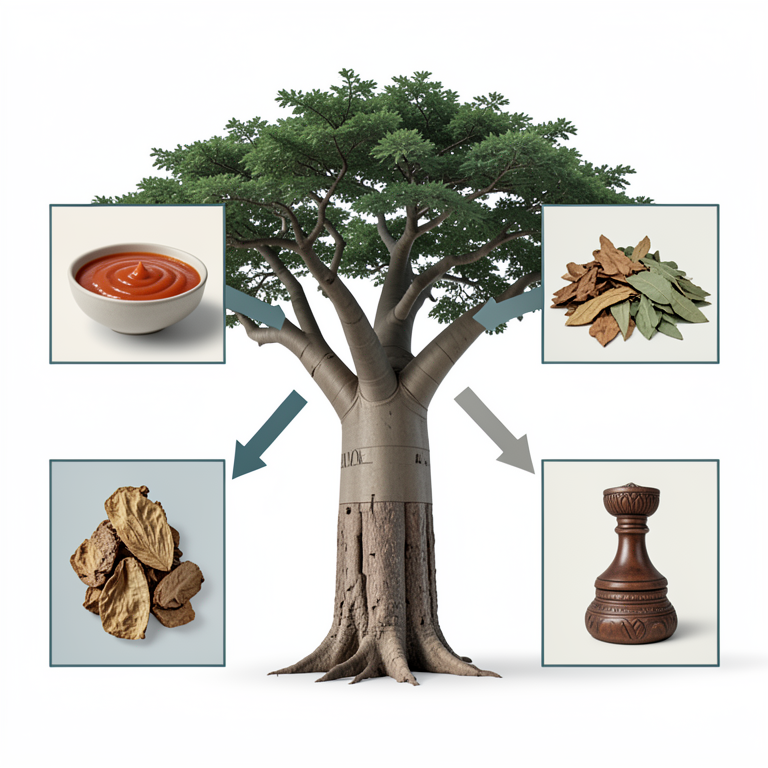
Baobab Use Distribution
AI-generated conceptual illustration (Adansonia digitata (baobab tree)). It explains the idea and does not show study data.
View source evidence ↗Figures & tables
From the original paper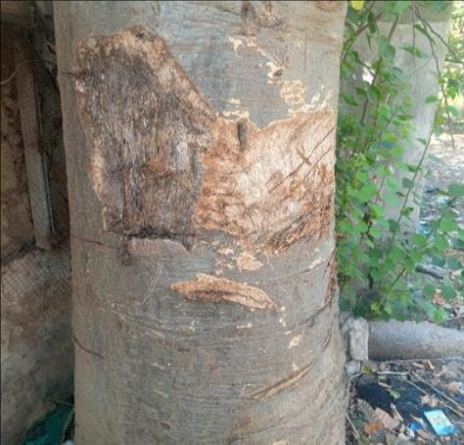 Figure 1
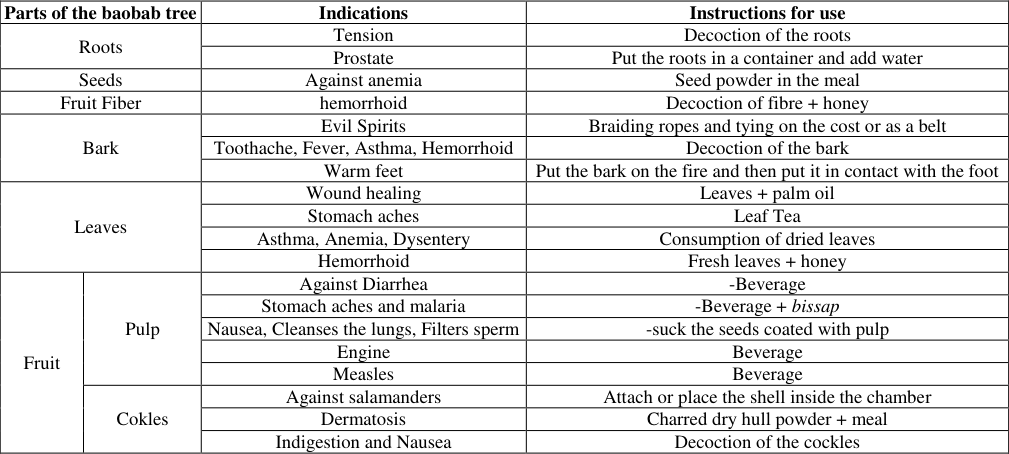 Table 1
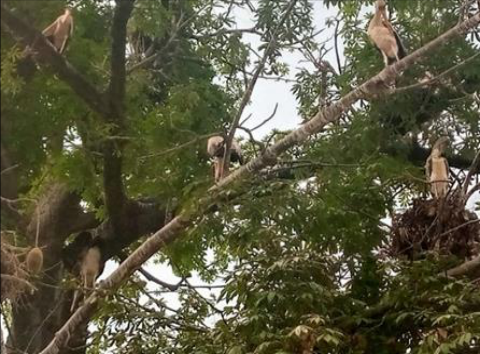 Figure 2
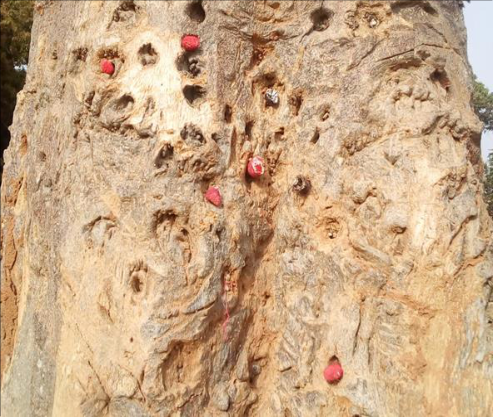 Figure 3
Introduction
The African baobab is identified by Kébenzikato et al., (2014) as one of the most important plant species in many sub-Saharan African countries because of its multiple roles. It was exported outside the continent by Arab, French, and Portuguese traders. As a result, it is domesticated in Asia (India, Indonesia and Malaysia), French Guiana, New Caledonia, Florida, Hawaii and Mauritius (Sow et al., 2018) [22] . The baobab tree plays an important role in the conservation of the environment. It can reduce soil surface layer temperatures, increase water infiltration and retention, provide organic matter, mobilize nutrients, reduce wind and storm erosion, and provide shade. All of this contributes to better growing conditions for crops (Kadri and Fall, 2005) [16] . Given these multiple ecological functions, it is not surprising that the baobab is widely present in some parts of Africa. Indeed, sub-Saharan Africa is home to large populations of baobabs (Diop et al., 2005) [12] , particularly in the West African sub-region such as Mali, Côte d'Ivoire, Benin, Burkina Faso and Senegal. In the latter country, Adansonia digitata is relatively well represented in its western, southern and eastern parts, more specifically in the vicinity of Dakar, Thiès, Kolda, Sédhiou, Ziguinchor, Tambacounda and Kédougou (USAID, UCAD, NCBA, ISRA, 2014) [24] . The baobabs in Ziguinchor have been studied by students from the University of Ziguinchor; who mapped the spatial distribution of the baobab. In this city located in the south of the country, the baobab grows in its natural state, considered in the work of under the term spontaneous species. However, man contributes to its maintenance because he draws various products with a socio-economic and cultural role from it. The socio-spatial dynamics of the city of Ziguinchor are often considered to be a real cause of the destruction of urban biodiversity. This consideration is all the more justified since population growth accompanied by urban sprawl is often to the detriment of greenery. Despite this spatial bulimia, the baobab is relatively maintained in view of its presence in the public and private spaces of the municipal perimeter. However, the utilitarian value of this tree in the daily life of certain populations can be an asset in favor of its conservation. In this work, we take stock of the issues of baobab conservation in the municipality of Ziguinchor in relation to the uses and perceptions of the populations.
Presentation of the study area
The research was carried out in five districts of the commune of Ziguinchor: Escale, Boucotte Est, Kénya, Kandialang Est and Ouest (Map 1). These central and peripheral districts cover an area of 989.32 ha. They have physical characteristics that match those of the urban environment, and are home to a diversity of plant species, including the baobab, a multi-use species, considered by Diallo (2022) to be spontaneous. The choice of these districts will be justified in the method part. The climate of the area is South Sudanese with rainfall variations influenced by atmospheric circulation and only one rainy season. Between 1991 and 2020, the highest and lowest average annual temperature recorded at the Ziguinchor station is 38 and 18oC, respectively. Over the same period, rainfall is in the range of 811.7 to 2400 mm. The commune of Ziguinchor is characterized by the presence of five types of soil: Ferralitic soils develop on rocks sufficiently rich in iron and in a well-drained environment. Tropical ferruginous soils are divided into two groups: lightly leached and leached. They present an individualization of ferruginous products, often followed by a more or less important migration. They are used for the cultivation of food plants in the Sudanian zone. Halomorphic soils develop in salty zones and are determined by their sodium potential and their richness in soluble salts. They are also characterized by an accumulation of salt on the surface on the sandy alluvium. Raw mineral soils to organic matter is practically absent but not biological activity. There is no evolution of the mineral matter, which remains in its raw state, often mechanically fragmented. These soils are characteristic of desert environments but can be observed elsewhere. Poorly evolved soils are characterized by a low degree of evolution and alteration and a limited level of organic matter (Segalen, 1970). They are rejuvenated, either by erosion or by the addition of material from higher levels. They are subdivided into alluvial input soils and colluvial input soils. The former develop on the minor beds of rivers dominated by fine elements. The latter are very fertile and are of great agronomic interest. Map 2 summarises the different types of soils found in the commune of Ziguinchor.
The vegetation is composite and diverse with 132 species grouped into 95 genera and 32 families (Charahabil et al., 2018) [8] . Among this group, the baobab occupies an interesting and very discreet place.
Materials and Methods
Materials and Methods
Data collection
The existing literature has allowed us to take stock of the scientific production relating to the species Adansonia digitata, its spatial distribution, its use, its socio-economic and cultural importance. In addition, quantitative data was used. They were obtained by a questionnaire survey conducted in two central districts (Escale and Boucotte Est) and three peripheral districts (Kénya, Kandialang East and Kandialang West) of the municipality. These neighbourhoods were selected because a large number of baobab trees and the largest numbers are found there. In each of these districts, we spoke to the heads of concessions who had at least one baobab tree in the courtyard. During these investigations, 55 concessions managers were investigated. These data are supplemented by the qualitative data obtained through the use of interview guides conducted with the Regional Water Inspector and Forêts, traditional healers at the Saint Moeurs market in Boucotte, elderly people and processors of harvested products (Kandjibu and Démir EIGs). The choice of resource persons allows us to have interlocutors capable of informing us about the uses of the baobab parts and its ecological value.
Data processing
Quantitative and qualitative data obtained in the field were processed from several software and applications. The Kobo toolbox software was used for the entry of the questionnaire and the collection of data, Excel for the creation of tables and graphs. As for the Word software, it was used to transcribe and enter the text. All these tools allowed us to produce graphs that facilitated the analysis of the problem studied. As for the cartographic data, they were projected on the basemap of the municipality with the Arc GIS 10.5 software in order to produce the location map of the study area.
Results and Discussions 3.1 A plant resource of socio-economic and cultural value in the municipality of Ziguinchor
The baobab tree is distinguished in particular by its multifunctional dimension as well as by the diversity of the products it offers, which have evolved according to societies, socio-economic and cultural contexts, as well as local development strategies.
Enhancement of baobab products
The parts of the baobab used are very well known by the population of the commune of Ziguinchor. Knowledge of the species is held by adults, women processors of forest products, water and forestry agents and traditional healers. With a fairly disparate distribution in the commune, baobabs provide products intended mainly for food, medicine, cultural and artisanal uses. Thus, the parts (fruits and leaves, etc.) from the baobabs of the plots surveyed are not marketed for several reasons: Low production by individuals located in the various concessions. Production is oriented towards self-consumption. The harvested fruits are shared with neighbors and family. The production is reserved for the "ngalakhfoot_0 " in the runup to Easter.
Dans toutes les concessions visitées, nous n'avons pas rencontré de personnes qui commercialisent les produits du baobab issus de la concession.
After each harvest, the baobab fruits are shared with the neighbors or the harvest is carried out following a need. On the other hand, the exploitation of the other parts of the baobab tree requires authorization from the concession manager in which the tree is located. A woman interviewed in Escale says that marabouts often come to collect the bark and roots of the baobab tree that they use to treat diseases such as toothache, asthma, hemorrhoids, etc. According to our interlocutor, her Fulani neighbors use the leaves of the baobab tree as an emollient. Despite this reality, we discovered points of sale of baobab products (Lalofoot_1 and fruit pulp) at the Saint Maure des Fossés market in Boucotte. Thus, according to some wholesalers, the pulp sold is supplied in the villages of Touba mouride and Carrefour Ndiaye located in the Sédhiou region. In these localities, the 100 kg bag is sold at 8000 FCFA to be resold at 500 FCFA per kilogram to retailers.
The latter, in turn, resell the product at prices between 600 and 700 FCFA per kilogram.
The different parts of the baobab tree used by the local population
The baobab tree plays an important role for the local population. Thus, in the neighbourhoods studied, the survey carried out revealed that all parts of the species are used. According to the population interviewed, the most used part of the baobab tree is the pulp of the fruit (100%). It is followed by the leaves (90.91%), the bark (72.73%) and the roots cited by 47.27%. Seeds (14.55%), fibre (3.64%), hull (1.82%) and exudate (3.64%) are less cited by the population 3 .
Source: I. Diallo 2022, field survey)
Graph 1: Parts derived from the baobab tree, used by the local population
The different forms of use of the baobab tree
In Ziguinchor as everywhere in Senegal, the baobab occupies a very important place in the lives of the population, thanks to the multiple uses it offers. Thus, through our field surveys, four forms of baobab use have been identified: Food, medicinal, cultural and artisanal (Figure 2).
Source: I. Diallo 2022, field survey
Graph 2: Population's knowledge of the types of baobab use 3 Looking at this graph, the cumulative percentage of responses to the use of the games is more than 100%. This raises questions about the results. However, by this we have used multiple-choice questions allowing the respondent to give several answers for a question
According to surveys conducted in the field, 42% of the population surveyed uses baobab products for food purposes compared to 36% for medicine. Religious and craft uses are the least cited. They represent 14% and 8% of respondents' perceptions, respectively. However, even if the tourist use of the baobab is not mentioned by the people surveyed, it must be recognized that the baobab is important in the tourism sector. Indeed, in Senegal, in the new seaside resort of Pointe Sarène, in the commune of Malicounda, the hotel newly inaugurated by the President of the Republic Mr. Macky Sall bears the name of "Riu Baobab". In Madagascar, the genus Adansonia has a remarkable aesthetic value. Thus, according to Andriafidison et al., (2017) [4] , the population on the Allée des baobabs in Morondava represents the image of Madagascar at the international level. It is one of the tourist attractions of the Big Island. In Senegal, baobabs are just as remarkable. But this seems so trivial that the aesthetic aspect is not very perceived by the local populations.
Medicinal use of the species
African populations still resort to traditional medicine because their territories offer a multitude of medicinal plants such as the baobab. Thus, Adansonia digitata is a plant species with multiple virtues. Apart from food use, the species is still used in traditional medicine. Thus, according to the interview held with one of the traditional healers, each part of the tree (root, pulp, bark, leaf, seed and others) is used in the traditional way, alone or mixed with other plant species for the treatment of certain diseases such as malaria, hemorrhoid, etc. Indeed, local populations have knowledge about the different uses of baobab parts in traditional medicine. Also, as far as therapeutic uses are concerned, the various products of the baobab tree, in particular the pulp of the fruit transformed into a drink, is a remedy used by the population to treat diarrhea. The seeds reduced to powder, the calcined shell, the root and the bark are taken as a decoction while the leaves in herbal tea. Fiber is all used in healing care. The removal of bark (Photograph 1) from a baobab tree in one of the neighbourhoods studied testifies to the use of these products by the local population to meet their health needs. As an example, Table 1 summarizes the therapeutic virtues of the baobab This graph shows that local people have knowledge about the benefits of herbal medicine. The parts of the baobab tree contain well-known pharmaceutical properties. Baobab leaves are composed of macronutrients: water, energy, lipids and proteins; minerals: copper, iron, calcium, magnesium, potassium and zinc, etc., and vitamins: A, B1, B2, B3 and C (Chadare, 2010) [7] . All these elements are important for human growth and support antibodies in the fight against bacteria and viruses. Thus, bark, fruits, leaves and roots are the most used with quotes of 25%, 19%, 18% and 16% respectively. The other parts, although important in therapeutic use, are less cited. This shows the close relationship that binds the population to the baobab. The latter is a remedy for diseases.
| Parts of the baobab tree | — | Indications | Instructions for use |
|---|---|---|---|
| Roots | Tension | Decoction of the roots | |
| Prostate | Put the roots in a container and add water | ||
| Seeds | Against anemia | Seed powder in the meal | |
| Fruit Fiber | hemorrhoid | Decoction of fibre + honey | |
| Bark | Evil Spirits | Braiding ropes and tying on the cost or as a belt | |
| Toothache, Fever, Asthma, Hemorrhoid | Decoction of the bark | ||
| Warm feet | Put the bark on the fire and then put it in contact with the foot | ||
| Leaves | Wound healing | Leaves + palm oil | |
| Stomach aches | Leaf Tea | ||
| Asthma, Anemia, Dysentery | Consumption of dried leaves | ||
| Hemorrhoid | Fresh leaves + honey | ||
| Fruit | Pulp | Against Diarrhea | -Beverage |
| Stomach aches and malaria | -Beverage + bissap | ||
| Nausea, Cleanses the lungs, Filters sperm | -suck the seeds coated with pulp | ||
| Engine | Beverage | ||
| Measles | Beverage | ||
| Cokles | Against salamanders | Attach or place the shell inside the chamber | |
| Dermatosis | Charred dry hull powder + meal | ||
| Indigestion and Nausea | Decoction of the cockles |
Table text extracted from the original PDF; superscript letters are shown inline. The original table image is below.
View original table image
Source
Source
Source: I. Diallo 2022, field survey)
Source: I. Diallo 2022, field survey)
Graph 3: Therapeutic use of baobab parts
In Senegal, trees occupy a very important place. Depending on the populations encountered, each tree has its own virtues. It is easy to understand why in some local languages, tree and medicine are synonymous. Thus, among the Fulani, we speak of léki, garab among the Wolofs, Boubébéne in Diola, and Kilik in Serer Ndut (Mont-Rolland).
The food use of the baobab tree
Beyond their medicinal function, baobab products play a decisive role in the human diet thanks to their nutritional contribution. This use generally concerns fruits and leaves rich in nutrient compounds (vitamins, proteins and carbohydrates, etc.) and mineral elements such as iron, calcium and potassium, etc. However, local people have mentioned that the seeds, bark and roots can also be used in food. According to field surveys, 100% of the population surveyed say that fruit is commonly used more, followed by leaves (91%). Seeds and roots are less so, with 7% and 5% respectively (Figure 4). Figure 4 shows the four parts of the baobab tree used in food by the surveyed population. The leaves of the baobab tree can be boiled as a vegetable or dried, then ground into a powder before being eaten or marketed. Dried and pounded, the leaves give a powder that is highly prized by local people, called Lalo. The latter is incorporated into cereals as a binder to prepare couscous, and as an emollient in sauces. This product is also used in the preparation of a sauce that accompanies the Toun, a dish much loved by the Fulani ethnic group from the Republic of Guinea Conakry. The fruit pulp, commonly known as monkey bread, is often used as a beverage by the local population. The pulp from the fruit is also used in the preparation of certain dishes. According to Cissé et al., (2010) [9] , it is the most frequently exploited part and the most quantitatively consumed raw material. It is also used to prepare fruit juice, which is consumed in ceremonies such as weddings and baptisms.
Apart from these two dishes, the pulp of the baobab fruit is used as a fruit for the mouth, especially by pregnant women. These baobab products contribute to the diet of the population, consumed on a daily basis, by providing nutritional supplements. The seeds give almonds which are used to season the sauce. Thus, according to Diop et al., (2005) [12] , after cooking or roasting, the kernel of the seeds is consumed directly as a thickener in powder form. Transformed into oil, the seeds hold an important place in food and traditional medicine. Baobab oil has great emollient power and softening abilities on the skin and scalp; it has a protective effect on the hair fiber (Cissé, 2012) [10] . Used as a massage cream, this oil softens the skin and helps relieve pain and injuries, and treats certain dermatological conditions including psoriasis and eczema. Pregnant women can apply this oil to the stomach and breasts, to allow the skin to keep its elasticity. In Senegal, these seeds give yields of 68% for shelled almonds and 52% for whole seeds (Faty, 2019) [13] .
The roots of baobab plants can be eaten like cassava tubers.
In addition, according to Sanago et al., (2015) some parts of the baobab: seeds, fibers and fruit shells are also used as components of "organic" products in industry and agriculture.
Cultural and craft use
In addition to its food and therapeutic uses, the baobab tree is considered a sacred tree full of mysteries, which makes it a tree that is highly respected by the population of the commune. Mythical, mystical and religious considerations are recognized by the entire population surveyed. The latter claims that the baobab is used in magic; it is said to harbor evil spirits. In the commune, there are baobabs on which people always come to insert talismans to satisfy their needs or annihilate someone. This is why in Benin, it is like a bad tree because it is still used in mystical practices (Dossa et al., 2015) [11] . Among the Mancagnesfoot_3 , for example, the pulp of the baobab tree is combined with curd and palm oil to cook during deaths. According to the report (USAID, ISRA, UCAD, 2014) [24] , the rope pulled from the baobab tree is one of the essential elements that accompany dowry among the Fulani. It symbolizes the consolidation of the bonds between future brides and grooms. According to our field investigations, the baobab tree is considered to be the fertility tree among the Serer. Because, during wedding ceremonies, the bride brings a baobab fruit to her matrimonial home that will bring her luck by allowing her to have many children.
Finally, the baobab is used in handicrafts. In many localities in Senegal, the bark is used to make strips that are used to make ropes used in construction in rural areas.
An ecological resource While food, medicinal and cultural functions have so far been the best cited, the baobab tree is of great interest because of its many ecological functions, which could help limit some of the environmental problems caused by urbanization, particularly in terms of biodiversity conservation.
Maintaining biodiversity by the baobab tree
The commune of Ziguinchor, located on the banks of the Casamance River, is home to an important avifauna. Plant species such as the baobab and the mangrove are preferred habitats for migratory birds. The latter are present in the commune around the governance and port of Ziguinchor, on the branches of some baobab plants, especially during the winter period. Thus, Meliani and Arnould, (2016), mention that in the city, the tree plays an ecological role, it is a support for biodiversity. During our fieldwork, several species of birds were observed, the most important of which are the Ibis Tantalum (Mycteria ibis), the White-breasted Cormorant (Phalacrocorax lucidus), the Great Egret (Ardea alba), the Kingfisher (Alcyon pie), the Grey Pelican (Pelecanus rufescens), the Cattle Egret, the Grey Heron (Ardea cinerea) and the African Anhinga (Anhinga rufa).
The baobab is therefore home to local and migratory species. The latter make it their favourable environment for resting, nesting and breeding (photograph 2). In addition, it can reduce the temperatures of the surface layer of the soil, increase infiltration and retention in water, provide organic matter, mobilize nutrients, reduce erosion due to wind and rain, and provide shade. [8] , classified the baobab among the five (5) most frequent species in the city. The baobab is becoming a landscape resource, real or potential, often exploited by the population to enhance its products, but still insufficiently taken into account by the public authorities in terms of territorial development despite being a national emblem and benefiting from partial protection under the 1998 forest code revisited in 2019. In recent years, this tree, as a heritage and identity element, has had an increasingly recognized landscape value. It features prominently in urban policy in terms of landscape integration, at least according to the documents defining the guidelines for the development of the urban pole of Diamniadio, in this case the Master Plan for the Urban Development of Dakar and its Surroundings: Horizon 2035 (Badiane and Mbaye, 2019) [5] .
Local perceptions and conservation issues
As in many localities in Senegal, the population of the commune of Ziguinchor has perceptions and representations relating to the baobab, linked to beliefs and lifestyles. Indeed, the baobab occupies an important place in the beliefs of the populations because, to satisfy some of their socio-economic needs, they resort to products from the leaves, fruits, seeds, bark and roots of the species.... Thus, the presence of the baobab in certain concessions of the commune, in the street, certain areas (sapper, military, school, sanitary camps, etc.), places of worship and in hotels expresses the close links that exist between the population and the baobab.
According to field surveys, the baobab is considered by 73% of the population questioned to be a species inhabited by supernatural spirits, compared to 2% who answered no and 25% did not know (Figure 5).
Source: I. Diallo 2022, field survey)
Graph 5: Perceptions of the population questioned on the mythical consideration of the baobab Thus, in Ziguinchor as in Madagascar, the baobab is considered, in the same way as the tamarind tree, a shelter for spirits. Some are thus sacred and are the subject of family or community ritual practices. This is why, very often, individuals with large diameters are rarely cut. In popular belief, cutting down these baobabs is synonymous with awakening the anger of the genies who live there. The presence of spirits in the baobab tree makes this species considered sacred in the area. Thus, if certain needs require its destruction, the owner of the house or plot is obliged to make libations if he does not want misfortune to befall his family. In addition, according to the populations interviewed, it is forbidden to visit or pick the products of this tree between 1 p.m. and 3 p.m., but also from 7 p.m.
In some concessions, the baobab tree is a repository of fetishes that protects the family. But this tree is also one of the altars of several mystical practices in this locality (photograph 3). This is confirmed by the populations interviewed in the city of Ziguinchor, 100% of whom admit that the species is used in magic.
Source: I. Diallo, January 08, 2020). The uses related to baobab products reflect a need and a usefulness for the population. These uses cannot be dissociated from the many know-how ranging from the management of the species to the production, conservation and processing of products to their use, or even marketing. This know-how has continued to develop in history since the first harvests of these products. It was first necessary to discover the nutritional properties and potentialities offered by the baobab, then to highlight the image of the baobab in the world. Indeed, in the spirit of SDGs 1 and 2 (the quest to reduce poverty and hunger) at the local and international levels, a look is taken at the importance of the baobab, in particular the usefulness of its products in improving human well-being. Once used by African populations, baobab products are the subject of special attention at the international level because of their potential contribution to improving the living conditions of many African populations. They have been widely exported to European countries since they were integrated as a new-generation food product by the European Union. The value of exports to Senegal was 967 tonsfoot_4 in 2021; hence our concern about the species whose commercial value has increased since the seeds are used for all kinds of cosmetic purposes by European and European industries. Africaines The population knows its advantages. For this reason, Sabaly (2014) [19] states that women who are active in this field are storing more and more seeds for possible export. At the same time, the law of supply and demand is at the origin of the increase in the price of the pulp extracted from the fruit. These new commercial sectors raise questions for which the future could be synonymous with opportunities for Adansonia digitata. To make the most of them, the insight will have to be required to take the necessary measures in time. Some parks are not valued. However, if they were, commercialization would contribute significantly to local development.
In order to reconcile socio-economic development and conservation of this natural heritage, it would be important to focus on the development of baobab domestication policies in Casamance to better meet the demand of the increasingly growing national and international market.
Conclusion
In Senegal, the baobab is an important plant species for local populations.
In Casamance, it has the status of a "remarkable tree". Its exploitation and its uses are examples of the relationship that man has with the species. The parts of the baobab tree rich in nutrient compounds (vitamins, proteins and carbohydrates, etc.) and mineral elements such as iron are used in the municipality in several ways. They have food, therapeutic, cultural and artisanal uses. In the issue of natural resource conservation, the identification of the relationship between man and the baobab tree is an important milestone in the enhancement of the image of this tree. However, even if the city of Ziguinchor is still home to important natural plants, Adansonia digitata can be impacted by human actions in the medium and long term.
There is an urgent need to find a conservation strategy involving local populations. An extension of this work to other baobab stands in Casamance as well as the impact of exploitation on the stands must be made.
Figures and tables from the paper
References
20 in the original paper- Andriafidison D, et al. Conservation strategy for the Grandidier baobab Adansonia grandidieri in the Ménabé region. Fauna and Flora Management Service, Directorate for the Development of Natural Resources, Ministry of Environment and Forests, Antananarivo, Madagascar; 2017, p. 21.
- Badiane S, Mbaye E. The baobab, an emblematic tree in the urban future of the Diamniadio pole in Senegal: spatial marker, social representation and landscape integration. Organisations & Territoires. 2019;28(2):55.
- Bationo AB, et al. Sociocultural dimension of the baobab Adansonia digitata L. in the Central Plateau of Burkina Faso. Bois For Trop. 2010;306(4):32.
- Charahabil MM, et al. Diversity and structure of urban green spaces in the city of Ziguinchor, Senegal. J Appl Biosci. 2018;12(4):1651-1666.
- Cissé M, et al. Characterization of the baobab fruit and its transformation into nectar. Fruits. 2010;65:19-34.
- Cissé I. Characterization of the biochemical and nutritional properties of baobab pulp of endemic species of Madagascar and continental Africa with a view to their valorization [dissertation]. Montpellier: SupAgro; 2012, p. 153.
- Dossa K, et al. Characterization of some natural stands of Baobab (Adansonia digitata L.) and the pressures experienced in the different chronological zones of Benin. J Appl Biosci. 2015;87:8760-8769.
- Diop A, et al. The African baobab (Adansonia digitata L.): main characteristics and uses. Fruits. 2005;61(2):69. DOI: 10.1051/fruits:2006005.
- Faty G. Traditional medicine of Senegal: example of some medicinal plants from the traditional Senegalese pharmacopoeia [dissertation]. Marseille: University of Marseille, Faculty of Pharmacy; 2019, p. 175.
- Gueye M. Characterization of the Neocarya macrophylla population in the Cayor terroirs: Case of the commune of Kab Gaye [Master's Thesis]. Dakar: Université Cheikh Anta Diop; 2018, p. 79.
- Kebenzikato A, et al. Distribution and structure of parks in Adansonia digitata L. (baobab), Togo (West Africa). Afr Sci. 2014;10(2):434-449.
- Kadri O, et al. Adansonia digitata L; 2005, p. 18.
- Maried C. Studies of the uses and practices of peasant populations: the case of the alley of baobabs, Bekonazy, Madagascar [master's thesis]. Paris: IEDES; 2008, p. 66.
- Meliani I, Arnould P. Arbres en otages: L'utilisation à Lyon de l'image de l'arbre en ville par le politique. In: Forest and Communication: Legacies, Representations and Challenges. Paris: Harmattan; 2016, p. 18.
- Sabaly K. Local context and use of the fruits of Adansonia digitata and Detarium senegalense in Sine Saloum in Senegal [Master's Thesis]. Dakar: Université Cheikh Anta Diop; 2014, p. 59.
- Sanogo D, et al. Evaluation of fruit production from natural stands of Baobab (Adansonia digitata L.) in two climatic zones in Senegal. J Appl Biosci. 2015;84:7838-7847.
- Segalen P. Classification of soils. In: Rural techniques in Africa: Pedology and development. Paris: OVATY; 1970, p. 115-133.
- Sow A, et al. The Baobab (Adansonia digitata L.): Taxonomy, socio-economic importance and variability of physicochemical characteristics. Int J Innov Sci Res. 2018;39(2):23.
- Sow D. Diachronic analysis of the spatial growth of the city of Ziguinchor from 1960 to 2014 [Master's Thesis]. Ziguinchor: Université Assane Seck; 2014, p. 115.
- USAID, ISRA, UCAD, NCBA. Socio-economic surveys on NTFPs Adansonia digitata fruit and Sterculia setigera gum in the Tambacounda and Kédougou regions of Senegal. Dakar: USAID; 2014, p. 72.