
Research article · 2025 · Full text
International Journal of Agriculture and Food ScienceEffect of effect of spacing on Tuber Yield of Shatavari (Asparagus recemosus L.) under Teak (Tectona grandis) based Agroforestry System
Volume 7(8) · Pages 1351–1354 · DOI: 10.33545/2664844x.2025.v7.i8m.712 ↗
Research areasAgronomic Practices and Intercropping SystemsAfrican Botany and Ecology StudiesAgroforestry and silvopastoral systems
Abstract
Author-writtenThe study aims to evaluate how different plant spacing and organic manures affect Shatavari's growth, yield, and economic viability in both open fields and teak agroforestry. Conducted over two years (2022–24) at the Experimental Farm of United University, Prayagraj, India, the research utilized a Factorial Randomized Block Design (FRBD) with twelve treatment combinations across three replications. The subtropical site with alluvial soils was ideal for testing these agro-technological methods. Findings provide crucial insights for optimizing Shatavari cultivation in teak agroforestry, highlighting that strategic interventions can enhance productivity and profitability. The analysis shows that organic manures, especially Vermicompost (M2) and Farmyard Manure (M1), significantly improve growth and yield in both settings, with Vermicompost yielding the highest net returns and cost-benefit ratios. This can be attributed to its rich nutrient content, enhanced microbial activity, and improved soil physicochemical properties, which collectively foster a more conducive environment for Tuber development and overall plant health. The superior economic performance of organically grown Shatavari, commanding a higher market price, solidifies the argument for adopting these sustainable practices.
Summary
Source-checkedPlain-language reading of the full paper, prepared with AI and checked against the text. Each point links to the authors' own words.
Why it matters
- Teak-based agroforestry systems are a promising method for growing medicinal plants like Shatavari (Asparagus racemosus) because they provide partial shade. View evidence ↗
- Shatavari tubers are highly valued for their pharmacological benefits, which are derived from their rich content of steroidal saponins. View evidence ↗
- Growing Shatavari under teak introduces challenges due to competition between the species for nutrients, water, and light. View evidence ↗
The question
- The study aims to investigate how different plant spacing and organic manure applications affect the growth and yield of Shatavari in a teak-based agroforestry system. View evidence ↗
What they did
- The study site is located in a subtropical zone in the southwestern plains of Uttar Pradesh, at an altitude of approximately 150 meters. View evidence ↗
- Researchers measured agronomic parameters including tuber length and both fresh and dry weights after manually harvesting and washing the tubers. View evidence ↗
What they found
- Wider spacing (S3) resulted in the highest pooled mean fresh tuber weight of 6.99 kg, compared to 5.80 kg for S2 and 4.72 kg for S1. View evidence ↗
- Among manure treatments, M3 produced the highest pooled mean fresh tuber weight at 6.25 kg, while the control (M0) was the lowest at 5.36 kg. View evidence ↗
- For dry tuber weight, the pooled mean was highest for S3 spacing (0.722 kg), followed by S2 (0.599 kg) and S1 (0.466 kg). View evidence ↗
- M3 was the most effective organic manure for dry tuber weight with a pooled mean of 0.649 kg, while M0 was the least effective at 0.540 kg. View evidence ↗
- Neem Cake (M3) produced the heaviest fresh tubers (6.124 kg), followed by Vermicompost (M2) at 5.767 kg. View evidence ↗
- Neem Cake (M3) also yielded the highest mean dry tuber weight (0.640 kg), with Vermicompost (M2) following at 0.594 kg. View evidence ↗
What it means
- The authors conclude that Vermicompost is the most beneficial organic amendment for maximizing net returns and cost-benefit ratios. View evidence ↗
- The authors recommend adopting sustainable organic practices because organically grown Shatavari commands a higher market price and offers superior economic performance. View evidence ↗
Visual summary
1 visualsIllustrations explain the paper; they do not show study data.
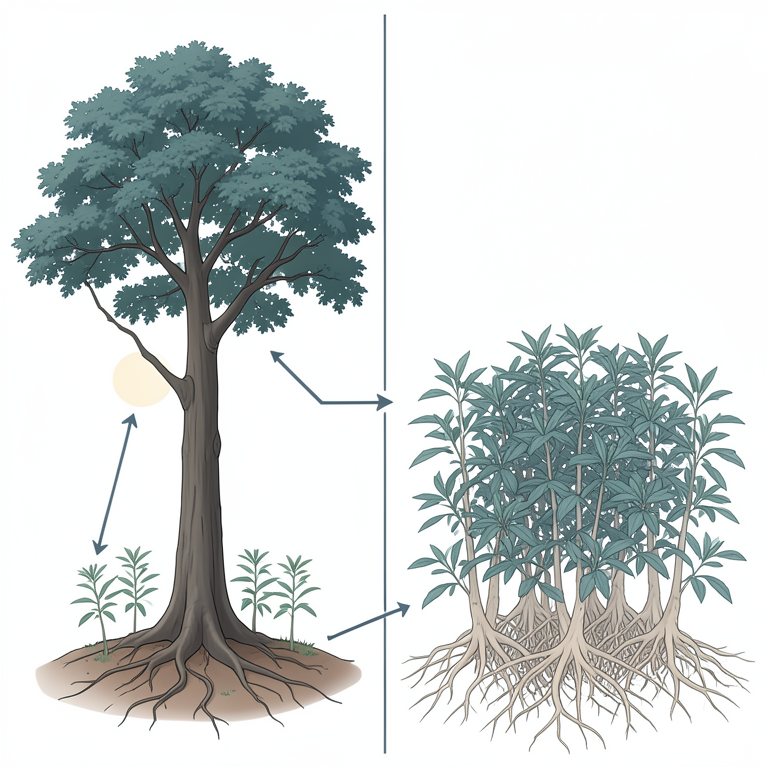
Agroforestry Competition Model
AI-generated conceptual illustration (Shatavari (Asparagus racemosus) plants growing beneath a Teak (Tectona grandis) tree). It explains the idea and does not show study data.
View source evidence ↗Figures & tables
From the original paper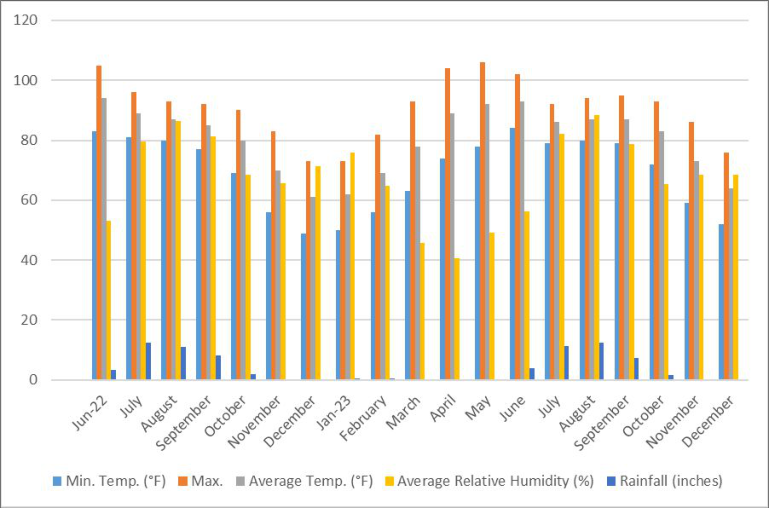 Figure 1
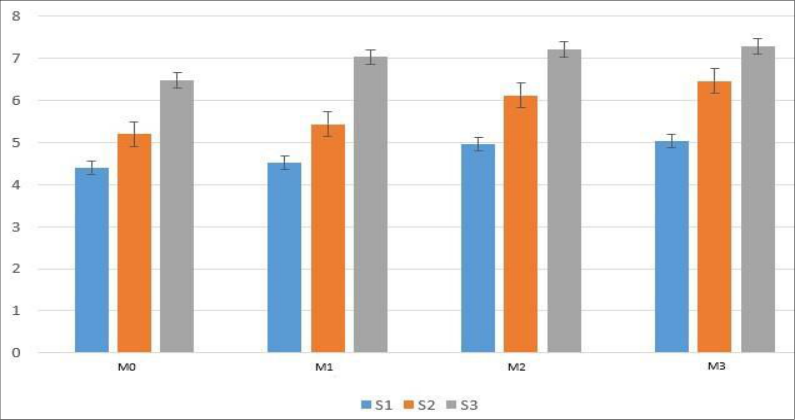 Figure 2
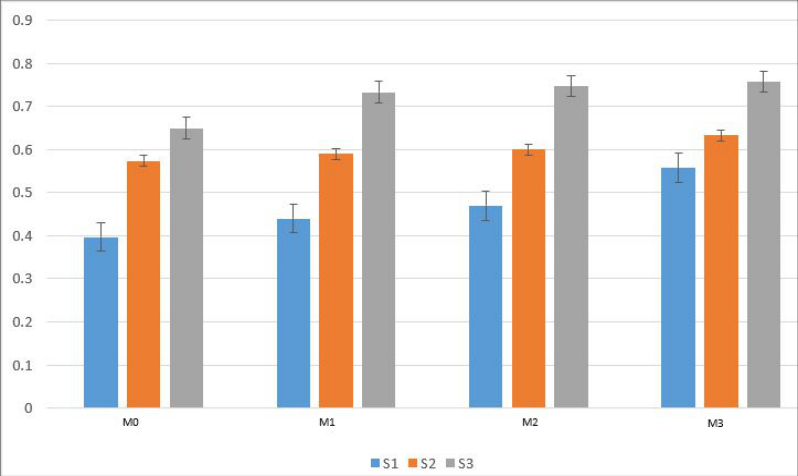 Figure 3
Introduction
Agroforestry systems that incorporate teak (Tectona grandis) present a highly promising approach for the cultivation of medicinal plants like Asparagus racemosus. These systems offer partial shade, which can alleviate environmental stresses such as excessive sunlight and soil erosion, while simultaneously providing opportunities for diversifying farm income, as Saravanan et al. (2019) [15] have emphasized. However, the presence of interspecific competition for critical resources-namely light, water, and nutrients-introduces challenges that can influence the performance of understory crops like Shatavari. To address this, the optimization of plant spacing emerges as a crucial factor in achieving a balance between resource allocation, Tuber development, and overall yield. Research by Mahanteshilager et al. (2022) has demonstrated that closer spacing configurations, such as 1.2 meters by 0.6 meters, can maximize dry Tuber yield per hectare, whereas wider spacing tends to enhance individual plant Tuber traits, including length and girth. The Tubers of Asparagus racemosus are particularly valuable due to their rich content of steroidal saponins, which confer a range of pharmacological benefits, as noted by Joshi (2016) [16] and Saran et al. (2019b) [17] . Beyond saponins, the plant contains an array of phytochemicals, including alkaloids, proteins, tannins, arginine, tyrosine, asparagine, flavonoids, essential oils, and resin, as documented by Joshi (2016) [16] . The incorporation of organic manure into cultivation practices further supports sustainable agriculture by enhancing soil health, boosting microbial activity, and improving nutrient availability. This approach can mitigate nutrient depletion commonly observed in teak-dominated agroforestry systems, thereby fostering robust growth of understory crops such as Asparagus racemosus. Comparative studies on other medicinal plants, such as Coleus forskohlii and Withania somnifera, conducted by Mastiholi et al. (2010) [18] , have demonstrated the effectiveness of organic amendments in increasing Tuber biomass and the production of secondary metabolites. Nevertheless, there remains a notable scarcity of research specifically examining the combined effects of spacing and organic manure on Asparagus racemosus within teakbased agroforestry systems, particularly with respect to optimizing both yield and the biosynthesis of bioactive compounds. In view of the above, this research endeavor is designed to investigate the influence of spacing and organic manure on the growth and yield of Asparagus racemosus within a teak-based agroforestry system, blending age-old traditional knowledge with cutting-edge agro-technological practices to formulate sustainable cultivation strategies. The adoption of appropriate agro-techniques, coupled with the development of effective marketing frameworks, is essential to overcoming challenges such as the inconsistent availability and inadequate supply of this valuable medicinal plant in commercial markets. Such measures not only enhance productivity but also improve economic returns and contribute to ecological resilience.
Material & methods
The experimental site for this study is located at the Research Farm of the Department of Agroforestry, Faculty of Agricultural Science, United University during the Kharif season of 2022-23 and 2023-24. Positioned approximately 25 km from the district headquarters of Prayagraj, Uttar Pradesh 208024, the research farm is readily accessible from Rawatpur. The farm is situated at approximately 25.43° North latitude and 81.84° East longitude in the southwestern plains of Uttar Pradesh. It sits at an altitude of around 150 meters above sea level, falling within the subtropical zone. The field was effectively leveled, equipped with adequate irrigation and drainage facilities. Prior to the current study, any stubble from the previous crop and weeds were manually removed from the field. The experiment was carried out over two consecutive years, 2022-23 and 2023-24 to account for variations in temperature, humidity, and rainfall, which could influence plant growth.
Tuber Harvesting Process
The harvesting process involved manually digging out the mature plants with minimal Tuber damage to preserve their quality. After extraction, the Tubers were thoroughly washed to remove soil and debris. Following this, they were processed for data recording, including measurements of fresh and dry weight, Tuber length, and other relevant agronomic parameters. Proper post-harvest handling was implemented to maintain the integrity of the harvested Tubers for further analysis and processing.
In 2022-23, fresh Tuber weight varied significantly with spacing levels. The widest spacing, S3, produced the heaviest Tubers (6.95 Kg), followed by S2 (5.79 Kg), while the lowest fresh weight was observed in S1 (4.75 Kg). Among organic manure treatments, M3 recorded the maximum mean fresh weight (6.21 Kg), whereas M0 produced the least (5.38 Kg). During 2023-24, the trend remained consistent. Spacing S3 again gave the highest Tuber weight (7.04 Kg), while S2 and S1 recorded 5.81 Kg and 4.70 Kg respectively. The treatment M3 continued to show its superiority (6.30 Kg), in contrast to M0, which had the lowest mean (5.34 Kg). The pooled mean across both years confirmed the superiority of S3 (6.99 Kg), followed by S2 (5.80 Kg), with S1 being the lowest (4.72 Kg). Similarly, among organic manure applications, M3 consistently recorded the greatest fresh Tuber weight (6.25 Kg), while M0 remained at the lowest (5.36 Kg). Overall, the results demonstrate that wider spacing (S3) combined with the application of higher organic manure levels (M3) substantially enhanced fresh Tuber weight of Asparagus racemosus. This improvement may be attributed to reduced inter-plant competition under wider spacing, coupled with the improved soil environment and nutrient supply provided by organic amendments.
Effect of spacing and different organic manure on dry Tuber weight of Asparagus racemosus L.
During the first year (2022-23), dry Tuber weight increased significantly with wider spacing. The maximum average weight was recorded in S3 (0.712 Kg), followed by S2 (0.589 Kg), whereas S1 produced the lowest mean value (0.458 Kg). Among manure treatments, M3 consistently gave the highest mean dry weight (0.639 Kg), while the minimum was under M0 (0.533 Kg). In the following year (2023-24), the results followed a similar pattern. Wider spacing (S3) continued to outperform other levels, registering the highest mean (0.732 Kg), while S2 and S1 recorded 0.609 Kg and 0.473 Kg respectively. Among treatments, M3 again produced the greatest dry Tuber weight (0.659 Kg), and M0 the least (0.547 Kg). The pooled mean across both years confirmed the dominance of S3 spacing (0.722 Kg), followed by S2 (0.599 Kg), with the lowest value in S1 (0.466 Kg). Among organic manure applications, M3 remained the most effective (0.649 Kg), whereas M0 was the least effective (0.540 Kg). As per discussions of the paper, S3 spacing resulted in the highest pooled mean fresh Tuber weight (6.779 Kg), with S1 recording the lowest (4.439 Kg). M3 (Neem Cake) consistently produced the heaviest fresh Tubers (6.124 Kg), followed by M2 (Vermicompost, 5.767 Kg), indicating their continued benefits under teak. Similar to fresh Tuber weight, S3 spacing showed the highest pooled mean dry Tuber weight (0.712 Kg), compared to S1 (0.448 Kg). M3 (Neem Cake) again yielded the greatest mean dry Tuber weight (0.640 Kg), followed by M2 (Vermicompost, 0.594 Kg), confirming their consistent positive impact on the economic part of the plant.
Conclusions
This research provides robust evidence for optimizing the cultivation of Shatavari (L.) within teak based agroforestry systems, offering critical insights for both ecological sustainability and economic prosperity. The comprehensive analysis of growth parameters, yield components, and economic viability under varying spacing and organic manure applications unequivocally demonstrates that thoughtful agro-technological interventions can significantly enhance productivity and profitability. Furthermore, the research highlights the unparalleled efficacy of organic manures, particularly Vermicompost (M2) and Farmyard Manure (M1), in improving Shatavari's growth and yield parameters across both open-field and under-teak conditions. Vermicompost, in particular, consistently emerged as the most beneficial organic amendment, leading to the highest net returns and cost-benefit ratios. This can be attributed to its rich nutrient content, enhanced microbial activity, and improved soil physicochemical properties, which collectively foster a more conducive environment for Tuber development and overall plant health. The superior economic performance of organically grown Shatavari, commanding a higher market price, solidifies the argument for adopting these sustainable practices.
Figures and tables from the paper
References
18 in the original paper- Aich RB, Bhuiyan MA, Shahriar M. Investigation of analgesic and neuropharmacological activities of Asparagus racemosus tuber extracts. Indian J Sci Res. 2012;3(2):1-7.
- Awasthi A, Sharma V, Khandal D. Evaluation of antimicrobial activity of Asparagus racemosus Willd. tuber extract. Asian J Plant Sci Res. 2011;1(1):51-56.
- Battu GR, Kumar S. Anti-inflammatory activity of tuber extract of Asparagus racemosus Willd. Asian Pac J Trop Med. 2010;3(12):975-977.
- Gajbhiye RP, Deshmukh SB. Tuber production and seed yield of ashwagandha as influenced by organic manures and biofertilizers. J Med Aromat Plant Sci. 2010;32(4):358-361.
- Hayes PY, Jahidin AH, Lehmann R, Penman K, Kitching W, Voss JJD. Steroidal shatavarins from the tubers of Asparagus racemosus. Phytochemistry. 2008;69(4):796-804. https://doi.org/10.1016/j.phytochem.2007.09.032
- Hossain MI, Sharmin FA, Akhter S, Bhuiyan M, Shahriar. Investigation of cytotoxicity and in vitro antioxidant activity of Asparagus racemosus tuber extract. Int Curr Pharm J. 2012;1(9):250-257.
- Ilager M, Hiremath JS, Srikantaprasad D, Narayanapur V, Patil RT, Nandimath ST. Tuber development, tuber yield, and quality parameters as influenced by plant density and harvesting stages in shatavari (Asparagus racemosus Willd.). J Farm Sci. 2022;35(2):259-265.
- Jayalakshmi S. Effect of spacing and nitrogen levels on growth, tuberous tuber yield and alkaloid content of medicinal coleus (Coleus forskohlii Briq.) [master's thesis]. Coimbatore (India): Tamil Nadu Agricultural University; 2003.
- Kundu M, Mazumder R, Khushwaha MD, Chakraborthy GS. Standardization profiles of tubers of Asparagus racemosus Wild. Pharmacologyonline. 2011;3:587-592.
- Mahanteshi L, Hiremath JS, Srikantaprasad D, Narayanapur V, Patil RT, Nandimath ST. Tuber development, tuber yield, and quality parameters as influenced by plant density and harvesting stages in shatavari (Asparagus racemosus Willd.). J Farm Sci. 2022;35(2):259-265.
- Mandal SC, Kumar CKA, Mohanan LS, Sinha S, Murugesan T, Saha BP, Pal M. Antitussive effect of Asparagus racemosus tuber against sulfur dioxideinduced cough in mice. Fitoterapia. 2000;71:686-689.
- Mandal SC, Mukherjee PK, Nandy A, Pal M, Saha BP. Some pharmacognostical characteristics of Asparagus racemosus Wild. tubers. Anc Sci Life. 1996;15(4):282285.
- Mandal SC, Nandy A, Pal M, Saha BP. Evaluation of antibacterial activity of Asparagus racemosus Wild tuber. Phytother Res. 2000;14:118-9.
- Misra KK, Jaiswal HR. Effect of planting season and storage period on survival and growth of bare tuber seedlings of bael (Aegle marmelos Correa) and karonda (Carissa carandas L.). J Non-Timber For Prod. 1997;4(3-4):170-172.
- Saravanan S, Vimalraj S, Thanikaivelan P, Banudevi S, Manivasagam G. A review on injectable chitosan/beta glycerophosphate hydrogels for bone tissue regeneration. International journal of biological macromolecules. 2019 Jan 1;121:38-54.
- Joshi S, Li Y, Kalwani RM, Gold JI. Relationships between pupil diameter and neuronal activity in the locus coeruleus, colliculi, and cingulate cortex. Neuron. 2016 Jan 6;89(1):221-34.
- Saran N, Dearani JA, Said SM, Greason KL, Pochettino A, Stulak JM, et al. Long-term outcomes of patients undergoing tricuspid valve surgery. European Journal of Cardio-Thoracic Surgery. 2019 Nov 1;56(5):950958.
- Patil RP, Chetti BM, Mastiholi AB, Chavan ML. Chlorophyll Content, Nitrate Reductase Activity. Journal of Ecobiology. 2010;26(4):367-71.