
Research article · 2025 · Full text
International Journal of Biology SciencesRecent trends in nutrigenomics and personalized diet: A mini review
Volume 7(8) · Pages 191–195 · DOI: 10.33545/26649926.2025.v7.i8c.465 ↗
Research areasNutrition, Genetics, and Disease
Abstract
Author-writtenNutrigenomics, encompassing both nutrigenomics and nutrigenetics, is an evolving discipline that investigates the interaction between dietary components and the human genome, providing insights into how nutrition influences gene expression and disease risk. With the global increase in chronic conditions such as obesity, diabetes, cardiovascular disease, and cancer, personalized nutrition based on genetic profiles has emerged as a promising approach to health promotion and disease prevention. This review aims to provide a comprehensive overview of recent advances in nutrigenomics and personalized diet strategies. A structured literature search was conducted using PubMed, Scopus, and Web of Science, focusing on publications between 2015 and 2024. Key findings indicate that specific genetic variants (e.g., FTO, APOE, MTHFR) significantly modulate individual responses to macronutrients and micronutrients, influencing metabolic pathways, inflammation, and oxidative stress. Bioactive compounds such as polyphenols, omega-3 fatty acids, and vitamins have been shown to regulate gene expression through epigenetic mechanisms including DNA methylation, histone modification, and microRNA modulation. The integration of omics technologies—genomics, transcriptomics, proteomics, metabolomics, and microbiomics—has enhanced the understanding of complex gene-diet interactions. Furthermore, artificial intelligence and machine learning applications are enabling predictive models for precision nutrition by combining genetic, dietary, and lifestyle data. Despite its promise, challenges remain, including the need for large-scale longitudinal studies, ethical concerns related to genetic data privacy, and barriers to clinical translation. Overall, nutrigenomics represents a paradigm shift from generalized dietary guidelines toward individualized nutrition care, with the potential to significantly reduce the burden of chronic disease and improve population health outcomes.
Summary
Source-checkedPlain-language reading of the full paper, prepared with AI and checked against the text. Each point links to the authors' own words.
Why it matters
- Personalized nutrition based on genetic profiles is a promising way to promote health and prevent chronic diseases like cancer, diabetes, obesity, and cardiovascular disease, which are increasing globally. View evidence ↗
- Nutrigenomics studies how bioactive compounds in the diet regulate molecular pathways, including glucose homeostasis, lipid metabolism, oxidative stress, and inflammation. View evidence ↗
- Nutrigenetics focuses on how individual genetic variations affect the absorption, utilization, and metabolism of nutrients, explaining why different people respond differently to the same diet. View evidence ↗
The question
- The review aims to provide a comprehensive overview of recent advances in personalized diet strategies and nutrigenomics. View evidence ↗
What they did
- The authors conducted a structured literature search of PubMed, Google Scholar, Scopus, and Web of Science for publications released between January 2015 and May 2024. View evidence ↗
- From an initial pool of approximately 100 publications, 85 full-text articles were reviewed, and 25 studies were ultimately selected for detailed synthesis. View evidence ↗
What they found
- Risk alleles in the FTO (fat mass and obesity-associated) gene are strongly linked to obesity and altered energy metabolism, often resulting in reduced satiety and higher energy intake. View evidence ↗
- The APOE ε4 variant increases sensitivity to saturated fat intake, affecting cardiovascular disease risk and lipid metabolism. View evidence ↗
- Variants in the MTHFR gene increase cardiovascular risk by elevating homocysteine levels and altering the metabolism of folate. View evidence ↗
- Bioactive polyphenols, including epigallocatechin gallate from green tea, curcumin from turmeric, and resveratrol from grapes, regulate microRNAs to influence carcinogenesis and inflammation. View evidence ↗
- Omega-3 fatty acids provide protection against autoimmune and cardiovascular diseases by reducing inflammatory responses and modulating genes involved in lipid metabolism. View evidence ↗
- Obesity is more likely in individuals who have a higher ratio of Bacteroidetes to Firmicutes in their gut microbiome. View evidence ↗
- Machine learning (ML) dietary scoring systems are more accurate at predicting postprandial glucose responses than traditional glycemic index values. View evidence ↗
What it means
- The authors conclude that nutrigenetics and nutrigenomics mark a paradigm shift from general dietary guidelines to precision nutrition tailored to an individual's microbial, metabolic, and genetic profiles. View evidence ↗
- The field is currently challenged by a lack of standardized methodologies, limited long-term clinical trials, and the inherent complexity of interactions between genes and diet. View evidence ↗
- Full integration of nutrigenomics into healthcare requires addressing ethical issues such as the potential misuse of genetic data, equity of access, and data privacy. View evidence ↗
Visual summary
1 visualsIllustrations explain the paper; they do not show study data.
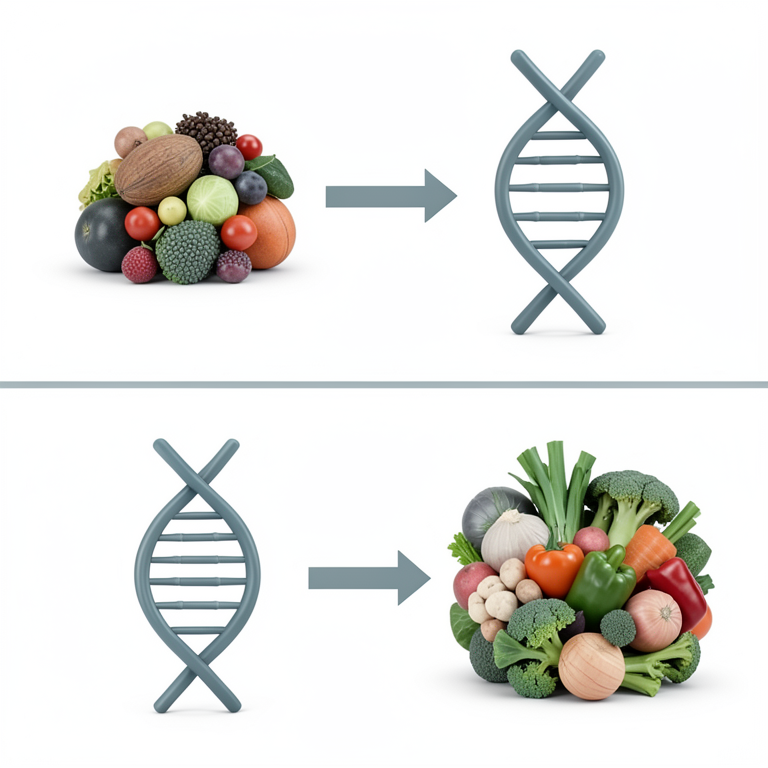
Nutrigenomics vs Nutrigenetics
AI-generated conceptual illustration (Human DNA double helix and various whole foods (avocados, nuts, berries, fish)). It explains the idea and does not show study data.
View source evidence ↗Introduction
The relationship between diet and health has been recognized for centuries, but recent advances in molecular biology and genomics have profoundly transformed our understanding of how nutrients influence gene expression and disease susceptibility [1,2] . Nutritional genomics, also known as nutrigenomics, investigates the mechanisms through which dietary bioactive compounds regulate molecular pathways such as inflammation, oxidative stress, lipid metabolism, and glucose homeostasis [3,4] . Closely related to this is nutrigenetics, which examines how genetic variations alter nutrient metabolism, absorption, and utilization, thereby explaining the wide inter-individual variability observed in dietary responses [5,6] . Together, these fields form the basis of personalized nutrition, an approach that adapts dietary interventions to an individual's genetic profile, lifestyle, and environmental exposures [7,8] . Nutrigenomics primarily focuses on the influence of nutrients on gene activity, including transcriptional regulation and epigenetic mechanisms. For instance, polyphenols found in grapes and green tea can regulate microRNAs associated with cancer progression [9] , while omega-3 fatty acids modulate the expression of genes involved in inflammatory pathways [4] . In contrast, nutrigenetics seeks to identify genetic polymorphisms that modify responses to dietary components. Well-studied examples include the APOE gene variant, which influences lipid metabolism and dietary fat recommendations [10] , and mutations in the MTHFR gene, which affect folate metabolism and cardiovascular risk [11] .
The significance of these insights is particularly evident in the context of public health. Chronic diseases such as obesity, type 2 diabetes, cardiovascular disorders, and cancer account for the majority of global mortality and are strongly shaped by dietary habits [12,13] . Conventional dietary guidelines are typically based on population averages and often fail to account for genetic diversity. By contrast, nutrigenomics offers a scientific foundation for shifting from a one-size-fits-all dietary framework to personalized nutrition, thereby enhancing both preventive and therapeutic strategies [14,15] . This personalized approach is especially valuable in genetically diverse populations and regions with wide variations in dietary practices, such as Asia and Africa [16] . Recent technological advances have further accelerated progress in this field. The development of next-generation sequencing, whole-genome sequencing, and advanced bioinformatics platforms has enabled the rapid identification of diet-related genetic markers [17] . Complementary approaches such as metabolomics, transcriptomics, and microbiome analysis now provide a systems-level view of the interactions between diet and gene networks [18,19] . Moreover, the incorporation of artificial intelligence and machine learning into nutritional genomics has made it possible to analyse large datasets that integrate genetic, clinical, and dietary information, thereby facilitating predictive models of individual dietary responses [20,21] . The emergence of wearable devices and mobile health applications that monitor diet, physical activity, and biomarker fluctuations has also contributed to the real-time application of precision nutrition strategies [22] . The applications of nutrigenomics are broad and hold significant promise. In disease prevention and management, personalized diets can help reduce risk factors associated with metabolic syndrome, cardiovascular diseases, and cancer by modulating gene activity [2,4,23] . In sports nutrition, genetic insights into muscle fiber composition, energy metabolism, and recovery patterns enable the optimization of dietary strategies to enhance athletic performance [24] . In the context of aging and longevity, epigenetic mechanisms influenced by caloric restriction and diets rich in antioxidants may delay the onset of age-related diseases [25] . Furthermore, the field contributes to the development of functional foods and nutraceuticals designed to address specific genetic vulnerabilities, such as probiotics for gut health or folate-enriched diets for individuals with MTHFR polymorphisms [11,23] . Despite these advances, nutrigenomics faces several challenges. Gene-diet interactions are complex, often influenced by multiple environmental and lifestyle factors, which makes replication across populations difficult [5,14] . Ethical concerns related to genetic testing, including issues of privacy, data ownership, and potential misuse of genetic information for discriminatory purposes, must be carefully addressed [24] . In addition, the limited accessibility of genetic testing in low-and middle-income countries raises concerns of health inequity, as the benefits of personalized nutrition may remain confined to affluent populations unless efforts are made to democratize these technologies [25] . Given the rapid expansion of nutrigenomic research and its potential to revolutionize nutrition and healthcare, this review aims to provide a comprehensive synthesis of current evidence on gene-nutrient interactions and personalized dietary interventions. It also seeks to highlight technological advances in omics, bioinformatics, and artificial intelligence that are shaping the future of nutritional science, to discuss clinical and public health implications along with ethical and translational challenges, and to offer perspectives on integrating nutrigenomics into healthcare systems as a key component of precision medicine [1,7,19] .
Materials and Methods
Materials and Methods
Quality Assessment
Systematic reviews and clinical studies were prioritized, while case reports and pilot studies were considered where they provided novel mechanistic insights. To ensure reliability, studies were evaluated based on sample size, methodological clarity, and reproducibility of findings.
Synthesis Approach
A narrative synthesis was employed due to heterogeneity across studies in terms of design, biomarkers assessed, and outcome measures. Findings were grouped under major themes: 1. Gene-nutrient interactions and chronic disease outcomes.
Role of Bioactive Compounds in Gene Regulation
Bioactive food compounds exert significant nutrigenomic effects by modulating signaling pathways and epigenetic markers.
Polyphenols, such as resveratrol (grapes), curcumin (turmeric), and epigallocatechin gallate (green tea), have been shown to regulate microRNAs and influence pathways related to inflammation and carcinogenesis. Omega-3 fatty acids modulate the expression of genes involved in lipid metabolism and reduce inflammatory responses, offering protection against cardiovascular and autoimmune diseases. Vitamins and minerals also act as key regulators; for instance, vitamin D interacts with vitamin D receptor (VDR) polymorphisms to influence bone health and immunity. These results emphasize that dietary components act not merely as sources of energy but as modulators of gene expression.
Integration of Omics Technologies
The application of multi-omics platforms has significantly advanced nutrigenomic research. Genomics and transcriptomics reveal associations between genetic variants and dietary responses. Proteomics identifies protein biomarkers altered by diet, particularly those linked to metabolic syndrome and diabetes. Metabolomics captures real-time changes in metabolites such as amino acids, fatty acids, and lipids, providing insight into nutrient utilization. Microbiomics has highlighted how gut microbial composition mediates host gene expression and metabolic health. The integration of these datasets through systems biology approaches allows for comprehensive mapping of diet-gene-phenotype interactions.
Role of the Gut Microbiome
The gut microbiome has emerged as a central mediator of diet-gene interactions. Variations in microbial composition influence nutrient absorption, energy harvest, and immune regulation. For instance, individuals with higher ratios of Firmicutes to Bacteroidetes are more prone to obesity. Diets rich in fiber increase short-chain fatty acid (SCFA) production, which modulates host gene expression related to inflammation and insulin sensitivity. Recent studies suggest that microbiome signatures can be used to predict individual glycemic responses to food, reinforcing the role of microbiota in personalized nutrition strategies.
Emerging Role of Artificial Intelligence and Digital Health
Artificial intelligence (AI) and machine learning (ML) are increasingly applied to analyze complex nutrigenomic data. By integrating genetic, microbiome, metabolomic, and dietary intake data, AI algorithms can generate predictive models for personalized dietary recommendations. For example, ML-based dietary scoring systems have been shown to predict postprandial glucose responses more accurately than conventional glycemic index values. Moreover, digital health tools such as smartphone applications and wearable devices enable real-time monitoring of diet, activity, and metabolic markers, making personalized nutrition accessible at the population level.
Discussion
Discussion
Interpretation of Findings
This review highlights how nutrigenomics and nutrigenetics have transformed our understanding of the diet-gene relationship. Evidence demonstrates that genetic variations such as FTO, APOE, and MTHFR polymorphisms significantly affect metabolic responses to nutrients. This underlines why population-based dietary guidelines often fail to achieve optimal outcomes at the individual level. Personalized dietary interventions, informed by genetic and epigenetic data, have shown promise in mitigating risk for obesity, cardiovascular disease, diabetes, and cancer. Moreover, bioactive compounds are not only nutrient sources but also gene regulators. Polyphenols, omega-3 fatty acids, and vitamins exert epigenetic modifications that influence inflammation, oxidative stress, and cellular metabolism. These findings support the concept of functional foods and nutraceuticals tailored to genetic profiles, bridging basic nutrition science and clinical application. The integration of multi-omics technologies provides a comprehensive systems-level approach, combining genomics, metabolomics, proteomics, and microbiomics. This convergence enhances the predictive capacity of nutrigenomics and enables a shift from reactive disease treatment toward preventive, precision nutrition strategies.
Clinical and Public Health Implications
Personalized nutrition has the potential to reshape clinical nutrition practice. For example, genetic testing for MTHFR polymorphisms can guide folate supplementation to reduce cardiovascular risk, while APOE profiling can help determine optimal fat intake in individuals at risk of hyperlipidemia. Beyond clinical care, nutrigenomics can improve public health strategies by tailoring interventions to populations with specific genetic susceptibilities.
The role of the gut microbiome further underscores the complexity of nutrition science. Microbial signatures predict glycemic responses more reliably than macronutrient content alone, offering a new dimension to dietary recommendations.
Personalized diets incorporating microbiome analysis may thus provide novel solutions for managing metabolic diseases.
Technological and Ethical Considerations
While artificial intelligence and machine learning enhance predictive accuracy, they introduce concerns regarding transparency, bias, and data security. Genetic and microbiome data are highly sensitive, raising ethical questions about privacy, ownership, and potential misuse by insurers or employers. Therefore, establishing clear legal and ethical frameworks is crucial for responsible application of nutrigenomic findings. Accessibility also remains a challenge. The cost of genetic sequencing and advanced diagnostics restricts the benefits of nutrigenomics to high-income populations, risking the widening of health disparities. To achieve global impact, nutrigenomic tools must become affordable, scalable, and culturally adaptable.
Conclusion
Nutrigenomics and nutrigenetics represent a paradigm shift in nutrition science, moving from generalized dietary guidelines toward precision nutrition tailored to individual genetic, metabolic, and microbial profiles. The evidence reviewed highlights that specific genetic variants, bioactive dietary compounds, and microbiome diversity collectively influence nutrient metabolism, disease susceptibility, and therapeutic outcomes. Integration of multi-omics technologies, coupled with advances in artificial intelligence and digital health, is accelerating the translation of nutrigenomic research into personalized dietary strategies. Despite this progress, several barriers remain. The complexity of gene-diet interactions, limited availability of long-term clinical trials, and lack of standardized methodologies continue to challenge the field. Ethical concerns regarding data privacy, equity of access, and potential misuse of genetic information must also be addressed before nutrigenomics can be fully integrated into healthcare systems. Looking ahead, nutrigenomics holds immense promise for disease prevention, management of chronic conditions, and optimization of health across diverse populations. Largescale validation studies, robust ethical frameworks, and multidisciplinary collaboration will be critical in realizing this potential. As technology advances and becomes more accessible, personalized diets informed by genomic insights are likely to become an integral component of preventive medicine and public health strategies. In summary, nutrigenomics is no longer a futuristic concept but an emerging reality in clinical and public health nutrition. Its successful implementation could significantly reduce the global burden of chronic diseases and contribute to healthier, longer lives.
Acknowledgement
AcknowledgementThe author gratefully thanks to the Department of Clinical Nutrition and Dietetics, PSG College of Arts & Science, Coimbatore, for providing academic guidance and support during the preparation of this review.
References
25 in the original paper- Bahinipati J, Sarangi R, Mishra S, Mahapatra S. Nutrigenetics and nutrigenomics: A brief review with future prospects. Biomedicine. 2021;41(4):714-719.
- Ferguson LR, De Caterina R, Görman U, Allayee H, Kohlmeier M, Prasad C, et al. Guide and position of the International Society of Nutrigenetics/Nutrigenomics on personalised nutrition. Lifestyle Genomics. 2016;9(1):12-27.
- Milella RA, Gasparro M, Giannandrea MA, Notarnicola M, Tutino V, Antonacci D. Nutrigenomics to reveal the effects of grape consumption in healthy subjects. BIO Web Conf. 2023;68:04012-04020.
- Corella D, Ordovas JM. Nutrigenomics in cardiovascular medicine. Circ Cardiovasc Genet. 2018;11(1):e001801-e001810.
- Rimbach G, Egert S, de Pascual-Teresa S. Nutrigenomics and individualized nutrition. Curr Opin Clin Nutr Metab Care. 2021;24(6):534-541.
- Bianchetti G, De Maio F, Abeltino A, Serantoni C, Riente A, Santarelli G, et al. Unraveling the gut microbiome-diet connection: exploring the impact of digital precision and personalized nutrition. Nutrients. 2023;15(18):3931-3945.
- Al-Kamil R, Alkhiat T, Al-Saman H, Hussein H, Hilyail D, Shari F. The effect of nutritional genomics on cardiovascular system. Georgian Med News. 2024;(347):168-176.
- Karimi S, Bano A, Altaf M, Jasra MA, Pervez S. Nutrigenomics: A way forward to disease and genetic disorder. J Nurs Allied Health. 2024;2(1):1-10.
- Kassem NM, Abdelmegid YA, El-Sayed MK, Sayed RS, Abdel-Aalla MH, Kassem HA. Nutrigenomics and microbiome shaping the future of personalized medicine. J Genet Eng Biotechnol. 2023;21(1):134-145.
- Lagoumintzis G, Patrinos GP. Triangulating nutrigenomics, metabolomics and microbiomics toward personalized nutrition and healthy living. Hum Genomics. 2023;17:109-118.
- Meral G, Aslan ES, Tunaligil V, Burkay N, Acar EG, Alp MY. The importance of nutrigenetics and microbiota in personalized medicine: From phenotype to genotype. Cureus. 2024;16(5):e31540-e31549.
- Missong H, Joshi R, Khullar N, Thareja S, Navik U, Bhatti GK, et al. Nutrient-epigenome interactions: Implications for personalized nutrition against agingassociated diseases. J Nutr Biochem. 2024;119:109330109340.
- Yoshimura H. Personalized nutrition: Tailoring diet plans to genetic profiles. Nutrition. 2023;109:112049112060.
- Roman S, Campos-Medina L, Leal-Mercado L. Personalized nutrition: the end of the one-diet-fits-all era. Front Nutr. 2024;11:1370595-1370605.
- Zulqarnain M, Suleman S, Niaz AQ, Akram MN, Hadi B, Usman M, et al. The role of nutrigenomics in sports performance: A quantitative overview of gene-diet interactions. J Health Rehabil Res. 2024;4(1):17131728.
- Park SH, Choi HK, Park JH, Hwang JT. Current insights into genome-based personalized nutrition technology: a patent review. Front Nutr. 2024;11:1346144-1346152.
- Sharma SK, Gaur S. Optimizing nutritional outcomes: The role of AI in personalized diet planning. Int J Res Publ Sem. 2024;15(2):107-116.
- Enkeleda B, Shishmani E, Hallaci A. Perceptions of nutrigenomics and nutrigenetics among Albanian young adults. BMC Nutr. 2023;9:102-110.
- Sivadas S, Castelino RL, Ajila V, Jain Y. Nutrigenomics and diabetes mellitus. Rom J Diabetes Nutr Metab Dis. 2024;31(2):214-220.
- Vasconcellos C, Ferreira O, Lopes MF, Ribeiro AF, Vasques J, Guerreiro CS. Nutritional genomics in nonalcoholic fatty liver disease. Biomedicines. 2023;11(2):319-330.
- Dureja S, Singh H, Patel R. Nutraceuticals and DNA methylation: implications for nutrigenomics. Food Sci Nutr. 2023;11(4):1889-1901.
- Singh V. Current challenges and future implications of exploiting omics data in nutrigenetics and nutrigenomics for personalized care. Nutrition. 2023;110:112002-112015.
- Murtadha M. Nutrigenomics and COVID-19. J Clin Nutr Health. 2024;12(3):145-153.
- Brinkman M, Green H, Crofts S, Jones B, Walsh S, Smith M. Personalized dietary management of advanced prostate cancer using nutrigenomics: a case report. Eur J Clin Nutr. 2024;78(4):356-359.
- Chew NWS, Ng CH, Tan DJH, Kong G, Lin C, Chin YH, et al. The global burden of metabolic diseases. Cell Metab. 2023;35:414-428.e3.
Cited by 2
From OpenAlex, OpenCitations and reference lists read by Scinovex
- Gene-diet interactions in obesity: Precision nutrition strategies for type 2 diabetes prevention ↗
Polu Picheswara Rao, Yatin Kumar Sharma · Obesity Medicine · 2026
❝ 0 - Exploring functional foods and bioactive compounds in rheumatoid arthritis management: A nutrigenomic and AI-driven perspective ↗
Shirin Fargana Bava, Millicent Mabel, Irine Jerald, Muniendra Babu, Kumar Selva · Food and Feed Research · 2026
Systemic inflammation and gradual joint damage are the indications of rheumatoid arthritis (RA), a chronic inflammatory disease. While biologics and disease-modifying antirheumatic medications (DMARDs) continue to be the primary form of RA treatment, their long-term usage is often restricted because of their high cost and potential adverse effects. As a result, complementary approaches that integrate precision medicine-based nutritional interventions are…
❝ 0PDF