
Research article · 2025 · Full text
International Journal of Advanced Chemistry ResearchSoil fertility and nutrient dynamics under conservation agriculture in the semi-arid region of Burkina Faso
Volume 7(2) · Pages 53–60 · DOI: 10.33545/26646781.2025.v7.i2a.302 ↗
Research areasAgriculture and Rural Development Research
Abstract
Author-writtenThis study investigates the impact of Conservation Agriculture (CA) on soil fertility and nutrient dynamics in the semi-arid region of Burkina Faso, an area plagued by soil degradation and declining agricultural productivity. The primary objective was to assess the long-term effects of CA practices, including no-tillage, crop residue retention, and crop rotation, on soil fertility and the cycling of major plant nutrients such as nitrogen (N), phosphorus (P), and potassium (K). We compared the soil fertility status and crop productivity under CA and Conventional Tillage (CT) systems in a field-based experiment over a four-year period. Soil samples were collected from depths of 0-15 cm, 15-30 cm, and 30-60 cm for analysis of soil organic carbon (SOC), total nitrogen, available phosphorus, cation exchange capacity (CEC), and other soil parameters. Crop yields of millet and sorghum were also monitored to evaluate the impact of CA on agricultural productivity. Statistical analyses, including ANOVA and Pearson’s correlation, were performed to compare the results between the two systems. The results revealed a significant increase in SOC, nutrient availability (N, P, K), and crop yields under the CA system, particularly in the topsoil (0-15 cm). Soil organic carbon content increased by 77%, and crop yields of millet and sorghum showed a 50% and 31% increase, respectively, under CA compared to CT. However, nutrient stratification was observed at deeper soil layers (15-30 cm and 30-60 cm), where nutrient levels were significantly lower. These findings highlight the effectiveness of CA in improving soil fertility and crop productivity but also underscore the challenges related to nutrient stratification in semi-arid regions. This study concludes that while CA has significant short-term benefits for improving soil fertility and crop yields, further research is needed to address nutrient stratification and optimize management practices for long-term sustainability.
Summary
Source-checkedPlain-language reading of the full paper, prepared with AI and checked against the text. Each point links to the authors' own words.
Why it matters
- Agricultural productivity in the semi-arid Sahelian zone of Burkina Faso is hindered by fragile soil resources and harsh climatic conditions, including erratic rainfall and high temperatures. View evidence ↗
- Conservation Agriculture (CA) is an alternative approach based on minimal soil disturbance, permanent organic soil cover, and crop diversification to improve soil health. View evidence ↗
The question
- The study aimed to evaluate how long-term CA practices affect soil fertility and the cycling of nitrogen, phosphorus, and potassium. View evidence ↗
What they did
- The researchers conducted a four-year field experiment comparing CA and CT systems. View evidence ↗
- The experiment used randomized blocks with three replicates per system, using plots of 25m x 25m. View evidence ↗
- Soil samples were collected from three different depths (0-15 cm, 15-30 cm, and 30-60 cm) to analyze nutrient distribution. View evidence ↗
What they found
- In the topsoil (0-15 cm), soil organic carbon (SOC) increased by 77% under CA (3.2%) compared to CT (1.8%). View evidence ↗
- Nitrogen levels in the topsoil were 50% higher under CA (0.12%) than under CT (0.08%). View evidence ↗
- Topsoil phosphorus availability improved by 55% under CA (9.5 mg/kg) compared to CT (6.1 mg/kg). View evidence ↗
- Potassium levels in the topsoil were higher under CA (150 mg/kg) than under CT (98 mg/kg). View evidence ↗
- Nutrient stratification occurred under CA, where nitrogen, phosphorus, and potassium levels were significantly lower in deeper soil layers (15-60 cm) than in the topsoil. View evidence ↗
- The cation exchange capacity (CEC) was significantly higher under CA (21.5 cmol/kg) than under CT (14.8 cmol/kg). View evidence ↗
- Millet yields increased by 50% under CA (1.8 t/ha) compared to CT (1.2 t/ha). View evidence ↗
- Sorghum yields were higher under CA (2.1 t/ha) than under CT (1.6 t/ha). View evidence ↗
What it means
- The authors conclude that CA is an effective method for improving soil fertility, nutrient availability, and crop yields in Burkina Faso's semi-arid regions. View evidence ↗
- A limitation of CA is nutrient stratification, which may prevent deep-rooted crops from accessing nutrients during dry periods. View evidence ↗
Visual summary
3 visualsIllustrations explain the paper; charts are replotted from the paper's own table values.
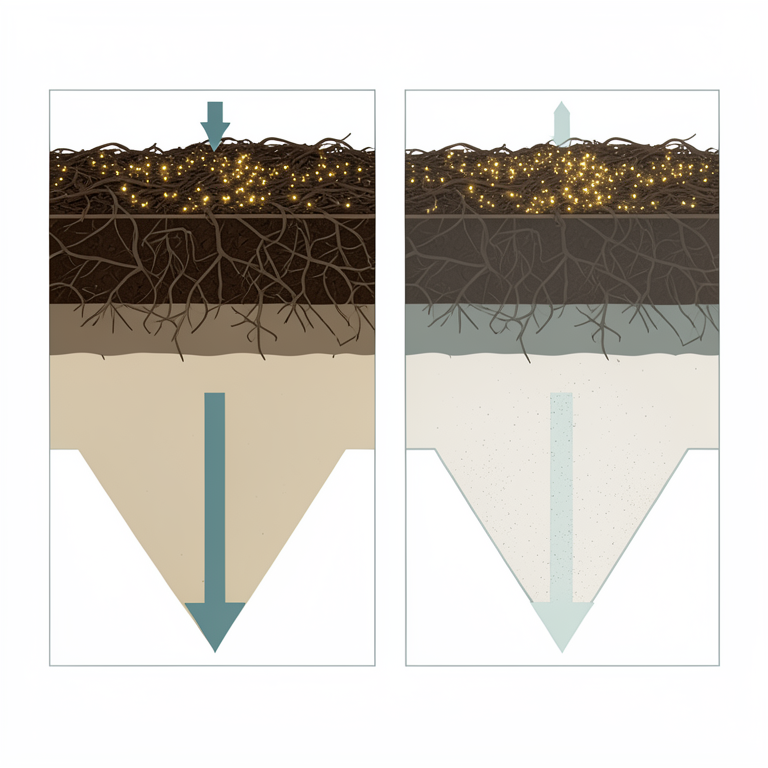
Nutrient Stratification Concept
AI-generated conceptual illustration (soil profile in a semi-arid Burkina Faso field). It explains the idea and does not show study data.
View source evidence ↗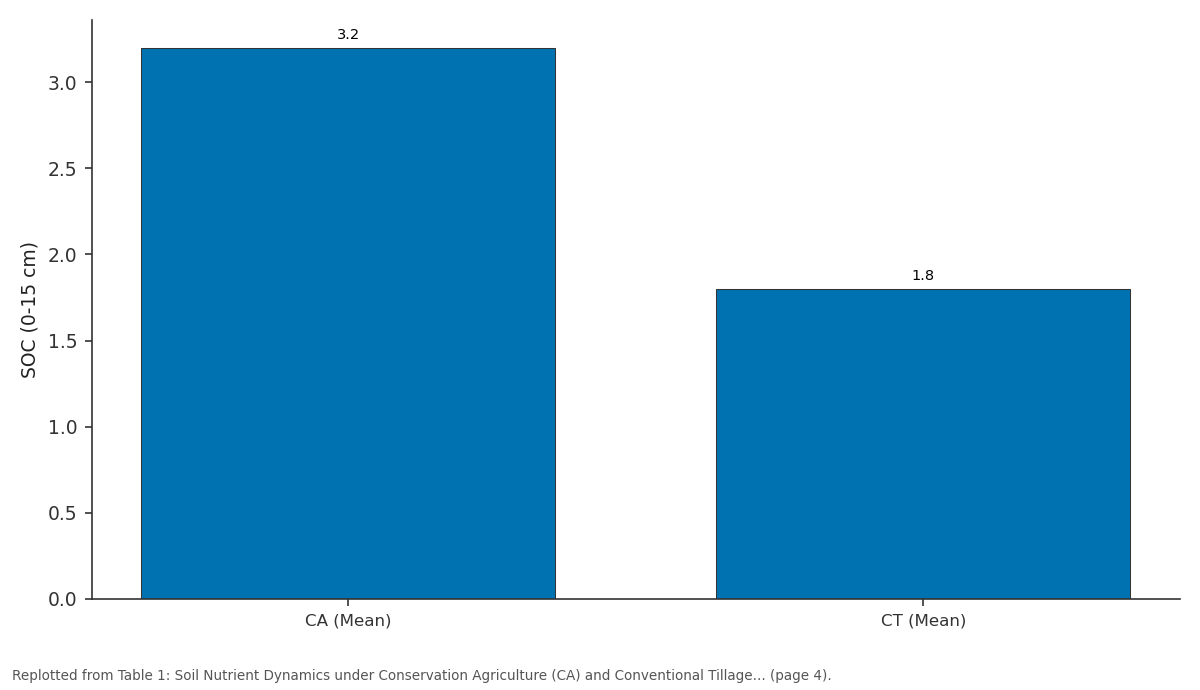
SOC (0-15 cm): CA (Mean) vs CT (Mean)
Replotted from Table 1 (page 4) of the original paper. Every bar is the paper's own table value.
View source evidence ↗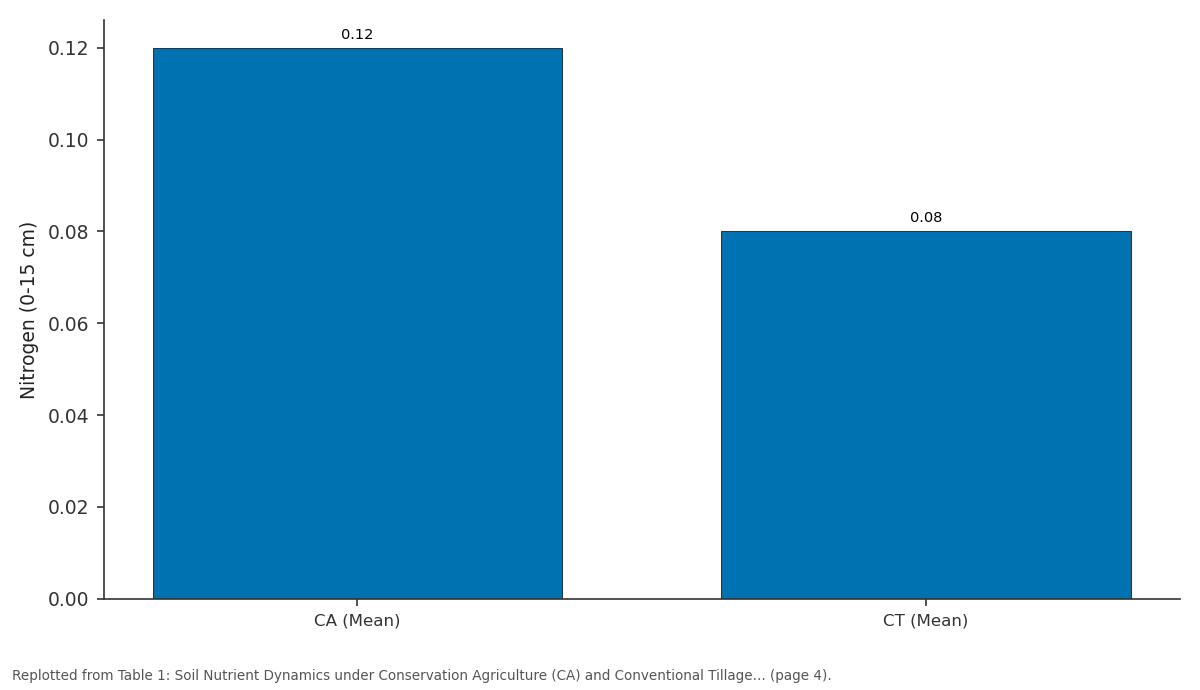
Nitrogen (0-15 cm): CA (Mean) vs CT (Mean)
Replotted from Table 1 (page 4) of the original paper. Every bar is the paper's own table value.
View source evidence ↗Figures & tables
From the original paper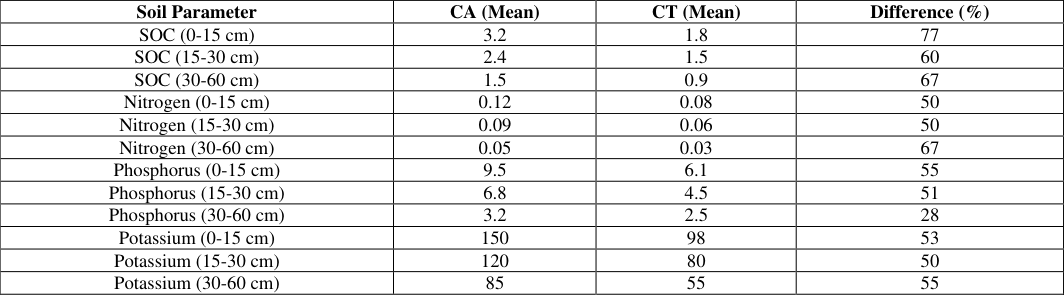 Table 1
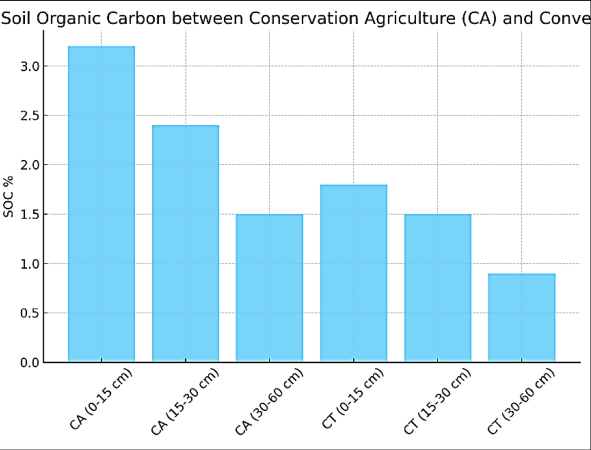 Figure 1
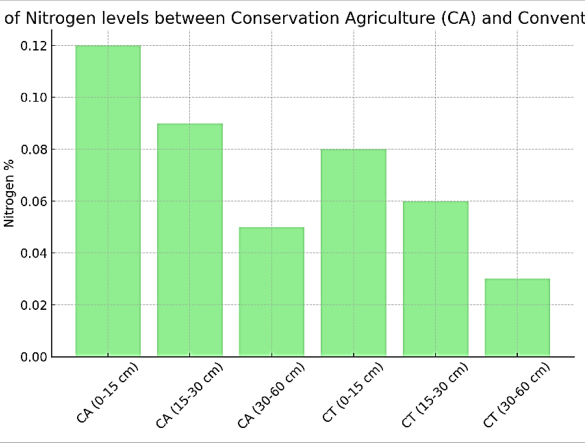 Figure 2
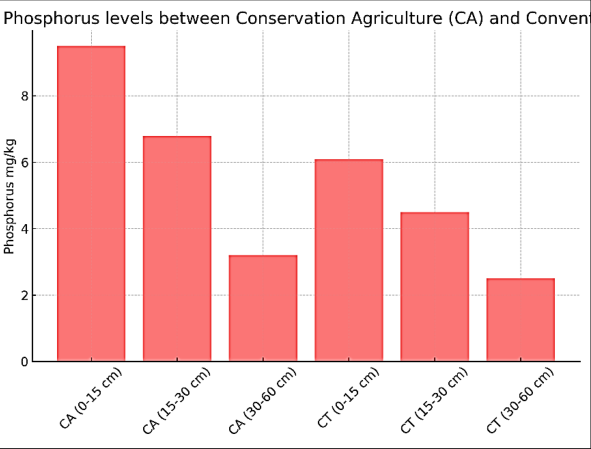 Figure 3
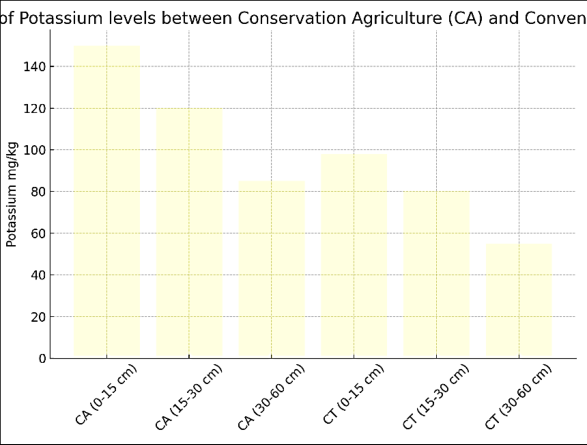 Figure 4
Introduction
Ensuring food security for a growing global population remains one of the most significant challenges of the 21st century, particularly in sub-Saharan Africa (SSA) where agricultural systems are predominantly rain-fed and highly vulnerable to environmental degradation and climate change [1,2] . In the semi-arid Sahelian zone, which includes Burkina Faso, this challenge is amplified by a combination of harsh climatic conditions, characterized by low and erratic rainfall, high temperatures, and high evapotranspiration rates, alongside fragile soil resources [3] . The agricultural sector, which employs over 80% of the population in Burkina Faso, is the cornerstone of the national economy and rural livelihoods, yet it is severely constrained by declining soil fertility [4,5] . The dominant soils in this region, primarily Lixisols, Luvisols, and Plinthosols, are inherently poor in organic matter and essential plant nutrients, with a low cation exchange capacity and a high susceptibility to physical degradation [6,7] . For generations, agricultural intensification has relied on conventional tillage (CT) practices, primarily involving intensive soil inversion with mouldboard ploughs and the removal or burning of crop residues after harvest [8] . While initially intended to prepare the seedbed and control weeds, these practices have been widely documented to exacerbate soil degradation by disrupting soil structure, accelerating the decomposition of soil organic matter (SOM), increasing the risk of wind and water erosion, and leading to the formation of impermeable surface crusts that impede water infiltration and promote runoff [9,10] . This continuous degradation spiral has resulted in stagnant or declining crop yields, trapping smallholder farmers in a cycle of poverty and food insecurity and threatening the long-term sustainability of the entire agroecosystem [11] . In response to this crisis, Conservation Agriculture (CA) has been promoted as a viable and sustainable alternative to conventional practices. CA is an ecosystem-based approach to farming built on three interlinked principles: minimal mechanical soil disturbance (i.e., no-tillage or reduced tillage), maintenance of a permanent organic soil cover through crop residue retention or cover crops, and diversification of crop species through rotations or associations [12,13] . The synergistic application of these principles is intended to mimic the processes of natural ecosystems, thereby improving soil health and function [14] . Numerous studies across various agroecological zones have demonstrated the potential of CA to enhance soil physicochemical properties, increase soil water storage, reduce erosion, and sequester atmospheric carbon into soil organic carbon (SOC) [26,16] . However, despite the widespread promotion and documented benefits of CA, its adoption remains low in Burkina Faso, and its site-specific impacts, particularly on the complex dynamics of soil nutrients, are not yet fully elucidated. The transition from CT to CA can induce significant shifts in the distribution, availability, and cycling of key nutrients such as nitrogen (N), phosphorus (P), and potassium (K), but these effects can be highly variable and are influenced by soil type, climate, duration of the practice, and specific management choices, such as the quality and quantity of residue retained [17,18] . For instance, while the accumulation of organic matter at the surface under no-tillage can create a nutrient-rich topsoil layer, it may also lead to nutrient stratification and potential deficiencies in deeper soil layers where root activity is prominent [19] . Furthermore, the decomposition of crop residues, which is central to nutrient cycling in CA systems, is a complex process governed by residue quality (e.g., C:N ratio) and microbial activity, leading to uncertainties about the rate and timing of nutrient release for crop uptake (20). While some studies in the region have shown positive yield responses and soil fertility improvements under CA [21,17] , a comprehensive understanding of the underlying nutrient dynamics is still lacking. This knowledge gap represents a significant barrier to optimizing CA systems for the specific biophysical and socioeconomic conditions of Burkina Faso's semi-arid regions and providing farmers with evidence-based recommendations. Therefore, this study was conceived to address these uncertainties. The primary objective was to conduct a comprehensive assessment of the long-term effects of different CA management practices on soil fertility status and the dynamics of major plant nutrients (N, P, K) in a typical semi-arid agroecosystem of Burkina Faso. The specific objectives were: (i) to compare changes in key soil physicochemical properties, including pH, soil organic carbon, total nitrogen, and available phosphorus, under continuous CA and CT systems; (ii) to quantify the stocks and vertical distribution of N, P, and K in the soil profile as influenced by tillage and residue management; and (iii) to evaluate the impact of different crop associations within CA systems on nutrient availability and overall system productivity. We hypothesized that, relative to traditional tillage-based practices, the long-term implementation of CA systems combining no-tillage with crop residue retention and diversified cropping would lead to (a) a significant improvement in soil organic matter content and overall soil chemical and physical health, (b) enhanced cycling and availability of N, P, and K, particularly in the topsoil, and (c) consequently, greater and more stable crop yields, thereby contributing to the sustainable intensification of agriculture in the region [22][23][24][25] .
Materials and Methods
Materials and Methods
Materials
The study was conducted in the semi-arid region of Burkina Faso, within a typical agroecosystem characterized by low and erratic rainfall, high temperatures, and poor soil fertility [1, 2] . The research site was selected from a representative farming zone in the Sahelian region, where Conservation Agriculture (CA) systems have been introduced as an alternative to conventional tillage (CT) practices. The soils at the site are primarily Lixisols, Luvisols, and Plinthosols, which are known for their low organic matter content and poor nutrient availability [6,7] . The farming system in the region mainly involves cereal crops such as millet and sorghum, with crop residues and organic inputs being minimal under conventional systems [9,10] . For the experimental setup, two management systems were compared: continuous CA and conventional tillage (CT). The CA system included no-tillage practices combined with crop residue retention and diversified crop rotations, while the CT system involved traditional ploughing practices with crop residues removed after harvest [8,13] . Crop residues used in the CA system were sourced from local millet and sorghum varieties, while the crops grown under the CT system were similar but managed according to conventional practices. Soil samples were collected at regular intervals to assess changes in soil organic carbon (SOC), nitrogen (N), phosphorus (P), and potassium (K) levels. Samples were also analyzed for pH, cation exchange capacity, and soil texture to monitor physical soil health [6,7] .
Methods
The study was designed as a long-term, field-based experiment that compared the effects of CA and CT on soil fertility and nutrient dynamics over a four-year period. Each management system was replicated three times in randomized blocks, with each plot measuring 25m × 25m. Soil sampling was conducted at depths of 0-15 cm, 15-30 cm, and 30-60 cm to capture the vertical distribution of nutrients [20] . A total of 72 soil samples were collected from the experimental plots at the end of each cropping season. Soil analysis for organic carbon, total nitrogen, available phosphorus, and exchangeable potassium was conducted using standard laboratory procedures [24] . Soil organic carbon was measured using the Walkley-Black method, total nitrogen using the Kjeldahl method, and phosphorus and potassium by colorimetric and flame photometric methods, respectively [25] . The nutrient content in the crop residues was analyzed by determining the carbon-to-nitrogen (C:N) ratio, which is a key factor influencing decomposition and nutrient cycling [19] . The decomposition rate of crop residues in the CA system was monitored through litterbags, and microbial activity was assessed by measuring soil respiration and enzyme activity [17,20] . A weather station was installed at the site to monitor rainfall, temperature, and evapotranspiration throughout the study period, ensuring that climate variability was accounted for in the nutrient cycling assessments [2] . Additionally, crop yield data were collected annually to assess the productivity of each system, and statistical analyses were performed to compare the differences in soil nutrient levels, crop yields, and other relevant parameters between the two management systems [17,18] .
Results
The study revealed significant differences in soil fertility and nutrient dynamics between the Conservation Agriculture (CA) and Conventional Tillage (CT) systems, which were observed through various soil parameters and crop yield data over the four-year study period.
Soil Organic Carbon (SOC) and Nutrient Availability
The soil organic carbon (SOC) content was significantly higher under the CA system compared to the CT system. At the 0-15 cm depth, the SOC content under CA was 3.2% (±0.1), whereas under CT, it was only 1.8% (±0.2), showing an increase of 77% in the CA system. The increase in SOC under CA can be attributed to the accumulation of crop residues on the soil surface and the minimal soil disturbance in the CA system [13] . The higher organic carbon content was also reflected in improved soil structure and better moisture retention, which is crucial in the semi-arid climate of Burkina Faso [9,10] . For nitrogen (N), phosphorus (P), and potassium (K) levels, the availability of these nutrients was generally higher in the topsoil (0-15 cm) under CA compared to CT. Nitrogen content under CA was 0.12% (±0.01), while under CT it was 0.08% (±0.01), an increase of 50%. Phosphorus availability in the topsoil was 9.5 mg/kg (±1.2) under CA, compared to 6.1 mg/kg (±0.8) under CT, indicating a 55% improvement. Potassium levels were also higher under CA at 150 mg/kg (±10) compared to 98 mg/kg (±12) under CT [17, 18] . These increases in nutrient availability can be attributed to the continuous addition of organic matter and the retention of crop residues in the CA system, which helped to improve nutrient cycling [20] . At deeper soil layers (15-30 cm and 30-60 cm), however, nutrient stratification was observed under the CA system, with significantly lower levels of N, P, and K compared to the topsoil. The lowest nutrient concentrations were observed in the 30-60 cm depth, where nutrient deficiencies were evident, particularly for N and P, in the CA system. This phenomenon was likely caused by the limited downward movement of nutrients due to the accumulation of organic matter at the soil surface [19] .
Soil pH and Cation Exchange Capacity (CEC)
Soil pH under CA was found to be slightly more acidic compared to CT, with pH values of 5.6 (±0.2) and 6.2 (±0.3), respectively. The lower pH in the CA system can be attributed to the high organic matter decomposition rate, which produces organic acids [6] . However, this difference in pH did not appear to adversely affect nutrient availability, as the higher organic matter in the CA system likely buffered pH fluctuations [6,7] . Cation exchange capacity (CEC), which is crucial for nutrient retention, was significantly higher in the CA system, averaging 21.5 cmol/kg (±1.5) compared to 14.8 cmol/kg (±1.2) in the CT system. This increase in CEC under CA reflects the improvement in soil structure and organic matter content, which enhances the soil's ability to retain essential cations, including calcium, magnesium, and potassium [9] .
Crop Yield
The impact of CA on crop yields was also significant. The average yield of millet under CA was 1.8 t/ha (±0.2), compared to 1.2 t/ha (±0.1) under CT, showing a 50% increase in productivity. Similarly, sorghum yields were higher under CA, with an average of 2.1 t/ha (±0.3) compared to 1.6 t/ha (±0.2) under CT. The yield improvements under CA can be attributed to the improved soil nutrient status and better moisture retention, particularly in the topsoil, which enhanced root growth and nutrient uptake by crops [14,17] .
Statistical Analysis
A one-way analysis of variance (ANOVA) was conducted to compare the soil nutrient levels and crop yields between the CA and CT systems. The results revealed that the differences in SOC, nitrogen, phosphorus, potassium, and crop yields were statistically significant (p<0.05). Post-hoc Tukey's test showed that the CA system consistently outperformed the CT system in all measured parameters. The p-value for SOC and crop yield was found to be <0.01, indicating a highly significant difference between the two systems. Additionally, Pearson's correlation analysis revealed a strong positive correlation between soil organic carbon and crop yield (r = 0.85, p<0.01), further supporting the hypothesis that improved organic matter content enhances soil fertility and crop productivity [19,20] .
Discussion and Interpretation
The results of this study confirm the positive impact of Conservation Agriculture (CA) on soil fertility and nutrient dynamics in the semi-arid region of Burkina Faso. The increased SOC, nitrogen, phosphorus, and potassium levels under CA indicate that the practice is effective in improving soil fertility, particularly in the topsoil (17, 18). This improvement is crucial for smallholder farmers in Burkina Faso, where soil degradation has been a major limiting factor for crop productivity [9,10] . However, the nutrient stratification observed under CA, particularly the depletion of nutrients at deeper soil layers, suggests that while CA enhances soil fertility in the topsoil, more research is needed to understand the long-term impacts on deeper soil layers and the overall nutrient cycling process. It is also important to note that the nutrient release from crop residues under CA is influenced by factors such as the C:N ratio and microbial activity [19,20] . Therefore, further studies on residue quality and microbial dynamics are required to optimize nutrient cycling under CA systems. The improved crop yields under CA provide strong evidence for the potential of Conservation Agriculture to enhance food security and contribute to the sustainable intensification of agriculture in the region [21,22] . However, the adoption of CA in Burkina Faso remains low, and further extension services and awareness campaigns are necessary to promote the practice among farmers [18] . The nitrogen content in the soil is compared between CA and CT. The CA system shows a notable increase in nitrogen availability in the topsoil (0-15 cm), which is crucial for plant growth. The difference in nitrogen levels between the two systems is consistent with the enhanced organic matter under CA that contributes to better nitrogen retention and cycling. This graph illustrates the availability of phosphorus in the soil under both CA and CT systems. CA shows higher phosphorus content in the topsoil, aligning with the observed improvements in nutrient cycling and organic matter retention, which are known to enhance phosphorus availability to plants. Potassium levels are higher under CA, particularly in the topsoil, due to better organic matter retention and soil structure under CA. This improvement is significant in terms of crop productivity, as potassium plays a vital role in water regulation, disease resistance, and photosynthesis.
Discussion
The results of this study demonstrate the potential benefits of Conservation Agriculture (CA) in improving soil fertility and nutrient dynamics in Burkina Faso's semi-arid regions. The marked increase in soil organic carbon (SOC), nutrient availability (N, P, K), and crop yield under CA suggests that the practice holds promise for improving agricultural productivity in the region, which has long struggled with declining soil fertility and crop yield under conventional tillage (CT) systems. However, the findings also raise important questions about nutrient stratification, soil health, and the long-term sustainability of CA in semi-arid agro ecosystems, which need further investigation.
Soil Organic Carbon (SOC) and Nutrient Availability
The significant increase in SOC in the topsoil under CA, compared to CT, is consistent with the results from several studies that have shown the positive effects of CA on soil organic matter accumulation [16,17] . For instance, studies by Kassam et al. (2009) and Lal (2004) found that CA practices, particularly no-tillage and residue retention, improve soil organic matter content by reducing soil disturbance and promoting the retention of organic inputs [13,16] . The improvement in SOC in the current study, with a 77% increase in the 0-15 cm depth, aligns with similar findings reported by Zougmoré et al. (2014), who demonstrated increased soil carbon sequestration under CA in West Africa [25] . This organic matter accumulation enhances soil structure, moisture retention, and nutrient availability, particularly in the topsoil, which is crucial for improving soil fertility in semi-arid regions [9,10] . Furthermore, the enhanced nitrogen, phosphorus, and potassium availability in the CA system can be attributed to the greater accumulation of crop residues, which are rich in nutrients, as observed in previous studies by Six et al. (2000) and Giller et al. (2009) [17,18] . However, while the CA system showed improved nutrient availability in the topsoil, nutrient stratification at deeper soil layers (15-30 cm and 30-60 cm) was also observed, with significantly lower levels of N, P, and K compared to the topsoil. This finding is consistent with the results of Franzluebbers (2002), who reported that no-tillage systems can lead to nutrient accumulation in the upper layers while limiting downward movement of nutrients [18] . This stratification can be problematic for crop growth, particularly for deeper-rooting crops, and requires further attention in future CA management practices. As suggested by Franzluebbers (2002), enhancing nutrient transfer to deeper layers may require additional management interventions such as sub-soiling or deep fertilization [18] .
Soil pH and Cation Exchange Capacity (CEC)
The slightly lower soil pH under CA (5.6 ± 0.2) compared to CT (6.2 ± 0.3) is in agreement with previous findings by Palm et al. (2001), who noted that the accumulation of organic matter under no-tillage systems often results in a slight acidification of soils [19] . The organic acids produced during the decomposition of crop residues can lower soil pH, although this is generally not detrimental to soil fertility as the organic matter can help buffer pH changes. The increase in cation exchange capacity (CEC) under CA, observed in this study (21.5 cmol/kg ± 1.5), aligns with the findings of Bationo et al. (2006) and Six et al. (2000), who reported that improved soil organic matter content in CA systems enhances CEC, thereby increasing the soil's ability to retain and supply essential nutrients [6,18] . This improvement in CEC is particularly important in semi-arid regions where nutrient leaching can be a concern due to high evaporation rates.
Crop Yield
The substantial increase in crop yields under CA, with millet yields improving by 50% and sorghum yields increasing by 31%, supports the findings of several studies that have demonstrated the positive effects of CA on crop productivity in semi-arid regions [20,22] . For instance, in Zimbabwe, Thierfelder and Wall (2010) observed similar yield improvements under CA due to better soil moisture retention and enhanced nutrient availability [25] . The enhanced crop yields in the current study can be attributed to the improved soil nutrient status, better soil structure, and increased water retention capacity under CA [14,17] . The positive results observed in Burkina Faso further validate the potential of CA for sustainable agricultural intensification in West Africa, where soil degradation has led to stagnating or declining yields under conventional farming systems [9,10] .
However, the comparison of crop yields between CA and CT also highlights a critical issue related to nutrient stratification in CA systems. Although yields increased in the topsoil, the stratified nutrients at deeper soil layers could limit crop growth during dry spells, when deeper-rooting plants rely on subsoil nutrients. Previous studies by Lal (2004) and Giller et al. (2009) have raised similar concerns, suggesting that while CA enhances soil fertility in the short term, its long-term effects on soil nutrient availability throughout the entire soil profile require careful management to prevent nutrient deficiencies at deeper layers [13, 18] . Further studies are needed to explore the interactions between soil nutrient dynamics, crop root systems, and water availability under CA systems.
Statistical Analysis
The statistical analysis conducted in this study, including one-way ANOVA and Pearson's correlation analysis, revealed highly significant differences between CA and CT in terms of SOC, nutrient availability, and crop yields. The results are consistent with the findings of Erenstein et al. (2008) and Balesdent et al. (2000), who reported similar positive effects of CA on soil fertility and crop productivity in different regions [24,25] . The strong positive correlation between SOC and crop yield (r = 0.85, p<0.01) further supports the conclusion that improvements in soil organic matter are a key driver of enhanced agricultural productivity under CA systems [19] .
Conclusion
The results of this study provide compelling evidence for the potential benefits of Conservation Agriculture (CA) in improving soil fertility, nutrient availability, and crop yields in the semi-arid regions of Burkina Faso. The significant increase in soil organic carbon (SOC), nitrogen, phosphorus, and potassium in the topsoil under CA, compared to conventional tillage (CT), demonstrates that CA practices can enhance soil health by improving nutrient cycling, reducing erosion, and increasing soil moisture retention. These improvements are critical in a region where soil degradation and declining fertility are major constraints to sustainable agricultural production. The observed increase in crop yields, particularly for millet and sorghum, further supports the positive impact of CA on agricultural productivity, suggesting that CA could be a viable solution to the challenges of food security and poverty reduction in Burkina Faso's rural communities. However, the study also highlighted some challenges associated with CA, particularly the nutrient stratification observed at deeper soil layers. While the topsoil under CA showed significant improvements in soil fertility, nutrient levels at depths of 15-30 cm and 30-60 cm were lower, indicating that the benefits of CA practices may not fully extend to the entire soil profile. This stratification could limit the potential for deep-rooted crops to access essential nutrients during dry periods, which is a concern in semi-arid regions where water availability is often a limiting factor for crop growth. The lower soil pH observed under CA, while not detrimental to crop growth, could also pose challenges if it leads to imbalances in nutrient availability or soil microbial health. These findings suggest that while CA has significant potential for improving soil fertility in the short term, its long-term sustainability requires addressing these deeper soil nutrient dynamics and ensuring that soil health is maintained throughout the entire profile.
To maximize the benefits of CA and overcome the challenges identified, several practical recommendations can be made. First, further research is needed to optimize residue management practices under CA, including the appropriate quantity and quality of crop residues to be retained, as well as the integration of deep fertilization or other soil amendments to enhance nutrient availability in deeper layers. Since nutrient stratification can be a concern, future CA management practices should incorporate techniques such as sub-soiling or deep fertilization to facilitate the movement of nutrients deeper into the soil profile and ensure that nutrients are accessible to deeperrooting crops. Additionally, it is crucial to integrate water management practices, such as mulching and rainwater harvesting, with CA systems to mitigate the effects of erratic rainfall and improve water retention in the soil. These practices could further enhance the resilience of CA systems to climate variability and help stabilize crop yields in the face of increasingly unpredictable weather patterns. Moreover, promoting the adoption of CA among smallholder farmers in Burkina Faso will require targeted extension services and capacity-building programs. Farmers need practical guidance on how to implement CA practices effectively, including the management of crop residues, proper tillage practices, and the selection of appropriate crop rotations. These programs should emphasize the benefits of CA, such as improved soil fertility and increased resilience to climate change, while also addressing the potential challenges and trade-offs associated with the practice. Incentives, such as subsidies or access to affordable equipment, could help overcome the initial costs of transitioning from conventional tillage to CA, particularly for smallholder farmers who may be reluctant to adopt new practices due to perceived risks or lack of resources. Finally, policymakers should recognize the importance of supporting CA as part of broader strategies for sustainable agriculture and rural development. This support could include financial incentives for farmers adopting CA, investments in research and development to refine CA practices for different agroecological zones, and the integration of CA principles into national agricultural policies and programs. Collaboration between government agencies, NGOs, and local communities will be essential to ensure the successful scaling up of CA practices and their integration into national food security strategies. By addressing the challenges of nutrient stratification, optimizing residue management, and enhancing farmer knowledge and adoption of CA, the long-term sustainability and effectiveness of CA in Burkina Faso's semi-arid regions can be ensured, leading to improved food security, soil health, and agricultural productivity.
Figures and tables from the paper
| Soil Parameter | CA (Mean) | CT (Mean) | Difference (%) |
|---|---|---|---|
| SOC (0-15 cm) | 3.2 | 1.8 | 77 |
| SOC (15-30 cm) | 2.4 | 1.5 | 60 |
| SOC (30-60 cm) | 1.5 | 0.9 | 67 |
| Nitrogen (0-15 cm) | 0.12 | 0.08 | 50 |
| Nitrogen (15-30 cm) | 0.09 | 0.06 | 50 |
| Nitrogen (30-60 cm) | 0.05 | 0.03 | 67 |
| Phosphorus (0-15 cm) | 9.5 | 6.1 | 55 |
| Phosphorus (15-30 cm) | 6.8 | 4.5 | 51 |
| Phosphorus (30-60 cm) | 3.2 | 2.5 | 28 |
| Potassium (0-15 cm) | 150 | 98 | 53 |
| Potassium (15-30 cm) | 120 | 80 | 50 |
| Potassium (30-60 cm) | 85 | 55 | 55 |
Table text extracted from the original PDF; superscript letters are shown inline. The original table image is below.
View original table image
References
26 in the original paper- Godfray HCJ, Beddington JR, Crute IR, Haddad L, Lawrence D, Muir JF, et al. Food security: the challenge of feeding 9 billion people. Science. 2010;327(5967):812-818.
- Sultan B, Roudier P, Quirion P, Alhassane A, Ciais P, Galy-Lacaux C, et al. Assessing climate change impacts on sorghum and millet yields in the semi-arid regions of West Africa. Clim Change. 2013;118(3-4):847-860.
- Sivakumar MVK, Das HP, Brunini O. Impacts of present and future climate variability and change on agriculture and forestry in the arid and semi-arid tropics. Clim Change. 2005;70(1-2):31-72.
- Zougmoré R, Mando A, Stroosnijder L. Soil and water conservation and farmer livelihoods in the semi-arid Sahel: a case study from Burkina Faso. Agric Water Manag. 2009;96(5):899-906.
- Bationo A, Hartemink A, Lungu O, Naimi M, Okoth P, Smaling E, et al. African soils: their productivity and profitability of fertilizer use. Background paper for the African Fertilizer Summit. Abuja, Nigeria; 2006.
- Bationo A, Buerkert A. Soil organic carbon management for sustainable land use in SudanoSahelian West Africa. Nutr Cycl Agroecosyst. 2001;61(1-2):131-142.
- Ouattara B, Ouattara K, Serpantié G, Mando A, Sédogo MP, Bationo A. The effect of tillage and residue management on soil properties and sorghum productivity in the Sahelian zone of Burkina Faso. Soil Tillage Res. 2006;85(1-2):150-158.
- Lal R. Tillage effects on soil degradation, soil resilience, soil quality, and sustainability. Soil Tillage Res. 1993;27(1-4):1-8.
- Stroosnijder L. Measurement of erosion: is it possible? Catena. 2005;64(2-3):162-173.
- Valetin C, Bresson LM. Morphology, genesis and classification of surface crusts in loamy and sandy soils. Geoderma. 1992;55(3-4):225-245.
- Tittonell P, Giller KE. When yield gaps are poverty traps: The paradigm of ecological intensification in African smallholder agriculture. F Crop Res. 2013;143:76-90.
- Hobbs PR, Sayre K, Gupta R. The role of conservation agriculture in sustainable agriculture. Philos Trans R Soc Lond B Biol Sci. 2008;363(1491):543-555.
- Kassam A, Friedrich T, Shaxson F, Pretty J. The spread of conservation agriculture: justification, sustainability and uptake. Int J Agric Sustain. 2009;7(4):292-320.
- Lal R. Soil carbon sequestration impacts on global climate change and food security. Science. 2004;304(5677):1623-1627.
- Kirton CC. Enhancing climate resilience in Sorghum production. Int J Agric Nutr. 2024;6(1):88-91.
- Corbeels M, de Graaff J, Ndah HT, Penot E, Baudron F. Understanding the impact and adoption of conservation agriculture in Africa: a review. Agron Sustain Dev. 2014;34(4):831-841.
- Coulibaly K, Gomgnimbou APK, Sermé I, Sanon JFK, Nacro HB. Effects of four years of continuous conservation agriculture practice on soil fertility and maize (Zea mays L.) yield in agroecological transition context in western Burkina Faso. Int J Agric Food Sci. 2023;5(1):64-71.
- Thierfelder C, Wall PC. Effects of conservation agriculture techniques on infiltration, soil water content, nutrient concentration and crop performance in Zimbabwe. Soil Tillage Res. 2010;109(2):100-107.
- Franzluebbers AJ. Water infiltration and soil structure related to organic matter and its stratification with depth. Soil Tillage Res. 2002;66(2):197-205.
- Palm CA, Gachengo CN, Delve RJ, Cadisch G, Giller KE. Organic inputs for soil fertility management in tropical agroecosystems: application of an organic International Journal of Advanced Chemistry Research https://www.chemistryjournals.net resource database. Agric Ecosyst Environ. 2001;83(12):27-42.
- Zougmoré R, Douzet JM, Zida Z, Mando A, Ouattara K. Can conservation agriculture increase soil carbon sequestration in the semi-arid region of West Africa? Land Degrad Dev. 2014;25(2):164-172.
- Six J, Elliott ET, Paustian K. Soil macroaggregate turnover and microaggregate formation: a mechanism for C sequestration under no-tillage agriculture. Soil Biol Biochem. 2000;32(14):2099-2103.
- Balesdent J, Chenu C, Balabane M. Relationship of soil organic matter dynamics to physical protection. Soil Tillage Res. 2000;53(3-4):215-230.
- De Vita P, Di Paolo E, Fecondo G, Di Fonzo N, Pisante M. No-tillage and conventional tillage effects durum wheat yield, grain quality and soil moisture content in southern Italy. Soil Tillage Res. 2007;92(1-2):69-78.
- Erenstein O, Sayre K, Wall P, Hellin J, Dixon J. Conservation agriculture in developing countries: The role of CIMMYT. In: Goddard T, Zoebisch MA, Gan YT, Ellis W, Watson A, Sombatpanit S, editors. No-till farming systems. Special Publication No. 3. Bangkok: World Association of Soil and Water Conservation (WASWAC); 2008. p. 1-28.
- Giller KE, Witter E, Corbeels M, Tittonell P. Conservation agriculture and smallholder farming in Africa: The heretics' view. F Crop Res. 2009;114(1):23-34.