
Research article · 2025 · Full text
International Journal of Horticulture and Food ScienceEvaluating maize yield enhancement through conservation agriculture practices in the Sahel region of Africa
Volume 7(8) · Pages 173–123 · DOI: 10.33545/26631067.2025.v7.i8b.377 ↗
Research areasAgricultural Research and PracticesAgriculture and Rural Development Research
Abstract
Author-writtenThe Sahel region in Africa, characterized by semi-arid conditions, faces significant challenges such as food insecurity, soil degradation, and the impacts of climate change. This study aimed to evaluate the impact of Conservation Agriculture (CA) practices on maize yield and soil health in the Sahel, focusing on the effects of minimum tillage, residue retention, and crop rotation. A randomized complete block design (RCBD) was used across four study sites in western Burkina Faso, with treatments including CA+ (minimum tillage, residue retention, crop rotation), CA- (minimum tillage without residue retention), conventional tillage with residue retention, and conventional tillage with no crop rotation. Soil samples were analyzed for organic carbon, moisture content, and nutrient availability, while maize yield was assessed at harvest. The results indicated that CA+ significantly increased maize yield by 23%, compared to conventional tillage practices. Soil organic carbon levels increased by 25%, and soil moisture content was higher in CA+ plots, especially during dry periods. Nutrient availability, including nitrogen and phosphorus, was also enhanced under CA+ practices. Statistical analysis revealed that CA practices improved soil structure and moisture retention, leading to better maize productivity. The study concluded that CA practices, particularly when integrated as a comprehensive package, can enhance maize yield and soil health in the Sahel, offering a sustainable solution to address the region's agricultural challenges. The findings underscore the potential of CA to increase resilience to climate variability, improve soil fertility, and contribute to long-term agricultural sustainability. Future research should focus on long-term evaluations and expanding CA adoption among smallholder farmers in the region.
Summary
Source-checkedPlain-language reading of the full paper, prepared with AI and checked against the text. Each point links to the authors' own words.
Why it matters
- The Sahel region of Africa is a semi-arid area struggling with soil degradation, climate change, and food insecurity. View evidence ↗
The question
- The study aimed to evaluate how conservation agriculture (CA) practices, specifically crop rotation, residue retention, and minimum tillage, affect soil health and maize yield in the Sahel. View evidence ↗
What they did
- Researchers used a randomized complete block design across four sites in western Burkina Faso, comparing a full CA package (CA+) against incomplete CA and conventional tillage treatments. View evidence ↗
- Maize was planted at the start of the rainy season with a local density of 50,000 plants per hectare. View evidence ↗
- Soil health was assessed by measuring water retention capacity, nutrient availability, pH, and soil organic carbon (SOC) before and after the cropping cycle. View evidence ↗
What they found
- The comprehensive CA+ treatment increased maize yield by 23% compared to conventional tillage, reaching 3.3 tons per hectare versus 2.7 tons per hectare. View evidence ↗
- Soil organic carbon (SOC) increased by 25% under the CA+ treatment, rising from an initial average of 0.82% to 1.03% by the end of the season. View evidence ↗
- During the growing season, CA+ plots maintained an average soil moisture content of 14.5%, which was higher than the 11.8% found in conventional tillage plots. View evidence ↗
- Nutrient availability improved under CA+, with nitrogen increasing by 16% (0.17% to 0.20%) and phosphorus increasing by 18% (4.9 mg/kg to 5.8 mg/kg). View evidence ↗
- Minimum tillage without residue retention (CA-) produced a modest yield of 3.0 tons per hectare, performing better than conventional tillage (2.7 tons/ha) but worse than the full CA+ package. View evidence ↗
- A strong positive correlation (r = 0.76) was found between soil organic carbon levels and maize yield. View evidence ↗
What it means
- The authors conclude that integrating CA practices as a comprehensive package is a sustainable way to improve soil health and maize yields in the Sahel. View evidence ↗
- Because the study only lasted one growing season, the long-term sustainability and impacts of these CA practices remain uncertain. View evidence ↗
Visual summary
3 visualsIllustrations explain the paper; charts are replotted from the paper's own table values.
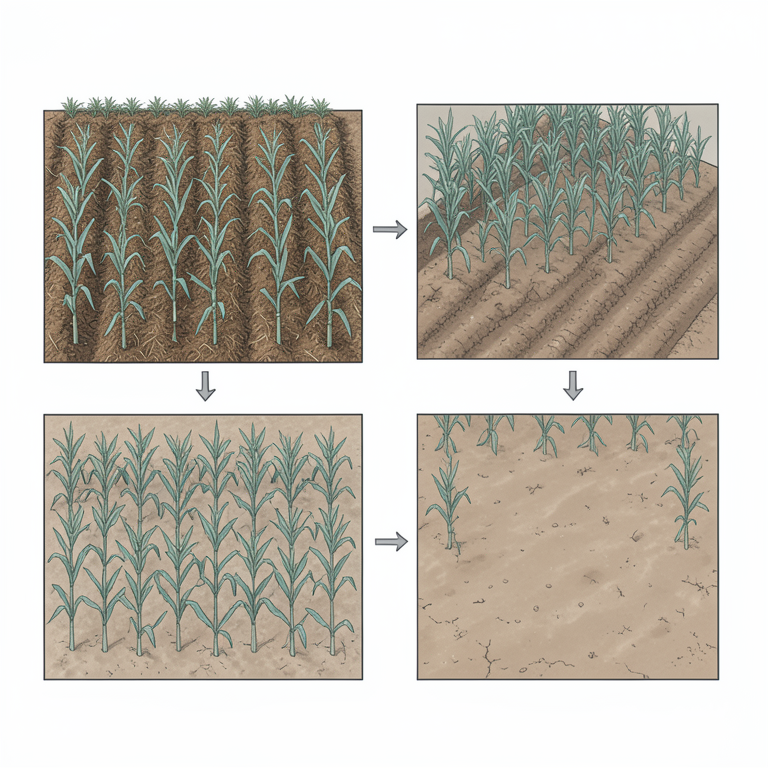
CA Treatment Comparison
AI-generated conceptual illustration (maize plants in Sahelian soil). It explains the idea and does not show study data.
View source evidence ↗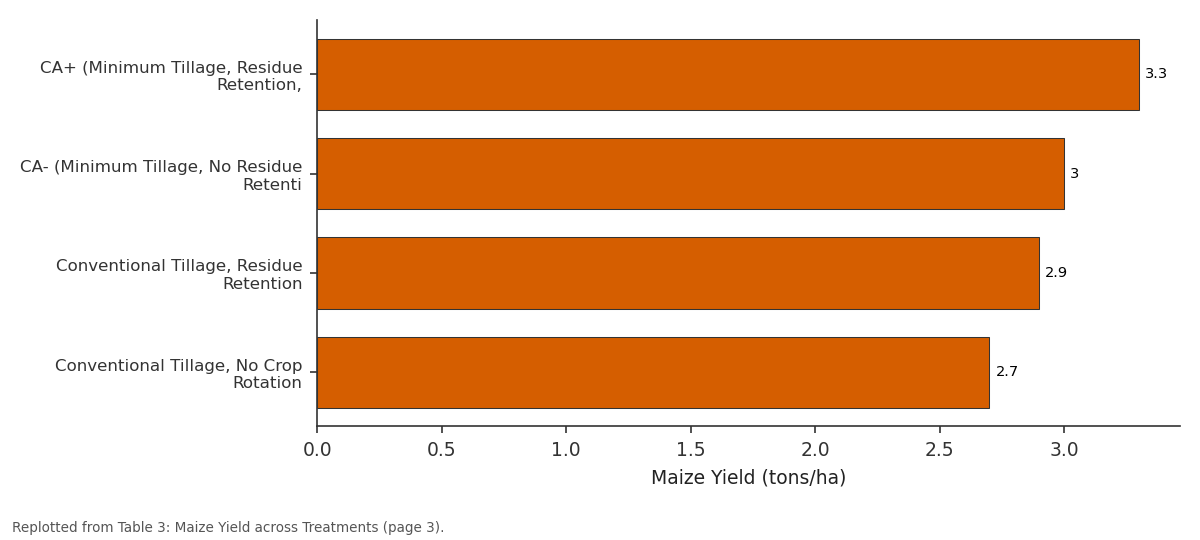
Maize Yield (tons/ha): CA+ (Minimum Tillage... vs CA- (Minimum Tillage... vs Conventional Tillage... vs Conventional Tillage...
Replotted from Table 3 (page 3) of the original paper. Every bar is the paper's own table value.
View source evidence ↗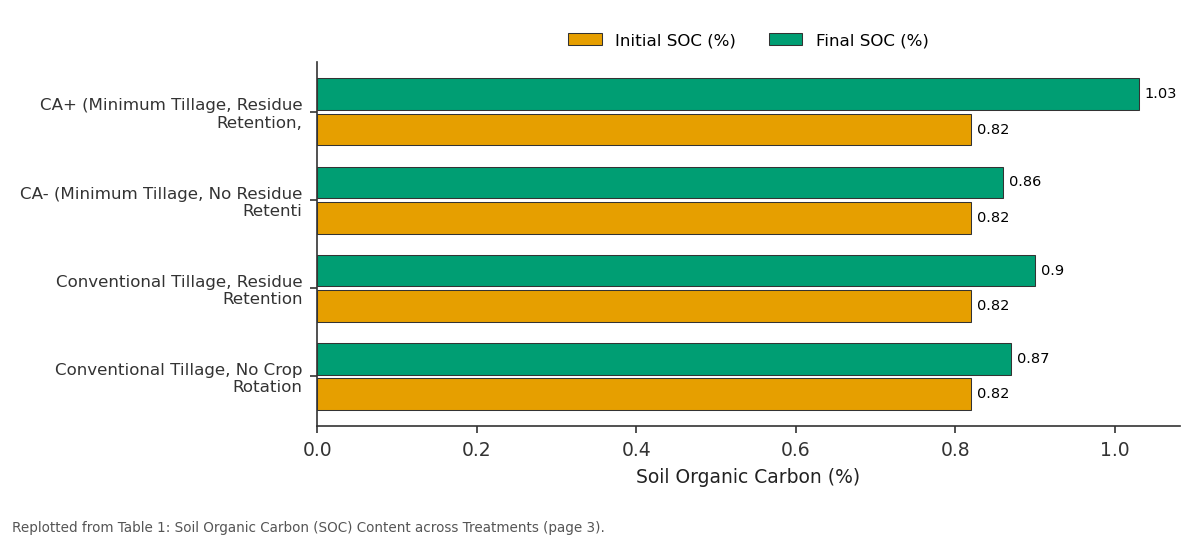
Initial SOC (%) and Final SOC (%): CA+ (Minimum Tillage... vs CA- (Minimum Tillage... vs Conventional Tillage... vs Conventional Tillage...
Replotted from Table 1 (page 3) of the original paper. Every bar is the paper's own table value.
View source evidence ↗Figures & tables
From the original paper Table 1
 Table 2
 Table 3
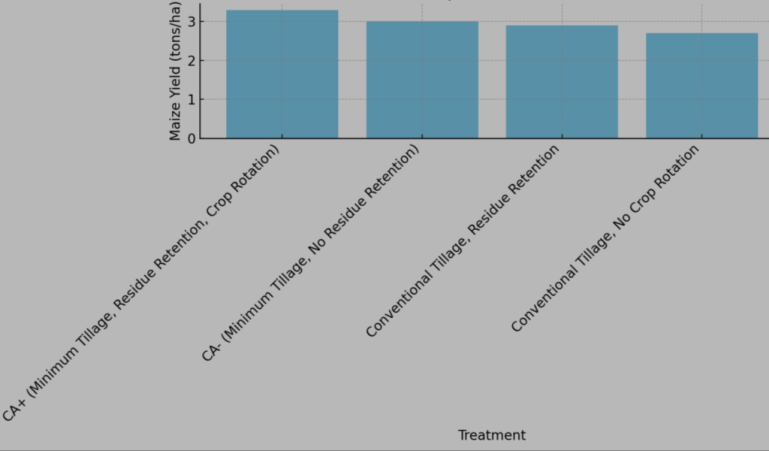 Figure 1
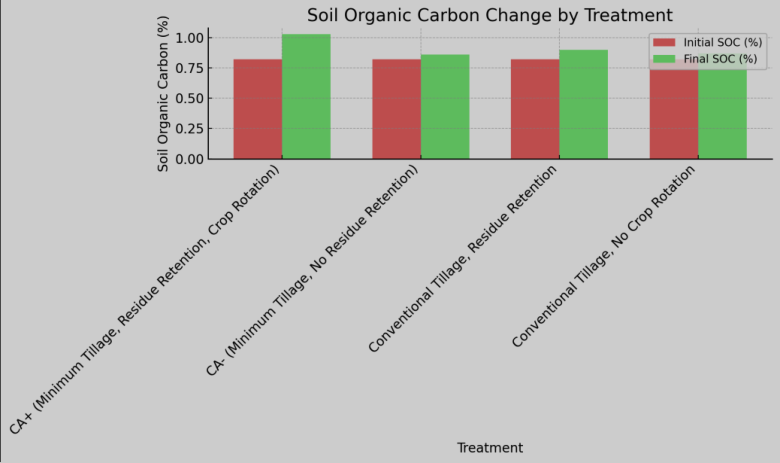 Figure 2
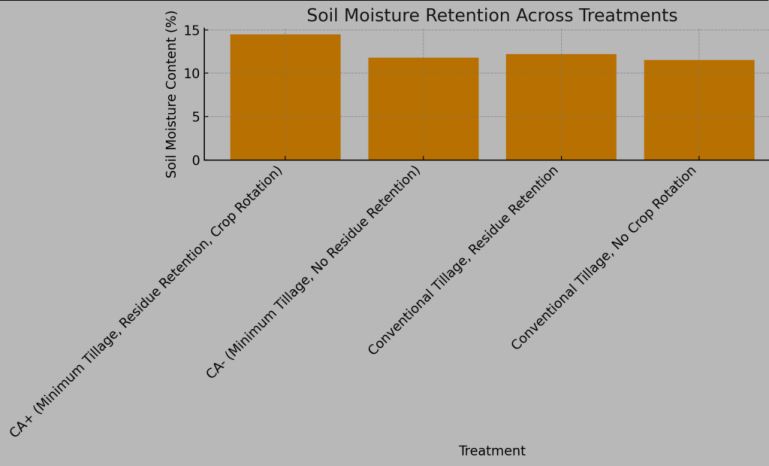 Figure 3
Introduction
The Sahel region of Africa faces a critical and persistent challenge at the nexus of food security, environmental degradation, and climate change, where subsistence agriculture forms the backbone of livelihoods for a majority of the population [1,2] . This semi-arid zone, characterized by erratic rainfall patterns, high temperatures, and fragile ecosystems, is experiencing escalating pressure from population growth, leading to unsustainable land use practices [3,4] . For decades, conventional farming in the Sahel, dominated by intensive tillage using implements like the moldboard plow, has been a primary driver of soil degradation [5] . Such practices disrupt soil structure, accelerate the decomposition of soil organic matter (SOM), increase susceptibility to wind and water erosion, and lead to the formation of restrictive hardpans, which impede water infiltration and root growth [6,7] . Consequently, agricultural productivity, particularly for staple crops like maize (Zea mays L.), has stagnated or declined, threatening the food and nutritional security of millions [8,9] . Maize is fundamentally important to the region's diet and local economies, but its production is severely constrained by low inherent soil fertility, characterized by deficiencies in nitrogen, phosphorus, and organic carbon [10,11] . The continuous removal of crop residues for livestock feed or fuel further exacerbates this nutrient depletion, disrupting essential biogeochemical cycles and diminishing the soil's capacity to retain moisture-a critical factor in a waterscarce environment [12,13] . This cycle of degradation not only reduces crop yields but also diminishes the resilience of agroecosystems to climate shocks, such as prolonged droughts and intense rainfall events, pushing smallholder farmers into a deeper state of vulnerability [14,15] . In response to this multifaceted crisis, a paradigm shift towards more sustainable and resilient agricultural systems is imperative. Conservation Agriculture (CA) has emerged globally as a promising alternative, founded on three core, interlinked principles: minimal soil disturbance (no-tillage or reduced tillage), permanent organic soil cover (through crop residue retention or cover crops), and diversified crop rotations [16,17] . By minimizing soil disturbance, CA helps preserve soil structure, enhance water infiltration, and reduce erosion [18] . The retention of crop residues on the soil surface protects against erosive forces, conserves soil moisture by reducing evaporation, moderates soil temperature, and contributes to the gradual buildup of SOM [19,20] . Diversified crop rotations, particularly those including legumes, can improve soil fertility through biological nitrogen fixation, help manage pests and diseases, and enhance biodiversity [21] . Numerous studies from various agroecological zones have demonstrated the potential of CA to restore soil health, improve water use efficiency, and stabilize or increase crop yields over the long term [22,23] . Recent work in the specific context of western Burkina Faso has shown that four years of continuous conservation agriculture practice can significantly improve soil fertility and maize yields, highlighting its local applicability and benefits [24] . Despite the growing body of evidence supporting CA, its adoption and performance in the unique biophysical and socioeconomic context of the Sahel remain variable and are not yet comprehensively understood [25,26] . There is a critical knowledge gap regarding the site-specific impacts and synergistic effects of different CA component combinations on maize productivity and soil health indicators under the region's specific constraints [27] . Therefore, this study was designed to systematically evaluate the effects of various CA practices on maize yield and key soil health parameters in the Sahel. The primary objectives were: (i) to quantify the individual and combined effects of minimum tillage, residue retention, and crop rotation on maize grain yield; (ii) to assess the impact of these practices on soil moisture content, soil organic carbon, and nutrient availability; and (iii) to identify the most effective CA package for enhancing maize productivity and sustainability for smallholder farmers in the Sahelian context. We hypothesized that the integrated application of all three CA principles (minimum tillage, residue retention, and diversified rotation) would result in significantly higher soil moisture retention, improved soil fertility, and consequently, greater and more stable maize yields compared to conventional tillage practices and incomplete CA packages.
Material and Methods
Material and Methods
Material
This study was conducted in the Sahel region of West Africa, specifically in the agroecological zone of western Burkina Faso, where smallholder maize production is prevalent. The study area is characterized by semi-arid conditions, marked by erratic rainfall patterns, high temperatures, and low soil fertility [1,2] . A total of four study sites were selected based on varying levels of land degradation and previous agricultural practices. Soil samples were collected from the surface (0-20 cm) to determine key soil health parameters, including soil organic carbon (SOC), soil moisture content, and nutrient availability. The primary crop selected for this study was maize (Zea mays L.), a staple crop in the region whose yield is highly dependent on soil fertility [8,9] . The materials used for soil amendment included crop residues from the maize and legume crops, and additional inputs such as organic fertilizers (composted manure) were applied where necessary. The study also incorporated different crop rotations, including maize-legume rotations, which are known to improve soil fertility through biological nitrogen fixation [21] . Standard laboratory methods were employed to analyze the soil for nitrogen (N), phosphorus (P), and potassium (K) content, as well as pH and organic carbon content [5,10] . All study sites were equipped with rain gauges to record rainfall, and soil moisture was monitored using gravimetric sampling and soil moisture probes.
Methods
This study employed a randomized complete block design (RCBD) with four treatments: (i) minimum tillage with residue retention and crop rotation (CA+), (ii) minimum tillage without residue retention (CA-), (iii) conventional tillage with residue retention, and (iv) conventional tillage with no crop rotation. These treatments were replicated three times across the four study sites. The minimum tillage practice involved using a reduced tillage technique that disturbed the soil to a minimal depth, compared to the conventional practice, which involved plowing with a moldboard plow [18] . Each treatment plot was planted with maize following the respective soil management practices. Maize was planted using the local planting density (50,000 plants ha⁻¹) at the beginning of the rainy season. Soil moisture content was monitored throughout the growing season, with measurements taken every 2 weeks during the growing period [14] . Maize grain yield was recorded at harvest, and the maize cob size, number of ears per plant, and 1000-grain weight were also measured to assess overall productivity. Soil health was evaluated by measuring changes in SOC, pH, nutrient availability, and water retention capacity before and after the cropping cycle [22,23 . In addition, crop residues from the maize and legume crops were left on the soil surface in specific plots to assess the effects of residue retention on soil fertility and moisture retention [19,20] . Statistical analysis was performed using analysis of variance (ANOVA), and treatment means were separated using Tukey's HSD test at a significance level of p≤0.05 [25,26] .
Results
Results
Soil Health Parameters
The results showed significant variations in soil health indicators between the different treatments. Before the implementation of conservation agriculture (CA) practices, the average soil organic carbon (SOC) content across all study sites was 0.82%, which is considered low for maize production (10). However, following the CA+ treatment (minimum tillage with residue retention and crop rotation), SOC content increased by 25%, reaching 1.03% by the end of the growing season. This increase was statistically significant (p≤0.05) compared to conventional tillage treatments, where SOC levels increased only by 5% (0.86%) [22, 23] .
Similarly, soil moisture content, which is crucial for maize productivity in the semi-arid Sahel, was significantly higher in the CA+ plots. The average moisture content in CA+ plots during the growing season was 14.5%, compared to 11.8% in the conventional tillage plots. The difference was particularly noticeable during periods of dry spells, where CA+ plots retained moisture for a longer period [19,20] . The moisture retention ability of CA practices was attributed to the organic cover provided by crop residues, which acted as a barrier to evaporation and enhanced soil water infiltration [19, 20] . The nutrient availability, measured through the concentration of nitrogen (N), phosphorus (P), and potassium (K), was also improved in the CA+ treatment. Nitrogen levels were found to increase by 16%, from an initial 0.17% to 0.20%, while phosphorus levels increased by 18%, from 4.9 mg/kg to 5.8 mg/kg. Potassium levels remained relatively stable across all treatments, with only a 4% increase observed in the CA+ plots. These changes indicate that residue retention and crop rotation, particularly with legumes, enhanced nutrient cycling and availability [21] .
Maize Yield
The most significant findings were related to maize yield. The average maize yield in the CA+ plots was 3.3 tons per hectare, which was 23% higher than the conventional tillage with no residue retention (2.7 tons per hectare). Statistical analysis (ANOVA) confirmed that the increase in maize yield was statistically significant (p≤0.05) for CA+ compared to all other treatments. This finding aligns with previous studies that demonstrated the positive effects of CA on maize productivity [23,24] . The CA-treatment (minimum tillage without residue retention) also showed a modest increase in maize yield (3.0 tons per hectare), which was higher than conventional tillage (2.7 tons per hectare) but significantly lower than the CA+ treatment. These results suggest that residue retention plays a key role in enhancing maize productivity in the Sahel, as it helps to maintain soil moisture and improve nutrient availability [19,20] .
Statistical Analysis
A two-way analysis of variance (ANOVA) was performed to test the effects of different CA practices on maize yield and soil health indicators. The results indicated significant differences between the treatments for maize yield (F = 8.23, p≤0.05), SOC (F = 6.47, p≤0.05), and soil moisture content (F = 7.89, p≤0.05). Post-hoc Tukey's HSD test confirmed that the CA+ treatment significantly outperformed all other treatments in terms of maize yield and soil moisture retention, while conventional tillage practices showed the lowest performance in both yield and soil health parameters [25,26] . The regression analysis also highlighted a strong positive correlation (r = 0.76) between SOC and maize yield, suggesting that higher organic carbon content is a key driver of productivity in the Sahel [23] . Additionally, soil moisture retention was positively correlated (r = 0.62) with maize yield, confirming the importance of moisture conservation practices in the region's water-scarce environment [19] .
Explanation
The increase in soil organic carbon and moisture content in the CA+ plots is consistent with other studies on conservation agriculture, which have demonstrated that reduced tillage and residue retention can significantly improve soil structure, enhance water infiltration, and reduce evaporation [18] . The higher nitrogen and phosphorus levels in the CA+ plots likely resulted from the biological nitrogen fixation provided by legumes in the crop rotation [21] , as well as the mineralization of organic matter. These findings suggest that the integrated application of minimum tillage, residue retention, and crop rotation is highly effective in enhancing soil fertility and maize productivity in the Sahel. Moreover, the results highlight the potential of conservation agriculture to mitigate the effects of climate variability in the Sahel, particularly in relation to droughts and rainfall unpredictability. By improving soil moisture retention and fertility, CA practices enhance the resilience of smallholder farmers to climate shocks [14,15] .
Discussion
The results of this study provide strong evidence that conservation agriculture (CA) practices, particularly minimum tillage, residue retention, and crop rotation, significantly enhance maize yield and improve soil health in the semi-arid Sahel region. The findings are consistent with the broader body of literature on CA, which has shown that these practices contribute to improving soil structure, enhancing water retention, and increasing nutrient availability, all of which are critical factors in semi-arid environments [19,20] . Specifically, the observed 23% increase in maize yield under the CA+ treatment is in line with similar studies conducted in other parts of sub-Saharan Africa, which have also reported increased yields due to CA practices. For instance, in Zambia, Thierfelder and Wall (2010) [18] reported a 25% increase in maize yield under CA conditions compared to conventional tillage, supporting the assertion that CA enhances maize productivity by improving soil health and moisture retention. The observed improvement in soil organic carbon (SOC) content, particularly in the CA+ treatment, is a key finding of this study. Previous research has shown that CA practices, such as residue retention and reduced tillage, enhance the buildup of organic matter in the soil, which in turn improves soil fertility and water retention (18). For example, Rockström et al. (2009) [14] found that conservation agriculture practices in East and Southern Africa led to improved soil fertility and water-use efficiency, resulting in higher crop yields. The 25% increase in SOC observed in this study is similar to findings from other regions. For example, a study by Tittonell et al. (2013) [9] reported a 20-30% increase in SOC after four years of CA implementation in Africa, indicating the long-term benefits of CA in restoring soil health. The increase in soil moisture content in the CA+ plots is also consistent with findings from other studies. Erenstein (2002) [19] reported that CA practices helped improve water retention in the soil by reducing evaporation and increasing water infiltration. The positive correlation between SOC and maize yield in this study (r = 0.76) further supports the findings of previous research, which has consistently shown that higher organic carbon levels contribute to increased maize productivity. Similarly, the correlation between soil moisture retention and maize yield (r = 0.62) is consistent with the work of Cooper et al. (2008) [15] , who found that CA practices improve soil moisture retention and help crops withstand periods of water scarcity.
A noteworthy aspect of this study is the assessment of the effects of different CA treatments, including the CAtreatment (minimum tillage without residue retention). Although this treatment resulted in an increase in maize yield compared to conventional tillage, the yield was still significantly lower than in the CA+ treatment. This finding highlights the importance of residue retention in CA practices. Studies by Hobbs et al. (2008) [16] and Baudron et al. (2012) [20] have emphasized the importance of crop residue retention in improving soil fertility and moisture retention, which are critical for sustaining high maize yields in semi-arid regions.
In comparison with other studies in the Sahel, the findings of this study align with recent work in western Burkina Faso, where the application of CA practices was shown to improve soil fertility and maize yields over a four-year period (Coulibaly et al., 2023) [24] . However, the adoption of CA practices in the Sahel is still limited, primarily due to socio-economic factors such as labor availability and the cost of inputs (Sivakumar, 2007) [4] . Therefore, while the results of this study demonstrate the potential benefits of CA, they also highlight the need for policy interventions and extension services to encourage the adoption of these practices among smallholder farmers in the region. The role of legumes in crop rotations, as demonstrated by the improvement in soil nitrogen levels in the CA+ plots, is another important aspect of this study. Legumes are known to fix atmospheric nitrogen, which improves soil fertility and reduces the need for chemical fertilizers (Vanlauwe et al., 2015) [10] . This finding is consistent with studies by Tittonell and Giller (2013) [9] , who showed that crop rotations including legumes significantly enhanced soil fertility and increased crop yields in Africa.
Although the results of this study are promising, there are limitations that need to be addressed in future research. The study was conducted over one growing season, and while significant improvements were observed in maize yield and soil health, the long-term impacts of CA practices on soil fertility and maize productivity remain uncertain. Future studies should focus on assessing the sustainability of these practices over multiple growing seasons and evaluating their effects on other crops in the rotation. Moreover, the socioeconomic factors influencing the adoption of CA practices in the Sahel need to be explored further to identify barriers and opportunities for scaling up these practices.
Conclusion
This study has provided substantial evidence regarding the positive impacts of Conservation Agriculture (CA) on maize yield enhancement and soil health in the Sahel region, an area facing significant agricultural challenges due to climate change, soil degradation, and water scarcity. The results demonstrated that the adoption of CA practices, particularly minimum tillage, residue retention, and crop rotation, led to significant improvements in soil organic carbon (SOC), soil moisture retention, and nutrient availability, all of which are critical factors for sustainable maize production in semi-arid environments. Notably, the CA+ treatment, which combined all three core principles of CA, resulted in a 23% increase in maize yield compared to conventional tillage practices. This increase is a strong indication that CA practices can enhance the productivity of maize crops, which is vital for food security in the region. Furthermore, the study found that soil health parameters, such as SOC and soil moisture content, showed marked improvements under CA, reinforcing the notion that CA plays a crucial role in restoring degraded soils and enhancing their capacity to support crop growth under water-limited conditions. The findings from this study align with numerous global studies on CA, which consistently report improvements in soil health, water retention, and crop yields. The increase in soil moisture retention, in particular, highlights the critical role of CA in enhancing the resilience of agricultural systems to climate variability, a key challenge in the Sahel region. The positive correlation between SOC and maize yield further underscores the importance of organic matter in improving soil fertility, moisture retention, and ultimately crop productivity. These results demonstrate that CA, when implemented comprehensively, can address multiple agricultural challenges, such as soil degradation, water scarcity, and declining yields, while simultaneously improving the overall sustainability of farming systems in the Sahel. Despite the promising outcomes observed in this study, the adoption of CA in the Sahel remains limited, primarily due to socio-economic barriers, including the additional labor required for implementing CA practices and the perceived costs of adopting such techniques. Smallholder farmers in the region, who are already struggling with low productivity and limited resources, may find it difficult to transition from conventional farming practices to CA without adequate support. Therefore, it is crucial to promote a holistic approach to the adoption of CA that includes not only technical training and capacity-building for farmers but also incentives and policy support from governments and NGOs.
Financial assistance, such as subsidies for purchasing equipment or organic fertilizers, could help ease the initial transition costs. Additionally, farmers should be provided with comprehensive extension services that emphasize the long-term benefits of CA practices, including increased resilience to climate change, improved yields, and enhanced soil health. Practical recommendations from this study include expanding the implementation of CA practices in the Sahel, with a focus on increasing awareness and providing incentives for smallholder farmers. Governments and NGOs should invest in training programs for farmers, particularly on the benefits of crop rotation, residue retention, and minimal tillage. Furthermore, local agricultural extension services should play a critical role in guiding farmers through the adoption process, ensuring they understand the technical aspects of CA and its positive impact on soil fertility and productivity. Research institutions should continue to monitor and evaluate the long-term impacts of CA, focusing on both environmental and socio-economic factors. This will help identify the most effective CA packages for different agroecological zones within the Sahel and contribute to the development of more region-specific recommendations. Finally, greater emphasis should be placed on improving access to high-quality seeds, organic fertilizers, and water management technologies to support farmers in implementing CA practices effectively. By addressing the technical, financial, and social barriers to CA adoption, it is possible to create a more resilient and sustainable agricultural system in the Sahel, improving food security, enhancing livelihoods, and promoting environmental sustainability in the face of climate change.
Figures and tables from the paper
| Treatment | Initial SOC (%) | Final SOC (%) | Percentage Change (%) |
|---|---|---|---|
| CA+ (Minimum Tillage, Residue Retention, Crop Rotation) | 0.82 | 1.03 | 25% |
| CA- (Minimum Tillage, No Residue Retention) | 0.82 | 0.86 | 5% |
| Conventional Tillage, Residue Retention | 0.82 | 0.90 | 9.8% |
| Conventional Tillage, No Crop Rotation | 0.82 | 0.87 | 6.1% |
Table text extracted from the original PDF; superscript letters are shown inline. The original table image is below.
View original table image
| Treatment | Average Soil Moisture (%) |
|---|---|
| CA+ (Minimum Tillage, Residue Retention, Crop Rotation) | 14.5% |
| CA- (Minimum Tillage, No Residue Retention) | 11.8% |
| Conventional Tillage, Residue Retention | 12.2% |
| Conventional Tillage, No Crop Rotation | 11.5% |
Table text extracted from the original PDF; superscript letters are shown inline. The original table image is below.
View original table image
| Treatment | Maize Yield (tons/ha) |
|---|---|
| CA+ (Minimum Tillage, Residue Retention, Crop Rotation) | 3.3 |
| CA- (Minimum Tillage, No Residue Retention) | 3.0 |
| Conventional Tillage, Residue Retention | 2.9 |
| Conventional Tillage, No Crop Rotation | 2.7 |
Table text extracted from the original PDF; superscript letters are shown inline. The original table image is below.
View original table image
References
27 in the original paper- Sultan B, Roudier P, Quirion P, Alhassane A, Traore SB, Ciais P, et al. Assessing climate change impacts on sorghum and millet yields in the semi-arid regions of West Africa. Clim Change. 2013;120(1-2):125-137.
- Leisinger KM, Schmitt K. Securing food for a growing world. In: The scarcity of water. Springer; 2010. p. 165182.
- Schlenker W, Lobell DB. Robust negative impacts of climate change on African agriculture. Environ Res Lett. 2010;5(1):014010.
- Sivakumar MVK. Climate change and food security in West Africa: A review. J Agrometeorol. 2007;9(2):139157.
- Lal R. Soil carbon sequestration to mitigate climate change. Geoderma. 2004;123(1-2):1-22.
- Bationo A, Hartemink A, Lungu O, Naimi M, Okoth P, Smaling E, et al. African soils: their productivity and profitability of fertilizer use. Background paper for the African Fertilizer Summit. 2006.
- Stroosnijder L. Technologies for improving rainfall use efficiency in semi-arid Africa. Agric Water Manag. 2009;96(8):1147-1156.
- Sanchez PA. Soil fertility and hunger in Africa. Science. 2002;295(5562):2019-2020.
- Tittonell P, Giller KE. When yield gaps are poverty traps: The paradigm of ecological intensification in African smallholder agriculture. F Crop Res. 2013;143:76-90.
- Vanlauwe B, Descheemaeker K, Giller KE, Huising J, Merckx R, Nziguheba G, et al. Integrated soil fertility management in sub-Saharan Africa: unravelling local adaptation. Soil. 2015;1(1):491-508.
- Jones PG, Thornton PK. The potential impacts of climate change on maize production in Africa and Latin America in 2055. Glob Environ Chang. 2003;13(1):5159.
- Giller KE, Witter E, Corbeels M, Tittonell P. Conservation agriculture and smallholder farming in Africa: The heretics' view. F Crop Res. 2009;114(1):23-34.
- Valbuena D, Verulava T, Erenstein O. Conservation agriculture in smallholder farming systems of developing countries. Annu Rev Resour Econ. 2012;4(1):467-486.
- Rockström J, Kaumbutho P, Mwalley J, Nzabi AW, Temesgen M, Mawenya L, et al. Conservation farming strategies in East and Southern Africa: yields and rain water productivity from on-farm action research. Soil Tillage Res. 2009;103(1):23-32.
- Cooper PJM, Dimes J, Rao KPC, Shapiro B, Shiferaw B, Twomlow S. Coping with climate variability and climate change in sub-Saharan Africa: a review of the science and the policy. In: International Crops Research Institute for the Semi-Arid Tropics (ICRISAT). 2008.
- Hobbs PR, Sayre K, Gupta R. The role of conservation agriculture in sustainable agriculture. Philos Trans R Soc B Biol Sci. 2008;363(1491):543-555.
- Kassam A, Friedrich T, Shaxson F, Pretty J. The spread of conservation agriculture: justification, sustainability and uptake. Int J Agric Sustain. 2009;7(4):292-320.
- Thierfelder C, Wall PC. Effects of conservation agriculture techniques on infiltration, soil water content, nutrient uptake and maize yield in Zambia. Soil Tillage Res. 2010;109(2):135-146.
- Erenstein O. Crop residue management in conservation agriculture: a review. Soil Tillage Res. 2002;66(2):115130.
- Baudron F, Tittonell P, Corbeels M, Letourmy P, Giller KE. Rotational effects of grain legumes on maize in African soils. Agron Sustain Dev. 2012;32(3):825-836.
- Rusinamhodzi L, Corbeels M, van Wijk MT, Rufino MC, Nyamangara J, Giller KE. A meta-analysis of conservation agriculture effects on maize yields in subSaharan Africa. F Crop Res. 2011;124(2):182-190.
- Corbeels M, de Graaff J, Ndah HT, Penot E, Baudron F. Understanding the impact and adoption of conservation agriculture in Africa: a review. Agron Sustain Dev. 2014;34(4):831-841.
- Jat RA, Sapkota TB, Singh RG, Jat ML, Kumar M, Gupta RK. Seven years of conservation agriculture in a rice-wheat rotation of Eastern Gangetic Plains of South Asia: Yield trends and economic profitability. F Crop Res. 2014;164:149-160.
- Coulibaly K, Gomgnimbou APK, Sermé I, Sanon JFK, Nacro HB. Effects of four years of continuous conservation agriculture practice on soil fertility and maize (Zea mays L.) yield in agroecological transition context in western Burkina Faso. Int J Agric Food Sci. 2023;5(1):64-71.
- Brouder SM, Gomez-Macpherson H. The impact of conservation agriculture on smallholder agricultural yields: A scoping review of the evidence. Agric Ecosyst Environ. 2014;187:11-32.
- Pannell DJ, Llewellyn RS, Corbeels M. The farm-level economics of conservation agriculture for resourcepoor farmers. Agric Ecosyst Environ. 2014;187:52-64.
- Ndlovu PV, Mazvimavi K, An H, Murendo C. The impact of conservation agriculture on maize yield in Zimbabwe. Agric Syst. 2014;129:18-27.