
Research article · 2025 · Full text
International Journal of Biology SciencesDiversity and richness of the freshwater zooplankton fauna of Visapur dam, Ahilyanagar (Maharashtra, India)
Volume 7(8) · Pages 154–157 · DOI: 10.33545/26649926.2025.v7.i8b.461 ↗
Research areasFish Biology and Ecology StudiesFish Ecology and Management StudiesAquatic Invertebrate Ecology and Behavior
Abstract
Author-writtenFreshwater zooplankton were studied for a period of two years from October 2022 to September 2024. Freshwater was studied for the presence or absence of zooplankton, including Rotifera, Cladocera, Copepoda, and Ostracoda. These organisms are important bioindicators and are known to indicate the physicochemical conditions of water. Their presence, absence, diversity, and abundance are important for understanding the water quality. These organisms play a crucial role in the food web, serving as primary consumers and food sources for larger aquatic species such as fish. They can also indicate eutrophic levels, type of pollutants, temperature, pH, etc. We present the data for 42 zooplankton, including 28 rotifers, eight cladocerans, four ostracods, and two copepods of the waterbody studied.
Summary
Source-checkedPlain-language reading of the full paper, prepared with AI and checked against the text. Each point links to the authors' own words.
Why it matters
- Freshwater zooplankton serve as important bioindicators that reflect the physicochemical conditions of the water they inhabit. View evidence ↗
- Zooplankton are critical to aquatic food webs, acting as primary consumers and providing food for larger species like fish. View evidence ↗
- Studying biodiversity in freshwater bodies is essential for assessing ecological health and guiding water management and conservation. View evidence ↗
The question
- The study aimed to examine the diversity and richness of four major zooplankton groups, Rotifera, Cladocera, Copepoda, and Ostracoda, at Visapur dam over a two-year period. View evidence ↗
What they did
- Research was conducted at three selected stations at Visapur Dam in Ahilyanagar, chosen based on accessibility, pollution, and human interference. View evidence ↗
- Samples were collected by filtering 20 litres of water through a 50-micron mesh plankton tow net, then concentrated to 100 ml and preserved in 4% formalin. View evidence ↗
- Researchers used a stereo microscope for microcrustaceans and a compound microscope with a digital camera to study rotifer morphology. View evidence ↗
What they found
- The most common rotifers were Brachionus angularis and B. quadridentatus, while Macrochaetus sericus, Lecane luna, and Filinia were the rarest. View evidence ↗
- Among the eight cladoceran species, Leydigia and Moina macrocopa were the most common, while Daphnia was rare. View evidence ↗
- Cyclops (24 occurrences) and Cypris (22 occurrences) were the most frequent copepod and ostracod, respectively, compared to Diaptomus (14) and Stenocypris (21). View evidence ↗
- Both rotifer and cladoceran diversity were lowest during monsoon and post-monsoon seasons and highest during winter and summer. View evidence ↗
What it means
- The authors conclude that this survey establishes a baseline for future monitoring and enhances the understanding of freshwater ecosystem dynamics in the dam. View evidence ↗
- The authors suggest that future research should further explore seasonal variations, the role of zooplankton in the food web, and responses to climate or water quality changes. View evidence ↗
Visual summary
1 visualsIllustrations explain the paper; they do not show study data.
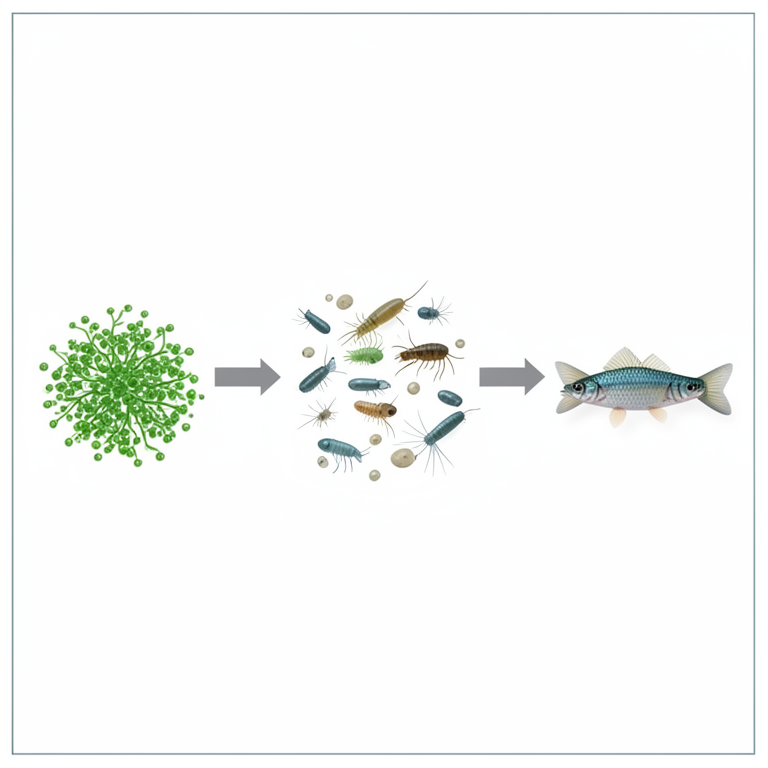
Freshwater Food Web Role
AI-generated conceptual illustration (Freshwater zooplankton, phytoplankton, and small fish in a dam ecosystem). It explains the idea and does not show study data.
View source evidence ↗Figures & tables
From the original paper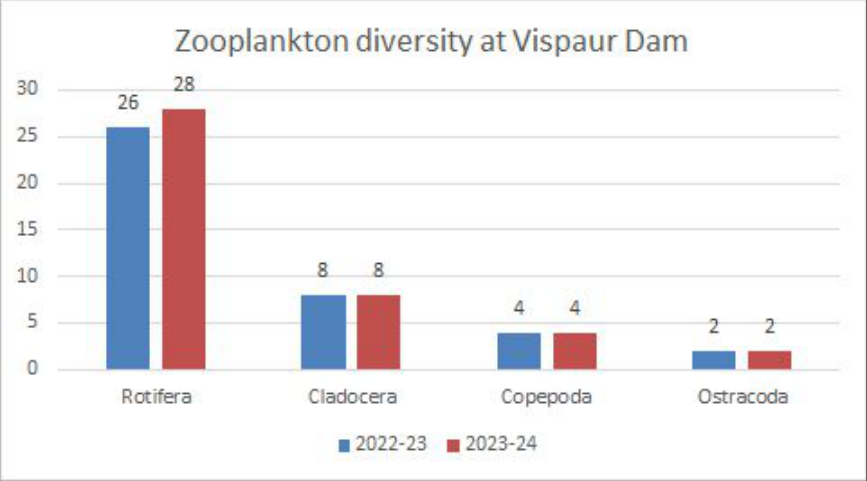 Figure 1
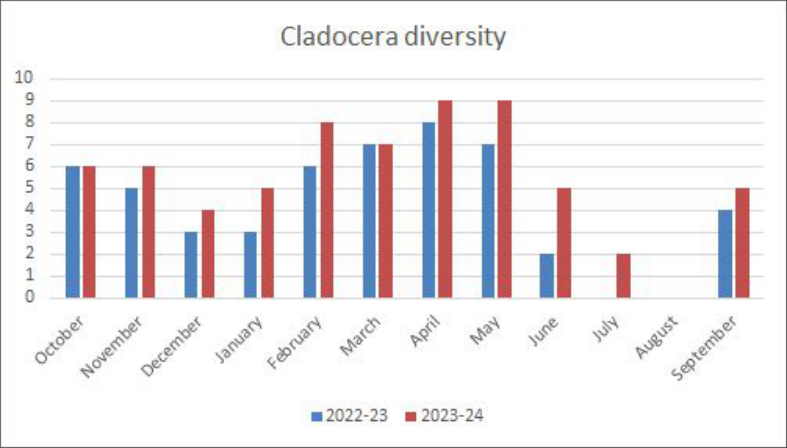 Figure 2
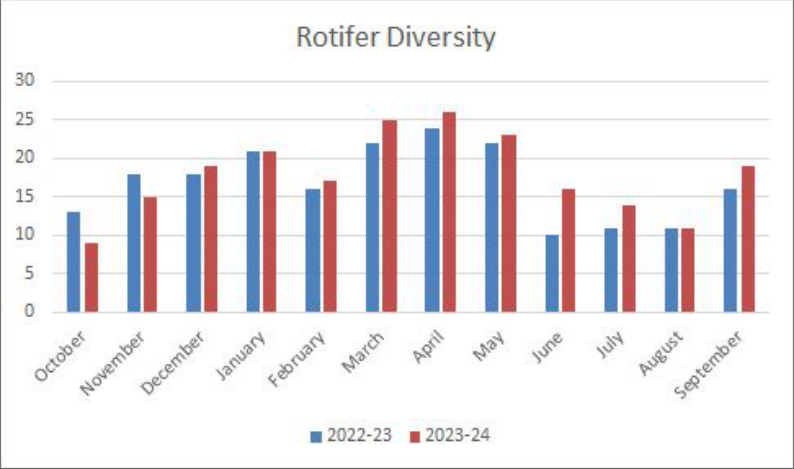 Figure 3
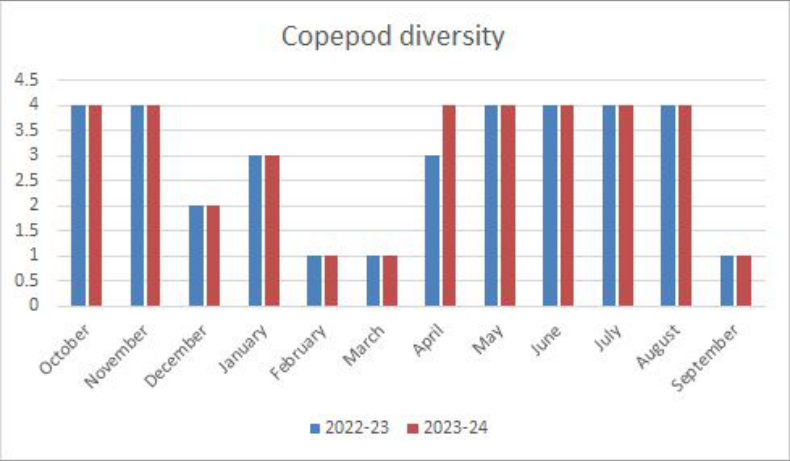 Figure 4
Introduction
The zooplankton in freshwater bodies are composed of cladocerans, copepods, ostracods and rotifers. These micro-invertebrates are abundant in freshwater bodies, such as lakes, ponds, reservoirs and rivers. They play crucial roles in aquatic ecosystems, serving as primary consumers that feed on phytoplankton, and as a vital food source for larger organisms such as fish and amphibians. Cladocerans, copepods, and rotifers exhibit diverse feeding strategies and life cycles, which contribute to the complex dynamics of freshwater food webs and nutrient cycling. Visapur dam is well known for its tourtist valur (Salunke et al., 2021) [7] . Visapur Dam has been studied for its Bryozoa fauna Mokashe et al., (2015) [1] and fishes Pandharkar. Bhalsing and Pokale (2023; 2024) [2,3] further studied the rotifer and zooplankton fauna, revealing 19 and 25 species, respectively. These studies have contributed to our understanding of the aquatic biodiversity in Visapur Dam. The presence of diverse Bryozoans, fish, rotifers, and other zooplankton species indicate a complex and thriving ecosystem. Such biodiversity studies are crucial for assessing the ecological health of freshwater bodies and can inform further conservation efforts and water management strategies. Freshwater zooplankton were studied for a period of two years from October 2022 to September 2024. The research focused on four major groups of zooplankton: Rotifera, Cladocera, Copepoda, and Ostracoda. The study revealed a total of 42 zooplankton species, with Rotifera being the most diverse group, represented by 28 species. This was followed by Cladocera with eight species, Ostracoda with four species, and Copepoda with two species. The presence and abundance of these zooplankton species can serve as indicators of water quality and ecosystem health. Rotifers, the most numerous in this study, are known for their rapid reproduction rates and ability to adapt to various environmental conditions. Cladocerans, commonly known as water fleas, are important consumers for algae and bacteria. Ostracods with their bivalve shells play a role in nutrient cycling and are sensitive to environmental changes. Although fewer in number here, copepods are crucial in marine and freshwater food webs. This comprehensive survey of zooplankton communities in dam water provides a baseline for future monitoring efforts and contributes to our understanding of the freshwater ecosystem dynamics.
Materials and Methods
The study was conducted at the Visapur Dam near Shrigonda, Ahilyanagar (18.8035565°N, 74.5827484°E). The Visapur dam is an earthfill dam on the Hanga River in Ahilyanagar. Three stations were selected based on human interference, pollution status, and accessibility. The selected stations were monitored for selected environmental parameters for two years from October 2022 to September 2024. Zooplankton (Rotifera, Cladocera, Copepoda and Ostracoda) were collected using a plankton tow net (mesh size 50 micron). A known quantity of water (20 litres) was filtered using a plankton net, concentrated to 100 ml in plastic bottles, and preserved in 4% formalin. A drop of glycerine was added to each sample bottle. The sample bottles were properly labelled and preserved in the dark for future studies. Microcrustaceans (Cladocera, Copepoda, and Ostracoda) were examined and photographed under a stereo microscope. The detailed morphology of rotifers was studied under a compound microscope (Magnus) fitted with a digital camera. All the latest monographs and keys (Sharma (1980-2022); Kulkarni et al., 2015 [5] , Vanjare et al., 2010; 2017) were used for identification. Help was also taken of experts in respective zooplankton groups for identification. Richness and Diversity data were calculated using freely available software, such as MS Excel and PAST 5.2.2. Canva software was used to create the image plates.
Results
Studies on the diversity of zooplankton over a period of two years revealed a good diversity of the studied zooplankton. Twenty-eight rotifers, eight cladocerans, four copepods, and two ostracods were documented during this study (Table 1). The overall species richness was comparatively similar for both years, with 40 and 42 species for the years 2022-23 and 2023-24 respectively (Fig. 1). Rotifers were 26 and 28 species for the years 2022-23 and 2023-24 respectively. All other groups, however, showed similar diversity (8-Cladocera, 4-Copepoda, 2-Ostracoda) during both years (Fig 234). Rotifers are microscopic freshwater organisms found in all types of nutrient-rich habitats (Sharma, 2011). Among the rotifers, the family Brachionidae was the most diverse with 11 species. Among the different genera, Branchionus was the most dominant, with seven species. Brachionus angularis (12 &11) and Brachionus quadridentatus (12 & 12) were the most common species while the rarest Macrochaetus sericus, Lecane luna (six) and Filinia (five) occurrences for the two collection years, respectively. Cladocerans are aquatic crustaceans belonging to the phylum Arthropoda (Sharma & Sharma, 2009). A total of eight species were found, of which Leydigia (7 and 10) and Moina macrocopa (8 and 9) were the most common species, whereas Daphnia was rare, with only six and three occurrences for the two collection years, respectively. Among Copepods, Cyclops showed 24 occurrences (12 and 12), and Ostracod Cypris was present 22 times (11 and 11) during the two-year study. The copepod Diaptomus showed 14 occurrences (12 and 12), whereas the Ostracod Stenocypris showed 21 occurrences (10 and 11) during the two-year study. The diversity of rotifers was comparatively lower during the monsoon and post-monsoon seasons. Good diversity was observed in the post-winter and post-summer seasons. The diversity of cladocerans was comparatively lower during the monsoon and post-monsoon seasons. Good diversity was observed during the winter and summer.
Discussion and Conclusion
Studies on zooplankton diversity over two years revealed twenty-eight rotifers, eight cladocerans, four copepods, and two ostracods. Species richness was similar for both years, with 40 and 42 species for 2022-23 and 2023-24 respectively. Rotifers increased from 26 to 28 species, while other groups maintained constant diversity (8-Cladocera, 4-Copepoda, 2-Ostracoda). Less number of Ostracods may be because they are benthic (Kulkarni et al., 2015) [5] . Among rotifers, family Brachionidae was most diverse with 11 species, with Branchionus being dominant (seven species). Brachionus angularis (12 &11) and B. quadridentatus (12 & 12) were most common, while Macrochaetus sericus, Lecane luna (six) and Filinia (five) were rare. Among eight cladoceran species, Leydigia (7 and 10) and Moina macrocopa (8 and 9) were common, while Daphnia was rare (six and three occurrences). For Copepods, Cyclops showed 24 occurrences (12 and 12), and Ostracod Cypris 22 times (11 and 11). Diaptomus had 14 occurrences, while Stenocypris showed 21 occurrences. Rotifer and cladoceran diversity were lower during monsoon and post-monsoon seasons but higher in postwinter and summer seasons.
Low numbers during the monsoon may be due to dilution by rain and high-water levels (Tyor et al., 2014) (Fig 234). High temperatures enhance the rate of decomposition as the water becomes nutrient-rich, increasing the population of rotifers (Arak & Mokashe, 2015; Shivashankar and Venkataramana, 2013) [1,8] . It has been frequently observed that high diversity during summer and winter, and the lowest diversity was observed during the monsoon season is present. The abundance of rotifers tends to fluctuate seasonally, with peaks often observed during warmer months. This pattern can be attributed to the increased availability of food sources and favourable environmental conditions for reproduction. However, factors such as predation pressure and competition with other zooplankton species may also influence rotifer population dynamics throughout the year.
A literature review of zooplankton in Maharashtra's dams and reservoirs (Bhalsing and Pokale, 2024) [2] revealed significant research focused on the diversity and abundance of key zooplankton groups: rotifers, cladocerans, copepods, and ostracods. These studies have contributed to a comprehensive understanding of zooplankton communities in these aquatic ecosystems, providing valuable insights into their composition, distribution, and population dynamics. While emphasis on diversity and abundance has been crucial, there is potential for expanding the scope of research to include other aspects of zooplankton ecology. Future studies could explore seasonal variations in zooplankton communities, their role in the aquatic food web, and their responses to environmental changes, such as water quality fluctuations or climate-related impacts (Vanjare et al., 2023) [1] . Additionally, investigating the interactions between zooplankton and other aquatic organisms as well as their potential as bioindicators of ecosystem health could provide a more holistic understanding of these important freshwater habitats in Maharashtra.
Acknowledgement
AcknowledgmentsAuthor (DGB) would like to thank the Chairman, Secretary and the Principal, Ahmednagar college, Ahilyanagar for their help and support.
Figures and tables from the paper
References
11 in the original paper- Arak GV, Mokashe SS. Potential of fresh water rotifer, B. calyciflorus as live feed. Int J Sci Res. 2015;4:14036.
- Bhalsing DG, Pokale SN. Occurrence of some freshwater rotifers from Visapur Dam, Ahmednagar, Maharashtra, India. Uttar Pradesh J Zool. 2023 Aug 3;44(16):100-106.
- Bhalsing DG, Pokale SN. Diversity of zooplankton from Visapur dam, Ahilyanagar with notes on studies in similar habitats of Maharashtra state. Int J Entomol Res. 2025;10(1):16-20.
- Harkal AD, Sontakke GK. Diversity and distribution of freshwater Bryozoa in India: a review. Int J Adv Res Biol Sci. 2022;9(12):222-227.
- Kulkarni MR, Padhye S, Vanjare AI, Jakhalekar SS, Shinde YS, Paripatyadar SV, et al. Documenting the fauna of a small temporary pond from Pune, Maharashtra, India. J Threat Taxa. 2015;7(6):7196-210.
- Pandarkar AK, Pawar BA, Mane UH. Sex ratio of Macrones bleekeri (Bleeker) from Visapur dam near Ahmednagar, Maharashtra. J Exp Zool India. 2010;13(2):605-608.
- Salunke VS, Lagad SJ, Bhagat RS, Kudnar NS, Shirur P. A geospatial approach to enhance point of the interest and tourism potential centers in Parner Tehsil in Maharashtra, India. Int J Sci Res Sci Eng Technol. 2021;8(1):186-196.
- Shivashankar P, Venkataramana GV. Seasonal fluctuations of water quality parameters in selected points of Bhadra River, Karnataka, India. Int J Innov Res Sci Eng Technol. 2015;4:219-224.
- Vanjare AI, Padhye SM, Pai K. Zooplankton from a polluted river, Mula (India), with record of Brachionus rubens (Ehrenberg, 1838) epizoic on Moina macrocopa (Straus, 1820). Opusc Zool Budapest. 2010;41(1):8992.
- Vanjare AI, Panikar CA, Padhye SM. Species richness estimate of freshwater rotifers (Animalia: Rotifera) of western Maharashtra, India with comments on their distribution. Curr Sci. 2017;112(4):695-698.
- Vanjare AI, Shinde YS, Padhye SM. Faunistic overview of the freshwater zooplankton from the urban riverine habitats of Pune, India. J Threat Taxa. 2023;15(9):23879-23888.