
Research article · 2025 · Full text
International Journal of Geography Geology and EnvironmentBiodiversity conservation and benefits for local communities and indigenous peoples. Case study of the luwe itota protected forest and nkuba conservation area in eastern Dr Congo
Volume 7(8) · Pages 64–71 · DOI: 10.22271/27067483.2025.v7.i8a.396 ↗
Research areasAgriculture and Rural Development ResearchMining and Resource ManagementConservation, Biodiversity, and Resource Management
Abstract
Author-writtenThe Luwe Itota Protected Forest and Nkuba Conservation Area are examples of wilderness areas managed by indigenous peoples and local communities in the Democratic Republic of Congo. These initiatives are being promoted in the Democratic Republic of Congo to diversify conservation strategies and to support the country’s commitments to contribute to the global collective effort to achieve Target 3 (30x30) of the Kunming-Montreal Global Biodiversity Framework by 2030. Around the Luwe Itota Protected Forest and Nkuba Conservation Area live indigenous peoples, particularly the Batwa indigenous people, whose traditions are deeply connected to the forest ecosystem. The benefits and services they derive from these ecosystems are invaluable. These protected areas, rich in biodiversity, also host endemic and flagship species of the region, notably the Eastern Lowland Gorilla (Gorilla beringei graueri), among others. This species is classified as Critically Endangered on the International Union for Conservation of Nature’s Red List. The objective of this paper is to analyse the benefits that indigenous peoples and local communities derive from the Luwe Itota Protected Forest and Nkuba Conservation Area, while also contributing to biodiversity conservation in these sites. In the long term, preserving the cultural and natural values of the Luwe Itota Protected Forest and Nkuba Conservation Area requires promoting the traditional knowledge and practices of local communities, particularly those related to sacred sites and customary access norms. These practices are transmitted orally, from elder knowledge holders to the younger generation, often through initiation rites. Promoting inclusive and equitable governance that strengthens the role, capacities, and rights of indigenous peoples and local communities is essential. Therefore, it is necessary to promote sustainable self-governance mechanisms, beyond institutional support, to transition away from perpetually assisted management.
Summary
Source-checkedPlain-language reading of the full paper, prepared with AI and checked against the text. Each point links to the authors' own words.
Why it matters
- The Democratic Republic of Congo is promoting community-managed conservation initiatives to diversify its strategies and meet the global '30x30' target of the Kunming-Montreal Global Biodiversity Framework by 2030. View evidence ↗
- The study areas are biodiversity-rich and provide critical habitat for the Eastern Lowland Gorilla, a species listed as Critically Endangered by the IUCN. View evidence ↗
- Community-led conservation is viewed as a more effective alternative to 'top-down' models, which can alienate local populations and hinder conservation goals. View evidence ↗
The question
- The study aims to analyze the benefits indigenous peoples and local communities receive from the Luwe Itota Protected Forest and Nkuba Conservation Area and how they contribute to biodiversity conservation. View evidence ↗
What they did
- The researchers conducted a series of interviews with community members living within the study areas to identify perceived ecosystem services. View evidence ↗
- The Luwe Itota Protected Forest (LIPF) is a traditional conservation area covering an estimated 527 hectares in the Mitumba mountain range. View evidence ↗
- The Nkuba Conservation Area (NCA) covers 105,344.89 hectares and is divided into three local community forest concessions. View evidence ↗
What they found
- Communities derive provisioning services from the forests, including water for fish farming and household needs, as well as food, wood, and fiber. View evidence ↗
- Local communities around the Nkuba Conservation Area specifically use the species Dillenia indica for roofing material. View evidence ↗
- The LIPF hosts traditional two-month initiation rites at specific sites (Lutende, Yando, and Bwali), which serve as a source of community pride. View evidence ↗
- Traditional knowledge in these areas includes cultural prohibitions on hunting during the breeding seasons of wild animals to protect biodiversity. View evidence ↗
- The Luwe Itota Protected Forest suffers from non-functional management structures and a lack of regulation, risking a 'tragedy of the commons' scenario. View evidence ↗
- Unlike the LIPF, the Nkuba Conservation Area has functional management bodies, with the Dian Fossey Gorilla Fund overseeing sustainable management. View evidence ↗
- NCA management employs 160 agents from indigenous families and utilizes approximately 1,260 temporary patrols annually to support local economies. View evidence ↗
- The primary threats to the conservation sites include timber exploitation, poaching, and bush fires caused by slash-and-burn agriculture. View evidence ↗
What it means
- The authors conclude that conservation should shift from external interventions to locally grounded solutions by strengthening community autonomy and self-governance. View evidence ↗
- The authors recommend that legal frameworks recognize indigenous peoples and local communities as rightsholders and leaders rather than just stakeholders. View evidence ↗
- The authors identify artisanal mining as a significant emerging risk that may encroach upon community lands and threaten the sites. View evidence ↗
Figures & tables
From the original paper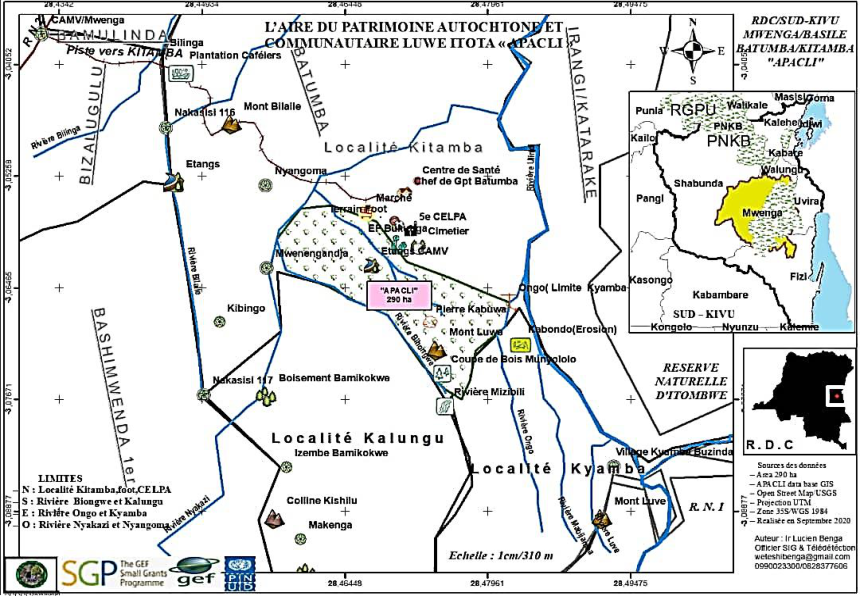 Figure 1
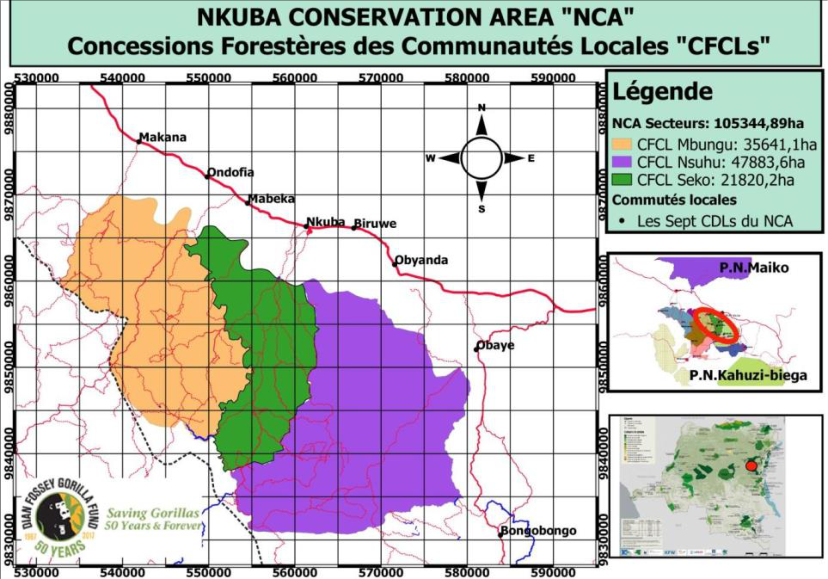 Figure 2
Introduction
An Indigenous and Community Conserved Area (ICCA) is a protected area managed either by representatives of an indigenous people or by a community living in or adjacent to the protected area (IUCN, 2019). Management decisions for these conserved territories and areas are made by indigenous peoples and local communities (IPLCs) with a view to safeguarding biodiversity. As a result, communities hold, as desired by Borrini-Feyerabend et al. (2013) [1] , authority and responsibility for management through legitimate legal and customary means. This local management of natural resources is a key pathway to effective biodiversity conservation (Reyes-García, 2019) [17] . Community-led and co-managed conservation areas, for example, have been found to maintain or even enhance biodiversity while supporting food security, cultural identity, and social cohesion. The success of such approaches contrasts with strictly "top-down" conservation models, which sometimes alienate local communities and undermine conservation objectives (Oldekop et al., 2016; Schleicher et al., 2017; Garnett et al., 2018) [8,10,28] . Interventions that are externally imposed especially those that attempt to replace local practices and undermine traditional institutions -often lead to ineffective conservation outcomes and social disruption, such as reduced trust, loss of rights, or weakened livelihoods (Brockington & Wilkie, 2015) [29] .
To be successful, conservation must be rooted in respectful partnerships that empower local actors and strengthen existing governance systems. This model of governance for protected areas, categorized as such by the International Union for Conservation of Nature (IUCN), has been promoted in international biodiversity governance since the 2008 Barcelona Congress. It is in this same spirit of improving sustainable biodiversity management that 192 countries, at COP15 of the Convention on Biological Diversity (CBD), adopted the Global Biodiversity Framework Kunming-Montreal (GBF-KM) to halt and reverse biodiversity loss by 2030. The target 3 of the GBF-KM is to achieve, by 2030, at least 30% of terrestrial and inland water areas, as well as marine and coastal areas, particularly areas of high importance for biodiversity and ecosystem functions and services, are effectively conserved and managed through the establishment of ecologically representative, wellconnected, and equitably managed protected areas, and Other Effective Area-based Conservation Measures (OECM) (CBD, 2022) [24] . The term OECM was created in 2010 at the tenth Conference of the Parties (COP10) to the CBD and included in Aichi Target 11. In 2018, the CBD finally defined an OECM as a geographically defined area other than a protected area, which is governed and managed in a way that achieves positive and sustainable long-term outcomes for the in situ conservation of biodiversity, with associated ecosystem functions and services and, where appropriate, cultural, spiritual, socio-economic, and other values relevant at the local level (CBD, 2018). The Democratic Republic of Congo (DRC) is committed to participating in the global effort to achieve the GBF-KM 2030 Agenda. As part of its implementation and following the national dialogue held in May 2023, OECMs are being promoted in the DRC to achieve 30% of the national territory conserved. OECMs offer a significant opportunity to recognize the de facto effectiveness of long-term conservation that takes place outside traditionally designated protected areas, in other areas of high biodiversity importance. The Luwe Itota Protected Forest (LIPF) and NKuba Conservation Area (NCA) are among the initiatives managed by IPLCs in the DRC. Currently, there are 32 identified ICCAs, of which 12 have been mapped, 8 documented, and 4 are emblematic (Sajeva et al., 2019) [9] . Apart from the introduction and conclusion, this paper analyses, on the one hand, the benefits that local communities derive from the conservation of LIPF and NCA OECMs, particularly in terms of resources essential to their survival. It also highlights the contribution of local knowledge and sustainable conservation practices to the preservation of these areas. On the other hand, it examines the main challenges related to the governance of these sites as well as the prospects for ensuring their sustainable management.
Presentation of the Luwe Itota Protected Forest and Nkuba Conservation Area
The LIPF and NCA have enormous diversity in terms of fauna and flora. An inventory of biodiversity in the NCA has already been carried out. However, LIPF has not yet been studied. Members of the communities living in these areas confirm the presence of several animal species, including antelope, porcupine, snakes, gorillas, monkeys, chimpanzees, pangolins, caterpillars, chameleons, mushrooms, gambit rats, squirrels, and several species of birds, including parrots. The main activity of households around these forests is agriculture and livestock farming. Agriculture around these sites is subsistence-based. The main crops grown are cassava, beans, corn, yams, sweet potatoes, and bananas. Chicken, goat, guinea pig, duck, and other livestock farming, as well as fish farming, are also practiced. It should be noted that fishponds, commonly known as "Mwamba," are located in the lowlands. These fish farming activities are supported by development organizations.
Luwe Itota Protected Forest
The LIPF is located in the Mitumba mountain range overlooking the western part of the Itombwe Nature Reserve. This traditional conservation area covers a total estimated area of 527 hectares. It is entirely located in the Basile chiefdom of Batumba, in the village of Kitamba, in the western ecological corridor of the Itombwe Nature These two sites are corridors between several protected areas and constitute tools on which public policies must rely in order to strengthen the network of traditional protected areas in the DRC.
Ecosystem services of the Luwe Itota Protected Forest and Nkuba Conservation Area
The territories and areas conserved by IPLCs are vital pillars of global biodiversity conservation, offering not only ecological value but also essential cultural, spiritual, and economic benefits. Their importance continues to gain recognition in international frameworks and scientific literature, reinforcing the need to formally strengthen these community-led reserves at the political and legal levels (Resende et al., 2021; Dawson et al., 2021) [16,11] . In the case of the LIPF and NCA in the DRC, conservation efforts have been notably inclusive. IPLCs are not only custodians of these forests, but also active partners in their protectionbringing deep local knowledge, long-term stewardship, and a profound sense of responsibility toward the land. Their involvement ensures that conservation actions benefit both people and nature, contributing to long-term sustainability and resilience. During a series of interviews conducted with community members across these areas, respondents consistently expressed appreciation for the ecosystem services provided by the forests. These include access to clean water, traditional medicines, building materials, and sources of food and income. Many highlighted that the forest is not just a resource but a life system -integral to their survival and cultural identity. At the heart of these ecosystem services is biodiversity. The diversity of species, habitats, and genetic resources provides the foundation for food security, climate resilience, and sustainable livelihoods (IPBES, 2019) [21] . When biodiversity is protected, communities benefit through the continued availability of resources and the ecological balance that underpins their well-being. Thus, supporting IPLCs-led conservation is not just an ethical imperative-it is also one of the most effective strategies for safeguarding biodiversity and sustaining human life in harmony with nature.
A farmer testifies "The benefits we derive from this site are mainly ecosystem services. These services are numerous, and we have been connected to this site for a very long time. Our parents knew how to protect these forests sustainably, and I think that's why we still benefit from them today. However, serious management threats weigh on our heritage. " (Interview with a farmer in the village of Kitamba, September 2024) The perception of the benefits of ecosystem services is linked to the community's relationship with the landscape and its accessibility. Thus, the links between services and benefits, and between benefits and different types of values, are undeniably associated ( [2,6] . These services are numerous and include, but are not limited to: Provisioning: Tangible goods that communities obtain from the forest, such as food, wood, fiber, and water for household needs and fish farming, Regulation: These services are reproduced in the forest and provide benefits such as microclimate regulation, flood management, and water filtration, Cultural: these services are linked to community wellbeing through recreational and educational benefits, as well as the establishment of spiritual connections. At this level, the site abounds with spaces for cultural initiation and, Support: the forest functions through nutrient cycling, soil formation, and the provision of habitats for biodiversity, which form the basis for the other three services mentioned above.
Beyond the well-documented medicinal properties of biodiversity, spending time in natural environments has profound positive effects on human health and well-being.
Research increasingly shows that simply being outdoors, whether walking through a forest, sitting near water, or spending time in a green space, can enhance overall life satisfaction and happiness. These nature-based experiences have also been linked to lower blood pressure, reduced anxiety, improved mood, and a decreased risk of cardiovascular diseases (Jimenez et al., 2021; Bratman et al., 2019) [14,27] .
As people reconnect with nature, even for brief moments, they often report feeling calmer, more focused, and emotionally uplifted. This highlights the vital importance of preserving biodiverse landscapes, not only for their ecological value but also for the tangible health benefits they provide to communities, especially those in urban settings where access to green space is limited. These benefits of life satisfaction are confirmed by a landowner interviewed in Nkuba.
Local knowledge and practices of indigenous peoples and local communities in the Luwe Itota Protected Forest and Nkuba Conservation Area
Indigenous knowledge carried by IPLCs can be defined as "cumulative and complex sets of knowledge, skills, practices, and representations that are perpetuated and developed by people with a long history of interaction with their natural environment, these cognitive systems being part of a whole that includes language, attachment to place, spirituality, and worldview " (UNESCO, n.d.) [18] . This worldview is based on empirical knowledge of the surrounding environment, the use of which has been validated from generation to generation (Huntington, 2000; Berkes, 2012; Fréguin-Gresh, 2017) [3,4,12] . Indigenous communities living around the LIPF and NCA have acquired and passed on knowledge to protect their forests, including selective hunting, deadwood cutting, and traditional intercession ceremonies. Thus, management by community members has always been based on their traditional knowledge and practices.
As the livelihoods and culture of IPLCs depend on nature, they have developed their own governance systems and practices to conserve their territories, as these are strongly linked to their identity. In the LIPF, there are initiation sites called "Lutende," "Yando," and "Bwali" [1] . This tradition has been going on for years and is a source of pride for the communities around LIPF. For two months, the traditional initiation takes place in the middle of the forest, far from homes and everyday activities. Only those who have already been initiated are allowed to enter. The Kimbilikiti, also known as the "god protector of culture," is always male and remains active, his voice continuing to echo through the forest as he waits for new candidates to join. There are also protected plant species that are off-limits to everyone in the community. These sacred sites and the biodiversity surrounding them are formally protected by these cultural practices. This traditional knowledge helps to protect the biodiversity of LIPF. Such is the case with Mu ao, which is subject to cultural restrictions or outright prohibitions. These cultural sites are in this case and access is prohibited to those who are not initiated. Also, culturally, hunting is prohibited during the breeding season of wild animals. However, due to the lack of a regular monitoring system and sanctions, people can afford to ignore this measure. Knowledge is also developed by those initiated through the location of species in the LIPF. In the NCA, there are places within the forest where "Tambiko" [2] is practiced.
Challenges and sustainable prospects for managing the Luwe Itota Protected Porest and the Nkuba Conservation Area
Most studies demonstrate that positive outcomes for both biodiversity conservation and community well-being are more likely when IPLCs play a central role in governance. When IPLCs have meaningful and substantial influence over decision-making processes or when local institutions, particularly those managing land tenure, are embedded in governance structures, conservation initiatives tend to be more effective, equitable, and sustainable. This approach ensures that conservation is not imposed, but rather aligned with local knowledge systems, cultural values, and livelihoods (Dawson et al., 2021; Garnett et al., 2018) [11,28] . The LIPF faces many challenges, both internal and external.
Internal challenges include weaknesses related to the management committee and community members themselves, while external challenges relate to external threats facing the site. The LIPF has management structures, but they are not functional. There is little regulation. As a result, the resources of the LIPF are at risk of falling into the trap of the tragedy of the commons (Garrett, 1968) [13] , as they are non-excludable but rivalrous in their consumption.
The most frequent and worrying threats to the site are bush fires (slash-and-burn agriculture), poaching/unregulated hunting, and timber exploitation. However, the NCA has formally established functional management bodies. The environmental Non-Governmental Organisation Dian Fosey Gorilla Fund is responsible for the sustainable management of the NCA. In addition to the existence of management institutions, with the supreme management body being the management committee composed of landowners, there are also tools for planning and managing the site, such as the simple management plan for the NCA, the fishing and hunting plan, the annual operations plan, and annual reports. Four functional programs (Gorilla and monitoring, Biodiversity, Community conservation, and Administration, human resources, and finance) ensure the day-to-day management of the site. As part of this initiative, the management of the NCA involves 160 agents from different indigenous families. 348 patrols have already been organized with staff, 60 community patrols, and around 1,260 temporary patrols per year are used to support household economies.
Equitable and inclusive governance of the Luwe Itota Protect Forest and the Nkuba Conservation Area
Equitable and inclusive governance of conservation areas is essential for achieving lasting biodiversity outcomes, particularly in regions where IPLCs have long-standing cultural, spiritual, and ecological ties to their lands. Despite their central role in conservation, limited data exist on the extent to which IPLCs are genuinely empowered to govern sites such as the LIPF and NCA in DRC. Ensuring meaningful participation of IPLCs, especially women, in governance and decision-making processes is vital. It not only as a matter of justice and rights but also because it leads to more effective conservation outcomes (Schreckenberg et al., 2016; Dawson et al., 2021) [26,11] . Unfortunately, formal assessments of governance equity remain scarce, and this gap may mask underlying imbalances in power and benefit-sharing. Currently, both LIPF and the NCA are managed primarily by IPLCs, with the support of national and international NGOs. This model holds promise-but only if the support provided respects the autonomy, customary governance systems, and territorial rights of local communities, and does not impose externally driven priorities (Tauli-Corpuz et al., 2020) [22] . External actors must act as facilitators and not decision-makers. These measures will ensure that IPLCs remain at the heart of planning, implementation, and monitoring processes. Importantly, these territories represent high-value areas not just for biodiversity, but also for local livelihoods and cultural identity. As such, they are well suited to be recognized as OECMs, or as new categories of protected and conserved areas under Target 3 of the GBF-KM, which aims to protect at least 30% of terrestrial and marine environments by 2030 (CBD, 2022) [24] . As highlighted by Neugarten et al. (2020) [15] , achieving this target requires prioritizing areas where conservation aligns with sustainable use and community-led governance. In this light, the recognition of IPLCs-led conservation models as legitimate and effective must be strengthened through policy, legal frameworks, and long-term financial support. This also means moving away from "fortress conservation" models that have historically excluded or displaced local communities, towards rights-based, inclusive, and adaptive governance structures (Borrini-Feyerabend et al., 2013) [1] . Furthermore, these governance structures must explicitly recognize the leadership of Indigenous women, who often serve as stewards of local knowledge systems and bear disproportionate burdens when access to natural resources is restricted (Leach et al., 2018) [25] . True progress on Target 3 will only be possible if conservation efforts are rooted in cogovernance, cultural sensitivity, and community empowerment.
Threats to indigenous peoples and their knowledge
Uncontrolled human activities are increasingly endangering the ecological integrity of biodiversity-rich areas, particularly those inhabited and managed by IPLCs. Rapid population growth, coupled with unsustainable land-use changes, often leads to the conversion of natural habitats into agricultural fields, settlements, or mining zones, contributing to severe habitat loss and fragmentation. These pressures directly impact the stability and survival of many species, some of which may be driven to local extinction (IPBES, 2019; FAO, 2021) [21,20] . Extractive activities, such as artisanal and small-scale mining and overhunting, present acute threats in regions where natural resources are both ecologically vital and economically attractive. The loss of biodiversity caused by these activities is not only ecological, it is also cultural. When forests are cleared for mining or agriculture, it is often at the expense of IPLC territories, customary rights, and knowledge systems (Tauli-Corpuz et al., 2020) [22] . The destruction of sacred forests, ritual sites, and areas of traditional harvesting interrupts spiritual practices, seasonal celebrations, and long-standing ecological knowledge passed down through generations. The erosion of traditional knowledge -including sustainable harvesting techniques, ethnobotanical knowledge, and oral traditions tied to the landscape -has profound implications for cultural resilience, food security, and health (Berkes, 2018; Reyes-García et al., 2019) [19,4,17] . Once disrupted, many of these knowledge systems are difficult, if not impossible, to recover. This loss not only undermines biocultural diversity, but also the adaptive capacity of communities to respond to environmental changes, particularly in the face of climate crises. Recognizing, respecting, and securing the rights of IPLCs is critical. Without inclusive conservation and governance mechanisms that protect both biodiversity and cultural heritage, the world risks losing irreplaceable knowledge and values that sustain not just ecosystems, but human societies (UNEP-WCMC, 2021) [23] .
Conclusion
The experiences of the Luwe Itota Protected Forest and the Nkuba Conservation Area in the Democratic Republic of Congo highlight the vital role that indigenous peoples and local communities play in the sustainable management and conservation of biodiversity. These territories are more than ecological spaces -they are living landscapes deeply rooted in community identity, livelihood, and cultural heritage. The benefits derived from ecosystem services in these areas are not abstract; they are tangible lifelines that support food security, traditional medicine, housing, and socio-cultural continuity. The strength of conservation in these landscapes lies in the transmission and practice of ancestral knowledge systems. Practices such as selective hunting, harvesting only dead wood, and ceremonial intercessions in the forest reflect a form of environmental stewardship that is often underrecognized in formal conservation discourse. These communities have built and refined their customary governance systems over generations -systems that respect the forest not only as a resource, but also as a space of spiritual and social meaning. Yet, these territories remain vulnerable. The Luwe Itota Protected Forest, for instance, faces multiple threats, from uncontrolled hunting and bush fires to increasing pressure from timber exploitation. Looking ahead, artisanal mining poses a significant and emerging risk, as extractive industries expand into nearby zones and encroach on community lands. These threats are compounded by the absence of formal protection mechanisms and the limited recognition of indigenous governance in national legal and policy frameworks. To ensure the long-term sustainability of these conservation efforts, it is essential to move beyond tokenistic inclusion toward genuine recognition and empowerment of indigenous peoples and local communities. This includes supporting equitable and inclusive governance models that reflect the aspirations and rights of these communities. National and international frameworks must align with local realities, recognizing indigenous peoples and local communities not merely as stakeholders, but as rightsholders and leaders in conservation. Importantly, the focus should not be solely on external technical assistance or institutional oversight. Rather, the path forward should emphasize the strengthening of community self-governance, autonomy, and resilience. By doing so, conservation efforts can shift from externally driven interventions to locally grounded solutions, where communities are fully empowered to manage their own landscapes in ways that are ecologically effective, socially just, and culturally meaningful. Ultimately, the future of biodiversity in places like Luwe Itota Protected Forest and Nkuba Conservation Area will depend on how well conservation frameworks embrace plural forms of knowledge, respect indigenous rights, and invest in long-term partnerships with indigenous peoples and local communities. It is in these relationships of trust and mutual learning that truly transformational conservation can take root.
Acknowledgement
AcknowledgementThis paper has received the support of International Union for Conservation of Nature who has trough the Project 'Objectif 30x30, catalyst for inclusive biodiversity conservation in the Democratic Republic of Congo' funded by the German Agency for International Cooperation (GIZ).
Figures and tables from the paper
References
29 in the original paper- Borrini-Feyerabend G, Dudley N, Jaeger T, Lassen B, Broome N, Phillips A, et al. Governance of protected areas: From understanding to action. Best Practice Protected Area Guidelines Series No. 20. Gland: IUCN; 2013. Available from: https://portals.iucn.org/library/sites/library/files/docume nts/PAG-020.pdf
- Chan KMA, Satterfield T, Goldstein J. Rethinking ecosystem services to better address and navigate cultural values. Ecological Economics. 2012;74:8-18. https://doi.org/10.1016/j.ecolecon.2011.11.011
- Huntington HP. Using traditional ecological knowledge in science: Methods and applications. Ecological Applications. 2000;10(5):1270-1274. https://doi.org/10.1890/10510761(2000)010[1270:UTEKIS]2.0.CO;2
- Berkes F. Sacred ecology. 3rd ed. New York: Routledge; 2012. https://doi.org/10.4324/9780203123195
- Díaz S, Demissew S, Carabias J, Joly C, Lonsdale M, Ash N, et al. The IPBES conceptual frameworkConnecting nature and people. Current Opinion in Environmental Sustainability. 2015;14:1-16. https://doi.org/10.1016/j.cosust.2014.11.002
- Haines-Young R, Potschin M. The links between biodiversity, ecosystem services and human well-being. In: Raffaelli D, Frid C, editors. Ecosystem ecology: A new synthesis. Cambridge: Cambridge University Press; 2010. p. 110-139. https://doi.org/10.1017/CBO9780511750458.007
- Convention on Biological Diversity (CBD). Protected areas and other effective area-based conservation measures (Decision 14/8). Montreal: CBD; 2018. Available from: https://www.cbd.int/doc/decisions/cop14/cop-14-dec-08-en.pdf
- Oldekop JA, Holmes G, Harris WE, Evans KL. A global assessment of the social and conservation outcomes of protected areas. Conservation Biology. 2016;30(1):133-141. https://doi.org/10.1111/cobi.12568
- Sajeva G, Borrini-Feyerabend G, Niederberger T. Meanings and more… (Policy Brief No. 7). Tehran: ICCA Consortium in collaboration with Cenesta; 2019. Available from: https://www.iccaconsortium.org/wpcontent/uploads/2019/11/ICCA-Briefing-Note-7-Finalfor-websites.pdf
- Schleicher J, Peres CA, Amano T, Llactayo W, LeaderWilliams N. Conservation performance of different conservation governance regimes in the Peruvian Amazon. Scientific Reports. 2017;7(1):11318. https://doi.org/10.1038/s41598-017-10736-w
- Dawson NM, Coolsaet B, Sterling EJ, Loveridge R, Gross-Camp ND, Wongbusarakum S, et al. The role of Indigenous peoples and local communities in effective and equitable conservation. Ecology and Society. 2021;26(3):19. https://doi.org/10.5751/ES-12625260319
- Fréguin-Gresh S. Foresterie communautaire, savoirs autochtones et gouvernance participative au Nicaragua. Autrepart. 2017;81:41-56. https://doi.org/10.3917/autr.081.0041
- Garrett H. The tragedy of the commons. Science. 1968;162:1243-1248.
- Jimenez MP, DeVille NV, Elliott EG, Schiff JE, Wilt GE, Hart JE, et al. Associations between nature exposure and health: A review of the evidence. International Journal of Environmental Research and Public Health. 2021;18(9):4790. https://doi.org/10.3390/ijerph18094790
- Neugarten RA, Moull K, Martinez NA, Andriamaro L, Bernard C, Bonham C, et al. Trends in protected area representation of biodiversity and ecosystem services in five tropical countries. Ecosystem Services. 2020;42:101078. https://doi.org/10.1016/j.ecoser.2020.101078
- Resende FM, Cimon-Morin J, Poulin M, Meyer L, Joner DC, Loyola R. The importance of protected areas and Indigenous lands in securing ecosystem services and biodiversity in the Cerrado. Ecosystem Services. 2021;49:101282. https://doi.org/10.1016/j.ecoser.2021.101282
- Reyes-García V, Fernández-Llamazares Á, McElwee P, Molnár Z, Öllerer K, Wilson SJ, et al. The contributions of Indigenous peoples and local communities to ecological restoration. Restoration Ecology. 2019;27(1):3-8. https://doi.org/10.1111/rec.12894
- UNESCO. Local and Indigenous Knowledge Systems (LINKS). Available from: https://en.unesco.org/links. Accessed 2022 Sep 20.
- Berkes F. Sacred ecology. 4th ed. New York: Routledge; 2018.
- Food and Agriculture Organization of the United Nations (FAO). The state of the world's forests 2020. Rome: FAO; 2021. https://doi.org/10.4060/ca8642en
- Intergovernmental Science-Policy Platform on Biodiversity and Ecosystem Services (IPBES). Global assessment report on biodiversity and ecosystem services. Bonn: IPBES; 2019. https://doi.org/10.5281/zenodo.3831673
- Tauli-Corpuz V, Alcorn J, Molnar A. Cornered by protected areas: Replacing "fortress conservation" with rights-based approaches. World Development. 2020;130:104923. https://doi.org/10.1016/j.worlddev.2020.104923
- United Nations Environment Programme World Conservation Monitoring Centre (UNEP-WCMC). The state of Indigenous peoples' and local communities' lands and territories. Cambridge: UNEP-WCMC; 2021. Available from: https://www.unep-wcmc.org/resourcesand-data/iplc-lands-report
- Convention on Biological Diversity (CBD). KunmingMontreal Global Biodiversity Framework. Montreal: CBD; 2022. Available from: https://www.cbd.int/gbf
- Leach M, Mehta L, Prabhakaran P. Gender equality and social inclusion in water resources management. Brighton: Institute of Development Studies; 2018. Available from: https://www.bridge.ids.ac.uk
- Schreckenberg K, Franks P, Martin A, Lang B. Social assessment for protected and conserved areas: Tools for assessing the social impacts of conservation. London: Development; 2016. Available from: https://pubs.iied.org/14665iied
- Bratman GN, Anderson CB, Berman MG, Cochran B, de Vries S, Flanders J, et al. Nature and mental health: An ecosystem service perspective. Science Advances. 2019;5(7):eaax0903. https://doi.org/10.1126/sciadv.aax0903
- Garnett ST, Burgess ND, Fa JE, Fernández-Llamazares Á, Molnár Z, Robinson CJ, et al. A spatial overview of the global importance of Indigenous lands for conservation. Nature Sustainability. 2018;1(7):369-374. https://doi.org/10.1038/s41893-018-0100-6
- Brockington D, Wilkie D. Protected areas and poverty. Philosophical Transactions of the Royal Society B: Biological Sciences. 2015;370(1681):20140271. https://doi.org/10.1098/rstb.2014.0271