
Research article · 2025 · Full text
International Journal of Biology SciencesAssessing the economics and problems of soybean growers: A study of Buldhana District
Volume 7(8) · Pages 26–30 · DOI: 10.33545/26649926.2025.v7.i8a.436 ↗
Research areasAgricultural Economics and PracticesAgricultural Innovations and Practices
Abstract
Author-writtenThis research explores the economic returns and production challenges associated with soybean cultivation in the Deulgaon Raja and Sindkhed Raja tehsils of Buldhana district. The study primarily aims to evaluate the Benefit-Cost (B:C) ratio of soybean farming and to identify major production-related problems faced by farmers using the Garrett Ranking method. Data were collected from 90 soybean growers through structured interviews. The B:C ratio was calculated to assess the profitability of cultivation, which showed that soybean farming is economically viable but subject to variations due to input costs and environmental factors. Production constraints were ranked by farmers, and the Garrett Ranking technique was applied to determine their severity. The results indicated that unfavorable weather conditions and shortage of labor during peak periods were the most significant problems. Other concerns included limited access to quality seeds, pest attacks, and inadequate credit facilities. The study concludes that although soybean is a profitable crop in the region, addressing these key production issues is essential to improve farm productivity and ensure sustainable income for cultivators.
Summary
Source-checkedPlain-language reading of the full paper, prepared with AI and checked against the text. Each point links to the authors' own words.
Why it matters
- Soybean is a globally significant oilseed crop valued for its high economic worth and diverse applications. View evidence ↗
- The Buldhana district, specifically the Deulgaon Raja and Sindkhed Raja tehsils, is a major soybean production area due to suitable climate and soil. View evidence ↗
- Despite the region's potential, various production and marketing challenges prevent soybean farmers from achieving maximum profitability. View evidence ↗
The question
- The research aims to determine the economic profitability of soybean farming via the Benefit-Cost (B:C) ratio and rank production problems using the Garrett Ranking method. View evidence ↗
What they did
- The study used random sampling to select 90 soybean farmers from ten villages across the Deulgaon Raja and Sindkhed Raja tehsils. View evidence ↗
- Data were gathered from farmers through direct interviews using a pre-tested, structured questionnaire. View evidence ↗
- Economic returns were assessed by calculating the B:C ratio, which divides gross income from sales by the total expenditure of the crop cycle. View evidence ↗
- The Garrett Ranking Technique was employed to systematically analyze and prioritize the production problems reported by farmers. View evidence ↗
What they found
- The total variable input costs (Cost A1) were found to be ₹28,880 per acre or ₹84,671.60 per hectare. View evidence ↗
- The total cost of cultivation (Cost C), including all actual and imputed expenses, was ₹43,818 per acre and ₹1,22,902.26 per hectare. View evidence ↗
- Soybean cultivation generated a gross income of ₹44,000 per acre or ₹1,60,000 per hectare. View evidence ↗
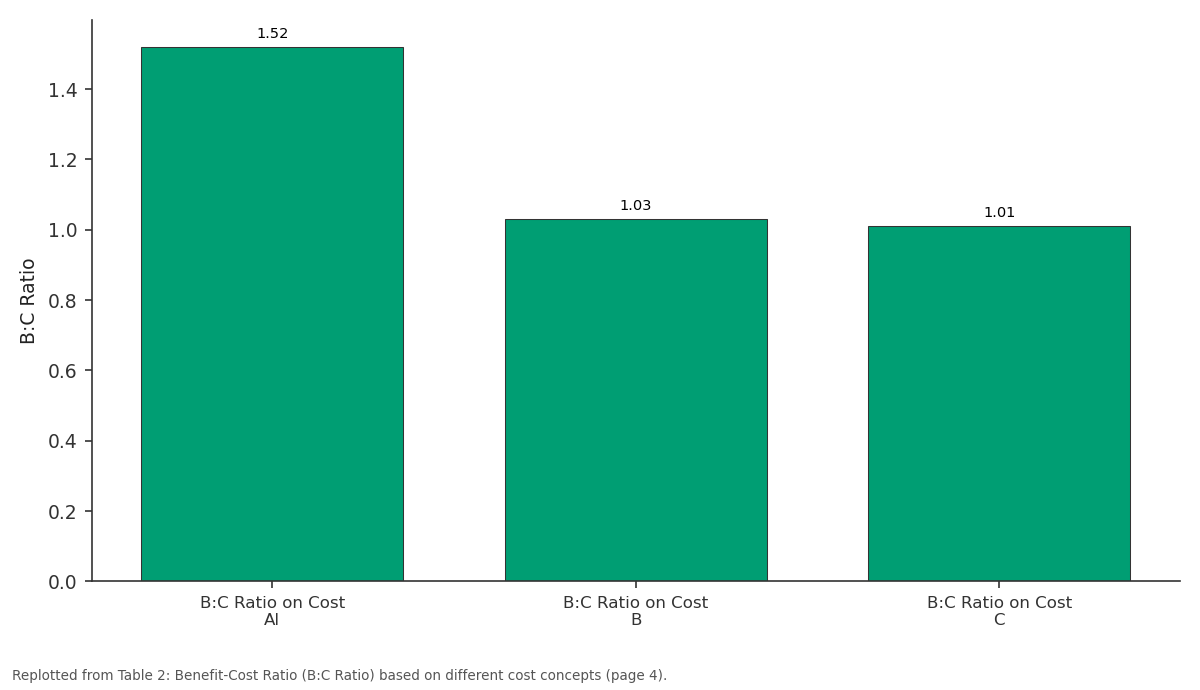
- On a per-acre basis, the B:C ratio using Cost C was 1.01, indicating a very narrow profit margin. View evidence ↗
- The impact of weather was ranked as the most significant production constraint, receiving the highest Garrett Score of 54.6. View evidence ↗
- Seasonal labor shortages were the second most critical problem, with a Garrett Score of 51.53. View evidence ↗
- Other major constraints included inadequate institutional credit (Rank III), high agro-chemical costs (Rank IV), and a lack of cultivation knowledge (Rank V). View evidence ↗
What it means
- The authors recommend that farmers adopt climate-smart and weather-resilient agricultural practices to mitigate the effects of unpredictable weather. View evidence ↗
Visual summary
2 visualsIllustrations explain the paper; charts are replotted from the paper's own table values.
Value: B:C Ratio on Cost Al vs B:C Ratio on Cost B vs B:C Ratio on Cost C
Replotted from Table 2 (page 4) of the original paper. Every bar is the paper's own table value.
View source evidence ↗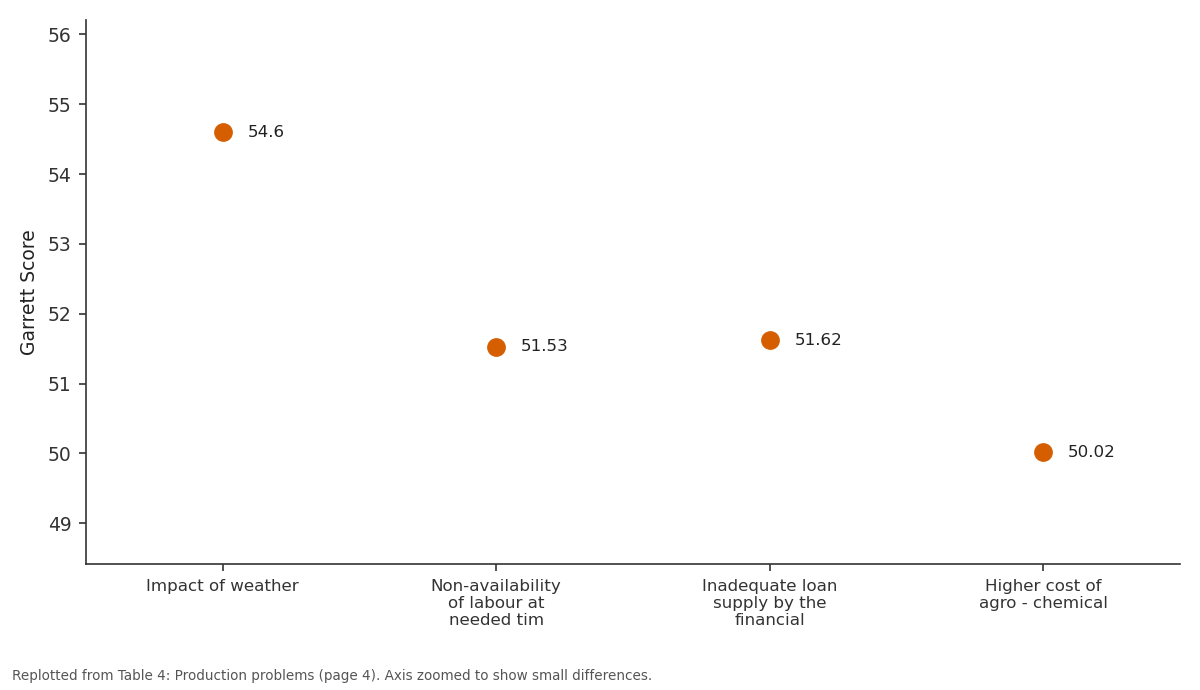
Garrett Score: Impact of weather vs Non-availability of... vs Inadequate loan supply... vs Higher cost of agro -...
Replotted from Table 4 (page 4) of the original paper. Every bar is the paper's own table value.
View source evidence ↗Figures & tables
From the original paper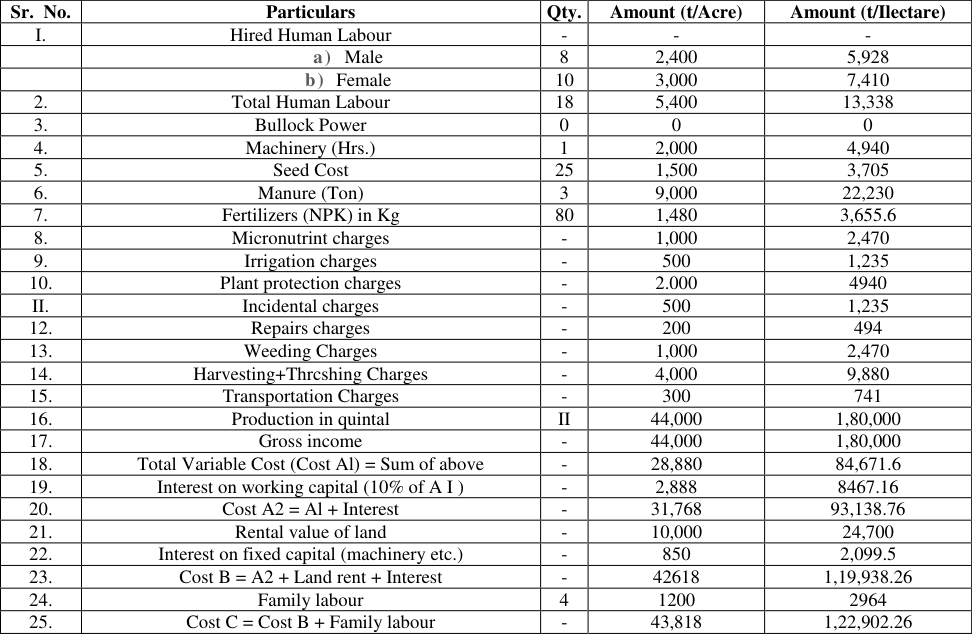 Table 1
 Table 2
 Table 3
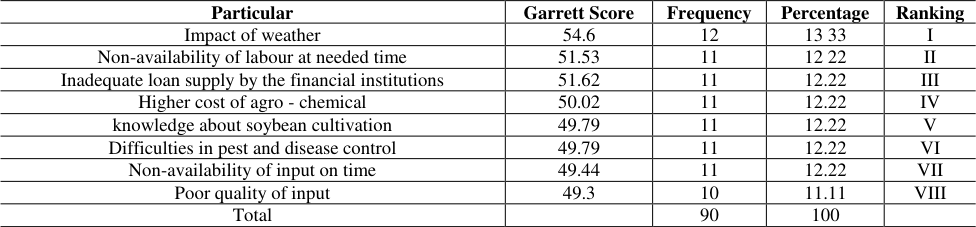 Table 4
Introduction
Soybean (Glycine max) is one of the most important oilseed crops cultivated across the globe due to its wide range of uses and high economic value. In India, soybean has gained prominence over the past few decades, especially in central and western states, due to its adaptability to varied agro-climatic conditions, relatively short growing period, and suitability for mechanized farming. Among the oilseed crops, soybean plays a pivotal role not only in enhancing farmers' income but also in contributing to the national oil economy. The crop is valued for its high protein and oil content and is widely used in food products, animal feed, and industrial applications. In Maharashtra, soybean is extensively cultivated in several districts, including Buldhana, which lies in the western Vidarbha region. Buldhana district has emerged as a key soybeanproducing region due to its favorable soil and climatic conditions. Within this district, the tehsils of Deulgaon Raja and Sindkhed Raja are significant contributors to soybean production. The majority of farmers in these areas rely on soybean cultivation as a primary source of income, particularly during the kharif season. However, despite its potential, soybean farming in this region is often challenged by a range of production and marketing problems that hinder optimal profitability. Understanding the economic viability of soybean cultivation is essential for framing effective agricultural policies and extension strategies. The Benefit-Cost (B:C) ratio is one of the most widely used measures to evaluate the economic performance of crop production. It compares the gross returns received by the farmer with the total cost incurred, providing a clear picture of profitability. A B:C ratio greater than one indicates that the farming activity is economically profitable, while a ratio less than one implies financial loss. Therefore, assessing the B:C ratio of soybean farming can provide valuable insights into the financial health of farmers and the sustainability of soybean cultivation in the study area.
Alongside profitability, it is crucial to identify and prioritize the key production problems that affect soybean farmers. In regions like Deulgaon Raja and Sindkhed Raja, farmers often face issues such as erratic rainfall, non-availability of labor during critical periods, rising input costs, lack of access to quality seeds and fertilizers, pest infestations, and limited institutional support. These constraints reduce both the yield and profitability of the crop. To effectively address these challenges, it is important to understand them from the farmers' perspective. The Garrett Ranking Technique offers a reliable method for ranking problems based on the importance assigned by respondents, allowing policymakers and agricultural planners to focus on the most pressing issues. This research is undertaken to evaluate both the benefit-cost ratio of soybean cultivation and the major production problems faced by farmers in Deulgaon Raja and Sindkhed Raja tehsils of Buldhana district. By combining economic analysis with farmer perception data, the study seeks to present a comprehensive understanding of the profitability and constraints associated with soybean farming in the region. The findings are expected to aid in the formulation of practical recommendations that can help farmers improve productivity, reduce risks, and achieve better returns from soybean cultivation. The study gains further significance in the context of changing agricultural dynamics, where increasing costs of cultivation, market fluctuations, and climate variability are making traditional farming more uncertain. A clear understanding of the cost-benefit structure and a prioritization of field-level problems can help in developing effective extension services, subsidy plans, and input delivery systems tailored to local needs. Moreover, it can assist in directing government support towards those areas that require urgent attention, thereby enhancing the sustainability and resilience of soybean-based farming systems in rural Maharashtra.
Objective of study:
To study economics and problems of soybean production Hypothesis: Null Hypothesis (H0): Soybean Production is not profitable. Alternate Hypothesis (H1): Soybean Production is profitable.
Methodology
This research was conducted in Buldhana district of Maharashtra, focusing on two major soybean-producing tehsils Deulgaon Raja and Sindkhed Raja. These tehsils were purposefully selected due to their prominence in soybean cultivation. From each tehsil, five villages were carefully chosen based on their area under soybean production and active involvement in farming activities, making a total of ten villages for the study. To ensure balanced representation, a random sampling technique was used to select 90 soybean farmers from these villages. Primary data were collected through direct interviews using a well-structured, pre-tested questionnaire. The questionnaire covered various aspects such as landholding, input use, labor, yield, production cost, market prices, and challenges faced during cultivation. The Benefit-Cost (B:C) ratio was used to assess the economic returns of soybean farming. This ratio was calculated by dividing the gross income obtained from soybean sales by the total expenditure incurred during the crop cycle. The cost included all relevant components such as seeds, fertilizers, pesticides, labor, machinery, irrigation, and land preparation.
To systematically analyze the production-related problems faced by farmers, the Garrett Ranking Technique was applied. Farmers were asked to list and rank the most common constraints they experienced during soybean cultivation. These rankings were then converted into scores using Garrett's conversion formula. The average scores for each issue were calculated to determine their relative importance and severity as perceived by the farming community.
In addition to the primary data, relevant secondary information was gathered from published reports, government records, agricultural department sources, and previous studies. Data analysis was performed using simple statistical tools like averages, percentages, and ranks to derive meaningful conclusions. The combined use of economic evaluation and farmer-based problem ranking helped in understanding both the profitability and practical barriers associated with soybean cultivation in the selected tehsils of Buldhana district.
Analytical Tool Cost Concept
The standard cost concepts i.e. Cost that the farmer earns ₹1.52 for every ₹1 spent. This reflects a good return when only direct production expenses are considered. However, when moving to Cost B, which also includes the rental value of land and interest on fixed capital, the B:C ratio drops to 1.03, suggesting a much lower profit margin. Finally, the B:C ratio on Cost C, which includes all costs including the imputed value of family labour, is further reduced to 1.01. This means that after accounting for all actual and imputed costs, the farmer earns just ₹1.01 for every ₹1 invested, showing a very narrow profit margin. Overall, while soybean cultivation appears profitable at a basic input level, the inclusion of fixed and family labour costs significantly lowers the economic returns.
Conclusion
The analysis of Benefit-Cost (B:C) ratios and production problems in soybean cultivation reveals important insights into the economic viability and challenges faced by farmers. The B:C ratio per acre, when calculated on Cost C (which includes all actual and imputed costs), is just 1.01, indicating a marginal profit. However, the ratio improves significantly at the hectare level, reaching 1.30 on Cost C, suggesting that larger-scale cultivation offers better economic returns. On the other hand, production-related problems continue to hinder profitability. The most severe issues identified by farmers include the impact of unpredictable weather, shortage of labour during critical periods, and limited access to institutional credit. High input costs and insufficient knowledge about soybean cultivation further reduce efficiency and output. These challenges directly influence the cost structure and yield, which in turn affect the overall benefit-cost ratio. Therefore, addressing production constraints through better support systems, timely input supply, training, and financial assistance is essential to improve both productivity and profitability in soybean farming.
Suggestion
Farmers should adopt weather-resilient farming techniques and climate-smart agricultural practices to reduce the impact of unpredictable weather conditions. Timely availability of labour and agricultural inputs should be ensured through efficient supply chains and the promotion of farm mechanization. Access to institutional credit must be improved by simplifying loan procedures and increasing the outreach of financial institutions. Regular training programs and extension services should be provided to educate farmers on modern soybean cultivation methods and pest management.
Figures and tables from the paper
| Sr. No. | Particulars | Qty. | Amount (t/Acre) | Amount (t/Ilectare) |
|---|---|---|---|---|
| I. | Hired Human Labour | - | - | - |
| a) Male | 8 | 2,400 | 5,928 | |
| b) Female | 10 | 3,000 | 7,410 | |
| 2. | Total Human Labour | 18 | 5,400 | 13,338 |
| 3. | Bullock Power | 0 | 0 | 0 |
| 4. | Machinery (Hrs.) | 1 | 2,000 | 4,940 |
| 5. | Seed Cost | 25 | 1,500 | 3,705 |
| 6. | Manure (Ton) | 3 | 9,000 | 22,230 |
| 7. | Fertilizers (NPK) in Kg | 80 | 1,480 | 3,655.6 |
| 8. | Micronutrint charges | - | 1,000 | 2,470 |
| 9. | Irrigation charges | - | 500 | 1,235 |
| 10. | Plant protection charges | - | 2.000 | 4940 |
| II. | Incidental charges | - | 500 | 1,235 |
| 12. | Repairs charges | - | 200 | 494 |
| 13. | Weeding Charges | - | 1,000 | 2,470 |
| 14. | Harvesting+Thrcshing Charges | - | 4,000 | 9,880 |
| 15. | Transportation Charges | - | 300 | 741 |
| 16. | Production in quintal | II | 44,000 | 1,80,000 |
| 17. | Gross income | - | 44,000 | 1,80,000 |
| 18. | Total Variable Cost (Cost Al) = Sum of above | - | 28,880 | 84,671.6 |
| 19. | Interest on working capital (10% of A I ) | - | 2,888 | 8467.16 |
| 20. | Cost A2 = Al + Interest | - | 31,768 | 93,138.76 |
| 21. | Rental value of land | - | 10,000 | 24,700 |
| 22. | Interest on fixed capital (machinery etc.) | - | 850 | 2,099.5 |
| 23. | Cost B = A2 + Land rent + Interest | - | 42618 | 1,19,938.26 |
| 24. | Family labour | 4 | 1200 | 2964 |
| 25. | Cost C = Cost B + Family labour | - | 43,818 | 1,22,902.26 |
Table text extracted from the original PDF; superscript letters are shown inline. The original table image is below.
View original table image
| B:C Ratio Type | Formula | — | Value |
|---|---|---|---|
| B:C Ratio on Cost Al | 44,000 / | 28,880 | 1.52 |
| B:C Ratio on Cost B | 44,000 / | 42,618 | 1.03 |
| B:C Ratio on Cost C | 44,000 / | 43,818 | 1.01 |
Table text extracted from the original PDF; superscript letters are shown inline. The original table image is below.
View original table image
| B:C Ratio Type | Formula | Value |
|---|---|---|
| B:C Ratio on Cost Al | 180000/84671 6 | 1 88 |
| B:C Ratio on Cost B | 180000/119938.26 | 1 33 |
| B:C Ratio on Cost C | 180000/12290226 | 1 3 |
Table text extracted from the original PDF; superscript letters are shown inline. The original table image is below.
View original table image
| Particular | Garrett Score | Frequency | Percentage | Ranking |
|---|---|---|---|---|
| Impact of weather | 54.6 | 12 | 13 33 | I |
| Non-availability of labour at needed time | 51.53 | 11 | 12 22 | II |
| Inadequate loan supply by the financial institutions | 51.62 | 11 | 12.22 | III |
| Higher cost of agro - chemical | 50.02 | 11 | 12.22 | IV |
| knowledge about soybean cultivation | 49.79 | 11 | 12.22 | V |
| Difficulties in pest and disease control | 49.79 | 11 | 12.22 | VI |
| Non-availability of input on time | 49.44 | 11 | 12.22 | VII |
| Poor quality of input | 49.3 | 10 | 11.11 | VIII |
| Total | 90 | 100 |
Table text extracted from the original PDF; superscript letters are shown inline. The original table image is below.
View original table image
References
19 in the original paper- Bhosale SR, Gawande SH. Economic analysis of soybean cultivation in Western Maharashtra. Agric Econ Res Rev. 2015;28(1):89-93.
- Chavan SB, Kumbhar ML. Garrett ranking technique in agricultural research: A case of soybean marketing. Int J Agric Sci. 2021;13(3):79-82.
- Directorate of Economics and Statistics, Ministry of Agriculture. State-wise area, production and productivity of soybean in India. DAC&FW; 2021.
- Deshmukh RG, Kale RB. Marketing efficiency of soybean in Maharashtra. Int J Commer Bus Manag. 2017;10(2):199-203.
- Dhobale AA, Kadam RP. Benefit cost ratio analysis of soybean cultivation in Maharashtra. Agric Econ Res Rev. 2020;33(2):211-8.
- Food and Agriculture Organization. Soybean market and production outlook in Asia-Pacific. FAO; 2020.
- Gaware V, More TA, Patil SL. Production and marketing of soybean in Western Maharashtra. Int J Commer Bus Manag. 2017;10(1):60-4.
- Government of Maharashtra. District Agricultural Statistical Handbook-Buldhana. Dept. of Agriculture; 2022.
- Jadhav VR, Pawar PV. Economics of soybean production in Maharashtra. Int J Appl Soc Sci. 2019;6(1):23-8.
- Kadam RP, Phatale PN. Marketing problems of soybean in Maharashtra: A case study. J Agric Dev Policy. 2015;25(1):41-9.
- Kolhe MR, Suryawanshi MN. Marketing challenges and cost analysis in soybean production. Int J Sci Res Agric Sci. 2022;9(3):75-80.
- Kshirsagar KG. Cost and return analysis of soybean production in Marathwada region. J Pharmacogn Phytochem. 2018;7(5):2697-700.
- Narwade AV, Ingole AN. Economic analysis of soybean cultivation in Buldhana district of Maharashtra. Int Res J Agric Econ Stat. 2016;7(1):45-9.
- National Bank for Agriculture and Rural Development. Potential linked credit plan for Buldhana district. NABARD; 2022.
- Pandhare RK, More SM. Input use pattern and returns of soybean farmers. J Agro Econ Rural Dev. 2018;4(2):100-4.
- Patil AP, Thorat DR. An economic study of soybean production and constraints in Beed district. Agric Update. 2016;11(3):280-3.
- Rathod RR, Deshmukh BN. Constraints faced by farmers in soybean cultivation. Agric Update. 2014;9(4):610-3.
- Shinde SA, Zade PB. Problems faced by farmers in the marketing of soybean in Vidarbha region. J Agric Ecol. 2020;10(1):95-100.
- Sontakke VM, Ingle MM. Profitability and constraints in soybean cultivation in Maharashtra. Int J Agric Innov Res. 2021;9(5):47-52.