
Research article · 2025 · Full text
International Journal of Biology SciencesEvaluation of bed disinfectants for improving rearing efficiency in FC₁ × FC₂ Bivoltine double hybrid silkworms
Volume 7(8) · Pages 31–38 · DOI: 10.33545/26649926.2025.v7.i8a.437 ↗
Research areasSilkworms and Sericulture ResearchInsect Utilization and EffectsColeoptera: Cerambycidae studies
Abstract
Author-writtenSericulture is a key agro-based enterprise that greatly supports rural livelihoods by offering significant employment opportunities. Nevertheless, the industry encounters major hurdles, particularly the widespread occurrence of silkworm diseases, which can lead to severe economic losses, including yield reductions of up to 20% in India. The present research evaluated the performance of four bed disinfectants-Shakthi, Labex, Vijetha, and Resham jyothi on FC1×FC2 bivoltine silkworm double hybrids. The experiment, carried out at Sri Krishna Devaraya University, involved applying bed disinfectants during the 2nd to 5th instar stages and assessing parameters such as larval and cocoon weights, shell weight, pupation rate, effective rate of rearing (ERR), disease incidence, and larval mortality. Among the tested disinfectants, Vijetha demonstrated superior effectiveness, yielding the highest larval weight (4.37 g), the shortest larval duration (23 days), and enhanced cocoon (1.98 g) and shell (0.41 g) weights. It also recorded the highest pupation rate (85.67%) and ERR (91.00%), along with the lowest disease incidence (3.00%) and larval mortality (4.67%). These results indicate that Vijetha is particularly effective in improving silkworm rearing performance and controlling diseases, thereby contributing to higher productivity in sericulture. The findings emphasize the importance of selecting suitable bed disinfectants, with Vijetha showing the greatest potential to boost silk yield and minimize disease-related losses.
Summary
Source-checkedPlain-language reading of the full paper, prepared with AI and checked against the text. Each point links to the authors' own words.
Why it matters
- Sericulture is an important agro-based industry that provides significant employment and supports rural livelihoods. View evidence ↗
- The sericulture industry faces major challenges from silkworm diseases, which can reduce yields by up to 20% in India, causing severe economic losses. View evidence ↗
- Keeping pathogen levels below the economic threshold can increase silk productivity by as much as 25% without needing more mulberry cultivation. View evidence ↗
The question
- The study aimed to evaluate how different bed disinfectants affect the rearing efficiency of FC1×FC2 double hybrid silkworms to improve disease management. View evidence ↗
What they did
- The research was conducted at Sri Krishna Devaraya University in Andhra Pradesh, focusing on the bivoltine double hybrid silkworm FC1×FC2. View evidence ↗
- The researchers measured several performance indicators, including larval and cocoon weights, shell weight, pupation rate, effective rate of rearing (ERR), disease incidence, and larval mortality. View evidence ↗
What they found
- Vijetha treatment resulted in the highest average larval weight at 4.37 g, compared to 3.89 g for Shakthi, 3.82 g for Labex, and 3.72 g for the control group. View evidence ↗
- The shortest larval duration was achieved with Vijetha (23.00 days), while the untreated control group had the longest duration (24.10 days). View evidence ↗
- Vijetha produced the heaviest cocoons (1.98 g), outperforming Shakthi (1.93 g), Labex (1.92 g), and the control (1.83 g). View evidence ↗
- The pupation rate was highest with Vijetha (85.67%) and lowest in the control group (55.00%). View evidence ↗
- The Effective Rate of Rearing (ERR) was highest for the Vijetha treatment at 91.00%, compared to 64.33% for the control group. View evidence ↗
- Vijetha resulted in the lowest disease incidence (3.00%), whereas the control group had the highest (15.67%). View evidence ↗
- Larval mortality was lowest with Vijetha (4.67%) and highest in the control group (18.33%). View evidence ↗
What it means
- The authors concluded that Vijetha is the most efficient disinfectant for improving larval and cocoon traits, increasing pupation and ERR, and minimizing disease and mortality. View evidence ↗
- The authors recommend Vijetha for its potential to improve silk yield and enhance disease management in sericulture. View evidence ↗
Visual summary
3 visualsIllustrations explain the paper; charts are replotted from the paper's own table values.
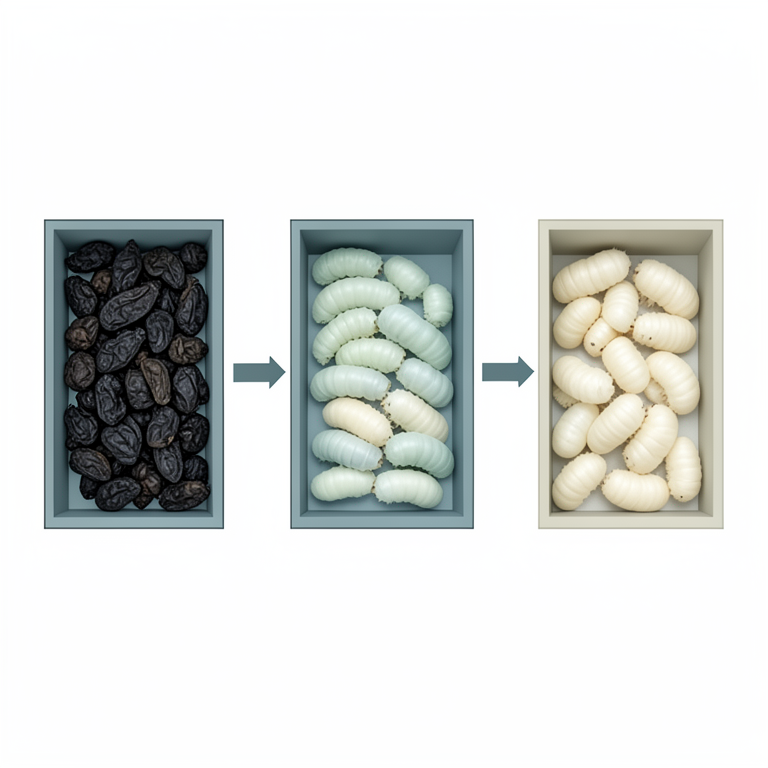
Comparison of Disinfectant Efficacy
AI-generated conceptual illustration (Bivoltine double hybrid silkworms on rearing beds). It explains the idea and does not show study data.
View source evidence ↗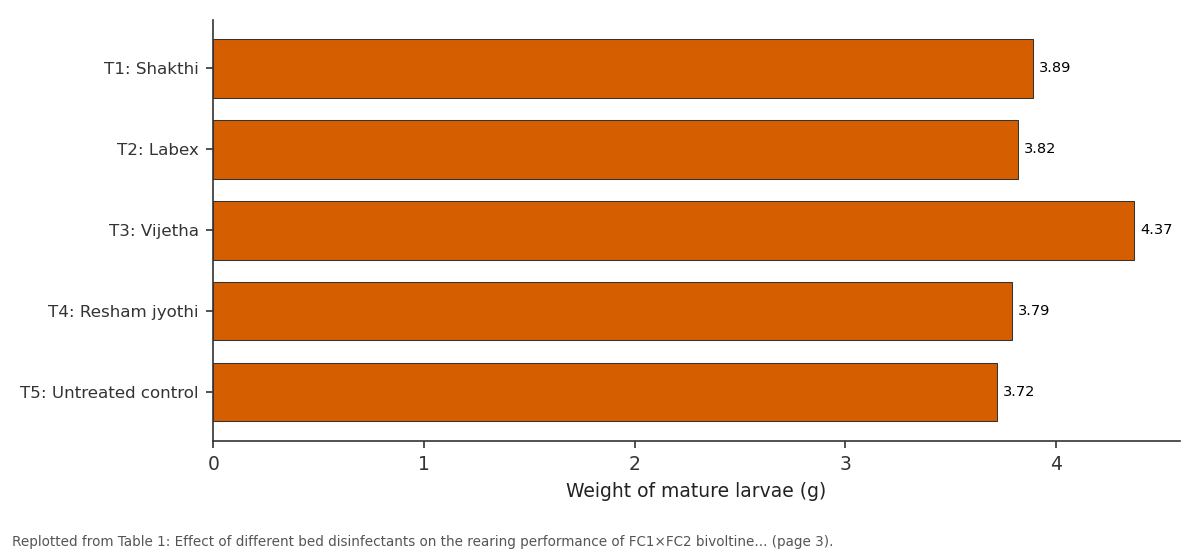
Weight of mature larvae (g): T1: Shakthi vs T2: Labex vs T3: Vijetha vs T4: Resham jyothi vs T5: Untreated control
Replotted from Table 1 (page 3) of the original paper. Every bar is the paper's own table value.
View source evidence ↗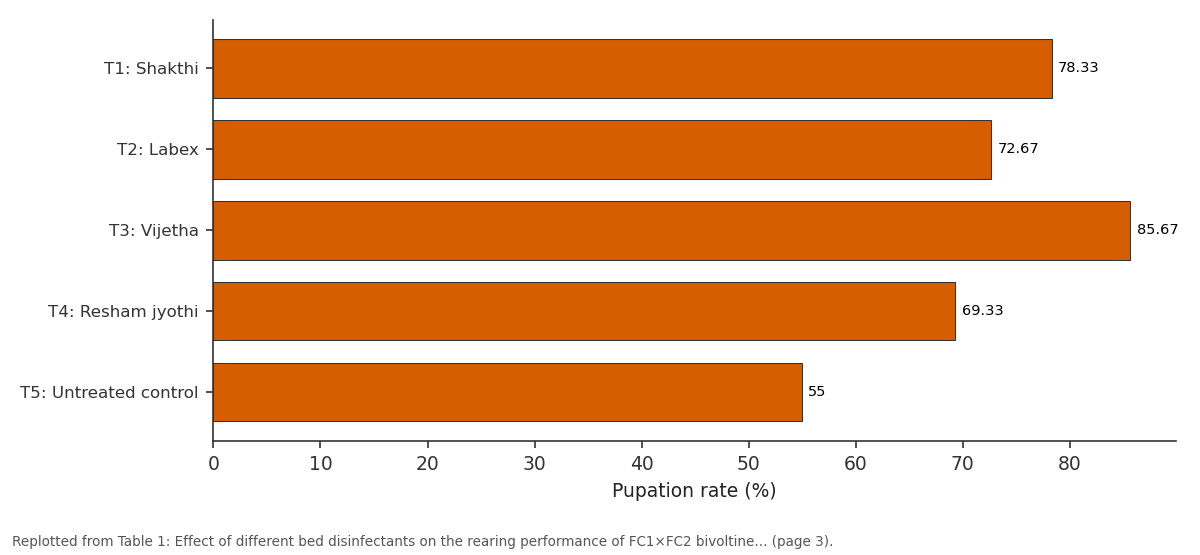
Pupation rate (%): T1: Shakthi vs T2: Labex vs T3: Vijetha vs T4: Resham jyothi vs T5: Untreated control
Replotted from Table 1 (page 3) of the original paper. Every bar is the paper's own table value.
View source evidence ↗Figures & tables
From the original paper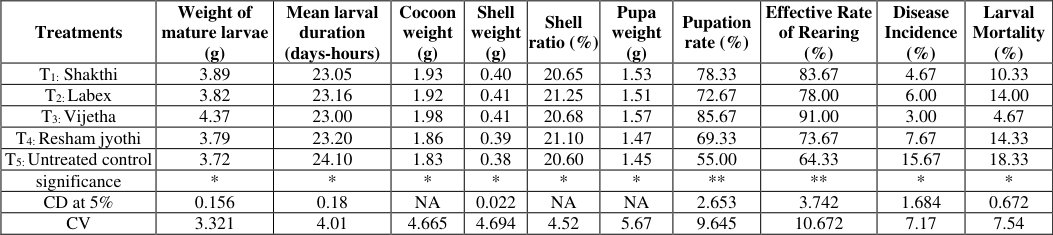 Table 1
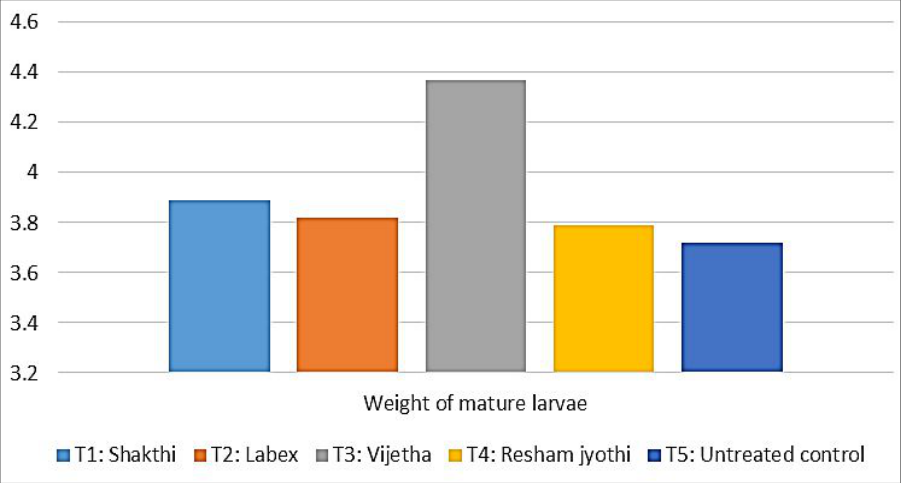 Figure 1
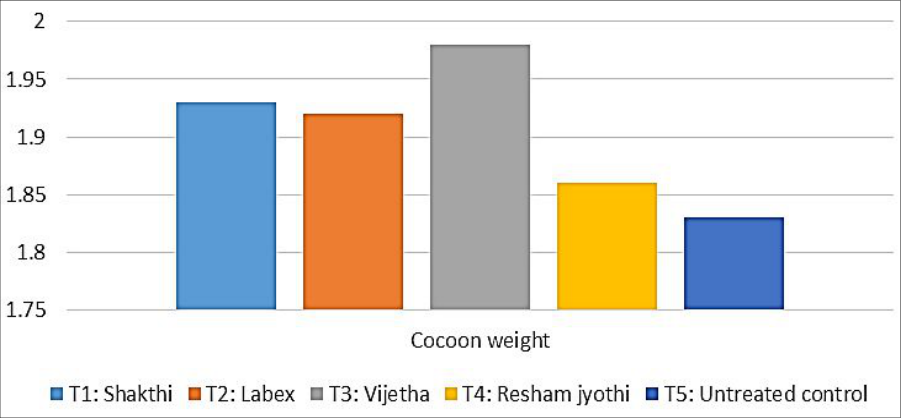 Figure 2
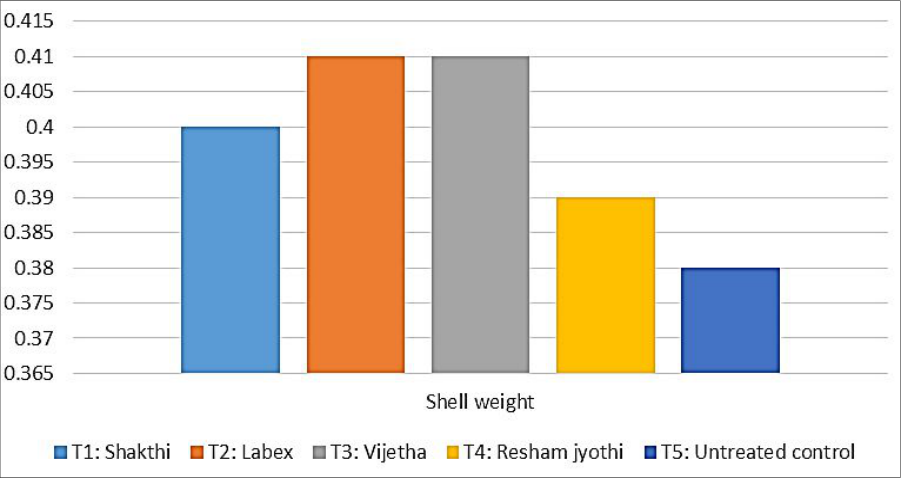 Figure 3
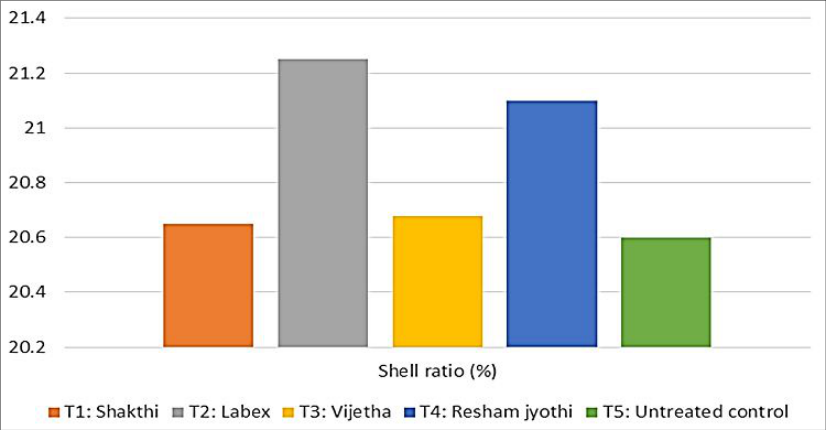 Figure 4
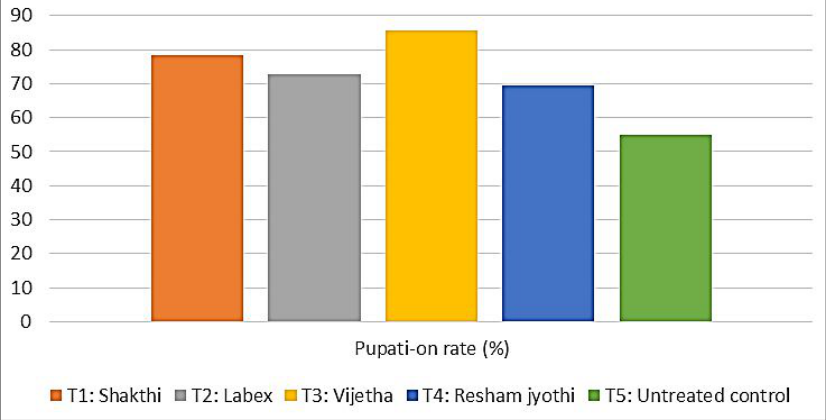 Figure 5
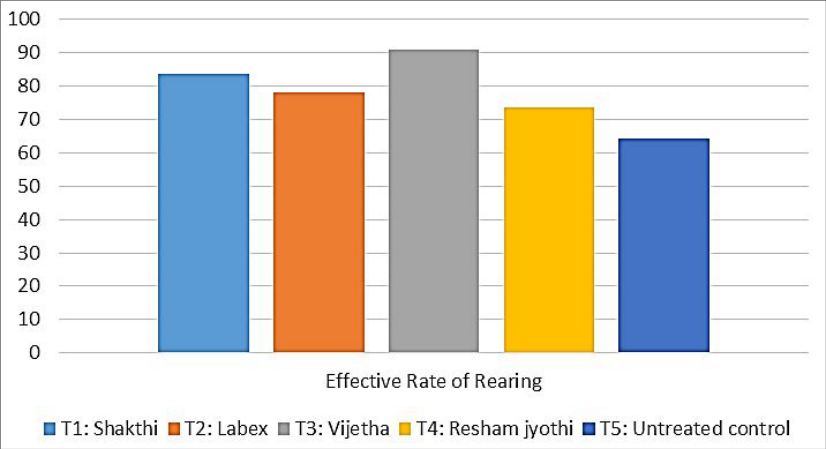 Figure 6
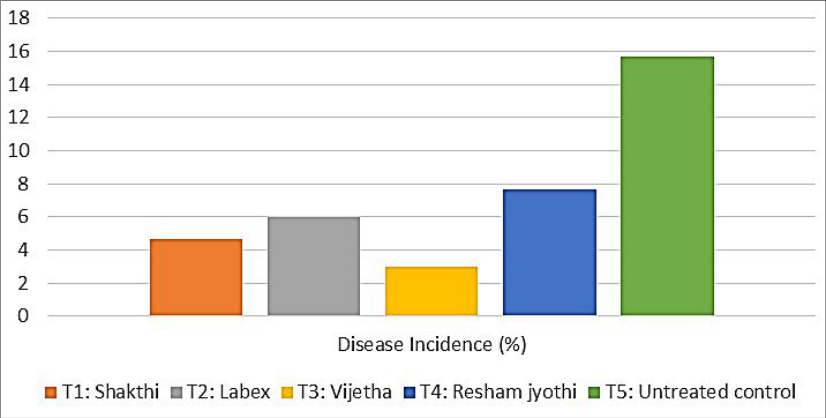 Figure 7
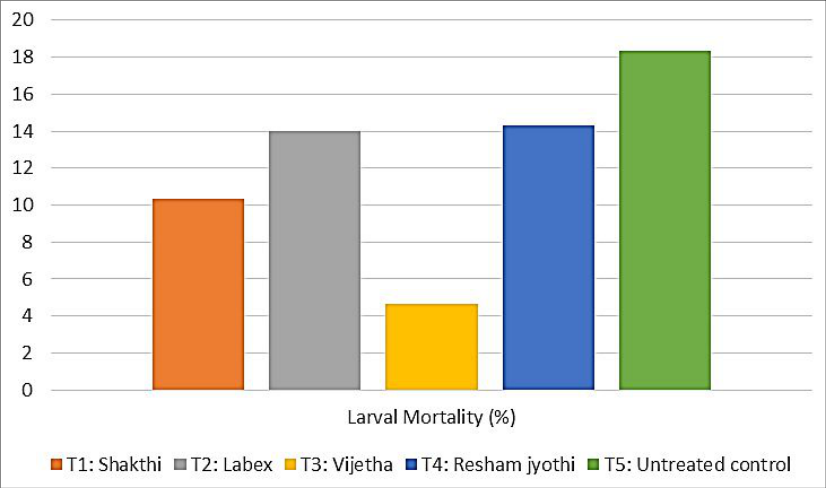 Figure 8
Introduction
Sericulture is a rural, agro-based cottage industry that integrates mulberry cultivation, silkworm rearing, and silk production. It plays a significant role in improving the rural economy by generating employment opportunities, requiring low investment, and offering high economic returns (Kapoor et al., 2022) [3] . However, silkworms are highly susceptible to various diseases, which lead to considerable larval mortality and a decline in cocoon yield throughout the year (Shashidhar et al., 2018) [18] . In India, disease outbreaks in silkworm crops cause annual losses ranging from 15% to 20% (Selvakumar et al., 2002; Balavenkatasubbaiah et al., 2014; Shashidhar et al., 2018) [16,12,18] . Managing infections after they occur is challenging, making preventive measures essential to minimize losses. Disease prevention in sericulture typically involves the use of chemical disinfectants, physical barriers, and improved cultural practices. Among these measures, the application of bed disinfectants is a critical strategy to prevent infections during the rearing process. Pathogens such as viruses, bacteria, and fungi may spread through contaminated leaves or rearing environments, particularly affecting Bombyx mori (Baig et al., 1990) [10] . Without proper preventive interventions, controlling outbreaks often relies on culling infected stocks to stop disease transmission (Acharya et al., 2002) [7] . Maintaining pathogen levels below the economic threshold has been shown to enhance silk productivity by up to 25% without expanding mulberry cultivation (Nagarajan and Radha, 1999) [6] . Therefore, the use of effective bed disinfectants is increasingly recognized as an important component of successful cocoon production (Surapwar et al., 2019) [23] .
This study focuses on assessing the performance of different bed disinfectants on the rearing efficiency of FC1×FC2 double hybrid silkworms, with the objective of improving disease management practices in sericulture.
Materials and methods
This research was carried out at the Postgraduate Department of Sericulture, Sri Krishna Devaraya University, Anantapur, Andhra Pradesh, to assess the influence of different bed disinfectants on the commercial characteristics and rearing performance of the bivoltine double hybrid silkworm FC1×FC2. The larvae in their second instar were procured from the Regional Sericultural Research Station, Anantapur. Rearing was conducted according to the standard procedures outlined by Benchamin and Nagaraj (1987) [13] and continued until the spinning stage.
Treatment details
T₁: Shakthi bed disinfectant applied at 5 g/ft2 after bed cleaning, 30 minutes before feeding, from the second moult until just before spinning. T₂: Labex bed disinfectant applied at 5 g/ft2 after bed cleaning, 30 minutes before feeding, from the second moult until just before spinning. T₃: Vijetha bed disinfectant applied at 5 g/ft2 after bed cleaning, 30 minutes before feeding, from the second moult until just before spinning. T₄: Resham jyothi applied at 5 g/ft2 after bed cleaning, 30 minutes before feeding, from the second moult until just before spinning. T₅: Control (no disinfectant applied).
A day before spinning, ten fully formed larvae were randomly selected and weighed from each replication.
The 5th Instar Larva's Duration (hours)
From the beginning of the first instar until 50% of the silkworms started to spin, the length of the larval stage was measured.
The following formula was used to determine the Effective Rate of Rearing (ERR) (%), followed by Kumar et al. (2014) [4] ,
Pupation was determined using the number of cocoons recovered and the number of healthy pupae found in each treatment.
On the sixth day after spinning, about 10 cocoons were randomly chosen from each replication, followed by Kumar et al. (2014) [4] and each one's weight was noted separately; and the cocoons' average weight was determined.
Weight of Shell (g) 10 randomly chosen cocoons from each replication were used to determine the shell weight and once the pupa was removed from the cocoons, the weight of the cocoon shell was noted.
Using the following formula, the shell ratio was determined based on the weight of the corresponding cocoon shell:
Weight of Pupa (g) Pupae extracted from ten randomly chosen cocoons in each replication were used to calculate pupal weight and each pupae weight was noted separately. The pupa's average weight was ascertained.
During the rearing process, the total number of diseaseinfected and healthy larvae in each treatment was noted. The following formula was used to determine the diseases' percentage incidence, which was then reported as a percentage.
Dead and diseased larvae are separated from healthy one and the larval mortality was counted daily and noted.
Results and discussion
The experiment assessed the influence of four bed disinfectants-Shakthi, Labex, Vijetha, and Resham jyothi in comparison with an untreated control on the growth of fifth instar larvae of the bivoltine double hybrid (FC₁×FC₂) silkworm. Each disinfectant was applied at a rate of 5 g/ft², 30 minutes prior to feeding, from the third to the fifth instar stages.
Effect on Fifth Instar Larval Weight
Among the treatments, larvae reared on beds disinfected with Vijetha recorded the highest average weight (4.37 g/larva), followed by those treated with Shakthi (3.89 g/larva) and Labex (3.82 g/larva). The lowest weight was noted in the control group (3.72 g/larva) (Figure 1; Table 1). Although the differences were not very large, the use of Vijetha showed a consistent improvement in larval weight compared to other treatments. Previous studies also support these findings. Manimegalai and Subramaniam (2000) [5] reported a larval weight of 32.70 g per 10 larvae with Vijetha treatment, while Sivaprakasam (1999) [21] observed a similar increase, recording 35 g per 10 larvae. An earlier report (Anonymous, 2002) [8] also highlighted that Vijetha improved larval weight, yielding 3.45 g per larva. Furthermore, Sujatha et al. (2007) [22] found that treatments with turmeric powder enhanced larval weight significantly. The present results align with these observations, confirming that Vijetha is more effective than the other disinfectants tested.
Total Larval Duration of FC1×FC2 Bivoltine Double Hybrid
In this study, the minimum larval duration was observed in the Vijetha-treated batches (23.00 days), followed by Shakthi-treated batches (23.05 days), while the untreated control group showed the longest duration (24.10 days) (Table 1). Similar findings were reported by Surapwar et al. (2019) [23] , who assessed the impact of different bed disinfectants, including Vijetha, Labex, and Ankush, on multivoltine silkworm hybrids.
Their results revealed that Vijetha applied at 5 g/ft² resulted in the shortest larval period (22.03 days), which was statistically on par with Labex at 5 g/ft² (22.86 days). The untreated control had a notably longer larval duration of 24.43 days. Additionally, Swathi et al. (2014) [24] demonstrated that using hydrated lime powder at 5 g/ft², along with bundh powder after each moult, reduced the larval period to 25.23 and 25.22 days in Bombyx mori L. Likewise, Jawale and Tayade (1987) [2] reported shorter larval durations when silkworms were reared on leaves cleaned with cotton (24.41 days) and treated with turmeric powder. These results collectively indicate that proper use of bed disinfectants effectively shortens larval duration, thereby improving silkworm productivity. Cocoon Weight: The impact of various bed disinfectants on the double hybrid mulberry silkworm race [FC1×FC2] is presented in Table 1 and illustrated in Figure 2. The results showed that silkworms treated with Vijetha produced the heaviest cocoons, averaging 1.98 g. Treatments with Shakthi (1.93 g) and Labex (1.92 g) also enhanced cocoon weight compared to the untreated control, which recorded an average of 1.83 g.
These observations are consistent with earlier research. Manimegalai and Subramaniam (2000) [5] documented a maximum cocoon weight of 1.63 g using Vijetha, while Sivaprakasam (1999) [21] reported a similar value of 1.6 g. Likewise, Anonymous (2002) [8] found that Vijetha treatment resulted in the largest cocoon weight of 1.684 g, and Kapoor et al. (2022) [3] confirmed similar trends in their study.
Cocoon Shell Weight
The influence of various bed disinfectants on cocoon shell weight followed a pattern similar to their effect on total cocoon weight. In the untreated control group, the average shell weight was recorded at 0.38 g. Treatments with disinfectants resulted in noticeable improvements, with cocoons exposed to Vijetha achieving the highest shell weight of 0.41 g. Labex and Shakthi treatments also showed positive outcomes, producing shell weights of 0.41 g and 0.40 g, respectively (refer to Table 1 and Figure 3).
Comparative findings from earlier studies support these results. Manimegalai and Subramaniam (2000) [5] reported a maximum shell weight of 0.24 g, while Sivaprakasam (1999) [21] observed 0.20 g. Similarly, Anonymous (2002) [8] documented a maximum value of 0.285 g for double hybrid mulberry silkworms treated with Vijetha disinfectant. The present study also demonstrated an increase in shell weight with Vijetha treatment, consistent with observations reported by Kapoor et al. (2022) [3] . Cocoon Shell Ratio: The application of different bed disinfectants had a significant effect on the cocoon and shell weights of the FC1×FC2 hybrid, as indicated in Table 1 and Figure 4. Labex treatment achieved the highest shell ratio at 21.25%, while Shakthi recorded the lowest at 20.65%, which was nearly equal to the control value of 20.60%. The Vijetha disinfectant produced a shell ratio of 20.68%. Statistical analysis confirmed that these differences were highly significant at the 0.01% level. Previous investigations have also reported variability in shell ratio with Vijetha application; Manimegalai and Subramaniam (2000) [5] documented a ratio of 15%, and Sivaprakasam (1999) [21] reported 16%. Findings by Kapoor et al. (2022) [3] further support these observations, suggesting that Vijetha use generally contributes to an improved cocoon shell ratio.
Effect on Pupation Rate
The pupation rate was notably influenced by the application of different bed disinfectants on fifth instar larvae of the FC1×FC2 hybrid. The highest pupation rate was observed in the batch treated with Vijetha, reaching 85.67%, followed by Labex with 72.67%. Shakthi-treated batches recorded a pupation rate of 78.33%, while Resham jyothi treatment resulted in the lowest among the disinfectants at 69.33%. The control group exhibited the least pupation rate at 55.00% (Table 1). Similar observations were made by Shashidhar et al. (2018) [18] , who assessed the impact of various dosages of bed disinfectants on double hybrid silkworm rearing under the subtropical conditions of Jammu. Their findings indicated that the application of Vijetha and lime disinfectants at 100% and 75% concentrations yielded better performance in parameters such as larval weight, effective rate of rearing (ERR), cocoon weight, shell ratio, shell weight, pupation rate, filament length, denier, renditta, and reelability compared to lower concentrations (0%, 20%, and 50%). These results are consistent with the observations of Kapoor et al. (2022) [3] , supporting the conclusion that Vijetha treatment enhances pupation rate and other economic traits.
Effective Rate of Rearing
The Effective Rate of Rearing (ERR) indicates the percentage of larvae that successfully form cocoons. In the present study, the highest ERR (91.00%) was achieved with the use of the Vijetha bed disinfectant, whereas the control group showed a much lower ERR of 64.33% (Kapoor et al., 2022) [3] . Treatments with Shakthi and Labex recorded ERRs of 83.67% and 78.00%, respectively, as shown in Table 1 and Figure 6. These differences were statistically significant at the 0.001% level. Similar findings were reported by Venkataramana et al. (2002) [25] , who observed a marked improvement in ERR with Vijetha and Resham Jyothi compared to untreated batches. Swathi et al. (2014) [24] also noted that control groups consistently exhibited the lowest ERR values relative to those treated with various disinfectants. Earlier studies by Narasimhanna et al. (1975) [14] , Baig et al. (1993) [11] , and Sharma et al. (1994) [17] further corroborate the present results, confirming the beneficial effects of disinfectant application on silkworm rearing performance. Disease Incidence: The study assessed how different bed disinfectants influence disease occurrence in bivoltine double hybrid silkworms (FC1×FC2) (Figure 7). Among the treatments, the Vijetha disinfectant (T 3 ) recorded the lowest disease incidence at 3.00%, followed by Shakthi (T₄), which showed 4.67% (Singh et al., 2023) [19] . In contrast, the untreated control group (T₀) exhibited the highest disease incidence, reaching 15.67%. Previous research by Samson (2000) [15] highlighted several disinfectants, including RKO, Vijetha, Resham Jyothi, and Suraksha, as highly effective against silkworm diseases. Similarly, Anonymous (2002) [8] reported that Vijetha demonstrated the lowest disease incidence (5.47%) compared to other tested products. Furthermore, Manimegalai and Subramaniam (2000) [5] and Surapwar et al. (2019) [23] observed that using turmeric powder combined with chalk powder, along with Vijetha, reduced grasserie infection by 63.16%. Additionally, Singhvi et al. (2004) [20] and Surapwar et al. (2019) [23] confirmed that disinfectants like RKO, Resham Jyothi, and Vijetha effectively shield Tasar silkworms from pathogenic attacks. Overall, Vijetha consistently minimized the spread of diseases in treated batches.
Larval Mortality
The findings of the study showed that the application of the Vijetha bed disinfectant (T 3 ) resulted in the lowest larval mortality rate of 4.67% (Singh et al., 2023) [19] . The next lowest mortality was observed with the Shakthi disinfectant (T 1 ), which recorded 10.33%. The untreated control group (T₅) exhibited the highest mortality at 18.33% (Figure 8).
Comparable outcomes were reported by Dhirwani et al.
(2015) [1] , who observed mortality rates as low as 1% with Amla and 4% with Tulsi when testing various plant-based disinfectants, including Neem, Amla, Haldi, Ber, and Tulsi, against RKO and other chemical agents. These observations are in agreement with the findings of Ayandokun et al.
(2017) [9] and Balavenkatasubbaiah et al. (2014) [12] .
Conclusion
Sericulture is often hindered by silkworm diseases, which can cause severe production losses. The present study assessed the effectiveness of four bed disinfectants-Shakthi, Labex, Vijetha, and Resham jyothi on the performance of FC1×FC2 bivoltine silkworm hybrids. Applications were carried out from the second moult to fifth instar stages, and parameters such as larval weight, cocoon weight, shell weight, pupation rate, effective rate of rearing (ERR), disease incidence, and larval mortality were examined. Among the tested products, Vijetha proved to be the most efficient, resulting in notable increases in larval and cocoon traits, as well as the highest pupation rate and ERR. Furthermore, it effectively minimized disease occurrence and larval mortality. These findings emphasize the importance of using bed disinfectants to create favorable rearing conditions. In particular, the superior results of Vijetha indicate its potential to enhance disease management and improve silk yield, offering significant advantages for sericulture practices.
Acknowledgement
AcknowledgementsAuthors would like to acknowledge the Vice Chancellor, Sri Krishnadevaraya University for providing us the lab facilities.
Figures and tables from the paper
References
24 in the original paper- Dhirwani H, Rathod MK, Rai MM. Evaluation of different bed disinfectant against the diseases of silkworm, Bombyx mori. International Journal of Researches in Biosciences, Agriculture & Technology. 2015;Special Issue(6):154-155.
- Jawale MD, Tayade DS. Effect of certain bed disinfectants on the growth and disease control of silkworm (Bombyx mori L). Sericologia. 1987;27(23):443-446.
- Kapoor S, Bhat MA, Sudan D. A comparison of different bed disinfectants on the rearing performance of the double hybrid silkworm FC, FC. The Pharma Innovation Journal. 2022;11(10):522-527.
- Kumar H, Priya YS, Kumar M, Elangovan V. Studies on biochemical changes of fungal infected mulberry leaves and their effect on growth and cocoon characteristics of the silkworm (Bombyx mori) (Lepidoptera: Bombycidae). Entomologia Generalis. 2014;35(1):1-10. doi:10.1127/0171-8177/2014/0001
- Manimegalai S, Subramaniam A. Efficacy of bed disinfectants and botanicals against Grasserie disease of silkworm Bombyx mori L. In: Govindan R, Chinnswamy KP, Krishnaprasad NK, Reddy DNR, editors. Proceedings of NSTS-1999, Volume 4. Bangalore: UAS; 2000. p. 338-340.
- Nagarajan P, Radha NV. Antibiotics supplementation as a component of integrated disease management in silkworm. Indian Silk. 1999;2(4):39-40.
- Acharya A, Sriram S, Sehrawat S, Rahman M, Sehgal D, Gopinathan KP. Bombyx mori nucleopolyhedrovirus: Molecular biology and biotechnological applications for large-scale synthesis of recombinant proteins. Current Science. 2002;83(4):455-465.
- Anonymous. Economic Survey of Maharashtra, 20012002. Mumbai: Directorate of Economics and Statistics; 2002.
- Ayandokun AE, Ete JA, Babayemi IS, Aina-Oduntan OA. Assessment of two disinfectants in the rearing of Bombyx mori and their effects on larval performance and cocoon yield. African Journal of Agriculture Technology and Environment. 2017;6(1):45-52.
- Baig M, Nataraju B, Samson MV. Studies on the effect of antibiotics on rearing performance and loss due to diseases in silkworm Bombyx mori L. Indian Journal of Sericulture. 1990;29(1):54-58.
- Baig M, Samson MV, Sharma SD, Balavenkatasubbaiah M, Sasidharan TO, Jolly MS. Efficacy of certain bed disinfectants in different combinations against the nuclear polyhedrosis and white muscardine of the silkworm, Bombyx mori L. Sericologia. 1993;33(1):53-63.
- Balavenkatasubbaiah M, Chandrasekharan K, Sharma SD, Nayaka ARN, Bindroo BB. Disinfection and hygiene technology using Asthra and Ankush for the management of silkworm diseases. International Journal of Plant, Animal and Environmental Sciences. 2014;4(1):100-106.
- Benchamin KV, Nagaraj CS. Silkworm Rearing Techniques. In: Jolly MS, editor. Appropriate Sericulture Techniques. Mysore: International Centre for Training and Research in Tropical Sericulture (ICTRTS); 1987. p. 63-106.
- Narasimhanna MN, Samson MV, Baig M. Studies on the control of white muscardine disease of silkworm. In: Annual Report. Mysore: Central Sericulture Research & Training Institute (CSRTI); 1975. p. 106111.
- Samson MV. Advances in research on silkworm disease and pest in tropics. In: Govindan R, Chinnswamy KP, Krishnaprasad NK, Reddy DNR, editors. Proceedings of NSTS-1999, Volume 4. Bangalore: UAS; 2000. p. 32-40.
- Selvakumar T, Nataraju B, Balavenkatasubbaiah M, Sivaprasad V, Baig M. A report on the prevalence of silkworm diseases and estimated crop loss. In: Advances in Indian Sericulture Research. Mysore: Central Sericulture Research & Training Institute (CSRTI); 2002. p. 354-357.
- Sharma BJ, Samson MV, Balavenkatasubbaiah M, Datta RJL. Effect of different disinfectants on the prevention of NPV of silkworm Bombyx mori L. Sericologia. 1994;34(2):100-104.
- Shashidhar KR, Thulasiram K, Haveri N. Effectiveness of bed disinfectants on silkworm diseases and cocoon yield under tropical conditions of Kolar district, Karnataka. Journal of Pharmacognosy and Phytochemistry. 2018;7(5):2720-2724.
- Singh S, Managanvi K, Ray SN, Erayya. Evaluation of bed disinfectants on economic traits of multivoltine hybrid mulberry silkworm [NISTARI x (SK6xSK7)], in Kishanganj district, Bihar. Biological Forum An International Journal. 2023;15(8a):262-266.
- Singhvi NR, Kushwaha RV, Mathur SK, Lochan R, Rekha M, Sinha BR. Comparative efficacy of bed disinfectant TKO, Resham Jyothi and Vijetha in protecting tasar silkworm from invasion of pathogens. Journal of Experimental Zoology. 2004;7(1):165-168. 21. Sivaprakasam N. Botanical formulation for management of grasserie disease of silkworm, Bombyx mori L. In: Proceedings of the National Seminar on Tropical Sericulture. 1999. p. 335-337.
- Sujatha K, Rao AP, Sammaiah C. Bioefficacy of Curcuma longa as bed disinfectant on biological parameters in silkworm Bombyx mori L. (Lepidoptera: Bombycidae). The Asian Journal of Animal Science. 2007;2(1&2):80-83.
- Surapwar PH, Nalwandikar PK, Bhamare VK, Waghmare YM. Effect of different bed disinfectants on economic traits of double hybrid mulberry silkworm (Bombyx mori L). International Journal of Chemical Studies. 2019;7(5):1855-1858.
- Swathi HC, Vijayendra M, Nagaraj SB. Revalidation of bed disinfectant practices followed by farmers in the rearing of silkworm Bombyx mori L. IOSR Journal of Agriculture and Veterinary Science. 2014;7(1):1-7.
- Venkataramana P, Sreenivasulu Reddy P, Suryanarayan N. Field evaluation of two silkworm bed disinfectants Vijetha and Resham Jyothi for cocoon yield and reduction in incidence of diseases. Journal of Environmental Research. 2002;12(1):1-7.