
Research article · 2025 · Full text
International Journal of Agriculture and Food ScienceInfluenced of different methods of storage on betel leaves (Piper betle L.)
Volume 7(8) · Pages 308–312 · DOI: 10.33545/2664844x.2025.v7.i8e.627 ↗
Research areasDate Palm Research Studies
Abstract
Author-written"Pan" or Betelvine (Piper betle L.) is a perennial dioecious creeper belonging to family Piperaceae and is probably a native of Malaysia but cultivated in India from time immemorial as cash crop for its leaves, used for chewing. Its deep green heart shaped leaf for (15-20) million Indian and 2 billion foreign consumers annually. The assessment of total sugar, ascorbic acid, total phenol content, moisture content, fresh weight, rotting and shelf life of Piper betle (L.) leaves has been attempted in this work. The study found that the leaves of Piper betle (L.) have a higher amount of antioxidant activity. Total sugar range vary between 0.44 to 0.74%, Ascorbic acid 0.71 to 3.11 mg/100ml, the minimum rotting 5.33% and highest shelf life 11 days are found in Alum with Bamboo basket covered with cloth. Among all the treatment, Alum and bamboo baskets shows the statistically significant superior result in all biochemical and physical observation.
Summary
Source-checkedPlain-language reading of the full paper, prepared with AI and checked against the text. Each point links to the authors' own words.
Why it matters
- Betel vine (Piper betle L.) is a significant asexually propagated cash crop from the Piperaceae family. View evidence ↗
- The leaves of the betel vine are consumed annually by approximately 15-20 million people in India and 2 billion people abroad. View evidence ↗
- Betel vine is a critical commercial crop that generates foreign exchange for the country. View evidence ↗
The question
- The study aimed to reduce spoilage loss and maintain the biochemical quality of betel leaves by testing various chemical treatments and storage methods. View evidence ↗
What they did
- The experiment took place in Dapoli, District Ratnagiri (MS), during the 2024-2025 period. View evidence ↗
- The study used a Factorial Completely Randomized Design (FCRD) testing six chemical treatments (Control, Benzyl Adenine 0.1%, Sodium Hypochlorite 0.1%, Ethrel 0.1%, Thiourea 0.1%, and Alum) and four storage methods (cloth-covered bamboo basket, polythene bag, gunny bag, and silver-foil glass container). View evidence ↗
- Data was collected 7 days after the application of chemical treatments and the start of storage. View evidence ↗
What they found
- Alum (T6) resulted in the highest β-Carotene content (0.17 mg/g), while Thiourea (T5) resulted in the lowest (0.11 mg/g). View evidence ↗
- The highest total sugar content (0.73%) was found in the Alum treatment (T6), and the lowest (0.51%) in the Thiourea treatment (T5). View evidence ↗
- Total Soluble Solids (TSS) were highest in the Alum treatment (1.13°Brix) and lowest in the Thiourea treatment (0.48°Brix). View evidence ↗
- The Alum treatment (T6) yielded the highest essential oil percentage (0.44%), while Thiourea (T5) yielded the lowest (0.40%). View evidence ↗
- Physiological Loss in Weight (PLW) was lowest in the Alum treatment (8.25%) and highest in the Thiourea treatment (14.25%). View evidence ↗
- The Alum treatment (T6) resulted in the minimum percentage of rotten leaves (7.42%), whereas Thiourea (T5) resulted in the highest (16.42%). View evidence ↗
- The combination of Alum and a cloth-covered bamboo basket resulted in the minimum rotting (5.33%) and the highest shelf life (11 days). View evidence ↗
What it means
- The authors conclude that treating leaves with alum and storing them in a cloth-covered bamboo basket is the most effective method. View evidence ↗
- The authors state that alum treatment extended shelf life to 12 days, whereas Thiourea treatment reduced it to 6 days. View evidence ↗
Visual summary
1 visualsIllustrations explain the paper; they do not show study data.
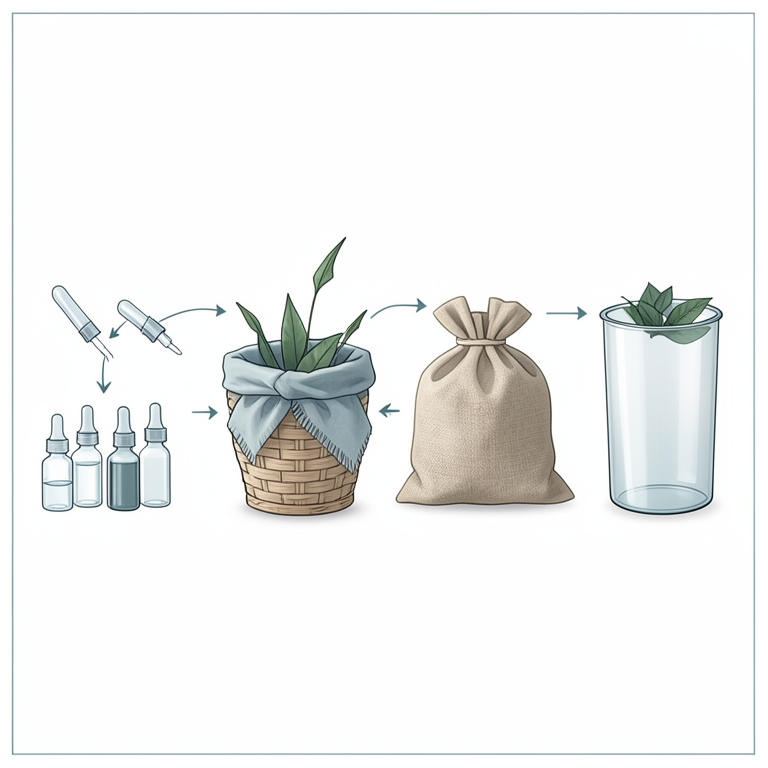
Experimental Setup
AI-generated conceptual illustration (betel leaves (Piper betle L.)). It explains the idea and does not show study data.
View source evidence ↗Figures & tables
From the original paper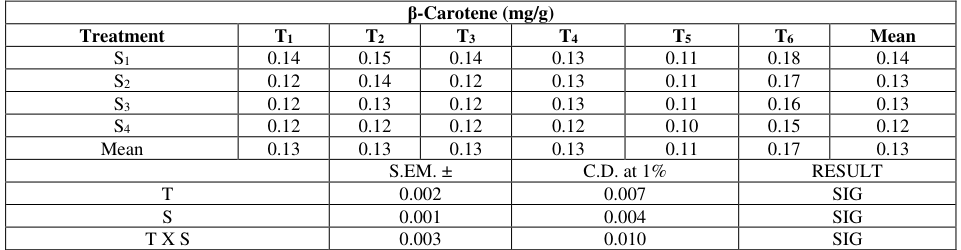 Table 1
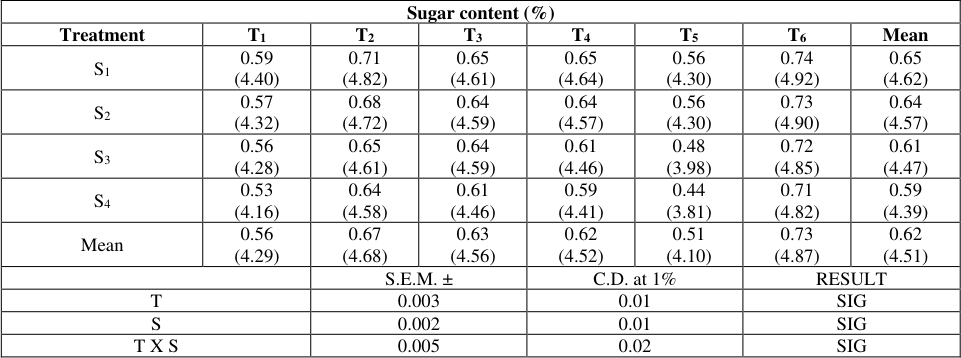 Table 2
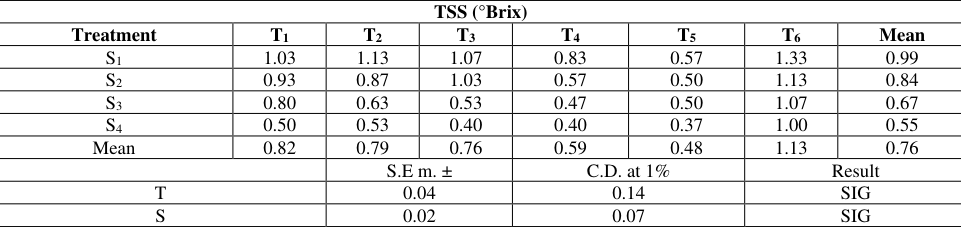 Table 3
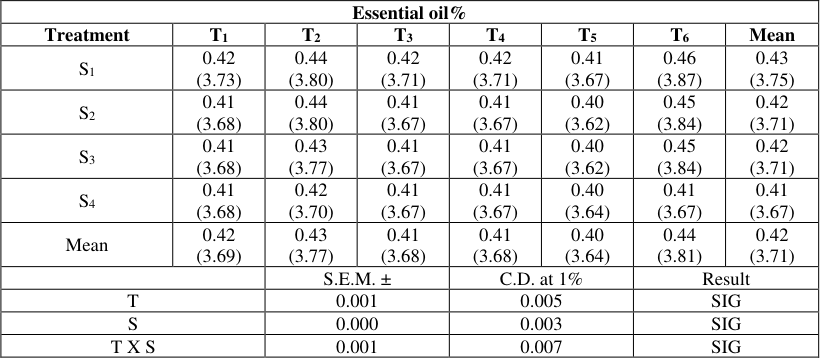 Table 4
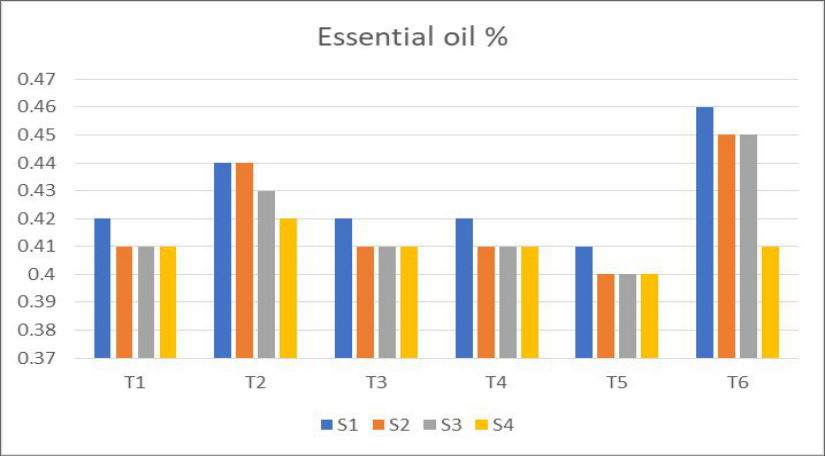 Figure 1
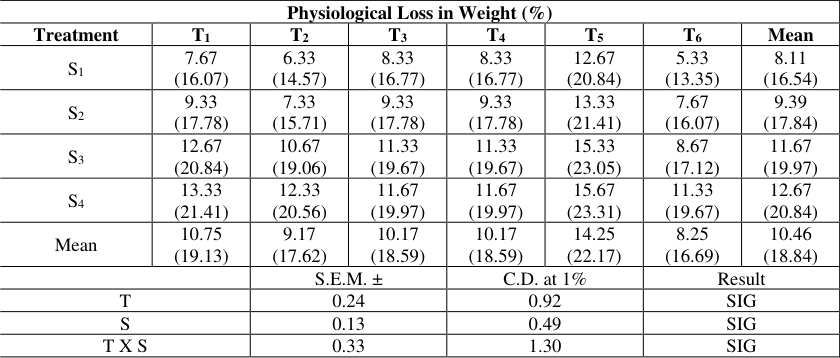 Table 5
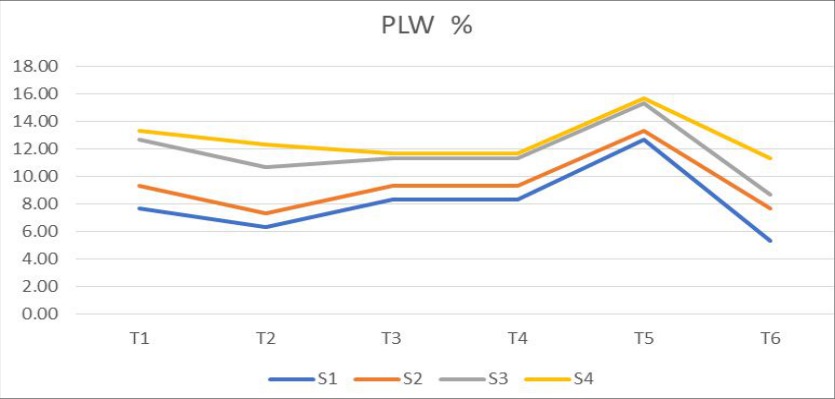 Figure 2
Introduction
Betel vine is the most important and useful asexually propagated cash crop having various cultivars. It belongs to Piperaceae family and is a shed loving plant. It has a perennial creeper and bears leaves that are 4-7-inch long and 2-4 inch broad. It bears both male and female flowers. It is also found to be one of the most important commercial crops which can attract adequate amount of foreign exchange to the country. The objective of this study to minimizes spoilage loss of betel leaves and maintained their biochemical factor for keeping their quality using different chemicals and storage methods (Guha, 2006) [4] .
Material and Methodology
The field experiment was conducted during the year 2024-2025 at Dapoli, Dist. Ratnagiri (MS). The treatment combinations comprised with six chemical treatment T 1 : Control (with distilled water), T 2 : Benzyl Adenine 0.1%, T 3 : Sodium Hypoclorite 0.1%, T 4 : Ethrel 0.1%, T 5 : Thiourea 0.1%, T 6 : Alum (g/l) and four storage methods S 1 : Bamboo basket covered with cloth, S 2 : Polythene Bag, S 3 : Gunny Bags, S 4 : Glass container with silver foil were conducted with Factorial Completely Randomized Design (FCRD).
Results and Discussion
Effect of chemicals and storage method on biochemical analysis of betel leaves. The data gathered after 7 days of chemical treatments and storage of betel leaves by different methods as a result presented in Tables.
From the data it can be concluded that, the maximum β-Carotene (0.17 mg/g) was recorded in treatment T 6 while the treatment T 5 showed minimum content of β-Carotene (0.11 mg/g). The significantly maximum β-Carotene (0.14 mg/g) reported in treatment S 1 . Whereas, the minimum β-Carotene (0.12 mg/g) reported in treatment S 4 . Interaction effect between chemicals and storage on β-carotene content of betel leaves showed significant effect. Among aggregates of treatment combinations, T 6 S 1 showed maximum content (0.18 mg/100 gm). Akshata and Vijayalaxmi (2019) [1] observed that carotenoids continued to form even in detached green leaves after the chlorophyll disappeared [4] . Thus, it appears that the increase in temperature inside the packages is only a secondary effect of respiration and it may not directly be responsible for the deterioration of β-Carotene. On the other hand, bamboo basket has natural material provides thermal insulation and breathability, maintaining a more stable environment. Thereby increasing the enzymatic activity with passage of time which were reduced with the application of benzyl adenine (Singh et al. 1990) [8] .
Sugar Content
From the below data the highest content of total sugar (0.73%) was found in treatment T 6 which is significantly superior to all below treatments, whereas the lowest total sugar content (0.51%) showed in treatment T 5 . The significantly maximum total sugar (0.65%) was seen in treatment S 1 . Interaction effect between chemicals and storage on total sugar of betel leaves showed significant effect. Among aggregates of treatment combinations, T 6 S 1 recorded maximum content (0.74%). Also, minimum total sugar content (0.44%) was observed in treatment combination T 5 S 4 . It might be due to Alum may restrict enzymatic activity mildly, preserving internal biochemicals balance. Also, alum showed enzymatic degradation that can lead to sugar breakdown. Freshly picked produce often has higher levels of sugar than stored produce, and as storage time increases, the amount of total sugar in produce gradually decreases (Iman MN and Pariari (2012).
TSS (°Brix)
From the data it can be concluded that, treatment T 5 showed minimum TSS (0.48°Brix) which is significantly superior and the maximum TSS (1.13°Brix) showed in treatment T 6 (Alum). The significantly the maximum TSS (0.99°Brix) was found in treatment S 1 . Whereas, lowest TSS (0.55°Brix) was observed in treatment S 4 . Interaction effect between chemicals and storage on TSS of betel leaves showed significant effect. Among aggregates of treatment combinations, T 6 S 1 showed maximum content of TSS (1.33 °Brix). Whereas the minimum TSS (0.37 °Brix) of betel leaves was recorded in treatment combination T 5 S 4.
Essential oil%
From the data it can be concluded that, treatment T 6 showed highest percentage of essential oil (0.44%). However, in betle leaves the lowest percentage of essential oil (0.40%) showed in treatment T 5 . The significantly maximum percentage of shelf life (0.43%) was observed in treatment S 1. Whereas, minimum percentage of shelf life (0.41%) showed in treatment S 4 . Interaction between chemicals and storage on essential oil of betel leaves showed significant effect. T 6 S 1 showed maximum content (0.46%) whereas minimum percentage of oil (0.40%) reflects in treatment combination T 5 S 4 .
Alum has astringent and antimicrobial property which reduces enzymatic activity and microbial spoilage that can degrade essential oil compounds. Also, stabilizes cell membranes where they prevent rupture of oil glands and loss of volatile compounds (Bidisha Mondal 2022) [2] .
Treatment T 6 recorded significantly lower percentage of PLW (8.25%). The higher PLW percentage (14.25%) was recorded with treatment T 5 . The different storage method also showed a significant effect on PLW. The highest PLW (12.67%) was recorded with treatment S 4 . The highest PLW (15.67%) was recorded with treatment combination T 5 S 4 whereas lowest PLW percentage (5.33%) was recorded with treatment combination T 6 S 1 having a comparable value reported in T 2 S 1 which was significantly superior to all over combination.
The physiological loss in weight of betel leaves was found increased when stored for 15 days at room temperature. The reason might be due to their lack of respiration and presence of vents has failed to decrease oxygen concentration and increase carbon dioxide concentration, thus leading to higher amount of Periodical loss in weight. Mathur et al.
(1956) [7] also found that, this is mainly attributed to the continuous moisture and other nutrient loss as leaves are actively involved in the physiological processes like respiration and transpiration and these processes is influenced by temperature.
The data revealed that among the chemical treatment T 6 was found significantly superior to all the treatment whereas minimum percentage of rotten leaves (7.42%) were was observed in treatment T 6 whereas highest rotten leaves (16.42%) was recorded in treatment T 5. The lowest percentage of rotten leaves (7.72%) was observed in treatment S 1 while the highest percentage of rotten leaves (12.94%) was observed in treatment S 4 . Interaction effect between chemicals and storage on rotting of betel leaves showed significant effect. Gather of treatment combinations, T 5 S 4 showed maximum rotting of leaves (21.33%) Whereas, the lowest percentage (5.33%) of rotten leaves reported in treatment combination T 6 S 1 .
The data revealed that among the chemical treatment T 6 was found significantly superior to all the treatment whereas minimum percentage of rotten leaves (7.42%) were was observed in treatment T 6 whereas highest rotten leaves (16.42%) was recorded in treatment T 5. The lowest percentage of rotten leaves (7.72%) was observed in treatment S 1 while the highest percentage of rotten leaves (12.94%) was observed in treatment S 4 . Interaction effect between chemicals and storage on rotting of betel leaves showed significant effect. Gather of treatment combinations, T 5 S 4 showed maximum rotting of leaves (21.33%) Whereas, the lowest percentage (5.33%) of rotten leaves reported in treatment combination T 6 S 1 .
It reduces cell permeability and delays microbial colonization, especially under ambient conditions. Glass container had the maximum humidity and no temperature fluctuations, which limit respiration rate and as a result, reduce vegetable decay toward the end of storage life. It may be because of the lack of respiration and the rise in CO 2 levels in the glass container and the lowest decay rate among the storage conditions. (Garande et al. 2019) [3] .
Conclusion
The effect of chemical treatment, storage, and their combined effect on leaves treated with alum and stored bamboo basket covered with cloth can be considered as the best treatment. However, based on differences in overall acceptance like Total sugar, Ascorbic acid, Phenol content, Moisture, Fresh Weight, rotting of leaves values scored lower as well as the shelf life of betel leaves treated with alum was higher (12 Days) compared to other treatments, leaves were treated with Thiourea was lower (6 Days).
Figures and tables from the paper
| β-Carotene (mg/g) | — | — | — | — | — | — | — |
|---|---|---|---|---|---|---|---|
| Treatment | T1 | T2 | T3 | T4 | T5 | T6 | Mean |
| S1 | 0.14 | 0.15 | 0.14 | 0.13 | 0.11 | 0.18 | 0.14 |
| S2 | 0.12 | 0.14 | 0.12 | 0.13 | 0.11 | 0.17 | 0.13 |
| S3 | 0.12 | 0.13 | 0.12 | 0.13 | 0.11 | 0.16 | 0.13 |
| S4 | 0.12 | 0.12 | 0.12 | 0.12 | 0.10 | 0.15 | 0.12 |
| Mean | 0.13 | 0.13 | 0.13 | 0.13 | 0.11 | 0.17 | 0.13 |
| S.EM. ± | C.D. at 1% | RESULT | |||||
| T | 0.002 | 0.007 | SIG | ||||
| S | 0.001 | 0.004 | SIG | ||||
| T X S | 0.003 | 0.010 | SIG |
Table text extracted from the original PDF; superscript letters are shown inline. The original table image is below.
View original table image
| Sugar content (%) | — | — | — | — | — | — | — |
|---|---|---|---|---|---|---|---|
| Treatment | T1 | T2 | T3 | T4 | T5 | T6 | Mean |
| S1 | 0.59 (4.40) | 0.71 (4.82) | 0.65 (4.61) | 0.65 (4.64) | 0.56 (4.30) | 0.74 (4.92) | 0.65 (4.62) |
| S2 | 0.57 (4.32) | 0.68 (4.72) | 0.64 (4.59) | 0.64 (4.57) | 0.56 (4.30) | 0.73 (4.90) | 0.64 (4.57) |
| S3 | 0.56 (4.28) | 0.65 (4.61) | 0.64 (4.59) | 0.61 (4.46) | 0.48 (3.98) | 0.72 (4.85) | 0.61 (4.47) |
| S4 | 0.53 (4.16) | 0.64 (4.58) | 0.61 (4.46) | 0.59 (4.41) | 0.44 (3.81) | 0.71 (4.82) | 0.59 (4.39) |
| Mean | 0.56 (4.29) | 0.67 (4.68) | 0.63 (4.56) | 0.62 (4.52) | 0.51 (4.10) | 0.73 (4.87) | 0.62 (4.51) |
| S.E.M. ± | C.D. at 1% | RESULT | |||||
| T | 0.003 | 0.01 | SIG | ||||
| S | 0.002 | 0.01 | SIG | ||||
| T X S | 0.005 | 0.02 | SIG |
Table text extracted from the original PDF; superscript letters are shown inline. The original table image is below.
View original table image
| TSS (°Brix) | — | — | — | — | — | — | — |
|---|---|---|---|---|---|---|---|
| Treatment | T1 | T2 | T3 | T4 | T5 | T6 | Mean |
| S1 | 1.03 | 1.13 | 1.07 | 0.83 | 0.57 | 1.33 | 0.99 |
| S2 | 0.93 | 0.87 | 1.03 | 0.57 | 0.50 | 1.13 | 0.84 |
| S3 | 0.80 | 0.63 | 0.53 | 0.47 | 0.50 | 1.07 | 0.67 |
| S4 | 0.50 | 0.53 | 0.40 | 0.40 | 0.37 | 1.00 | 0.55 |
| Mean | 0.82 | 0.79 | 0.76 | 0.59 | 0.48 | 1.13 | 0.76 |
| S.E m. ± | C.D. at 1% | Result | |||||
| T | 0.04 | 0.14 | SIG | ||||
| S | 0.02 | 0.07 | SIG |
Table text extracted from the original PDF; superscript letters are shown inline. The original table image is below.
View original table image
| Essential oil% | — | — | — | — | — | — | — |
|---|---|---|---|---|---|---|---|
| Treatment | T1 | T2 | T3 | T4 | T5 | T6 | Mean |
| S1 | 0.42 (3.73) | 0.44 (3.80) | 0.42 (3.71) | 0.42 (3.71) | 0.41 (3.67) | 0.46 (3.87) | 0.43 (3.75) |
| S2 | 0.41 (3.68) | 0.44 (3.80) | 0.41 (3.67) | 0.41 (3.67) | 0.40 (3.62) | 0.45 (3.84) | 0.42 (3.71) |
| S3 | 0.41 (3.68) | 0.43 (3.77) | 0.41 (3.67) | 0.41 (3.67) | 0.40 (3.62) | 0.45 (3.84) | 0.42 (3.71) |
| S4 | 0.41 (3.68) | 0.42 (3.70) | 0.41 (3.67) | 0.41 (3.67) | 0.40 (3.64) | 0.41 (3.67) | 0.41 (3.67) |
| Mean | 0.42 (3.69) | 0.43 (3.77) | 0.41 (3.68) | 0.41 (3.68) | 0.40 (3.64) | 0.44 (3.81) | 0.42 (3.71) |
| S.E.M. ± | C.D. at 1% | Result | |||||
| T | 0.001 | 0.005 | SIG | ||||
| S | 0.000 | 0.003 | SIG | ||||
| T X S | 0.001 | 0.007 | SIG |
Table text extracted from the original PDF; superscript letters are shown inline. The original table image is below.
View original table image
| Physiological Loss in Weight (%) | — | — | — | — | — | — | — |
|---|---|---|---|---|---|---|---|
| Treatment | T1 | T2 | T3 | T4 | T5 | T6 | Mean |
| S1 | 7.67 (16.07) | 6.33 (14.57) | 8.33 (16.77) | 8.33 (16.77) | 12.67 (20.84) | 5.33 (13.35) | 8.11 (16.54) |
| S2 | 9.33 (17.78) | 7.33 (15.71) | 9.33 (17.78) | 9.33 (17.78) | 13.33 (21.41) | 7.67 (16.07) | 9.39 (17.84) |
| S3 | 12.67 (20.84) | 10.67 (19.06) | 11.33 (19.67) | 11.33 (19.67) | 15.33 (23.05) | 8.67 (17.12) | 11.67 (19.97) |
| S4 | 13.33 (21.41) | 12.33 (20.56) | 11.67 (19.97) | 11.67 (19.97) | 15.67 (23.31) | 11.33 (19.67) | 12.67 (20.84) |
| Mean | 10.75 (19.13) | 9.17 (17.62) | 10.17 (18.59) | 10.17 (18.59) | 14.25 (22.17) | 8.25 (16.69) | 10.46 (18.84) |
| S.E.M. ± | C.D. at 1% | Result | |||||
| T | 0.24 | 0.92 | SIG | ||||
| S | 0.13 | 0.49 | SIG | ||||
| T X S | 0.33 | 1.30 | SIG |
Table text extracted from the original PDF; superscript letters are shown inline. The original table image is below.
View original table image
References
9 in the original paper- Vernekar A, Vijayalaxmi. Nutritional composition of fresh and dehydrated betel leaves. Pharma Innov J. 2019;8(4):602-605.
- Mondal B. Extraction of betel leaf essential oil for the sustainable solution to betel business in West Bengal for effective economic gain: A review. Mysore J Agric Sci. 2022;56(2):1-13.
- Garande VK, Raut PD, Dhumal SS, Sonawane PN, Sarvade SA. Studies on storage behavior of primary processed leafy vegetables under different storage conditions. Int J Curr Microbiol Appl Sci. 2019;8(6):2249-2272. Available from: https://doi.org/10.20546/ijcmas.2019.806.268
- Hency Thacker and Vijay Ram. Theoretical evaluation of corrosion inhibitor potential of phytoconstituents of male and female Phoenix dactylifera L. extracts. Int. J. Adv. Chem. Res. 2024;6(1):58-62.
- Guha P. Development of technology for enhancing shelf life of betel leaves (Piper betle L.). In: Annual report of all India coordinated research project on postharvest technology (ICAR). Kharagpur: Food and Agricultural Engineering Department, IIT Kharagpur; 2004, p. 39-56.
- Iman MN, Pariari A. Keeping quality of betel leaves (Piper betle L.) as influenced by different methods and seasons. J Spices Aromat Crops. 2012;21(2):106-12. Available from: https://www.indianspicesociety.in/josac/index.php/josac
- Mathur PB, Iyengar NVR, Srinivasa NVR, Date WB. Studies in packaging and cold storage of betel leaves. Bull C.F.T.R.I. Mysore. 1956;5:307-310.
- Singh KK, Balasubrahmanyam VR, Kochhar VK. Effect of different packing methods, temperature conditions, treatment with chemicals on the senescence and storage behaviour of betel (Piper betle L.) leaves. J Plants Crops. 1990;18(1):23-28.
- Guha P. Betel leaf: The neglected green gold of India. J Hum Ecol. 2006;19(2):87-93.