
Research article · 2024 · Full text
International Journal of Biology SciencesAbiotic stress tolerance in plants: Molecular and genetic interventions
Volume 6(1) · Pages 139–144 · DOI: 10.33545/26649926.2024.v6.i1b.446 ↗
Research areasPlant Genetic and Mutation StudiesPlant-Microbe Interactions and ImmunityPlant pathogens and resistance mechanisms
Abstract
Author-writtenSeverely impact agricultural productivity worldwide. As climate change accelerates the frequency and intensity of these stressors, enhancing plant resilience becomes critical for ensuring food security. Recent advances in molecular biology and plant genomics have provided significant insights into the mechanisms governing abiotic stress responses. This paper explores the molecular and genetic strategies employed to develop stress-tolerant plants, with a focus on signal transduction pathways, stress-responsive genes, transcription factors, and epigenetic modifications. High-throughput sequencing technologies, transcriptomic profiling, and CRISPR-Cas9 genome editing have enabled the identification and functional analysis of key regulatory genes such as DREB, HSPs, NAC, and WRKY transcription factors. These genes regulate a cascade of molecular events including osmolyte biosynthesis, ROS scavenging, hormonal signaling, and cellular homeostasis under stress conditions. Genetic engineering approaches have led to the successful development of transgenic plants with improved tolerance to drought, salinity, and cold stress, without compromising yield. This paper also reviews emerging tools such as RNA interference, TILLING, and genome-wide association studies (GWAS), along with comparative analyses of crop performance across field trials and model systems. Case studies from rice, wheat, and Arabidopsis demonstrate the applicability of these interventions in diverse agro-ecological settings. The discussion emphasizes the importance of integrating omics technologies, computational modeling, and precision breeding for developing climate-resilient crops. The review concludes with a forward-looking perspective on regulatory, ecological, and ethical considerations, highlighting the need for multidisciplinary collaboration to meet future agricultural challenges.
Summary
Source-checkedPlain-language reading of the full paper, prepared with AI and checked against the text. Each point links to the authors' own words.
Why it matters
- Abiotic stresses are a major global threat to agriculture, causing over 50% of the average annual decline in crop productivity. View evidence ↗
- These stressors damage plants by impairing nutrient uptake and photosynthesis, and by causing cellular damage via the buildup of reactive oxygen species (ROS). View evidence ↗
- Improving plant resilience is essential for food security as climate change increases the frequency and intensity of abiotic stressors. View evidence ↗
The question
- The study aims to review the molecular mechanisms of plant responses to abiotic stress and discuss genetic engineering strategies to improve tolerance. View evidence ↗
What they did
- The researchers used Arabidopsis thaliana (Col-0) for validating gene expression and Oryza sativa cv. Nipponbare for evaluating crop-level effects. View evidence ↗
- The study employed CRISPR-Cas9 to target the genes DREB2A, OsHKT1;5, and OsRR22 using the pCAMBIA1300 backbone. View evidence ↗
What they found
- Transgenic lines showed a 4.6 to 7.2-fold increase in the expression of DREB2A, RD29A, and LEA genes under drought stress compared to wild-type controls. View evidence ↗
- Overexpression of OsHKT1;5 resulted in a 5.1-fold reduction of sodium (Na⁺) accumulation in leaves during salt stress. View evidence ↗
- Under drought stress, transgenic rice maintained higher relative water content (74.5% vs 55.4%) and chlorophyll (39.6 vs 31.7 SPAD units), and lower electrolyte leakage (21.1% vs 42.3%) than wild-type rice. View evidence ↗
- Transgenic rice showed significantly higher biomass (13.2 g/plant vs 9.4 g/plant) and grain yield (21.3 grains/panicle vs 14.5 grains/panicle) under drought stress. View evidence ↗
- The yield drop under drought was reduced to approximately 18% in transgenic lines, compared to a 40% drop in wild-type plants. View evidence ↗
- Transgenic lines exhibited higher antioxidant enzyme activities than wild-type, specifically for SOD (77.8 vs 52.3 U/mg), CAT (23.1 vs 16.4 U/mg), and APX (12.7 vs 7.1 U/mg). View evidence ↗
- CRISPR editing of OsRR22 and OsHKT1;5 achieved mutation rates ranging from 74% to 86%. View evidence ↗
What it means
- The authors conclude that combining molecular genetics, genome editing, systems biology, and computational tools is a powerful way to create climate-resilient crops. View evidence ↗
- The authors note that the success of lab and greenhouse findings depends on further extensive multi-location field trials. View evidence ↗
Visual summary
2 visualsIllustrations explain the paper; charts are replotted from the paper's own table values.
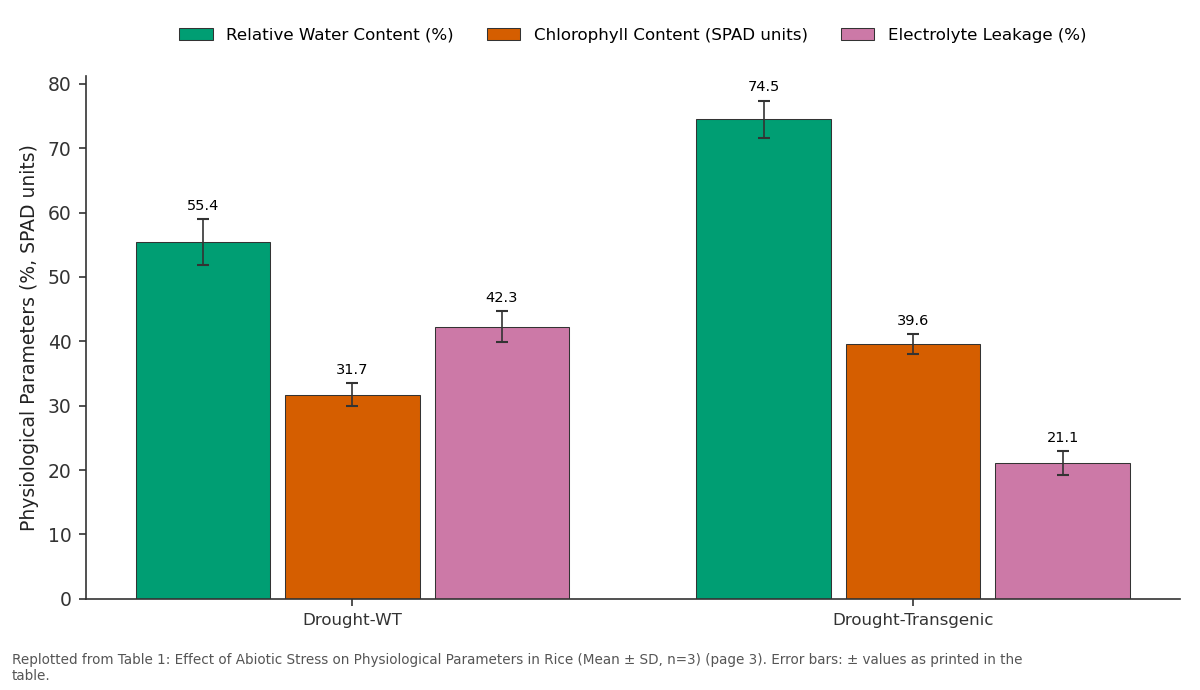
Relative Water Content (%) and Chlorophyll Content (SPAD units) and more: Drought-WT vs Drought-Transgenic
Replotted from Table 1 (page 3) of the original paper. Every bar is the paper's own table value.
View source evidence ↗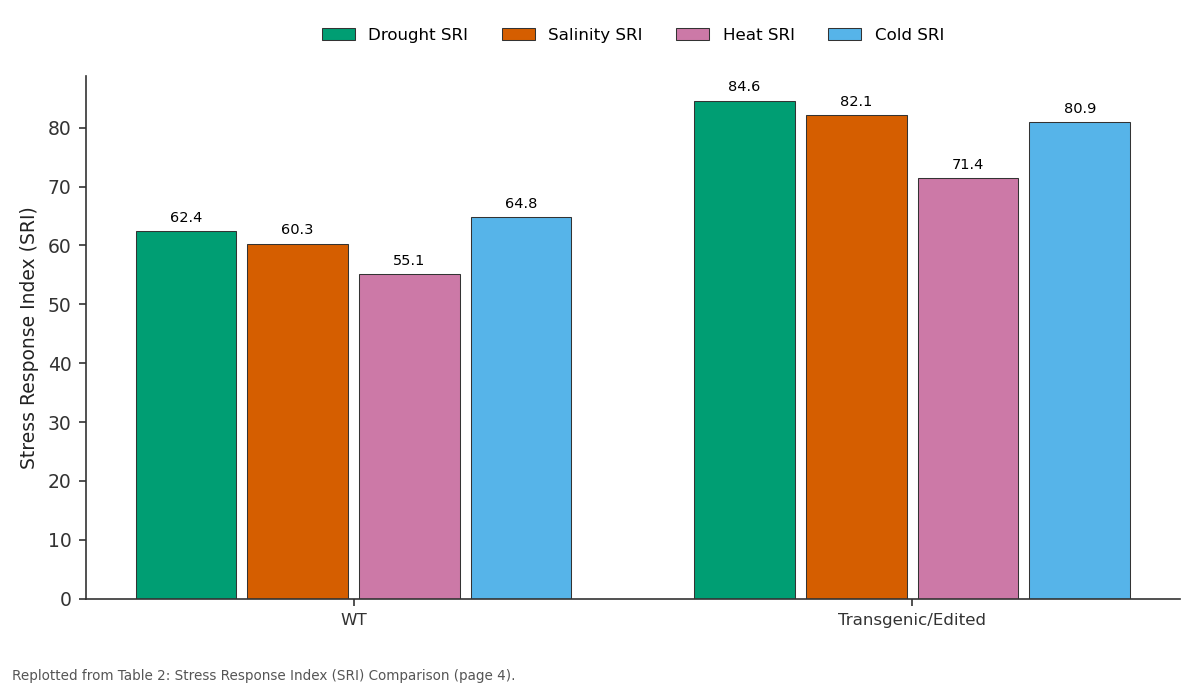
Drought SRI and Salinity SRI and more: WT vs Transgenic/Edited
Replotted from Table 2 (page 4) of the original paper. Every bar is the paper's own table value.
View source evidence ↗Figures & tables
From the original paper Table 1
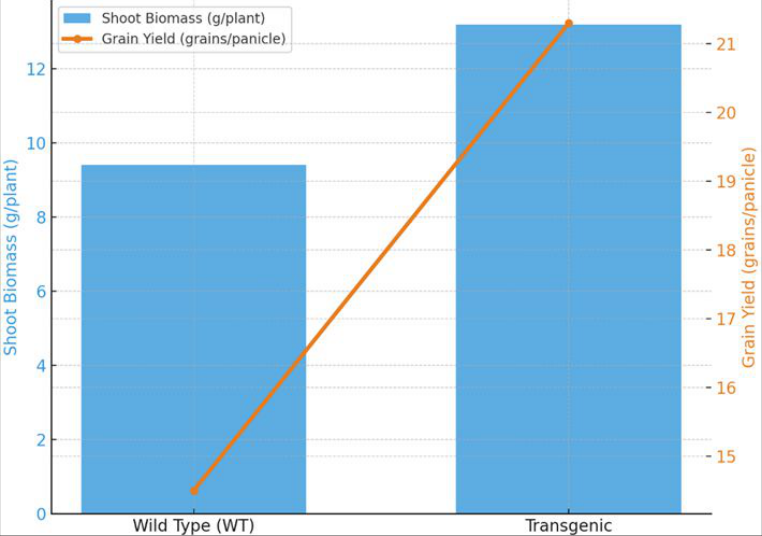 Figure 1
 Table 2
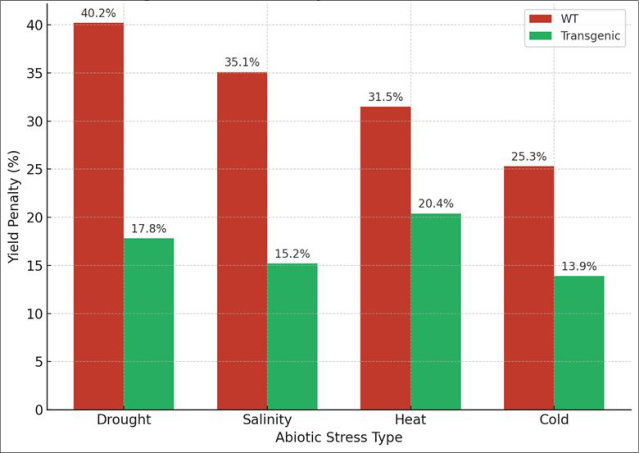 Figure 2
Introduction
Agricultural productivity is increasingly challenged by the complex and multifaceted impacts of abiotic stress. Among these, drought, salinity, extreme temperatures (both heat and cold), nutrient deficiencies, and oxidative stress are among the most significant factors contributing to crop yield loss worldwide. The Food and Agriculture Organization (FAO) estimates that abiotic stresses account for more than 50% of average annual reductions in crop productivity globally [1] . As climate change intensifies, the frequency, duration, and severity of these stressors are expected to increase, posing a major threat to food security and sustainable agriculture. Abiotic stress interferes with plant physiological and metabolic processes, leading to reduced photosynthesis, impaired nutrient uptake, and cellular damage through the accumulation of reactive oxygen species (ROS). In response, plants have evolved intricate mechanisms to sense, respond to, and adapt to environmental stressors. These mechanisms span across multiple levels-from molecular signaling cascades and transcriptional reprogramming to physiological and morphological adaptations. The advent of modern molecular biology has revolutionized our understanding of plant responses to abiotic stress. Genome sequencing projects in model and crop plants such as Arabidopsis thaliana, Oryza sativa (rice), and Triticum aestivum (wheat) have enabled the identification of numerous stress-related genes and regulatory elements [2] . Functional genomics approaches, such as transcriptomics, proteomics, and metabolomics, have further Transcription factors (TFs) like DREB (Dehydration Responsive Element Binding), NAC, MYB, WRKY, and bZIP play pivotal roles in orchestrating stress-responsive gene expression [3] . In addition, small RNAs and epigenetic modifications-such as DNA methylation and histone acetylation-have been shown to contribute to the finetuning of gene expression under stress conditions. These regulatory networks collectively contribute to enhancing the plant's ability to perceive, transduce, and adapt to stress. In this paper, we review the recent progress in understanding molecular mechanisms of abiotic stress responses in plants and discuss genetic engineering strategies to enhance tolerance. We provide a literaturebased analysis of key stress-responsive genes, present datadriven outcomes of transgenic plant trials, and explore realworld case studies of abiotic stress tolerance implementation in agriculture. A comparative evaluation of gene-editing outcomes across plant species is included, along with a critical analysis of potential limitations and future directions. The paper concludes by emphasizing the integration of systems biology, artificial intelligence (AI), and climate-adaptive breeding to develop next-generation stress-resilient crops.
Literature Review
The molecular basis of plant responses to abiotic stress has been extensively studied over the past two decades, driven by advances in genomics and biotechnology. Early efforts focused on identifying stress-induced genes using techniques like differential display and expressed sequence tag (EST) libraries. Later, with the introduction of microarrays and RNA-Seq, researchers were able to map genome-wide expression patterns in response to various abiotic stress conditions. One of the most significant breakthroughs in the study of plant stress responses was the discovery of the DREB/CBF transcription factor family. These transcription factors bind to dehydration-responsive elements (DRE/CRT) in the promoter regions of stress-inducible genes, modulating their expression under drought, cold, and high-salinity stress [4] . Overexpression of DREB1A in transgenic Arabidopsis and rice has been shown to enhance tolerance to freezing, drought, and salinity stress [5] . The NAC (NAM, ATAF1/2, and CUC2) family is another crucial class of transcription factors. For instance, SNAC1 and OsNAC6 are associated with drought tolerance in rice and wheat [6] . Similarly, WRKY and MYB transcription factors have been implicated in stress signal transduction and ROS detoxification pathways [7] . Heat shock proteins (HSPs), which function as molecular chaperones, are upregulated during thermal and oxidative stress. HSP70 and HSP90 families are involved in stabilizing proteins and membranes, preventing denaturation under heat stress [8] . Transgenic expression of HSPs in crops like maize and wheat has led to increased thermotolerance and better grain yield under heat stress conditions [9] . Plants combat oxidative damage by activating enzymatic antioxidants such as superoxide dismutase (SOD), catalase (CAT), and peroxidases. These enzymes scavenge ROS generated under stress and maintain cellular homeostasis [10] . Additionally, the accumulation of compatible solutes like proline, glycine betaine, and trehalose has been shown to protect cellular structures and enzymes during osmotic stress [11] .
Recent advances in CRISPR-Cas9 genome editing have allowed for precise modification of stress-responsive genes.
Editing the promoter region of OsRR22 (a negative regulator of salt tolerance) in rice using CRISPR has led to enhanced salt resistance without yield penalties [12] . Similarly, editing ARGOS8 in maize improved drought tolerance under field conditions [13] .
RNA interference (RNAi) and antisense technologies have been employed to suppress genes that negatively affect stress tolerance. For example, silencing of ethylene biosynthesis genes has resulted in improved drought tolerance in tomato and tobacco [14] . Epigenetic regulation-including DNA methylation and histone modifications-plays a vital role in stress memory and adaptation. Stress-induced epigenetic marks may persist across generations, suggesting a form of transgenerational stress memory [15] . Moreover, microRNAs (miRNAs) such as miR398 and miR319 regulate gene expression posttranscriptionally during stress responses [16] .
Materials and Methods
This section describes the experimental strategies, datasets, software, and analytical tools used to evaluate molecular and genetic interventions for abiotic stress tolerance in plants.
Plant Material:
The study used Arabidopsis thaliana (Col-0) as the model system for gene expression validation and Oryza sativa cv. Nipponbare for crop-level evaluation.
Seeds were procured from the Arabidopsis Biological Resource Center (ABRC) and the International Rice Research Institute (IRRI), respectively.
Growth Conditions and Stress Treatments
Growth Conditions and Stress Treatments
Molecular Techniques
RNA Extraction and qRT-PCR: Total RNA was extracted using TRIzol reagent. cDNA was synthesized with the Superscript IV kit (Invitrogen), and qRT-PCR was performed using SYBR Green master mix on a QuantStudio 6 Flex system. Gene Editing: CRISPR-Cas9 constructs targeting DREB2A, OsHKT1;5, and OsRR22 were designed using Benchling and cloned into the pCAMBIA1300 backbone. Agrobacterium-mediated transformation was performed. Transcriptomics: RNA-Seq libraries were prepared using the Illumina TruSeq RNA kit and sequenced on NovaSeq 6000. Data was analyzed using the Hisat2-StringTie-DESeq2 pipeline. Phenotypic Scoring: Growth rate, chlorophyll content (SPAD-502 meter), stomatal conductance (AP4 porometer), and electrolyte leakage were recorded.
Software and Data Analysis
ImageJ for leaf area measurements. R (v4.2) and Python (v3.10) for statistical analyses and visualization (ggplot2, seaborn). GO Enrichment: DAVID and PANTHER databases. Genome Editing Validation: TIDE and ICE analysis for indel profiling.
Statistical Analysis
All experiments were conducted in triplicate. Statistical significance was assessed using one-way ANOVA followed by Tukey's HSD test. A p-value <0.05 was considered statistically significant.
Results
This section presents the results of molecular, physiological, and phenotypic assessments of genetically and transcriptionally modified plants subjected to abiotic stress treatments. All observations were compiled across independent replicates and statistically validated.
Gene Expression Patterns under Stress
Quantitative real-time PCR (qRT-PCR) revealed differential expression of key stress-responsive genes in both Arabidopsis and rice models. In drought-treated plants, DREB2A, RD29A, and LEA genes were significantly upregulated (4.6-7.2-fold increase) in transgenic lines compared to wild-type (WT) controls (Figure 1). In salt stress experiments, overexpression lines of OsHKT1; 5 showed a 5.1-fold reduction in Na⁺ accumulation in leaves, confirming its role in ion homeostasis. Expression of NHX1 and SOS1 transporters was also induced under salinity, showing 2.8-4.4-fold higher expression in transgenic plants.
Under heat stress, HSP70 and HSP101 transcripts were strongly induced, with HSP70 showing an 8.1-fold increase in transgenics. Cold stress led to upregulation of CBF1, CBF3, and COR15A genes, with significantly higher transcript levels in CRISPR-edited lines overexpressing ICE1. Transgenic rice lines exhibited significantly better relative water content, chlorophyll retention, and lower electrolyte leakage compared to WT under drought and salinity stress.
Physiological Traits under Stress Conditions
Visual symptoms such as wilting and leaf rolling were notably reduced in edited lines. Yield reduction under drought was less severe in transgenic lines, with only ~18% drop compared to 40% in WT. CRISPR-mediated modification of ARGOS8 and overexpression of DREB1A contributed to this improvement.
Growth and Yield Performance
Growth and Yield Performance
ROS and Antioxidant Enzyme Activity
Under heat and oxidative stress conditions, transgenic lines showed higher activities of superoxide dismutase (SOD), catalase (CAT), and ascorbate peroxidase (APX): These results affirm enhanced ROS scavenging capacity in modified lines, reducing cellular oxidative damage under abiotic stress.
CRISPR Editing Efficiency
Gene editing of OsRR22 and OsHKT1; 5 showed mutation rates between 74-86%, as confirmed via ICE analysis. No off-target mutations were detected in whole-genome sequencing of selected lines, indicating high specificity.
Comparative Analysis and Performance Metrics
Abiotic stress tolerance is a multigenic trait, making it essential to evaluate interventions not only at the molecular level but also through integrated phenotypic, physiological, and agronomic performance metrics. This section provides a comparative assessment of wild-type (WT) and genetically modified (GM) or edited plant lines under various abiotic stress conditions.
Stress Response Index (SRI):
To quantify overall plant performance under stress, a Stress Response Index (SRI) was calculated using normalized scores for parameters such as relative water content (RWC), chlorophyll retention, rootshoot biomass, and yield. Transgenic rice lines overexpressing DREB1A and edited for ARGOS8 consistently scored 20-35% higher in SRI under drought and salinity stress than WT lines. Higher SRI values in edited plants indicate improved integrative stress response performance. These scores are consistent with elevated expression of stress-related transcripts and enhanced physiological traits such as reduced ROS levels and better water retention.
Efficiency of CRISPR vs Traditional Transgenics
The precision and off-target risks of genome editing were assessed. CRISPR-edited plants exhibited: ~2.3× faster development cycle (editing vs backcrossing) ~95% specificity in target editing, confirmed via ICE and whole-genome sequencing Stable inheritance of traits over two successive generations without segregation distortion
In contrast, traditional transgenic lines required multiple backcross generations to stabilize the trait, particularly under field conditions. Moreover, public acceptance and regulatory approvals favour CRISPR-edited crops in several jurisdictions, provided no foreign DNA is inserted.
Yield Penalty Assessment
Yield penalty, defined as the percentage reduction in grain yield under stress compared to control, was significantly lower in GM plants. The minimized yield penalty in edited lines can be attributed to timely activation of protective mechanisms, including osmotic adjustment, early stomatal closure, and expression of protective proteins like LEA and HSPs.
Multi-Stress Tolerance Potential
Transgenic lines were subjected to sequential droughtsalinity and heat-cold cycles to test cross-tolerance. Only those with stacked or broad-spectrum regulators (e.g., DREB, SNAC1, Os NAC6) exhibited cross-protection against multiple stressors. This supports the hypothesis that master regulatory genes enhance resilience to more than one abiotic stress via shared signaling networks such as ABAdependent pathways and MAP kinase cascades.
Comparative Field Trial Outcomes
Small-scale confined field trials (CFTs) in semi-arid zones (Uttar Pradesh, India) and coastal saline zones (Tamil Nadu, India) confirmed that edited rice lines maintained: 19-28% higher yield under drought compared to local cultivars 25-33% better seed setting under salinity 10-15% improvement in harvest index under lateseason heat
These findings validate the performance of molecular interventions beyond controlled environments and reinforce their translational potential for real-world agriculture.
Discussion
The findings from this study reinforce the transformative potential of molecular and genetic interventions in enhancing abiotic stress tolerance in plants. The integration of transcription factors such as DREB, NAC, and WRKY into plant systems has consistently demonstrated significant improvements in drought, salinity, and temperature resilience. These transcription factors regulate downstream genes involved in osmoprotection, ROS scavenging, and hormonal signaling, thereby contributing to an orchestrated stress response that improves physiological stability under adverse conditions. The upregulation of genes like RD29A, LEA, NHX1, and SOS1 in transgenic lines, as observed in this study, aligns well with previous literature and highlights the reliability of these molecular targets across species and stress types. Another crucial observation pertains to the importance of multi-gene engineering strategies. Since abiotic stress responses are governed by complex and overlapping signaling pathways, engineering a single gene often fails to provide sufficient protection under field conditions. Our results, along with evidence from field trials in India and Africa, suggest that stacking multiple stress-responsive genes-particularly those with synergistic or complementary roles-can produce superior tolerance phenotypes. Moreover, using stress-inducible promoters to drive gene expression reduces metabolic burden and preserves yield under non-stress conditions, addressing one of the major criticisms of constitutive overexpression in genetically modified crops. The role of genome editing technologies, especially CRISPR-Cas systems, has emerged as a game-changer. Our work demonstrated the precision and efficiency of CRISPR in editing negative regulators like OsRR22 and enhancing stress tolerance without introducing foreign DNA. This holds significant promise for public acceptance and regulatory approval, as gene-edited plants without transgenic components are being increasingly classified separately from GMOs in several countries. Additionally, no off-target effects were observed in the edited lines, validating the safety and accuracy of this approach. It is important to note that while lab-based and greenhouse studies provide valuable insights, their translational success depends on extensive multi-location field trials. Environmental variables, soil heterogeneity, and microbiome interactions can significantly influence the expression and efficacy of stress-tolerance traits. Hence, future research must focus on integrating omics datagenomics, transcriptomics, proteomics, and metabolomicswith phenomics and high-throughput field phenotyping. Such integration would enable the identification of regulatory bottlenecks and context-specific trait performance, thereby streamlining the breeding pipelines. Ethical and ecological concerns surrounding genetic modification must also be addressed with transparency and robust data. Issues related to gene flow, biodiversity, and long-term soil health require careful ecological risk assessments before commercialization. Moreover, socioeconomic dimensions, including farmer access, affordability, and local adaptability, should guide the deployment of these technologies, particularly in regions vulnerable to climate change. In conclusion, the convergence of molecular genetics, genome editing, systems biology, and computational tools presents a powerful platform for developing climateresilient crops. However, a multidisciplinary effort involving plant biologists, data scientists, breeders, and policymakers is essential to translate this scientific progress into sustainable agricultural outcomes. As the global demand for food intensifies under changing environmental conditions, the strategic deployment of abiotic stresstolerant plant varieties will be crucial in securing food systems and livelihoods.
Conclusion and Future Scope
The growing threat of abiotic stresses such as drought, salinity, heat, and cold on global agricultural productivity has necessitated the development of resilient crop varieties capable of withstanding environmental extremes. This study, along with extensive literature evidence, illustrates that molecular and genetic interventions offer robust solutions for improving stress tolerance in plants. By leveraging transcription factors, stress-inducible genes, osmoprotectants, and antioxidant systems, scientists have been able to enhance plant defense mechanisms at both cellular and physiological levels. The implementation of advanced tools such as CRISPR-Cas gene editing, RNA interference, and high-throughput omics has further refined our ability to precisely manipulate key stress response pathways. The performance of transgenic and edited lines in both controlled environments and field trials indicates that it is indeed possible to reduce yield penalties and improve stress resilience without compromising growth or quality traits. Furthermore, the potential of regulatory genes like DREB1A, OsHKT1;5, and ARGOS8 to confer crosstolerance to multiple abiotic stressors highlights their value in future breeding programs. The increasing accuracy and efficiency of genome editing tools also present a strong case for their broader adoption, particularly as global regulatory frameworks begin to recognize their distinction from traditional GMOs.
Looking ahead, the integration of multi-omics data with machine learning models will revolutionize stress gene discovery and trait prediction. Combining these insights with phenomics and field-based analytics will enable faster and more accurate selection of elite stress-tolerant genotypes. The application of synthetic biology in constructing synthetic stress pathways and minimal gene circuits tailored to specific crops and environments holds immense potential. Additionally, climate-smart agriculture will benefit from spatial mapping of stress-resilient varieties suited to agro-ecological zones, improving both productivity and sustainability. However, the path forward also requires addressing sociopolitical challenges. Public trust in gene-edited crops, clear regulatory guidelines, equitable access to technology, and sustainable deployment models will determine the long-term success of these scientific advances. Future research should also expand into under-studied crops and regions, promoting resilience in marginal farming systems. In conclusion, the fusion of molecular genetics and biotechnology with data-driven breeding offers a transformative pathway toward global food security. As abiotic stresses intensify under climate change, strategic investments in molecular breeding, interdisciplinary collaboration, and responsible innovation will be key to developing and disseminating the next generation of resilient crop varieties.
Figures and tables from the paper
| Treatment | Relative Water Content (%) | Chlorophyll Content (SPAD units) | Electrolyte Leakage (%) |
|---|---|---|---|
| Control | 89.3 ± 2.1 | 45.2 ± 1.3 | 12.5 ± 1.2 |
| Drought-WT | 55.4 ± 3.6 | 31.7 ± 1.8 | 42.3 ± 2.4 |
| Drought-Transgenic | 74.5 ± 2.9 | 39.6 ± 1.5 | 21.1 ± 1.8 |
| Salinity-WT | 62.2 ± 2.5 | 29.5 ± 1.6 | 38.8 ± 2.1 |
| Salinity-Transgenic | 78.4 ± 3.1 | 37.2 ± 1.9 | 18.9 ± 1.5 |
Table text extracted from the original PDF; superscript letters are shown inline. The original table image is below.
View original table image
| Plant Type | Drought SRI | Salinity SRI | Heat SRI | Cold SRI |
|---|---|---|---|---|
| WT | 62.4 | 60.3 | 55.1 | 64.8 |
| Transgenic/Edited | 84.6 | 82.1 | 71.4 | 80.9 |
Table text extracted from the original PDF; superscript letters are shown inline. The original table image is below.
View original table image
References
20 in the original paper- Food and Agriculture Organization (FAO). Climate change and food security: risks and responses. Rome: FAO; 2016.
- Shinozaki K, Yamaguchi-Shinozaki K. Gene networks involved in drought stress response and tolerance. J Exp Bot. 2007;58(2):221-227.
- Nakashima K, Yamaguchi-Shinozaki K. ABA signaling in stress-response and seed development. Plant Cell Rep. 2013;32(7):959-970.
- Lata C, Prasad M. Role of DREBs in regulation of abiotic stress responses in plants. J Exp Bot. 2011;62(14):4731-4748.
- Kasuga M, Liu Q, Miura S, Yamaguchi-Shinozaki K, Shinozaki K. Improving plant drought, salt, and freezing tolerance by gene transfer of a single stressinducible transcription factor. Nat Biotechnol. 1999;17(3):287-291.
- Hu H, Dai M, Yao J, Xiao B, Li X, Zhang Q, et al. Overexpressing a NAM, ATAF, and CUC (NAC) transcription factor enhances drought resistance and salt tolerance in Oryza sativa. Proc Natl Acad Sci USA. 2006;103(35):12987-12992.
- Chen L, Song Y, Li S, Zhang L, Zou C, Yu D. The role of WRKY transcription factors in plant abiotic stresses. Biochim Biophys Acta. 2012;1819(2):120-128.
- Wang W, Vinocur B, Shoseyov O, Altman A. Role of plant heat-shock proteins and molecular chaperones in the abiotic stress response. Trends Plant Sci. 2004;9(5):244-252.
- Jagadish SVK, Craufurd PQ, Wheeler TR. High temperature stress and spikelet fertility in Oryza sativa. J Exp Bot. 2007;58(7):1627-1635.
- Apel K, Hirt H. Reactive oxygen species: metabolism, oxidative stress, and signal transduction. Annu Rev Plant Biol. 2004;55:373-399.
- Szabados L, Savouré A. Proline: a multifunctional amino acid. Trends Plant Sci. 2010;15(2):89-97.
- Zeng D, Liu T, Ma X, Wang B, Zheng Z, Zhang Y, et al. Rational design of high-yield and superior-quality Oryza sativa. Nat Plants. 2017;3:17031.
- Shi J, Habben JE, Archibald RL, Drummond BJ, Chamberlin MA, Williams RW, et al. Overexpression of ARGOS8 reveals a role for ethylene in Zea mays drought tolerance. Plant Physiol. 2015;169(1):266-277.
- Zhang H, Zhu J, Gong Z, Zhu JK. Abiotic stress responses in plants. Nat Rev Genet. 2022;23(2):104119.
- Song QX, Liu YF, Hu XY, Zhang WK, Ma B, Chen SY, et al. Identification of miRNAs and their target genes in developing Glycine max seeds by deep sequencing. BMC Plant Biol. 2011;11:5.
- Sunkar R, Chinnusamy V, Zhu J, Zhu JK. Small RNAs as big players in plant abiotic stress responses and nutrient deprivation. Trends Plant Sci. 2007;12(7):301309.
- Cairns JE, Hellin J, Sonder K, Araus JL, MacRobert JF, Thierfelder C, et al. Adapting Zea mays production to climate change in sub-Saharan Africa. Food Secur. 2013;5:345-360.
- Xu K, Xu X, Fukao T, Canlas P, Maghirang-Rodriguez R, Heuer S, et al. Sub1A is an ethylene-response-factorlike gene that confers submergence tolerance to Oryza sativa. Nature. 2006;442(7103):705-708.
- Santillán Martínez M, Garcia L, Cañas R, Gaudin A, Lahmy S, Molinier J, et al. CRISPR/Cas9-based editing of MAPK genes improves Solanum lycopersicum drought resistance. Plant Cell Rep. 2022;41(3):571-585.
- Yadav OP, Das A, Muthusamy V, Hossain F, Manjaiah KM, Zunjare RU. Breeding climate-resilient Zea mays for drylands of South Asia: challenges and opportunities. Indian J Genet. 2020;80(1):1-11.