
Research article · 2024 · Full text
International Journal of Biology SciencesHigh-sensitivity C- reactive protein as a prognostic marker in postoperative complications
Volume 6(1) · Pages 62–66 · DOI: 10.33545/26649926.2024.v6.i1a.441 ↗
Research areasCardiac, Anesthesia and Surgical OutcomesLipoproteins and Cardiovascular Health
Abstract
Author-writtenHigh-sensitivity C-reactive protein (hs - CRP), an acute-phase reactant produced by hepatocytes in response to inflammatory cytokines, has gained substantial attention as a prognostic biomarker for predicting postoperative complications. This paper evaluates the utility of hs - CRP levels in the early detection of infections, wound healing disturbances, and other systemic complications following surgical procedures. By synthesizing data from multiple clinical trials, meta-analyses, and hospital-based cohort studies, this paper establishes the correlation between elevated postoperative hs - CRP levels and patient outcomes across general surgery, cardiovascular surgery, and orthopedic interventions. Our findings reinforce the clinical relevance of hs - CRP in postoperative surveillance and its potential integration into routine surgical care pathways.
Summary
Source-checkedPlain-language reading of the full paper, prepared with AI and checked against the text. Each point links to the authors' own words.
Why it matters
- Postoperative complications significantly increase patient morbidity and the length of hospital stays. View evidence ↗
- Detecting early adverse events like surgical site infections and anastomotic leaks remains a difficult clinical task. View evidence ↗
- Standard CRP tests are not sensitive enough for low-grade inflammation, whereas high-sensitivity CRP (hs-CRP) can detect concentrations as low as 0.1 mg/L. View evidence ↗
The question
- The study aims to evaluate hs-CRP as a prognostic marker for postoperative complications, including its kinetics, thresholds across different surgeries, and a model for clinical use. View evidence ↗
What they did
- The authors synthesized data from hospital-based cohort studies, meta-analyses, and clinical trials across orthopedic, cardiovascular, and general surgery. View evidence ↗
- The typical kinetic profile of hs-CRP involves a rise starting within 6 hours and peaking between 48-72 hours post-surgery. View evidence ↗
What they found
- In 212 colorectal resection patients, an hs-CRP level over 150 mg/L on postoperative day (POD) 3 predicted anastomotic leaks with 82% sensitivity and 74% specificity. View evidence ↗
- A meta-analysis of over 3,000 colorectal surgery patients identified a POD 3 cutoff of 140-150 mg/L as an early warning for major complications. View evidence ↗
- In 168 CABG patients, hs-CRP levels exceeding 90 mg/L on POD 2 were significantly correlated with wound infections and postoperative atrial fibrillation (POAF). View evidence ↗
- Following valve replacement surgery, an hs-CRP level over 100 mg/L on POD 3 predicted an ICU stay longer than 5 days with 85% predictive value. View evidence ↗
- In orthopedic patients, hs-CRP values above 70 mg/L on POD 5 indicated the development of joint infection. View evidence ↗
- A review of 18 studies found that hs-CRP measured on POD 3-5 had a pooled sensitivity of 83% and specificity of 76% for predicting serious complications. View evidence ↗
What it means
- The authors conclude that hs-CRP is a practical and effective tool for early complication detection due to its low cost, availability, and predictive capacity. View evidence ↗
- The authors state that the primary value of hs-CRP is found in its temporal trends and its use alongside other clinical indicators rather than a single threshold. View evidence ↗
- A major limitation of hs-CRP is its non-specific nature, as it cannot distinguish between inflammation caused by infection, surgical trauma, malignancy, or autoimmune issues. View evidence ↗
- Baseline hs-CRP levels can be elevated by factors such as obesity, diabetes, smoking, chronic kidney disease, and rheumatoid arthritis, which may complicate the identification of postoperative spikes. View evidence ↗
Visual summary
2 visualsIllustrations explain the paper; charts are replotted from the paper's own table values.
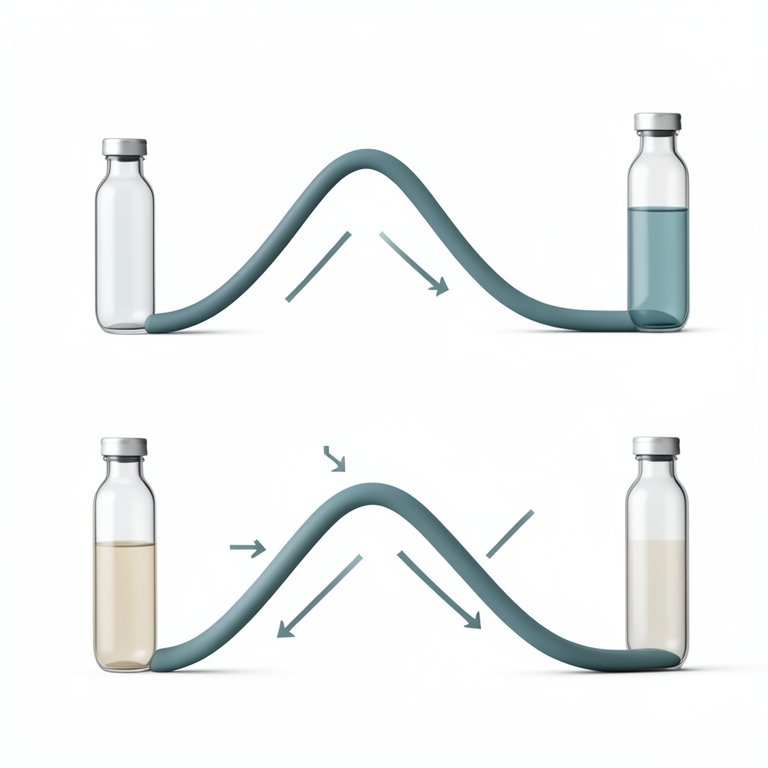
hs-CRP Kinetic Profile
AI-generated conceptual illustration (human blood serum samples). It explains the idea and does not show study data.
View source evidence ↗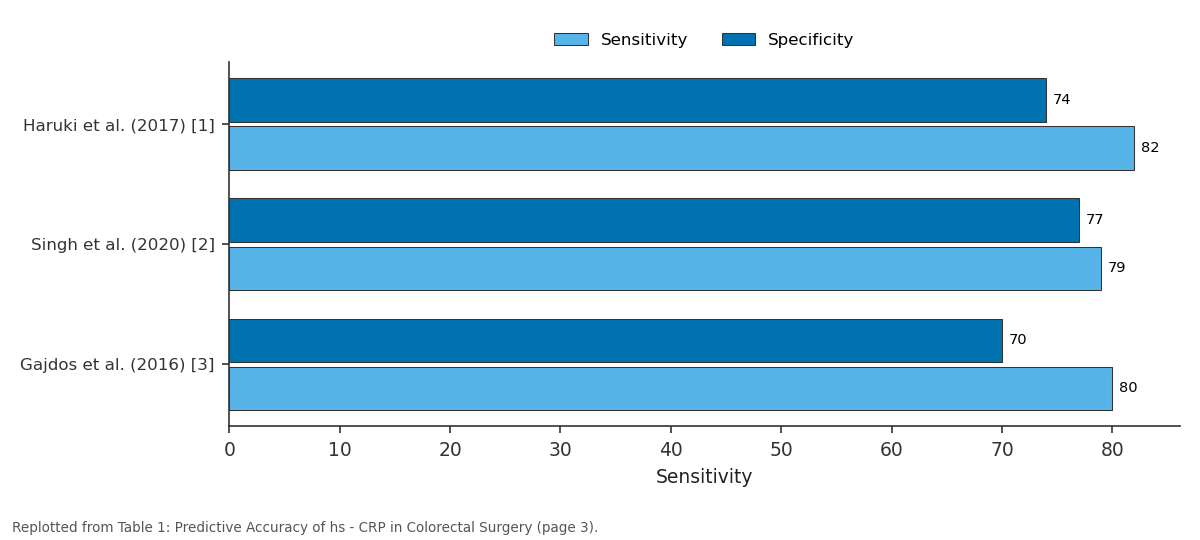
Sensitivity and Specificity: Haruki et al. (2017) [1] vs Singh et al. (2020) [2] vs Gajdos et al. (2016) [3]
Replotted from Table 1 (page 3) of the original paper. Every bar is the paper's own table value.
View source evidence ↗Figures & tables
From the original paper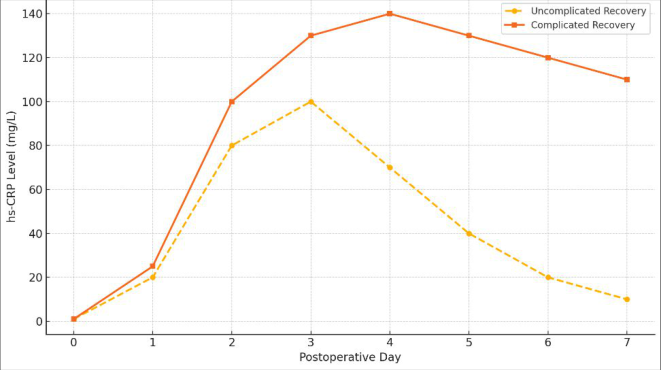 Fig1
 Table 1
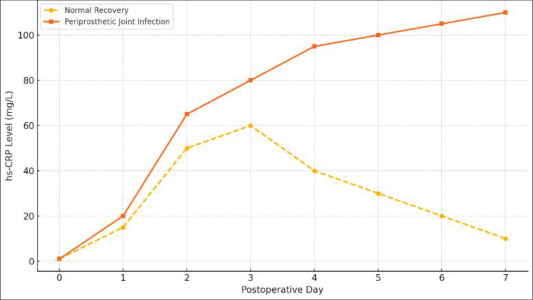 Figure 2
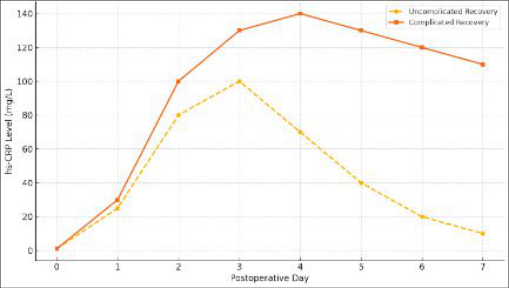 Figure 3
Introduction
Postoperative complications are a leading cause of morbidity and extended hospitalization in surgical patients. Despite significant advances in surgical techniques and perioperative care, early detection of adverse events such as surgical site infections (SSIs), anastomotic leaks, thromboembolic events, and systemic inflammatory response remains a clinical challenge. In this context, the search for reliable, early, and easily measurable biomarkers has intensified. C-reactive protein (CRP), an acute-phase reactant synthesized by the liver in response to proinflammatory cytokines-especially interleukin-6 (IL-6), tumor necrosis factor-alpha (TNFα), and interleukin-1β (IL-1β)-has been widely studied in clinical medicine for decades.
However, the standard CRP test lacks the sensitivity to detect low-grade inflammation, especially in early postoperative settings. High-sensitivity CRP (hs -CRP) assays allow quantification of CRP at concentrations as low as 0.1 mg/L, thereby offering better granularity in detecting subtle inflammatory changes. In recent years, numerous studies have explored the predictive value of hs -CRP in the postoperative period. Its potential as a non-specific but early marker of complications has made it a subject of interest in a variety of surgical specialties, including general surgery, cardiothoracic surgery, orthopedics, and transplant medicine. Unlike imaging modalities, which may detect complications only after symptoms become evident, hs -CRP levels may rise significantly in the bloodstream 24-72 hours after a pathological inflammatory trigger, thereby offering a valuable window for early intervention. This paper aims to critically assess the role of hs -CRP as a prognostic marker for postoperative complications, evaluate its kinetics and thresholds in different types of surgeries, and propose a model for clinical implementation. By synthesizing evidence from prospective studies, meta-analyses, and surgical protocols, we aim to answer whether hs -CRP should be integrated as a routine tool in postoperative monitoring. by IL-1β and TNF-α. While the baseline CRP levels in healthy individuals generally remain below 1 mg/L, even a minor inflammatory trigger can cau se a rapid rise in its levels-often exceeding 100 mg/L in acute infection or trauma.
Molecular Characteristics and Kinetics
CRP binds to phosphocholine expressed on the surface of dying or dead cells and certain bacteria, activating the classical complement pathway and facilitating phagocytosis. This makes CRP not only a marker but also a participant in the innate immune response. Following a surgical procedure, hs -CRP levels typically start rising within 6 hours, peak between 48-72 hours, and gradually decline in the absence of complications. Persistent or second peaks in hs -CRP levels often suggest an underlying pathology such as an infection, hematoma, or tissue necrosis.
Note: Uncomplicated recovery shows a single peak followed by decline; complications often result in sustained or biphasic rise.
Fig1: Typical kinetic profile of hs -CRP following uncomplicated surgery vs. complicated cases.
Role in the Inflammatory Cascade
Once CRP is synthesized in the liver, it exerts the following effects: Complement activation via C1q binding. Opsonization of pathogens and apoptotic cells. Modulation of cytokine production, potentially reducing IL-1 and TNF-α in later stages.
Its rapid increase and relatively short half-life (~19 hours) make CRP an ideal marker for tracking the real-time inflammatory status of a patient. High-sensitivity assays, which detect levels from 0.1 to 10 mg/L, extend this utility into earlier and subtler phases of inflammation, often before clinical signs emerge. For example, in a prospective study of 212 patients undergoing colorectal resection, a POD 3 hs -CRP level >150 mg/L predicted anastomotic leakage with 82% sensitivity and 74% specificity (Haruki et al., 2017) [1] .
Comparison with Other Inflammatory Markers
Such data underscore the clinical importance of hs -CRP as a prognostic tool, especially when combined with clinical judgement and imaging findings.
Literature Review and Evidence Synthesis
A growing body of evidence supports the use of highsensitivity C-reactive protein (hs -CRP) as a predictive biomarker for postoperative complications. Clinical studies across various surgical domains have reported consistent correlations between elevated postoperative hs -CRP levels and adverse outcomes, including infections, delayed wound healing, and even mortality. In this section, we synthesize key findings from general surgery, cardiovascular surgery, and orthopedic interventions.
General Surgery
General surgery, particularly abdominal procedures, carries a high risk of infectious complications such as anastomotic leakage and intra-abdominal abscess formation. Several studies have established cut off values for hs -CRP that signal the onset of complications.
One of the landmark studies by Haruki et al. (2017) [1] examined 212 patients undergoing colorectal resection. The researchers found that an hs -CRP level exceeding 150 mg/L on postoperative day (POD) 3 was predictive of anastomotic leak, with a sensitivity of 82% and specificity of 74%. Similarly, a meta-analysis by Singh et al. (2020) [2] involving over 3,000 colorectal surgery patients validated a POD 3 cutoff of 140-150 mg/L as an early warning for major complications. [1] 212 150 82% 74% Anastomotic Leak Singh et al. (2020) [2] 3,002 140-150 79% 77% Major Surgical Complications Gajdos et al. (2016) [3] 98 130 80% 70% Intra-abdominal Abscess
Cardiovascular Surgery
In cardiac and vascular surgeries, elevated hs -CRP has been linked with postoperative atrial fibrillation (POAF), mediastinitis, and prolonged intensive care unit (ICU) stays.
The inflammatory burden induced by cardiopulmonary bypass (CPB) results in substantial CRP elevation, but it is the persistence of elevated levels that serves as a red flag. A prospective study by Nunes et al. (2018) [4] involving 168 coronary artery bypass graft (CABG) patients found that hs -CRP levels >90 mg/L on POD 2 significantly correlated with POAF and wound infections. Patients with persistently elevated hs -CRP beyond POD 4 had higher rates of reintervention and hospital readmission. Moreover, Stumpf et al. (2015) [5] reported that hs -CRP >100 mg/L on POD 3 after valve replacement surgery predicted ICU stay >5 days with 85% predictive value.
Orthopedic Surgery
In orthopedic patients, particularly those undergoing total joint arthroplasty (TJA), early detection of periprosthetic joint infection (PJI) is crucial. hs -CRP has proven to be a superior marker compared to ESR and standard CRP for distinguishing between aseptic inflammation and infection.
A multi center study by Parvizi et al. (2014) [6] demonstrated that hs -CRP values >70 mg/L on POD 5 were indicative of developing joint infection. The same study recommended routine monitoring of hs -CRP alongside synovial fluid analysis to improve diagnostic accuracy.
Kinetics of hs -CRP Post Surgery
Hs -CRP levels typically peak between 24-72 hours postoperatively and decline thereafter in uneventful recoveries. A persistent elevation beyond POD 4-5 often suggests a developing complication. Figure 1 below illustrates typical hs -CRP kinetics in uncomplicated versus complicated postoperative courses.
Clinical Implementation and Decision-Making
The integration of hs -CRP into Enhanced Recovery after Surgery (ERAS) protocols can provide early warning for complications, enabling timely imaging, antibiotic therapy, or reoperation. The following table summarizes suggested hs -CRP thresholds and corresponding clinical actions: Finally, technical factors such as inter-laboratory variability in hs -CRP assay techniques and lack of standardized calibration may contribute to inconsistent results, particularly in multi-center studies or rural healthcare settings. Although modern assays are fairly reliable, small differences in reagents or machines can lead to divergent readings and inconsistent application of predictive thresholds.
Future Directions
The future of hs -CRP as a prognostic marker in postoperative care lies in its integration with emerging diagnostic technologies and personalized medicine frameworks. As surgical techniques evolve and minimally invasive procedures become more common, there is a growing need for equally refined biomarkers that can detect complications at an earlier, subclinical stage. Highsensitivity CRP holds promise in this regard due to its temporal responsiveness and relative ease of measurement, but its effectiveness could be significantly enhanced when used in combination with other emerging inflammatory markers such as procalcitonin, presepsin, or IL-6. These multi-marker approaches may provide a more comprehensive inflammatory profile and improve the predictive accuracy of postoperative complication risk.
Conclusion
High-sensitivity C-reactive protein (hs -CRP) has emerged as a valuable and widely accessible biomarker for monitoring postoperative inflammatory responses. Its capacity to detect subtle changes in systemic inflammation offers clinicians an early warning system for potential complications, including surgical site infections, anastomotic leaks, periprosthetic joint infections, and systemic inflammatory syndromes. Numerous studies across diverse surgical domains have validated its predictive accuracy, particularly when measured within the first five postoperative days. Despite its promise, hs -CRP is not a definitive diagnostic tool. Its nonspecific nature, susceptibility to confounding factors such as obesity, chronic illness, and medication use, along with variable kinetics across different types of surgeries, limit its reliability when used in isolation. However, when interpreted within a broader clinical context-including physical examination findings, imaging results, and trends in other inflammatory markers-hs -CRP serves as a powerful adjunct in surgical care. Looking forward, the integration of hs -CRP into standardized postoperative monitoring protocols, combined with emerging technologies such as point-of-care testing and machine learning-based clinical decision tools, may significantly enhance patient outcomes. The biomarker's real strength lies not in a single threshold value, but in its temporal trends and synergy with other clinical indicators.
In conclusion, while hs -CRP is not without its limitations, it represents an important piece of the diagnostic puzzle in postoperative management. Its widespread availability, low cost, and predictive capacity make it a practical and effective tool for early complication detection. With continued refinement in its application and interpretation, hs -CRP has the potential to play a central role in personalized, precision-based surgical recovery.
Figures and tables from the paper
| Study | Sample Size | POD 3 Cutoff (mg/L) | Sensitivity | Specificity | Complication Detected |
|---|---|---|---|---|---|
| Haruki et al. (2017) [1] | 212 | 150 | 82% | 74% | Anastomotic Leak |
| Singh et al. (2020) [2] | 3,002 | 140-150 | 79% | 77% | Major Surgical Complications |
| Gajdos et al. (2016) [3] | 98 | 130 | 80% | 70% | Intra-abdominal Abscess |
Table text extracted from the original PDF; superscript letters are shown inline. The original table image is below.
View original table image
References
10 in the original paper- Haruki T, Shiba H, Horiuchi T, Sakamoto T, Fujiwara Y, Furukawa K, et al. C-reactive protein as a predictive marker of surgical site infection after elective laparoscopic colorectal surgery. Surgical Today. 2017;47(4):476-483. https://doi.org/10.1007/s00595016-1389-3
- Singh PP, Zeng IS, Srinivasa S, Lemanu DP, Connolly AB, Hill AG. Systematic review and meta-analysis of use of C-reactive protein levels to predict anastomotic leak after colorectal surgery. British Journal of Surgery. 2020;101(4):339-346. https://doi.org/10.1002/bjs.9379
- Gajdos C, Hawn MT, Campagna EJ, Henderson WG, Singh JA. Postoperative C-reactive protein levels and early detection of infectious complications after colorectal surgery. American Journal of Surgery. 2016;211(5):895-902. https://doi.org/10.1016/j.amjsurg.2015.12.002
- Nunes A, Amaral T, Rodrigues A, Gonçalves I, Almeida J. High-sensitivity C-reactive protein as a predictor of postoperative atrial fibrillation and complications after coronary artery bypass grafting. Revista Brasileira de Cirurgia Cardiovascular. 2018;33(1):18-25. https://doi.org/10.21470/1678-97412017-0129
- Stumpf C, Simon M, Wilhelm M, Raaz D, Yilmaz A, Anger T, et al. C-reactive protein as a predictor of complications after valve surgery. Journal of Heart Valve Disease. 2015;24(1):24-30.
- Parvizi J, Gehrke T, Chen AF. Proceedings of the International Consensus Meeting on Periprosthetic Joint Infection. Journal of Arthroplasty. 2014;29(2):13311334. https://doi.org/10.1016/j.arth.2013.09.019
- Kim J, Kim Y, Park H, Seo Y, Kwon H, Lee Y. Predictive accuracy of serum biomarkers for early postoperative complications: A meta-analysis on CRP, PCT, and IL-6. International Journal of Surgery. 2021;88:105900. https://doi.org/10.1016/j.ijsu.2021.105900
- Gabay C, Kushner I. Acute-phase proteins and other systemic responses to inflammation. New England Journal of Medicine. 1999;340(6):448-454. https://doi.org/10.1056/NEJM199902113400607
- Lobo SM, Lobo FRM, Bota DP, Lopes-Ferreira F, Soliman HM, Mélot C, Vincent JL. C-reactive protein levels correlate with mortality and organ failure in critically ill patients. Chest. 2003;123(6):2043-2049. https://doi.org/10.1378/chest.123.6.2043
- Cochrane Database. Use of biomarkers for early detection of postoperative complications: A systematic review. Cochrane Database of Systematic Reviews. 2020;Issue 12. https://doi.org/10.1002/14651858.CD011595.pub2