
Research article · 2024 · Full text
International Journal of Biology SciencesCytokine storms and immune dysregulation in viral infections
Volume 6(1) · Pages 73–76 · DOI: 10.33545/26649926.2024.v6.i1a.444 ↗
Research areasImmune responses and vaccinationsCOVID-19 epidemiological studiesSARS-CoV-2 and COVID-19 Research
Abstract
Author-writtenCytokine storms, or hypercytokinemia, represent a hallmark of severe viral infections where the immune system's response becomes dysregulated, leading to pathological consequences. This phenomenon, characterized by an overwhelming release of pro-inflammatory cytokines, plays a critical role in the progression of diseases such as influenza, dengue, Ebola, and more recently, COVID-19. While cytokines are essential for initiating antiviral immunity, their excessive or uncoordinated release contributes to systemic inflammation, vascular dysfunction, tissue damage, and, in many cases, multi-organ failure. This review examines the mechanisms underlying cytokine storms during viral infections, elucidates the signaling pathways involved, highlights viral strategies that hijack immune responses, and discusses current and emerging therapeutic interventions aimed at modulating the hyperinflammatory state. Special emphasis is placed on COVID-19 as a recent case study of global relevance, while drawing comparative insights from other viral infections to underscore the common immunopathological threads.
Summary
Source-checkedPlain-language reading of the full paper, prepared with AI and checked against the text. Each point links to the authors' own words.
Why it matters
- Cytokine storms, also known as hypercytokinemia, occur when the immune response to a viral infection becomes dysregulated, causing pathological damage. View evidence ↗
- Although cytokines are necessary for fighting viruses, their excessive release can lead to systemic inflammation, tissue damage, and multi-organ failure. View evidence ↗
- In severe viral infections, the host's immune response, specifically the amount and duration of cytokine release, significantly influences mortality and disease severity. View evidence ↗
The question
- The review aims to examine the mechanisms and signaling pathways of cytokine storms, how viruses hijack immune responses, and the therapeutic interventions used to manage hyperinflammation. View evidence ↗
What they did
- The authors used COVID-19 as a primary case study and compared it with other viral infections to identify common immunopathological patterns. View evidence ↗
- The review compiled data from multiple previous studies to identify biomarkers and clinical outcomes associated with cytokine storms. View evidence ↗
What they found
- Cytokine storms are triggered when pattern recognition receptors (PRRs), including TLRs, RLRs, and NLRs, detect viral components. View evidence ↗
- The activation of NF-κB and IRFs leads to the production of pro-inflammatory cytokines such as IL-6, IL-1β, TNF-α, and type I interferons. View evidence ↗
- Immune imbalance is worsened when regulatory T cells (Tregs) and anti-inflammatory cytokines like IL-10 are suppressed. View evidence ↗
- In severe dengue, elevated levels of IL-10, IL-6, and TNF-α cause vascular leakage, which can lead to shock syndrome or hemorrhagic fever. View evidence ↗
- In COVID-19, C-reactive protein (CRP) levels increased to over 100 mg/L, serving as an indicator of systemic inflammation. View evidence ↗
- Ferritin levels exceeding 500 ng/mL are associated with macrophage activation syndrome (MAS) and hyperinflammation. View evidence ↗
- A decrease in lymphocyte count (lymphopenia) reflects immune cell depletion and correlates with higher mortality and disease severity. View evidence ↗
- Dexamethasone has shown mortality benefits for COVID-19 patients who require mechanical ventilation or oxygen. View evidence ↗
What it means
- The authors conclude that future management of cytokine storms depends on early recognition, biomarker-based risk stratification, and the use of combination therapies. View evidence ↗
- A critical challenge in treating cytokine storms is the timing of immunomodulatory therapies to ensure they do not compromise the body's antiviral immunity. View evidence ↗
Visual summary
1 visualsIllustrations explain the paper; they do not show study data.
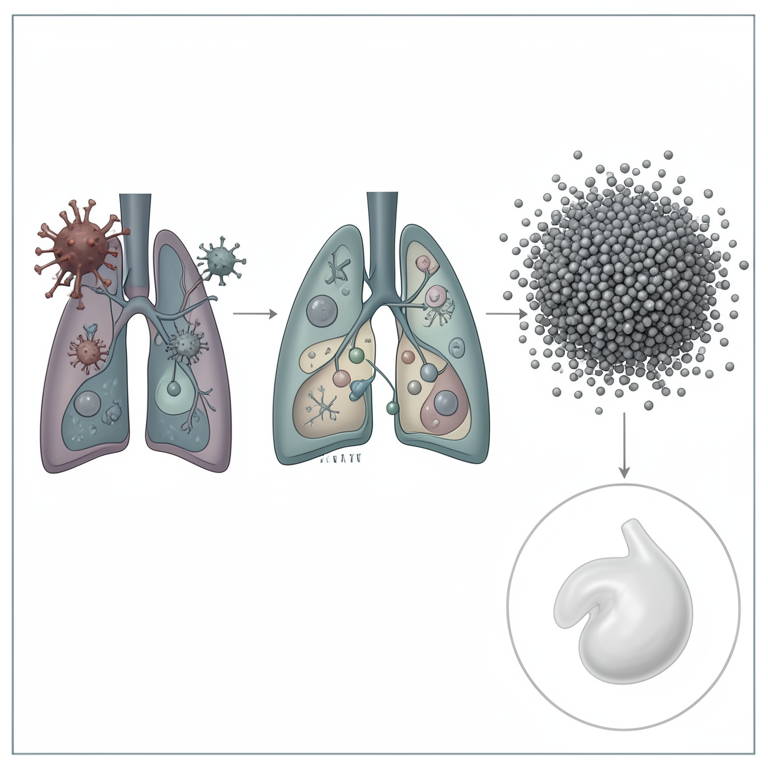
The Cycle of a Cytokine Storm
AI-generated conceptual illustration (human lung epithelial cells and immune cells). It explains the idea and does not show study data.
View source evidence ↗Figures & tables
From the original paper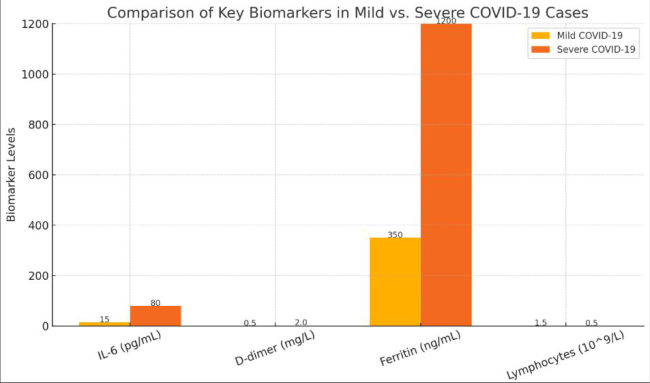 Figure 1
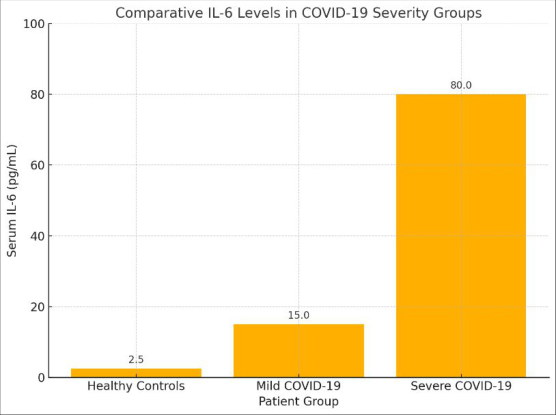 Figure 1
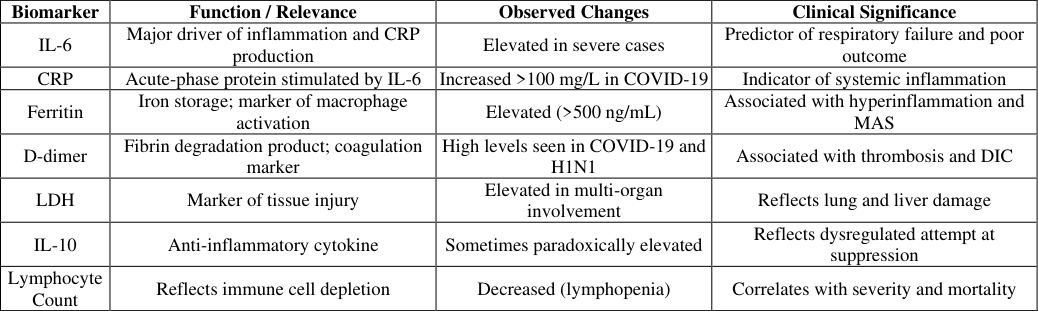 Table 1
Introduction
The human immune system is an intricate and highly regulated network designed to detect, respond to, and eliminate invading pathogens, including viruses. In a well-orchestrated immune response, various cellular and molecular components interact to control infection while minimizing collateral tissue damage. Among these components, cytokines play a central role. Cytokines are low molecular weight glycoproteins that act as signaling molecules, facilitating communication between immune and non-immune cells during immune responses. They orchestrate processes such as immune cell activation, differentiation, migration, and inflammation. Under normal physiological conditions, cytokine levels are tightly regulated. However, during certain infections, this balance is disrupted, leading to a pathological condition referred to as a "cytokine storm" or "cytokine release syndrome" (CRS). Cytokine storms represent a hyperactive immune state characterized by the excessive and uncontrolled release of pro-inflammatory cytokines, often leading to systemic inflammation, vascular leakage, tissue injury, and multi-organ dysfunction. While initially recognized in the context of graft-versus-host disease and certain immunotherapies, cytokine storms have since been identified as a critical factor in the pathogenesis of several severe viral infections. These include infections caused by highly pathogenic influenza viruses (e.g., H5N1, H1N1), coronaviruses (SARS-CoV, MERS-CoV, and SARS-CoV-2), flaviviruses (e.g., Dengue virus), filoviruses (e.g., Ebola virus), and Hantaviruses. In these diseases, the severity and mortality are not solely determined by the virus itself but are significantly influenced by the host's immune response, particularly the magnitude and duration of the cytokine release. The term "cytokine storm" has gained substantial attention in recent years, especially during respiratory distress syndrome (ARDS), thrombosis, and multi-organ failure, which are leading causes of death in hospitalized patients. Autopsy studies of COVID-19 patients have revealed diffuse alveolar damage, extensive immune cell infiltration, and widespread microvascular thrombosis, all consistent with hyperinflammation and immune dysregulation (Del Valle et al., 2020) [1] . These observations are not unique to SARS-CoV-2 but rather reflect a recurring immune pathological theme in viral infections that involve cytokine storm syndromes. The mechanisms that drive cytokine storms are multifactorial and complex. At the onset of infection, the innate immune system responds by recognizing viral components through pattern recognition receptors (PRRs) such as Toll-like receptors (TLRs), RIG-I-like receptors (RLRs), and NOD-like receptors (NLRs). These receptors detect viral RNA or DNA and initiate signaling cascades that activate transcription factors including nuclear factor kappa B (NF-κB) and interferon regulatory factors (IRFs). The result is the production of pro-inflammatory cytokines and type I interferons, which help limit viral replication and activate adaptive immunity. However, in some cases, the immune response fails to self-regulate, and the excessive cytokine production becomes pathogenic. Overactivation of macrophages, dendritic cells, T lymphocytes, and natural killer (NK) cells further amplifies the inflammatory response. Simultaneously, regulatory mechanisms such as the actions of regulatory T cells (Tregs) and antiinflammatory cytokines like IL-10 may become suppressed, further exacerbating the immune imbalance (Moore and June, 2020) [12] . Viral factors also play a role in modulating the immune response. Some viruses encode proteins that antagonize interferon signaling, delay antigen presentation, or promote immune evasion, thereby prolonging viral persistence and increasing immune activation. For example, Ebola virus glycoproteins activate monocytes and endothelial cells, leading to a cytokine cascade that contributes to shock and vascular collapse. Dengue virus can trigger antibodydependent enhancement (ADE), a process in which preexisting antibodies facilitate viral entry into immune cells, increasing viral replication and cytokine release. These viral strategies not only enable immune escape but also fuel the cytokine storm by prolonging and intensifying immune activation (Martina et al., 2009) [3] . Clinically, cytokine storms manifest as systemic inflammatory response syndrome (SIRS), often progressing to ARDS, coagulopathy, and multi-organ failure. The laboratory findings typically include elevated levels of IL-6, CRP, ferritin, D-dimer, and lactate dehydrogenase (LDH), along with lymphopenia and elevated liver enzymes. These biomarkers are not only useful for diagnosing the cytokine storm but also serve as prognostic indicators for disease severity and outcomes. Immunomodulatory drugs such as corticosteroids, IL-6 inhibitors (e.g., tocilizumab), IL-1 receptor antagonists (e.g., anakinra), and Janus kinase (JAK) inhibitors (e.g., baricitinib) have been explored for their potential to dampen hyperinflammation. The use of such therapies must be carefully timed to avoid compromising antiviral immunity. Additionally, supportive treatments such as anticoagulation, oxygen therapy, and mechanical ventilation are crucial for managing complications associated with cytokine storms. Personalized medicine approaches, including cytokine profiling and biomarkerbased risk stratification, are increasingly being integrated into clinical practice to optimize therapeutic strategies.
Mechanisms Underlying the Cytokine Storm
The onset of a cytokine storm during viral infections begins with the recognition of viral components by pattern recognition receptors (PRRs) such as Toll-like receptors (TLRs), RIG-I-like receptors (RLRs), and NOD-like receptors (NLRs). These receptors detect viral RNA or DNA and activate downstream signaling cascades, particularly through nuclear factor-kappa B (NF-κB) and interferon regulatory factors (IRFs), resulting in the transcription of pro-inflammatory cytokines including IL-6, IL-1β, TNF-α, and type I interferons (IFN-α/β) (Liu et al., 2016) [4] . While early cytokine release is critical for viral clearance, persistence of viral antigens and inadequate resolution of inflammation amplify this response. Overactivated macrophages and dendritic cells continue to secrete cytokines, while activated T cells contribute to additional interferon-γ (IFN-γ) and TNF-α production. Concurrently, regulatory mechanisms, particularly involving T regulatory cells (Tregs) and anti-inflammatory cytokines like IL-10, become suppressed or ineffective, allowing unbridled cytokine release to continue (Giamarellos-Bourboulis et al., 2020) [5] . Moreover, this storm affects the vascular endothelium, promoting increased permeability, edema, and coagulation abnormalities. The result is tissue hypoxia and systemic inflammation, most notably manifesting in the lungs as ARDS. Multisystem organ involvement reflects the systemic impact of uncontrolled cytokine signaling.
Cytokine Signaling and Immune Dysregulation
The major cytokines implicated in storm syndromes include IL-6, TNF-α, IL-1β, IFN-γ, and IL-10. IL-6, a pleiotropic cytokine, activates downstream pathways via the Janus kinase (JAK) and signal transducer and activator of transcription (STAT3) axis. Overactivation of this pathway leads to persistent systemic inflammation, hematologic abnormalities, and acute phase protein production (Tanaka et al., 2014) [8] . TNF-α contributes to endothelial damage and enhances pro-coagulant activity. IL-1β, often activated via the NLRP3 inflammasome, promotes leukocyte recruitment and fever, further amplifying inflammation. Type I interferons, while critical in early antiviral defense, when sustained, contribute to tissue damage and lymphocyte apoptosis. Dysregulated IFN-γ production has been implicated in macrophage activation syndrome (MAS), often considered an extreme form of cytokine storm (Brisse and Wulffraat, 2019) [9] . These cytokines not only function individually but also synergistically, creating a feedback loop that perpetuates the hyperinflammatory state.
Clinical Manifestations and Laboratory Findings
Clinically, patients undergoing cytokine storm present with high-grade fever, hypotension, hypoxia, and rapid progression to ARDS. Laboratory findings include elevated levels of IL-6, ferritin, C-reactive protein (CRP), and Ddimer. Lymphopenia is commonly observed, reflecting immune exhaustion and redistribution of lymphocytes to inflamed tissues (Zhou et al., 2020) [10] . Coagulation abnormalities including elevated fibrinogen and prolonged prothrombin time indicate progression toward disseminated intravascular coagulation (DIC). Organ involvement, particularly liver and kidney dysfunction, signals poor prognosis and the need for aggressive intervention. [1] , Wauquier et al. (2010) [7] , Giamarellos-Bourboulis et al. (2020) [5] , Tanaka et al. (2014) [8] , and Zhou et al. (2020) [10] .
Therapeutic Strategies
Therapeutic Strategies
Figures and tables from the paper
| Biomarker | Function / Relevance | Observed Changes | Clinical Significance |
|---|---|---|---|
| IL-6 | Major driver of inflammation and CRP production | Elevated in severe cases | Predictor of respiratory failure and poor outcome |
| CRP | Acute-phase protein stimulated by IL-6 | Increased >100 mg/L in COVID-19 | Indicator of systemic inflammation |
| Ferritin | Iron storage; marker of macrophage activation | Elevated (>500 ng/mL) | Associated with hyperinflammation and MAS |
| D-dimer | Fibrin degradation product; coagulation marker | High levels seen in COVID-19 and H1N1 | Associated with thrombosis and DIC |
| LDH | Marker of tissue injury | Elevated in multi-organ involvement | Reflects lung and liver damage |
| IL-10 | Anti-inflammatory cytokine | Sometimes paradoxically elevated | Reflects dysregulated attempt at suppression |
| Lymphocyte Count | Reflects immune cell depletion | Decreased (lymphopenia) | Correlates with severity and mortality |
Table text extracted from the original PDF; superscript letters are shown inline. The original table image is below.
View original table image
References
10 in the original paper- Del Valle DM, Kim-Schulze S, Huang HH, Beckmann ND, Nirenberg S, Wang B, et al. An inflammatory cytokine signature predicts COVID-19 severity and survival. Nat Med. 2020;26(10):1636-1643. DOI:10.1038/s41591-020-1051-9.
- Moore JB, June CH. Cytokine release syndrome in severe COVID-19. Science. 2020;368(6490):473-474. DOI:10.1126/science.abb8925.
- Martina BE, Koraka P, Osterhaus AD. Dengue virus pathogenesis: an integrated view. Clin Microbiol Rev. 2009;22(4):564-581. DOI:10.1128/CMR.00035-09.
- Liu Q, Zhou YH, Yang ZQ. The cytokine storm of severe influenza and development of immunomodulatory therapy. Cell Mol Immunol. 2016;13(1):3-10. DOI:10.1038/cmi.2015.74.
- Giamarellos-Bourboulis EJ, Netea MG, Rovina N, Akinosoglou K, Antoniadou A, Antonakos N, et al. Complex immune dysregulation in COVID-19 patients with severe respiratory failure. Cell Host Microbe. 2020;27(6):992-1000.e3. DOI:10.1016/j.chom.2020.04.009.
- de Jong MD, Simmons CP, Thanh TT, Hien VM, Smith GJ, Chau TN, et al. Fatal outcome of human influenza A (H5N1) is associated with high viral load and hypercytokinemia. Nat Med. 2006;12(10):1203-1207. DOI:10.1038/nm1477.
- Wauquier N, Becquart P, Padilla C, Baize S, Leroy EM. Human fatal Zaire Ebolavirus infection is associated with an aberrant innate immunity and with massive lymphocyte apoptosis. PLoS Negl Trop Dis. 2010;4(10):e837. DOI:10.1371/journal.pntd.0000837.
- Tanaka T, Narazaki M, Kishimoto T. IL-6 in inflammation, immunity, and disease. Cold Spring Harb Perspect Biol. 2014;6(10):a016295. DOI:10.1101/cshperspect.a016295.
- Brisse E, Wulffraat N, Ängström L, Smets K, Van Loosdregt J, Van Royen-Kerkhof A. Interferon-γ release assay as a diagnostic tool for macrophage activation syndrome. Clin Exp Rheumatol. 2019;37 Suppl 121(6):126-133. PMID:31820369.
- Zhou F, Yu T, Du R, Fan G, Liu Y, Liu Z, et al. Clinical course and risk factors for mortality of adult inpatients with COVID-19 in Wuhan, China: a retrospective cohort study. Lancet. 2020;395(10229):1054-1062. DOI:10.1016/S01406736(20)30566-3.