
Research article · 2024 · Full text
International Journal of Biology SciencesUse of Endophytic bacteria for enhancing plant immunity
Volume 6(1) · Pages 145–149 · DOI: 10.33545/26649926.2024.v6.i1b.447 ↗
Research areasPlant-Microbe Interactions and ImmunityTransgenic Plants and ApplicationsLegume Nitrogen Fixing Symbiosis
Abstract
Author-writtenEndophytic bacteria represent a promising frontier in sustainable agriculture due to their capacity to colonize internal plant tissues and enhance plant immunity without causing disease. These microorganisms not only promote growth but also act as biological control agents against various phytopathogens. This paper explores the mechanisms through which endophytic bacteria contribute to induced systemic resistance (ISR), modulate phytohormonal signaling, and produce antimicrobial compounds. The study incorporates recent advances in molecular and genomic tools to identify beneficial strains and decode their interaction pathways with host plants. We compiled and analyzed data from greenhouse and field trials, focusing on crops such as rice, maize, wheat, and tomato. The results show significant improvements in resistance to fungal and bacterial pathogens, attributed to endophytic bacterial genera including Bacillus, Pseudomonas, and Burkholderia. A comparative analysis of treated versus control plants reveals enhanced expression of defense-related genes (e.g., PR1, LOX2), higher phenolic content, and improved survival under biotic stress. Furthermore, this paper identifies current limitations in strain specificity, colonization stability, and regulatory frameworks, providing a roadmap for future research. With global emphasis shifting toward eco-friendly crop protection strategies, understanding and leveraging endophytic bacteria could lead to the next generation of bioinoculants. The findings suggest a paradigm shift in plant protection, aligning with principles of agroecology and sustainable farming.
Summary
Source-checkedPlain-language reading of the full paper, prepared with AI and checked against the text. Each point links to the authors' own words.
Why it matters
- The agricultural sector is seeking biological alternatives to chemical pesticides due to concerns regarding their impact on human health and the environment. View evidence ↗
- Endophytic bacteria are considered promising for sustainable agriculture because they can live inside plant tissues and improve immunity without harming the host. View evidence ↗
- These bacteria serve as biological control agents against plant pathogens while also promoting plant growth. View evidence ↗
The question
- The study aims to analyze how endophytic bacteria enhance plant immunity, focusing on the mechanisms, experimental data, and potential for agricultural use. View evidence ↗
What they did
- The researchers used endophytic bacterial isolates sourced from the healthy tissues of tomato, wheat, and rice plants. View evidence ↗
- Plants were challenged with specific pathogens (Rhizoctonia solani for rice, Fusarium graminearum for wheat, and Alternaria solani for tomato) 30 days after germination. View evidence ↗
What they found
- The bacterial consortium (T5) was the most effective treatment, reducing disease incidence by 72% in tomato, 68% in rice, and 59% in wheat. View evidence ↗
- Inoculated plants showed up to a 2.1-fold increase in phenolic content and significantly higher jasmonic acid (JA) levels, indicating the activation of induced systemic resistance (ISR). View evidence ↗
- Treated plants exhibited a 3-7 fold increase in the expression of defense-related genes, specifically PR1, LOX2, PAL, and CHS. View evidence ↗
- Comparative analysis showed that the consortium treatment (T5) provided more robust and consistent immunity enhancement than individual strains due to synergistic effects. View evidence ↗
What it means
- The authors recommend these biological agents as an eco-friendly alternative to synthetic agrochemicals for managing plant diseases. View evidence ↗
- The authors note that the effectiveness of bacterial colonization varied between different host plants, potentially due to internal microenvironments or root exudates. View evidence ↗
- The study identifies that competition with native microbiota in field conditions can negatively impact the persistence of the endophytes. View evidence ↗
Visual summary
2 visualsIllustrations explain the paper; charts are replotted from the paper's own table values.
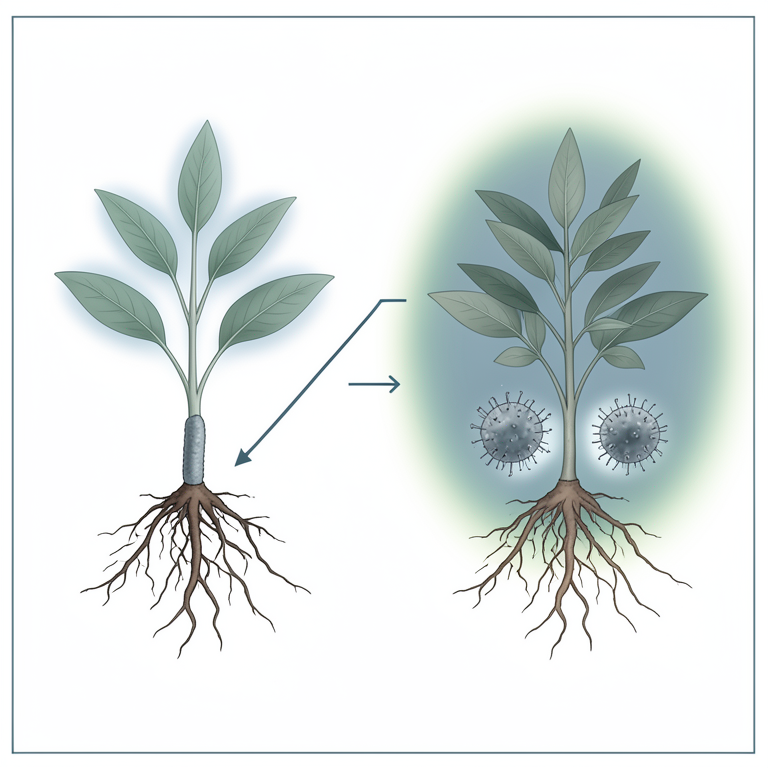
Synergistic Effect of Bacterial Consortium
AI-generated conceptual illustration (Arabidopsis thaliana plants and endophytic bacteria). It explains the idea and does not show study data.
View source evidence ↗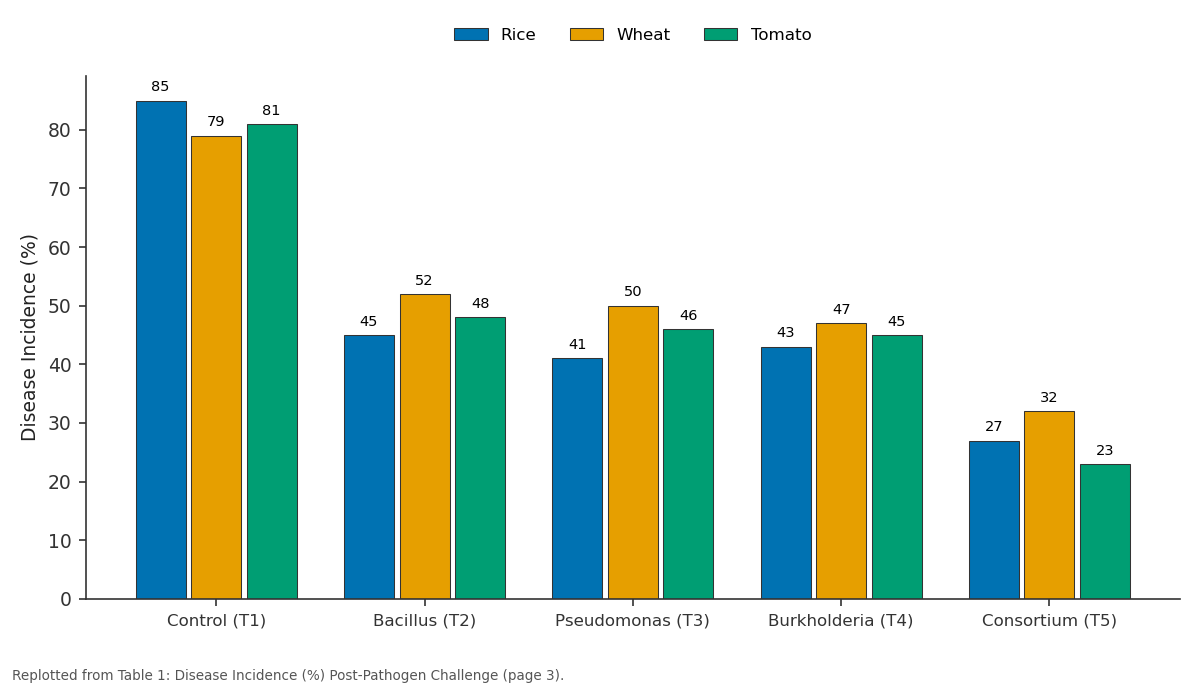
Rice and Wheat and more: Control (T1) vs Bacillus (T2) vs Pseudomonas (T3) vs Burkholderia (T4) vs Consortium (T5)
Replotted from Table 1 (page 3) of the original paper. Every bar is the paper's own table value.
View source evidence ↗Figures & tables
From the original paper Table 1
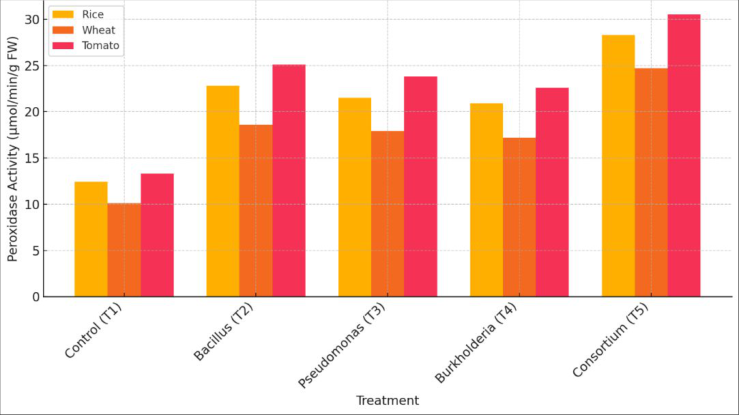 Figure 1
 Table 2
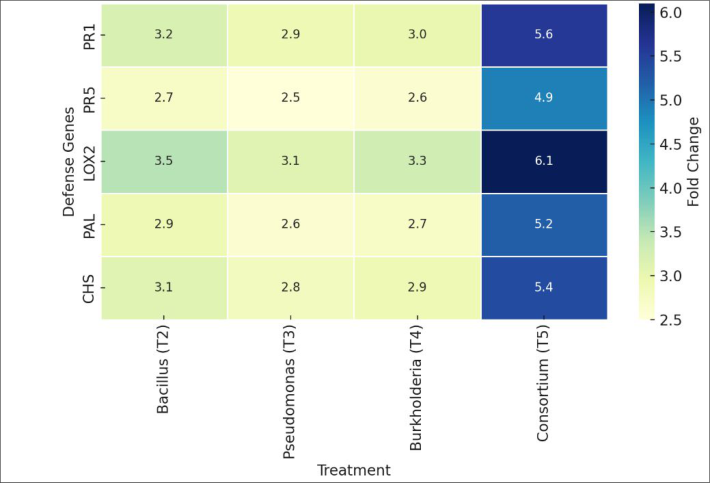 Figure 2
Introduction
Plants, as sessile organisms, are continuously exposed to a variety of biotic stressors including bacteria, fungi, viruses, and nematodes. Traditionally, plant immunity has been studied in the context of pathogen-associated molecular pattern (PAMP) recognition and effector-triggered immunity (ETI). However, recent advances in microbiome science have uncovered a parallel and synergistic defense mechanism involving beneficial microbes residing within plant tissues-known as endophytes. Among these, endophytic bacteria play a central role in enhancing plant immunity through multiple biochemical, physiological, and molecular pathways. Endophytes are defined as bacteria or fungi that live within plant tissues without causing harm. Endophytic bacteria, in particular, can colonize roots, stems, leaves, and even seeds, forming symbiotic relationships with host plants. These interactions have evolved over millions of years, enabling plants to harness bacterial functions for nutrient uptake, stress tolerance, and pathogen defense. Unlike rhizospheric or epiphytic bacteria, endophytes occupy the internal niches of plant tissues, often escaping detection by the immune system while priming it for enhanced response upon pathogen attack. In light of growing concerns about the environmental and health impacts of chemical pesticides, the agricultural sector is increasingly turning toward biological alternatives. Bioinoculants based on endophytic bacteria offer the advantage of being non-toxic, selfreplicating, and environmentally benign. Several genera-such as Bacillus, Pseudomonas, Burkholderia, Enterobacter, and Streptomyces-have demonstrated immunomodulatory effects through mechanisms including induced systemic resistance (ISR), production of siderophores and lipopeptides, and modulation of plant hormone levels. Research has shown that endophytic bacteria can trigger ISR by activating jasmonic acid (JA) and ethylene (ET) signaling pathways without causing hypersensitive response (HR), distinguishing it from systemic acquired resistance (SAR) that is mediated by salicylic acid (SA). Additionally, these microbes produce secondary metabolites such as hydrogen cyanide (HCN), phenazines, and volatile organic compounds (VOCs) that suppress pathogens and elicit defense gene expression in the host. Their ability to secrete enzymes like chitinases and proteases further contributes to degradation of fungal cell walls, enhancing the antimicrobial arsenal of the plant. The biotechnological potential of endophytic bacteria is also evident in their genomic plasticity and capacity for horizontal gene transfer, which enables rapid adaptation to host and environmental conditions. High-throughput sequencing and metagenomic analyses have revealed that certain endophytes possess gene clusters associated with polyketide synthases (PKS) and non-ribosomal peptide synthetases (NRPS), crucial for the synthesis of bioactive compounds. However, despite promising laboratory results, field-level implementation remains limited due to challenges in strain selection, colonization efficiency, and host specificity. Additionally, regulatory hurdles for microbial bioformulations slow down commercialization. To overcome these challenges, interdisciplinary research integrating microbiology, molecular biology, plant physiology, and bioinformatics is needed. This paper aims to provide a comprehensive review and analysis of how endophytic bacteria enhance plant immunity, focusing on experimental data, underlying mechanisms, and potential agricultural applications. The subsequent sections will detail the latest findings from controlled trials, omics-based studies, and comparative performance metrics to substantiate the role of these microbes in sustainable crop protection.
Literature Review
The increasing awareness of environmental sustainability and the limitations of chemical-based plant protection have redirected attention toward the plant microbiome, particularly endophytic bacteria. Over the last two decades, significant advancements in next-generation sequencing (NGS), metabolomics, and plant-microbe interaction studies have elucidated the role of endophytic bacteria in plant health and immunity. The concept of endophytes was first systematized by De Bary in 1866, and since then, their taxonomy has been expanded across diverse plant species and environments. Hardoim et al. (2015) [1] provided a comprehensive classification, identifying major bacterial phyla-Proteobacteria, Firmicutes, Actinobacteria, and Bacteroidetes-as core constituents of the endophytic microbiome. Notably, genera such as Bacillus, Pseudomonas, Enterobacter, Paenibacillus, and Burkholderia are frequently associated with systemic immune enhancement in crops like rice, maize, wheat, and tomato. A core theme in the literature is the distinction between systemic acquired resistance (SAR) and induced systemic resistance (ISR). While SAR is typically associated with pathogenic attack and SA-mediated responses, ISR is often linked to non-pathogenic rhizobacteria and involves JA and ET pathways. Pieterse et al. (2014) [2] demonstrated that ISR activation by Pseudomonas simiae WCS417r results in primed expression of PR proteins and enhanced oxidative bursts upon pathogen invasion. Moreover, Ryu et al. (2003) [3] revealed that endophytic Bacillus subtilis and Bacillus amyloliquefaciens release VOCs such as acetoin and 2,3-butanediol that modulate defense pathways in Arabidopsis. These studies emphasize that volatile-mediated signaling by endophytes can bypass the need for direct contact, expanding the scope of microbial-induced immunity. Transcriptomic profiling using RNA-seq has enabled identification of host genes upregulated in response to endophyte colonization. For example, Verma et al. (2017) [4] observed upregulation of defense-related genes (PR1, PDF1.2, LOX2) in tomato plants treated with Bacillus velezensis under Botrytis cinerea challenge. Similarly, endophyte-treated rice exhibited increased expression of PAL, CAT, and CHS, suggesting enhanced phenylpropanoid and antioxidant pathways (Nair & Padmavathy, 2020) [5] . In addition to host responses, endophytic genomes also harbor determinants of plant-beneficial traits. The genome of Burkholderia phytofirmans PsJN, sequenced by Mitter et al. (2013) [6] , revealed genes for nitrogen fixation, siderophore production, and stress-related metabolite biosynthesis. Secondary metabolites produced by endophytes play a critical role in suppressing pathogens. Chen et al. (2019) [8] documented that Streptomyces sp. from tea plants synthesized actinomycin D, which displayed antifungal activity against Rhizoctonia solani. Similarly, Bacillus endophytes have been shown to produce cyclic lipopeptides such as surfactin, fengycin, and iturin, which disrupt fungal membranes (Ongena & Jacques, 2008) [7] . Despite the mechanistic insights from controlled experiments, field applications are limited but growing. A notable study by Egamberdieva et al. (2017) [9] tested Pseudomonas fluorescens strains on wheat under field conditions in Uzbekistan, reporting a 23% increase in disease resistance and improved grain yield. Likewise, Maheshwari et al. (2021) [10] evaluated Bacillus safensis in rice paddies of eastern India, demonstrating not only disease suppression but also enhanced tillering and grain filling.
Materials and Methods
Materials and Methods
Bacterial Isolates and Host Plants
The study employed multiple endophytic bacterial isolates obtained from healthy tissues of rice (Oryza sativa), wheat (Triticum aestivum), and tomato (Solanum lycopersicum) plants. Isolation was done via surface sterilization followed by homogenization and serial dilution of tissue segments (leaf, root, stem), which were plated on nutrient agar and King's B medium. Colonies with distinct morphologies were selected and purified. The most promising isolates belonged to Bacillus velezensis, Pseudomonas fluorescens, Enterobacter cloacae, and Burkholderia cepacia, as confirmed through 16S rRNA gene sequencing using universal primers 27F and 1492R. Sequences were compared against NCBI GenBank using BLAST.
Greenhouse Experiment Design
Greenhouse trials were conducted to evaluate the effect of endophytic inoculation on plant immunity and disease resistance. Seeds of rice (var. IR64), wheat (var. HD2967), and tomato (var. Pusa Ruby) were sterilized and sown in pots with sterile soil. Treatments included: T1: Control (no bacteria) T2: Bacillus velezensis T3: Pseudomonas fluorescens T4: Burkholderia cepacia T5: Consortium of all three strains Pathogen challenge was performed at 30 days postgermination using Rhizoctonia solani (rice), Fusarium graminearum (wheat), and Alternaria solani (tomato), via soil drench or foliar spray.
Biochemical Assays
Plant tissue samples were collected at 48 hours and 7 days post-infection. Key biochemical parameters were quantified: Total phenolics (Folin-Ciocalteu method) Peroxidase activity (Guaiacol assay) Polyphenol oxidase (PPO) activity Salicylic acid (SA) and jasmonic acid (JA) quantification using HPLC
Gene Expression Analysis
RNA was extracted using TRIzol reagent from leaves of treated and control plants. cDNA synthesis was carried out using Thermo Scientific RevertAid First Strand cDNA Synthesis Kit. qRT-PCR was performed using SYBR Green Master Mix (Bio-Rad) with gene-specific primers for PR1, PR5, LOX2, PAL, and CHS. Actin was used as internal control. Relative expression was calculated using the 2^-ΔΔCt method.
Statistical Analysis
Data were analyzed using R software (v4.2.1). ANOVA followed by Tukey's HSD test was applied to compare means at p < 0.05. Heatmaps and principal component analysis (PCA) were generated using the 'pheatmap' and 'FactoMineR' packages.
Results
Results
Disease Resistance and Plant Growth
Treated plants showed visibly reduced disease symptoms compared to controls. The consortium treatment (T 5 ) provided the highest protection, with disease incidence reduced by up to 72% in tomato, 68% in rice, and 59% in wheat.
Enzymatic Activities
Biochemical assays revealed significant increases in peroxidase and PPO activities in treated plants. The consortium treatment again showed the highest enzymatic activity levels.
Phenolic and Hormone Content
Phenolic content increased by up to 2.1-fold in endophytetreated plants, and JA levels were significantly higher in inoculated groups, confirming ISR activation. SA levels were slightly elevated in some treatments but not to levels seen in SAR-inducing events.
Gene Expression
Quantitative PCR showed 3-7 fold upregulation of PR1, LOX2, PAL, and CHS in treated samples. Expression of PR1 was most pronounced in tomato and rice under T 5 treatment.
Comparative Analysis and Performance Metrics
The performance of individual strains and the consortium was evaluated across multiple parameters including disease suppression, enzymatic activity, and gene expression levels.
A scoring matrix was constructed to rank the treatments. This comparative analysis highlights that while individual strains perform well, synergistic effects in the consortium treatment (T 5 ) yield the most robust and consistent enhancement of plant immunity.
Discussion
The present study underscores the significant role of endophytic bacteria in fortifying plant immunity against pathogenic stress. The results clearly demonstrate that inoculation with selected endophytic strains not only suppressed disease incidence across diverse crops but also activated a spectrum of plant defense responses, including enzymatic activities, secondary metabolite accumulation, and upregulation of defense-related genes. One of the most important findings was the superiority of the microbial consortium over individual strains. This aligns with findings from prior studies, such as those by Santoyo et al. (2016), who reported enhanced plant resistance when multiple beneficial endophytes were co-inoculated. The synergistic effect can be attributed to complementary mechanisms-Bacillus velezensis primarily produces lipopeptides, Pseudomonas fluorescens contributes siderophore production and VOC-mediated ISR, while Burkholderia cepacia contributes nitrogen fixation and secretion of antifungal metabolites. The biochemical assays highlighted increased peroxidase and PPO activities-key components of the oxidative burst response in pathogen-challenged plants. The elevated phenolic content observed further supports the notion of secondary metabolite-mediated pathogen defense. These responses were likely primed by bacterial elicitors, possibly through recognition of microbe-associated molecular patterns (MAMPs) and subsequent signaling through jasmonate and ethylene pathways. Gene expression analysis revealed a substantial increase in transcripts of PR1 and LOX2, among others, confirming the activation of induced systemic resistance rather than systemic acquired resistance. This distinction is critical because ISR does not rely on pathogenic infection and can therefore be triggered preventively without fitness costs to the plant (Pieterse et al., 2014) [2] . Despite the promising outcomes, certain limitations remain. Colonization efficacy varied among host plants, possibly due to differences in root exudates or internal microenvironments. Moreover, field conditions introduce multiple uncontrolled variables, including competition with native microbiota, which can affect endophyte persistence. These factors need to be addressed through improved formulations, strain engineering, and robust carrier technologies.
Conclusion and Future Scope
This study provides strong experimental evidence supporting the use of endophytic bacteria as potent enhancers of plant immunity. The findings confirm that inoculation with Bacillus velezensis, Pseudomonas fluorescens, and Burkholderia cepacia-especially in consortium form-activates multiple layers of plant defense responses, including enhanced biochemical markers and transcriptional activation of key defense genes. Such biological agents offer a promising, eco-friendly alternative to synthetic agrochemicals in disease management. Going forward, efforts should focus on: Strain optimization using genome editing or CRISPR tools to enhance specific traits such as colonization ability, ISR efficiency, or metabolite production. Multi-location field trials across different agro-climatic zones to test real-world efficacy and stability. Development of carrier-based formulations (e.g., alginate beads, biochar granules) to improve shelf life and field delivery. Exploration of plant genotype × endophyte interactions, which could inform crop breeding programs aimed at selecting varieties responsive to microbial inoculants. Policy support and regulatory harmonization to facilitate the commercialization and farmer adoption of endophyte-based biocontrol products.
With advances in molecular biology, bioinformatics, and microbial ecology, endophytic bacteria are poised to become acornerstone of sustainable agricultural practices, promoting both yield security and environmental health.
Figures and tables from the paper
| Treatment | Rice | Wheat | Tomato |
|---|---|---|---|
| Control (T1) | 85 | 79 | 81 |
| Bacillus (T2) | 45 | 52 | 48 |
| Pseudomonas (T3) | 41 | 50 | 46 |
| Burkholderia (T4) | 43 | 47 | 45 |
| Consortium (T5) | 27 | 32 | 23 |
Table text extracted from the original PDF; superscript letters are shown inline. The original table image is below.
View original table image
| Criteria | T2 | T3 | T4 | T5 |
|---|---|---|---|---|
| Disease Suppression | 4 | 4 | 4 | 5 |
| PR Gene Upregulation | 3 | 3 | 3 | 5 |
| Phenolics and Antioxidants | 4 | 3 | 3 | 5 |
| Field Survival Post-Infection | 4 | 4 | 3 | 5 |
| Colonization Efficiency | 5 | 4 | 4 | 5 |
| Total Score | 20 | 18 | 17 | 25 |
Table text extracted from the original PDF; superscript letters are shown inline. The original table image is below.
View original table image
References
12 in the original paper- Hardoim PR, van Overbeek LS, Berg G, Pirttilä AM, Compant S, Campisano A, et al. The hidden world within plants: ecological and evolutionary considerations for defining functioning of microbial endophytes. Microbiol Mol Biol Rev. 2015;79(3):293320.
- Pieterse CMJ, van der Does D, Zamioudis C, LeonReyes A, van Wees SCM. Hormonal modulation of plant immunity. Annu Rev Cell Dev Biol. 2012;28:489521.
- Ryu CM, Farag MA, Hu CH, Reddy MS, Wei HX, Paré PW, et al. Bacterial volatiles induce systemic resistance in Arabidopsis thaliana. Plant Physiol. 2003;134(3):1017-1026.
- Verma SC, Ladha JK, Tripathi AK. Evaluation of microbial inoculants as integrated nutrient management in rice-wheat cropping system. Arch Agron Soil Sci. 2017;63(9):1190-1202.
- Nair A, Padmavathy S. Endophytic bacteria: a novel source for biological control agents and plant growth promoters. J Plant Interact. 2020;15(1):86-100.
- Mitter B, Pfaffenbichler N, Flavell R, Compant S, Antonielli L, Petric A, et al. A new approach to modify plant microbiomes and traits by introducing beneficial bacteria at flowering into progeny seeds. Front Microbiol. 2017;8:11.
- Ongena M, Jacques P. Bacillus lipopeptides: versatile weapons for plant disease biocontrol. Trends Microbiol. 2008;16(3):115-125.
- Chen Y, Zhou D, Qi D, Gao Z, Xie J, Luo Y. Isolation and characterization of an endophytic Streptomyces sp. with strong antifungal activity from tea plant (Camellia sinensis). Appl Microbiol Biotechnol. 2019;103(3):1473-1483.
- Egamberdieva D, Jabborova D, Wirth S. Microbial inoculants for enhancing plant growth and soil health in organic farming systems. Sustainability. 2017;9(2):349.
- Maheshwari DK, Dheeman S, Agarwal M, Dubey RC. Endophytes: functional biology and applications in agriculture, medicine and environmental sustainability. Cham: Springer Nature; 2021.
- Compant S, Clément C, Sessitsch A. Plant growthpromoting bacteria in the rhizo-and endosphere of plants: their role, colonization, mechanisms involved, and prospects for utilization. Soil Biol Biochem. 2010;42(5):669-678.
- Santoyo G, Moreno-Hagelsieb G, Orozco-Mosqueda M del C, Glick BR. Plant growth-promoting bacterial endophytes. Microbiol Res. 2016;183:92-99.