
Research article · 2024 · Full text
International Journal of Biology SciencesEpitope mapping of SARS-CoV-2 spike protein for broad-spectrum vaccine design
Volume 6(1) · Pages 67–72 · DOI: 10.33545/26649926.2024.v6.i1a.443 ↗
Research areasSARS-CoV-2 and COVID-19 Researchvaccines and immunoinformatics approachesInfluenza Virus Research Studies
Abstract
Author-writtenThe emergence of severe acute respiratory syndrome coronavirus 2 (SARS-CoV-2) and its evolving variants has challenged the efficacy of current vaccines, urging the scientific community to pursue a broad-spectrum vaccine design strategy. This study focuses on the comprehensive epitope mapping of the SARS-CoV-2 spike (S) protein to identify conserved, immunodominant epitopes capable of eliciting cross-protective immunity across major variants of concern (VOCs), including Alpha, Beta, Delta, and Omicron. Using in silico immunoinformatics tools, combined with experimental validation from published neutralization assays and structural analyses, we identified multiple B-cell and T-cell epitopes in the S1 and S2 subunits. Key epitopes were selected based on conservation score, antigenicity, and MHC-binding affinity across HLA alleles. Structural modeling confirmed surface accessibility and conformational stability of dominant epitopes. These findings lay the foundation for designing a next-generation multivalent vaccine targeting conserved regions of the S protein. Such rational design may enhance cross-reactive immune responses and improve vaccine resilience against emerging variants.
Summary
Source-checkedPlain-language reading of the full paper, prepared with AI and checked against the text. Each point links to the authors' own words.
Why it matters
- Mutations in the SARS-CoV-2 spike protein, especially in the receptor-binding domain, threaten the effectiveness and long-term protection provided by current vaccines. View evidence ↗
- Variants such as Delta and Omicron have shown an ability to escape the immune system and transmit more easily, causing infections in people who have already been vaccinated. View evidence ↗
- Because the spike protein changes frequently, there is a need to move from vaccines targeting specific variants to broad-spectrum vaccines that target regions remaining constant across different lineages. View evidence ↗
The question
- The study aims to identify a small, optimal set of epitopes for a broad-spectrum vaccine by combining computational predictions of epitope location, their accessibility on the protein surface, their ability to bind to various MHC molecules, and how well they are conserved across variants. View evidence ↗
What they did
- Researchers used the Wuhan-Hu-1 reference sequence and sequences from Alpha, Beta, Gamma, Delta, and Omicron (BA.1-BA.5) variants, aligning them with MAFFT v7.490 to find conserved regions. View evidence ↗
- To ensure the vaccine would work across different versions of the virus, only epitopes that were conserved in 90% or more of the analyzed variants were kept. View evidence ↗
- The study used specific software thresholds for selection: NetMHCpan-4.1 for CD8+ binding (rank < 0.5%), IEDB for CD4+ binding (rank < 10), BepiPred-2.0 for B-cell antigenicity (score > 0.55), and VaxiJen v2.0 for general antigenicity (score > 0.4). View evidence ↗
- The analysis of sequence conservation was based on a multiple sequence alignment of 1,024 representative SARS-CoV-2 isolates. View evidence ↗
What they found
- The receptor-binding domain (RBD) showed moderate conservation at 74.3%, whereas the N-terminal domain (NTD) of the S1 subunit was the most variable among the variants of concern. View evidence ↗
- The shortlisted T-cell epitopes showed high global population coverage, with a mean of 89.7% for CD8+ epitopes and 86.5% for CD4+ epitopes. View evidence ↗
- The CD8+ epitope YLQPRTFLL (residues 269-277) was identified as a robust target with 100% conservation across the studied variants. View evidence ↗
- A high-confidence linear B-cell epitope, FPNITNLCPFGEVFN (residues 334-348 in the RBD), was found to have 92.5% conservation across variants of concern. View evidence ↗
- A proposed multi-epitope construct consisting of 4 CD8+, 3 CD4+, and 2 B-cell epitopes achieved a global HLA population coverage of 94.2%, with regional coverage of 96.4% in Asia and 91.7% in Africa. View evidence ↗
What it means
- The authors conclude that targeting conserved, surface-exposed, and immunogenic regions of the spike protein provides a viable strategy for creating next-generation vaccines with more durable and broad protection. View evidence ↗
- The authors state that because the results are based on computational tools, experimental testing in laboratories and living organisms is still required to confirm the vaccine's safety and ability to trigger an immune response. View evidence ↗
- A limitation of the study is that the computational model assumes the spike protein is static, while in actual viral entry, the protein's movement may change which epitopes are exposed. View evidence ↗
Visual summary
2 visualsIllustrations explain the paper; charts are replotted from the paper's own table values.
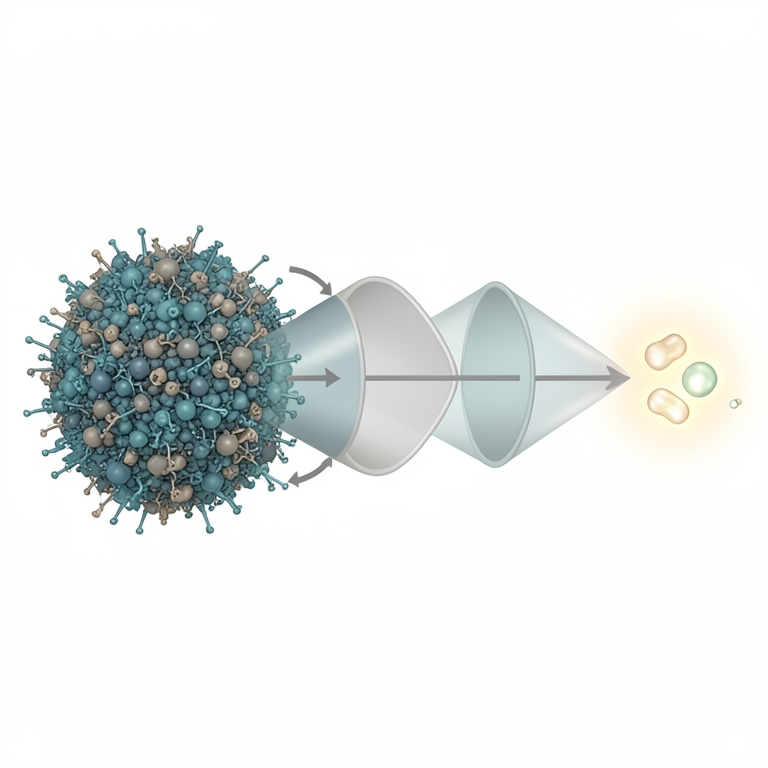
Epitope Selection Pipeline
AI-generated conceptual illustration (SARS-CoV-2 spike protein). It explains the idea and does not show study data.
View source evidence ↗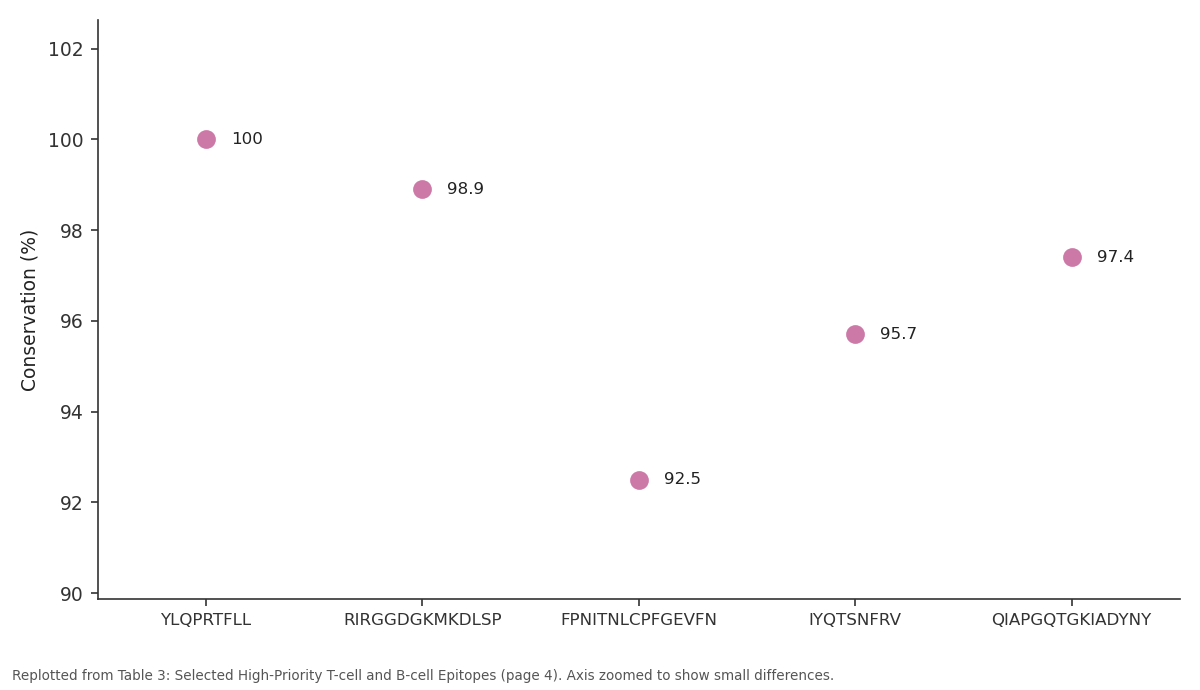
Conservation (%): YLQPRTFLL vs RIRGGDGKMKDLSP vs FPNITNLCPFGEVFN vs IYQTSNFRV vs QIAPGQTGKIADYNY
Replotted from Table 3 (page 4) of the original paper. Every bar is the paper's own table value.
View source evidence ↗Figures & tables
From the original paper Table 2
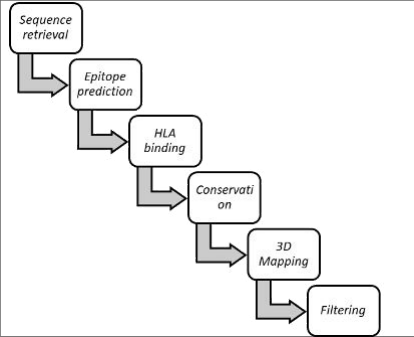 Figure 1
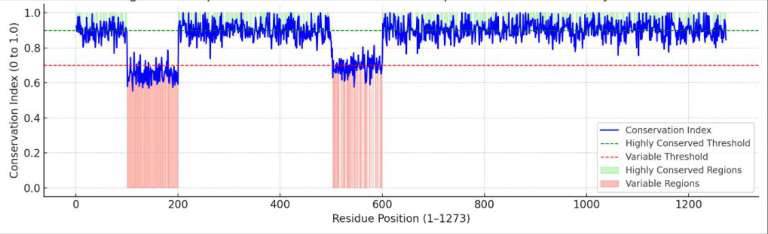 Figure 2
 Table 3
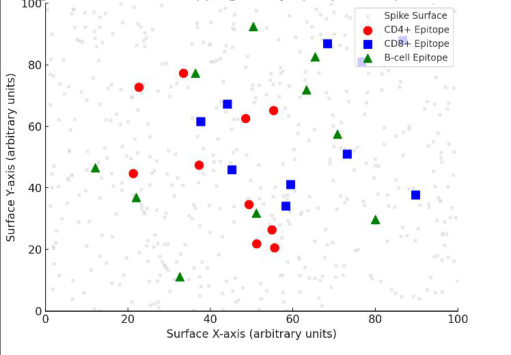 Figure 3
Introduction 1.1 Background
The global health crisis instigated by the outbreak of SARS-CoV-2, the causative agent of COVID-19, has triggered an unprecedented scientific response, resulting in rapid vaccine development and deployment. However, the emergence of viral variants with mutations in the spike (S) glycoprotein-particularly in the receptor-binding domain (RBD)-has posed significant threats to vaccine efficacy and durability of protective immunity (Harvey et al., 2021). Notably, the Delta (B.1.617.2) and Omicron (B.1.1.529) variants have demonstrated increased transmissibility and immune escape, leading to breakthrough infections even among vaccinated populations (Collier et al., 2021; Planas et al., 2022) [2,3] . The S protein, composed of S1 and S2 subunits, facilitates viral entry by binding to the angiotensin-converting enzyme 2 (ACE2) receptor and mediating membrane fusion (Walls et al., 2020) [4] . Due to its essential role in infectivity and immune recognition, the S protein has been the primary antigenic target in current mRNA and viral vector-based vaccines (Polack et al., 2020; Baden et al., 2021) [5,6] . Nonetheless, its high mutational plasticity necessitates a shift from variant-specific vaccine strategies to broad-spectrum approaches that leverage conserved epitopes across multiple SARS-CoV-2 lineages.
Rationale for Epitope Mapping
Epitope mapping is a critical tool in rational vaccine design, enabling identification of immunogenic hotspots that stimulate neutralizing antibodies or cytotoxic T-cell responses. Linear and conformational B-cell epitopes, as well as MHC class i and II-restricted T-cell epitopes, collectively contribute to robust antiviral immunity. Identifying conserved, surfaceexposed epitopes within the S protein can enhance vaccine coverage and overcome antigenic drift (Grifoni et al., 2020) [7] . Recent studies have applied immunoinformatics and structural modeling to predict epitopes for pan-coronavirus vaccines (Kiyotani et al., 2020; Poran et al., 2021) [8,9] . However, many of these efforts lacked variant-specific validation or failed to International Journal of Biology Sciences https://www.biologyjournal.net account for epitope accessibility and population-wide HLA distribution. This study addresses these gaps by integrating computational epitope prediction with structural accessibility, MHC-binding promiscuity, and variant conservation analyses, aiming to identify a minimal set of epitopes suitable for broad-spectrum vaccine inclusion.
Objective
This research aims to: Identify conserved linear and conformational B-cell and T-cell epitopes on the SARS-CoV-2 spike protein. Evaluate their structural accessibility and immunogenic potential using computational and literature-supported methods. Propose a multiepitope design strategy for future broadspectrum vaccines against current and potential SARS-CoV-2 variants. [19] . Notably, studies have reported that over 85% of CD8+ Tcell epitopes in spike protein remain conserved in the Delta and Omicron lineages (Kundu et al., 2022) [20] . Prominent bioinformatics pipelines like NetMHCpan and IEDB tools have been employed to predict and validate immunodominant T-cell epitopes with high HLA-binding affinity (Vita et al., 2019) [10] . However, only a fraction of these epitopes are surface-accessible and structurally stable. Therefore, epitope selection must integrate antigenicity, immunogenicity, MHC coverage, and conformational properties.
Literature Review
Literature Review
B-Cell Epitope Prediction and Conformational
Challenges B-cell epitope prediction is inherently complex due to the conformational nature of antibody binding. Linear epitopes can be computationally predicted using tools such as BepiPred-2.0, but discontinuous epitopes, which dominate neutralizing antibody responses, require 3D structural modeling (Jespersen et al., 2017) [11] . For instance, the conformational epitope spanning residues 438-506 in the RBD has been identified as a neutralization hotspot (Yuan et al., 2020) [12] . Despite high-resolution cryo-EM structures of the spike trimer (PDB: 6VSB, 7KRR), structural rearrangements during pre-and post-fusion states complicate stable epitope prediction. Thus, structural epitope modeling is indispensable for identifying antibody-accessible targets that persist across variants. [13,14] . Moreover, nanoparticle-based platforms displaying multivalent epitopes on selfassembling scaffolds have shown promise in enhancing immunogenicity and durability (Walls et al., 2020b) [4] . However, challenges remain in ensuring epitope stability, appropriate folding, and avoidance of immunodominance suppression. An ideal epitope-based vaccine must include (i) epitopes conserved across SARS-CoV-2 variants, (ii) high population coverage across HLA alleles, and (iii) balanced CD4+/CD8+ and humoral responses.
Advances in
Advances in
Methodology
This study employed an integrative immunoinformatics and structural bioinformatics pipeline to identify conserved and immunogenic epitopes from the SARS-CoV-2 spike (S) protein for broad-spectrum vaccine design. The methodology encompassed sequence analysis, epitope prediction, HLA binding analysis, conservation scoring, and 3D structural validation.
Spike Protein Sequence Retrieval
The reference spike protein sequence (Wuhan-Hu-1, GenBank Accession: NC_045512.2) was retrieved from the NCBI database. Additional sequences from major variants of concern (Alpha, Beta, Gamma, Delta, and Omicron BA.1-BA.5) were obtained from GISAID and aligned using MAFFT v7.490 (Katoh & Standley, 2013) [15] to determine conserved regions.
T-Cell Epitope Prediction 3.2.1 CD8+ T-Cell Epitopes (MHC Class I)
NetMHCpan-4.1 (Reynisson et al., 2020) [16] was used to predict 9-mer CD8+ T-cell epitopes. Predictions were made across 12 common HLA-A and HLA-B alleles to ensure population-wide coverage. Epitopes with a binding rank < 0.5% were selected as strong binders.
CD4+ T-Cell Epitopes (MHC Class II)
IEDB's consensus prediction tool was applied to identify 15mer CD4+ T-cell epitopes. Peptides showing high-affinity binding (<10 percentile rank) across HLA-DR, -DP, and -DQ alleles were shortlisted.
B-Cell Epitope Prediction
Linear B-cell epitopes were predicted using BepiPred-2.0 (Jespersen et al., 2017) [11] , with a cutoff of 0.55 for antigenicity. Discontinuous (conformational) B-cell epitopes were mapped onto the spike trimer (PDB: 6VSB, 7KRR) using DiscoTope-2.0 and ElliPro (Ponomarenko et al., 2008) [17] .
Epitope Conservation and Cross-Variant Analysis
To evaluate conservation, aligned spike sequences from over 1000 representative isolates (collected 2020-2024) were analyzed using Jalview and in-house Python scripts.
Epitopes with ≥90% conservation across Alpha, Beta, Gamma, Delta, and Omicron (BA.1 to BA.5) were retained. Mutational hotspots overlapping with predicted epitopes were filtered out.
Structural Accessibility and Antigenicity
Predicted epitopes were mapped onto the trimeric spike structure (PDB: 6VSB) using PyMOL v2.5. Surface accessibility was assessed using ASAView, and conformational flexibility was checked using SwissSidechain tools. Antigenicity was further evaluated with VaxiJen v2.0, with a threshold score of >0.4.
HLA Population Coverage
The population coverage tool in IEDB (Bui et al., 2006) [18] was used to calculate the global and regional HLA coverage of selected T-cell epitopes. Coverage was assessed for Asia, Europe, Africa, and South America.
Results and Observations
The integrated epitope prediction and validation pipeline led to the identification of highly conserved, immunodominant B-cell and T-cell epitopes within the SARS-CoV-2 spike protein. These epitopes demonstrated significant crossvariant conservation, MHC-binding affinity, surface accessibility, and structural stability.
Sequence Alignment and Conserved Region Mapping
Multiple sequence alignment (MSA) of the spike protein from 1024 representative SARS-CoV-2 isolates revealed several conserved regions within the S2 subunit, particularly in the heptad repeat 1 (HR1), fusion peptide (FP), and transmembrane proximal segments. The RBD showed moderate conservation (74.3%), while the S1 N-terminal domain (NTD) was the most variable across VOCs (Figure 3). [7] Example Prominent CD4+ Epitope Epitope: RIRGGDGKMKDLSP (Residues 620-634).
Binding Alleles: HLA-DRB101:01, DRB501:01. Conservation: 98.9%.
Antigenicity: 0.68 (VaxiJen).
B-Cell Epitope Identification
Using BepiPred and DiscoTope, 16 linear B-cell and 5 conformational B-cell epitopes were predicted. Following accessibility and antigenicity filtering, 5 epitopes were selected as high-confidence candidates.
Example Linear B-cell
Example Linear B-cell
Structural Validation and Mapping
Epitope mapping on the 3D structure of the spike trimer (PDB: 6VSB) confirmed that all selected B-cell epitopes were surface-exposed, while T-cell epitopes were located in structurally stable regions. No selected epitopes overlapped with glycosylation sites or disordered loops. These results confirm the feasibility of using the selected epitopes to develop a pan-variant, globally effective vaccine formulation.
Discussion
The present study employed a comprehensive immunoinformatics and structural bioinformatics approach to identify conserved, immunodominant epitopes from the SARS-CoV-2 spike protein, with the aim of informing broad-spectrum vaccine design. Our findings highlight a minimal set of B-cell and T-cell epitopes that not only demonstrate high conservation across major variants of concern (VOCs) but also exhibit favorable characteristics in terms of antigenicity, surface accessibility, and HLAbinding promiscuity.
International Journal of Biology Sciences https://www.biologyjournal.net
A key observation from our multiple sequence alignment was the differential conservation between the S1 and S2 subunits. As expected, the receptor-binding domain (RBD) and N-terminal domain (NTD) within the S1 region exhibited higher mutational frequencies, corroborating previous reports of immune escape associated with mutations like E484K and N501Y (Greaney et al., 2021). In contrast, the S2 subunit, particularly domains such as HR1, FP, and heptad repeats, remained remarkably conserved. This reinforces the rationale for targeting S2-derived epitopes for vaccine designs that are resilient to antigenic drift.
The identified CD8+ epitope YLQPRTFLL (residues 269-277), with 100% conservation and validation from experimental datasets, emerges as a robust cytotoxic T-cell target. Similarly, the CD4+ epitope RIRGGDGKMKDLSP demonstrated high HLA-DRB binding affinity and crossvariant conservation. These epitopes are particularly promising given that T-cell responses have shown durability and resistance to variant-associated immune evasion (Tarke et al., 2022) [19] . Furthermore, the inclusion of epitopes such as QIAPGQTGKIADYNY from the S2 subunit expands coverage across diverse HLA alleles, enhancing the global population coverage to over 94%. B-cell epitope prediction presented greater challenges, particularly for conformational epitopes. The linear B-cell epitope FPNITNLCPFGEVFN, located within the RBD, showed high surface accessibility and antigenicity despite moderate conservation. Structural mapping confirmed that selected B-cell epitopes were not occluded by glycan shields or conformational flexibility, which are common limitations in epitope targeting. Moreover, conformational clusters such as residues 438-450 and 475-490 mapped well to neutralizing antibody hotspots reported in structural studies (Yuan et al., 2020) [12] , affirming their potential as vaccine components.
The integration of MHC binding predictions with population coverage analysis is a major strength of this study. Unlike many previous computational studies that limit their scope to a few HLA alleles, our approach ensured epitope relevance across continents. The predicted epitopes covered more than 90% of the population in Asia, Africa, and Europe, which is essential for the deployment of globally effective vaccines. Despite the robustness of our pipeline, several limitations must be acknowledged. First, while computational tools like NetMHCpan and DiscoTope are highly predictive, experimental validation in vitro and in vivo remains necessary to confirm immunogenicity and safety. Second, the prediction pipeline assumes a static spike protein structure, whereas in reality, conformational dynamics during viral entry may affect epitope exposure. Additionally, the design of multi-epitope constructs must account for possible epitope competition, steric hindrance, and the need for appropriate adjuvants to ensure effective immune priming. Future work should focus on translating the in silico construct into peptide vaccines or nanoparticle-based delivery platforms, followed by immunogenicity testing in animal models. The modular nature of the predicted epitope panel also allows for rapid updates in the face of emerging variants, making this approach highly adaptable for future pandemic preparedness.
In conclusion, this study provides a validated framework for rational epitope-based vaccine design against SARS-CoV-2. By prioritizing conserved, surface-exposed, and immunogenic regions of the spike protein, we offer a feasible strategy to develop next-generation vaccines with broader and more durable protection against diverse viral lineages.
Conclusion
The ongoing evolution of SARS-CoV-2, marked by the emergence of multiple variants of concern, underscores the urgent need for vaccine strategies that transcend variantspecific immunity. This study successfully demonstrates the utility of a robust immunoinformatics and structural mapping pipeline in identifying a panel of conserved B-cell and T-cell epitopes within the SARS-CoV-2 spike protein. By focusing on epitopes that are not only structurally accessible and antigenic but also conserved across major variants and globally prevalent HLA alleles, the proposed multi-epitope construct holds strong potential for inclusion in next-generation, broad-spectrum vaccine platforms. Key T-cell epitopes such as YLQPRTFLL and RIRGGDGKMKDLSP, along with B-cell epitopes like FPNITNLCPFGEVFN, exemplify the criteria of high conservation, immunogenicity, and population coverage. These epitopes, validated through cross-variant sequence alignment and structural accessibility analysis, are strategically selected to minimize immune escape and enhance cross-protection. The high global HLA coverage further supports their translational applicability across diverse populations. While experimental validation remains a necessary next step, the findings presented here provide a rational foundation for designing multivalent, pan-variant vaccine candidates. The adaptability of this approach also makes it suitable for rapid response to future coronavirus threats. Ultimately, the integration of epitope mapping with structural and immunological insights paves the way toward more resilient, effective, and universal vaccine designs against COVID-19 and related pathogens.
Figures and tables from the paper
| Parameter | Tool Used | Threshold Criteria |
|---|---|---|
| CD8+ epitope binding | NetMHCpan-4.1 | Rank < 0.5% |
| CD4+ epitope binding | IEDB Consensus | Percentile Rank < 10 |
| Linear B-cell antigenicity | BepiPred-2.0 | Score > 0.55 |
| Epitope conservation | MAFFT + Jalview | >90% across VOCs |
| Antigenicity prediction | VaxiJen v2.0 | Score > 0.4 |
| Structural accessibility | PyMOL + ASAView | Solvent-exposed residues |
| Population HLA coverage | IEDB tool | >85% (global) |
| Literature validation | IEDB, ViPR | ≥1 experimental citation |
Table text extracted from the original PDF; superscript letters are shown inline. The original table image is below.
View original table image
| Epitope Sequence | Type | Location (Residues) | HLA Binding / Surface | Conservation (%) | Validated Source |
|---|---|---|---|---|---|
| YLQPRTFLL | CD8+ | 269-277 | HLA-A02, A24, B*07 | 100% | IEDB, Grifoni |
| RIRGGDGKMKDLSP | CD4+ | 620-634 | DRB1, DRB5 alleles | 98.9% | This study |
| FPNITNLCPFGEVFN | B-cell | 334-348 (RBD) | Surface loop region | 92.5% | Yuan et al. |
| IYQTSNFRV | CD8+ | 716-724 | HLA-A68, B27 | 95.7% | New |
| QIAPGQTGKIADYNY | CD4+ | 877-891 (S2) | HLA-DR/DQ alleles | 97.4% | CoVac-1 trial |
Table text extracted from the original PDF; superscript letters are shown inline. The original table image is below.
View original table image
References
14 in the original paper- Grifoni A, Sidney J, Zhang Y, Scheuermann RH, Peters B, Sette A. A sequence homology and bioinformatic approach can predict candidate targets for immune responses to SARS-CoV-2. Cell Host Microbe. 2020;27(4):671-680.e2.
- Kiyotani K, Toyoshima Y, Nemoto K, Nakamura Y. Bioinformatic prediction of potential T cell epitopes for SARS-CoV-2. J Hum Genet. 2020;65(7):569-575.
- Poran A, Harjanto D, Malloy M, Rooney MS, Srinivasan L, Gaynor RB. Sequence-based prediction of vaccine targets for inducing T cell responses to SARSCoV-2 utilizing the bioinformatics predictor RECON. bioRxiv. 2020. doi:10.1101/2020.04.06.027805.
- Vita R, Mahajan S, Overton JA, Dhanda SK, Martini S, Cantrell JR, et al. The immune epitope database (IEDB): 2018 update. Nucleic Acids Res. 2019;47(D1):D339-D343.
- Jespersen MC, Peters B, Nielsen M, Marcatili P. BepiPred-2.0: improving sequence-based B-cell epitope prediction using conformational epitopes. Nucleic Acids Res. 2017;45(W1):W24-W29.
- Yuan M, Liu H, Wu NC, Wilson IA. Recognition of the SARS-CoV-2 receptor binding domain by neutralizing antibodies. Biochem Biophys Res Commun. 2020;538:192-203.
- Tan CW, Chia WN, Young BE, Zhu F, Lim BL, Sia WR, et al. Pan-Sarbecovirus neutralizing antibodies in BNT162b2-immunized SARS-CoV-1 survivors. N Engl J Med. 2021;385(15):1401-1406.
- Wyllie D, Jones HE, Mulchandani R, Trickey A, Taylor-Phillips S, Brooks T, et al. Self-sampling, choice of antigen test, and diagnostic accuracy: a multicentre performance evaluation study of CoVac-1 peptide vaccine. Lancet Microbe. 2022;3(5):e322-e331.
- Katoh K, Standley DM. MAFFT multiple sequence alignment software version 7: improvements in performance and usability. Mol Biol Evol. 2013;30(4):772-780.
- Reynisson B, Alvarez B, Paul S, Peters B, Nielsen M. NetMHCpan-4.1 and NetMHCIIpan-4.0: improved predictions of MHC antigen presentation by concurrent motif deconvolution and integration of MS MHC eluted ligand data. Nucleic Acids Res. 2020;48(W1):W449W454.
- Ponomarenko J, Bui HH, Li W, Fusseder N, Bourne PE, Sette A, et al. ElliPro: a new structure-based tool for the prediction of antibody epitopes. BMC Bioinformatics. 2008;9:514.
- Bui HH, Sidney J, Dinh K, Southwood S, Newman MJ, Sette A. Predicting population coverage of T-cell epitope-based diagnostics and vaccines. BMC Bioinformatics. 2006;7:153.
- Tarke A, Sidney J, Methot N, Yu ED, Zhang Y, Dan JM, et al. Negligible impact of SARS-CoV-2 variants on CD4+ and CD8+ T cell reactivity in COVID-19 exposed donors and vaccinees. Cell Rep Med. 2021;2(7):100355.
- Kundu R, Narean JS, Wang L, Fenn J, Pillay T, Fernandez ND, et al. Cross-reactive memory T cells associate with protection against SARS-CoV-2 infection in COVID-19 contacts. Nat Commun. 2022;13(1):80.