
Research article · 2024 · Full text
International Journal of Biology SciencesRole of plant secondary metabolites in biotic interactions and defense
Volume 6(1) · Pages 172–175 · DOI: 10.33545/26649926.2024.v6.i1c.428 ↗
Research areasPlant and fungal interactionsBotanical Research and Chemistry
Abstract
Author-writtenPlants, being sessile organisms, have evolved complex biochemical strategies to cope with biotic pressures from herbivores, pathogens, and competing plants. Among these strategies, the production of secondary metabolites plays a central role in mediating plant interactions with other organisms and in fortifying defense mechanisms. These metabolites—including alkaloids, phenolics, terpenoids, and glucosinolates—are not directly involved in primary metabolism but confer evolutionary advantages by deterring predators, attracting beneficial organisms, and modulating plant-plant competition. This paper reviews the biosynthetic pathways, ecological significance, and defensive roles of plant secondary metabolites in various biotic contexts, emphasizing experimental findings and recent advances in metabolomics and molecular biology. Understanding these interactions provides valuable insights into natural defense systems and offers promising avenues for sustainable agriculture and biocontrol applications.
Summary
Source-checkedPlain-language reading of the full paper, prepared with AI and checked against the text. Each point links to the authors' own words.
Why it matters
- Because plants cannot move, they have developed complex biochemical strategies to survive pressures from pathogens, herbivores, and other plants. View evidence ↗
- Plant secondary metabolites (PSMs) are central to how plants defend themselves and interact with other organisms. View evidence ↗
- PSMs, such as terpenoids, phenolics, alkaloids, and glucosinolates, provide evolutionary advantages by deterring predators and managing competition, though they are not needed for basic growth. View evidence ↗
The question
- The paper aims to review the biosynthetic pathways, ecological importance, and defensive functions of PSMs across different biotic interactions. View evidence ↗
What they did
- The authors conducted a review of existing experimental findings and recent advances in molecular biology and metabolomics. View evidence ↗
What they found
- Phenolic compounds, including tannins and flavonoids, are primarily synthesized through the phenylpropanoid pathway. View evidence ↗
- Alkaloids are nitrogen-containing compounds typically synthesized from amino acids like tyrosine, tryptophan, or ornithine. View evidence ↗
- The production of PSMs is tightly controlled by environmental factors and hormones, specifically ethylene, salicylic acid, and jasmonic acid. View evidence ↗
- In tobacco plants, nicotine alkaloids act as a defense by interfering with the insect central nervous system, causing death or paralysis. View evidence ↗
- Tannins defend plants by precipitating proteins in the gut of herbivores, which restricts their growth and nutrient absorption. View evidence ↗
- Plants use indirect defense by emitting volatile organic compounds (VOCs), like green-leaf volatiles or methyl jasmonate, to attract predators of the herbivores. View evidence ↗
- Plants produce phytoalexins, such as pisatin and medicarpin in legumes, to inhibit the growth of pathogens and disrupt fungal invasion. View evidence ↗
- Phenolic acids (e.g., p-coumaric, caffeic, and ferulic acids) act as allelochemicals that cause oxidative stress and disrupt cell membranes and chlorophyll biosynthesis in neighboring plants. View evidence ↗
- Sorghum bicolor releases sorgoleone and Secale cereale releases benzoxazinoids, both of which strongly inhibit the growth of weeds. View evidence ↗
What it means
- The authors conclude that combining modern biotechnology with ecological knowledge can lead to the design of productive, 'ecologically intelligent' next-generation crops. View evidence ↗
- A major challenge is that PSM production depends on environmental variables like soil nutrients, light, and temperature, making standardization for pharmacology or agriculture difficult. View evidence ↗
Visual summary
1 visualsIllustrations explain the paper; they do not show study data.
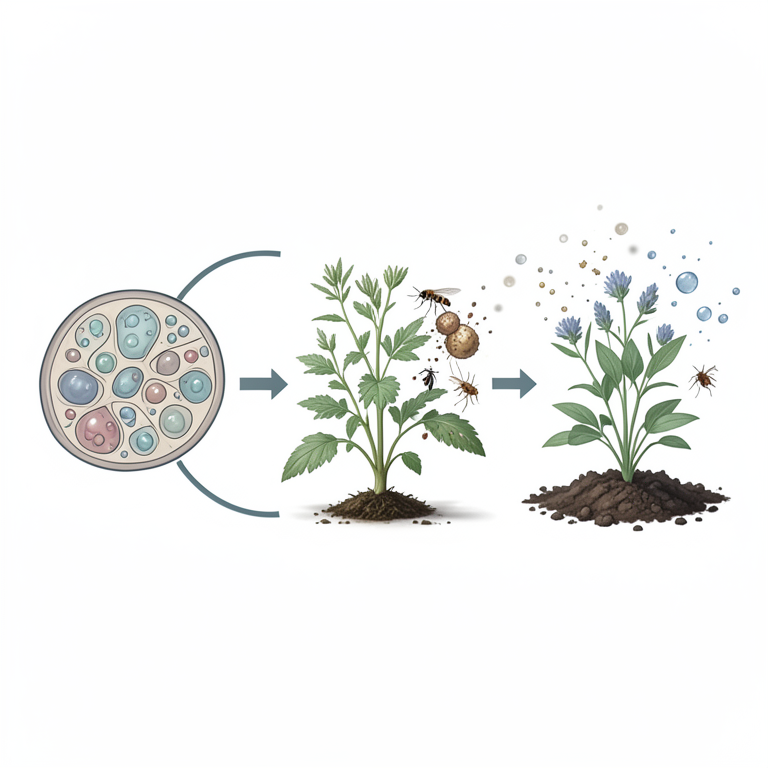
Study overview
AI-generated conceptual illustration (Arabidopsis thaliana plants). It explains the idea and does not show study data.
View source evidence ↗Introduction
Plants interact continuously with a diverse range of organisms, including herbivorous insects, fungal and bacterial pathogens, nematodes, and neighboring plant species. These interactions have shaped plant evolution, prompting the development of sophisticated defense mechanisms. One of the most effective strategies involves the production and release of plant secondary metabolites (PSMs)-organic compounds that are not essential for growth or reproduction but confer survival advantages under stress. These metabolites often function as chemical signals, toxins, repellents, or antimicrobials. They are central to the plant's dynamic response to biotic challenges and are tightly regulated both spatially and temporally. Plant secondary metabolites not only serve in direct defense (e.g., poisoning herbivores or pathogens) but also in indirect defense by attracting predatory insects or activating systemic resistance responses. Additionally, allelopathic compounds influence plant-plant competition and community composition. This review explores the defensive roles of these compounds across multiple biotic interactions, their biosynthetic diversity, and the underlying molecular mechanisms.
Classification and Biosynthesis of Secondary Metabolites
Plant secondary metabolites are an exceptionally diverse group of organic compounds categorized based on their biosynthetic origin and structural features. Though not directly involved in the fundamental physiological processes of growth, development, or reproduction, their ecological significance lies in mediating plant interactions with other organisms and facilitating defense. The three major classes of plant secondary metabolites include terpenoids, phenolic compounds, and nitrogen-containing compounds (including alkaloids and glucosinolates). Each group arises from distinct metabolic pathways and contributes uniquely to plant defense.
Terpenoids
Terpenoids (also known as isoprenoids) form the largest class of secondary metabolites, derived from the five-carbon precursor isopentenyl diphosphate (IPP), produced through the mevalonate (MVA) and methylerythritol phosphate (MEP) pathways. They range from simple monoterpenes to complex tetraterpenes like carotenoids. Many terpenoids act as feeding deterrents to herbivores, antimicrobials against pathogenic fungi and bacteria, and attractants for pollinators or predatory insects. For instance, volatile terpenes released upon herbivore attack serve as airborne signals that recruit natural enemies of herbivores-an indirect defense mechanism.
Phenolic Compounds
Phenolics are synthesized primarily via the phenylpropanoid pathway and include compounds such as flavonoids, tannins, lignins, and coumarins. They are known for their antioxidant properties, UV-protective roles, and structural functions. In defense, phenolic compounds fortify plant cell walls through lignification and act as antimicrobial agents. Flavonoids, for example, exhibit broad-spectrum antifungal and antibacterial activity, while tannins deter herbivory by binding to proteins and reducing digestibility.
Alkaloids and Other Nitrogen-Containing Compounds
Alkaloids are a chemically diverse class containing nitrogen atoms, often synthesized from amino acids such as tryptophan, tyrosine, or ornithine. They include pharmacologically significant molecules like morphine, nicotine, and quinine. Alkaloids are typically toxic to insects and mammals, acting through interference with neurotransmitter function or inhibition of metabolic enzymes. Glucosinolates, prevalent in the Brassicaceae family, yield toxic isothiocyanates upon enzymatic hydrolysis, which deter generalist herbivores and microbial invaders.
Biosynthesis Regulation
The biosynthesis of secondary metabolites is tightly regulated by environmental cues and phytohormonal signaling networks, particularly jasmonic acid, salicylic acid, and ethylene. These hormones mediate transcriptional activation of genes involved in biosynthetic pathways upon detection of herbivory, infection, or wounding. The spatial distribution of biosynthetic enzymes-localized to specific tissues such as trichomes or laticifers-further supports targeted chemical defense.
Tissue-Specific and Inducible Production
Unlike primary metabolites, the production of secondary compounds is often tissue-specific and inducible. For example, glandular trichomes on the leaf surface may accumulate high concentrations of terpenoids, while root exudates may contain allelopathic flavonoids or saponins. Upon pathogen recognition, certain alkaloids or phytoalexins may be synthesized de novo as part of localized or systemic acquired resistance responses.
Defensive Roles in Plant-Herbivore Interactions
Plants have co-evolved with herbivores over millions of years, developing intricate defense mechanisms to deter feeding and minimize tissue damage. Among the most crucial of these defenses is the synthesis of secondary metabolites that serve as chemical barriers against herbivory. These compounds can act through diverse modes-deterrence, toxicity, anti-digestive properties, and behavioral disruption-to reduce the attractiveness or nutritional value of plant tissues to herbivores. One of the best-known examples is the use of alkaloids like nicotine in tobacco plants (Nicotiana spp.), which interfere with the central nervous system of insects, leading to paralysis or death. Similarly, pyrrolizidine alkaloids found in Senecio species are toxic to many generalist herbivores but tolerated by some specialist insects, underscoring the evolutionary arms race between plants and herbivores. Terpenoids such as limonoids in citrus and cucurbitacins in cucumbers serve as feeding deterrents due to their bitter taste and disruption of insect hormonal balance. Phenolic compounds, especially tannins and flavonoids, contribute to defense by reducing the digestibility of plant tissues. Tannins can precipitate dietary proteins in the herbivore gut, limiting nutrient absorption and growth. In some cases, phenolics are stored in inactive forms and rapidly activated upon tissue damage, ensuring an efficient but economical defense system. The release of phenolics also generates reactive oxygen species (ROS), creating an oxidative environment harmful to invading organisms. Furthermore, secondary metabolites often serve indirect roles by facilitating tritrophic interactions. For example, volatile organic compounds (VOCs) such as methyl jasmonate or green-leaf volatiles are emitted in response to herbivory and act as airborne signals that attract parasitoids or predators of the herbivores. This mechanism enhances plant fitness by enlisting biological allies rather than relying solely on chemical warfare. Plants also exhibit inducible defenses, whereby the biosynthesis of secondary metabolites is triggered upon herbivore attack. This adaptive response conserves metabolic resources while still providing timely protection. The jasmonic acid signaling pathway plays a central role in activating such inducible defenses, upregulating genes responsible for the biosynthesis of alkaloids, terpenes, and phenolic glycosides. In agricultural contexts, allelopathy has been harnessed in crop rotation and intercropping strategies. Species such as rye (Secale cereale) and sorghum (Sorghum bicolor) release benzoxazinoids and sorgoleone, respectively, both potent inhibitors of weed growth. These properties make secondary metabolites valuable tools in developing eco-friendly weed management systems.
Roles in
Roles in
Ecological and Evolutionary Perspectives
The presence of secondary metabolites in plants is not a random occurrence but rather a product of intense evolutionary selection shaped by millions of years of biotic interactions. These compounds have diversified under co-evolutionary pressures imposed by herbivores, pathogens, and competing plants, resulting in a vast chemical arsenal that reflects species-specific ecological niches. From an ecological standpoint, secondary metabolites contribute to the fitness of individual plants by improving survival and reproductive success under hostile environmental conditions. For instance, plants growing in dense, species-rich habitats often invest more in allelochemicals and volatile defense compounds than those in isolated monocultures. Similarly, shade-tolerant understory plants may rely more heavily on anti-herbivore metabolites due to limited light availability for regrowth. Evolutionarily, chemical diversity within plant populations confers resilience against pests that evolve counter-defenses. This concept, known as the "diversity-resistance hypothesis," suggests that genetic variability in secondary metabolite profiles can reduce the success of specialist herbivores or pathogens, slowing down evolutionary arms races. Plants also exhibit phenotypic plasticity in secondary metabolite production, responding dynamically to the presence or absence of biotic stress. Studies using phylogenetics and metabolomics have revealed conserved biosynthetic pathways and gene families associated with secondary metabolism, such as terpene synthases, polyketide synthases, and cytochrome P450 monooxygenases. These gene clusters often show signatures of positive selection, indicating their adaptive value. Horizontal gene transfer and gene duplication events have also contributed to the metabolic innovation seen across plant lineages. Thus, secondary metabolites are not merely biochemical byproducts but represent ecological and evolutionary strategies that have shaped plant survival and diversification.
Agricultural and Biotechnological Applications
Understanding the defensive roles of plant secondary metabolites opens doors to numerous agricultural innovations. One prominent application is the development of natural pesticides and bioherbicides. Compounds like pyrethrins from Chrysanthemum and rotenone from Derris have been commercialized as botanical insecticides due to their efficacy and environmental safety compared to synthetic chemicals. Crop varieties with enhanced secondary metabolite profiles are being bred or engineered to resist common pests and diseases. For instance, wild tomato species rich in acylsugars and alkaloids are being introgressed into commercial cultivars to improve resistance against whiteflies and aphids. Similarly, high-glucosinolate Brassica lines are effective in reducing soil-borne pathogens through biofumigation. Biotechnological approaches also harness synthetic biology to produce plant secondary metabolites in microbial systems. Engineered yeast and E. coli strains are now capable of producing complex compounds like artemisinin (a sesquiterpene lactone used against malaria), making these compounds more accessible and sustainable. Moreover, metabolomic screening and CRISPR-based editing of metabolic genes provide precision tools for manipulating plant chemistry, allowing targeted enhancement of specific defensive pathways without compromising growth or yield. These applications illustrate the tremendous potential of secondary metabolites in creating sustainable, climateresilient, and low-input agricultural systems.
Challenges and Future Directions
Despite their importance, the use of plant secondary metabolites in applied sciences faces several challenges. One of the primary issues is the context dependency of metabolite production. Environmental variables like temperature, light, and soil nutrients can significantly influence the quantity and composition of secondary metabolites, making it difficult to standardize their use in agriculture or pharmacology. Additionally, many secondary metabolites show broadspectrum bioactivity, which may unintentionally affect nontarget organisms, including pollinators, soil microbes, or human consumers. Understanding and mitigating such side effects requires comprehensive ecological risk assessments and toxicological studies. From a research perspective, the complexity of secondary metabolite biosynthetic pathways-often involving dozens of enzymes and regulatory elements-poses significant challenges for genetic engineering. Moreover, metabolic trade-offs can occur, where increased investment in defense reduces growth or reproductive output, especially under non-stress conditions. Future research should focus on: Mapping the metabolic networks and regulatory circuits governing secondary metabolism using integrative omics. Developing tissue-specific or inducible promoters to fine-tune metabolite expression. Exploring synergistic interactions between different secondary metabolites and their role in microbiome shaping. Promoting interdisciplinary collaboration among plant scientists, ecologists, agronomists, and bioengineers.
Discussion
The role of plant secondary metabolites in mediating biotic interactions reflects the remarkable biochemical adaptability and evolutionary innovation of plants. As evidenced across numerous plant lineages, these metabolites provide a multilayered defense system against herbivores, pathogens, and even competing plants. The diversity in chemical structures-ranging from simple phenolic acids to complex terpenoids-enables plants to combat a wide array of threats with both direct toxicity and indirect ecological strategies.
A consistent theme across plant-herbivore and plantpathogen interactions is the inducibility and specificity of metabolite production. Unlike primary metabolism, secondary metabolite synthesis is tightly regulated in a context-dependent manner, often coordinated through hormonal signals like jasmonic acid and salicylic acid. This regulation allows plants to allocate resources efficiently, maintaining a balance between defense and growth. The interplay between allelopathy and microbial mediation is particularly notable in competitive plant-plant dynamics.
Allelochemicals not only directly inhibit competitors but also reshape rhizosphere communities, potentially altering nutrient availability and plant succession. These interactions underline the ecological intelligence embedded in plant secondary chemistry. Furthermore, the evolutionary arms race between plants and their consumers is evident in the emergence of specialized metabolites and the corresponding adaptations in herbivores and pathogens. The diversification of biosynthetic pathways and gene families involved in secondary metabolism supports the view that chemical innovation has been a key driver of plant speciation and resilience. However, translating this rich chemical arsenal into agricultural applications requires deeper understanding and caution. While several secondary metabolites show promise as biopesticides or herbicidal agents, their ecological complexity and variability demand careful evaluation. Modern molecular tools and metabolomics offer unprecedented resolution for exploring these pathways, yet integration across disciplines remains essential to fully harness their potential.
Conclusion
Plant secondary metabolites are indispensable to survival and success in biotic environments. They act not only as defensive chemicals but as regulators, messengers, and competitors-integral to the ecological and evolutionary strategies of plants. Their functions span multiple biological levels, influencing interactions from cellular defenses to ecosystem dynamics. As global agriculture faces increasing pressure from climate change, pest resistance, and the need for sustainability, leveraging the power of these natural compounds offers a promising path forward. By integrating traditional ecological knowledge with modern biotechnological tools, we can design next-generation crops that are both productive and ecologically intelligent. Continued exploration into the complex world of secondary metabolites is not only a scientific necessity but a step toward more resilient agroecosystems.
References
10 in the original paper- Wink M. Evolution of secondary metabolites from an ecological and molecular phylogenetic perspective. Phytochemistry. 2003;64(1):3-19.
- Mithöfer A, Boland W. Plant defense against herbivores: chemical aspects. Annu Rev Plant Biol. 2012;63:431-450.
- Piasecka A, Jedrzejczak-Rey N, Bednarek P. Secondary metabolites in plant innate immunity: conserved function of divergent chemicals. New Phytol. 2015;206(3):948-964.
- Züst T, Agrawal AA. Trade-offs between plant growth and defense against insect herbivory: an emerging mechanistic synthesis. Annu Rev Plant Biol. 2017;68:513-534.
- War AR, Paulraj MG, War MY, Ignacimuthu S. Role of plant volatiles in defence against herbivores. Arthropod-Plant Interact. 2011;5(3):179-191.
- Macías FA, Molinillo JM, Varela RM, Galindo JC. Allelopathy-a natural alternative for weed control. Pest Manag Sci. 2007;63(4):327-348.
- Gershenzon J, Dudareva N. The function of terpene natural products in the natural world. Nat Chem Biol. 2007;3(7):408-14.
- Verpoorte R, van der Heijden R, Memelink J. Engineering the plant cell factory for secondary metabolite production. Transgenic Res. 2000;9(6):32343.
- Zhang H, Mallik AU, Zeng RS. Control of natural vegetation by allelopathy. Allelopathy J. 2010;25(1):5770.
- Erb M, Kliebenstein DJ. Plant secondary metabolites as defenses, regulators, and primary metabolites: the blurred functional trichotomy. Plant Physiol. 2020;184(1):39-52.
Cited by 3
From OpenAlex, OpenCitations and reference lists read by Scinovex
- HPLC–PDA and LC–HRMS/MS-based quantitative and qualitative analysis of Glycosmis pentaphylla alkaloids, and investigation of their anticancer potential through network pharmacology ↗
Soham Rajyaguru, Parusu Kavya Teja, V. K. Yuvaraaj, Joyeeta Das, Reena Madavi, Nitish Sharma et al. · Journal of Chromatography A · 2026
❝ 1 - Plant Omics and Co-expression Networks Capture Key Components of Secondary Metabolites Biosynthesis in Alpine Medicinal Herbs ↗
Bhawna Kumari, Rutvik Sameer Kulkarni, Siddhant Diliprao Mahabale, Rashmi Kishor Agashe, Varun Kumar, Rajinder Singh Chauhan · Springer eBooks · 2026
❝ 0 - Biotic Stress and Production of Secondary Metabolites by Biotech Tools ↗
Akash Shaikh, Praveen Nagella, Jameel Mohammed Al-Khayri · Springer eBooks · 2026
❝ 0