
Research article · 2025 · Full text
International Journal of Advanced Chemistry ResearchStructural determination of an isolated vasodilatory molecule from Passiflora edulis Sims (Passifloraceae)
Volume 7(7) · Pages 7–11 · DOI: 10.33545/26646781.2025.v7.i7a.294 ↗
Research areasMedicinal Plant Extracts Effects
Abstract
Author-writtenThis study aimed to isolate and characterize a vasodilatory compound from Passiflora edulis Sims using bioassay-guided fractionation, chromatographic and spectroscopic techniques. The bioactive molecule was isolated from the ethyl acetate fraction using preparative thin-layer chromatography and structurally elucidated via spectroscopic methods (UV, 1D- and 2D NMR, MS). The vasodilatory activity of the isolate was investigated on isolated rat aorta. Thin Layer Chromatography revealed two principal compounds in the ethyl acetate fraction with retention factors (Rf) of 0.65 and 0.54. The compound with Rf 0.65 demonstrated significant vasorelaxant effects on norepinephrine-precontracted aorta with an EC50 of 3.64×10⁻⁵ M. Comparison of chemical shifts (δH) and spin-spin coupling constants (JHH) with literature data confirmed the identity of the isolate (D65) as 8-methylheptadecane. This discovery bridges traditional knowledge with modern pharmacological research, offering new perspectives for cardiovascular drug development from natural sources.
Summary
Source-checkedPlain-language reading of the full paper, prepared with AI and checked against the text. Each point links to the authors' own words.
Why it matters
- Cardiovascular disorders are the primary cause of death and illness globally, with arterial hypertension being a major risk factor. View evidence ↗
- In traditional medicine, particularly in Madagascar, the leaves of Passiflora edulis are used for their ability to lower blood pressure. View evidence ↗
- It is necessary to determine the specific mechanisms of traditional medicines to understand how they work and identify possible side effects. View evidence ↗
The question
- The researchers aimed to isolate and identify a specific molecule from Passiflora edulis that causes blood vessels to widen (vasodilation). View evidence ↗
What they did
- The study used 200 g of pulverized, shade-dried Passiflora edulis leaves collected from Antsirabe, Madagascar. View evidence ↗
- The plant material was extracted sequentially using four solvents (hexane, dichloromethane, ethyl acetate, and methanol) for 72 hours each. View evidence ↗
- Vasodilatory activity was tested on isolated rat aorta rings equilibrated for 60 minutes and pre-contracted with 10-4M norepinephrine. View evidence ↗
- The structure of the isolated molecule was determined using UV spectroscopy, 1D and 2D NMR, and Q-TOF mass spectrometry. View evidence ↗
What they found
- The ethyl acetate fraction was more potent than the methanolic fraction, with EC50 values of 0.99 mg/ml and 2.49 mg/ml, respectively. View evidence ↗
- Thin Layer Chromatography of the ethyl acetate fraction identified two main compounds with Rf values of 0.65 and 0.54. View evidence ↗
- Spectroscopic analysis identified the active molecule D65 as 8-methylheptadecane. View evidence ↗
- The 1H-NMR and 13C-NMR data for the isolate matched existing literature data for 8-methylheptadecane. View evidence ↗
What it means
- The authors state that further in vivo pharmacological studies, pharmacokinetic profiling, and toxicological assessments are needed to fully understand the compound's therapeutic potential. View evidence ↗
Visual summary
1 visualsIllustrations explain the paper; they do not show study data.
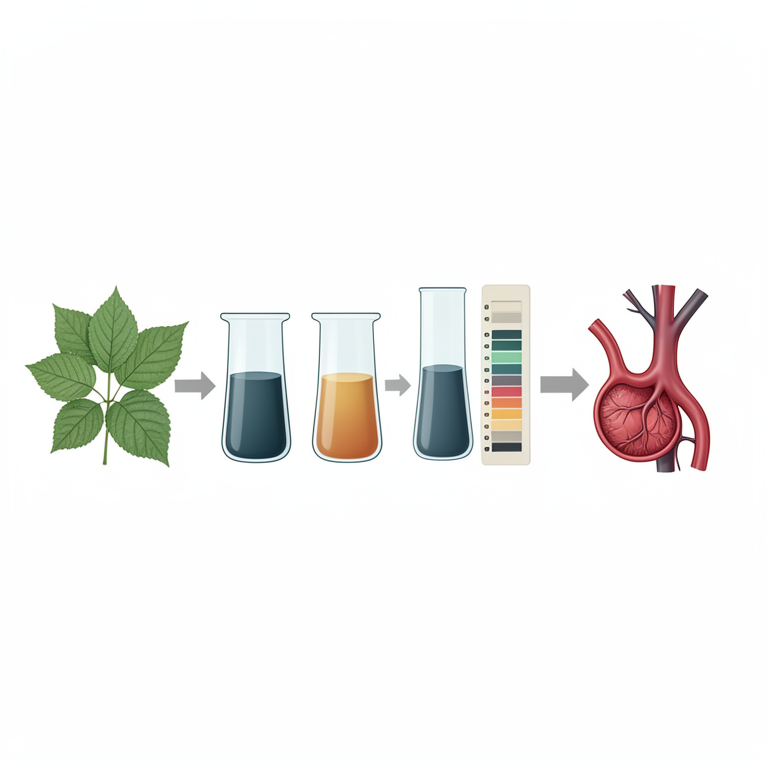
Bioassay-Guided Isolation Workflow
AI-generated conceptual illustration (Passiflora edulis leaves and a blood vessel). It explains the idea and does not show study data.
View source evidence ↗Figures & tables
From the original paper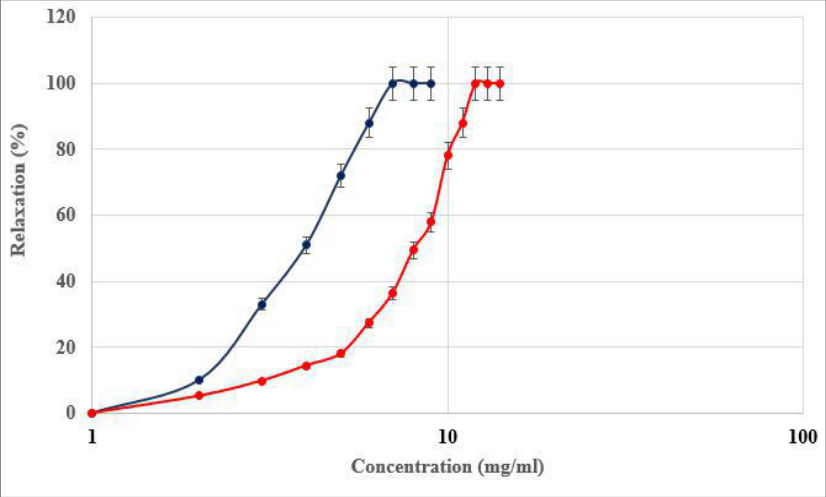 Figure 1
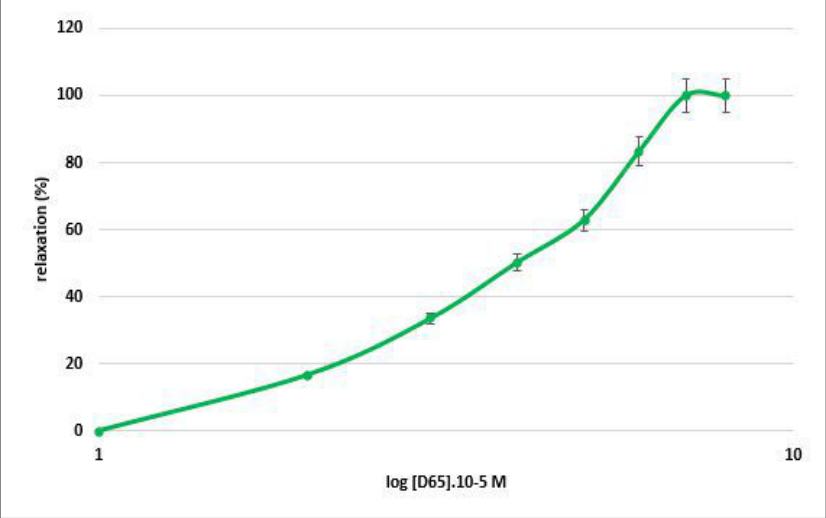 Figure 2
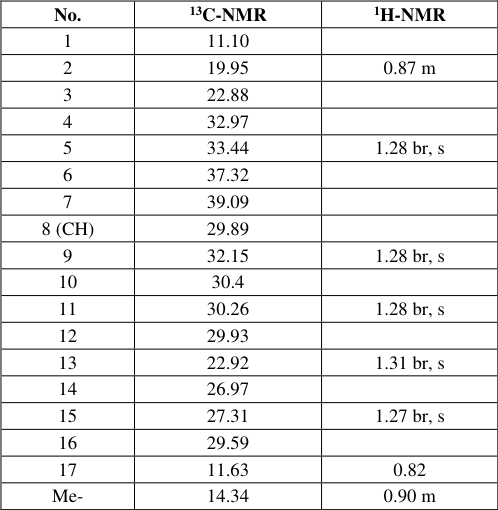 Table 1
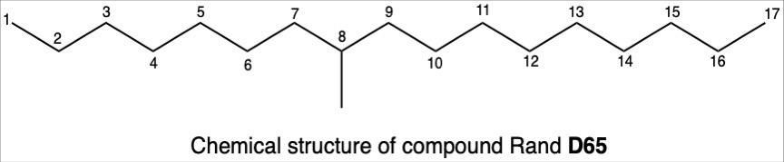 Figure 3
Introduction
Cardiovascular disorders represent the leading cause of morbidity and mortality worldwide, with arterial hypertension serving as a primary risk factor for cardiovascular disease development [1,2] . Despite the availability of conventional antihypertensive medications including calcium channel blockers, diuretics, angiotensin II receptor antagonists, angiotensin-converting enzyme inhibitors, and beta-blockers [3,4,5,6] Stephen et al., 2024), the search for novel therapeutic agents remains crucial. Traditional medicine systems, founded on indigenous knowledge and cultural practices, continue to provide valuable resources for hypertension management. Passiflora edulis leaves have been documented for their antihypertensive properties in traditional medicine across several regions, including Madagascar [7,8] . Our previous investigations have demonstrated the plant's antihypertensive, diuretic, and vasodilatory activities [9,10] . Elucidating the mechanism of action of ethnomedicinal preparations is essential to understand their pharmacological effects and predict potential adverse reactions [11,12] . Systematic investigation is necessary to establish both safety and efficacy profiles, thereby enabling evidence-based utilization with consequent social, health, and economic benefits. In this study, we report the isolation and structural characterization of a vasodilatory compound from P. edulis with potential applications in hypertension management. This approach aligns with the historical contribution of plant-derived compounds to pharmaceutical development, where natural products have provided starting points for over 50% of currently used drugs [13] .
Materials and Methods
Materials and Methods
Chemicals
All solvents (hexane, chloroform, ethanol, methanol, and ethyl acetate) of analytical grade were obtained from Labosi. Deuterated methanol (MeOD), deuterated chloroform (CDCl3), and components for Krebs-Henseleit solution preparation were purchased from Sigma-Aldrich Inc. (St. Louis, MO, USA). Standard 5 mm, 7′′ NMR tubes (XR-55 series) were sourced from Norell Inc. (Landisville, NJ, USA).
Animal handling
Male Wistar rats (200-250 g) were maintained at the Laboratory of Pharmacology General, Pharmacokinetics and Cosmetology (LPGPC) animal facility under standard conditions (12/12 h light/dark cycle, 22 °C ambient temperature). Animal care and experimental protocols were approved by the bioethics committee of the Sciences Faculty, University of Antananarivo, Madagascar (approval number: CBQ20/029).
Sample preparation
Passiflora edulis leaves were collected from Antsirabe, Vakinakaratra region, Madagascar. The plant material was transported to the laboratory and maintained at ambient temperature until processing. A voucher specimen was authenticated and deposited at the herbarium of Parc Botanique et Zoologique de Tsimbazaza (PBZT), Antananarivo, Madagascar. The leaves were thoroughly washed with tap water to remove extraneous matter and shade-dried at room temperature for 30 days. The dried material (200 g) was pulverized using a Brook Crompton © série 2000 grinder.
Bioassay fractioning
The powdered material underwent sequential extraction with hexane, dichloromethane, ethyl acetate, and methanol using a Soxhlet apparatus for 72 h per solvent. After extraction, solvents were removed under reduced pressure using an Evapotec® rotary evaporator to yield dry extracts. The percentage yield of extracts was then determined. All crude extracts were evaluated for vasodilatory activity on isolated thoracic aorta pre-contracted with norepinephrine. The extract demonstrating the highest activity was selected for further isolation procedures.
Isolation of the vasodilatory molecule
The bioactive compound was isolated using precoated preparative silica gel (GF254) glass base plates (Merck, 107747) with 1 mm thickness. The ethyl acetate fraction was deposited on preparative chromatographic plates and developed using an ethyl acetate-methanol (95:5) (v/v) solvent system. After development, plates were dried, and separated compounds were visualized under UV light (254/365 nm). The retention factor (Rf) was calculated for each band, and compounds were recovered by scraping. Purity assessment was conducted using two-dimensional TLC on aluminum base precoated silica gel GF254 plates (Merck) developed with ethyl acetate-methanol (70:30) (v/v) and ethyl acetate-methanol (50:50) solvent systems.
Vasodilatory investigation
Vasodilatory activity of the isolated compound was investigated on isolated aorta contracted with norepinephrine. The rats were sacrificed under thiopental sodium at the dose of 50 mg/kg (Pentothal Sodium, Abbott, Turkey) and the thoracic aorta was removed. Ring segments (4 mm long) were prepared in Krebs-Henseleit solution (composition in mM: NaCl: 118, KCl: 4.7, MgSO4: 1.2, KH2PO4: 1.2, NaHCO3: 25, CaCl2: 2.5, and D-Glucose: 10.6). The aortic rings were mounted between two wire hooks and suspended in organ baths containing 10 mL Krebs-Henseleit solution, maintained at 37 °C, and bubbled with 95% CO2 and 5% O2. The isolated aorta was washed at 15-minute (min) intervals. After 60 min of equilibration under the resting tension of 1 g, the organ was subjected to a viability test and sensibilisation by exposure to norepinephrine 10 -4 M (dissolved in distilled water) prior to the execution of the experimental protocol. After this test, the preparation was rinsed and left to stabilise for 30 minutes, during which it was rinsed every 15 minutes. Afterwards, the organ was contracted with norepinephrine injected in the bath in a cumulative manner until maximum contraction, then the isolate (D65) was injected in the bath in a cumulative manner to get concentration from 10 -10 M in the bath until complete relaxation. Isometric contraction and relaxation were recorded using force displacement transducer. The responses were expressed as percentage relaxation from maximal norepinephrine precontraction.
Data analysis
Vasorelaxation induced by D65 was expressed as percentage relaxation relative to norepinephrine-induced contraction. Results are presented as mean ± standard error of the mean (SEM), where n represents the number of aortic preparations. Statistical analysis was performed using oneway ANOVA followed by Student's t-test to evaluate significant differences between relaxation responses at various concentrations of D65. Differences were considered statistically significant at p<0.05.
Structural determination of the bioactive isolate
The chemical structure of the isolated compound was elucidated using spectroscopic methods including UV spectroscopy, 1D-and 2D-Nuclear Magnetic Resonance (NMR) spectroscopy (Bruker FT-NMR Avance-500 spectrometer, Ettlingen, Germany), and mass spectrometry (Q-TOF) at the Department of Pharmacognosy and Herbal Medicine, School of Pharmacy, University of Ghana, Legon, Accra, Ghana. All NMR experiments were conducted at a temperature of 300 K to ensure consistency and accuracy throughout the analysis. The 1 H NMR spectra were acquired at 500 MHz using the "zg30" pulse sequence optimized for proton spectroscopy. Measurements were performed using a 500 MHz Bruker spectrometer with AVANCE console equipped with 5 mm TXI and TCI triple resonance inverse detection cryoprobes with z-axis pulse field gradient. Spectral data processing was conducted using Bruker Topspin software (version 3.6.3).
Results and discussion
Results and discussion
Determination of the active fraction
This study aimed to isolate and characterize a vasodilatory compound from Passiflora edulis leaves, traditionally used for hypertension management in rural Madagascar. Our previous studies demonstrated that the hydroalcoholic extract of these leaves reduces hyper-sodium diet-induced hypertension through diuretic and vasodilatory mechanisms [14,15] . To identify the bioactive principles responsible for the vasodilatory effect, bioassay-guided fractionation was undertaken. Comparative evaluation of different fractions (hexane, ethyl acetate, and methanol) revealed that while the hexane fraction exhibited no vasodilatory activity, the ethyl acetate fraction demonstrated superior potency compared to the methanolic fraction, with EC50 values of 0.99 and 2.49 mg/ml, respectively (p<0.05) (Fig 1). Consequently, the ethyl acetate fraction was selected for further isolation procedures. . The 1 H-NMR (500 MHz) and 13 C-NMR (125 MHz) data for D65 (CDCl3, δ in ppm, J in Hz) are presented in Table 1. The 13 C-NMR and 1 H-NMR data were consistent with those reported for 8-methylheptadecane in the literature [16] .
| No. | 13C-NMR | 1H-NMR |
|---|---|---|
| 1 | 11.10 | |
| 2 | 19.95 | 0.87 m |
| 3 | 22.88 | |
| 4 | 32.97 | |
| 5 | 33.44 | 1.28 br, s |
| 6 | 37.32 | |
| 7 | 39.09 | |
| 8 (CH) | 29.89 | |
| 9 | 32.15 | 1.28 br, s |
| 10 | 30.4 | |
| 11 | 30.26 | 1.28 br, s |
| 12 | 29.93 | |
| 13 | 22.92 | 1.31 br, s |
| 14 | 26.97 | |
| 15 | 27.31 | 1.27 br, s |
| 16 | 29.59 | |
| 17 | 11.63 | 0.82 |
| Me- | 14.34 | 0.90 m |
Table text extracted from the original PDF; superscript letters are shown inline. The original table image is below.
View original table image
Conclusion
This study demonstrates the significant vasorelaxant effect of 8-methylheptadecane (D65) isolated from Passiflora edulis leaves on thoracic aorta isolated from rats. The ability of this aliphatic hydrocarbon to induce aortic relaxation provides scientific validation for the traditional use of P. edulis leaves in hypertension management. These findings suggest that D65 could represent a promising lead compound for the development of novel antihypertensive agents. Further investigation, including comprehensive in vivo pharmacological evaluation, pharmacokinetic profiling, and toxicological assessment, is warranted to fully characterize the therapeutic potential of this compound.
Acknowledgement
AcknowledgmentsThe authors acknowledge the laboratory of the Department of Pharmacognosy and Herbal Medicine, University of Ghana, Legon Accra, Ghana to enable us to carry out the structural determination of our sample and the laboratory of pharmacology of the Pharmacology Department of Sciences Faculty of the University of Antananarivo, Madagascar for the pharmacological investigation, and all the staff of the two laboratories for their contribution.
Figures and tables from the paper
References
16 in the original paper- Harrison DG, Patrick DM. Immune mechanisms in hypertension. Hypertension. 2024;81(8):1659-1674. Available from: https://doi.org/10.1161/hypertensionaha.124.21355
- Dos Passos RR, Santos CVD, Priviero F, Briones AM, Tostes RC, Webb RC, et al. Immunomodulatory activity of cytokines in hypertension: a vascular perspective. Hypertension. 2024;81(7):1411-23. Available from: https://doi.org/10.1161/hypertensionaha.124.21712
- Arendse LB, Danser AHJ, Poglitsch M, Touyz RM, Burnett JC, Llorens-Cortes P, et al. Novel therapeutic approaches targeting the renin-angiotensin system and associated peptides in hypertension and heart failure. Pharmacol Rev. 2019;71(4):539-70. Available from: https://doi.org/10.1124/PR.118.017129
- Höcht C, Allo MÁ, Polizio AH, Moretton MA, Carranza A, Chiappetta DA, et al. New and developing pharmacotherapies for hypertension. Expert Rev Cardiovasc Ther. 2022;20(8):647-66. Available from: https://doi.org/10.1080/14779072.2022.2105204
- Huang L, Zhang Y, Xing L, Li PQ, Chu H, He CX, et al. Pharmacological research progress of novel antihypertensive drugs. Discov Med. 2024;36(184):882-97. Available from: https://doi.org/10.24976/discov.med.202436184.83
- Winner JG, Jain S, Gupta D. Unveiling novel molecules and therapeutic targets in hypertension-a narrative review. Eur J Pharmacol. 2024;984(1):177053. Available from: https://doi.org/10.1016/j.ejphar.2024.177053
- Rawat P, Gill NS, Arora R. Phytochemical and pharmacological review on Passiflora spp. Arch Pharm Pharma Sci. 2016;1(1):1-9.
- Landazuri P, Loango N, Gallego B, Restrepo B. Vascular protective effects of Passiflora edulis f. flavicarpa Degener: assessment of antiatherogenic capability in coronary arteries. Rev Cubana Plant Med. 2017;22(1):1-9.
- Miora DR, Rajaonarison JF, Ralahiravo DY, Razafimahazoro SD, Quansah N, Randrianavony P. Evaluation of anti-hypertensive and vasorelaxant activity of ethanolic extract of Passiflora edulis (PASSIFLORACEAE) leaves in rat. World J Biol Pharm Health Sci. 2024a;20(03):390-5. Available from: https://doi.org/10.30574/wjbphs.2024.20.3.0944
- Miora DR, Randrianavony P, Ralahiravo YD, Razanadrabenafindra R, Quansah N, Rajaonarison JF. Evaluation of diuretic activity of hydro ethanolic extract of Passiflora edulis f. edulis (PASSIFLORACEAE) leaves in rat. GSC Biol Pharm Sci. 2024b;29(02):40813. Available from: https://doi.org/10.30574/gscbps.2024.29.2.0447
- Baldo F. Prediction of modes of action of components of traditional medicinal preparations. Phys Sci Rev. 2020;5(2):20180115. Available from: https://doi.org/10.1515/PSR-2018-0115
- Si-Yuan P, Shu-Feng Z, Si-Hua G, Zhi-Ling Y, ShuoFeng Z, Min-Ke T, et al. New perspectives on how to discover drugs from herbal medicines: CAM's outstanding contribution to modern therapeutics. Evid Based Complement Alternat Med. 2013;2013(627375):1-25. Available from: https://doi.org/10.1155/2013/627375
- Smyth C, Liu J, Yuan S, Obaidi I, Sheridan H. Carissa spinarum L.: a study using ethnomedicine-guided systems pharmacology in identifying a mechanism of action of a medicinal plant. Planta Med. 2022. Available from: https://doi.org/10.1055/s-00421759276
- Miora DR, Rajaonarison JF, Ralahiravo DY, Razafimahazoro SD, Quansah N, Randrianavony P. Evaluation of anti-hypertensive and vasorelaxant activity of ethanolic extract of Passiflora edulis (PASSIFLORACEAE) leaves in rat. World J Biol Pharm Health Sci. 2024a;20(03):390-5. Available from: https://doi.org/10.30574/wjbphs.2024.20.3.0944
- Miora DR, Randrianavony P, Ralahiravo YD, Razanadrabenafindra R, Quansah N, Rajaonarison JF. Evaluation of diuretic activity of hydro ethanolic extract of Passiflora edulis f. edulis (PASSIFLORACEAE) leaves in rat. GSC Biol Pharm Sci. 2024b;29(02):40813. Available from: https://doi.org/10.30574/gscbps.2024.29.2.0447
- Chow S, Fletcher MT, Lambert L, Gallagher OP, Moore CJ, Cribb BW, et al. Novel cuticular hydrocarbons from the cane beetle Antitrogus parvulus: 4,6,8,10,16-penta and 4,6,8,10,16,18hexamethyldocosanes. J Chem Ecol. 2005;31(12):283545. Available from: https://doi.org/10.1021/jo0481093