
Research article · 2025 · Full text
International Journal of Agriculture and Food ScienceDevelopment of bael powder incorporated functional flavoured milk
Volume 7(7) · Pages 523–528 · DOI: 10.33545/2664844x.2025.v7.i7g.556 ↗
Research areasFood Industry and Aquatic Biology
Abstract
Author-writtenFunctional flavoured milk was developed by incorporating bael powder in milk. To determine the optimal formulation, levels of bael powder varying from 1-4 and sugar 7-9 percent was employed, using Response Surface Methodology a statistical tool. The optimization process was based on sensory characteristics such as colour and appearance, flavour, consistency/mouthfeel, sedimentation and overall acceptability of the product. RSM optimization yielded ideal proportions of 3.13 percent bael powder and 7.82 percent sugar. The formulation prepared using these optimized values were compared to control flavoured milk containing cocoa in place of bael powder. The experimental formulation had notably higher protein content (3.51%), titratable acidity (0.18%LA), viscosity (25.2 cP), tyrosine values (230.23 µg tyrosine/5 ml), DPPH radical scavenging activity (89.63 percent inhibition) and total phenolic content (1.32 mg GAE/g) compared with control flavoured milk sample. Sensory evaluations revealed that the bael enriched flavoured milk outperformed the control in overall acceptability.
Summary
Source-checkedPlain-language reading of the full paper, prepared with AI and checked against the text. Each point links to the authors' own words.
Why it matters
- Bael fruit is a versatile ingredient for functional foods and can be processed into various products including powders and syrups. View evidence ↗
- Bael pulp is valued for its therapeutic properties, specifically its laxative effects and its use in treating diabetes and gastrointestinal issues. View evidence ↗
- The presence of polyphenolic components and flavonoids gives bael fruit pulp strong antioxidant properties. View evidence ↗
The question
- The study aimed to use Response Surface Methodology (RSM) to find the best proportions of bael powder and sucrose to improve the nutritional value and sensory appeal of flavoured milk. View evidence ↗
What they did
- The beverage was formulated using toned milk containing 8.7% solids-not-fat (SNF) and 3.2% fat. View evidence ↗
- The process involved heating milk to 90°C for 10 minutes, cooling it to 60°C, and then mixing in sugar, tri-sodium citrate, and bael powder. View evidence ↗
- The final product was sterilized in-bottle at 115°C for a duration of 21 minutes. View evidence ↗
- Sensory quality was assessed by a trained panel of 10 judges using a 9-point hedonic scale. View evidence ↗
What they found
- The optimal formulation for the flavoured milk was determined to be 7.82% sugar and 3.13% bael powder. View evidence ↗
- The bael-enriched milk had a higher protein content (3.51±0.06%) compared to the cocoa-based control milk (3.2±0.03%). View evidence ↗
- The bael-enriched milk exhibited significantly higher viscosity (25.2±0.03 cP) than the control milk (15.2±0.05 cP). View evidence ↗
- The bael-enriched milk showed superior antioxidant potential with a DPPH radical scavenging activity of 89.63±0.45% compared to 75.15±0.48% in the control. View evidence ↗
- Total phenolic content was substantially higher in the bael-enriched milk (1.32±0.02 mg GAE/g) than in the control (0.24±0.01 mg GAE/g). View evidence ↗
- The tyrosine value, indicating proteolytic activity, was much higher in the bael-enriched milk (230.23±0.72 µg/5 ml) than in the control (55.36±0.85 µg/5 ml). View evidence ↗
- The bael-enriched milk received a higher overall acceptability score (8.5±0.10) than the control milk (8.3±0.30). View evidence ↗
- The developed bael-enriched flavoured milk remained stable for a shelf life of 63 days at room temperature. View evidence ↗
What it means
- The authors conclude that bael-enriched flavoured milk is a functional beverage with nutraceutical properties that can support overall wellness and reduce oxidative stress. View evidence ↗
Visual summary
3 visualsIllustrations explain the paper; charts are replotted from the paper's own table values.
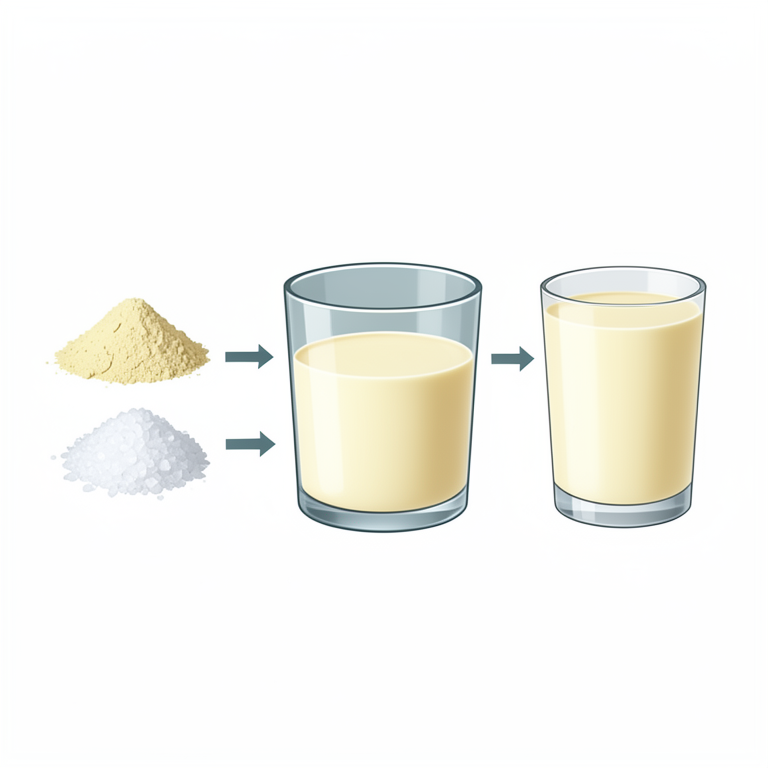
Optimization Process
AI-generated conceptual illustration (bael fruit powder and milk). It explains the idea and does not show study data.
View source evidence ↗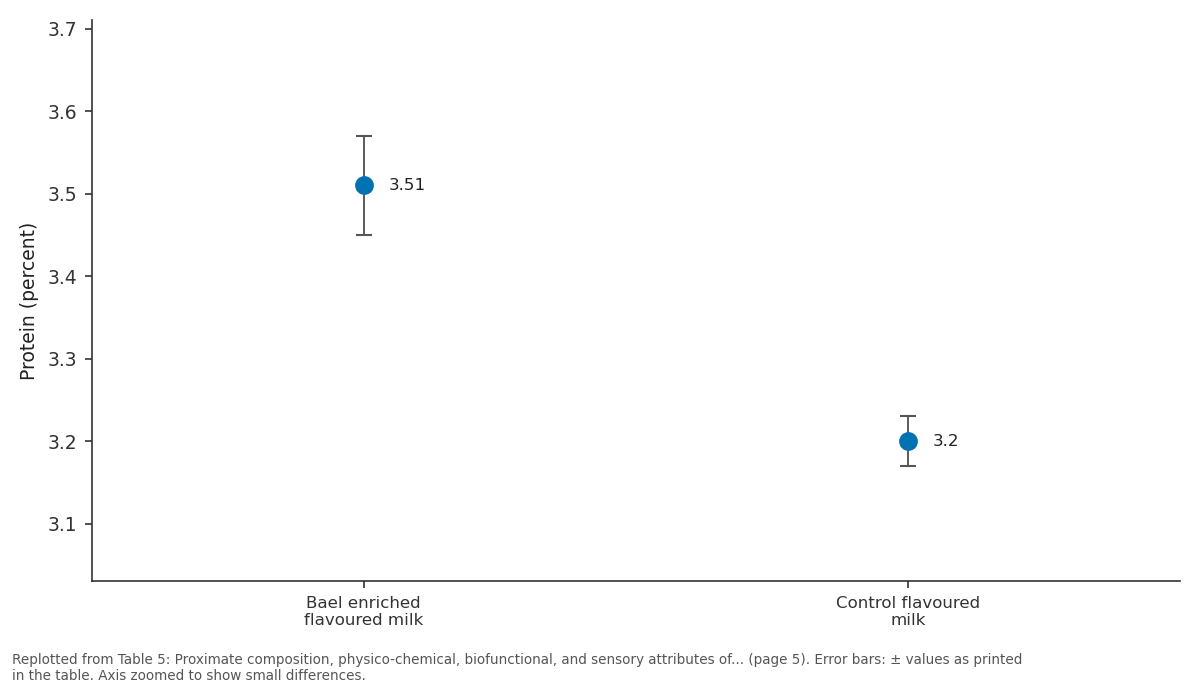
Protein (percent): Bael enriched flavoured... vs Control flavoured milk
Replotted from Table 5 (page 5) of the original paper. Every bar is the paper's own table value.
View source evidence ↗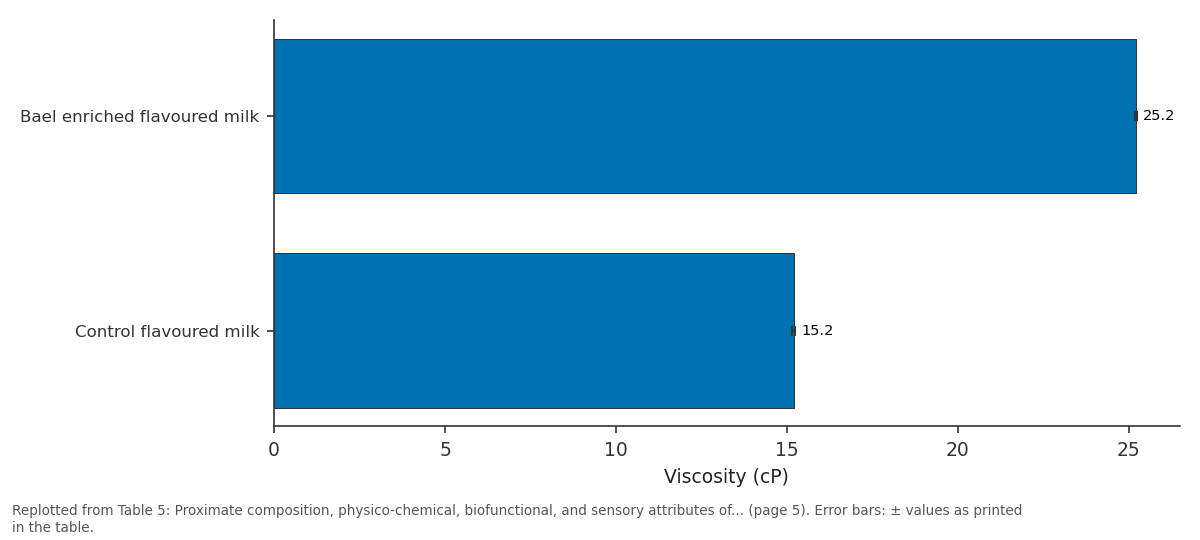
Viscosity (cP): Bael enriched flavoured... vs Control flavoured milk
Replotted from Table 5 (page 5) of the original paper. Every bar is the paper's own table value.
View source evidence ↗Figures & tables
From the original paper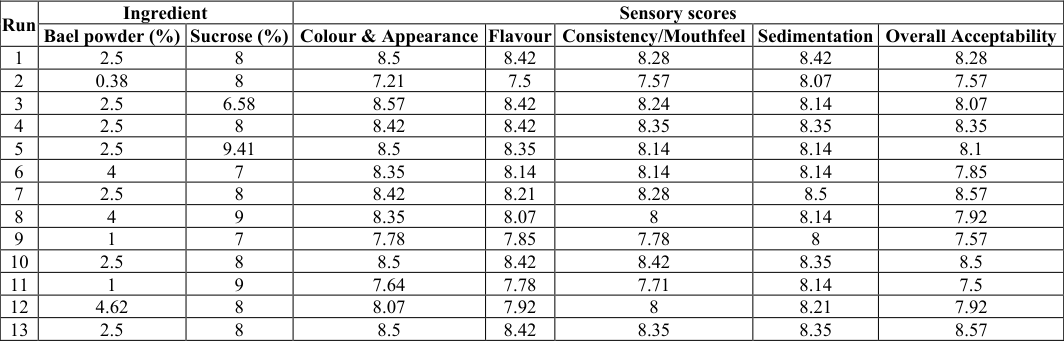 Table 1
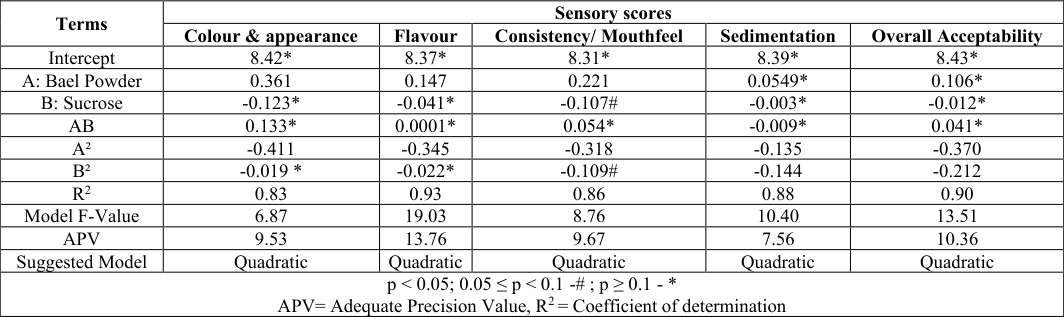 Table 2
 Table 3
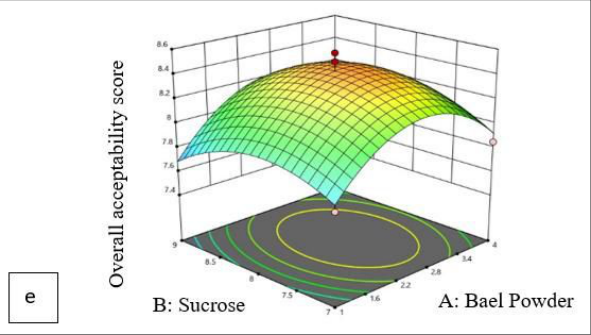 Figure 1
 Table 4
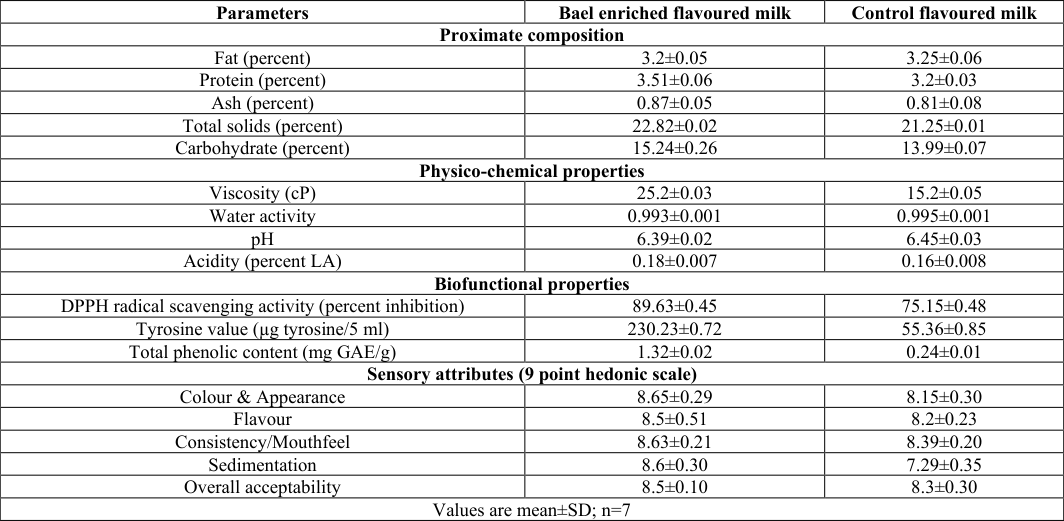 Table 5
Introduction
Flavoured milk prepared by using natural ingredients is gaining popularity as a nutritious and refreshing beverage that combines the health benefits of milk with the therapeutic properties of various natural ingredients. Bael fruit holds significant potential in functional foods, as it can be used and processed into a variety of products such as preserves, murabba, wine, jam, slabs, powder and sherbet, syrup (Singh et al., 2014) [20] . The bael pulp is particularly recognized for its strong laxative effect. It is widely used to treat gastrointestinal issues such as diarrhea, dysentery, and diabetes (Maity et al., 2009) [13] . Additionally, bael has antibacterial, antifungal, anticancer, antipyretic, and nalgesic properties and helps to relieve constipation (Patel et al., 2012) [18] . The antioxidant properties of dried bael fruit powder have also been studied by Wijewardana et al. (2015) and evaluated its effectiveness in scavenging DPPH free radicals. Human's gastrointestinal infections are treated with the fruit pulp of Aegle marmelos (bael). Terpenoids, flavonoids, phenolic compounds, steroids, fat, lignin and oil, proteins, alkaloids, carbohydrates, cardiac glycosides, and flavonoids are all present in this fruit's pulp. Due to the presence of phytochemicals such as flavonoids and other polyphenolic components, it was discovered that the fruit pulp extract of bael had strong antioxidant qualities (Rajan et al., 2011) [19] . The current study was focused on developing a flavoured milk containing bael powder to meet the growing demand for functional foods among health conscious consumers. The primary objective is to determine the optimal levels of bael powder and sucrose using response surface methodology (RSM) to enhance sensory attributes and also to improve the nutritional content of the flavoured milk. Bael has an untapped prospective for processing because the good aroma of this fruit is not destroyed even during different processing techniques. By incorporating bael (Aegle marmelos) powder in flavoured milk, it can utilize the fruit's rich cultural heritage and nutritional potency to offer consumers a unique and health enhancing beverage option. Bael has a potential to address the demand for natural, plant-based ingredient in flavoured milk and it is a healthier alternative to artificial flavoured drinks. The incorporation of bael powder into milk lead to an increase in viscosity, which in turn contributed to improved mouthfeel and a richer sensory experience of the final product.
Materials and Methods
The bael enriched flavoured milk was formulated using toned milk (3.2% fat & 8.7% SNF) obtained from Vidya Dairy, Anand. Non-dairy ingredients included crystalline sugar of Madhur brand was procured from local market of Anand and tri sodium citrate from LOBA chemie was used. The flavoured milk was packed in sterilizable glass bottles (200 mL).
Preparation of flavoured milk: Toned milk was heated to 90°C for 10 minutes to stabilize the milk protein and then cooled to 60°C. Then the bael powder, sugar and tri-sodium citrate solution was added and properly mixed. The mixture was held for 30 minutes with frequent stirring to ensure proper dissolution. After that, homogenization was carried out and filled into 200 mL glass bottles and sealed with crown corks, followed by in-bottle sterilization at 115°C for 21 minutes. Finally, it was cooled and stored at room temperature.
Analysis of bael enriched flavoured milk: Toned milk and flavoured milk were analyzed for its titratable acidity (IS: SP-18, Part XI, 1981), fat, protein, total solids (FSSAI, 2022) [3] , ash (IS 1479, Part-II-1961) and carbohydrate was calculated by difference. For flavoured milk, water activity, pH, viscosity (Jelena et al., 2002) [9] , total phenolic content (Beatrix et al., 2023) [1] , protein breakdown, in terms of tyrosine content (Park et al., 2019) [17] and DPPH radical scavenging activity (McCune and Johns, 2002) [14] were also analyzed. Aerobic plate count, coliform count, yeast and mold count (FSSAI, 2024) [4] and spore count (IS: 4238, 1967) was analyzed for microbial quality.
Sensory evaluation of bael enriched flavoured milk:
The sensory evaluation of bael enriched flavoured milk was done by trained panel of 10 judges using a 9-point hedonic scale (Meilgaard et al., 1999) [15] . Statistical analysis: Design Expert software was used for all statistical work including the selection of the number of trials and final analysis of the data generated. An advanced statistical software programme named RSM Design Expert 13.0.1.0 was employed in the study. RSM with central composite rotatable design (CCRD) for two variables was adopted to optimize the quantity of bael powder and sucrose in flavoured milk with respect to selected sensory responses. The optimized level of ingredients was then replicated seven times and actual values of sensory analysis was compared with predicated value.
Results and Discussion
Optimization of variables, bael powder and sucrose level using RSM thirteen experimental trials were conducted using a central composite rotatable design (CCRD) as delineated in Table 1. The responses in terms of sensory evaluation is recorded and presented in Table 1 and is discussed herein.
| Run | Ingredient | — | Sensory scores | — | — | — | — |
|---|---|---|---|---|---|---|---|
| Bael powder (%) | Sucrose (%) | Colour & Appearance | Flavour | Consistency/Mouthfeel | Sedimentation | Overall Acceptability | |
| 1 | 2.5 | 8 | 8.5 | 8.42 | 8.28 | 8.42 | 8.28 |
| 2 | 0.38 | 8 | 7.21 | 7.5 | 7.57 | 8.07 | 7.57 |
| 3 | 2.5 | 6.58 | 8.57 | 8.42 | 8.24 | 8.14 | 8.07 |
| 4 | 2.5 | 8 | 8.42 | 8.42 | 8.35 | 8.35 | 8.35 |
| 5 | 2.5 | 9.41 | 8.5 | 8.35 | 8.14 | 8.14 | 8.1 |
| 6 | 4 | 7 | 8.35 | 8.14 | 8.14 | 8.14 | 7.85 |
| 7 | 2.5 | 8 | 8.42 | 8.21 | 8.28 | 8.5 | 8.57 |
| 8 | 4 | 9 | 8.35 | 8.07 | 8 | 8.14 | 7.92 |
| 9 | 1 | 7 | 7.78 | 7.85 | 7.78 | 8 | 7.57 |
| 10 | 2.5 | 8 | 8.5 | 8.42 | 8.42 | 8.35 | 8.5 |
| 11 | 1 | 9 | 7.64 | 7.78 | 7.71 | 8.14 | 7.5 |
| 12 | 4.62 | 8 | 8.07 | 7.92 | 8 | 8.21 | 7.92 |
| 13 | 2.5 | 8 | 8.5 | 8.42 | 8.35 | 8.35 | 8.57 |
Table text extracted from the original PDF; superscript letters are shown inline. The original table image is below.
View original table image
Effects on sensory parameters
The colour and appearance scores of flavoured milk, ranged from 7.21 to 8.57 (Table 1). The formulation with 2.50% bael powder and 6.58% sucrose received the highest score, while the one with 0.38% bael powder and 8.00% sucrose scored the lowest. The colour and appearance of the product were positively influenced by bael powder (A) (p<0.05) and it had a non-significant negative influence of sucrose (B).
The interactive effect of bael powder and sucrose (AB) had non-significant positive impact on colour and appearance. At quadratic level, bael powder (A 2 ) had negatively significant impact while sucrose (B 2 ) had non-significant negative impact on colour and appearance score (Table 2). Similar effect was found by Begum et al. (2024) [2] who developed functional ice cream by incorporating bael fruit (Aegele marmelos) pulp and found that increase in fruit pulp concentration (0-50%) had a positive effect on colour & appearance score. Similarly Navdeep et al. (2023) [16] developed protein enriched whey-bael beverage and found that the increase in bael pulp concentration (6.0 to 14.0%) positively affected the colour & appearance score. The flavour score of flavoured milk samples were observed in the range of 7.5 to 8.42 (Table 1). The formulation with 2.50% bael powder and 8.00% sucrose scored highest, while the one with 0.38% bael powder and 8.00% sucrose scored lowest among panellists. The flavour of the product were positively influenced by bael powder (A) (p<0.05) and sucrose (B) had minimal non-significant negative influence. The interactive effect of bael powder and sucrose (AB) had a minor non-significant positive impacts on flavour score. At quadratic level, bael powder (A 2 ) had a significant negative impact and sucrose (B 2 ) had a non-significant negative impact on flavour score (Table 2). A similar trend was found by Begum et al. (2024) [2] who incorporated bael fruit (Aegele Marmelos) pulp into functional ice cream and observed that increasing in fruit pulp concentration (till 25 percent) had a positive effect on taste & smell score. Similarly Vipul et al. (2023) [21] developed value added products from bael powder such as bread, soup and sharbat and found that as increasing in bael powder (10 -20%) concentration positively affected the flavour score.
| Terms | Sensory scores | — | — | — | — |
|---|---|---|---|---|---|
| Colour & appearance | Flavour | Consistency/ Mouthfeel | Sedimentation | Overall Acceptability | |
| Intercept | 8.42* | 8.37* | 8.31* | 8.39* | 8.43* |
| A: Bael Powder | 0.361 | 0.147 | 0.221 | 0.0549* | 0.106* |
| B: Sucrose | -0.123* | -0.041* | -0.107# | -0.003* | -0.012* |
| AB | 0.133* | 0.0001* | 0.054* | -0.009* | 0.041* |
| A² | -0.411 | -0.345 | -0.318 | -0.135 | -0.370 |
| B² | -0.019 * | -0.022* | -0.109# | -0.144 | -0.212 |
| R2 | 0.83 | 0.93 | 0.86 | 0.88 | 0.90 |
| Model F-Value | 6.87 | 19.03 | 8.76 | 10.40 | 13.51 |
| APV | 9.53 | 13.76 | 9.67 | 7.56 | 10.36 |
| Suggested Model | Quadratic | Quadratic | Quadratic | Quadratic | Quadratic |
| p < 0.05; 0.05 ≤ p < 0.1 -# ; p ≥ 0.1 - * APV= Adequate Precision Value, R2 = Coefficient of determination |
Table text extracted from the original PDF; superscript letters are shown inline. The original table image is below.
View original table image
The mouthfeel/consistency score of flavoured milk samples were observed in the range of 7.57 to 8.42 (Table 1). The formulation with 2.50% bael powder and 8.00% sucrose received the highest panelist score, while the one with 0.38% bael powder and 8.00% sucrose received the lowest. Mouthfeel/consistency were significantly (p<0.05) enhanced by bael powder (A), highlighting its role in improving the thickness/viscosity of the product and it had non-significant negative influence of sucrose (B). The interactive effect of bael powder and sucrose (AB) had non-significant positive effect on this response. At quadratic level, bael powder (A 2 ) had a significant negative impact and sucrose (B 2 ) had a non-significant negative impact on consistency/mouthfeel score. Similar trend was reported by Begum et al. (2024) [2] who developed a functional ice cream by incorporating bael fruit (Aegele Marmelos) pulp and found that increase in fruit pulp concentration (till 25 percent) positively affected on texture score. Similarly Hitendra et al. (2016) developed basundi from admixture of whole milk and Aegle marmelos pulp and found that increase in bael pulp concentration (0-15%) positively affected the body and texture score.
The sedimentation score of flavoured milk samples were observed in the range of 8.00 to 8.42 (Table 1). The formulation with 2.50% bael powder and 8.00% sucrose received the highest panelist score, while the one with 1.00% bael powder and 7.00% sucrose received the lowest. Bael powder (A) affected the sedimentation score in a nonsignificant positive manner and sucrose (B) affected in a non-significant negative manner. While the interaction term (AB) contributed negatively to the sedimentation score. At quadratic level, both bael powder (A 2 ) and sucrose (B 2 ) had significant negative impact on sedimentation score (Table 2). The overall acceptability score of flavoured milk samples were observed in the range of 7.5 to 8.57 (Table 1).
The formulation with 2.50% bael powder and 8.00% sucrose received the highest score from the panelists, while the one with 1.00% bael powder and 9.00% sucrose scored the lowest. Bael powder (A) affected the overall acceptability score in a non-significant positive way and sucrose (B) affected in a non-significant negative way. While interaction term (AB) showed a non-significant positive effect. At quadratic level, both bael powder (A 2 ) and sucrose (B 2 ) had significant negative impact on overall acceptability score (Table 2). Similar observations were reported by Begum et al. (2024) [2] for functional ice cream incorporating bael fruit (Aegele Marmelos) pulp and found that increase in fruit pulp concentration (till 25 percent) had a positive effect on overall acceptability score. Similarly Kaur et al. (2019) [11] developed burfi with carrot and bael pulp and found that increase in bael pulp concentration (40%) positively affected the overall acceptability score. The relationship of variables on sensory responses is also vividly demonstrated in the three-dimensional response surface plots (Figure1, a -e), which depicts the effect of varying levels of levels of bael powder and sugar level on various responses under study.
Optimization of flavoured milk
The optimization of bael enriched flavoured milk was performed using numerical optimization techniques. For optimization, bael powder was set to be maximized, while sucrose was kept within the range, both having a level of importance of 3. Sensory attributes such as colour & appearance, flavour, consistency/mouthfeel, sedimentation and overall acceptability were also evaluated. Among these, flavour was given the highest importance level of 5, followed by consistency and overall acceptability (importance level 4) and then colour & appearance and sedimentation (importance level 3) (Table 4).The RSM suggested optimal levels of 3.13 percent bael powder and The bael enriched flavoured milk (T2) was analysed and compared with the control flavoured milk containing cocoa (1.5% cocoa powder, T1) for its proximate composition, physico-chemical properties, sensory attributes and biofunctional properties. Results were statistically analysed using a completely randomized design (CRD) as shown in Table 5. Non-significant variation was observed in fat content, ash content and water activity between experimental (T2) and control (T1) sample. Higher protein content was observed in T2 sample compared to T1. It was obvious as bael powder contributed to protein content (10.85%). An increase in total solids and carbohydrate content was also recorded in T2 and such effect was due to higher addition of bael powder (3.13%) compared to cocoa (1.5%). Viscosity was also higher in T2 compared to T1, contributed to improved mouthfeel which might be due to contribution of fiber from bael powder (11.36% crude fiber in powder). A slight reduction in pH was observed in T2 relative to T1, while titratable acidity was marginally higher in T2 than in T1 which is due to contribution of acidic component of bael powder that had a lowered pH. Bael incorporated flavoured milk (T2) exhibited significantly higher DPPH radical scavenging activity compared to control sample (T1), indicating enhanced antioxidant potential of bael powder. Additionally, total phenolic content was higher in T2 than in T1, reflecting improved functional quality. Tyrosine value, an indicator of proteolytic activity, was also elevated in T2 relative to T1 that could be due to higher phenolic content of bael compared to cocoa. Sensory evaluation revealed higher scores for T2 in colour and appearance, flavour, consistency/mouthfeel, sedimentation, and overall acceptability, compared to T1. Microbiologically, both the experimental and control samples showed no detectable aerobic plate count, coliform count, yeast and mold count and spore count.
| Parameters | Bael enriched flavoured milk | Control flavoured milk |
|---|---|---|
| Proximate composition | ||
| Fat (percent) | 3.2±0.05 | 3.25±0.06 |
| Protein (percent) | 3.51±0.06 | 3.2±0.03 |
| Ash (percent) | 0.87±0.05 | 0.81±0.08 |
| Total solids (percent) | 22.82±0.02 | 21.25±0.01 |
| Carbohydrate (percent) | 15.24±0.26 | 13.99±0.07 |
| Physico-chemical properties | ||
| Viscosity (cP) | 25.2±0.03 | 15.2±0.05 |
| Water activity | 0.993±0.001 | 0.995±0.001 |
| pH | 6.39±0.02 | 6.45±0.03 |
| Acidity (percent LA) | 0.18±0.007 | 0.16±0.008 |
| Biofunctional properties | ||
| DPPH radical scavenging activity (percent inhibition) | 89.63±0.45 | 75.15±0.48 |
| Tyrosine value (µg tyrosine/5 ml) | 230.23±0.72 | 55.36±0.85 |
| Total phenolic content (mg GAE/g) | 1.32±0.02 | 0.24±0.01 |
| Sensory attributes (9 point hedonic scale) | ||
| Colour & Appearance | 8.65±0.29 | 8.15±0.30 |
| Flavour | 8.5±0.51 | 8.2±0.23 |
| Consistency/Mouthfeel | 8.63±0.21 | 8.39±0.20 |
| Sedimentation | 8.6±0.30 | 7.29±0.35 |
| Overall acceptability | 8.5±0.10 | 8.3±0.30 |
| Values are mean±SD; n=7 |
Table text extracted from the original PDF; superscript letters are shown inline. The original table image is below.
View original table image
| Sr. No. | Parameter | Units | Goal | Lower Limit | Upper Limit | Level of Importance |
|---|---|---|---|---|---|---|
| 1 | A:Bael powder | percent | Maximize | 1 | 4 | 3 |
| 2 | B:Sucrose | percent | in range | 7 | 9 | 3 |
| 3 | Colour & Appearance | Out of 9 | in range | 7.21 | 8.57 | 3 |
| 4 | Flavour | Out of 9 | Maximize | 7.5 | 8.42 | 5 |
| 5 | Consistency/Mouthfeel | Out of 9 | Maximize | 7.41 | 8.42 | 4 |
| 6 | Sedimentation | Out of 9 | in range | 8 | 8.5 | 3 |
| 7 | Overall Acceptability | Out of 9 | Maximize | 7.57 | 8.57 | 4 |
Table text extracted from the original PDF; superscript letters are shown inline. The original table image is below.
View original table image
Conclusion
A bael enriched flavoured milk was developed using response surface methodology (RSM), for the optimization of proportions of bael powder and sucrose to achieve a sensorially acceptable product. Bael powder showed a significant (p<0.05) positive effect on colour and appearance, flavour and consistency/mouthfeel score and non-significant positive effect on sedimentation and overall acceptability score. Based on these outcomes, software suggested preparation of the bael enriched flavoured milk using 3.13 percent bael powder and 7.82 percent sugar. Developed flavoured milk incorporated with bael powder was having fat (3.20%), higher protein (3.51%) compared to regular flavoured milk, ash (0.87%), carbohydrate (15.24%) and total solids (22.82%) and had shelf life of 63 days when stored at room temperature. Bael enriched flavoured milk exhibited 19.26 percent higher DPPH radical scavenging activity and about 450 percent increase in total phenolic content compared to control flavoured milk which indicates its superior antioxidant potential. This suggest that bael enriched flavoured milk can offer additional health benefits such as reducing oxidative stress and supporting overall wellness which can make it a functional dairy beverage with enhanced neutraceutical properties.
Figures and tables from the paper
| Property | Equation |
|---|---|
| Colour & appearance | 8.18122+0.444724A-0.030465B+0.088608AB-0.182602A2-0.019633B2 |
| Flavour | 6.09246+0.864966A+0.308865B+0.000074AB-0.153556A2-0.021886B2 |
| Consistency/mouthfeel | 1.62509+0.565217A+1.55517B+0.036245AB-0.141519A2-0.109536B2 |
| Sedimentation | -1.41009+0.387917A+2.31971B-0.006289AB-0.060191A2-0.144198B2 |
| Overall acceptability | -5.68760+0.674381A+3.30796B+0.027368AB-0.164504A2-0.211794B2 |
Table text extracted from the original PDF; superscript letters are shown inline. The original table image is below.
View original table image
References
22 in the original paper- Beatrix S, Henrietta B, Viktoria K, Erika L, Fanni D, Rita S. Antioxidant and polyphenol content of different milk and dairy products. J King Saud Univ Sci. 2023.
- Begum NJ, Chandimala UR, Hettiarachchi HAP, Gimhani JAN. Development of functional ice cream by incorporating bael fruit (Aegele Marmelos) pulp and evaluation of its quality parameters. Sri Lankan J Technol. 2024;2773-6970.
- Food Safety and Standard Authority of India. Manual of methods of analysis of foods: Dairy and Dairy Products. New Delhi: FSSAI; 2022.
- Food Safety and Standards Authority of India, Ministry of Health and Family Welfare, Government of India. Manual of methods of analysis of foods - microbiological examination of food and water. FSSAI; 2024.
- Hitendra PS, Puneet A, Binod KB, Parimita, John D. Development of Basundi from admixture whole milk and Aegle marmelos (wood apple) pulp. Int J Chem Stud. 2019;7(6):2656-2659.
- Bureau of Indian Standards. Method of test for dairy industry. Chemical analysis of milk. IS: 1479 (Part II). New Delhi: Bureau of Indian Standards; 1961.
- Bureau of Indian Standards. Indian Standard Specification of Sterilized Milk. IS: 4238. New Delhi: Bureau of Indian Standards; 1967.
- Bureau of Indian Standard. Handbook of food analysis. Milk and milk products. IS: SP-18 (XI). New Delhi: Bureau of Indian Standard; 1981.
- Jelena DD, Macej O, Snezana J. Viscosity of set-style yogurt as influenced by heat treatment of milk and added demineralized whey powder. J Agric Sci. 2002.
- Kandeel SA, Megahed AA, Ebeid MH, Constable PD. Ability of milk pH to predict subclinical mastitis and intramammary infection in quarters from lactating dairy cattle. J Dairy Sci. 2018. DOI: 10.3168/jds.2018-14993
- Kaur A, Anita K, Savita S, Boora RS. Sensory evaluation of value added dairy products using bael pulp (Aegle marmelos) and stevia powder. Int J Curr Microbiol Appl Sci. 2019. DOI: 10.20546/ijcmas.2019.809.246
- Zhang L, Sun DW, Zhang Z. Methods for Measuring Water Activity (aw) of Foods and Its Applications to Moisture Sorption Isotherm Studies. Crit Rev Food Sci Nutr. 2015. DOI: 10.1080/10408398.2015.1108282
- Maity P, Hansda D, Bandopadhaya U, Mishra DK. Biological activities of crude extracts and chemical constituents of Bael, Aegle marmelos (L.) Corr. Indian J Exp Biol. 2009;47:849-861.
- McCune LM, Johns T. Antioxidant activity in medicinal plants associated with the symptoms of diabetes mellitus used by the indigenous peoples of the North American boreal forest. J Ethnopharmacol. 2002;82:197-205. DOI: 10.1016/S03788741(02)00180-0.
- Meilgaard MC, Carr BT, Civille GV. Sensory evaluation techniques. CRC Press; 1999. DOI: 10.1201/9781003040729
- Navdeep JP, Ramesh V, Amit K, Smita S, Manoj KJ, Ashish D. Development of protein enriched whey-bael beverage and its evaluation for antioxidant potential. Pharma Innov J. 2023:254-259. DOI: 10.22271/tpi.2023.v12.i1c.19197
- Park JH, Coralia VG, Sam-Pin L. Fortification of Polyγ-Glutamic Acid and γ-Aminobutyric Acid in Homogenized Hydroponic Ginseng Co-Fermented by Bacillus subtilis HA and Lactobacillus plantarum EJ2014. Prev Nutr Food Sci. 2019;24(4):485-491. DOI: 10.3746/pnf.2019.24.4.485
- Patel PK, Sahu J, Sahu L, Prajapati NK, Dubey BK. Aegle marmelos: A review on its medicinal properties. Int J Pharm Phytopharmacol Res. 2012;332-341.
- Rajan S, Gokila M, Jency P, Brindha P, Sujatha RK. Antioxidant and phytochemical properties of Aegle marmelos Fruit Pulp. Int J Curr Pharm Res. 2011;3:6570.
- Singh A, Sharma HK, Kaushal P, Upadhyay A. Bael (Aegle marmelos Correa) products processing: a review. Afr J Food Sci. 2014;204-215. DOI: 10.5897/AJFS2013.1119
- Vipul C, Vivak K, Harsh PS, Vijay KS, Vaishali, Arjun SP, et al. Development of value added products prepared from bael (Aegle marmelos L.) powder and its quality evaluation. Pharma Innov J. 2023;12(5):11111117.
- Wijewardana R, Nawarathne SB, Wickramasinghe I, Gunawardane CR, Wasala T. Retention of physicochemical and antioxidant properties of dehydrated bael (Aegle marmelos) and palmyra (Borassus flabellifer) fruit powders. Procedia Food Sci. 2016;6:170-175. DOI: 10.1016/j.profoo.2016.02.041