
Research article · 2025 · Full text
International Journal of Horticulture and Food ScienceAllelopathic influence of Senna uniflora on morphological traits of Vigna mungo (Black gram)
Volume 7(7) · Pages 136–141 · DOI: 10.33545/26631067.2025.v7.i7b.348 ↗
Research areasAllelopathy and phytotoxic interactionsPlant tissue culture and regenerationSeed Germination and Physiology
Abstract
Author-writtenThe present study entitled “Allelopathic Influence of Senna uniflora on Morphological Traits of Vigna mungo” was conducted at JSA College of Agriculture and Technology, Cuddalore, to evaluate the allelopathic effects of plant part extracts of Senna uniflora on black gram (Vigna mungo). The experiment was laid out in a Randomized Block Design (RBD) with three replications and four treatments: leaf extract (T1), stem extract (T2), root extract (T3), and control (T4), with each extract prepared using 50 g of plant material in 50 ml of distilled water.The results revealed that the leaf extract (T1) significantly inhibited seed germination and seedling growth of black gram compared to the control. Shoot length, root length, fresh weight, dry weight, seedling vigour indices (SVI-I & SVI-II), and response index were all adversely affected. In contrast, stem and root extracts (T2 and T3) showed negligible effects on seed germination and seedling growth. The study concludes that allelochemicals are likely concentrated in the leaves of Senna uniflora, causing phytotoxic effects on black gram.
Summary
Source-checkedPlain-language reading of the full paper, prepared with AI and checked against the text. Each point links to the authors' own words.
Why it matters
- Pulses are essential protein sources in India, but current per capita availability (42g/day) is lower than the recommended levels for men (60g/day) and women (55g/day). View evidence ↗
- Black gram (Vigna mungo), or urad dal, is a critical pulse crop cultivated throughout India. View evidence ↗
- Allelopathy occurs when plants release phytotoxic allelochemicals that can either benefit or harm the germination and growth of other plants. View evidence ↗
The question
- The study aimed to evaluate how extracts from different parts of the plant Senna uniflora affect the morphological traits of black gram (Vigna mungo). View evidence ↗
What they did
- The researchers used a Randomized Block Design with three replications and four treatment groups: leaf extract, stem extract, root extract, and a distilled water control. View evidence ↗
- Extracts were prepared by soaking 50 g of plant material in 50 ml of distilled water for 24 hours before filtration. View evidence ↗
- The roll towel method was used for germination testing, with results recorded after 7 days. View evidence ↗
- The study measured shoot length, root length, fresh weight, dry weight, and two seedling vigour indices. View evidence ↗
What they found
- Leaf extract (T1) reduced the germination rate to 80%, while stem extract, root extract, and the control all maintained a 100% germination rate. View evidence ↗
- The minimum shoot length (8.15 cm) occurred with leaf extract (T1), while the maximum (12.76 cm) was observed with root extract (T3). View evidence ↗
- Root length was shortest in the leaf extract treatment (5.74 cm) and longest in the root extract treatment (11.99 cm). View evidence ↗
- Seedling vigour was lowest in the leaf extract treatment and highest in the control group. View evidence ↗
- Allelochemicals in the leaf extract had a more severe inhibitory effect on root length than on shoot length. View evidence ↗
What it means
- The authors conclude that Senna uniflora leaves contain the highest concentration of allelochemicals, causing the strongest inhibitory effects on black gram. View evidence ↗
- The authors recommend careful management of Senna uniflora in fields to protect susceptible crops during their early germination and seedling stages. View evidence ↗
Visual summary
1 visualsIllustrations explain the paper; they do not show study data.
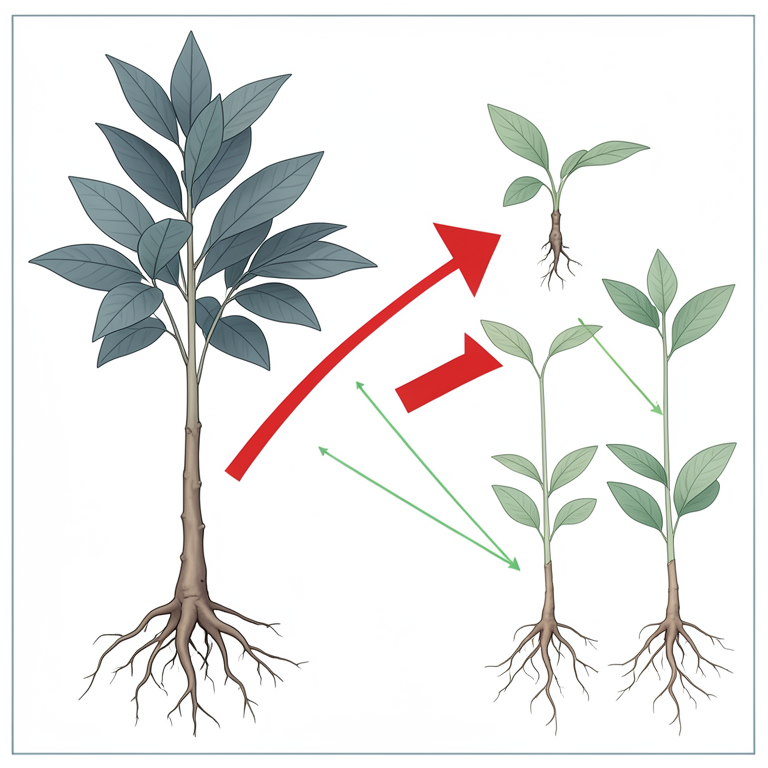
Allelopathic Impact Comparison
AI-generated conceptual illustration (Senna uniflora plant and Vigna mungo (black gram) seedlings). It explains the idea and does not show study data.
View source evidence ↗Figures & tables
From the original paper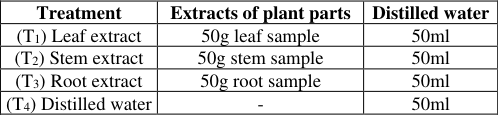 Table 1
 Table 1
 Table 2
Introduction
The term allelopathy was first coined by Australian plant physiologist Hans Molisch in 1937. It is derived from the Greek words "allelon" (mutual) and "pathy" (harm). Allelopathy refers to the direct or indirect, beneficial or harmful effects of one plant on another through the release of allelochemicals, which are phytotoxic substances that can inhibit germination and growth. According to Musa (2017) [3] , allelopathy involves both stimulatory and inhibitory effects via secondary compounds released by plants into their surroundings. Pulses are a vital source of protein in India. However, the per capita availability (42g/day) is below the required level (60g/day for men, 55g/day for women). India ranks first globally in both area (35%) and production (25%) of pulses, with 24 million hectares producing 16.5 million tonnes (FAO, 2016; Dr. J. Vasanthakumar, 2016) [1,9] . Despite this, productivity remains low at 650 kg/ha, compared to the world average of 909 kg/ha. In Tamil Nadu, black gram (46%) occupy around 71% of the pulse area. However, yields are lower than the national average due to constraints such as lack of high-yielding varieties, poor seed quality, and low seed replacement rate (SRR) (Dr. J. Vasanthakumar, 2016) [9] . Black gram (Vigna mungo), also known as urad dal, is a key pulse crop in India, grown nationwide. It belongs to the Leguminosae family and is resilient to adverse climatic conditions, enhancing soil fertility by fixing atmospheric nitrogen. It contains about 26% protein, nearly three times that of cereals, along with essential minerals and vitamins. It contributes to soil enrichment by fixing around 22.10 kg N/ha, equivalent to 59,000 tonnes of urea annually. India is the largest producer and consumer of black gram, which makes up 10% of the country's total pulse production (Narayan & Kumar, 2015) [10] .
Senna uniflora (Mill.) -A Botanical Overview
Senna uniflora (Mill.) H.S. Irwin & Barneby is an annual, woody, erect herb, commonly known as one-leaf senna or single-flowered senna. The genus name Senna is derived from the Arabic word for a thorny bush, while uniflora means "single-flowered" in Latin.
Distribution
• Global: Found in tropical South America, Brazil, West Indies, Mexico, and India. • India: Reported in Thrissur district, Kerala.
(Dr. N. Sasidharan, KFRI, Peechi)
Habitat
• Grows in plains, wastelands, and bushy hillsides.
• Occurs in both moist and dry open areas.
• Commonly seen at elevations of 200-1,000 meters. • Lower surface: densely hairy, especially along veins.
• Petiole: 1.8-2 cm long with stalked yellow glands between leaflet pairs (except terminal).
Inflorescence and Flowers
• Inflorescence: Axillary racemes with short, hairy peduncles and pedicels. • Pistil: Hairy ovary with 7-9 ovules, pubescent style, and trumpet-shaped stigma.
Fruits and Seeds
• Pods: Straight, quadrangular, 25-30 mm long, hairy, wrinkled, and constricted between seeds. • Seeds: 6-9 per pod, dark brown, rhomboid to subquadrangular, glabrous.
Flowering & Fruiting Period
• From August to December.
Agroforestry and Ecological Relevance
• In India, Senna uniflora is cultivated to suppress the invasive weed Parthenium hysterophorus. • Despite being in the Fabaceae family, the species does not fix atmospheric nitrogen, as it lacks a symbiotic relationship with nitrogen-fixing bacteria. • Within its native range, the plant is also considered a weed.
Pharmacological and Environmental Significance of
Pharmacological and Environmental Significance of
Senna uniflora
Several studies have explored the pharmacological and ecological properties of Senna uniflora (Mill.) H.S. Irwin & Barneby:
Phytochemical and Antioxidant Properties L.P. Kothapalli (2017) [2] reported the presence of important phytochemicals in the leaf extract of Senna uniflora. The extract demonstrated significant antioxidant activity, and its gel formulation also showed promising potential as a natural source of antioxidants.
Antimicrobial and Phytochemical Studies
T. Jothirathinam and V.D. Victor (2016) conducted a study on the phytochemical constituents and antimicrobial activity of Senna uniflora. Their findings suggest the plant's potential in traditional medicine due to its bioactive compounds, offering health applications at an affordable cost. Additionally, the benzene and alcohol extracts of the plant were analyzed for their ability to remove copper from aqueous solutions, highlighting its application in environmental remediation.
Allelopathic and Autotoxic Effects
J.A. Kumari and P. Prasad (2018) investigated the allelopathic and autotoxic effects of Senna uniflora, contributing valuable insights into its ecological interactions and potential impact on plant growth dynamics.
Materials and methods
The experiment was carried out at JSA College of Agriculture and Technology (TNAU Affiliated), Thittagudi, Tamilnadu, India during 2021-2022 to study and evaluate the allelopathic chemical screening of aqueous extract of leaf, stem and root of Senna uniflora.
Experiment Details Collection and Preparation of Plant Extracts:
Fresh leaf, stem, and root parts of Senna uniflora were collected from the field of JSA College of Agriculture and Technology. The study was conducted in the Agronomy Laboratory. The plant materials were cleaned thoroughly to remove soil and debris. Each plant part was processed as follows:
• Leaf extract: 50 g of leaves were crushed and soaked in 50 ml of distilled water. • Stem extract: 50 g of stems were crushed and soaked in 50 ml of distilled water. • Root extract: 50 g of roots were crushed and soaked in 50 ml of distilled water.
All samples were soaked for 24 hours, after which the aqueous extracts were filtered and used for allelopathic bioassay. Allelopathic Bioassay Using Green Gram and Black Gram Seeds the allelopathic effect of Senna uniflora extracts was tested on the seeds of green gram and black gram. The roll towel method was employed for the germination test.
• Seeds were placed on germination sheets soaked with the prepared aqueous extracts:
• Extracts were reapplied every 24 hours to keep the sheets moist and avoid drying. • After 7 days, the number of germinated seedlings was recorded for each treatment.
Measurement of Seedling Growth Parameters
• Fresh weight of the seedlings was recorded immediately after 7 days. • For dry weight, the germinated seedlings were placed in a hot air oven at 100°C until completely dried, and the weight was then measured.
Treatment details
Treatment details
The seeds were considered as germinated when it's radicle was about 2mm long, and the germination percentage was determined by counting the number of germinated seeds on the 7 th day after sowing (DAS).After final count, Germination percentage (GP%) was calculated by using the following formula (Raun et al., 2002) expressed as percent.
Germination percentage (%) = number of germinated seeds/number of seeds kept for germination ×100
After 7 DAS, seedlings from each extracts were carefully removed and the Seedling shoot length was measured from the collar region to the top of the longest leaf and expressed as cm.
The root length of the seedlings was measured from the base of the stem to the tip of the longest root and expressed as cm.
After measuring the root length and shoot length of the seedlings, the fresh weight should be measured by using the weighing balance and expressed as mg.
After that the seedlings was placed on hot air oven to drying up, then the dry weight of the seedlings were measured by using weighing balance and expressed as mg.
3.3.7. Seedling vigour index II -[standard germination% × seedling dry weight (mg)] The vigour index of the seedlings was calculated using the following formula proposed by Abdul-Baki and Anderson (1973) and expressed as percent were evaluated.
Response Index (RI)
were determined as follows (Richardson and Williamson, 1988)
Whereas, T is treatment and C is control. A negative RI reflects in output of seedling (germination (%), shoot length (cm), root length (cm), fresh weight (mg), and dry weight (mg)) of black gram & green gram seedlings in treatment relative to output in control.
The experiment was carried out at JSA College of Agriculture and Technology (TNAU Affliated), Tittagudi, Tamil Nadu, India during 2021-2022 to study the morphological traits and allelopathic chemical screening of Senna uniflora. The results obtained from the experiment are discussed in this chapter.
Results
Results
The germination experiment was conducted using Black gram seeds. All seeds germinated successfully except those treated with the leaf extract (T 1 ). The highest germination rate (100%) was observed in seeds treated with stem extract (T 2 ) and root extract (T 3 ), as well as in the control (T 4 ). The lowest germination rate (80%) was recorded in the leaf extract treatment (T 1 ). The overall germination percentage across all treatments was calculated as 93.33%.
Shoot length varied among the different treatments:
• Leaf extract (T 1 ): 8.15 cm • Stem extract (T 2 ): 10.10 cm • Root extract (T 3 ): 12.76 cm • Control (T 4 ): 10.24 cm
The maximum shoot length was recorded in the root extract (T 3 ), while the minimum was in the leaf extract (T 1 ) treatment.
Root length also showed variation with treatments:
• Leaf extract (T1): 5.74 cm • Stem extract (T2): 6.61 cm • Root extract (T3): 11.99 cm • Control (T4): 6.10 cm
The longest root was observed in seedlings treated with root extract (T 3 ), and the shortest in those treated with leaf extract (T 1 ). Different plant extracts of Senna uniflora were tested for their allelopathic effect on the germination of black gram seeds [4] . Among the treatments, the highest germination percentage was observed in the control (T 4 ), while the lowest was recorded in the leaf extract treatment (T 1 ). The stem (T 2 ) and root (T 3 ) extracts did not show significant allelopathic effects on germination when compared to the control. The reduced germination observed in the leaf extract treatment may be attributed to a higher concentration of allelochemicals, which likely interfered with the normal germination process. The inhibitory effect on seed germination suggests that the leaves of Senna uniflora contain more potent allelochemicals than the stem and root parts.
Allelopathic Effect of Senna uniflora on Seedling
Length: The seedling length of black gram varied across treatments with different plant extracts. Among them, root extract (T 3 ) promoted better seedling growth than the control (T 4 ). In contrast, the leaf extract (T 1 ) exhibited the most pronounced inhibitory effect, reducing both shoot and root lengths. Notably, the inhibition was more severe in root length than in shoot length, indicating that the allelochemicals present in the leaf extract of Senna uniflora may have a stronger suppressive effect on the root development of black gram seedlings.
Allelopathic Effect of Senna uniflora on Seedling
Vigour: Seedling vigour was found to decrease with increased concentrations of allelochemicals. In this study, the lowest seedling vigour was recorded in the leaf extract treatment, while the highest was observed in the control group. This suggests that the allelochemicals present in the leaf extract significantly reduced seedling vigour. The order of seedling vigour among treatments indicates that black gram seedlings were most vigorous in the control (T 4 ), followed by root (T 3 ), stem (T 2 ), and least in the leaf extract (T 1 ).
Conclusions
The study clearly demonstrates that different parts of Senna uniflora exhibit varying degrees of allelopathic effects on black gram (Vigna mungo). Among all treatments, the leaf extract (T 1 ) showed the strongest inhibitory effect, significantly reducing germination percentage, seedling length (especially root length), and seedling vigour. This suggests that the leaves of Senna uniflora contain a higher concentration of allelochemicals compared to the stem and root.
In contrast, the root extract (T 3 ) not only showed no inhibitory effect but even slightly enhanced seedling growth when compared to the control (T 4 ), indicating its relatively non-toxic or possibly growth-promoting nature under the conditions tested.
Overall, the findings highlight the potential allelopathic impact of Senna uniflora leaf extract on crop species in black gram. These results emphasize the need for careful management of Senna uniflora in agricultural fields, especially during the early germination and seedling stages of susceptible crops.
Figures and tables from the paper
| Treatment | Extracts of plant parts | Distilled water |
|---|---|---|
| (T1) Leaf extract | 50g leaf sample | 50ml |
| (T2) Stem extract | 50g stem sample | 50ml |
| (T3) Root extract | 50g root sample | 50ml |
| (T4) Distilled water | - | 50ml |
Table text extracted from the original PDF; superscript letters are shown inline. The original table image is below.
View original table image
| Treatment | Germination (%) | Shoot length (cm) | Root length (cm) | Fresh weight (mg) | Dry weight (mg) |
|---|---|---|---|---|---|
| Black gram | 93.33±6.66 | 10.33±1.33 | 8.11±1.95 | 0.25±0.02 | 0.02±0.002 |
| Distilled water | 100±0 | 9.97±0.27 | 7.55±1.45 | 0.28±0.015 | 0.026±0.002 |
Table text extracted from the original PDF; superscript letters are shown inline. The original table image is below.
View original table image
References
8 in the original paper- FAO. India at a glance. Rome: Food and Agriculture Organization; 2016.
- Kothapalli LP. Evaluation of Senna uniflora (Mill.) leaf extract and its tropical gel formulation for biological activity. International Journal of Pharmaceutics and Drug Analysis. 2017;5(8):354-365.
- Musa D, et al. Preliminary allelopathic activity of aqueous extract of Senna occidentalis on the germination and early seedling growth of cowpea (Vigna unguiculata). International Journal of Current Science and Studies. 2017;1(1):[no page number given].
- Singh N, Lal M. Response of different weed management practices on growth and yield of black gram (Vigna mungo L.) under irrigated conditions of Punjab. Int J Res Agron. 2023;6(1):1-5.
- Prasad S, et al. Effects of Cassia tora on the germination and growth of Parthenium hysterophorus L. Allelopathy Journal. 2006;17(2):303-310.
- Senna uniflora (Mill.) Irwin & Barneby. Mem Bot Gard. 1982;35:258. Pradeep A, Prasad K. Indian Journal of Forestry. 2008;31:435.
- Vasanthakumar J. Constraints to productivity of black gram (Vigna mungo L.) and green gram (Vigna radiata L.) in Tamil Nadu. Indian Journal of Natural Sciences. 2016;7(38):0976-0997.
- Narayan P, Kumar S. Constraints of growth in area, production and productivity of pulses in India: An analytical approach to major pulses. Indian Journal of Agricultural Research. 2015;49(2):114-124.