
Research article · 2025 · Full text
International Journal of Agriculture and Food ScienceFeathered allies as bioindicators and agents for sustainable agriculture
Volume 7(7) · Pages 396–400 · DOI: 10.33545/2664844x.2025.v7.i7e.537 ↗
Research areasInvertebrate Taxonomy and Ecology
Abstract
Author-writtenFeather allies, or Birds, have long coexisted with agricultural ecosystems, playing both direct and indirect roles in enhancing farm productivity, biodiversity, and ecological balance. From pest control and pollination to integrated farming and economic diversification, avians contribute significantly to sustainable agriculture. This ecosystem service supports integrated pest management (IPM) practices and reduces environmental pollution by chemicals. Additionally, many species of birds help to pollinate crops and disperse seeds and, in many cases help to promote biodiversity that can improve crop yields. Diverse avifauna also indicates healthy agro-ecosystems that includes well-managed habitats that provide food and shelter for wildlife. An extension of sustainable agriculture and avifauna conservation, through habitat conservation and agroforestry helps to facilitate the biodiversity of avifauna. For example, rice paddies and orchards, offer mixed cropping systems which provide habitats and food resources for both granivorous, frugivorous and insectivorous birds. These birds contribute to soil health and nutrient cycling, which assists in enhancing sustainable farming systems. Conversely, avifauna face habitat loss and population decline due to land conversion, pesticide exposure, agricultural intensification, loss of organic matter and habitat fragmentation. Each of the issues can interrupt processes initiated by birds and the same effect can be seen with the removal of healthy bird populations. To mitigate these issues, agronomists can also use a few bird-friendly farming practices to mitigate these threats as well as foster a resilient agricultural ecosystem by incorporating hedgerows for pest management, cover crops and reducing the use of pesticide, herbicides, and fertilizers.
Summary
Source-checkedPlain-language reading of the full paper, prepared with AI and checked against the text. Each point links to the authors' own words.
Why it matters
- Birds have a long-standing relationship with agricultural ecosystems, contributing to biodiversity, ecological balance, and farm productivity. View evidence ↗
- The ecosystem services provided by birds support integrated pest management and help lower chemical pollution in the environment. View evidence ↗
- A diverse population of birds serves as an indicator of a healthy agro-ecosystem with well-managed habitats. View evidence ↗
The question
- The paper explores the economic and ecological value of birds in agriculture, specifically their roles in pest control, pollination, and nutrient cycling. View evidence ↗
What they did
- The authors utilize the framework of agricultural ornithology to analyze how birds interact with crops and pests. View evidence ↗
What they found
- Barn swallows can consume up to 60 insects per hour, which helps reduce the necessity for chemical pesticides. View evidence ↗
- Certain bird species, including Quail, Partridge, and some sparrows, assist in weed regulation by eating weed seeds. View evidence ↗
- Fresh chicken manure serves as an organic fertilizer containing 0.9% - 1.5% nitrogen, 0.4% - 0.5% phosphorus, and 0.8% potassium. View evidence ↗
- Birds act as sentinel species and bioindicators because they are observable and sensitive to environmental toxicants. View evidence ↗
- Agricultural pesticides are a major threat, affecting 87% of bird species that are globally threatened. View evidence ↗
- Habitat loss and fragmentation are driven by urban development, deforestation, and the expansion of agricultural land. View evidence ↗
- Integrating climate-resilient species like ducks and guinea fowl into smart farming systems offers potential for rural and commercial scalability. View evidence ↗
What it means
- The authors conclude that birds are essential for sustainable agriculture due to their roles in nutrient cycling, pollination, seed dispersal, and pest regulation. View evidence ↗
- To attract and retain birds, the authors recommend that farmers preserve habitats like forest patches, wetlands, and hedgerows. View evidence ↗
Visual summary
1 visualsIllustrations explain the paper; they do not show study data.
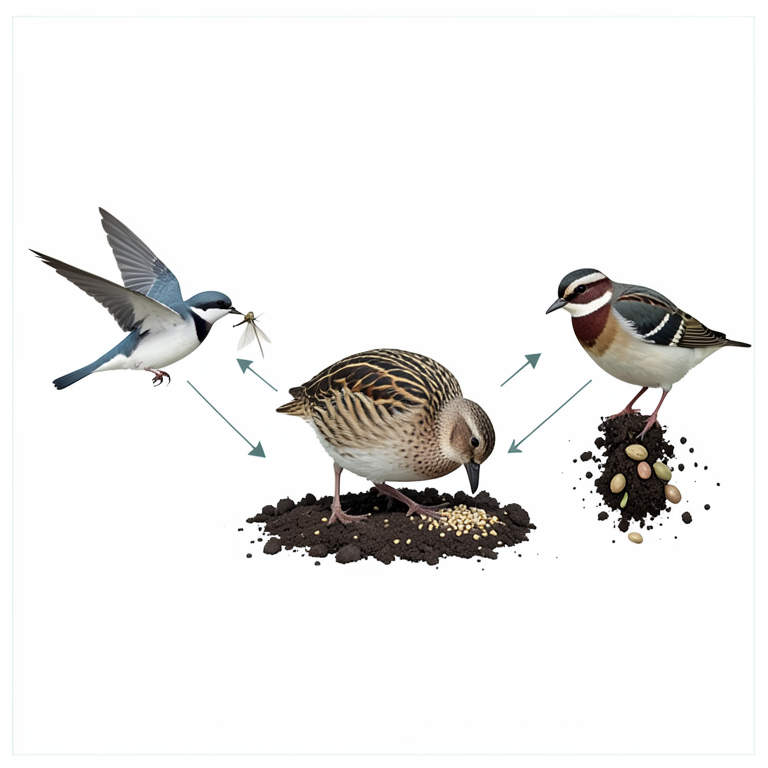
Avian Ecosystem Services Cycle
AI-generated conceptual illustration (Barn swallows and ground-feeding birds in a crop field). It explains the idea and does not show study data.
View source evidence ↗Figures & tables
From the original paper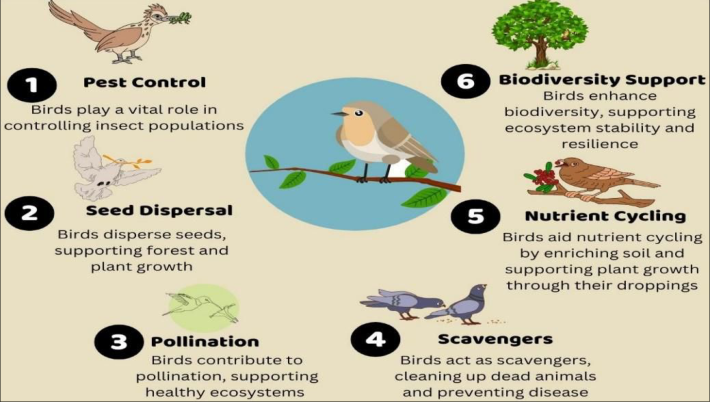 Figure 1
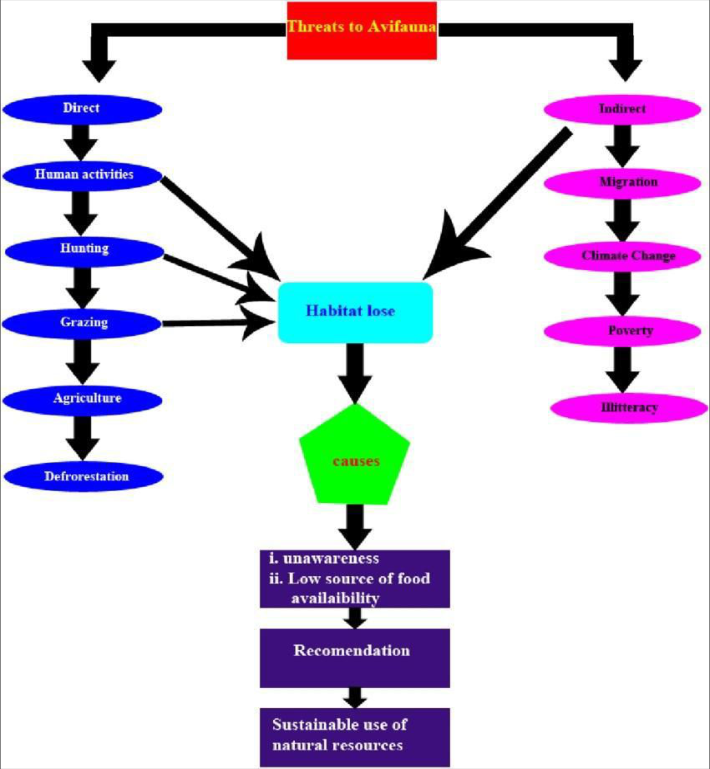 Figure 2
Introduction
The economic ornithology is the study of the economic impact of birds, focusing on their value to humans, particularly in agriculture and ecosystems. It examines how birds contribute to pest control, pollination, seed dispersal, and nutrient cycling, and also explores their negative impacts like crop damage. Agricultural ornithology is the study of birds in relation to agriculture, focusing on their impact, both positive and negative, on farming practices and ecosystems. It involves understanding how birds interact with crops, pests, and other agricultural components, and utilizing this knowledge for both conservation and pest management. Birds play an important role in balance of ecosystem. Agricultural birds include granivorous, frugivorous, nectarivorous, carnivorous, and omnivorous species (Priya et al., 2022; AL-Taai, 2022) [17,22] . Avifauna suppress the insect pests, so it used as a biological control agent. They are the key component of an agro ecosystem because they function as a potential pollinator, scavengers, nutrient depositors, prey, predators so it is known as Bio indicators (Parmesh Kumar and Sharmila, 2019) [15] . In addition, birds likewise improve soil quality indirectly through the modification of insect populations and the deposition of organic matter (through droppings). Bird species diversity and abundance are sometimes used as bioindicators of ecological quality in agricultural contexts (Benton et al., 2003) [2] . Feathered allies or bird populations help in promotion of sustainable agriculture with ecosystem services like pest control, pollination, and nutrient cycling. Birds feed upon a myriad of insect species and rodents seen as pests by farmers destroying crops and thus act as biological pest controllers, thereby reducing the use of chemical pesticides for a healthier environment. Many birds dismantle seeds and spotlight soil fertility, thus helping in seed dispersal and aiding in an increase in soil nutrient levels or crop yields. The presence of many avifaunal species usually depicts a balanced and resilient agroecosystem. Conservation of agroecosystem and agroforestry may further increase results, thus making birdfriendly agriculture a great potential strategy for agricultural sustainability (Wenny et al., 2011) [25] .
Functions of Avians 1. Pest control: Many birds are insectivorous they eat harmful insect and pest that affect crops growth and declines the yield. They help to decrease insect population by feeding on them, minimize the need of chemical pesticides (Kanchan Parajuli, 2024) [10] . Nicole Miller, (2024) [13] found that Barn swallows consume up to 60 insect per hour and reduce use of pesticide.
Seed dispersal & pollination: Birds help in forest
regeneration by seed dispersal. Frugivorous bird plays a significant role in spreading seed over large distance (Harvey, 2006) [9] . Certain bird such as hummingbird and sunbird is an important pollinator. Their foraging behavior enhances plant reproduction and genetic diversity (Mrunal et.al., 2025) [12] . 3. Weed regulation: Birds such as Quail, Patridge, and certain species of sparrows control weed population by consuming weed and seeds. This is particularly beneficial for agriculture field where weed management is crucial. Duck and Geese help to control the weed and pest in rice field as documented by Kanchan Parajuli (2024) [10] . 4. Soil fertility and Nutrient cycling: Birds dropping are rich in nitrogen and phosphorus, which help to increase soil fertility. Studies shows that avian-mediated nutrient cycling support microbial activity and helps to reduce the use of synthetic fertilizer by crops, and offers more sustainable solutions (Yeole, 2024) [28] .
Birds as Bioindicators of agro ecosystem health
Ecosystem health can be analyzed by the birds due to their sensitivity to environment change and various habitat. The overall ecosystem health can be analyzed with the presence and behaviour birds in agro ecosystem. Variation in birds' population indicate the change in environment and alters the farmers to take possible measures. They help in decomposition by scavenging and eating carrion. Bird dropping or guano serve as natural fertilizer that enhance soil fertility and promote plant growth (Kanchan Parajuli, 2024) [10] . Birds' diversity is an important ecological tool. They respond to many changes in environment so they are used as Bio-indicators. In wetland condition waterfowl is used as bio-indicator for both local and regional scales. Birds are sentinel species because they are observable, sensitive toxicants, and live in variety of trophic positions (Mangan, 2024) [18] . In many developing nation birds are used as a bio indicator in various cases of environmental pollution such as pollution caused by mining activities, raptor pollution decline caused by DDT, and radioactive events such as the Chernobyl disaster. The bird population is a sensitive indicator of pollution in both terrestrial and aquatic ecosystem (Mathialagan Mariyappan, 2023) [11] .
Benefits of birds in sustained Crop Production
Bird's excreta is the best substitute for chemical fertilizer that avoid adverse effect on environment. The bird droppings are rich in nitrogen, which act as a natural fertilizer. Excrete act as a green manure for agricultural soil. Chicken manure is used as organic fertilizer, for soil with low nitrogen content. Fresh chicken manure contains 0.8% potassium, 0.4% -0.5% phosphorus and 0.9% -1.5% nitrogen (Panditrao Dattatraya, 2019) [14] . Birds helps in nutrient cycling by dispersing seed and organic matter, which improve soil fertility and promote microbial activity (Bohnet et al., 2017) [4] . The dropping enriches the soil with nitrogen, phosphorus, and act as a natural fertilizer. By preying on soil-dwelling pests and insects, birds help maintain a balanced soil ecosystem that supports healthy root growth and nutrient uptake (Whelan et al., 2008) [26] .
Avifauna play an important role in promoting sustainable crop production and increase resilience of agro ecosystem. They also act as a natural pest controller by preying on insect and rodents that damage crops, and thereby reduce the need of chemical pesticides (Peisley, 2016) [16] . Their dropping also increases the soil fertility by nutrient cycling. The birds also act as bioindicator, helping farmers to monitor ecosystem health and respond to the environmental changes. The avian diversity can be increased through habitat preservation and reducing the use of pesticides (Whelan, et al., 2008) [26] . Avifauna support the food web and ecological interactions, also maintain soil health and crop productivity (Şekercioğlu, 2006) [20] .
Threats to Avifauna
Avian species plays an important role in ecosystem. The major threats for their population decline are due to different reasons but agriculture pesticides alone affect 87% of globally threatened bird species. Fluctuation in the population of avian species provide warning of environmental problems and healthy avian population are indicators of ecological integrity. The decline in avian population shows a collapsing ecosystem (Ashish Kumar et al., 2019) [1] . the risk of contracting disease also increases. Moreover, the increase in temperature caused by climate change allows the disease to move to higher altitude region and infect birds in that region. Climate change also has negative impact on egg laying of birds. Climate change led to mismatch between the timing of breeding and availability of staple foods for birds.
Global climate change has led to the occurrence of phenological mismatches, resulting in changes in population size, leading to population declines or even extinction, and studies have found that climate change has been a major factor in population changes of birds. Habitat loss is the major problem which lead to decline in bird population and disruption in ecological function. The expansion of agricultural land, urban development, deforestation, and infrastructure projects result in the destruction, fragmentation, and degradation of natural habitats (Bird Life International, 2018) [3] . Habitat loss is mainly due to agricultural expansion, urbanization, and deforestation. These lead to many species population decline or local extinction. This led to reduce the ecosystem support provide by the birds (Şekercioğlu et al., 2006) [20] .
Noise, vibrations, and movement from tractors, harvesters, construction equipment, and vehicles can disrupt bird feeding, nesting, and breeding behaviors. Frequent human presence in nesting areas can cause stress or abandonment of nests, especially during the breeding season. In agricultural and urban areas, such disturbances reduce habitat quality, limit reproductive success, and may lead to long-term population declines (Francis et al., 2009) [7] .
Promoting Bird -Friendly Farming
In agriculture landscape promoting bird-friendly farming help in preserving biodiversity and ensuring ecological sustainability. Practices such maintaining hedgerows, bird perches, help in reducing pesticides use, implementing crop diversity offer food sources for both resident and migratory birds (Winqvist et al., 2011) [27] . Promoting bird friendly farming around the waterbodies is vital for conservation of wetland bird species. To conserve this species, farmers can implement sustainable practices such as creating buffer zones, preserving natural wetland, reducing chemical use, scheduling farm activities around peak breeding. These practices enhance the water quality and biodiversity (Vickery et al., 2014) [24] . Integrated Farming System combines various agriculture components such as crops, livestock, aquaculture, agroforestry, and horticulture within a single farm unit. Thereby promoting landscape diversity and creates bird friendly habitats with abundant foraging, nesting, shelter (FAO, 2013). The implementation of IFS approaches optimizes resource use, conservation of biodiversity, and protection of ecosystems to synergistically promote birdfriendly farming (Singh et al., 2019) [21] . Components of agroforestry such as shelterbelts and hedgerows also serve the purpose of aiding in the movement of birds as well as providing habitats across agricultural landscapes. IFS along with further sustainability in farming helps reinforce the negative impacts on the ecosystem's functions by birds, which includes pollination, pest control, and seed dispersal (FAO, 2013). By educating and training farmers about benefits of pest control, pollination, and seed dispersal, can increase awareness and encourage the adoption of bird friendly farming practices, we can taste the success of birds in agriculture. Motivated farmers can be provided with financial incentive, or some recognition of kind; this act would trigger his neighborhoods and help in expansion of bird friendly areas (Wenny et al., 2011) [25] . Government should initiate Training programmes, Field demonstration, Community based learning to educate farmers on bird species, understand their role in agroecosystem, and implement habitat enhancing measures like hedgerows and reducing pesticides use (Tscharntke et al., 2012) [5] .
Support system & Policy framework for Agricultural birds
In the field of poultry development, adequate avifauna diversification support system along with good policy framework infrastructures increases enhanced rural livelihoods while conserving indigenous poultry species. NABARD has been supporting poultry infrastructure under shed construction and equipment purchase schemes with an aim to improve rural poultry farming practices (NABARD, 2021). The National Livestock Mission (NLM) focuses on the promotion of backyard poultry as an economically productive activity at a greater scale with special emphasis on women and smallholders improving nutritional security and diversification of income. The Integrated Livestock Development Programme (ILDP) aimed at skill training and breed improvement also strongly supports the developing of indigenous poultry breeds underpin productivity.
In addition, Farmer Producer Organizations (FPOs) and Self-Help Groups (SHGs) are important for rural poultry farmers as they act as community-based institutions for collective action, capacity building and better market integration. These all are part of the initiatives towards sustainable avifauna management and development of economy at rural level. [5] . Climate resilience species: As climate variability intensifies, the sustainable farming of poultry species such as Guinea fowl and ducks that can withstand climate shocks is gaining prominence. These species are already suited to adverse environments in regions that experience extreme temperatures, erratic rainfall, and resource scarcity. Guinea fowl are hardy birds that have a comparative advantage because they are resistant to some poultry diseases, low-feed, and amenable to free-range systems. Similarly, ducks readily adapt to wetlands and flood-prone areas, making them suitable substitute for chicken in these ecosystems. Both species enhance the diversification of farming systems and are crucial in supporting food sustainably and the livelihoods of smallholder farmers. Their resilience not only reduces the dependency on the inputs accorded to intensive farming but also on climate-smart agriculture principles. The integration of these species into rural livelihoods has been increasingly proposed to mitigate the impacts of climate change on poultry systems (FAO, 2013).
Potentials of Feathered
Potentials of Feathered
Conclusion
Avifauna is essential to sustainable agriculture through the various ecosystem services it provides, including regulating pests, pollination, seed dispersal, and nutrient cycling. These benefits decrease chemical use, improve soil fertility, and sustain crop production, ultimately enhancing both ecological integrity and agricultural resilience. Farmers can achieve avifauna retention and attraction through the preservation of habitats, such as hedgerows, wetlands, and forest patches, within agricultural lands.
Figures and tables from the paper
References
28 in the original paper- Kumar A, Sharma R, Gupta K. Impacts of agricultural pesticides on global avian biodiversity decline. Environ Sci Pollut Res. 2019;26(19):19845-19853.
- Benton TG, Vickery JA, Wilson JD. Farmland biodiversity: is habitat heterogeneity the key. Trends Ecol Evol. 2003;18(4):182-188.
- Bird Life International. State of the World's Birds: Indicators for Conservation. Bird Life Report; 2018.
- Bohnet IC, James SL, Smith RJ. Role of birds in nutrient cycling and soil fertility enhancement. Soil Biol Biochem. 2017;115:394-402.
- Chatterjee S, Sharma K, Singh J. Mobile incubation units for enhancing rural poultry production. Indian J Poult Sci. 2015;50(2):138-144.
- Department of Animal Husbandry & Dairying. National Livestock Mission: Backyard Poultry Development. Ministry of Agriculture & Farmers Welfare Publication; 2020.
- Francis CD, Ortega EA, Cruz MP. Effects of human disturbance on bird behavior and reproduction. Conserv Biol. 2009;23(6):1300-1309.
- Food and Agriculture Organization. Climate Resilient Poultry Species: Guinea Fowl and Ducks. FAO Technical Report; 2013.
- Harvey CA, Lobo DMG, Villalobos MP, Molina TF. Biodiversity conservation in agroforestry systems: The role of birds in pollination and seed dispersal. Agric Ecosyst Environ. 2006;115(1-4):187-194.
- Parajuli KK. Role of insectivorous and aquatic birds in sustainable pest and weed control in agriculture. J Agroecol Biodiversity. 2024;12(1):45-52.
- Mariyappan M. Birds as sentinel species: applications in environmental pollution monitoring and ecosystem assessment. Environ Monit Sustain J. 2023;14(2):101110.
- Mrunal R, Sharma T, Patel S. Pollination and seed dispersal by birds: ecological services for plant diversity and regeneration. Ecol Evol Biol J. 2025;8(1):20-28.
- Miller N. Avian pest control: ecological benefits of Barn Swallows in crop protection. Int J Ornithol Sci. 2024;10(2):112-118.
- Panditrao D. Organic fertilizers: nutrient content and agricultural benefits of poultry manure. Indian J Agric Sci. 2019;89(3):450-456.
- Kumar P, Sharmila P. Birds as bioindicators in agroecosystems: an ecological overview. J Ecol Nat Resour. 2019;6(2):1-7.
- Peisley RK, Saunders ME, Luck GW. Ecological role of birds in orchard ecosystems: pest control and pollination. Agric Ecosyst Environ. 2016;231:152-160.
- Priya G, Manimegalai P, Ramesh A. Role of avifauna in sustainable agricultural ecosystems: An overview. Int J Agric Environ Biotechnol. 2022;15(2):305-310.
- Mangan N, Hughes S, Johnson P. Avian contributions to seed dispersal and ecosystem balance in orchard landscapes. J Appl Ecol. 2024;61(1):45-59.
- National Bank for Agriculture and Rural Development. Support for Rural Poultry Infrastructure Development. NABARD Annual Report; 2021.
- Şekercioğlu ÇH. Increasing awareness of avian ecological roles. Auk. 2006;123(2):461-477.
- Singh R, Mehta A, Kumar M. Role of integrated farming systems in enhancing bird habitats and biodiversity. Indian J Ecol. 2019;46(1):15-24.
- AL-Taai SAH. Morphological comparison of proventricular and gizzard in starling birds Sturnus vulgaris and pigeon Columba livia. Int J Vet Sci Anim Husbandry. 2022;7(1):15-18. DOI:10.22271/veterinary.2022.v7.i1a.398.
- Tscharntke T, Klein A, Kruess A, Steffan-Dewenter I, Thies C. Landscape perspectives on agricultural biodiversity: mixed cropping systems and bird diversity. Ecol Appl. 2005;15(2):375-386.
- Vickery JA, Buxton ELT, Wilson HJ. Wetland bird conservation through sustainable agricultural practices. J Wildl Manag. 2014;78(5):875-885.
- Wenny DG, DeVault TL, Johnson MD, Kelly D, Sekercioglu CH, Tomback DF, et al. The need to quantify ecosystem services provided by birds. Auk. 2011;128(1):1-14.
- Whelan CJ, Wenny DG, Marquis RJ. Ecosystem services provided by birds. Ann N Y Acad Sci. 2008;1134(1):25-60.
- Winqvist C, Andersson L, Lindström M. Promoting bird-friendly farming through habitat conservation and reduced pesticide use. Agric Ecosyst Environ. 2011;141(1-2):72-81.
- Yeole SM. Avian-mediated nutrient cycling and its impact on soil fertility in agricultural systems. Indian J Sustain Agric. 2024;9(3):89-96.