
Research article · 2025 · Full text
International Journal of Biology SciencesBiochemical and molecular mechanisms underlying the role of dietary polyphenols in modulating uropathogenic virulence in women with UTIS
Volume 7(7) · Pages 102–108 · DOI: 10.33545/26649926.2025.v7.i7b.418 ↗
Research areasUrological Disorders and TreatmentsPelvic floor disorders treatmentsUrinary Tract Infections Management
Abstract
Author-writtenUrinary tract infections (UTIs) are a common and recurrent health issue, especially in women, often requiring repeated antibiotic use that contributes to antimicrobial resistance. Uropathogenic Escherichia coli (UPEC), the leading cause of UTIs, can adhere to and invade bladder epithelial cells, forming intracellular bacterial communities that evade immune detection and antibiotic treatment. With rising resistance concerns, attention has turned to non-antibiotic alternatives such as dietary polyphenols. Found in fruits, vegetables, tea, and wine, polyphenols are plant-derived compounds with antioxidant, anti-inflammatory, and antimicrobial effects. Cranberry proanthocyanidins, in particular, prevent UPEC adhesion to urinary tract cells, reducing infection risk. Polyphenols exert multiple actions: inhibiting biofilm formation, disrupting quorum sensing, modulating bacterial enzyme activity, and enhancing epithelial barrier integrity. Additionally, they influence host immune responses by downregulating inflammatory cytokines and activating protective signalling pathways. While clinical and in vitro studies support their potential in reducing UTI frequency and severity, challenges remain, including low bioavailability and individual variability in response. Further research is needed to optimize formulations and delivery systems. Despite current limitations, incorporating polyphenol-rich foods into preventive healthcare represents a promising, sustainable strategy to manage UTIs and reduce dependence on antibiotics.
Summary
Source-checkedPlain-language reading of the full paper, prepared with AI and checked against the text. Each point links to the authors' own words.
Why it matters
- Urinary tract infections (UTIs) are frequent and often recur in women, leading to a cycle of antibiotic use that increases antimicrobial resistance. View evidence ↗
- Uropathogenic Escherichia coli (UPEC) is the primary cause of UTIs and can create intracellular bacterial communities that protect the bacteria from antibiotics and the immune system. View evidence ↗
- Dietary polyphenols are plant-based compounds found in tea, wine, fruits, and vegetables that possess antimicrobial, anti-inflammatory, and antioxidant properties. View evidence ↗
The question
- The objective of this paper is to review how dietary polyphenols mechanistically prevent and control UTIs and to identify current research gaps and therapeutic relevance. View evidence ↗
What they did
- The authors conducted a review of existing literature, synthesizing data into tables that categorize uropathogenic mechanisms, polyphenol classes, and specific compounds used in UTI management. View evidence ↗
What they found
- UTIs affect more than 40% of women at least once in their lives, and 30% of these women experience a recurrence within six months. View evidence ↗
- The polyphenol myricetin inhibits UPEC adherence to uroepithelial cells with IC50 values of 13.2 μM for P-type and 5.50 μM for type-1 fimbriae. View evidence ↗
- A meta-analysis found that consuming 36 mg of proanthocyanidins (PACs) daily can lower the risk of UTIs by about 18%. View evidence ↗
- Rutin disrupts quorum sensing in Pseudomonas aeruginosa by downregulating the lasI, lasR, rhlI, and rhlR genes, which reduces virulence. View evidence ↗
- Polyphenols from tea cause bacterial membrane disruption, leading to oxidative stress from reactive oxygen species (ROS) accumulation and cellular leakage. View evidence ↗
- Polyphenols modulate the host response by reducing inflammatory cytokines TNF-α and IL-6 while enhancing mucosal defenses and innate immunity through TLR activation. View evidence ↗
- Rutin inhibits the production of bacterial enzymes such as elastase, pyocyanin, and protease, which prevents the formation of biofilms and reduces virulence. View evidence ↗
What it means
- The authors conclude that combining polyphenols with antibiotics, dietary changes, and microbiome strategies could provide a sustainable and holistic approach to managing UTIs. View evidence ↗
- A significant limitation is that most polyphenols have poor absorption and are metabolized quickly, which restricts their effectiveness within the urinary tract. View evidence ↗
- Current clinical evidence is limited by small sample sizes, a lack of control groups, and general methodological flaws. View evidence ↗
Figures & tables
From the original paper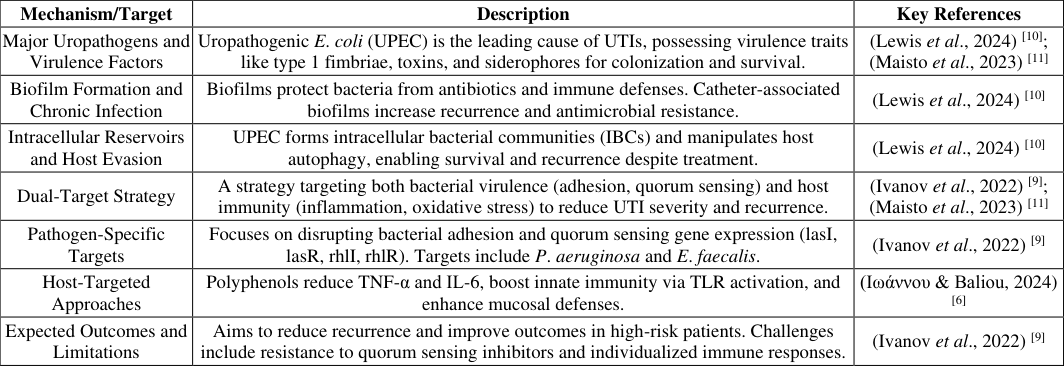 Table 1
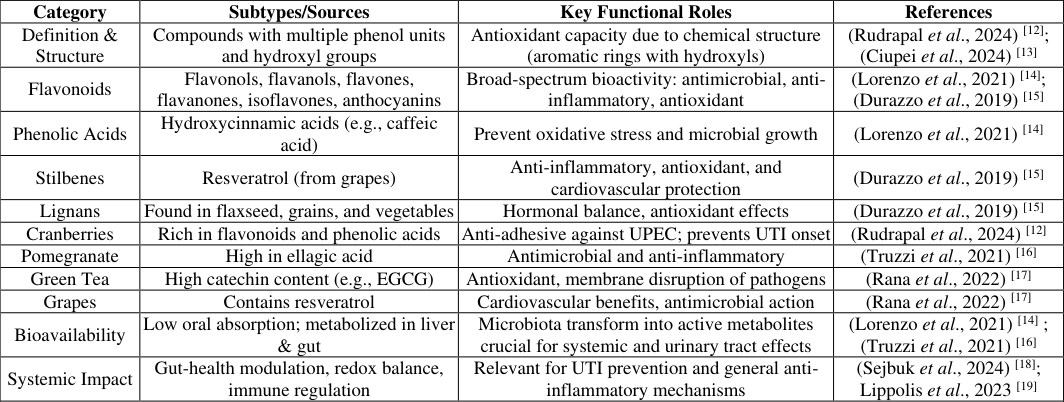 Table 2
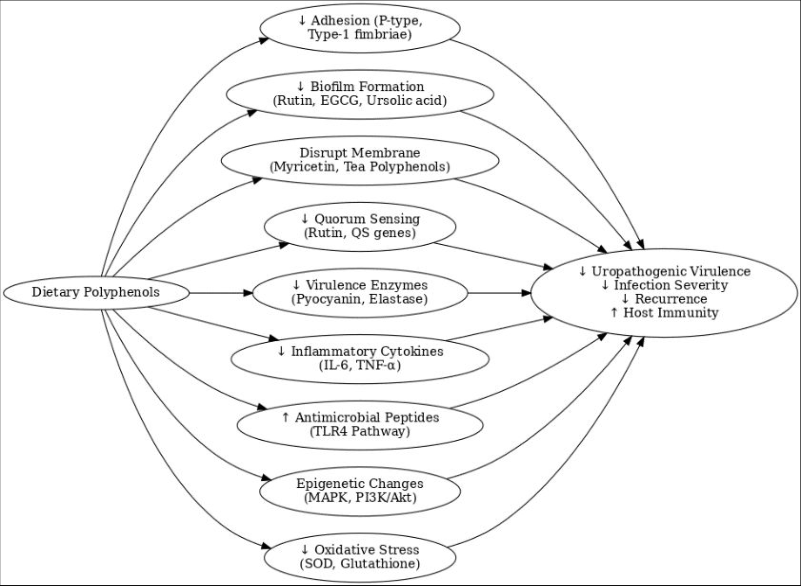 Figure 1
 Table 3
Introduction
Urinary tract infections (UTIs) are a prevalent health issue, particularly among women, with significant recurrence rates and clinical implications. Traditional antibiotic therapies, while effective, are increasingly limited by rising antimicrobial resistance, necessitating alternative strategies. Dietary polyphenols, such as those found in cranberries, offer promising potential in modulating uropathogenic virulence through various biochemical and molecular mechanisms. Given the growing urgency for non-antibiotic approaches to manage recurrent UTIs and combat resistance, this paper aims to review the mechanistic roles of dietary polyphenols in preventing and controlling UTIs, while identifying their therapeutic relevance and research gaps (Lee, 2023) [1] .
Prevalence and Recurrence of UTIs in Women
UTIs are among the most common bacterial infections, affecting over 40 percent of women at least once in their lifetime, with 30% experiencing recurrent infections within six months (Lee, 2023) [1] . The recurrence of UTIs poses a significant health burden, often leading to long-term antibiotic use, which can contribute to antibiotic resistance (Scribano et al., 2021) [2] .
Rising Antimicrobial Resistance and the Need for Alternative Strategies
The World Health Organization has identified antibiotic resistance as a major public health challenge, prompting the exploration of non-antibiotic alternatives (Kucheria et al., 2023) [3] . Non-antibiotic strategies, such as antiadhesive treatments, immunomodulation therapies, and probiotics, are being investigated for their potential to manage recurrent UTIs without contributing to resistance (Lee, 2023) [1] .
Overview of Dietary Polyphenols: Definition, Sources, Health Relevance
Polyphenols are natural compounds found in various foods, including cranberries, which are rich in flavonoids and phenolic acids (Llano et al., 2020) [5] . These compounds have demonstrated broad anti-infective properties, including disruption of microbial membranes and inhibition of bacterial adhesion (Ιωάννου & Baliou, 2024) [6] .
Biochemical and Molecular Mechanisms of Dietary Polyphenols
Cranberry polyphenols, particularly A-type proanthocyanidins, inhibit the adhesion of uropathogenic Escherichia coli (UPEC) to the urothelium, reducing UTI occurrence (Ιωάννου & Baliou, 2024) [6] ; (Khoo & Liu, 2018) [7] . Polyphenols can modulate the integrity and functionality of the intestinal and urinary barriers, enhancing host defenses against infections (Llano et al., 2024) [8] . Rutin, a specific polyphenol, has shown potential in reducing biofilm formation and bacterial virulence, suggesting its role in developing novel antimicrobials (Ivanov et al., 2022) [9] . While dietary polyphenols present a promising alternative to antibiotics in managing UTIs, challenges remain in optimizing their use. Issues such as bioavailability, optimal dosages, and potential side effects need further investigation. Additionally, the complexity of UTI pathophysiology and the adaptive evolution of uropathogens necessitate a multifaceted approach, combining dietary interventions with other non-antibiotic strategies. Continued research is essential to fully understand and harness the potential of polyphenols in UTI prevention and treatment.
Uropathogenic Mechanisms and Emerging Dual-Target Strategies in UTIs
Table 1 summarizes the key uropathogenic mechanisms involved in UTIs, including bacterial strategies like adhesion, biofilm formation, and immune evasion, alongside emerging host-and pathogen-targeted therapeutic approaches such as the dual-target strategy. This integrated understanding supports the development of more effective interventions for recurrent and chronic UTIs. [10] ; (Maisto et al., 2023) [11] Biofilm Formation and Chronic Infection
| Mechanism/Target | Description | Key References |
|---|---|---|
| Major Uropathogens and Virulence Factors | Uropathogenic E. coli (UPEC) is the leading cause of UTIs, possessing virulence traits like type 1 fimbriae, toxins, and siderophores for colonization and survival. | (Lewis et al., 2024) [10]; (Maisto et al., 2023) [11] |
| Biofilm Formation and Chronic Infection | Biofilms protect bacteria from antibiotics and immune defenses. Catheter-associated biofilms increase recurrence and antimicrobial resistance. | (Lewis et al., 2024) [10] |
| Intracellular Reservoirs and Host Evasion | UPEC forms intracellular bacterial communities (IBCs) and manipulates host autophagy, enabling survival and recurrence despite treatment. | (Lewis et al., 2024) [10] |
| Dual-Target Strategy | A strategy targeting both bacterial virulence (adhesion, quorum sensing) and host immunity (inflammation, oxidative stress) to reduce UTI severity and recurrence. | (Ivanov et al., 2022) [9]; (Maisto et al., 2023) [11] |
| Pathogen-Specific Targets | Focuses on disrupting bacterial adhesion and quorum sensing gene expression (lasI, lasR, rhlI, rhlR). Targets include P. aeruginosa and E. faecalis. | (Ivanov et al., 2022) [9] |
| Host-Targeted Approaches | Polyphenols reduce TNF-α and IL-6, boost innate immunity via TLR activation, and enhance mucosal defenses. | (Ιωάννου & Baliou, 2024) [6] |
| Expected Outcomes and Limitations | Aims to reduce recurrence and improve outcomes in high-risk patients. Challenges include resistance to quorum sensing inhibitors and individualized immune responses. | (Ivanov et al., 2022) [9] |
Table text extracted from the original PDF; superscript letters are shown inline. The original table image is below.
View original table image
Biofilms protect bacteria from antibiotics and immune defenses. Catheter-associated biofilms increase recurrence and antimicrobial resistance.
(Lewis et al., 2024) [10] Intracellular Reservoirs and Host Evasion UPEC forms intracellular bacterial communities (IBCs) and manipulates host autophagy, enabling survival and recurrence despite treatment.
(Lewis et al., 2024) [10] Dual-Target Strategy A strategy targeting both bacterial virulence (adhesion, quorum sensing) and host immunity (inflammation, oxidative stress) to reduce UTI severity and recurrence.
(Ivanov et al., 2022) [9] ; (Maisto et al., 2023) [11] Pathogen-Specific Targets Focuses on disrupting bacterial adhesion and quorum sensing gene expression (lasI, lasR, rhlI, rhlR). Targets include P. aeruginosa and E. faecalis. (Ivanov et al., 2022) [9] Host-Targeted Approaches Polyphenols reduce TNF-α and IL-6, boost innate immunity via TLR activation, and enhance mucosal defenses.
(Ιωάννου & Baliou, 2024) [6] Expected Outcomes and Limitations
Aims to reduce recurrence and improve outcomes in high-risk patients. Challenges include resistance to quorum sensing inhibitors and individualized immune responses.
(Ivanov et al., 2022) [9] Abbreviations: UPEC-Uropathogenic Escherichia coli; UTI-Urinary Tract Infection; IBC-Intracellular Bacterial Community; TNF-α-Tumor Necrosis Factor-alpha; IL-6-Interleukin-6; TLR-Toll-Like Receptor; P. aeruginosa-Pseudomonas aeruginosa; E. faecalis-Enterococcus faecalis
Dietary Polyphenols: Structural Classes, Dietary Sources, and Systemic Health Implications
Table 2 summarizes the key categories of dietary polyphenols, their major subtypes and dietary sources, and outlines their core biochemical and therapeutic functions. It highlights the structural diversity of polyphenols such as flavonoids, phenolic acids, stilbenes, and lignans and connects these chemical classes to specific health benefits. The table also addresses polyphenol bioavailability, their metabolism via gut microbiota, and systemic impacts, particularly in the context of urinary tract infection (UTI) prevention and immune modulation.
| Category | Subtypes/Sources | Key Functional Roles | References |
|---|---|---|---|
| Definition & Structure | Compounds with multiple phenol units and hydroxyl groups | Antioxidant capacity due to chemical structure (aromatic rings with hydroxyls) | (Rudrapal et al., 2024) [12]; (Ciupei et al., 2024) [13] |
| Flavonoids | Flavonols, flavanols, flavones, flavanones, isoflavones, anthocyanins | Broad-spectrum bioactivity: antimicrobial, anti- inflammatory, antioxidant | (Lorenzo et al., 2021) [14]; (Durazzo et al., 2019) [15] |
| Phenolic Acids | Hydroxycinnamic acids (e.g., caffeic acid) | Prevent oxidative stress and microbial growth | (Lorenzo et al., 2021) [14] |
| Stilbenes | Resveratrol (from grapes) | Anti-inflammatory, antioxidant, and cardiovascular protection | (Durazzo et al., 2019) [15] |
| Lignans | Found in flaxseed, grains, and vegetables | Hormonal balance, antioxidant effects | (Durazzo et al., 2019) [15] |
| Cranberries | Rich in flavonoids and phenolic acids | Anti-adhesive against UPEC; prevents UTI onset | (Rudrapal et al., 2024) [12] |
| Pomegranate | High in ellagic acid | Antimicrobial and anti-inflammatory | (Truzzi et al., 2021) [16] |
| Green Tea | High catechin content (e.g., EGCG) | Antioxidant, membrane disruption of pathogens | (Rana et al., 2022) [17] |
| Grapes | Contains resveratrol | Cardiovascular benefits, antimicrobial action | (Rana et al., 2022) [17] |
| Bioavailability | Low oral absorption; metabolized in liver & gut | Microbiota transform into active metabolites crucial for systemic and urinary tract effects | (Lorenzo et al., 2021) [14] ; (Truzzi et al., 2021) [16] |
| Systemic Impact | Gut-health modulation, redox balance, immune regulation | Relevant for UTI prevention and general anti- inflammatory mechanisms | (Sejbuk et al., 2024) [18]; Lippolis et al., 2023 [19] |
Table text extracted from the original PDF; superscript letters are shown inline. The original table image is below.
View original table image
Biochemical Actions of Polyphenols Against Uropathogens
Polyphenols exhibit multifaceted antimicrobial actions against uropathogens, positioning them as promising alternatives to conventional antibiotics. These actions include inhibition of bacterial adhesion, disruption of membrane integrity, quorum sensing interference, suppression of biofilm formation, and modulation of virulence-associated enzymes, as illustrated in Fig. 1 (Li et al., 2022) [20] .
Anti-Adhesion Mechanisms
Cranberry-derived compounds like myricetin and quercetin inhibit the adherence of uropathogenic E. coli (UPEC) to uroepithelial cells. Myricetin shows potent activity with IC 50 values of 13.2 μM (P-type) and 5.50 μM (type-1 fimbriae).
Proanthocyanidins (PACs) from cranberries exhibit strong anti-adhesion effects (Li et al., 2022) [20] . [12] ; (Ciupei et al., 2024) [13] Flavonoids Flavonols, flavanols, flavones, flavanones, isoflavones, anthocyanins Broad-spectrum bioactivity: antimicrobial, antiinflammatory, antioxidant (Lorenzo et al., 2021) [14] ; (Durazzo et al., 2019) [15] Phenolic Acids Hydroxycinnamic acids (e.g., caffeic acid) Prevent oxidative stress and microbial growth (Lorenzo et al., 2021) [14] Stilbenes Resveratrol (from grapes) Anti-inflammatory, antioxidant, and cardiovascular protection (Durazzo et al., 2019) [15] Lignans Found in flaxseed, grains, and vegetables Hormonal balance, antioxidant effects (Durazzo et al., 2019) [15] Cranberries Rich in flavonoids and phenolic acids Anti-adhesive against UPEC; prevents UTI onset (Rudrapal et al., 2024) [12]
Pomegranate
High in ellagic acid Antimicrobial and anti-inflammatory (Truzzi et al., 2021) [16] Green Tea High catechin content (e.g., EGCG) Antioxidant, membrane disruption of pathogens (Rana et al., 2022) [17]
Grapes
Contains resveratrol Cardiovascular benefits, antimicrobial action (Rana et al., 2022) [17] Bioavailability Low oral absorption; metabolized in liver & gut
Microbiota transform into active metabolites crucial for systemic and urinary tract effects (Lorenzo et al., 2021) [14] ; (Truzzi et al., 2021) [16] Systemic Impact Gut-health modulation, redox balance, immune regulation
Relevant for UTI prevention and general antiinflammatory mechanisms (Sejbuk et al., 2024) [18] ; Lippolis et al., 2023 [19] Abbreviations: UPEC-Uropathogenic Escherichia coli; UTI-Urinary Tract Infection.
Membrane Disruption
Tea polyphenols disrupt bacterial membranes, causing leakage and oxidative stress due to ROS accumulation (Zhong et al., 2023) [21] . Rutin also compromises membrane permeability (Ivanov et al., 2022) [9] .
Quorum Sensing Inhibition
Polyphenols like rutin interfere with bacterial communication systems (quorum sensing), downregulating genes like lasI, lasR, rhlI, and rhlR in Pseudomonas aeruginosa, reducing virulence without resistance pressure (Higuera-Ciapara et al., 2024) [22] ; (Ivanov et al., 2022) [9] .
Biofilm Suppression
Compounds such as rutin, EGCG, and ursolic acid reduce biofilm biomass and matrix synthesis, limiting bacterial persistence in chronic infections (Ivanov et al., 2022) [9] ; Sycz et al., 2022) [23] ; (Hengge, 2019) [24] .
Enzyme Modulation
Rutin downregulates bacterial enzymes like protease, pyocyanin, and elastase, impeding biofilm formation and virulence (Ivanov et al., 2022) [9] ; (Buchmann et al., 2023) [25] . While promising, the antimicrobial effects of polyphenols vary across bacterial strains and compound types, necessitating further studies on structure-function relationships and synergistic combinations with existing therapies. [21,9,21,22,23,24,25,19]
Molecular Modulation of Host Response by Polyphenols
Polyphenols modulate the host immune system through multiple molecular pathways, enhancing the body's defenses against infections and inflammation. Their mechanisms include downregulating inflammatory cytokines, boosting antimicrobial peptides, modulating gene expression, and acting as potent antioxidants (Shakoor et al., 2021) [26] ; (Yahfoufi et al., 2018) [27] .
Cytokine Suppression
Polyphenols like curcumin and quercetin inhibit inflammatory mediators such as IL-6 and TNF-α by targeting NF-κB and JAK/STAT pathways. This has shown therapeutic benefits in inflammatory diseases like IBD (Vaghari-Tabari et al., 2022) [28] ; (Ismail et al., 2024) [29] .
Immune Activation
These compounds enhance innate immunity by modulating Toll-like receptors (especially TLR4) and supporting the function of dendritic cells, macrophages, and T cells (Yu et al., 2022) [30] ; (Shakoor et al., 2021) [26] .
Gene and Epigenetic Modulation
Polyphenols influence signalling pathways such as MAPK and PI3K/Akt, inducing beneficial gene expression and epigenetic modifications in uroepithelial cells (Yahfoufi et al., 2018) [27] .
Antioxidant Defense
By inhibiting enzymes like xanthine oxidase and upregulating antioxidant enzymes such as SOD and glutathione peroxidase, polyphenols mitigate oxidative stress and protect tissues from damage (Yahfoufi et al., 2018) [27] ; (Vaghari-Tabari et al., 2022) [28] . While promising, these effects can vary due to differences in polyphenol type, dosage, and individual metabolism. More clinical studies are needed to clarify their long-term safety and efficacy in infectious and inflammatory disease contexts (Ismail et al., 2024) [29] ; (Yu et al., 2022) [30] .
Polyphenolic Compounds and Their Role in UTI Therapy
Table 3 presents various dietary polyphenols such as proanthocyanidins (PACs), epigallocatechin gallate (EGCG), resveratrol, and quercetin that have been investigated for their potential role in preventing and managing urinary tract infections (UTIs). These compounds exhibit multiple antimicrobial mechanisms, including inhibition of bacterial adhesion, suppression of biofilm formation, disruption of microbial membranes, and modulation of immune responses (Williams et al., 2023) [31] ;
| Polyphenol | Source | Mechanism of Action | Evidence Type | References |
|---|---|---|---|---|
| Proanthocyanidins | Cranberries | Anti-adhesive, anti-biofilm | In vitro, clinical studies | (Li et al., 2022; Williams et al., 2023; Llano et al., 2019; Xiong et al., 2024) [20], [31], [33], [32] |
| Epigallocatechin Gallate (EGCG) | Green Tea | Membrane disruption, antioxidant | General antimicrobial research | (Ivanov et al., 2022; Zhong et al., 2023) [9], [21] |
| Resveratrol | Grapes, Berries | Immunomodulatory, anti- inflammatory | General antimicrobial research | (Durazzo et al., 2019; Yahfoufi et al., 2018) [15], [27] |
| Quercetin | Onions, Apples | Anti-adhesive, antimicrobial | In vitro studies | (Li et al., 2022; Ivanov et al., 2022) [20], [9] |
Table text extracted from the original PDF; superscript letters are shown inline. The original table image is below.
View original table image
(Li et al., 2022) [20] . [32] . Epigallocatechin Gallate (EGCG), found in green tea, exerts antimicrobial effects by disrupting bacterial membranes and acting as an antioxidant. While specific UTI studies are limited, its general efficacy against bacterial pathogens is well documented (Ivanov et al., 2022) [9] . Quercetin and resveratrol, found in various fruits and vegetables, have demonstrated immunomodulatory, anti-inflammatory, and anti-adhesion effects. Quercetin, in particular, has shown promising results in vitro against UPEC adhesion and biofilm formation. [20], [31], [33], [32] [20], [9]
Research Gaps and Limitations
Despite encouraging findings, the application of dietary polyphenols in UTI prevention and treatment is limited by several critical research gaps. Key issues include inconsistent bioavailability, lack of standardized clinical trials, suboptimal delivery systems, and incomplete understanding of host-microbiome interactions.
Bioavailability and Interindividual Response
Polyphenol metabolism and efficacy vary greatly between individuals due to differences in gut microbiota, genetics, and physiological factors (Favari et al., 2024) [34] ; (Morand, 2024) [35] . Microbial diversity influences the conversion of polyphenols into bioactive metabolites, leading to inconsistent outcomes (Ho et al., 2019) [36] .
Limited Clinical Trials and Lack of Standardization
Existing clinical data on polyphenols in UTI management are sparse and often suffer from methodological flaws, including small cohorts and lack of control (Maisto et al., 2023) [11] . Variability in dosing, formulation, and outcome measures further undermines reproducibility (Karp, 2018) [37] .
Targeted Delivery and Synergistic Potential
Most polyphenols are poorly absorbed and rapidly metabolized, limiting their action at the urinary tract. Targeted delivery systems remain underdeveloped (Peron et al., 2020) [38] . Combining polyphenols with complementary agents like probiotics may enhance their efficacy, but this synergy is not yet fully explored (Ιωάννου & Baliou, 2024) [6] .
Host Genetics and Microbiome Dynamics
Genetic polymorphisms and microbial ecology play a crucial role in polyphenol metabolism and efficacy, yet they remain largely unexplored in current UTI-related studies (Morand, 2024 [35] ; (Piwowarski et al., 2021) [39] .
Key Points
Addressing these gaps will require: Multi-omic analyses (genomics, metabolomics, microbiomics) Personalized clinical trials Standardized and bioavailable formulations These efforts are essential to advance polyphenol-based interventions in UTI therapy.
Future Perspectives
Advancements in biotechnology and integrative health research are opening new frontiers for using polyphenols in UTI management. Nanotechnology, omics-based profiling, and functional nutrition are key drivers of this evolution.
Antibiotic-Adjunct Potential
Polyphenols such as rutin have demonstrated efficacy in reducing biofilm formation and virulence factor expression in resistant pathogens like Pseudomonas aeruginosa (Ivanov et al., 2022). Their combination with nanoparticles enhances antimicrobial potency through membrane disruption and ROS generation (Farhadi et al., 2023) [40] .
Smart Delivery Systems
Novel vehicles like solid lipid nanoparticles and liposomes improve site-specific delivery and bioavailability of polyphenols, enhancing retention in bladder tissues and overcoming challenges like rapid clearance (Sarfraz et al., 2022) [41] .
Molecular Insights via Omics Tools
Transcriptomic and proteomic studies provide mechanistic understanding of how polyphenols affect pathogen virulence and host immunity (Ivanov et al., 2022) [9] ; (Kong et al., 2024) [42] . These insights enable identification of molecular targets for personalized interventions.
Diet-Based Prevention Strategies
Polyphenol-rich diets, especially those incorporating cranberries, show promise in reducing bacterial adhesion and infection rates. Integrating these findings into nutritional guidelines can support UTI prevention (Maisto et al., 2023) [11] .
Section Insight
Future directions include: Optimizing nano formulations for clinical use Incorporating multi-omic data for targeted therapies Developing nutrition-based protocols for long-term management
Collectively, these strategies can position polyphenols as key tools in the fight against antibiotic-resistant UTIs.
Conclusion
Dietary polyphenols are emerging as promising agents in the management of urinary tract infections, offering antimicrobial, anti-inflammatory, and antioxidant effects. These plant-derived compounds target uropathogens through multiple pathways, including disruption of bacterial adhesion, inhibition of biofilms, and modulation of host immune responses.
Scientific Rationale
Flavonoids and related polyphenols exhibit broad-spectrum activity by disrupting microbial membranes, interfering with quorum sensing and regulating inflammatory pathways (Ιωάννου & Baliou, 2024) [6] ; (Ivanov et al., 2022) [9] .
Therapeutic Insights
Initial clinical studies indicate a reduction in UTI recurrence, especially in women, although further trials are needed to establish optimal formulations and dosing regimens (Ιωάννου & Baliou, 2024) [6] .
Renal and Systemic Health Benefits
Beyond infection control, polyphenols may offer kidney protection through their antioxidative and anti-inflammatory properties (Guerreiro et al., 2022) [43] .
Future Research Imperatives
Research should focus on enhancing polyphenol bioavailability, exploring nanoparticle-based delivery systems and tailoring interventions based on genetic and microbial profiles (Baptista et al., 2024) [44] ; (Maisto et al., 2023) [11] .
Broader Implications
With rising antimicrobial resistance, integrating polyphenols into standard UTI management protocols-alongside antibiotics, dietary changes, and microbiome-based strategies, may offer a holistic and sustainable solution.
References
44 in the original paper- Lee WC. Emerging non-antibiotic options targeting uropathogenic mechanisms for recurrent uncomplicated urinary tract infection. Int J Mol Sci. 2023;24(8):7055. https://doi.org/10.3390/ijms24087055
- Scribano D, Sarshar M, Fettucciari L, Ambrosi C. Urinary tract infections: Can we prevent uropathogenic Escherichia coli infection with dietary intervention? Int J Vitam Nutr Res. 2021;91(5-6):413-425. https://doi.org/10.1024/0300-9831/A000704
- Kucheria A, Kanabar S, Blick C, Yang B. A practical guide on the non-antibiotic options available in the prevention of recurrent urinary tract infections in women. Riv Urol. 2023;95(3):153-159. https://doi.org/10.1177/03915603231193060
- Forbes R, Ali A, Abouhajar A, Brennand C, Brown H, Carnell S, et al. ALternatives To prophylactic Antibiotics for the treatment of Recurrent urinary tract infection in women (ALTAR): study protocol for a multicentre, pragmatic, patient-randomised, noninferiority trial. Trials. 2018;19(1):616. https://doi.org/10.1186/S13063-018-2998-4
- Llano DG de, Moreno-Arribas MV, Bartolomé B. Cranberry polyphenols and prevention against urinary tract infections: Relevant considerations. Molecules. 2020;25(15):3523. https://doi.org/10.3390/MOLECULES25153523
- Ιωάννου Π, Baliou S. The molecular mechanisms and therapeutic potential of cranberry, D-mannose, and flavonoids against infectious diseases: The example of urinary tract infections. Antibiotics. 2024;13(7):593. https://doi.org/10.3390/antibiotics13070593
- Khoo C, Liu H. Effect of cranberry polyphenols and metabolites on microbial activity and impact on urinary tract health. In: Food Bioactives. Elsevier; 2018. p. 193218. https://doi.org/10.1016/B978-0-12-813008-7.00008-4
- Llano DG de, Roldán M, Taladrid D, Guía ER de la, Moreno-Arribas MV, Bartolomé B. Cranberry polyphenols and prevention against urinary tract infections: New findings related to the integrity and functionality of intestinal and urinary barriers. J Agric Food Chem. 2024;72(10):3245-3256. https://doi.org/10.1021/acs.jafc.3c07169
- Ivanov M, Novović K, Malešević M, Dinić M, Stojković D, Jovcic B, et al. Polyphenols as inhibitors of antibiotic resistant bacteria-mechanisms underlying rutin interference with bacterial virulence. Pharmaceuticals. 2022;15(3):385. https://doi.org/10.3390/ph15030385
- Lewis AJ, Richards AC, Mendez AA, Dhakal BK, Jones TA, Sundsbak JL, et al. Plant phenolics inhibit focal adhesion kinase and suppress host cell invasion by uropathogenic Escherichia coli. Infect Immun. 2024;92(3):e00080-24. https://doi.org/10.1128/iai.00080-24
- Maisto M, Iannuzzo F, Novellino E, Schiano P, Piccolo V, Tenore GC. Natural polyphenols for prevention and treatment of urinary tract infections. Int J Mol Sci. 2023;24(4):3277. https://doi.org/10.3390/ijms24043277
- Rudrapal M, Rakshit G, Singh RP, Garse S, Khan J, Chakraborty S. Dietary polyphenols: Review on chemistry/sources, bioavailability/metabolism, antioxidant effects, and their role in disease management. Antioxidants. 2024;13(4):429. https://doi.org/10.3390/antiox13040429
- Ciupei D, Colișar A, Leopold L, Stănilă A, Diaconeasa Z. Polyphenols: From classification to therapeutic potential and bioavailability. Foods. 2024;13(24):4131. https://doi.org/10.3390/foods13244131
- Lorenzo CD, Colombo F, Biella S, Stockley CS, Restani P. Polyphenols and human health: The role of bioavailability. Nutrients. 2021;13(1):273. https://doi.org/10.3390/NU13010273
- Durazzo A, Lucarini M, Souto EB, Souto EB, Cicala C, Caiazzo E, et al. Polyphenols: A concise overview on the chemistry, occurrence, and human health. Phytother Res. 2019;33(9):2221-2243. https://doi.org/10.1002/PTR.6419
- Truzzi F, Tibaldi C, Zhang Y, Dinelli G, D′Amen E. An overview on dietary polyphenols and their biopharmaceutical classification system (BCS). Int J Mol Sci. 2021;22(11):5514. https://doi.org/10.3390/IJMS22115514
- Rana A, Samtiya M, Dhewa T, Mishra V, Aluko RE. Health benefits of polyphenols: A concise review. J Food Biochem. 2022;46(8):e14264. https://doi.org/10.1111/jfbc.14264
- Sejbuk M, Mirończuk-Chodakowska I, Karav S, Witkowska AM. Dietary polyphenols, food processing and gut microbiome: Recent findings on bioavailability, bioactivity, and gut microbiome interplay. Antioxidants. 2024;13(10):1220. https://doi.org/10.3390/antiox13101220
- Lippolis T, Cofano M, Caponio GR, Nunzio VD, Notarnicola M. Bioaccessibility and bioavailability of diet polyphenols and their modulation of gut microbiota. Int J Mol Sci. 2023;24(4):3813. https://doi.org/10.3390/ijms24043813
- Li S, Zhao S, Christman LM, Washington TL, Gu L. Anti-adhesion capacities of selected cranberry polyphenols and metabolites against P-type and Type-1 fimbriated uropathogenic Escherichia coli using a fluorometric method. Food Biosci. 2022;48:101960. https://doi.org/10.1016/j.fbio.2022.101960
- Zhong W, Tang M, Xie Y, Huang X, Liu Y. Tea polyphenols inhibit the activity and toxicity of Staphylococcus aureus by destroying cell membranes and accumulating reactive oxygen species. Foodborne Pathog Dis. 2023;20(1):63-70. https://doi.org/10.1089/fpd.2022.0085
- Higuera-Ciapara I, Benitez-Vindiola M, FigueroaYañez LJ, Martínez-Benavidez E. Polyphenols and CRISPR as quorum quenching agents in antibioticresistant foodborne human pathogens (Salmonella Typhimurium, Campylobacter jejuni and Escherichia coli O157:H7). Foods. 2024;13(4):584. https://doi.org/10.3390/foods13040584
- Sycz Z, Wojnicz D, Tichaczek-Goska D. Does secondary plant metabolite ursolic acid exhibit antibacterial activity against uropathogenic Escherichia coli living in single-and multispecies biofilms? Pharmaceutics. 2022;14(8):1691. https://doi.org/10.3390/pharmaceutics14081691
- Hengge R. Targeting bacterial biofilms by the green tea polyphenol EGCG. Molecules. 2019;24(13):2403. https://doi.org/10.3390/MOLECULES24132403
- Buchmann D, Schwabe M, Weiss R, Kuß AW, Schaufler K, Schlüter R, et al. Natural phenolic compounds as biofilm inhibitors of multidrug-resistant Escherichia coli-the role of similar biological processes despite structural diversity. Front Microbiol. 2023;14:1232039. https://doi.org/10.3389/fmicb.2023.1232039
- Shakoor H, Feehan J, Apostolopoulos V, Platat C, Al Dhaheri AS, Ali HI, et al. Immunomodulatory effects of dietary polyphenols. Nutrients. 2021;13(3):728. https://doi.org/10.3390/NU13030728
- Yahfoufi N, Alsadi N, Jambi M, Matar C. The immunomodulatory and anti-inflammatory role of polyphenols. Nutrients. 2018;10(11):1618. https://doi.org/10.3390/NU10111618
- Vaghari-Tabari M, Alemi F, Zokaei M, Moein S, Qujeq D, Yousefi B, et al. Polyphenols and inflammatory bowel disease: Natural products with therapeutic effects? Crit Rev Food Sci Nutr. 2022;1-24. https://doi.org/10.1080/10408398.2022.2139222
- Ismail EN, Ishak R, Vidyadaran S, Muhammad H, Othman Z. Polyphenols mitigating inflammatory mechanisms in inflammatory bowel disease (IBD): focus on the NF-κB and JAK/STAT pathways. Inflammopharmacology. 2024;32(1):1-17. https://doi.org/10.1007/s10787-024-01607-8
- Yu C, Wang H, Yang Z, Wang T. Pharmacological effects of polyphenol phytochemicals on the intestinal International Journal of Biology Sciences https://www.biologyjournal.net inflammation via targeting TLR4/NF-κB signaling pathway. Int J Mol Sci. 2022;23(13):6939. https://doi.org/10.3390/ijms23136939
- Williams G, Hahn D, Stephens JH, Craig JC, Hodson EM. Cranberries for preventing urinary tract infections. Cochrane Database Syst Rev. 2023;2:CD001321.pub6. https://doi.org/10.1002/14651858.CD001321.pub6
- Xiong Z, Gao Y, Chi Y, Jian Z, Wei X. Preventive effect of cranberries with high dose of proanthocyanidins on urinary tract infections: a metaanalysis and systematic review. Front Nutr. 2024;11:1422121. https://doi.org/10.3389/fnut.2024.1422121
- Llano DG de, Liu H, Khoo C, Moreno-Arribas MV, Bartolomé B. Some new findings regarding the antiadhesive activity of cranberry phenolic compounds and their microbial-derived metabolites against uropathogenic bacteria. J Agric Food Chem. 2019;67(29):8083-8090. https://doi.org/10.1021/ACS.JAFC.8B05625
- Favari C, Alvarenga JFR de, Sánchez-Martínez L, Tosi N, Mignogna C, Cremonini E, et al. Factors driving the inter-individual variability in the metabolism and bioavailability of (poly)phenolic metabolites: A systematic review of human studies. Redox Biol. 2024;66:103095. https://doi.org/10.1016/j.redox.2024.103095
- Morand C. How to better consider and understand interindividual variability in response to polyphenols in clinical trials. Front Nutr. 2024;11:1522516. https://doi.org/10.3389/fnut.2024.1522516
- Ho L, Zhao D, Ono K, Ruan K, Mogno I, Tsuji M, et al. Heterogeneity in gut microbiota drive polyphenol metabolism that influences α-synuclein misfolding and toxicity. J Nutr Biochem. 2019;64:170-181. https://doi.org/10.1016/J.JNUTBIO.2018.10.019
- Karp NA. Reproducible preclinical research-is embracing variability the answer? PLoS Biol. 2018;16(3):e2005413. https://doi.org/10.1371/JOURNAL.PBIO.2005413
- Peron G, Hidalgo-Liberona N, González-Domínguez R, Garcia-Aloy M, Guglielmetti S, Bernardi S, et al. Exploring the molecular pathways behind the effects of nutrients and dietary polyphenols on gut microbiota and intestinal permeability: A perspective on the potential of metabolomics and future clinical applications. J Agric Food Chem. 2020;68(47):13051-13067. https://doi.org/10.1021/ACS.JAFC.9B01687
- Piwowarski JP, Stanisławska I, Granica S. Dietary polyphenol and microbiota interactions in the context of prostate health. Ann N Y Acad Sci. 2021;1508(1):4054. https://doi.org/10.1111/NYAS.14701
- Farhadi F, Jamialahmadi T, Gumpricht E, Sahebkar A. Polyphenolic nano-formulations: a new avenue against bacterial infection. Curr Med Chem. 2023;30(23):26642679. https://doi.org/10.2174/0929867330666230607125432
- Sarfraz M, Qamar S, Rehman MU, Tahir MA, Ijaz MA, Ahsan A, et al. Nano-formulation based intravesical drug delivery systems: an overview of versatile approaches to improve urinary bladder diseases. Pharmaceutics. 2022;14(9):1909. https://doi.org/10.3390/pharmaceutics14091909
- Kong Y, Xu C, Feng L, Tang J, Chen Y, Zhang X, et al. Ultrasmall polyphenol-NAD+ nanoparticle-mediated renal delivery for mitochondrial repair and anti-inflammatory treatment of AKI-to-CKD progression. Adv Mater. 2024;36(10):e2310731. https://doi.org/10.1002/adma.202310731
- Guerreiro ÍCF, Ferreira-Pêgo C, Carregosa D, Santos CN, Menezes R, Fernandes AS, et al. Polyphenols and their metabolites in renal diseases: An overview. Foods. 2022;11(7):1060. https://doi.org/10.3390/foods11071060
- Baptista F, Paié-Ribeiro J, Almeida M, Barros A. Exploring the role of phenolic compounds in chronic kidney disease: A systematic review. Molecules. 2024;29(11):2576. https://doi.org/10.3390/molecules29112576