
Research article · 2025 · Full text
International Journal of Agriculture and Food SciencePersonal and operational profile of cow shelters (Ghaushalas) in southern Rajasthan
Volume 7(7) · Pages 209–212 · DOI: 10.33545/2664844x.2025.v7.i7c.514 ↗
Research areasLivestock Management and Performance ImprovementAnimal Disease Management and EpidemiologyAgricultural Systems and Practices
Abstract
Author-writtenThe study was conducted to analyze the socio-economic characteristics, management practices and resource utilization patterns of cow shelters (Gaushalas) in Southern Rajasthan, covering eight districts and 150 Gaushalas (48 rural and 102 urban) during 2020-21. A pre-tested interview schedule was used to collect data from managers or supervisors of Gaushalas through personal interviews and direct observations. The findings revealed that the majority of Gaushalas (89.58% rural and 93.14% urban) were established between 1986 and 2020, with no new establishments after 2020. A notable disparity in educational status was observed, with 40.20% of urban managers being graduates, compared to 22.92% illiterate managers in rural areas. Most Gaushalas housed a medium number of cattle (184-1110) and reported moderate milk production levels (27-125 L/day). Similarly, a large proportion maintained medium-sized groups of lactating animals and operated with small labor forces (
Summary
Source-checkedPlain-language reading of the full paper, prepared with AI and checked against the text. Each point links to the authors' own words.
Why it matters
- Gaushalas are essential institutions in India for the management of stray, abandoned, and unproductive cattle. View evidence ↗
- While socially and religiously important, these shelters frequently struggle with technical awareness, resource use, and scientific management. View evidence ↗
- The socio-economic profile of a shelter's manager directly impacts how technologies are adopted and the overall productivity of the facility. View evidence ↗
The question
- The study aims to analyze the operational and demographic characteristics of Gaushala managers in rural and urban southern Rajasthan to inform future policy and interventions. View evidence ↗
What they did
- The research was a descriptive survey conducted during 2020-21 across eight districts in southern Rajasthan, involving 150 Gaushalas (102 urban and 48 rural). View evidence ↗
- Data were gathered via personal interviews using a pre-tested schedule focusing on five husbandry areas: health care, milking, housing, breeding, and feeding. View evidence ↗
- The analysis employed descriptive statistics, including ranking, percentage, frequency, and Mean Percent Score (MPS). View evidence ↗
What they found
- Most shelters were established between 1986 and 2020, specifically 93.14% of urban and 89.58% of rural Gaushalas. View evidence ↗
- There is a disparity in education: 40.20% of urban managers are graduates, while 22.92% of rural managers are illiterate. View evidence ↗
- Medium-sized shelters (184-1110 cattle) are the most common, representing 66.67% of rural and 57.84% of urban facilities. View evidence ↗
- Medium milk production (27-125 litres/day) was reported by 53.92% of urban and 45.83% of rural shelters. View evidence ↗
- A small workforce of fewer than 10 workers is used by 67.65% of urban and 58.33% of rural shelters. View evidence ↗
- Value addition of urine and dung is rare, with 95.10% of urban and 93.75% of rural shelters not practicing it. View evidence ↗
- Land holdings are predominantly small (<110 bighas), especially in urban areas where 93.14% of shelters fall into this category. View evidence ↗
- Tube wells are the primary water source for 69.61% of urban and 58.33% of rural Gaushalas. View evidence ↗
- Extension services are limited to Animal Husbandry Departments and Veterinary Hospitals, with zero reported contact with Livestock Research Stations (LRS) or Krishi Vigyan Kendras (KVKs). View evidence ↗
What it means
- The authors conclude that improving education, resource use, and integration with research/extension systems is necessary for the economic and operational sustainability of Gaushalas. View evidence ↗
Visual summary
3 visualsIllustrations explain the paper; charts are replotted from the paper's own table values.
Extension Contact Gap
AI-generated conceptual illustration (cow shelters in southern Rajasthan). It explains the idea and does not show study data.
View source evidence ↗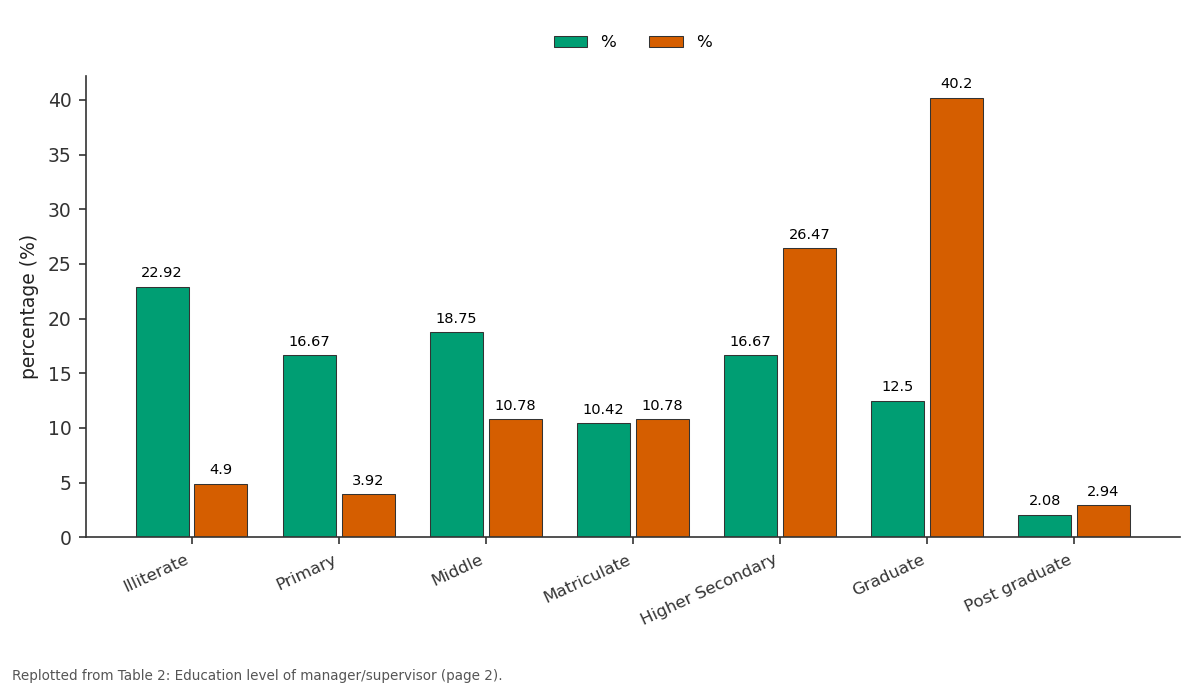
% and %: Illiterate vs Primary vs Middle vs Matriculate vs Higher Secondary
Replotted from Table 2 (page 2) of the original paper. Every bar is the paper's own table value.
View source evidence ↗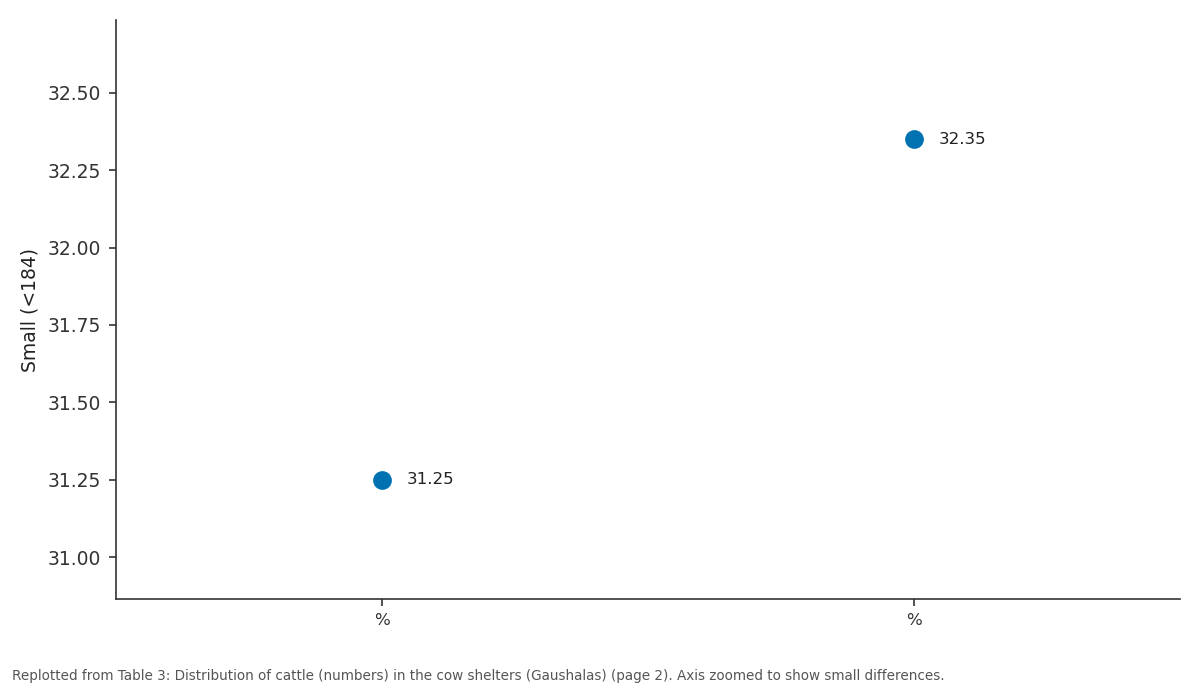
Small (<184): % vs %
Replotted from Table 3 (page 2) of the original paper. Every bar is the paper's own table value.
View source evidence ↗Figures & tables
From the original paper Table 1
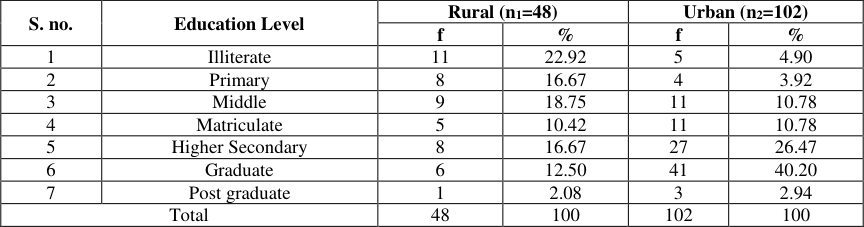 Table 2
 Table 3
 Table 4
 Table 5
 Table 6
 Table 7
 Table 8
Introduction
Cow shelters or Gaushalas serve as critical institutions for managing abandoned, stray and unproductive cattle in India. Rooted in religious and cultural traditions, Gaushalas play a key role in animal welfare, particularly for non-lactating, aged or diseased cattle that are no longer economically productive. These shelters are supported by charitable trusts, religious organizations, public donations, and sometimes government schemes. Despite their socioreligious importance, Gaushalas often face challenges in terms of scientific management, resource utilization and technical awareness. Understanding the personal profile of individuals managing these shelters such as their educational background, herd size, access to resources and institutional connectivity is essential for identifying gaps and potential areas for improvement in animal husbandry practices. Managers socio-economic characteristics directly influence decision-making, adoption of technologies, and overall shelter productivity. Southern Rajasthan, with its mixed agro-climatic zones and significant cattle population, provides a relevant case for studying the managerial profiles of Gaushalas. This study, therefore, aims to analyze the demographic and operational characteristics of Gaushala managers across rural and urban regions of the state, serving as a basis for future policy formulation and targeted interventions.
Materials and Methods
To assess the knowledge and adoption of animal husbandry management practices among cow shelters (Gaushalas), a field-based descriptive survey was conducted during 2020-21 in eight purposively selected districts of southern Rajasthan. A total of 150 Gaushalas (48 rural and 102 urban) were selected from a population of 187 using proportionate random sampling. Data were collected through personal interviews using a structured and pre-tested interview schedule specifically designed to capture knowledge and adoption levels across five key areas of animal husbandry: feeding, breeding, housing, milking and health care. The schedule comprised 67 items related to knowledge and 50 items related to adoption, with responses recorded in a dichotomous format (Yes = 1, No = 0). The scores were compiled for each respondent and categorized into low, medium and high levels based on mean and standard deviation. Data were analyzed using descriptive statistics such as frequency, percentage, Mean Percent Score (MPS) and ranking to interpret the level of knowledge and extent of adoption of recommended practices among the surveyed Gaushalas.
Results and Discussion
This section presents the personal and operational profile of respondents managing cow shelters (Gaushalas) in rural and urban settings. The data is interpreted using principles of rural development theory, the Diffusion of Innovations theory and the Sustainable Livelihoods Framework.
Year of Establishment of Cow Shelters
The majority of cow shelters (Gaushalas) 89.58% in rural and 93.14% in urban areas were established between 1986 and 2020, reflecting the historical spread of cow shelters under government schemes or religious-social initiatives during that period. The absence of new Gaushalas after 2020 could be attributed to a shift in policy focus, funding saturation or infrastructural constraints.
Distribution of Cattle in Cow Shelters
Most cow shelters in both rural (66.67%) and urban (57.84%) areas housed a medium number of cattle (184-1110). Small shelters (<184 cattle) were also common (31.25% rural; 32.35% urban), while large Gaushalas (>1110 cattle) were rare, particularly in rural areas (2.08%). The predominance of medium-sized shelters reflects a moderate operational scale that balances resource use and animal welfare.
Milk Production Levels
Milk production in most shelters was categorized as medium (27-125 litres/day), accounting for 45.83% of rural and 53.92% of urban shelters. Rural Gaushalas also had a higher proportion (50%) in the small production category (<27 litres), indicating potentially lower productivity or focus on non-milking functions such as animal care and religious purposes.
Distribution of Lactating Animals
The majority of Gaushalas in both rural (81.25%) and urban (88.24%) areas maintained a medium number of lactating animals (4-30), reflecting a consistent reproductive management approach. Very few shelters had either large (>30) or very small (<4) lactating populations, indicating a general homogeneity in herd management practices.
Workforce in Cow Shelters
Most shelters operated with a small workforce (<10 workers), constituting 58.33% in rural and 67.65% in urban areas. Only a few employed more than 32 workers. The labor structure suggests that cow shelters are managed with limited human resources, possibly due to financial constraints or a preference for voluntary service models in traditional Gaushalas.
Value Addition of Dung and Urine
Value addition of dung and urine was notably absent in most shelters, with 93.75% of rural and 95.10% of urban Gaushalas not engaging in such practices. This point to a significant missed opportunity in organic farming inputs and bioenergy production.
Promoting awareness and technologies for dung-based value addition could enhance sustainability and economic viability.
Availability of Feed
All respondents from both rural and urban Gaushalas reported adequate feed availability, indicating strong feed resource planning or support systems. This is a positive sign for animal health and productivity, though the qualitative nature and nutritional value of the feed were not assessed in this study.
Land Availability in Cow Shelters
A majority of Gaushalas, particularly in urban areas (93.14%), had small land holdings (<110 bighas). Rural shelters were slightly more diversified, with 13.95% having large tracts (>262 bighas). Limited land availability may restrict fodder cultivation and infrastructure development, especially in urban settings where land cost is high.
Conclusion
The study reveals that most Gaushalas in both rural (89.58%) and urban (93.14%) areas were established between 1986 and 2020. Urban Gaushalas showed better managerial education, with 40.20% graduates, compared to a high illiteracy rate (22.92%) in rural areas. Medium-sized shelters (184-1110 cattle) dominated, and most shelters reported medium milk production (27-125 litres/day) and lactating animals (4-30). Feed availability was adequate across all shelters, but land availability remained small in most cases, especially in urban areas (93.14%). Despite the potential, value addition of dung/urine was rare-only 6.25% rural and 4.90% urban shelters practiced it. Tubewells were the main water source, and extension contact was limited to veterinary hospitals and A.H. Departments, with no linkages to KVKs or LRS.The findings highlight the need for improved education, enhanced resource utilization and better integration with research and extension systems to strengthen the operational and economic sustainability of Gaushalas.
Figures and tables from the paper
| S. No. | Establishment Year | Rural (n1=48) | — | Urban (n2=102) | — |
|---|---|---|---|---|---|
| f | % | f | % | ||
| 1 | Before 1986 | 5 | 10.42 | 7 | 6.86 |
| 2 | In between (1986 to 2020) | 43 | 89.58 | 95 | 93.14 |
| 3 | After 2020 | 0 | 0.00 | 0 | 0.00 |
| Total | 48 | 100 | 102 | 100 |
Table text extracted from the original PDF; superscript letters are shown inline. The original table image is below.
View original table image
| S. no. | Education Level | Rural (n1=48) | — | Urban (n2=102) | — |
|---|---|---|---|---|---|
| f | % | f | % | ||
| 1 | Illiterate | 11 | 22.92 | 5 | 4.90 |
| 2 | Primary | 8 | 16.67 | 4 | 3.92 |
| 3 | Middle | 9 | 18.75 | 11 | 10.78 |
| 4 | Matriculate | 5 | 10.42 | 11 | 10.78 |
| 5 | Higher Secondary | 8 | 16.67 | 27 | 26.47 |
| 6 | Graduate | 6 | 12.50 | 41 | 40.20 |
| 7 | Post graduate | 1 | 2.08 | 3 | 2.94 |
| Total | 48 | 100 | 102 | 100 |
Table text extracted from the original PDF; superscript letters are shown inline. The original table image is below.
View original table image
| S. no. | Cattle (in numbers) | Rural (n1=48) | — | Urban (n2=102) | — |
|---|---|---|---|---|---|
| f | % | f | % | ||
| 1 | Small (<184) | 15 | 31.25 | 33 | 32.35 |
| 2 | Medium (184-1110) | 32 | 66.67 | 59 | 57.84 |
| 3 | Large (>1110) | 1 | 2.08 | 10 | 9.80 |
| Total | 48 | 100 | 102 | 100 |
Table text extracted from the original PDF; superscript letters are shown inline. The original table image is below.
View original table image
| S. no. | Milk Production (in Litre) | Rural (n1=48) | — | Urban (n2=102) | — |
|---|---|---|---|---|---|
| f | % | f | % | ||
| 1 | Small (<27) | 24 | 50.00 | 40 | 39.22 |
| 2 | Medium (27-125) | 22 | 45.83 | 55 | 53.92 |
| 3 | Large (>125) | 2 | 4.17 | 7 | 6.86 |
| Total | 48 | 100 | 102 | 100 |
Table text extracted from the original PDF; superscript letters are shown inline. The original table image is below.
View original table image
| S. No. | Lactating Animal (in No.) | Rural (n1=48) | — | Urban (n2=102) | — |
|---|---|---|---|---|---|
| f | % | f | % | ||
| 1 | Small (<4) | 6 | 12.50 | 5 | 4.90 |
| 2 | Medium (4-30) | 39 | 81.25 | 90 | 88.24 |
| 3 | Large (>30) | 3 | 6.25 | 7 | 6.86 |
| Total | 48 | 100 | 102 | 100 |
Table text extracted from the original PDF; superscript letters are shown inline. The original table image is below.
View original table image
| S. no. | Workers in Gaushala (No.) | Rural (n1=48) | — | Urban (n2=102) | — |
|---|---|---|---|---|---|
| f | % | f | % | ||
| 1 | Small (<10) | 28 | 58.33 | 69 | 67.65 |
| 2 | Medium (10-32) | 18 | 37.50 | 29 | 28.43 |
| 3 | Large (>32) | 2 | 4.17 | 4 | 3.92 |
| Total | 48 | 100 | 102 | 100 |
Table text extracted from the original PDF; superscript letters are shown inline. The original table image is below.
View original table image
| S. no. | Land Availability (in Bighas) | Rural (n1=48) | — | Urban (n2=102) | — |
|---|---|---|---|---|---|
| f | % | f | % | ||
| 1 | Small (<110) | 36 | 75.00 | 95 | 93.14 |
| 2 | Medium (110-262) | 5 | 10.42 | 3 | 2.94 |
| 3 | Large (>262) | 7 | 13.95 | 4 | 3.92 |
| Total | 48 | 100 | 102 | 100 |
Table text extracted from the original PDF; superscript letters are shown inline. The original table image is below.
View original table image
| S. no. | Extension contact | Rural (n1=48) | — | Urban (n2=102) | — |
|---|---|---|---|---|---|
| f | % | f | % | ||
| 1 | KVK | 0 | 0.00 | 0 | 0.00 |
| 2 | LRS | 0 | 0.00 | 0 | 0.00 |
| 3 | A.H. Department | 20 | 41.67 | 59 | 57.84 |
| 4 | Vet. Hospital | 28 | 58.33 | 43 | 42.16 |
| Total | 48 | 100 | 102 | 100 |
Table text extracted from the original PDF; superscript letters are shown inline. The original table image is below.
View original table image
References
18 in the original paper- Bashir A, Sharma R. Extension services and animal husbandry practices among tribal livestock keepers in J&K. Indian Journal of Social Research. 2011;52(2):109-114.
- Chandra S, Rathore PS, Tiwari S. Land availability and staffing in Indian Gaushalas: A comparative study. Livestock Research Reports. 2023;14(2):102-109.
- Dhayal BL, Mali RS. Knowledge of breeding practices among milk producers in Rajasthan. Journal of Dairy and Veterinary Sciences. 2015;8(3):121-127.
- Gour A. Livestock ownership and literacy among tribal farmers in India. Tribal Research Bulletin. 2015;8(1):33-39.
- Khode RL, Aulakh GS, Lohakare A. Impact of sociopersonal characteristics on dairy farming adoption among farmers. Indian Research Journal of Extension Education. 2013;13(3):21-25.
- Kumar S, Singh H, Meena MS. Status of cow shelters in Haryana and challenges faced in their management. International Journal of Livestock and Rural Development. 2019;11(3):73-80.
- Mandi R, Subhash R. Assessment of infrastructure and resource utilization in Gaushalas of Karnataka. Indian Journal of Livestock Research. 2019;39(4):91-98.
- Manjunath L, Patil SS, Reddy R. Socio-economic analysis of dairy farmers in Yadgir district of Karnataka. Journal of Rural Studies. 2020;22(1):54-60.
- Mohanty P, Tripathy SK. Medicinal uses of cow urine in traditional systems of medicine. Journal of Ethnoveterinary Medicine. 2014;3(2):77-83.
- Patel M, Sabapara GP. Knowledge of feeding and breeding practices among tribal dairy farmers in Gujarat. Journal of Animal Husbandry Extension. 2023;19(1):12-19.
- Prashad B, Meena RL, Gaur S. Educational profile of dairy farmers in semi-arid Rajasthan. International Journal of Agricultural Extension. 2019;17(4):88-93.
- Randhawa NS. Cow urine as bio-enhancer and biopesticide: A review. Indian Journal of Organic Farming. 2010;8(1):44-49.
- Saunders M. Traditional Indian beliefs and animal treatment methods. Cultural Veterinary Studies. 1982;5(4):198-204.
- Selvak Kumar P, Natarajan A. Effectiveness of AI services and breeding awareness in Tamil Nadu. South Indian Journal of Extension Education. 2013;17(1):4147.
- Sharma A. A comprehensive study on the status and functioning of cow shelters in India. Indian Journal of Animal Welfare. 2020;18(2):120-127.
- Sharma N, Singh M. Extension contact and knowledge level of dairy farmers in Kheda district. Gujarat Journal of Extension Education. 2012;23(2):88-92.
- Singh R, Yadav K, Kumar A. Education status and adoption of improved dairy farming practices in Northern India. Journal of Dairy Science and Technology. 2021;10(1):45-52.
- Thakur RP, Yadav RS. Gender disparity in livestock farming: A study from rural India. Indian Journal of Gender Studies. 2001;6(2):113-119.