
Research article · 2025 · Full text
International Journal of Biology SciencesProduction of Bioplastics from Biological Materials
Volume 7(7) · Pages 58–63 · DOI: 10.33545/26649926.2025.v7.i7a.415 ↗
Research areasbiodegradable polymer synthesis and properties
Abstract
Author-writtenBioplastics are plastics derived from renewable biomass sources like plants, microorganisms, and other biological materials. They offer a sustainable alternative to conventional petroleum-based plastics due to their biodegradability and production from renewable resources. In this paper, we have reviewed the different sources of Bioplastics, like microorganisms, plants, agricultural waste, seaweed and algae, protein, milk, chicken feathers, and waste newspapers. This review article helps to summarize different biological and biological materials that are responsible for the production of biodegradable plastics.
Summary
Source-checkedPlain-language reading of the full paper, prepared with AI and checked against the text. Each point links to the authors' own words.
Why it matters
- Plastics are essential in modern society, with widespread use in construction, packaging, electronics, automotive, and household applications. View evidence ↗
- Conventional non-renewable plastics are problematic because they resist microbial decomposition, leading to pollution of land and water and disrupting biological functions in organisms. View evidence ↗
- Bioplastics, derived from renewable biomass such as plants and microorganisms, serve as sustainable, biodegradable alternatives to petroleum-based plastics. View evidence ↗
The question
- The aim of this review is to summarize various biological materials, including microorganisms, plants, agricultural waste, seaweed, algae, proteins, milk, chicken feathers, and waste newspapers, that can be used to produce biodegradable plastics. View evidence ↗
What they did
- The authors conducted a review of existing literature to identify and categorize different biological sources for bioplastic production. View evidence ↗
What they found
- Bioplastics can be produced by over 90 genera of microorganisms, including aerobic, anaerobic, photosynthetic, and archae microorganisms. View evidence ↗
- Adding 4% precipitated calcium carbonate (PCC) to a cassava starch matrix provides the most favorable increase in the tensile strength of the resulting bioplastic composite. View evidence ↗
- Bioplastics can be synthesized from the cellulose found in oil palm empty fruit bunch (EFB) through isolation, purification, and modification. View evidence ↗
- Cellulose can be extracted from pineapple peel using 0.5 M HCl and 1M NaOH to produce carboxy methyl cellulose (CMC) for natural plastic fabrication. View evidence ↗
- Seaweeds are a viable bioplastic source due to their high biomass, low cost, low impact on the food chain, and lack of dependence on chemicals. View evidence ↗
- Milk can be used as a raw material for biodegradable plastics because it contains high levels of casein protein, which acts as a natural biopolymer. View evidence ↗
- Chicken feathers, which are over 90% protein (mainly beta keratin), can be used for bioplastics; adding EPS as a plasticizer improves their flexibility and tensile strength. View evidence ↗
- Sulphuric acid-catalyzed production of cellulose acetate biofiber from agricultural waste yields 81% for flax fibers and 54% for cotton linters. View evidence ↗
- Adding nisin to a pea protein bioplastic mixture creates a material with antimicrobial properties, specifically against gram-positive bacteria. View evidence ↗
What it means
- The authors conclude that bioplastics are a promising sustainable alternative to conventional plastics because they reduce fossil fuel reliance and promote biodegradability. View evidence ↗
- The authors note that challenges regarding the cost and performance of bioplastics still remain, though they are being improved through advancements in biotechnology and material science. View evidence ↗
Visual summary
1 visualsIllustrations explain the paper; they do not show study data.
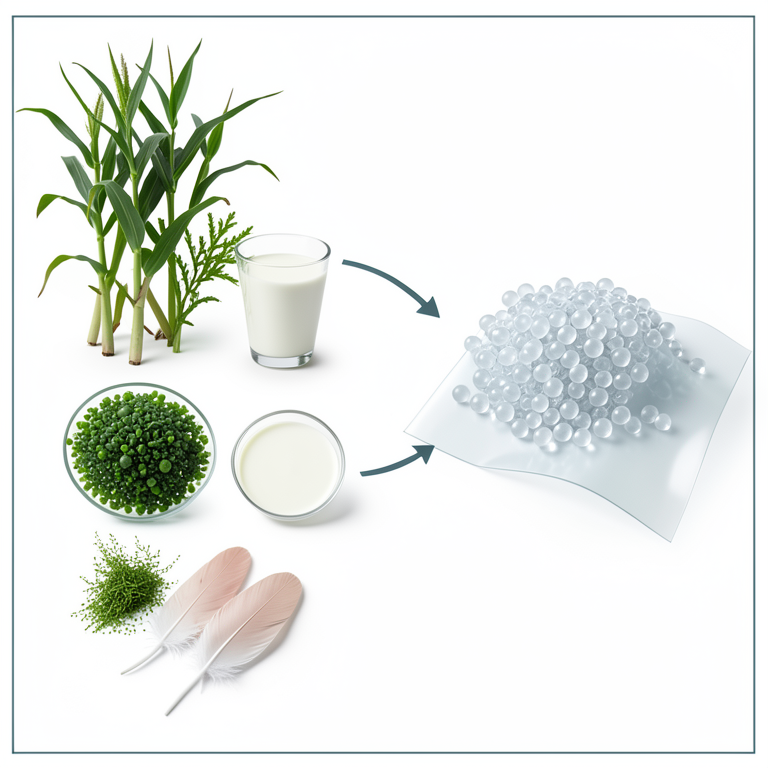
Sources of Bioplastics
AI-generated conceptual illustration (biological raw materials including corn stalks, algae, bacteria colonies, milk, and chicken feathers). It explains the idea and does not show study data.
View source evidence ↗Figures & tables
From the original paper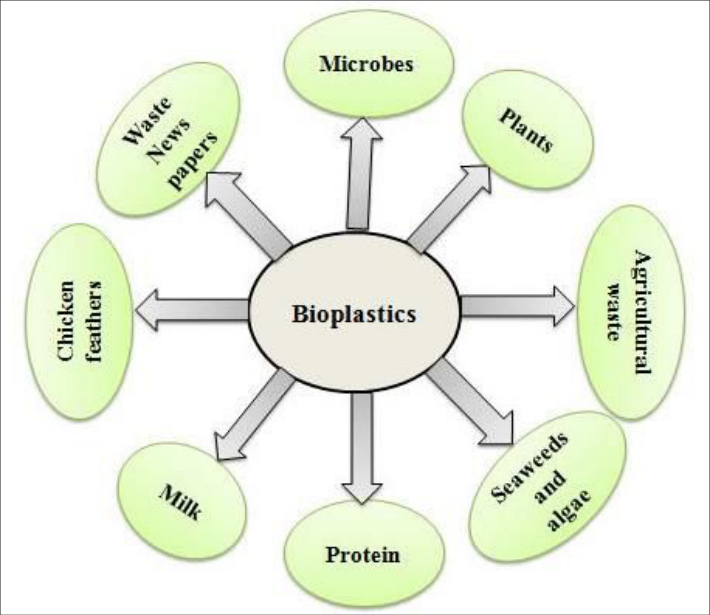 Figure 1
Introduction
Plastic is an important part of our present society. They are found in applications such as in, building, packaging material, electrical industries, automobile, furniture, agriculture and household items. Their durability is the topic of concern about their end of life. The important end of life cycle for non renewable plastic is recycling, because their microbial decomposition is indestructible. The accurate time which is needed for biodegradation is not known & can produce carbon dioxide, methane etc. burning, which is highly pollutant thus causing environmental issues (Goswami et al. 2015) [6] . Plastic are non renewable resources. The plastic that is used and produced in increasing amount will degrade very slowly, which cause the product to remain in the environment for many of the years. Plastic pollution can severely effect land, waterways and oceans, and also cause disturbance in bio functions of the living organisms. Due to the excessive use of chemical during plastic production, plastic is seem to be more harmful (Yaradoddi et al, 2016) [28] . Therefore, scientists are looking for alternative to the traditional plastic derived from petrochemical sources. Plastic waste is increasing day by day. The excessive use of this plastic has created various of the problems. Hence there is need to produce plastic that can be easily degraded or eliminated from our biosphere in an ecofriendly manner (Goswami et al., 2015) [6] . Nowadays, it is essential to have a better renewable based plastic material that can reduce the use of conventional plastics. The bio plastics obtained from natural sources will be environmental friendly, trendy, user friendly and decomposable (Yaradoddi et al.2016) [28] . Bioplastics are degrade through enzymatic action of microorganisms.
Sources of Bioplastics
There are various sources of bioplastic like animal, plants, microbial and other sources given below (Figure 1). [14] produced bioplastic from microorganisms. Bioplastic are polyester created by a scope of microorganisms, refined under different supplement and natural condition. Organisms having a place with in excess of 90 genera including aerobic, anaerobic, photosynthetic micro organisms, archae microorganisms and lower eukaryotes can amass and catabolise these polyesters. Bioplastic contain, as monomers, diverse beta oxidation intermediates which are enzymatically polymerized by the buildup of the carboxy work, present in a monomeric Co-Athioester with the 3-hydroxy gathering of the following one. Other bioplastic containing exceptional monomers which are integrated through various pathways, proposing that biosynthetic chemicals are broadly conveyed, and that the creation of a specific kind of polyester is strain explicit occasion. Hereditary and metabolic designing has a great deal of generation of bioplastic blend by a wide range of recombinant living being (microscopic organisms, yeasts or transgenic plants). Kumaravel et al. (2010) [13] produced polyhydroxy butyrate (bioplastic) and its biodegradation by "Pseudomonas Lemoignei and Aspergillus Nigar". The production of PHB occurs from an industrial effluent (sugarcane) and the degradation of PHB done by microorganisms on soil. Fungus has high capacity of utilizing PHB as growth substrate than bacteria isolates. All these isolates were tested for the degradation of above polymer in assay agar medium and also in liquid medium. PHB degrading bacteria secrete PHB de polymerases which hydrolyze the polymer into a "monomeric or Oligomeric ester". The hydrolytic products are taken up by the cells and metabolize. Olayide et al. (2007) [18] developed biodegradable plastics from starch. Starch is a natural based polymer which is made up of amylose and amylopectin. Amylose is a single chain polymer while amylopectin is branched polymer and has been used in two forms namely granular (native) form and thermoplastic (plasticized) form. The advantage of starch for plastic production is having a good biodegradable property because it possesses satisfactorily thermal stability and cause minimum restrictions with melt flow of most material used in plastic industry. Lots of developments occur from starch because of its property like bio degradability, oxygen barriers capacity is good in the dry state and have low cost. Ali et al. (2017) [1] produced bioplastic by bacteria isolated from local soil and organic wastes. The ability of bacteria is to produce bioplastic (PHB) which is isolated from soil and organic wastes by Sodium hypochlorite-Chloroform method. Resulting of screening to produce PHB by Sudan black staining method. Polyhydroxybutyrate (PHB) is biodegradable, ecofriendly, bio compatible and microbial thermoplastic. It is thermoplastic biopolymer which has good mechanical property and that become an alternative for petrochemical derived plastic. The bacteria from the organic waste produce more PHB.
Bioplastics from Plant sources
Coles et al. (2011) [4] derived bioplastic from renewable raw material. The plants produced material such as starch used for production of bioplastic, carbon cycle play an important role in it. The carbon emission and amount of fossil fuel used by the current technique of production through seed transportation, seed planting, fertiliser/ pesticide produce and method of application, transport of processing facilities and production processes. Classification of bioplastic occurs in many ways such as on the basis of origin, chemical composition, synthesis method and application. PLA is one of the most available bioplastic made from starch/sugar rich crop. The production of bioplastic may use less amount of energy in substrate production and conversion as compared to petroleum based plastic. Hermansyah et al. (2014) [7] produced food grade bioplastic based on "corn starch with banana pseudostem fiber or bacterial cellulose hybrid filler". This type of plastic has good mechanical and water barrier properties than synthetic plastic. In this paper, cellulose is added to create hybrid filler with banana pseudostem fiber in glycerol plasticized corn starch matrix for improving mechanical and water barrier properties of plant cellulose filled bioplastic bacteria. The addition of bacteria cellulose was proven to give a best effect to water barrier or resistant properties. These properties were confirmed with SEM and XRD analysis. Chumee et al. (2014) [3] observed that green bioplastic can be produced by carboxy methyl cellulose from pineapple peel. By etherification the Pineapple peel cellulose can be converted to carboxy methyl cellulose (CMC). The pineapple peel has cellulose which can be extracted by refulexing with acid and alkali solution like 0.5 M HCl and 1M NaOH. Then in end step, the activated cellulose react with chloro acetic acid or sodium hypochlorite. CMC is a natural biopolymer, the solubility depend on reduction of a carboxy methyl group instead of cellular structure. Therefore the CMC is used as a source for fabrication of natural plastic with non toxic, friendly environment. Mulyono et al. (2015) [17] developed bioplastic from cassava flour and its starch derivative for food packaging. Bioplastic form from the starch and nano particles which are derivative of cassava flour. Tapioca starch was extracted from cassava flour and further processed into its nanoparcticle by ethanol precipitation. These all are used to produce renewable plastic with the presence of glycerol as plasticizer. This plastic is used in food packaging because these result in bioplastics absorbed UV-A so the product inside could be protected from photo oxidative degradation. Goswami et al. (2015) [6] prepared bioplastic from potato peel left after preparing potato chips. Bioplastic is formed from these peels after extracting starch from them, thus resolving problem of their disposal after the chips have been made and thus usable material is made out of it. Bioplastic from potato peel is viable and more ecofriendly. It can degrade at the same rate as paper. Biodegradable plastics means plastics which have short life span and can be convert into carbon dioxide, water and biomass and a compostable substance which breakdown easily and return the nutrients back into the nature. Bioplastic created from organic waste materials (potato peel) which reduce the dependency on petroleum based plastic. Yaradoddi et al. (2016) [28] used fruit waste material for the production of biodegradable plastic, and its sustainable use for green application. Bioplastic prepared from a best raw material fruit waste, a renewable resources. The plastic is produce from banana peel, mango seed and corn kernals blended with the glycerol, use of proper concentrations (0.1 NaOH & 0.1 HCl) assist in the production of plastic having property of flexibility, user friendliness and good strength. Bioplastic manufactured from this method could be substantial and have a biodegradable property in a developing bioplastic material. Gaonkar et al. (2017) [5] prepared bioplastics from banana peels that can be used as packaging materials or as a carrying bag. Glycerol is added as a plasticizer that increases the flexibility. To prevent growth of bacteria and fungi sodium metabisulphite is used. Banana peels are used as a raw material to produce a good quality of bioplastic (prepare in lab) which degrade easily. Ashok et al. (2017) [2] studied the effects of softening agents in the Thermal and Morphological properties of starch based bioplastics.
Plasticization of starch with 1, 2, 3 -trihydroxy-propane (Glycerol) as a softening agent (Plasticizer) offers good stability, improved physiochemical and functional property of starch. These agents replace the starch -starch bond to starch -massive glycerol bonds. Hydrogen bonds between starch intermolecular chains are destroyed due to the formation of starch plasticizer complexes & this destruction is responsible for the plasticizing concentration. As the glycerol content decreased, the transition temperature also decreased and the sample with less glycerol content shows narrow fusion and melting curve. Syafri et al. (2017) [25] observed the effect of precipitate calcium carbonate on, mechanical, physical and thermal characteristics of cassava starch bioplastic composite. Cassava starch mixed with glycerol as a plasticizer and 0-10% by weight of PCC is used to make bioplastic composites. The material was then pelt down into a mould and dried in oven. When PCC is added into a starch matrix it increase the tensile strength of resulting bioplastic or PCC composite with the most favorable value by adding 4% of PCC. Then all characteristics of bioplastic or PCC composites are estimated using tensile strength measurement, XRD, SEM, etc. An increase in crystallinity of the bioplastic/PCC composite are shown in the results of XRD with increase in PCC content but moisture absorption get decreased and the SEM images indicate that the PCC filler content was absorbed into the matrix. Analysis of TGA graph shows that thermal stability of the composite is improved by the addition of PCC. Isroi et al. (2017) [8] produced bioplastic from cellulose of oil palm empty fruit bunch (EFB). EFB is found in Indonesia as side product of COP (crude oil palm). It consist of cellulose, hemicellulose and lignin. Cellulose is a good source of bioplastic production based on EFB. The production of bioplastic from EFB was done by isolation and purification of cellulose, then cellulose modification and then synthesis of bioplastic. Cellulose was isolated by sodium hydroxide method and bleached using sodium hypochlorite and use glycerol as a plasticizer in bioplastic synthesis. Kasmuri et al. (2018) [11] used chitosan and eggshells on potato starch for increasing bioplastic production. The aim of this research is to overcome the inherent drawbacks of bioplastic by using eggshells and fillers in potato starch.The eggshell or chitosan in Potato starch based plastic enhance the tensile strength, reduce water absorbtion and reduce the weight in biodegradability that improves the bioplastic property. Wade et al. (2018) [27] used waste vegetables to manufacture bioplastic. Bioplastic are composed of starch, cellulose, biopolymers and different material for which waste vegetable as a raw material is used. Corn starch is used to form bioplastic where glycerin is used as a plasticizer and a small quantity of glycerine is easy to make thin film and a uniform film of bioplastic and vinegar is also used which contain ethanoic acid that form atomic no. 1 is an acetate ion creating bioplastic film from starch. Maulida et al. (2018) [15] used starch of mango seed in production of bioplastic, reinforced by microparticle clay using glycerol as plasticizer. The starch of mango seed contain good amount of amylose and amylopectin and the addition of micro particles has improve the properties of bioplastic. The starch of mango seeds having clay increased tensile strength and decreased extension at break in bioplastic was observed. The improvement in bioplastics with strengthen particles provide the strong hydrogen bond between hydroxyl groups of the interface of both clay filler and starch matrix.
Bioplastics from Seaweeds and algae
Rajendran et al. (2012) [21] observed that a new source of bioplastic is seaweeds. Bioplastic are biodegradable. There are various sources of bioplastic like animal, plants, and microbial sources, they have some of the problem such as no-availability of high biomass and cultivation difficulties.
In some cases seaweeds can be alternatives for the production of bioplastic because their biomass is high. These are not costly. Their impact on the food chain is low and are not dependent on chemical. Bioplastics from seaweeds are observed to be more resistant to radiation, less brittle and durable nature. Sreenikethanam et al. (2021) [23] used algae in production of renewable bioplastic. Algae is a powerful alternative than other microbial sources, because an algae has high biomass growth rate and ease of culture in natural environment. Consequently, bioplastic based on algae are a feasible alternative. They are not based on fossil resources and can be degraded easily and also they are biocompatible. Use of algae is renewable, biodegradable, non toxic and environment friendly in bioplastic production for a sustainable environment.
Bioplastics from Milk:
In year 2013 Jayakumar et al. [9] used milk as a raw material for the production of bio degradable plastics because milk contains high level of casein protein, it is a natural bio polymer and have good film making properties. Casein from milk builds up the basic units of the biodegradable materials. The term biodegradable represent a process where the micro organisms that are found in the surrounding convert casein from milk into products like water, carbon dioxide and compost. Reddy et al. (2013) [22] proposed that bioplastic is green and sustainable alternative to plastic. The common type of bioplastic is derived from starch, cellulose, poly lactic acid, poly hydroxybutyrate. Bioplastic are 100 percent biodegradable, produce from natural renewable sources, which are capable to be reused, recycled, composted or incinerate without producing any harmful byproduct, which makes it a better product. Biopolymers releases low amount of carbon dioxide during production and degrade easily by microorganisms after disposal. These renewable plastic has two third less harmful green house gases emission as compared to toxin producing plastic during the production.
It is cheaper, beneficial to rural economy, reduce toxic substances, reduce carbon footprint, and also reduce carbon dioxide emission. Pathak et al. (2014) [24] discussed timeline of bioplastic based on its scenario and challenges. Plastic waste management not occur properly that lead to dwindling nature of petroleum resources, increased green house gases into the atmosphere and disruption of aquatic life. Bioplastic introduced as sustainable alternative of bad plastic use in order to reduce the petroleum dependency. The idea of bio based plastic change the source of producing plastic i.e., the conventional plastic are replaced with the more renewable, economical, accessible, abundant, and decomposable source. The future trends are expansion of effectual and economical practices for PHA production, purification, isolation, and increase of PHA material.
Bioplastics from Waste News papers: Joshi et al.
(2014) [10] used waste newspaper as a raw material for the formation of plastic from cellulose. Cellulose is taken out from waste newspaper by decomposing them. The cellulose is decomposed into starch/ glucose with help of enzymes called cellulolysis (prepare plastics in lab by starch/ glucose). For the preparation of bioplastic, extraction of cellulose from pulp and conversion of cellulose into dextrose has to be done and produce PLA plastic.
Bioplastics from chicken feathers
Kota et al. (2014) [12] produced bioplastic from chicken feather waste. The feather is a highly microcrystalline, mechanical and thermal stress resistant, because of the presence of the keratin a protein. It is same as polypropylene. Feather comprises over 90% of protein. The main component is beta keratin. A fibrous containing disulphide bond an insoluble protein. These bond have a property of resistance to digestion by the proteases of animal which are the major problem for degradation, feather waste contain keratinase which is use to degrade feather waste and in the production of animal feed, fertilizer. Bioplastic quality was improved by the addition of EPS which act as plasticizer that trap the water in the crude precipitation containing the keratin unit by making the product less crystalline and reduce surface tension thereby increasing the flexibility and high tensile strength of it. Bioplastic from feather having good flexibility results in the increase in the tensile strength.
Bioplastic from agricultural wastes
Mostafa et al. (2015) [16] produced bio degradable plastics from agriculture waste. The relevant method for the production of the "cellulose acetate biofiber from flax fibers and cotton linters" by using sulphuric acid -catalyzed process. The used process yield 81% and 54% for flax fibers and cotton linters respectively. Flax is a crop in Egypt and cotton linters are valuable cellulose raw material. Bio degradable plastics based on cellulose acetate produce plastics which decompose in soil or water and also recycle or burn without residue. Cellulose acetate has good mechanical strength, impact resistance, transparency, colerabilty. Trivedi et al. (2016) [26] studied degradation of synthetic plastic and manufacture of bioplastic by the microbes. Microorganism are used as a source of bioplastic manufacture and also used for degradation of plastic, it will decrease solid waste which cause environmental problems.
Polymers like polyethylene are utilized as substrate for microorganism growth when they are degraded and the polymer used for production of bioplastic is polyhydroxybutyrate. Microrganism secrete enzyme polyhydroxyalkanoates depolymerases and decrease the polymer chain size by oxidation which help in plastic degradation.
Bioplastic from Protein Sources
Patel et al. (2016) [19] used protein for the fabrication of bioplastic. Protein and synthetic petroleum based polymer share some vital characteristic such as synthetic polymer consist of identical polymer covalently bonded in a long chain while protein are composed of repeating units of different amino acid. These type of bioplastic are easily degraded by bacteria and fungus. The extraction of protein was obtained from rapeseed defatted cake and this cake is generated from oil seed after extracting oil. The extracted protein was blended with filler, binder, lubricants and plasticizer and the percentage of calcium carbonate is used to increase the tensile strength and the impact strength of the green plastic sheet. Rapeseed protein based bioplastic seed can be used for making disposable article such as lightweight utensil. Perez-Puyana et al. (2017) [20] developed a pea protein bioplastic with anti microbial property, pea protein as a raw material isolates byproduct of the agro food by adding nisin (polycyclic peptide antibiotic) by thermo chemical process based on mixing then followed by injection, moul dingand produce by spray drying. Bioplastic with better anti microbial characteristics, in aricular against gram positive bacteria were obtained by adding nisin to the initial protein or plasticizer mixture. However, by adding nisin more rigid but less deformable bioplastic is produced.
Growth inhibition studies against gram negative and gram positive bacteria was used for testing antimicrobial activity of the bioplastic and the addition of nisin makes bioplastic as potential candidate in alternate to conventional plastic.
Conclusion
Bioplastics, derived from biological sources, offer a promising sustainable alternative to conventional plastics by reducing reliance on fossil fuels and promoting biodegradability. While challenges remain in terms of cost and performance, advancements in material science, biotechnology, and manufacturing processes are steadily improving their viability for various applications. Ultimately, responsible use, proper disposal, and recycling are crucial for maximizing the environmental benefits of Bioplastics.
References
28 in the original paper- Ali WS, Zaki NH, Obiad SYN. Production of bioplastic by bacteria isolated from local soil and organic wastes. Current Research in Microbiology and Biotechnology. 2017;5(2):1012-1017.
- Ashok A, Rejeesh CR. Effects of Softening Agents in the Thermal and Morphological Properties of Starch Based Bioplastics. Journal of Polymer and Composites. 2017;5(1):15-24.
- Chumee J, Khemmakama P. Carboxymethyl cellulose from pineapple peel: Useful Green Bioplastic. Advanced Materials Research. 2014;979:366-369. doi:10.4028/www.scientific.net/AMR979-366.
- Coles R, Kay M, Song J. Bioplastics. In: Food and Beverages Packaging Technology. 2nd ed. 2011. doi: 10.1002/9781444392180.ch11.
- Gaonkar MR, Palaskar P, Navandar R. Production of bioplastic from banana peels. IIER International Conference; 2017 Dec 27-28; Hongkong.
- Goswami G, Goswami MG, Purohit P. Bioplastics from organic waste. International Journal of Engineering Research and Technology. 2015;3(23):1-3.
- Hermansyah H, Carissa R, Faiz MB, Deni P. Food grade Bioplastic based on corn starch with banana pseudostem fibre /bacterial cellulose hybrid filler. Advanced Materials Research. 2014;997:158-168. doi: 10.4028/www.scientific.net/AMR997-158.
- Isroi A, Panji CT, Wibowo NA, Syamsu K. Bioplastic production from cellulose of oil palm empty fruit bunch. Earth and Environmental Science. 2017;65:012011. doi:10.1088/1755-1315/65/1/012011.
- Jayakumar S, Govindaraju M, Ismail MFM, Chun LY, Sabri NA. Biodegradable Plastic. 2013. Available from: www.researchgate.net/publication/319757311.
- Joshi S, Sharma U, Goswami G. Bio-Plastic From Waste Newspaper. International Journal of Engineering Research & Technology (IJERT). 2014;2(3):24-27. doi:10.17577/IJERTCONV2IS03037.
- Kasmuri N, Zai MSA. Enhancement of Bioplastic using Eggshells and Chitosan on Potato Starch Based. International Journal of Engineering and Technology. 2018;7(3.32):110-115.
- Kota KP, Shaik SS, Kota RK, Karlapudi AP. Bioplastic from Chicken Feather Waste. International Journal of Pharmaceutical Science Review and Research. 2014;27(2):373-375.
- Kumaravel S, Hema R, Lakshmi R. Production of Polyhydroxybutyrate (bioplastic) and its biodegradation by Pseudomonas lemoignei and Aspergillus niger. J Chem. 2010;7:547. doi:10.1155/2010/148547.
- Luengo JM, Garcia B, Sandovel A, Naharro G, Olivera ER. Bioplastics from Microorganisms. Current Opinion in Microbiology. 2003;6:251-260.
- Maulida, Kartika T, Harahap MB, Ginting MHS. Utilization of mango seed starch in manufacture of bioplastic reinforced with microparticle clay using glycerol as plasticizer. In: IOP Conference Series: Materials Science and Engineering. 2018;309:0-7. https://doi.org/10.1088/1757-899X/309/012068.
- Mostafa NA, Farag AA, Abo-dief HM, Tayeb AM. Production of bio degradable plastics from agriculture wastes. Arabian Journal of Chemistry. 2015;11(4):546553. doi:10.1016/j.arabjc.2015.04.008.
- Mulyono N, Suhartono MT, Angelina S. Development of bioplastic based on cassava flour and its starch derivative for food packaging. Journal of Harmonized Research in Applied Sciences. 2015;3(2):125-132.
- Olayide O, Fabunmi LG, Tabil J, Panigrahi S, Chang PR. Developing biodegradable plastics from starch. American Society of Agricultural and Biological Engineers paper. 2007;no.:RRB-07130.
- Patel A, Panchal T, Rudakiya D, Gupte A, Patel J. Fabrication of bio-plastics from protein isolates and its biodegradation studies. Int J Chem Sci Technol. 2016;1(3):1-13.
- Perez-Puyana V, Felix M, Romero A, Guerrero A. Development of pea protein-based bioplastics with antimicrobial properties. J Sci Food Agric. 2017;97(8):2671-2674. doi: 10.1002/jsfa.8051. Epub 2016 Oct 20. PMID: 27664795.
- Rajendran N, Puppala S, Sneha RM, Angeeleena R. Seaweeds can be a new source of bioplastics. Journal of Pharmacy Research. 2012;5(3):1476-1479.
- Reddy RL, Reddy VS, Gupta GA. Study of Bioplastic as Green and Sustainable Alternative to Plastics. International Journal of Emerging Technology and Advanced Engineering. 2013;3(5):2250-2459.
- Sreenikethanam A, Bajhaiya A. Algae Based BioPlastics: Future of Green Economy. In: Biorefineries - Selected Processes. IntechOpen; 2022. Available from: http://dx.doi.org/10.5772/intechopen.100981.
- Pathak S, Sneha CLR, Mathew BB. Bioplastics: Its Timeline Based Scenario and Challenges. Journal of Polymer and Biopolymer Physics Chemistry. 2014;2(4):84-90.
- Syafri E, Kasim A, Abral H, Asben A. Effect of Precipitated Calcium Carbonate on Physical, Mechanical and Thermal Properties of Cassava Starch Bioplastic Composites. Int J Adv Sci Eng Inf Technol. 2017;7(5):1950-1956.
- Trivedi P, Hasan A, Akhtar S, Siddiqui MH, Sayeed U, Khan MKA. Role of microbes in degradation in synthetic plastics and manufacture of bioplastics. Journal of Chemical and Pharmaceutical Research. 2016;8(3):211-216.
- Wade RR, Choudhari AD, Punvantwar S. Manufacturing of bioplastic from waste vegetables. International Journal of Trend in Scientific Research and Development. 2018;2(3). Available from: www.ijtsrd.com.
- Yaradoddi J, Patil V, Ganachari S, Banapurmath N, Hunashyal A, Shettar A. Biodegradable plastic production from fruit waste material and its sustainable use for green applications. International Journal of Pharmaceuticals Research and Allied Sciences. 2016;5(4):56-66.
Cited by 1
From OpenAlex, OpenCitations and reference lists read by Scinovex
- Bioplastics in the green transition: between market expansion and sustainability challenges – an overview ↗
Konrad Sulak, Jagoda Jóźwik-Pruska, Justyna Wietecha, Beata Górska, Dominik Borkowski, Ewelina Pawłowska et al. · Polimery · 2026
This review article presents the current state of knowledge on the definitions, properties, and applications of the most important bioplastics, including PLA, PBS, PHB, PCL, and TPS. It discusses the factors driving market development, including technological, economic, and regulatory aspects, as well as the challenges associated with biodegradability, recycling, and waste management. The review highlights that the environmental benefits of…
❝ 0PDF