
Research article · 2025 · Full text
International Journal of Agriculture and Food ScienceA study on the engineering properties of onion crop for designing a digger cum detopper
Volume 7(7) · Pages 166–172 · DOI: 10.33545/2664844x.2025.v7.i7c.508 ↗
Research areasAgricultural Engineering and MechanizationResearch in Cotton Cultivation
Abstract
Author-writtenUnderstanding the engineering properties of onion bulbs is essential for the effective design of machinery used in harvesting and post-harvest processes. In this study, the agronomic, mechanical and biometric characteristics of the Onion (Allium cepa L.) (Panchganga variety) were evaluated at the harvesting stage. The seedlings were cultivated in sandy loam soil with a spacing of 150 mm between rows and 100 mm between plants. Onion bulbs were located at an average depth of 48.69±6.70 mm below the soil surface, with a coefficient of variation (CV) of 13.75%. The average plant height was 349.47±93.69 mm, corresponding to a CV of 26.81%. The force required to detach the leaves ranged from 54.00 to 89.78 N. The Panchganga bulbs exhibited an oblate shape. The average polar diameter, equatorial diameter and mass of the bulbs were measured as 45.73±6.57 mm, 50.04±7.01 mm and 69.34±18.83 g, respectively. The mean bulk density was found to be 406.69 kg/m³ and the average angle of repose was 24.35°. No significant correlation was observed between the polar and equatorial diameters, nor between bulb mass and either diameter.
Summary
Source-checkedPlain-language reading of the full paper, prepared with AI and checked against the text. Each point links to the authors' own words.
Why it matters
- Onions are globally significant and widely consumed bulbous vegetable crops. View evidence ↗
- India is the world's leading producer of onions, producing 31.68 million tons according to 2024 FAOSTAT data. View evidence ↗
- The design of effective harvesting equipment is currently hindered by a lack of available data on the properties of onion bulbs. View evidence ↗
The question
- The study aimed to determine the essential engineering characteristics of onion bulbs at the time of harvest to inform machinery design. View evidence ↗
What they did
- The research focused on the Panchganga onion variety, transplanted on November 10, 2024, at the JAU instructional farm in Junagadh. View evidence ↗
- Seedlings were grown in sandy loam soil across ten 30 x 1.2 m beds, with spacing of 150 mm between rows and 100 mm between plants. View evidence ↗
- Cutting force for leaf removal was measured using a texture analyzer, cutting 20 mm above the crown across five samples with three replications each. View evidence ↗
- Biometric properties were determined by measuring 30 randomly selected onion bulbs. View evidence ↗
What they found
- At harvest, the soil exhibited a bulk density of 1.45 g/cm³, a moisture content of 12.68%, and a cone index of 274.65 kPa. View evidence ↗
- The average depth of the bulbs below the soil surface was 48.69±6.70 mm. View evidence ↗
- The force required to detach onion leaves from the bulbs ranged from 54.00 N to 89.78 N. View evidence ↗
- The Panchganga variety bulbs had an average polar diameter of 45.73±6.57 mm and an average equatorial diameter of 50.04±7.01 mm. View evidence ↗
- The bulbs had an average mass of 69.34 g, a bulk density of 406.69 kg/m³, and an angle of repose of 24.35°. View evidence ↗
- With a shape factor of 1.10, the Panchganga onion bulbs were classified as having an oblate shape. View evidence ↗
Visual summary
1 visualsIllustrations explain the paper; charts are replotted from the paper's own table values.
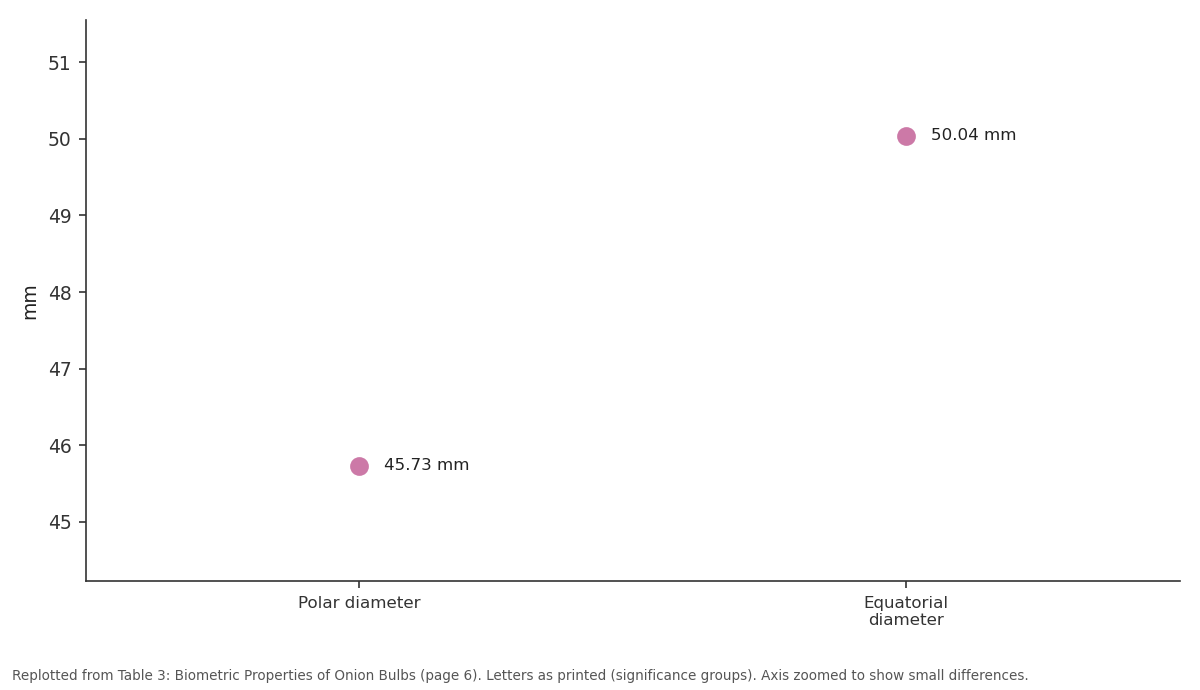
Observation: Polar diameter vs Equatorial diameter
Replotted from Table 3 (page 6) of the original paper. Every bar is the paper's own table value.
View source evidence ↗Figures & tables
From the original paper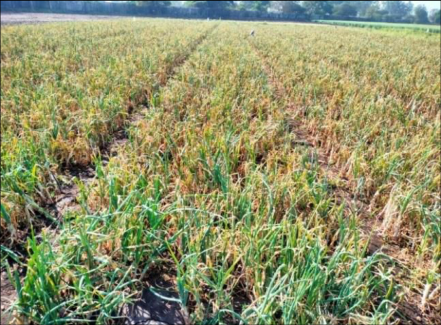 Figure 1
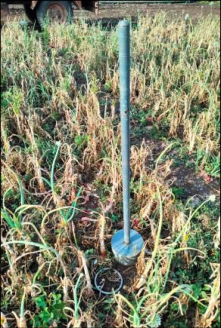 Figure 2
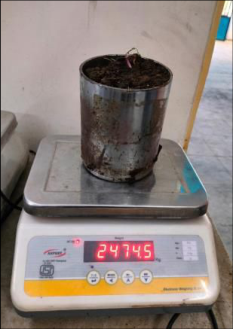 Figure 2
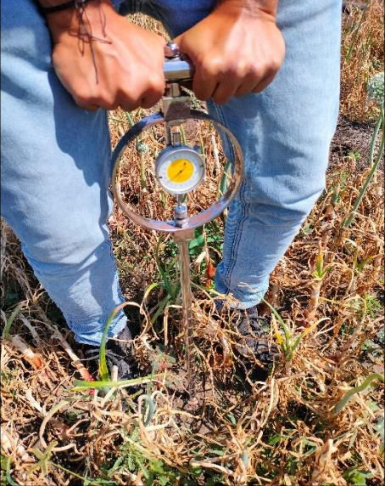 Figure 3
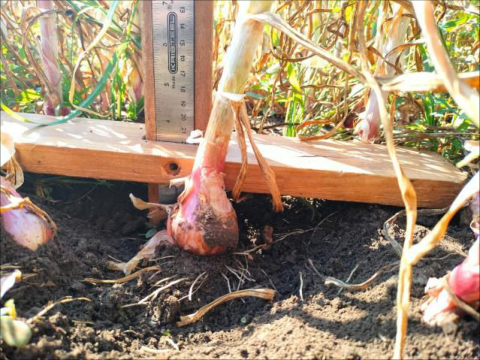 Figure 4
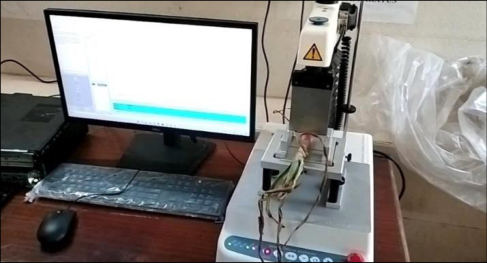 Figure 5
 Table 1
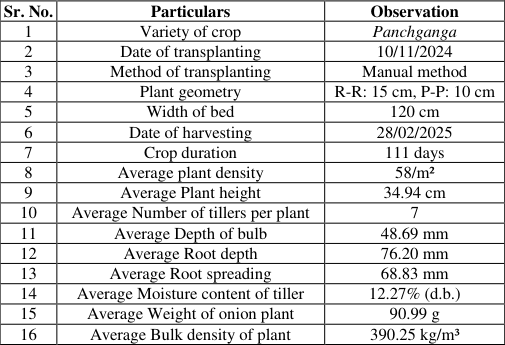 Table 2
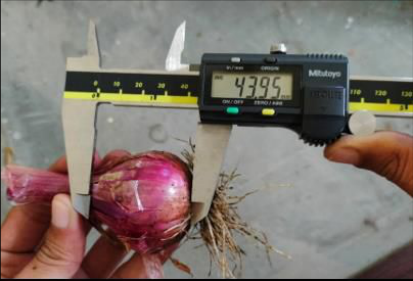 Figure 6
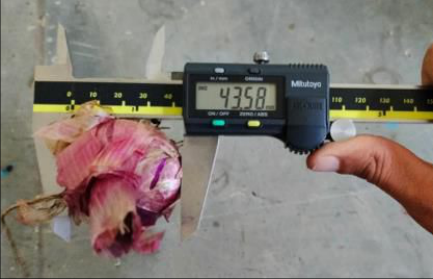 Figure 6
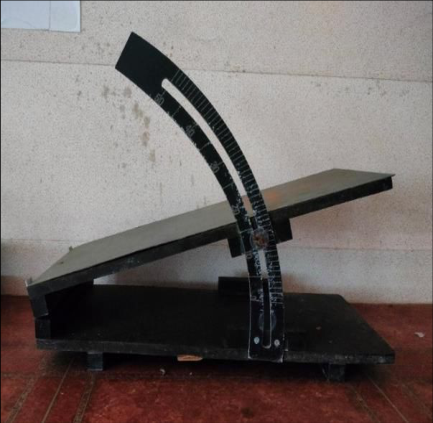 Figure 7
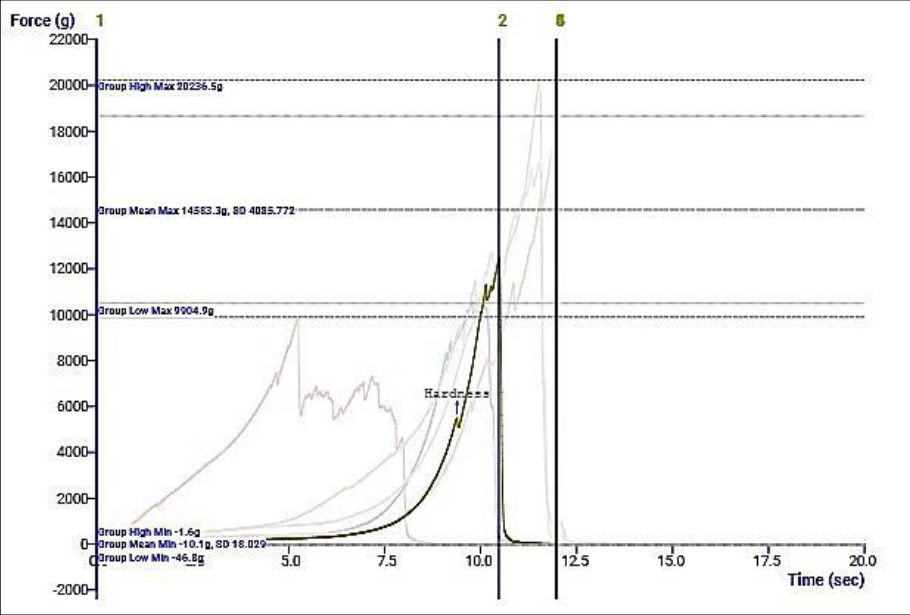 Figure 8
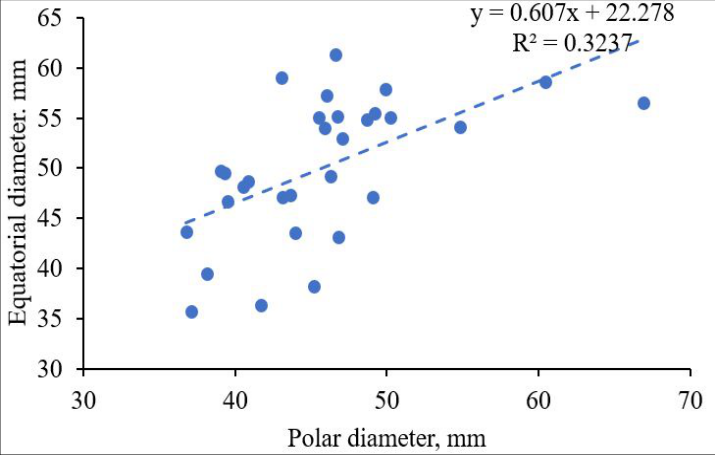 Figure 9
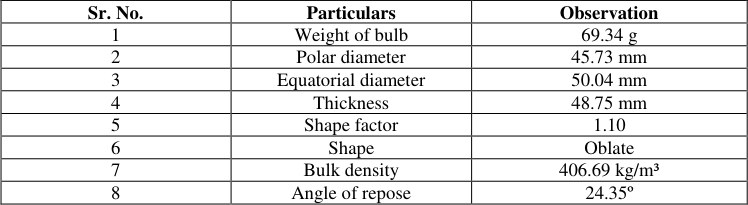 Table 3
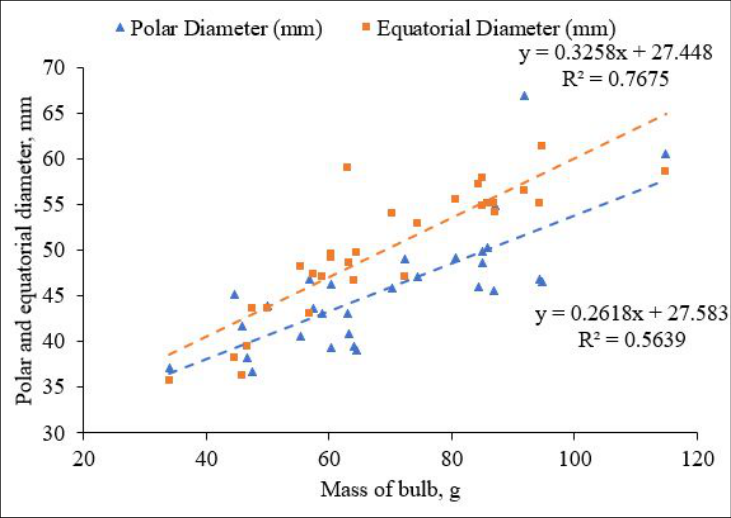 Figure 10
Introduction
Onion (Allium cepa L.) is one of the most widely consumed and commercially significant bulbous vegetable crops globally. India is the largest producer of onions, with a production volume of 31.68 million tons (FAOSTAT, 2024) [25] . Within India, Maharashtra leads in onion production, contributing 43.13%, followed by Madhya Pradesh. Currently, onion cultivation is practiced across all Indian states. Nationally, onion production has significantly increased, from 2.20 million tons in 1978-1979 to 31.69 million tons in 2021-2022 (Anon., 2024b) [2] . The increase in area under onion cultivation is largely attributed to its high profitability per unit area (Nikus & Mulugeta, 2010) [20] . Common onion varieties cultivated in India include Agrifound Dark Red, Agrifound Light Red, NHRDF Red, Agrifound White, Agrifound Rose, Agrifound Red, Pusa Ratnar, Pusa Red and Pusa White Round. Depending on the variety, onion crops are typically ready for harvest 70-90 days after transplanting. At this stage, the foliage starts turning yellow and collapses just above the bulb. When approximately 50% of the tops fall, the crop is left in the field for one week before harvesting. This period is considered ideal for harvesting Rabi season onions. However, during the Kharif season, since the tops do not collapse naturally, bulbs are harvested once red pigmentation appears and the leaves begin to yellow. In India, onions are grown in two major crop cycles: the first harvested between November and January and the second from January to May. Timely harvesting is crucial, as premature harvesting can lead to sprouting, while delayed harvesting may cause secondary root growth (Kumawat & Raheman, 2022) [14] . Onion cultivation begins with sowing seeds in nursery beds (3 × 2 m). After 6-8 weeks, the seedlings reach a height of 150-200 mm and develop a pea-sized bulb with an 8 mm neck diameter. These seedlings are then manually transplanted into the main field, maintaining 150 mm row spacing and 100 mm between plants for optimal growth (Kumawat & Raheman, 2023) [15] .
Understanding the agronomic, mechanical and biometric properties of onions is essential for the design of efficient harvesting equipment and other post-harvest machinery, including systems for cleaning, grading and sorting (Bahnasawy et al., 2004; Khura et al., 2010) [4,13] . Khura et al. (2010) [13] investigated the engineering properties of the Pusa White Round variety, reporting that the root zone of 95% of bulbs lies within 70 mm below the ground. For large bulbs, the equatorial diameter, polar diameter and density were found to be 64.68 mm, 53.20 mm and 290 kg/m³, respectively. Dabhi and Patel (2017) [7] studied the physical and mechanical properties of the Talaja Red variety, noting that bulb shape ranged from oval to spherical and the mean bulk density was 548 kg/m³. Numerous researchers have assessed the physical and mechanical properties of various onion varieties. These include equatorial and polar diameters, bulb weight and bulk density, as reported by Nieuwhof et al. (1973) [19] for Primodoro and Rijnsburg varieties; Abdel-Ghaffar & Hindey (1984) [1] for Abo-Fatla (Egyptian variety); Eweida et al. (1986) [9] for Giza 6 Mohassan; Maw et al. (1996) [17] for Granex-Grano; Rani & Srivastava (2006) [22] for Agrifound Dark Red, Pusa Red and NP-53; Khura et al. (2010) [13] for Pusa White Round; Ghaffari et al. (2013) [11] for Azarshahr Red, Kashan White and Isfahan Yellow (Iranian varieties); Shoba et al. (2017) [24] for Ballari Red, Arka Kalyan, Satara and Kalasa (local varieties); and Devojee et al. (2021) [8] . Knowledge of parameters such as size, density, angle of friction, angle of repose and crushing strength is essential for designing grading systems (Chandrasekar & Viswanathan, 1999) [6] . For the Granex Grano variety, Maw et al. (1996) [17] reported average values of 98 g mass, 111 cm² surface area, 95 cm³ volume, 1.1 g/cm³ density and equatorial and polar diameters of 6.2 cm and 4.2 cm, respectively. They also recorded crushing and puncture forces of 26.4 N and 25.0 N. Bahnasawy et al. (2004) [4] analyzed the physical and mechanical characteristics of Giza 6 (white), Beheri (red) and Giza 20 (yellow) varieties, with equatorial and polar diameters ranging from 51.20±3.30 mm to 62.0±1.5 mm (CV: 11-25%). Beheri and Giza 20 had spherical bulbs, while Giza 6 was oval. The density ranged between 1.04±0.09 and 1.11±0.15 g/cm³ (CV: 8.04-13.5%). Rani and Srivastava (2006) [22] evaluated Agrifound Dark Red, Pusa Red and NP-53 varieties, finding the Pusa Red variety to be larger and denser, with a reported density of 270 kg/m³. Using a texture analyzer, they measured the average shear force required to cut the neck as 16.23, 17.67 and 18.00 kgf for Agrifound Dark Red, Pusa Red and NP-53, respectively. Designing suitable harvesting equipment remains a challenge due to limited available data on onion bulb properties. Therefore, this study was undertaken to determine the essential engineering characteristics of onion bulbs at harvest. These parameters are critical for designing onion harvesting machinery, which typically includes four main components: a detopping unit for cutting matured leaves, a digging unit for lifting bulbs from the soil, a conveying unit for transporting bulbs and a separating unit for removing soil and debris. The key engineering properties examined include polar and equatorial diameters, bulb mass, depth below the soil surface, leaf length, leaf moisture content, neck diameter, bulb shape, bulk density, angle of repose and cutting force.
Materials and Methods
Understanding the agronomical, mechanical and biometric properties of onion plants is essential for designing effective cutting units for leaf removal and digging-cum-conveying units for harvesting detopped onion bulbs. In this study, the Panchganga onion variety was transplanted on 10 November 2024 at the instructional farm of the College of Agricultural Engineering and Technology, JAU, Junagadh. The soil in the field was predominantly sandy loam, characterized by its relative composition of sand, silt and clay. Ten beds of dimensions 30 × 1.2 m were prepared and onion seedlings were transplanted with a spacing of 150 mm between rows and 100 mm between plants. The crop matured and was ready for harvest 90-100 days after transplanting (Figure 1).
Soil bulk density
A core sampler with a diameter of 100 mm and a length of 127.5 mm was used to measure the bulk density of the soil (Figure 2). The sampler, sharpened at a 30° bevel angle, was inserted vertically into the soil at ten randomly selected locations. The collected soil samples were weighed and bulk density was calculated as per ASA (1965) [3] using the following formula:
Where, W= Weight of moist soil collected, g V= Volume of metallic core, cm³ MC= Moisture content of the soil (%)
Measurement of bulk density of soil
Soil moisture content
To determine the moisture content, soil samples were collected from a depth of 100 mm at five random locations during harvesting. The samples were dried in a hot air oven at 105±5 °C for 24 hours, following the IS Test Code (1973). The moisture content on a dry basis was calculated using:
Cone index measurement
The cone index, indicating soil penetration resistance, was measured using a cone penetrometer with a 30° cone angle and 3 cm base diameter. Measurements were taken at depths of 0-100 mm by inserting the penetrometer into the soil and recording dial gauge readings. The test was repeated five times at different field locations under varying moisture conditions. The average of the readings was taken as the cone index (Moraes et al., 2014) [18] (Figure 3).
Moisture content of leaves
At harvest, onion bulbs with leaves were randomly sampled from ten locations. The leaves were detached, weighed and then oven-dried at 105±5 °C for 24 hours (Khura et al., 2010) [13] . Moisture content was calculated on a dry basis using:
Where, Mb = Weight of onion crop before drying, kg Ma = Weight of onion crop after drying, kg
Average depth of the bulb
The depth of bulbs below the soil surface was measured at 30 random points using a horizontal and vertical scale setup (least count: 1 mm) (Figure 4). The distance from the soil surface to the top of the bulb was recorded.
Neck diameter above the bulb
A digital Vernier caliper (least count: 0.01 mm) was used to measure the neck diameter just above the crown. Measurements were taken from 30 randomly selected bulbs at harvest.
Determination of Mechanical Properties
The breaking strength of onion leaves is critical in designing a detopping unit, as it influences the cutting force required for leaf removal.
Cutting force measurement
The mature onion leaves were cut 20 mm above the crown using a texture analyser. The bulb neck was fixed on the platform (Figure 5), with the lower plate stationary and the upper jaw (with blade) moving downward at 2 mm/s. The cutting force was measured for five samples with varying neck diameters; each tested in three replications.
Determination of Biometric Properties of Onion Bulb
Biometric properties such as polar diameter, equatorial diameter, mass, shape factor, bulk density and angle of repose are vital for designing the conveying and storage systems. Measurements were conducted on 30 randomly selected onion bulbs.
Polar diameter
The polar diameter is the vertical distance from the bulb crown to the root base. It was measured using a digital Vernier caliper with a 0.01 mm least count (Figure 6a).
Equatorial diameter
The equatorial diameter is the maximum width perpendicular to the polar axis and was also measured using a digital Vernier caliper (Figure 6b).
Bulb mass
Bulb mass was recorded using a digital weighing machine with a capacity of 5000 g.
Bulk density
Both large and small onion bulbs were placed in a box of size 0.105 × 0.105 × 0.105 m³ without compaction. The bulk density was calculated by dividing the total weight of the bulbs by the volume of the box (Parmar & Dabhi, 2022) [21] .
Angle of repose
The angle of repose was determined using the tilting-table method (Figure 7), as described by Sahay & Singh (2001). Thirty small bulbs were placed one at a time at the center of a tilting platform. The platform was slowly inclined until the bulb began to roll. The angle at this point was measured using a protractor (Buyanov & Voronyuk, 1985) [5] .
Fig 7:
View of tilting-top drafting table
Shape and shape factor
The shape factor is the ratio of equatorial diameter to polar diameter, as defined by Maw et al. (1996) [17] and Rani & Srivastava (2006) [22] . Shape classification based on shape factor values is presented in Table 1.
| Sr. No. | Shape factor | Shape |
|---|---|---|
| 1 | <1 | Prolate |
| 2 | 1 | Spherical |
| 3 | >1 | Oblate |
Table text extracted from the original PDF; superscript letters are shown inline. The original table image is below.
View original table image
Results and Discussion
3.1 Soil Properties: At the harvesting stage, key soil parameters such as bulk density, moisture content and cone index were measured. The bulk density was found to be 1.45 g/cm³, the soil moisture content was 12.68% and the cone index was recorded as 274.65 kPa.
Agronomical Properties:
Agronomical parameters of the Panchganga onion variety were recorded using a standard measuring scale, as summarized in Table 2. The average bulb depth measured at 30 different locations was 48.69±6.70 mm, which is critical for determining the working depth and structural design of the digging mechanism. Similar findings were previously reported by Rani and Srivastava (2006) [22] for the Pusa Red variety and Khura et al. (2010) [13] for Pusa White Round. The average height of onion leaves at harvest was 349.47±93.69 mm. The number of leaves per plant ranged from 4 to 12 and the neck diameter of bulbs above the crown varied between 6.87 mm and 20.43 mm. The mass of onion bulbs was measured as 69.34±18.83 g, with a CV of 27.16%. The relationships between bulb mass (y) with equatorial and polar diameters (x) were given by: y = 0.2618x + 27.583 (equatorial) y = 0.3258x + 27.448 (polar) These observations are consistent with the findings of Rani and Srivastava (2006) [22] for Agrifound Dark Red, Pusa Red and NP-53 onion varieties. The average shape factor (ratio of equatorial to polar diameter) was found to be greater than one, indicating an oblate shape for the Panchganga variety. The bulk density of onion bulbs was measured as 406.69 kg/m³ and the angle of repose was observed to be 24.35°.
| Sr. No. | Particulars | Observation |
|---|---|---|
| 1 | Variety of crop | Panchganga |
| 2 | Date of transplanting | 10/11/2024 |
| 3 | Method of transplanting | Manual method |
| 4 | Plant geometry | R-R: 15 cm, P-P: 10 cm |
| 5 | Width of bed | 120 cm |
| 6 | Date of harvesting | 28/02/2025 |
| 7 | Crop duration | 111 days |
| 8 | Average plant density | 58/m² |
| 9 | Average Plant height | 34.94 cm |
| 10 | Average Number of tillers per plant | 7 |
| 11 | Average Depth of bulb | 48.69 mm |
| 12 | Average Root depth | 76.20 mm |
| 13 | Average Root spreading | 68.83 mm |
| 14 | Average Moisture content of tiller | 12.27% (d.b.) |
| 15 | Average Weight of onion plant | 90.99 g |
| 16 | Average Bulk density of plant | 390.25 kg/m³ |
Table text extracted from the original PDF; superscript letters are shown inline. The original table image is below.
View original table image
Implications for Onion Digger cum Detopper Design
The mechanical and biometric characteristics of onion plants play a crucial role in the effective design of onion harvesting equipment. For the topping unit, factors such as neck diameter, leaf length, number of leaves per plant and leaf moisture content are essential considerations in designing the cutting mechanism. The cutter's size and diameter can be optimized based on the plant spacing; both row-to-row and plant-to-plant. Additionally, the moisture content of the leaves significantly affects the cutting force and speed, influencing the efficiency and effectiveness of the topper unit. In the case of the conveying system, properties like bulk density and bulb mass are vital for determining the required capacity of the conveyor. The equatorial and polar diameters of the onion bulbs, along with the shape factor, help in deciding the optimal spacing between the bars on the conveyor system to ensure smooth handling and minimal damage. Furthermore, the angle of repose of the bulbs is a key parameter in determining the appropriate slope or inclination angle of the conveying chain or elevator mechanism, ensuring efficient transfer of the bulbs without rolling or clogging. Additionally, the depth of the bulb beneath the soil surface is a critical parameter for determining the digging depth of the harvester, ensuring precise extraction without damaging the bulbs.
Conclusions
The agronomical, mechanical and biometric properties of the Panchganga onion variety were systematically evaluated to support the design of efficient onion harvesting equipment. The key agronomical parameters, including the average leaf height at harvest (349.47±93.69 mm), number of leaves per plant (4-12) and average bulb depth (48.69±6.70 mm), were recorded. Biometric characteristics such as polar diameter (45.73±6.57 mm), equatorial diameter (50.04±7.01 mm), bulb mass (69.34±18.83 g) and bulk density (406.69 kg/m³) were also measured. The cutting force required to detach the leaves from the bulbs ranged from 54.00 to 89.78 N. Understanding these International Journal of Agriculture and Food Science https://www.agriculturaljournals.com engineering properties at the harvesting stage provides critical inputs for the effective design of onion harvesters; specifically, for the topping, digging and conveying units to improve performance, reduce damage and enhance operational efficiency.
Figures and tables from the paper
| Sr. No. | Particulars | Observation |
|---|---|---|
| 1 | Weight of bulb | 69.34 g |
| 2 | Polar diameter | 45.73 mm |
| 3 | Equatorial diameter | 50.04 mm |
| 4 | Thickness | 48.75 mm |
| 5 | Shape factor | 1.10 |
| 6 | Shape | Oblate |
| 7 | Bulk density | 406.69 kg/m³ |
| 8 | Angle of repose | 24.35º |
Table text extracted from the original PDF; superscript letters are shown inline. The original table image is below.
View original table image
References
25 in the original paper- Abdel-Ghaffar EA, Hindey FI. Linear airflow resistance of onions. Journal Agriculture Research Tanta University. 1984;10(3):721-735.
- Anonymous. Agricultural Statistics at a Glance 2023. New Delhi: Economics, Statistics and Evaluation Division, Department of Agriculture and Farmers Welfare, Ministry of Agriculture and Farmers Welfare, Government of India; 2024.
- ASA. ASA 30-2.2: Methods of soil analysis. Bulk density. ASA Standards. 1965.
- Bahnasawy AH, El-Haddad ZA, El-Ansary MY, Sorour HM. Physical and mechanical properties of some Egyptian onion cultivars. Journal of Food Engineering. 2004;62(3):255-261.
- Buyanov AI, Voronyuk BA. Physical and mechanical properties of plants. Fertilizers and Soils. New Delhi: Amerind Pub. Co. Pvt. Ltd.; 1985. p.15-97.
- Chandrasekar V, Viswanathan R. Physical and thermal properties of coffee. Journal of agricultural engineering research. 1999;73(3):227-234.
- Dabhi M, Patel N. Physical and mechanical properties of talaja red onion cultivar. Bioprocess Engineering. 2017;1(4):110-114.
- Devojee B, Rathinakumari AC, Dave AK, Kumaran S. Studies on engineering properties of multiplier onion. Agricultural Engineering Today. 2021;45(1):11-18.
- Al-Azhar Journal of Agricultural Research. 1986;6:1-9.
- FAOSTAT. FAOSTAT Agriculture data. Available from: https://www.fao.org/faostat/en/#data/FBS. Accessed 24 Feb 2025.
- Ghaffari H, Marghoub N, Sheikhdarabadi MS, Hakimi A, Abbasi F. Physical properties of three Iranian onion varieties. International Research Journal of Applied and Basic Sciences. 2013;7(9):587-593.
- IS Test code. Methods of Test for Soil, Part-2, Determination of Water Content. IS: 2720 (Part II) - 1973. New Delhi: Bureau of Indian Standards; 1973. p.3-5.
- Khura TK, Mani I, Srivastava AP. Some engineering properties of onion crop relevant to design of onion digger. Journal of Agricultural Engineering. 2010;47(1):1-8.
- Kumawat L, Raheman H. Mechanization in onion harvesting and its performance: A review and a conceptual design of onion harvester from Indian perspective. Journal of The Institution of Engineers (India): Series A. 2022;103(1):1-10.
- Kumawat L, Raheman H. Determination of engineering properties of onion crop required for designing an onion harvester. Cogent Engineering. 2023;10(1):2191404.
- Mahajan V, Thangasamy A, Gupta AJ, Khade YP, Kale RB et al. Onion bulb production technology. In: Kale RB, Gadge SS, Rao BV, Mahajan V, Singh M, editors. Good Agricultural Practices in Onion and Garlic Production. Pune: ICAR-Directorate of Onion and Garlic Research; 2022. p.9-18.
- Maw BW, Hung YC, Tollner EW, Smittle DA, Mullinix BG. Technical notes: Physical and mechanical properties of fresh and stored sweet onions. Transactions of the ASAE. 1996;39(2):633-637.
- Moraes MTD, Silva VRD, Zwirtes AL, Carlesso R. Use of penetrometers in agriculture: a review. Engenharia Agrícola. 2014;34(1):179-193.
- Nieuwhof M, De Bruyn JW, Garretsen F. Methods to determine solidity and dry matter content of onions (Allium cepa L.). Euphytica. 1973;22(1):39-47.
- Nikus O, Mulugeta F. Onion seed production techniques. A manual for extension agents and seed producers. Rome: FAO; 2010.
- Parmar R, Dabhi MN. Physical properties of fresh turmeric rhizomes (Var. Salem). International Journal of Agriculture, Environment and Biotechnology. 2022;15(3):369-373.
- Rani V, Srivastava AP. Physical and mechanical properties of onion (Allium cepa L.) crop relevant to mechanical detopping. Journal of Agricultural Engineering. 2006;43(3):83-86.
- Sahay KM, Singh KK. Unit Operation of Agricultural Processing. 2nd ed. New Delhi: Vikas Publishing House Pvt. Ltd.; 2001. p.1-66.
- Shoba H, Rajeshwari N, Nagaraja G. A study on physico-mechanical properties of onion varieties under Koppal District (Karnataka). Current Agriculture Research Journal. 2017;5(3):381-386.
- Ludemann CI, Wanner N, Chivenge P, Dobermann A, Einarsson R, Grassini P, Gruere A, Jackson K, Lassaletta L, Maggi F, Obli-Laryea G. A global FAOSTAT reference database of cropland nutrient budgets and nutrient use efficiency (1961-2020): nitrogen, phosphorus and potassium. Earth System Science Data. 2024 Jan 22;16(1):525-541.