
Research article · 2025 · Full text
International Journal of Agriculture and Food SciencePerformance evaluation of banana fiber production unit
Volume 7(7) · Pages 86–92 · DOI: 10.33545/2664844x.2025.v7.i7b.500 ↗
Research areasBanana Cultivation and Research
Abstract
Author-writtenThis study evaluates the performance and economic feasibility of a banana fiber production unit established at the village Rakhi, district Bemetara, Chhattisgarh and operated by a Women Self-Help Group to extract fiber from banana pseudo stems. India, being one of the largest banana producers, particularly in regions like Chhattisgarh, generates substantial banana stem waste after harvest (January to June), which can be effectively utilized for fiber production. The performance analysis of the fiber extraction unit focused on machine specifications, input capacity, and efficiency. The fiber extracting machine demonstrated an efficiency of 10.65% to 13.00%, with an input capacity of 107.66-110.00 kg/h and an output of 11.47-12.50 kg/h for fresh fiber and 1.60-2.00 kg/h for dry fiber. The hydraulic press and manual screw press showed water-based efficiencies of 65.49% and 46.01%, fiber-based efficiencies of 28.58% and 45.19%, and input capacities of 205 kg/h and 175 kg/h respectively. The waste fiber-recovery machine operated at 80% efficiency with a 60 kg/h input capacity, while the 7-stage filtration machine showed 71.67% efficiency at 67 kg/h, equivalent to approximately 63.81 L/h based on an assumed density of 1.05 kg/L. The processing unit incurred a total operational cost of ₹ 838.73 per hour. The fiber extraction machine accounted for ₹168.23 per hour (₹14.67 per kilogram) and exhibited a payback period of 41.23 days. The complete unit achieved a breakeven point at 720 (approximately) operating hours per year, with a payback period of 108.5 days. These results demonstrate that banana fiber extraction is not only technically feasible but also economically viable, presenting a sustainable livelihood opportunity particularly for rural, women-led enterprises.
Summary
Source-checkedPlain-language reading of the full paper, prepared with AI and checked against the text. Each point links to the authors' own words.
Why it matters
- India, especially in Chhattisgarh, produces significant amounts of banana stem waste between January and June, which represents an opportunity for fiber production. View evidence ↗
- Banana fiber is an eco-friendly material suitable for use in handicrafts, paper, and textiles. View evidence ↗
- Because natural fiber production in Chhattisgarh currently relies on traditional methods and is not a primary livelihood, mechanization could support rural development by increasing commercial output. View evidence ↗
The question
- The study aims to evaluate the economic feasibility and performance of a banana fiber production unit operated by a Women Self-Help Group in Rakhi, Chhattisgarh. View evidence ↗
What they did
- The evaluation was conducted using a pre-existing production unit located in the village of Rakhi, Bemetara district, Chhattisgarh. View evidence ↗
- The production unit consists of four main components: a fiber extraction machine, a hydraulic press for pulp water removal, a waste fiber recovery machine, and a 7-stage filtration system. View evidence ↗
- Economic analysis was performed by calculating labor, electricity, material, and maintenance costs, with machine costs based on the IS: 9164 code. View evidence ↗
What they found
- The fiber extraction machine had an efficiency between 10.65% and 13.00%, processing 107.66-110.00 kg/h of input to produce 11.47-12.50 kg/h of fresh fiber and 1.60-2.00 kg/h of dry fiber. View evidence ↗
- The hydraulic press (205 kg/h capacity) and manual screw press (175 kg/h capacity) showed water-based efficiencies of 65.49% and 46.01%, and fiber-based efficiencies of 28.58% and 45.19%, respectively. View evidence ↗
- The waste fiber-recovery machine achieved 80% efficiency (60 kg/h input), and the 7-stage filtration machine achieved 71.67% efficiency (67 kg/h input, or ~63.81 L/h). View evidence ↗
- The total operational cost for the entire processing unit was ₹ 838.73 per hour. View evidence ↗
- The fiber extraction machine specifically cost ₹ 168.23 per hour (₹ 14.67 per kg) and had a payback period of 41.23 days. View evidence ↗
- The entire production unit has a payback period of 108.5 days and reaches its breakeven point at approximately 720 operating hours per year. View evidence ↗
What it means
- The authors conclude that banana fiber extraction is technically and economically viable, offering a sustainable livelihood for rural, women-led enterprises. View evidence ↗
Visual summary
2 visualsIllustrations explain the paper; charts are replotted from the paper's own table values.
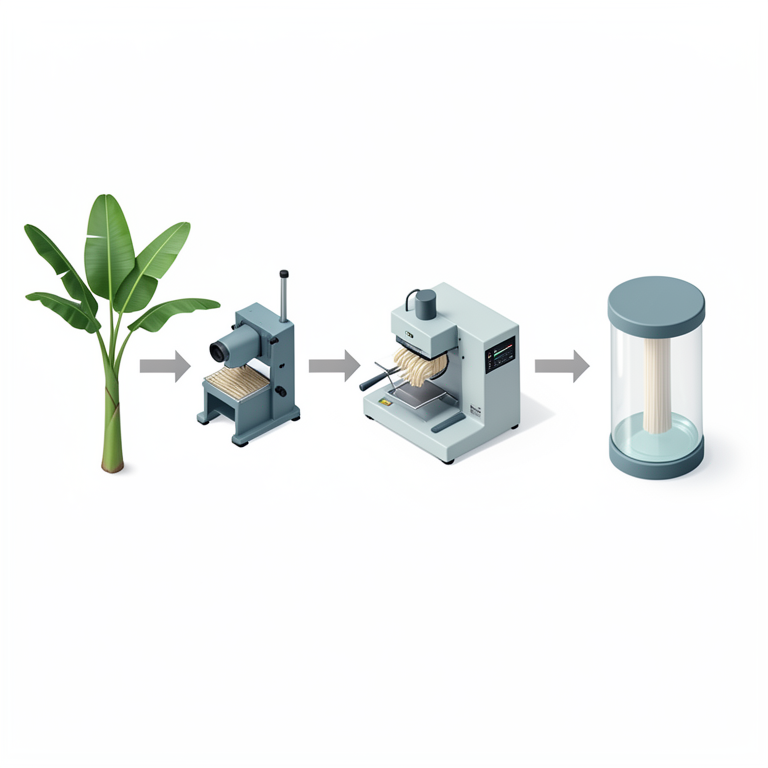
Banana Fiber Production Workflow
AI-generated conceptual illustration (banana plant stems and industrial fiber extraction machinery). It explains the idea and does not show study data.
View source evidence ↗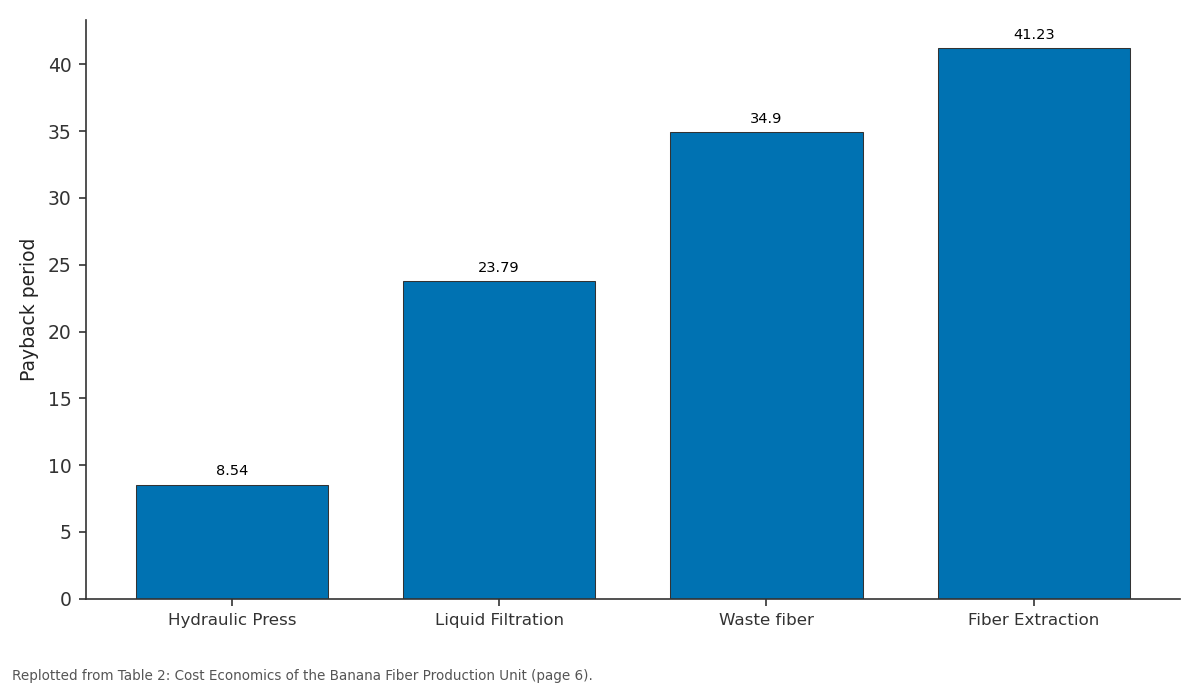
Payback period: Hydraulic Press vs Liquid Filtration vs Waste fiber vs Fiber Extraction
Replotted from Table 2 (page 6) of the original paper. Every bar is the paper's own table value.
View source evidence ↗Figures & tables
From the original paper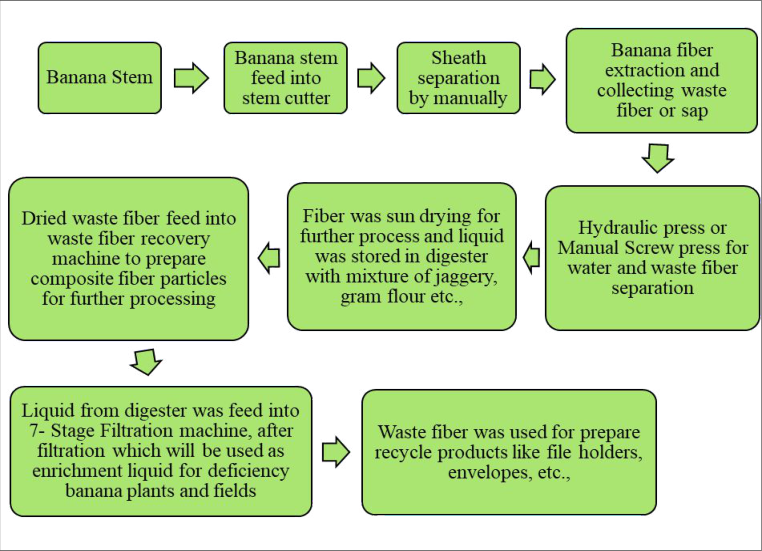 Figure 1
 Table 1
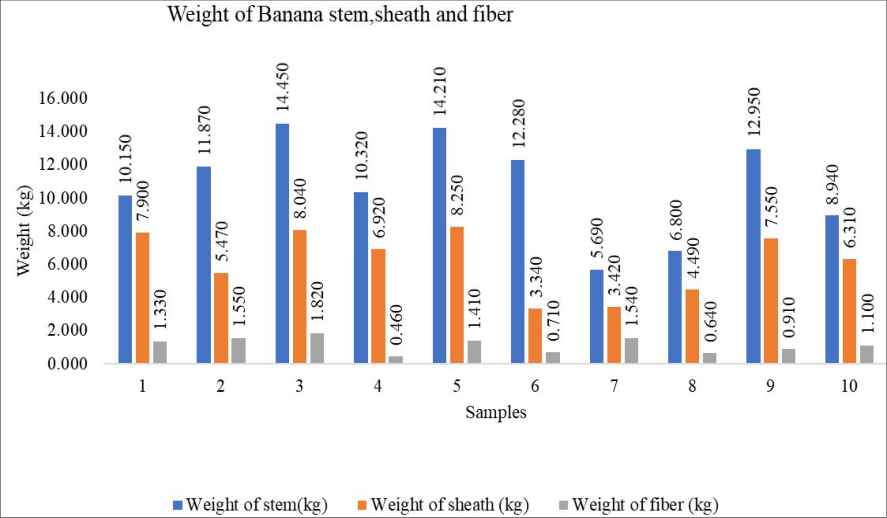 Figure 2
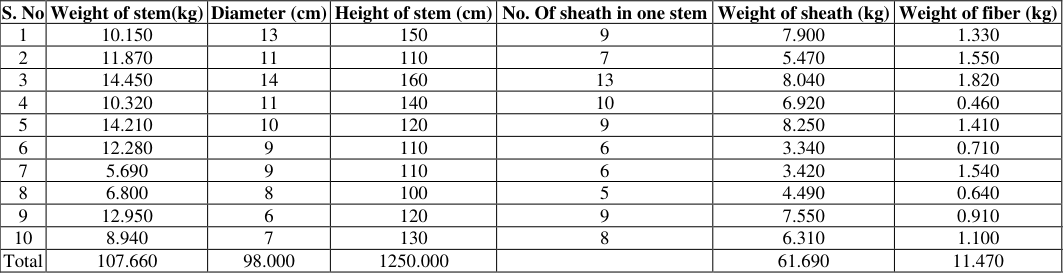 Table 2
 Table 3
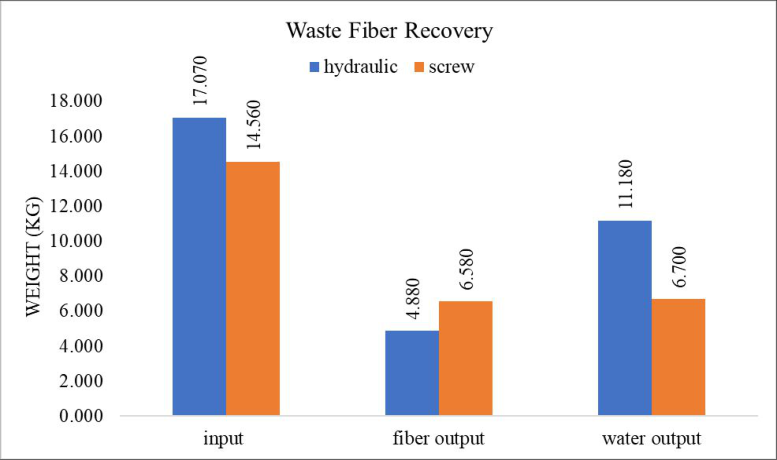 Figure 3
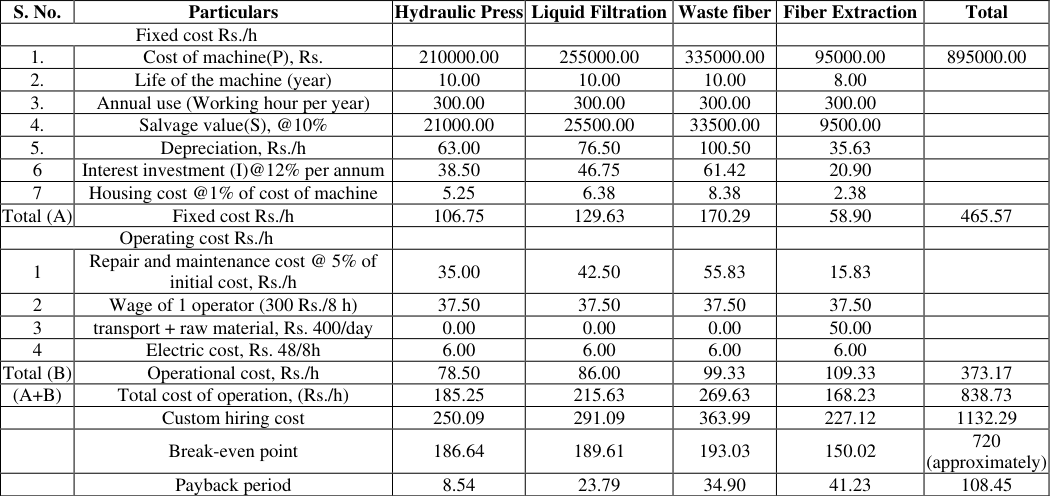 Table 2
Introduction
Banana is an edible (Musa sp.), elongated fruit available worldwide throughout the year. The banana plant is a large herb that grows from an underground stem to create a false trunk, reaching heights of 3 to 6 meters. The lowest leaf sheath sections comprise this stem, which is capped by a cluster of 10 to 20 oblong to elliptical leaves that occasionally reach lengths of 3 to 3.5 meters and widths of 650 mm. Since each trunk can only hold one bunch of bananas, the plant is chopped down to the ground once it has finished bearing fruit. Then, around every six months, shoots that develop from the rhizome give rise to new trunks. High-quality textile fibers, known as banana fiber, are produced from the banana plant. The banana plant's pseudo-stem is the source of these fibers. An appropriate extractor may process two banana plants' fibers at once. Known for its remarkable sustainability, banana fiber is categorised as a natural fiber. Plant fibers are widely used in industries for a wide range of purposes. Nevertheless, natural fibers' market shares significantly decreased as synthetic fibers gained popularity in the middle of the 20th century. 2009 was declared the International Year of Natural Fibers (IYNF) to increase awareness of natural fibers and their advantages. In banana plantations, after the fruits are harvested, the trunks or stems will be wasted. A billion tons of pseudo-stems are thrown away annually. The extraction of banana stem fiber is not a common practice and much of the stems are not used for the production of fiber. The banana harvesting period is almost around the year. Banana fiber is obtained from the superimposed leaves forming the pseudo-stem of the plant, which currently has no use, apart from a low percentage dedicated to cattle feed.
History of the Fiber
The use of natural fibers for textile materials began before recorded history. The oldest indication of fiber use is probably the discovery of flax and wool fabrics at excavation sites of the Swiss lake dwellers (7th and 6th centuries BCE). Several vegetable fibers were also used by prehistoric people. Reports of the spinning of cotton in India date back to 3000 BCE. The invention and development of sericulture silk and the method to spin silk date from 2640 BCE. New fiber plants were also discovered and their use was explored. In the 18th and 19th centuries, the Industrial Revolution encouraged the further invention of machines for use in processing various natural fibers, resulting in a tremendous upsurge in fiber production. The considerable improvement achieved has permitted increased total production, although natural fibers' actual share of the market has decreased with the influx of the cheaper, synthetic fibers requiring fewer man-hours for production.
Justification
A banana fiber production unit performance assessment is important as a means to assess the unit's efficiency and economic viability. Banana fiber has been considered a crop with eco-friendly properties that can be applied to textiles, paper, and handicrafts. Hence, as it obtains large acceptance, its evaluation in processing, costs, and products is essential to increase its production unit's performance. Natural fibers are low-cost, bio-degradable and easily available. Hence there has been a steep rise in their demands in recent times.
In Chhattisgarh, the production of natural fibers is mainly localized to traditional approaches followed by the rural community and it is not considered as a means of livelihood. Hence mechanization of the fiber extraction process to increase output for commercial applications is a viable option for rural development. Therefore, a study was undertaken to evaluate a banana fiber production unit comprising three different machines for three different operations installed in the village Rakhi, district Bemetara, which is run by women workers of a self-help group under KVK Bemetara. In the past, a tough, time-consuming extraction process of banana fiber resulted in limited use of it. But now, the mechanical method of extraction has made it easier, which may enhance the use of banana fiber widely. The study was carried out to evaluate the production process entitled "Performance Evaluation of Banana Fiber Production Unit".
The benefits of the proposed fiber extractor machine are as follows:
1. Unused banana stem can be effectively converted into fiber. 2. It helps reduce agricultural waste by reusing, thus minimizing environmental pollution. 3. The machine is easy to operate and requires minimal maintenance, lowering overall costs. 4. Farmers may experience an increase in their income due to the added value of fiber production.
Flow Chart of Banana Fiber Production Unit Process
Flow Chart of Banana Fiber Production Unit Process
Materials and method
The experiment was carried out with the already manufactured banana fiber production unit installed at the gouthan, village Rakhi, district Bemetara Chhattisgarh, which is located 21⁰ 42′ 50.4900′′ N and 81⁰ 32′ 8.2104″ E.
The machine is installed by zila panchayat and runs by panchayat self-help groups women with the help of Krishi Vigyan Kendra, Jhal, Bemetara.
Bemetara is located near the centre of a large plain. The Shivnath river flows to the east of the city of Bemetara and the southern side has dense forest. The Maikal hills rise on the Deccan Plateau. Bemetara has a tropical wet and dry climate, temperatures remain moderate throughout the year, except from March to June, which can be extremely hot.
The city receives about 51 inches (1300 mm) of rain.
Performance Evaluation of Banana Fiber Production Unit
The performance evaluation of the banana fiber production unit includes the banana fiber extraction machine, hydraulic press for removing water from the pulp, waste banana fiber recovery machine, and a 7-stage filtration system for organic liquid nutrient derived from banana liquid.
Cost Analysis of Banana Fiber Production Unit
Cost economics of banana fiber production unit was determined by labour charges, material cost, electricity, repair, and maintenance. The machine cost was computed using the code IS: 9164. The current input and manufacturing costs for the machinery, equipment, and operator rental pay were used to calculate the operational cost. The overall operating expenses were separated into two groups: variable costs, which rise in direct proportion to the amount of use, and fixed costs, which stay the same regardless of consumption. Depreciation, interest on capital costs, insurance, and taxes are all included in the fixed cost. Lubricant costs, labour charges, and maintenance and repair fees are all included in the operational cost. The banana fiber extractor machine's running costs were calculated in rupees per hour.
Results and Discussion
Experiments were conducted with the developed banana fiber extracting machine, hydraulic press for water removal from banana fiber, waste fiber recovery machine, and 7stages filtration machine. The performance of the machines was studied.
Performance Evaluation of Banana Fiber Production Unit
The performance evaluation of the banana fiber extraction machine has been carried out considering the following indicators
Efficiency of Banana Fiber Extraction Machine
From the test procedure, it was found that the efficiency of banana fiber extraction machine was 10.65% at 530 RPM of the drum blade shaft.
Fiber Recovery
The following formula is used to calculate fiber recovery The fiber recovery rate is the amount of fiber recovered or extracted from fiber extracting machine. Fiber recovery rate of the machine was 18.59%. The speed of blade drum was 530RPM.
Efficiency of Hydraulic Press for Water Removal from Banana Fiber
For Hydraulic based on fiber,
Cost Analysis of Banana Fiber Production Unit
The cost of banana fiber production unit was Rs. 8,95,000. Cost analysis was done by straight line method. It is the sum of total fixed cost and total variable cost. Cost of extracting banana fiber per hour from banana pseudo stem, sap and water separation, waste fiber recovery, and liquid filtration by using installed machines was calculated. It was found that cost of extracting banana fiber production unit per hour was Rs.838.733. Table 2 show the Cost Economics of the Banana Fiber Production Unit. The table presents detailed cost breakdowns for four machines: Hydraulic Press, Liquid Filtration, Waste Fiber, and Fiber Extraction. For each machine, the fixed costs per hour are calculated based on the cost of the machine, its life expectancy, annual usage, salvage value, depreciation, interest investment, and housing costs. For example, the fixed cost per hour for the Hydraulic Press is Rs. 106.75, while for the Liquid Filtration, it is Rs. 129.63, and for the Waste Fiber, it is Rs. 170.29, with Fiber Extraction having the lowest fixed cost at Rs. 58.90. When combined with the operating costs, such as repair and maintenance, wages, transport, and electricity, the total operational cost per hour for Hydraulic Press is Rs. 185.25, for Liquid Filtration it is Rs. 215.63, and for Waste Fiber, it is Rs. 269.63. Fiber Extraction has a total operational cost of Rs. 168.23 per hour. The custom hiring costs and breakeven points are also calculated for each machine, showing the price per hour for outsourcing each machine's use. The break-even point for the Hydraulic Press is Rs. 186.64, while the payback period for these machines varies significantly, with the Hydraulic Press having the shortest payback period of 8.54 days, and Fiber Extraction taking 41.23 days. The total payback period for all four machines combined is 108.45 days. Because these machines allow rural women to make items from banana stems and fiber, they are essential in giving them opportunities for a living. Women may turn banana trash into useful products like fabrics, ropes, and mats by using these machines. In addition to giving people financial power, this encourages sustainable behaviors in rural areas. These women contribute to local economies and improve their quality of life by working in the banana fiber processing industry, which also preserves the environment by using agricultural byproducts.
| S. No. | Particulars | Hydraulic Press | Liquid Filtration | Waste fiber | Fiber Extraction | Total |
|---|---|---|---|---|---|---|
| Fixed cost Rs./h | ||||||
| 1. | Cost of machine(P), Rs. | 210000.00 | 255000.00 | 335000.00 | 95000.00 | 895000.00 |
| 2. | Life of the machine (year) | 10.00 | 10.00 | 10.00 | 8.00 | |
| 3. | Annual use (Working hour per year) | 300.00 | 300.00 | 300.00 | 300.00 | |
| 4. | Salvage value(S), @10% | 21000.00 | 25500.00 | 33500.00 | 9500.00 | |
| 5. | Depreciation, Rs./h | 63.00 | 76.50 | 100.50 | 35.63 | |
| 6 | Interest investment (I)@12% per annum | 38.50 | 46.75 | 61.42 | 20.90 | |
| 7 | Housing cost @1% of cost of machine | 5.25 | 6.38 | 8.38 | 2.38 | |
| Total (A) | Fixed cost Rs./h | 106.75 | 129.63 | 170.29 | 58.90 | 465.57 |
| Operating cost Rs./h | ||||||
| 1 | Repair and maintenance cost @ 5% of initial cost, Rs./h | 35.00 | 42.50 | 55.83 | 15.83 | |
| 2 | Wage of 1 operator (300 Rs./8 h) | 37.50 | 37.50 | 37.50 | 37.50 | |
| 3 | transport + raw material, Rs. 400/day | 0.00 | 0.00 | 0.00 | 50.00 | |
| 4 | Electric cost, Rs. 48/8h | 6.00 | 6.00 | 6.00 | 6.00 | |
| Total (B) | Operational cost, Rs./h | 78.50 | 86.00 | 99.33 | 109.33 | 373.17 |
| (A+B) | Total cost of operation, (Rs./h) | 185.25 | 215.63 | 269.63 | 168.23 | 838.73 |
| Custom hiring cost | 250.09 | 291.09 | 363.99 | 227.12 | 1132.29 | |
| Break-even point | 186.64 | 189.61 | 193.03 | 150.02 | 720 (approximately) | |
| Payback period | 8.54 | 23.79 | 34.90 | 41.23 | 108.45 |
Table text extracted from the original PDF; superscript letters are shown inline. The original table image is below.
View original table image
| S. No | Weight of stem(kg) | Diameter (cm) | Height of stem (cm) | No. Of sheath in one stem | Weight of sheath (kg) | Weight of fiber (kg) |
|---|---|---|---|---|---|---|
| 1 | 10.150 | 13 | 150 | 9 | 7.900 | 1.330 |
| 2 | 11.870 | 11 | 110 | 7 | 5.470 | 1.550 |
| 3 | 14.450 | 14 | 160 | 13 | 8.040 | 1.820 |
| 4 | 10.320 | 11 | 140 | 10 | 6.920 | 0.460 |
| 5 | 14.210 | 10 | 120 | 9 | 8.250 | 1.410 |
| 6 | 12.280 | 9 | 110 | 6 | 3.340 | 0.710 |
| 7 | 5.690 | 9 | 110 | 6 | 3.420 | 1.540 |
| 8 | 6.800 | 8 | 100 | 5 | 4.490 | 0.640 |
| 9 | 12.950 | 6 | 120 | 9 | 7.550 | 0.910 |
| 10 | 8.940 | 7 | 130 | 8 | 6.310 | 1.100 |
| Total | 107.660 | 98.000 | 1250.000 | 61.690 | 11.470 |
Table text extracted from the original PDF; superscript letters are shown inline. The original table image is below.
View original table image
Figures and tables from the paper
| S. No. | Particular | Mean Value | Standard Deviation | CV (coefficient of variance) |
|---|---|---|---|---|
| 1. | Weight of stem(kg) | 10.766 | 2.965 | 27.540 |
| 2. | Diameter (cm) | 9.8 | 2.529 | 25.806 |
| 3. | Height of stem (cm) | 125 | 19.578 | 15.662 |
| 4. | No. Of sheath | 8.2 | 2.347 | 28.622 |
Table text extracted from the original PDF; superscript letters are shown inline. The original table image is below.
View original table image
References
17 in the original paper- Ahmed FE, Tilahun M, Gemeso F. Design and fabrication of multi plant stem fiber extraction machine. International Journal of Modern Science and Technology. 2019;168-173.
- Al-Qureshi HA. The use of banana fiber reinforced composites for the development of a truck body. In: 2nd International Wood and Natural Fiber Composites Symposium; Germany. 1999.
- Ankitha N, Rupashri MR. Modelling of banana fiber extraction machine. CVR Journal of Science and Technology. 2020;19:2277-3916.
- Chandramohan D, Marimuthu K. A review on natural fibers. International Journal of Recent Research and Applied Studies (IJRRAS). 2011;8:194-206.
- Chawdhury A, Karim MR, Hoque MA, Hossain A, et al. Design, development, and performance evaluation of a power-operated jute fiber extraction machine. Agri Engineering. 2021;3(2):403-422.
- Deepali, Jogdand SV, Naik RK. Techno economic evaluation of banana fiber extraction machine [unpublished M. Tech thesis]. SVCAET & RS, IGKV, Raipur, Chhattisgarh; 2023.
- Om Prakash, Taram. Development and performance evaluation of hydraulic tamarind briquetting machine. 2017. http://krishikosh.egranth.ac.in/handle/1/5810036689.
- SVCAET &RS, IGKV, Raipur Chhattisgarh; 2022.
- Rahamaththulla S, Premnath S, Ravi V, Subramaniyan M. Design & fabrication of banana fiber extracting machine. International Journal for Scientific Research & Development. 2018;6(1):393-396.
- SVCAET &RS, IGKV, Raipur Chhattisgarh. 2021.
- Sharma NK. Study on properties of banana fiber reinforced green composite. Journal of Reinforced Plastic and Composites. 2013;525-532.
- Sheikh SA, Awate NP. A review paper on design and development of banana fiber extraction machine. International Journal of Engineering Sciences and Research Technology. 2016;5(3):841-847.
- Vanishree TS, Shamil KU, Tharun A, Ujwal S, Sanjay P. Design and fabrication of sisal fiber extraction machine. International Advanced Research Journal in Science, Engineering and Technology. 2020;7.
- Vidya Bharathi S, Vinodhkumar S, Saravanan MM. Strength characteristics of banana and sisal fiber reinforced composites. IOP Conf. Series: Materials Science and Engineering. 2021;1055:012024.
- Vinoth R, Gokulnath KS, Barathkumar KJ, Ahildarpan K, Gokulprakash E. A study of banana fiber: A review. International Journal for Scientific Research and Development. 2018;6(9):127-131.
- Yang X, Zhang Z, Wang H. Effect of filler content on the mechanical properties of natural fiber reinforced polypropylene composites. Journal of Materials Science. 2006;41(23):7841-7846.
- Yuso Y, Arifin YH, Muchtar A. Mycelium fibers as new resource for environmental sustainability. Procedia Engineering. 2013;53:504-508.
Cited by 1
From OpenAlex, OpenCitations and reference lists read by Scinovex
- Market potential and processing economics of banana-fibre reusable sanitary pads in Raigarh district, Chhattisgarh
Satyaprabha Ohdar, Hulas Pathak · International Journal of Agriculture Extension and Social Development · 2026
The increasing concern over environmental pollution, agricultural waste and the need for sustainable menstrual hygiene products has created interest in reusable and eco-friendly sanitary pads. Banana fibre, obtained from banana plant residues, represents a potential waste-to-wealth resource that can be utilised in the production of reusable sanitary pads. However, limited empirical evidence is available regarding the social acceptance, market potential, production economics and business challenges associated with banana-fibre reusable sanitary pads in Raigarh district of Chhattisgarh. The pres