
Research article · 2025 · Full text
International Journal of Horticulture and Food ScienceResponse of GA3, NAA and Ethrel on yield, quality and economics of ridge gourd (Luffa acutangula L.) cv. GRG-2
Volume 7(7) · Pages 39–46 · DOI: 10.33545/26631067.2025.v7.i7a.335 ↗
Research areasAdvances in Cucurbitaceae Research
Abstract
Author-writtenThe experiment entitled “Response of GA₃, NAA, and Ethrel on Yield, Quality, and Economics of Ridge Gourd (Luffa acutangula L.) cv. GRG-2 (Gujarat Ridge Gourd-2)” was carried out during the summer season of 2024 at the Instructional Farm, Jambuvadi, Department of Vegetable Science, College of Horticulture, Junagadh Agricultural University (JAU), Junagadh, Gujarat. The study utilized the ridge gourd variety GRG-2, a high-yielding cultivar released by JAU, and was laid out in a Randomized Block Design (RBD) with ten treatments and three replications. The treatments included three concentrations each of NAA (70, 85, and 100 ppm), GA₃ (30, 45, and 60 ppm), Ethrel (100, 150, and 200 ppm), and an untreated control. Foliar applications of plant growth regulators were administered at the critical 2-4 leaf stage. The results revealed significant differences among the treatments with respect to yield and its contributing traits. Among all treatments, the application of Ethrel at 200 ppm (T9) emerged as the most effective, resulting in the highest fruit length (28.77 cm), fruit girth (11.56 cm), fruit weight (132.64 g), number of fruits per plant (22.46), fruit yield per plant (2.97 kg), fruit yield per plot (28.65 kg), and total yield (10.23 t/ha). In terms of economic returns, T9 also recorded the maximum gross return of ₹3,06,900 per hectare, net return of ₹1,85,415 per hectare, and a benefit-cost ratio of 2.54, indicating superior profitability. In contrast, the untreated control (T10) consistently recorded the lowest performance across all measured parameters. While numerical improvements in some quality attributes, such as total soluble solids and sugar content, were observed under Ethrel treatments, the differences were statistically non-significant, suggesting that the application of GA₃, NAA, and Ethrel had limited influence on the internal quality of the fruits. Overall, the study concludes that foliar application of Ethrel at 200 ppm during the early vegetative stage significantly enhances the yield and economic returns of ridge gourd cultivation without negatively affecting fruit quality.
Summary
Source-checkedPlain-language reading of the full paper, prepared with AI and checked against the text. Each point links to the authors' own words.
Why it matters
- Cucurbits, including ridge gourd, are economically and nutritionally important in India, accounting for approximately 5.6% of the country's total vegetable production. View evidence ↗
- The productivity of ridge gourd is heavily dependent on sex expression, as only female (pistillate) flowers can develop into fruit. View evidence ↗
- A common productivity challenge in ridge gourd is the early prevalence of male flowers, particularly at lower nodes, which delays the formation of fruit. View evidence ↗
The question
- The study aimed to evaluate how the application of gibberellic acid (GA₃), naphthalene acetic acid (NAA), and Ethrel affects the yield, quality, and economic viability of ridge gourd. View evidence ↗
What they did
- The research was conducted during the summer of 2024 at the Junagadh Agricultural University's Instructional Farm in Gujarat, India. View evidence ↗
- The study used the high-yielding GRG-2 ridge gourd variety in a Randomized Block Design featuring ten treatments and three replications. View evidence ↗
- Treatments consisted of an untreated control and three concentrations each of NAA (70, 85, 100 ppm), GA₃ (30, 45, 60 ppm), and Ethrel (100, 150, 200 ppm). View evidence ↗
- Plant growth regulators were applied as foliar sprays during the critical 2-4 leaf growth stage. View evidence ↗
What they found
- The application of 200 ppm Ethrel (T9) produced the highest number of fruits per plant at 22.46. View evidence ↗
- The maximum fruit length of 28.77 cm was achieved using 200 ppm Ethrel (T9). View evidence ↗
- The greatest fruit girth of 11.56 cm was recorded in the 200 ppm Ethrel (T9) treatment. View evidence ↗
- The maximum individual fruit weight of 132.64 g was observed with 200 ppm Ethrel (T9). View evidence ↗
- The highest fruit yield per plant was 2.97 kg, achieved with the foliar application of 200 ppm Ethrel (T9). View evidence ↗
- The maximum total yield of 10.23 tons per hectare was reached using 200 ppm Ethrel (T9). View evidence ↗
- Although Ethrel treatments showed numerical improvements in sugar content and total soluble solids, these quality differences were not statistically significant. View evidence ↗
What it means
- The authors recommend the application of Ethrel at 200 ppm as an effective strategy to optimize yield and economic returns in commercial ridge gourd production. View evidence ↗
Visual summary
3 visualsIllustrations explain the paper; charts are replotted from the paper's own table values.
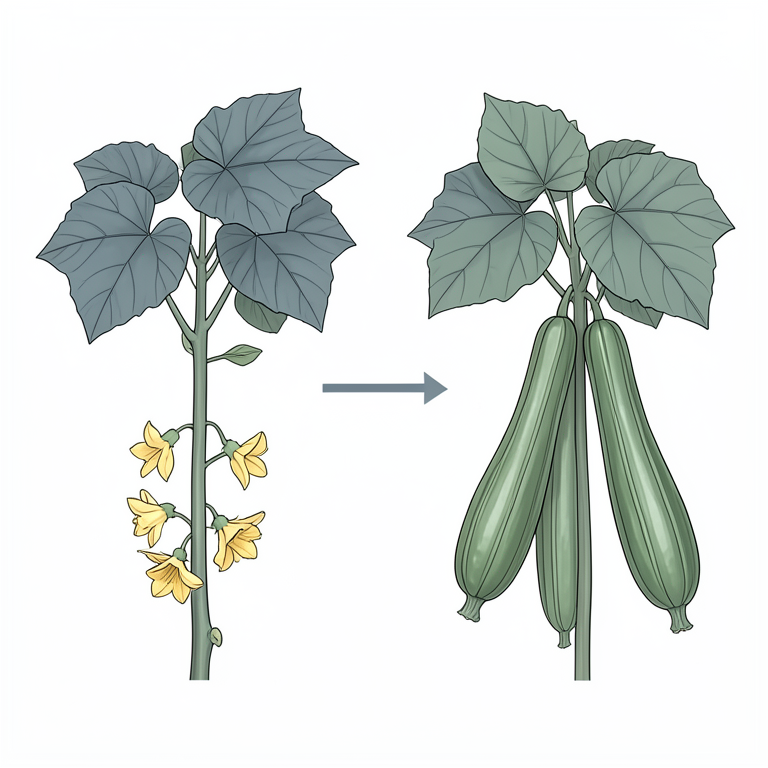
The Role of PGRs in Sex Expression
AI-generated conceptual illustration (ridge gourd plants (Luffa acutangula L.)). It explains the idea and does not show study data.
View source evidence ↗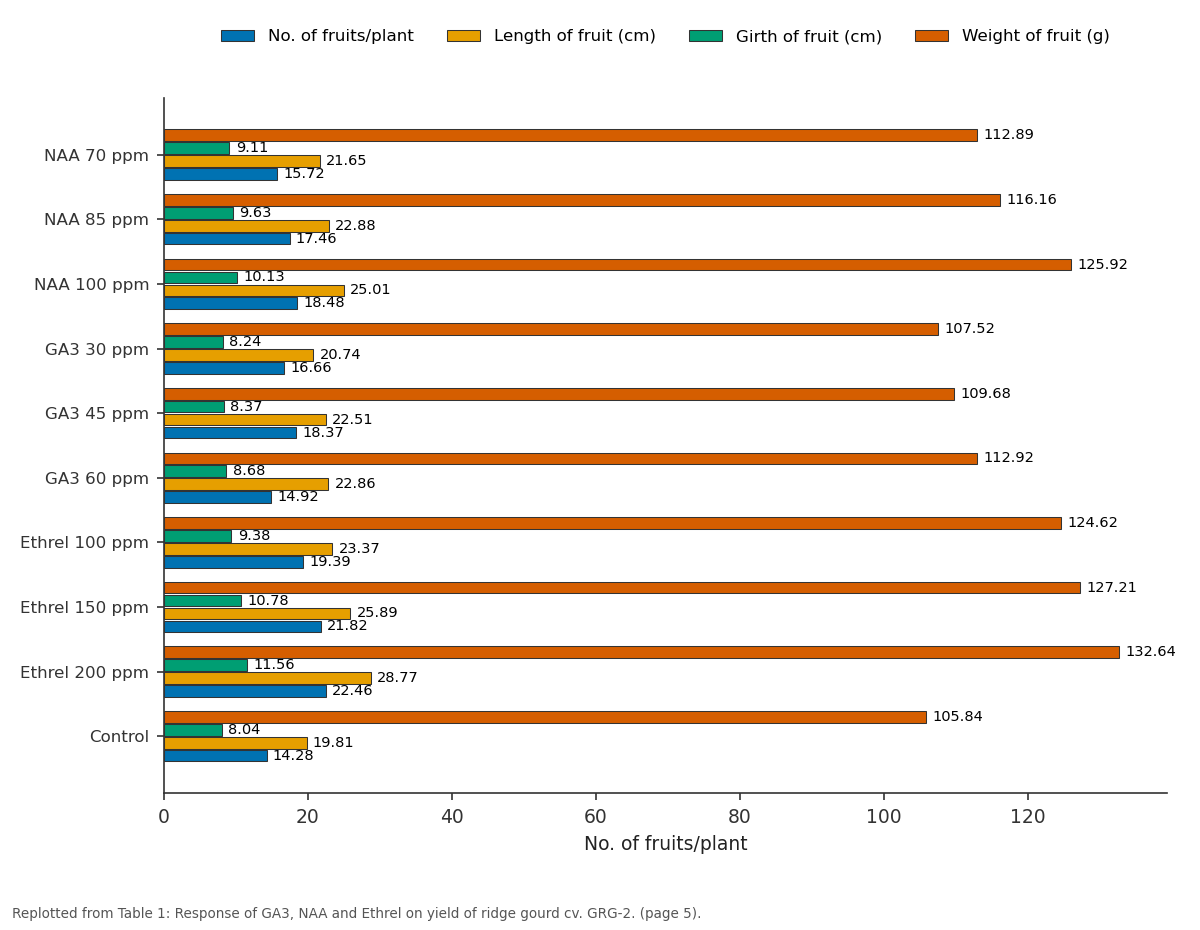
No. of fruits/plant and Length of fruit (cm) and more: NAA 70 ppm vs NAA 85 ppm vs NAA 100 ppm vs GA3 30 ppm vs GA3 45 ppm
Replotted from Table 1 (page 5) of the original paper. Every bar is the paper's own table value.
View source evidence ↗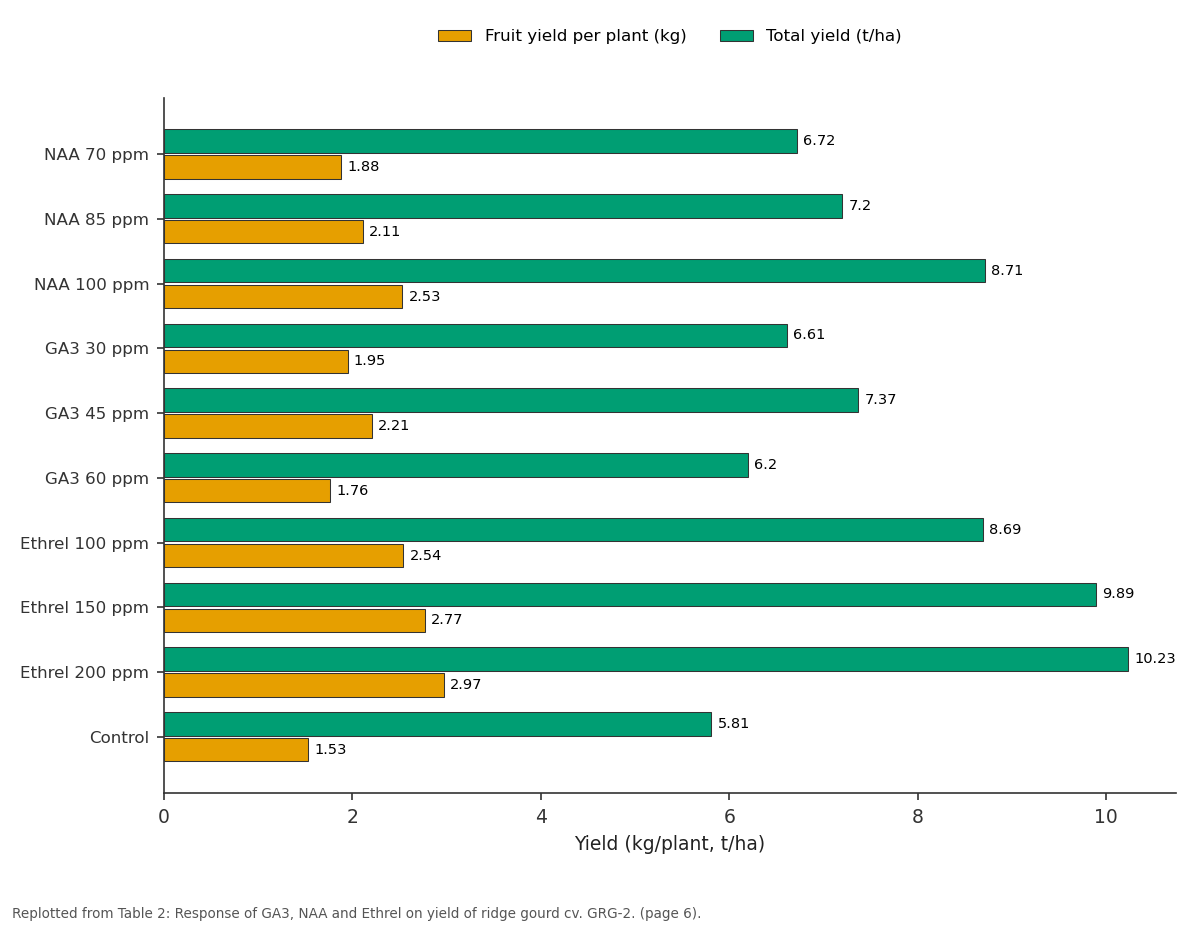
Fruit yield per plant (kg) and Total yield (t/ha): NAA 70 ppm vs NAA 85 ppm vs NAA 100 ppm vs GA3 30 ppm vs GA3 45 ppm
Replotted from Table 2 (page 6) of the original paper. Every bar is the paper's own table value.
View source evidence ↗Figures & tables
From the original paper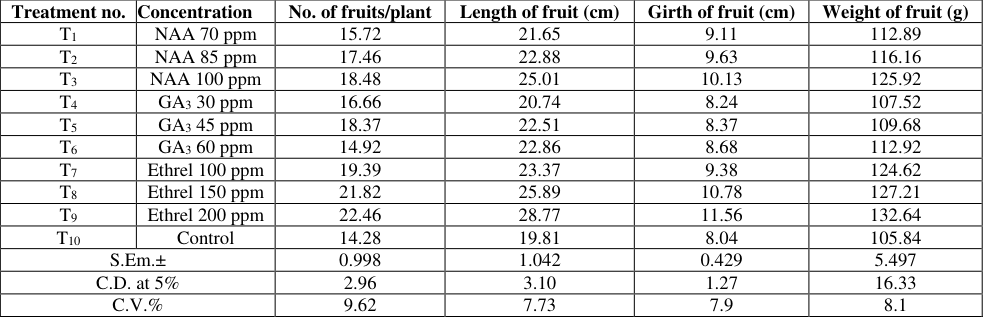 Table 1
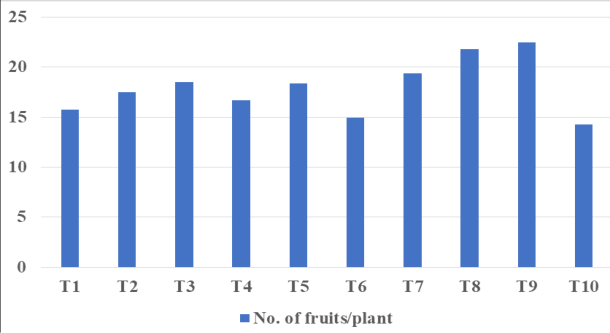 Figure 1
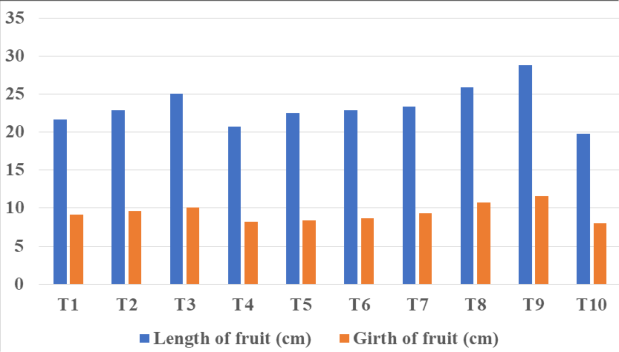 Figure 2
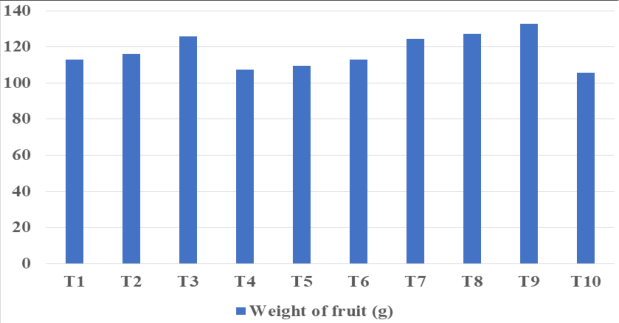 Figure 3
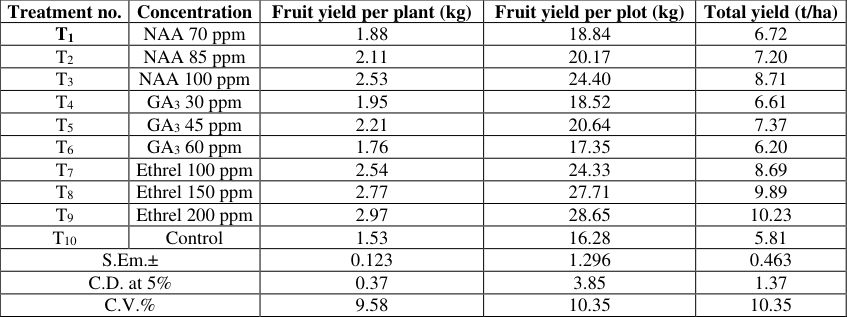 Table 2
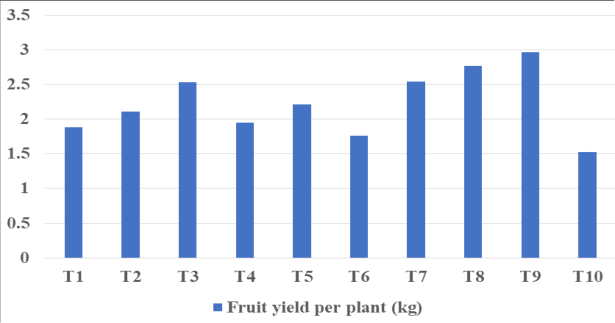 Figure 4
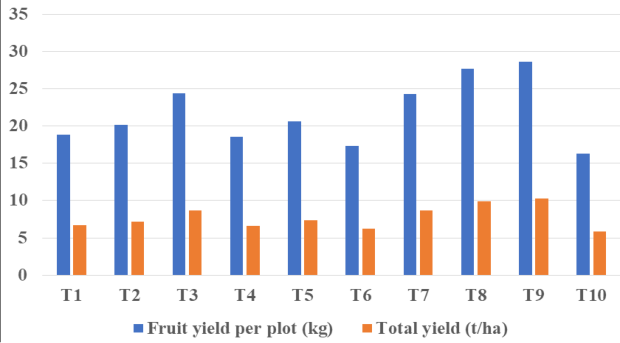 Figure 5
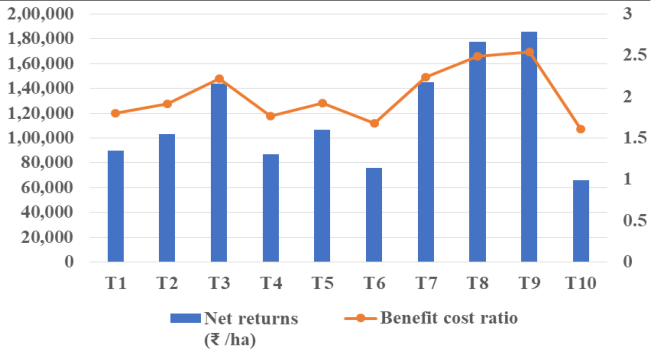 Figure 6
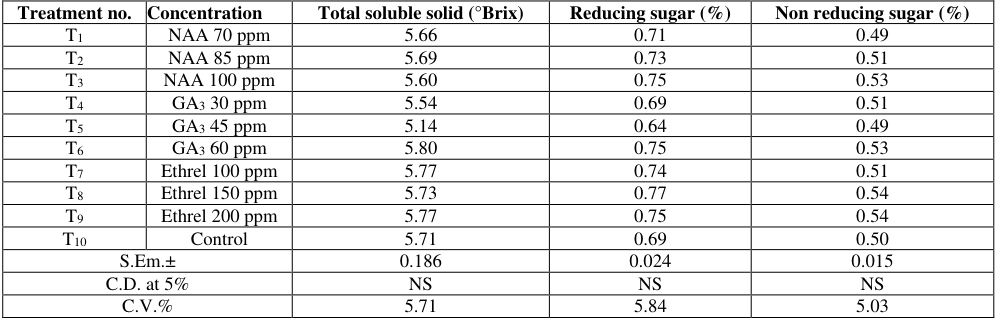 Table 3
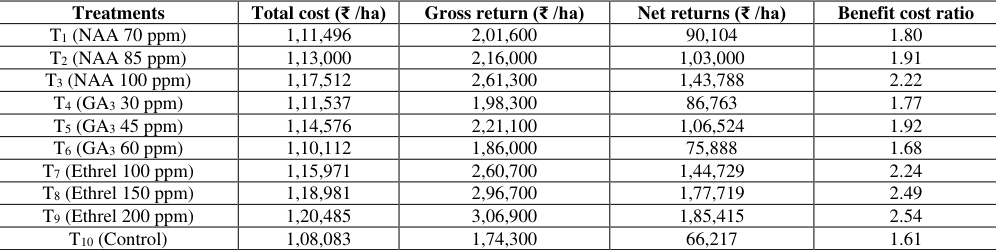 Table 4
Introduction
Ridge gourd (Luffa acutangula L.) is a diploid plant species (2n = 26) and is primarily known as a cross-pollinated vegetable crop. Belonging to the Cucurbitaceae family, this species traces its origin back to India and plays a significant role in traditional agriculture. The Cucurbitaceae family itself is quite diverse, comprising around 118 genera and approximately 825 known species. In the context of Indian horticulture, cucurbits contribute to nearly 5.6% of the nation's total vegetable production, underscoring their economic and nutritional importance. Ridge gourd, in particular, is mainly cultivated during the summer months but exhibits year-round cultivation in certain regions-especially in the northeastern parts of India-due to favorable climatic conditions. Characterized by its climbing or trailing growth habit, ridge gourd produces tender, elongated fruits that are widely consumed in household diets across the country. Its culinary versatility and mild flavor make it a staple in many traditional dishes. Notably, there exists a high level of genetic diversity within this species, particularly concerning traits such as fruit shape, size, and length. This variability presents valuable opportunities for crop improvement and breeding programs targeting better yield and adaptability. The genus Luffa is also renowned for its unique non-food utility. Mature and dried fruits of certain Luffa species are processed into natural sponges-commonly referred to as "loofahs." These fibrous sponges are used extensively for personal hygiene, household cleaning, and a range of industrial applications, including the manufacture of scrubbers, mats, pillows, and even eco-friendly packaging materials. Ridge gourd is cultivated not only commercially on large farms but also in kitchen gardens, particularly in tropical and subtropical regions such as Indonesia, Myanmar, Malaysia, the Philippines, Sri Lanka, and Taiwan. This wide adaptability highlights its relevance beyond the Indian subcontinent.
A key determinant of productivity in cucurbit crops, including ridge gourd, is sex expression, since only pistillate (female) flowers have the potential to develop into fruit. Ridge gourd is typically monoecious, meaning that both male (staminate) and female (pistillate) flowers are borne on the same plant. However, a common challenge is the predominance of male flowers at the early stages of growth, especially at the lower nodes, which often delays fruit formation. Pistillate and hermaphrodite flowers generally appear later, reducing the crop's early yield potential and overall productivity if not managed properly. To address this imbalance in flower distribution and enhance yield, the use of plant growth regulators (PGRs) has gained considerable attention in agricultural research and practice. Compounds such as gibberellic acid (GA₃), naphthalene acetic acid (NAA), and Ethrel (ethephon) have been shown to significantly affect floral biology in cucurbits. Application of these substances during the critical two-to four-leaf stage-when floral differentiation is actively taking place-can effectively alter the sex ratio by stimulating the formation of pistillate flowers while suppressing excessive development of staminate flowers. Among these, Ethrel has demonstrated particularly strong results in encouraging the early emergence of female flowers on lower nodes, thereby contributing to earlier and more productive harvests. In addition to influencing sex expression, PGRs also play a vital role in regulating vegetative growth. This control can help optimize plant spacing and density, ultimately leading to improved land use efficiency and higher yields per unit area. As increased female flower production is directly associated with better fruit set and yield enhancement, the strategic application of PGRs offers a promising and practical approach to boosting ridge gourd production. Therefore, this study was undertaken with the following objective: To evaluate the impact of gibberellic acid (GA₃), naphthalene acetic acid (NAA), and Ethrel on yield performance, quality attributes, and economic viability in the cultivation of ridge gourd.
Materials and Methods
The present investigation was conducted to evaluate the response of plant growth regulators-gibberellic acid (GA₃), naphthalene acetic acid (NAA), and Ethrel (ethephon) on the yield, quality, and economics of ridge gourd (Luffa acutangula L.) cultivar GRG-2. The experiment took place during the summer season of 2024 at the Instructional Farm, Jambuvadi, Department of Vegetable Science, College of Horticulture, Junagadh Agricultural University (JAU), Junagadh, Gujarat, India. The region is characterized by a semi-arid climate, with conditions favorable for ridge gourd cultivation. The cultivar GRG-2 (Gujarat Ridge Gourd-2), released by Junagadh Agricultural University in 2018-19, was selected for this study due to its widespread cultivation in Gujarat and its agronomically desirable traits. This variety produces long, slender, green fruits with pronounced ridges, elongated petioles and pedicels, and male flowers with five prominent dorsal nerves on the petals. It exhibits moderate tolerance to downy mildew and relatively low susceptibility to pests such as fruit fly and leaf miners. Seeds were procured from the Vegetable Research Station, JAU, Junagadh, ensuring genetic purity and uniformity. The study was laid out in a Randomized Block Design (RBD) with three replications to ensure statistical rigor and minimize environmental bias. Each treatment was randomly assigned to plots within each block. There was total ten treatments, i.e., NAA 70 ppm (T 1 ), NAA 85 ppm (T 2 ), NAA 100 ppm (T 3 ), GA 3 30 ppm (T 4 ), GA 3 45 ppm (T 5 ), GA 3 60 ppm (T 6 ), Ethrel 100 ppm (T 7 ), Ethrel 150 ppm (T 8 ), Ethrel 200 ppm (T 9 ) and control (T 10 ). Stock solutions of NAA and GA₃ were prepared by dissolving the required quantities in a small volume of 0.1 N sodium hydroxide (NaOH) to ensure solubility, then diluted with distilled water to a total volume of one liter. These stock solutions had concentrations of 255 ppm for NAA and 135 ppm for GA₃ and were subsequently diluted to the respective treatment concentrations. Ethrel stock solution was prepared by mixing 450 microliters of ethrel with one liter of distilled water. Subsequent dilutions yielded working concentrations of 100, 150, and 200 ppm. Foliar sprays were applied in the early evening using a hand-held plastic sprayer, ensuring thorough coverage of both upper and lower leaf surfaces as well as the entire plant canopy. Applications were timed to coincide with the critical two-to four-leaf stage of plant growth, a period significant for floral differentiation and sex expression regulation in ridge gourd.
How observations recorded
To determine the total number of fruits, the mature, edible fruits harvested at each picking were counted, and the average number was calculated for each treatment. Fruit length was measured from the stalk end to the tip using a measuring tape or ruler, and the average length was recorded in centimeters. Girth was measured at the midpoint of each selected fruit using a vernier caliper, with the average girth also expressed in centimeters. The weight of mature fruits was recorded individually at each picking using a digital weighing scale, and the mean weight was calculated for each treatment. For fruit yield per plant (kg), the total weight of fruits harvested during each picking was measured using a digital balance. In the case of fruit yield per vine, the yield from five tagged plants was averaged across all pickings. Similarly, for fruit yield per plot (kg), the total harvested fruits from each plot at each picking were weighed, and the total yield was calculated by summing the values from all harvests. To compute the total yield per hectare (t/ha), the cumulative fruit yield from each plot over time was weighed and then converted into tons per hectare. For the estimation of Total Soluble Solids (TSS), five fruits were selected, the peel was uniformly removed, and the fruits were cut into small pieces and thoroughly mixed to prepare a homogeneous extract. TSS readings were taken using a hand refractometer (range 0-53°) (PAL-α, Atago, Japan), and the average value was calculated. Reducing and non-reducing sugars were estimated using standard procedures with a spectrophotometer.
Results and Discussion
Results and Discussion
Effect on yield parameters
The highest number of fruits per plant (22.46) was recorded under treatment T 9 , which involved the application of Ethrel at 200 ppm. This result was statistically comparable to treatment T 8 (Ethrel 150 ppm), where the number of fruits per plant was slightly lower at 21.82. In contrast, the control treatment (T 10 ), which did not receive any plant growth regulator, showed the lowest fruit count per plant, with an average of 14.28 fruits. The enhanced fruit production observed with Ethrel treatments can be attributed to the regulator's ability to stimulate vegetative growth, particularly by promoting the development of additional branches. This branching effect likely leads to an increase in the number of female (pistillate) flowers, which directly contributes to improved fruit set and consequently a higher fruit yield per vine. These findings align with earlier studies, such as those by Sureshkumar et al. (2016) [23] , who reported that Ethrel application significantly increased the number of fruits in ridge gourd by influencing flower sex expression. Similarly, Arora et al. (1995) documented an increase in fruit numbers in ridge gourd following the use of growth regulators, while Kooner et al. (2000) [5] observed comparable results in bottle gourd, a closely related cucurbit species. Moreover, it is well-established that the application of plant growth regulators during the crucial 2-to 4-leaf stage enhances the differentiation and proliferation of female flowers on the vine, thereby boosting overall fruit production. This stage is critical as floral sex expression is highly responsive to hormonal treatments, making timely foliar application essential for maximizing yield potential. The maximum fruit length of 28.77 cm was recorded under treatment T 9 , where Ethrel was applied at a concentration of 200 ppm. This result was statistically comparable to treatment T 8 (Ethrel 150 ppm), which produced fruits averaging 25.89 cm in length. In contrast, the control group (T 10 ), which received no plant growth regulator treatment, exhibited the shortest fruits with an average length of 19.81 cm. The observed enhancement in fruit length following Ethrel application can be attributed to the hormone's influence on endogenous auxin levels within the plant tissues. Ethrel, by releasing ethylene, indirectly stimulates the synthesis and accumulation of auxins, which are known to promote cell enlargement and elongation, particularly in developing fruit tissues. This cellular expansion ultimately leads to longer fruits. The beneficial effect of Ethrel on fruit size is consistent with findings reported by Kumari et al. (2019) [6] in bottle gourd, where similar increases in fruit length were linked to elevated auxin activity induced by plant growth regulators. These results highlight the role of timely hormonal application in manipulating fruit development processes to improve quality parameters such as fruit size. The greatest fruit girth, measuring 11.56 cm, was recorded under treatment T 9 , which involved the application of Ethrel at 200 ppm. This measurement was statistically comparable to treatment T 8 (Ethrel 150 ppm), where fruit girth averaged 10.78 cm. On the other hand, the control treatment (T 10 ), which did not receive any plant growth regulator, produced fruits with the smallest girth, averaging 8.04 cm. The significant increase in fruit girth observed with Ethrel treatments can primarily be attributed to the compound's ability to stimulate the synthesis of endogenous auxins within the plant. Auxins play a critical role in promoting the radial expansion of fruit cells, leading to increased cell division and enlargement in the transverse direction. This cellular growth results in a noticeable thickening of the fruit, thereby increasing its girth. The findings of this study are in alignment with previous research conducted by Kumari et al. (2019) [6] , who reported similar enhancements in fruit diameter in bottle gourd following the application of growth regulators that modulate auxin levels. Such hormonal regulation during critical stages of fruit development proves to be an effective strategy to improve fruit size and overall quality in cucurbit crops. Maximum weight of fruit (132.64 g) was observed under treatment T 9 (Ethrel 200 ppm) which was found at par with treatment the treatment T 8 (Ethrel 150 ppm) ( 127.21 g), T 7 (Ethrel 150 ppm) (124.62 g) and T 3 (NAA 100 ppm) (125.92 g). Whereas, minimum weight of fruit (105.84 g) was recorded in T 10 (Control). The increase in fruit weight observed with ethrel application may be explained by the critical role of fertilized ovules in stimulating fruit growth through the production of hormones. These hormones are believed to initiate and sustain a metabolic gradient within the plant, which effectively directs the translocation of nutrients and assimilates from other parts of the plant toward the developing fruit. This enhanced nutrient flow supports greater cell division and enlargement, resulting in increased fruit weight. Such findings have also been reported by Sureshkumar et al. (2016) [23] in bitter gourd, highlighting the hormonal regulation of fruit development and resource allocation. The highest fruit yield per plant, measuring 2.97 kg, was recorded under treatment T 9 , which involved the foliar application of Ethrel at 200 ppm. This yield was statistically comparable to that obtained under treatment T 8 (Ethrel 150 ppm), where the average fruit yield per plant was 2.77 kg. Conversely, the lowest fruit yield was observed in the control treatment (T 10 ), which produced only 1.53 kg per plant without any plant growth regulator application. The substantial increase in fruit yield with Ethrel treatment can be attributed to a synergistic effect involving multiple factors: a greater number of female flowers per plant, an increased fruit set resulting in a higher number of fruits per vine, and an enhancement in individual fruit weight. Together, these factors culminate in the improved overall productivity of ridge gourd plants treated with Ethrel. These observations corroborate the findings of several earlier studies, including those by Chaurasiya et al. (2016) [4] in muskmelon, Sondarava et al. (2016) [22] in ridge gourd, Nayak et al. (2018) [14] in cucumber, and Kumari et al. (2019) [6] in bottle gourd, all of which reported significant increases in fruit yield following the application of plant growth regulators that favorably influence flower development and fruit set. Hence, the judicious use of Ethrel at appropriate concentrations during early growth stages emerges as a valuable practice for enhancing yield potential in cucurbit crops. The highest fruit yield per plot was recorded under treatment T 9 , with Ethrel applied at 200 ppm, resulting in an average yield of 28.65 kg. This yield was statistically comparable to that obtained in treatment T 8 (Ethrel 150 ppm), where the fruit yield per plot was 27.71 kg. In contrast, the lowest yield was observed in the control treatment (T 10 ), which produced only 16.28 kg per plot without any plant growth regulator application. The significant improvement in fruit yield following Ethrel application can be explained by several interrelated factors, including an increased number of female flowers per plant, a higher number of fruits set per vine, enhanced individual fruit weight, and ultimately greater total fruit production per plant. Together, these physiological and morphological changes contribute to the overall maximization of yield at the plot level. These findings are in strong agreement with earlier research studies conducted by Chaurasiya et al. (2016) [4] in muskmelon, Sondarava et al. (2016) [22] in ridge gourd, Nayak et al. (2018) [14] in cucumber, and Kumari et al. (2019) [6] in bottle gourd, all of which reported similar positive effects of plant growth regulator applications on increasing fruit yield. Consequently, the use of Ethrel at appropriate concentrations appears to be a promising agronomic practice to boost production efficiency in ridge gourd cultivation. The highest total fruit yield, amounting to 10.23 tons per hectare, was achieved under treatment T 9 , where Ethrel was applied at 200 ppm. This yield was statistically comparable to that observed under treatment T 8 (Ethrel 150 ppm), which produced 9.89 tons per hectare. In contrast, the lowest total yield of 5.81 tons per hectare was recorded in the untreated control (T 10 ). The substantial increase in total yield due to Ethrel application can be attributed to several factors acting synergistically. These include an increased number of female flowers per plant, a higher fruit set resulting in more fruits per vine, greater individual fruit weight, and overall improved fruit yield per plant. Collectively, these physiological improvements contribute to the enhanced productivity observed at the hectare scale. These findings are consistent with previous studies such as those by Chaurasiya et al. (2016) [4] in muskmelon, Sondarava et al. (2016) [22] in ridge gourd, Nayak et al. (2018) [14] in cucumber, and Kumari et al. (2019) [6] in bottle gourd, all of which documented similar positive effects of Ethrel and other plant growth regulators on total fruit yield. Therefore, the application of Ethrel at optimal concentrations represents an effective agronomic strategy to maximize ridge gourd production.
Effect on quality parameters
The analysis of total soluble solids (TSS), expressed in degrees Brix (°Brix), revealed no statistically significant differences among the treatments. However, numerically higher TSS values were observed in certain treatments. The maximum TSS content of 5.77 °Brix was recorded under both T 7 (Ethrel 100 ppm) and T 9 (Ethrel 200 ppm), indicating a slight improvement in fruit sweetness and internal quality in these treatment groups. Although the differences were not significant, the trend suggests that Ethrel application may contribute positively to the accumulation of soluble sugars in ridge gourd fruits, possibly through its influence on ripening physiology and carbohydrate metabolism. These subtle enhancements in quality parameters, while not statistically conclusive, could be beneficial from a consumer preference standpoint and warrant further investigation in future studies. The evaluation of sugar content in ridge gourd revealed that both reducing and non-reducing sugars were not significantly influenced by the application of plant growth regulators. However, numerical differences were observed among treatments. The highest reducing sugar content (0.77%) was recorded under treatment T8 (Ethrel 150 ppm), suggesting a slight improvement in the breakdown of complex carbohydrates into simpler sugars in response to Ethrel application. Similarly, the highest non-reducing sugar content (0.54%) was observed under treatments T 8 (Ethrel 150 ppm) and T 9 (Ethrel 200 ppm), indicating a marginal increase in the storage forms of sugar, such as sucrose. Although these differences were statistically non-significant, the data imply a potential role of Ethrel in modulating sugar metabolism, possibly through ethylene-mediated physiological processes that affect carbohydrate partitioning and transport during fruit development. These subtle improvements in sugar composition, while not conclusive, may contribute to better fruit taste and marketability, and they highlight the need for further detailed biochemical studies.
Effect on economics
Economic evaluation of the various treatments revealed that the application of Ethrel at 200 ppm (treatment T 9 ) provided the most favorable financial outcomes. This treatment recorded the highest gross return of ₹3,06,900 per hectare, accompanied by a net return of ₹1,85,415 per hectare. Furthermore, the benefit-cost ratio (BCR) for T 9 was calculated at 2.54, indicating that for every rupee invested, there was a return of ₹2.54. These figures demonstrate the economic viability of applying Ethrel at 200 ppm, as it not only enhanced yield but also significantly improved profitability. The high net return and BCR are the result of the combined effect of increased fruit yield per plant, higher total yield per hectare, and the relatively low cost of Ethrel application. These findings suggest that Ethrel, when used at the appropriate concentration and growth stage, is a costeffective agronomic input that can substantially boost the income of ridge gourd growers. Therefore, from an economic standpoint, T 9 stands out as the most efficient and profitable treatment among all those tested in the current investigation.
Conclusion
The findings of the present study clearly indicate that the application of plant growth regulators had a significant impact on the yield, quality attributes, and economic viability of ridge gourd cultivation. Among the ten treatments evaluated, foliar application of Ethrel at 200 ppm during the critical 2-4 leaf stage proved to be the most effective. This treatment consistently outperformed others in terms of increasing the number of female flowers, fruit set, fruit size (both length and girth), and ultimately, total yield per plant, per plot, and per hectare. In addition to enhancing productivity, the use of Ethrel at this concentration also resulted in the highest net returns and the most favorable benefit-cost ratio, making it an economically sound practice for farmers. These outcomes underscore the importance of timely and appropriate application of plant growth regulators, particularly Ethrel, in improving not only the agronomic performance of ridge gourd but also its profitability. Therefore, Ethrel at 200 ppm may be recommended as an effective and efficient strategy for optimizing both yield and economic gains in commercial ridge gourd production systems.
Figures and tables from the paper
| Treatment no. | Concentration | No. of fruits/plant | Length of fruit (cm) | Girth of fruit (cm) | Weight of fruit (g) |
|---|---|---|---|---|---|
| T1 | NAA 70 ppm | 15.72 | 21.65 | 9.11 | 112.89 |
| T2 | NAA 85 ppm | 17.46 | 22.88 | 9.63 | 116.16 |
| T3 | NAA 100 ppm | 18.48 | 25.01 | 10.13 | 125.92 |
| T4 | GA3 30 ppm | 16.66 | 20.74 | 8.24 | 107.52 |
| T5 | GA3 45 ppm | 18.37 | 22.51 | 8.37 | 109.68 |
| T6 | GA3 60 ppm | 14.92 | 22.86 | 8.68 | 112.92 |
| T7 | Ethrel 100 ppm | 19.39 | 23.37 | 9.38 | 124.62 |
| T8 | Ethrel 150 ppm | 21.82 | 25.89 | 10.78 | 127.21 |
| T9 | Ethrel 200 ppm | 22.46 | 28.77 | 11.56 | 132.64 |
| T10 | Control | 14.28 | 19.81 | 8.04 | 105.84 |
| S.Em.± | 0.998 | 1.042 | 0.429 | 5.497 | |
| C.D. at 5% | 2.96 | 3.10 | 1.27 | 16.33 | |
| C.V.% | 9.62 | 7.73 | 7.9 | 8.1 |
Table text extracted from the original PDF; superscript letters are shown inline. The original table image is below.
View original table image
| Treatment no. | Concentration | Fruit yield per plant (kg) | Fruit yield per plot (kg) | Total yield (t/ha) |
|---|---|---|---|---|
| T1 | NAA 70 ppm | 1.88 | 18.84 | 6.72 |
| T2 | NAA 85 ppm | 2.11 | 20.17 | 7.20 |
| T3 | NAA 100 ppm | 2.53 | 24.40 | 8.71 |
| T4 | GA3 30 ppm | 1.95 | 18.52 | 6.61 |
| T5 | GA3 45 ppm | 2.21 | 20.64 | 7.37 |
| T6 | GA3 60 ppm | 1.76 | 17.35 | 6.20 |
| T7 | Ethrel 100 ppm | 2.54 | 24.33 | 8.69 |
| T8 | Ethrel 150 ppm | 2.77 | 27.71 | 9.89 |
| T9 | Ethrel 200 ppm | 2.97 | 28.65 | 10.23 |
| T10 | Control | 1.53 | 16.28 | 5.81 |
| S.Em.± | 0.123 | 1.296 | 0.463 | |
| C.D. at 5% | 0.37 | 3.85 | 1.37 | |
| C.V.% | 9.58 | 10.35 | 10.35 |
Table text extracted from the original PDF; superscript letters are shown inline. The original table image is below.
View original table image
| Treatment no. | Concentration | Total soluble solid (°Brix) | Reducing sugar (%) | Non reducing sugar (%) |
|---|---|---|---|---|
| T1 | NAA 70 ppm | 5.66 | 0.71 | 0.49 |
| T2 | NAA 85 ppm | 5.69 | 0.73 | 0.51 |
| T3 | NAA 100 ppm | 5.60 | 0.75 | 0.53 |
| T4 | GA3 30 ppm | 5.54 | 0.69 | 0.51 |
| T5 | GA3 45 ppm | 5.14 | 0.64 | 0.49 |
| T6 | GA3 60 ppm | 5.80 | 0.75 | 0.53 |
| T7 | Ethrel 100 ppm | 5.77 | 0.74 | 0.51 |
| T8 | Ethrel 150 ppm | 5.73 | 0.77 | 0.54 |
| T9 | Ethrel 200 ppm | 5.77 | 0.75 | 0.54 |
| T10 | Control | 5.71 | 0.69 | 0.50 |
| S.Em.± | 0.186 | 0.024 | 0.015 | |
| C.D. at 5% | NS | NS | NS | |
| C.V.% | 5.71 | 5.84 | 5.03 |
Table text extracted from the original PDF; superscript letters are shown inline. The original table image is below.
View original table image
| Treatments | Total cost (₹ /ha) | Gross return (₹ /ha) | Net returns (₹ /ha) | Benefit cost ratio |
|---|---|---|---|---|
| T1 (NAA 70 ppm) | 1,11,496 | 2,01,600 | 90,104 | 1.80 |
| T2 (NAA 85 ppm) | 1,13,000 | 2,16,000 | 1,03,000 | 1.91 |
| T3 (NAA 100 ppm) | 1,17,512 | 2,61,300 | 1,43,788 | 2.22 |
| T4 (GA3 30 ppm) | 1,11,537 | 1,98,300 | 86,763 | 1.77 |
| T5 (GA3 45 ppm) | 1,14,576 | 2,21,100 | 1,06,524 | 1.92 |
| T6 (GA3 60 ppm) | 1,10,112 | 1,86,000 | 75,888 | 1.68 |
| T7 (Ethrel 100 ppm) | 1,15,971 | 2,60,700 | 1,44,729 | 2.24 |
| T8 (Ethrel 150 ppm) | 1,18,981 | 2,96,700 | 1,77,719 | 2.49 |
| T9 (Ethrel 200 ppm) | 1,20,485 | 3,06,900 | 1,85,415 | 2.54 |
| T10 (Control) | 1,08,083 | 1,74,300 | 66,217 | 1.61 |
Table text extracted from the original PDF; superscript letters are shown inline. The original table image is below.
View original table image
References
26 in the original paper- Barot DC, Pawar Y, Nadoda N, Chaudhari VM. Influence of plant growth regulators on morphological and flowering behaviour of bottle gourd (Lagenaria siceraria (Mol.) Standl.). Journal of Eco-friendly Agriculture. 2022;18(2):275-278.
- Standl.) to foliar application of plant growth regulators. The Pharma Innovation Journal. 2022;11(12):27052707.
- Baqi A, Manohar RK, Sankar AG. Effect of GA₃ and NAA with pruning levels on growth, sex expression and yield attributes of cucumber (Cucumis sativus L. Malini F1) under protected condition. International Journal of Chemical Studies. 2018;6(4):1991-1996.
- Chaurasiya J, Verma RB, Ahmad M, Adarsh A, Kumar R, Pratap T. Influence of plant growth regulators on growth, sex expression, yield and quality of muskmelon (Cucumis melo L.). Ecology, Environment and Conservation. 2016;22:39-43.
- Kooner KS, Singh J, Saimbhi MS. Effect of plant growth substances on growth, sex expression and fruit yield in bottle gourd cv. Punjab Komal. Haryana Journal of Horticultural Sciences. 2000;29(3-4):268269.
- Kumari K, Kamalkant, Kumar R, Singh VK. Effect of plant growth regulators on growth and yield of bottle gourd (Lagenaria siceraria (Mol.) Standl.). International Journal of Current Microbiology and Applied Sciences. 2019;8(7):1881-1885.
- Madhani DP, Patel KD, Jakhotra KK, Zankat SB. Impact of GA₃, NAA and Ethrel on growth, flowering and sex expression of ridge gourd (Luffa acutangula L.) cv. GRG-2. 2025.
- Meshram LT, Sonkamble AM, Patil SR, Dahake LZ. Effect of plant growth regulators on growth and yield of watermelon. International Journal of Current Microbiology and Applied Sciences. 2020;11(1):529534.
- Murthy TCS, Negegowda V, Basavaiah. Influence of growth regulators on growth, flowering and fruit yield of gherkin (Cucumis anguria L.). The Asian Journal of Horticulture. 2007;2(1):44-46.
- Nadoda NA, Barot DC, Chaudhari VM, Baria VK. Impact of plant growth regulators on the yield and quality of cucumber (Cucumis sativus L.). International Journal of Plant & Soil Science. 2023;35(24):100-104.
- Nadoda NA, Barot DC, Chaudhari VM, Vadodaria JR. Effect of plant growth regulators on the growth and flowering of cucumber (Cucumis sativus L.). The Pharma Innovation Journal. 2023;12(8):1077-1079.
- Nagamani S, Basu S, Singh S, Lal SK, Behera TK, Chakrabarty SK, et al. Effect of plant growth regulators on sex expression, fruit setting, seed yield and quality in the parental lines for hybrid seed production in bitter gourd (Momordica charantia). Indian Journal of Agricultural Sciences. 2015;85(9):1185-1191.
- Nayak SR, Parmar VK, Patel AN, Suchismita J, Lathiya JB, Tandel YN. Efficacy of pinching and plant growth regulators in enhancing yield characters of cucumber (Cucumis sativus L.). International Journal of Chemical Studies. 2018;6(1):1804-1807.
- Patel AN, Parmar VK, Nayak SR, Patel NM. Influence of pinching and plant growth regulators on morphological and sex expression of bottle gourd (Lagenaria siceraria L.). International Journal of Chemical Studies. 2017;5(4):2035-2038.
- Patel RP, Purohit VL, Vasava HV, Chaudhari TM, Sentha P. Effect of bio-stimulants on growth, yield and quality of okra (Abelmoschus esculentus L. Moench). International Journal of Statistics and Applied Mathematics. 2024;9(1):80-85.
- Pawar V, Meena MK, Jadia M, Basediya SS. Study of influence of plant growth regulators (PGRs) on yield attributing characters in cucumber. International Journal of Pure and Applied Bioscience. 2019;7(3):318-324.
- Senta PB, Purohit VL, Vasava HV, Patel RP, Chaudhari TM. Effect of integrated nutrient management on growth, yield and quality of ridge gourd (Luffa acutangula L.) cv. GRG-2. International Journal of Statistics and Applied Mathematics. 2024;9(1):86-89.
- Shafeek MR, Helmy YI, Ahmed AA, Ghoname AA. Effect of foliar application of growth regulators (GA₃ and Ethrel) on growth, sex expression and yield of summer squash plants (Cucurbita pepo L.) under plastic house condition. International Journal of ChemTech Research. 2016;9(6):70-76.
- Shukla S, Singh R, Baksh H, Pandey R, Srivastav A. Effect of plant growth regulators on growth, flowering and yield of ridge gourd (Luffa acutangula L. Roxb.) cv. Kashi Shivani. The Pharma Innovation Journal. 2023;12(7):823-826.
- Singh P, Singh R, Baksh H, Panday R, Srivastav A, Panday AK. Effect of plant growth regulators on growth and yield attributes of sponge gourd (Luffa cylindrica L.) cv. Kashi Shreya. The Pharma Innovation Journal. 2023;12(6):3961-3964.
- Sondarava J, Patel NB, Patel JB. Effect of growth regulators and stages of spray on seed yield and seed quality parameters of ridge gourd (Luffa acutangula (Roxb.) L.). Journal of Applied and Natural Science. 2016;8(3):1551-1555.
- Sureshkumar R, Karuppaiah P, Rajkumar M, Sendhilnathan R. Influence of plant growth regulators on certain yield and quality attributes of bitter gourd (Momordica charantia L.) ecotype mithipagal in the rice fallow of Cauvery delta region. International Journal of Current Research. 2016;8(5):30293-30295.
- Thappa M, Kumar S, Rafiq R. Influence of plant growth regulators on morphological, floral and yield traits of cucumber (Cucumis sativus L.). Kasetsart Journal of Natural Science. 2011;45(2):177-188.
- Wamiq M, Prasad VM, Deepanshu, Kaushal GS. Effect of GA₃ and NAA on yield of bottle gourd (Lagenaria siceraria) cv. MGH-4. International Journal of Current Microbiology and Applied Sciences. 2020;9(10):22172221.
- Zankat SB, Hathi HS. Effect of time of spray and plant growth regulators on yield, quality and economics of muskmelon (Cucumis melo L.). The Pharma Innovation Journal. 2022;11(9):3026-3030.
- Zankat SB, Leuva HN, Hathi HS. Effect of time of spray and plant growth regulators on growth and flowering of muskmelon (Cucumis melo L.). The Pharma Innovation Journal. 2022;11(9):3031-3035.
Cited by 1
From OpenAlex, OpenCitations and reference lists read by Scinovex
- Effect of plant growth regulators on growth and fruit yield of ridge gourd (Luffa acutangular L. Roxb)
Vishuddha Nand, J Gangadhar Reddy · International Journal of Research in Agronomy · 2025
The present investigation was carried out during the Rabi season of 2024-25 at the Centre of Excellence on Protected Cultivation and Precision Farming Unit, College of Agriculture, IGKV, Raipur (C.G). The experiment was laid out in a Randomized Block Design (RBD) with ten treatments and three replications. The treatments comprised GA₃ (25 ppm and 50 ppm), Ethrel (150 ppm and 200 ppm), Paclobutrazol (150 ppm) and their combinations, along with a control. Results revealed that the application of plant growth regulators (PGRs) significantly influenced the growth and yield of ridge gourd. GA₃ at 5