
Research article · 2025 · Full text
International Journal of Geography Geology and EnvironmentSalinity intrusion in coastal region of Bangladesh and its impact on human health and environment
Volume 7(6) · Pages 25–32 · DOI: 10.22271/27067483.2025.v7.i6a.372 ↗
Research areasFreezing and Crystallization ProcessesWater Quality Monitoring TechnologiesRegional Development and Management Studies
Abstract
Author-writtenThe study focused on one of the critical issues of the coastal area of Bangladesh; salinity intrusion and its multidimensional impacts on human health and the environment. It used DPSIR (Driver-Pressure-State-Impact-Response) to explore drivers (such as climate change and economy), pressures (climate related events), and responses towards rising salinity level within these high salinized districts like Khulna, Satkhira and Begerhat. Primary and secondary data found that the sea-level rise, coastal hydraulic withdrawal and reckless shrimp farming were the major factors causing saline water intrusion to agricultural land and fresh-water sources. Results indicated that inhabitants of the high salt-affected area had high levels of health-related problems such as tension, skin diseases, and digestive disorders, particularly among women and children. Researcher also observed environmentally decline - decreased cropping viability and biodiversity, and water stress. The research indicated additional adaptive measures such as rainwater husbandry, use of salt resistant crop species, and migration. The study has highlighted that salinity is of serious concern for the sustainable livelihood and public health with reference to diseases prevalence and found the importance to manage water resources, health interventions and community-based adaptation strategies to be able to reduce its long-term impacts.
Summary
Source-checkedPlain-language reading of the full paper, prepared with AI and checked against the text. Each point links to the authors' own words.
Why it matters
- Bangladesh is highly vulnerable to climate change due to its low-lying geography as a delta formed by the Ganges, Brahmaputra, and Meghna rivers. View evidence ↗
- The area affected by salinity in Bangladesh grew significantly from 0.83 million hectares in 1973 to over 1.056 million hectares by 2019. View evidence ↗
- Approximately 35 million people live in the 19 coastal districts of Bangladesh, relying mainly on fishing, aquaculture, and agriculture. View evidence ↗
What they did
- The research was carried out in three severely affected coastal districts: Bagerhat, Satkhira, and Khulna. View evidence ↗
- The study used a mixed-methods approach involving 200 purposively selected household interviews, 15 key informant interviews, and focus group discussions. View evidence ↗
- The researchers applied the European Environment Agency's DPSIR (Driver-Pressure-State-Impact-Response) framework to analyze the dynamics of salinity intrusion. View evidence ↗
What they found
- Groundwater samples in affected unions showed electrical conductivity between 3.5 and 7.2 ds/m, indicating moderate to high salinity. View evidence ↗
- Over 60% of surveyed farmers reported that their crop yields decreased by 40% or more during the previous 10 years. View evidence ↗
- Hypertension (blood pressure >140/90 mmHg) was reported by 36% of adult respondents and was statistically linked (p<0.01) to drinking water with electrical conductivity above 2.5 ds/m. View evidence ↗
- Skin disorders were the most frequent health complaint, affecting 48% of the surveyed population. View evidence ↗
- Among 60 interviewed pregnant women, 40% suffered from preeclampsia or gestational hypertension, and 15% experienced preterm births or miscarriages. View evidence ↗
- Approximately 25% of adults reported experiencing symptoms of depression and anxiety. View evidence ↗
- Most households spent between 10% and 20% of their monthly income on treating, filtering, transporting, and collecting water. View evidence ↗
- Over 70% of respondents agreed that salinity increased in the last decade, and 68% attributed this to sea level rise, climate change, and upstream freshwater withdrawal. View evidence ↗
What it means
- The authors recommend expanding community-level rainwater harvesting and promoting affordable desalination technologies for households to ensure safe drinking water. View evidence ↗
- To improve agricultural resilience, the authors suggest promoting sustainable aquaculture and salt-tolerant crop varieties. View evidence ↗
- The study notes a lack of structured information dissemination, as 61% of the sample had no access to local adaptation strategy or awareness campaigns. View evidence ↗
Visual summary
1 visualsIllustrations explain the paper; they do not show study data.
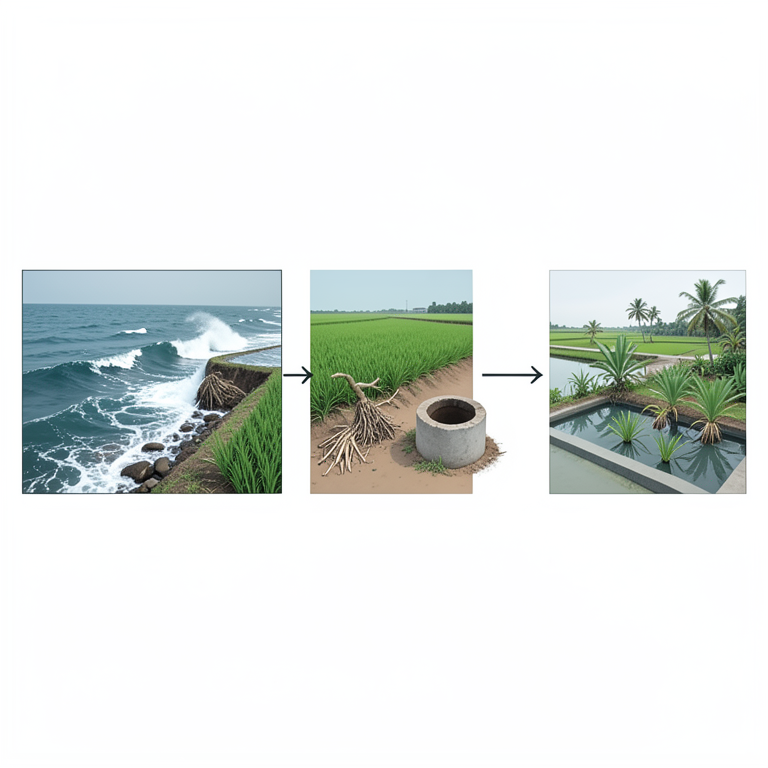
DPSIR Conceptual Flow
AI-generated conceptual illustration (Coastal landscape of Bangladesh featuring mangroves, rice paddies, and rural villages). It explains the idea and does not show study data.
View source evidence ↗Figures & tables
From the original paper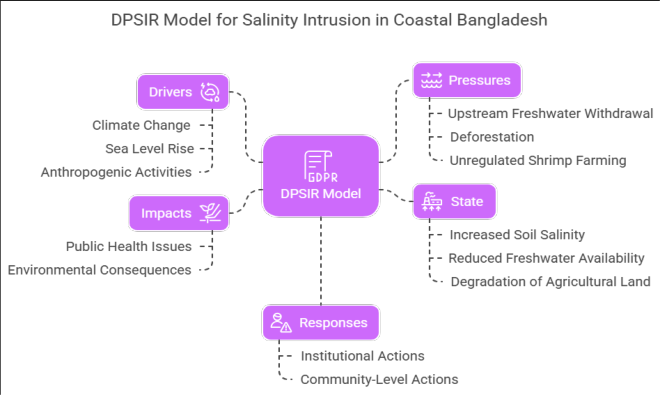 Figure 1
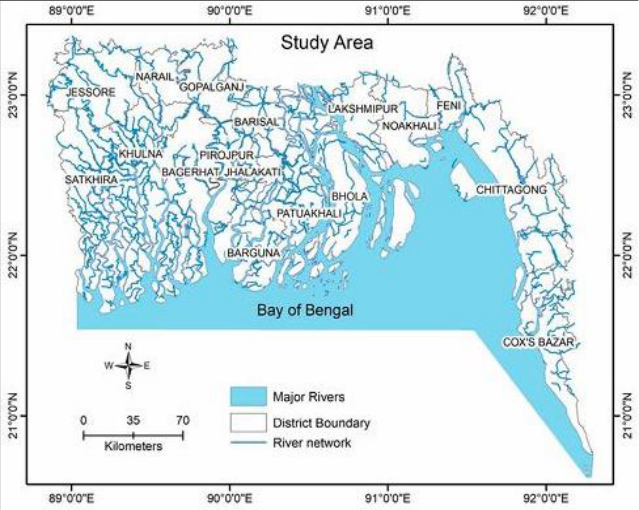 Figure 2
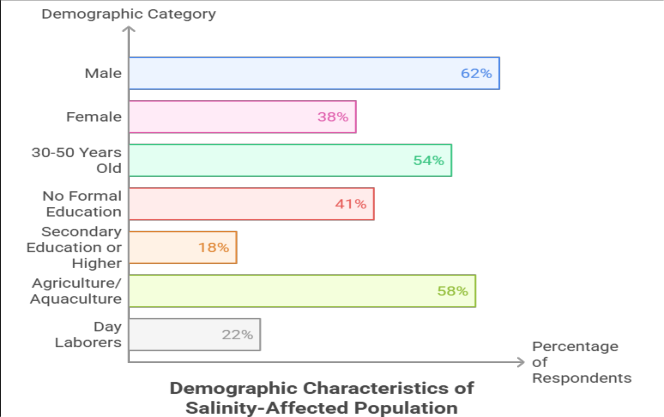 Figure 3
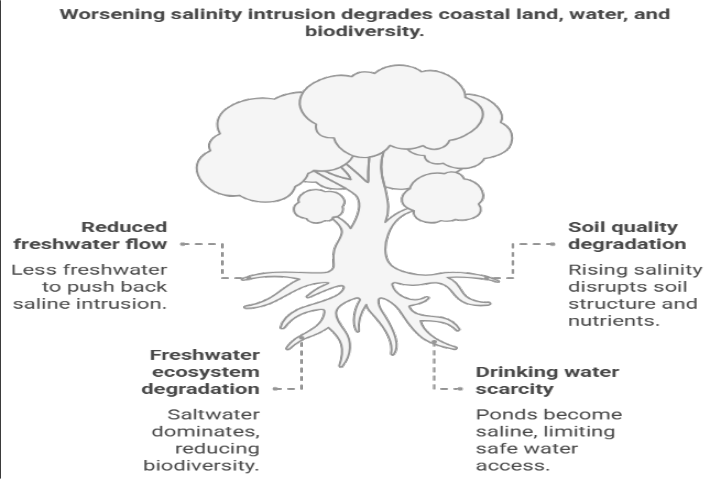 Figure 4
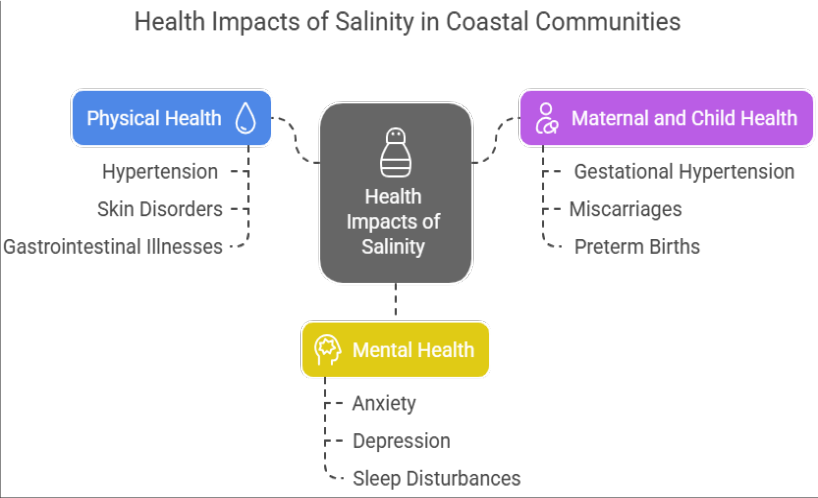 Figure 5
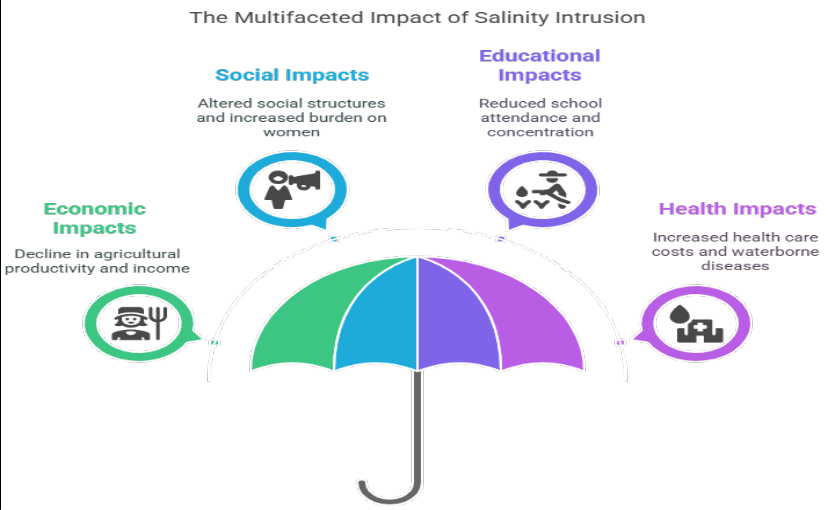 Figure 6
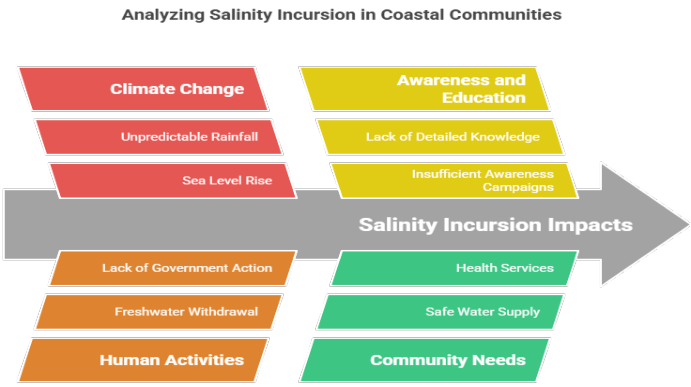 Figure 7
Introduction
Bangladesh-one of the most climate-vulnerable countries in the world as it sits in a lowlying landmass that is a delta of three main rivers: the Ganges, Brahmaputra, and Meghna; is densely populated, and with natural resources as the heart of the country (Halimuzzaman et al., 2024) [6] . Salt water intrusion is one of several environmental challenges it faces Salinity being a serious risk, particularly in the South West coastal region where millions of people depend on for their lives and livelihoods (Mokbul Morshed Ahmad, 2021) [12] . Salinity intrusion relates to the movement of saline water into freshwaters such as rivers, soils and aquifers, causing physical and chemical changes (Robert Maliva, 2020) [14] . This has been speeding up in Bangladesh due to a range of natural processes such as sea level rise and tidal surges and human induced pressures like diversion of freshwater at the headwaters, unsustainable land use practices, and unregulated shrimp farming. The coastal region of Bangladesh consists of 19 districts where around 35 million people live and their livelihood predominantly relies on agriculture, aquaculture, and small-scale fishing (Atiqur Rahman Sunny, 2020) [2] . In recent decades, the saline front has advanced toward the head of the estuary, particularly during dry periods when low river runoff fails to drive seawater back (Hoi Soo Jung, 2023 and Padmakumar, 2024) [8,17] . In districts such as Khulna, Satkhira, and Bagerhat, for example, surface water and groundwater have become significantly more saline, such that there are many sources of drinking water and irrigation that can no longer be tapped (Hoi Soo Jung, 2023) [8] . Salinity in Bangladesh has expanded geometrically from 0.83 million hectare in 1973 to a figure of more than 1.056 million hectare in 2019 as mentioned by Soil Resources Development Institute (SRDI) which reflects the seriousness and continuousness of the problem (Zahanggir Alam, 2023) [19] . The consequences of saline intrusion are multifold: human health, food security, access to water and ecosystem stability (Bhuiyan et al., 2025) [3] . On the health side, high levels of sodium from consuming saline water has been associated with hypertension, preeclampsia, skin diseases, and gastrointestinal diseases(Imran et al., 2024) [9] . Women, children and the elderly are particularly at risk because of biological vulnerability and social roles, such as collecting water and caring for the sick (Stephanie J. Melles, 2023) [15] . At the same time, environmental impacts are just as hard: salinity leads to depletion of soil fertility, reduction in crop productivity and degradation of biodiversity, putting at risk the sustainability of freshwater ecosystems (Mohammad Sarwar Hossain Islam et al., 2024) [11] . The effect of these dynamics has been a crisis socioecologically and has immense impacts on national development and resilience to climate (Stephen Whitfield, 2019) [16] . However, most studies on salinity intrusion from an environmental and socio-economic point of view are rather limited and tend to lack a comprehensive approach that investigates the subjective and objective causes of salinity intrusion and the system conditions. This gap is in part filled with the application of the DPSIR (Driver-Pressure-State-Impact-Response) framework, a methodological tool developed by the European Environment Agency (EEA), to analyze salinity intrusion dynamics. In carrying out an analysis of drivers (e.g., precipitation and sea-level variability), pressures (e.g., reduced river flows), states (e.g., increased salinity levels), impacts (including health and environmental degradation) and responses (policies and interventions) it is possible to develop a holistic perspective on the salinity crisis in the coast of Bangladesh. This study aims to: Discover the main drivers and pressures causing salinity intrusion on the coast of Bangladesh; Evaluate the health and environmental implications of increased salinity; Assess current community and institutional responses to adaptation and policy. Advise on holistic, long-term solutions to address the impacts of salinity intrusion on human health and the environment.
This study aims to contribute to more comprehensive and effective interventions by combining scientifically collected information with local knowledge and policy analysis on one of Bangladesh's most challenging environmental and public health problems.
Theoretical framework
Theoretical backgrounds of the present study is the DPSIR (Driver-Pressure-State-Impact-Response) framework, enabling a systematic approach for understanding the causeeffect relationships underlying environmental challenges including salt intrusion (Claudia Labianca, 2020) [4] . These modified environmental conditions ultimately lead to bad effects like serious public health problems like hypertension, skin diseases, maternal health problems, and environmental effects like reduction in agricultural productivity, loss of biodiversity and ecosystem disequilibrium. The response part of the framework is characterized by institution and community based measures among others that include the building of embankments, promoting of salt-tolerant crops, rain water harvesting, health intervention as part of coping and living mechanism of these impacts. By utilizing this model, this study is able to capture the dynamic interactions between socio-economic drivers, environmental change, and human health outcomes, providing a complete picture of salinity intrusion, and offering the foundation for responsive, well-informed, multi-sectorial approaches.
Materials & methods
This study utilized a mixed-methods approach, using qualitative methods in combination with quantitative data collection strategies to explore the causes and consequences of salinity intrusion in coastal Bangladesh. The study was conducted in 3 severely affected coastal districts including Khulna, Satkhira and Bagerhat. Data were primarily generated through household interviews with 200 purposively selected respondents, 15 key informant interviews with local officials, health workers and society leaders, and focus group discussion to gain more in-depth community perception. Secondary sources of information included reports and publications of government agencies like the Bangladesh Water Development Board and Soil Resources Development Institute and peer-reviewed journals (Islam et al., 2025) [10] . The extent and trend of salinity-affected areas were mapped using Geographical Information Systems (GIS), and statistical analysis was conducted to find associations between salinity levels and documented health impacts. Interviewee narratives and focus group discussion content were thematically coded, and key themes related to community experience, adaptive capacity, and local adaptation were extracted. This methodological process contributed to a broad and contextspecific consideration of the environmental and health effects of salinity intrusion in the chosen coastal areas.
Result & discussion
The findings from the field are summarized in the Results and Discussion section which highlights the assessment findings on salinity intrusion in the coastal part of Bangladesh and their effect on human health, environment, and local livelihoods. Based on quantitative as well as qualitative information, this section underlines the magnitude and reach of salinity intrusion, its temporal evolution, and the associated engineering, social and economic implications on affected parties (Md. Al-Amin Hoque, 2013). It also considers how environmental pollutionincluding soil and water salinitybecomes a public health risk, contributing to hypertension, skin diseases and gastrointestinal illnesses, disrupting agricultural productivity and boosting mass migration. The conversation is placed in the context of the DPSIR model to link driving forces with observed impacts and to evaluate the effectiveness of current responses and local adaptations.
Demographic Profile of the Respondents
Using data from 200 purposively sampled people from the salinity-affected areas of Khulna, Satkhira and Bagerhat, demographic analysis revealed key patterns that can lead to an understanding of vulnerability to salinity intrusion. The above figure explains the demographic information of the respondents. Most of the respondents (62%) were male, 38% female (recognizing the male head-of-household structure typical in rural Bangladesh). Age structure revealed that the economically active 30-50 age group was leading the salinity practicing (54% respondents), which signified that economically active population was highly participating in combating salinization. Educational level was generally low, with the highest levels of schooling being 18% up to and including secondary school, with 41% with no formal education, which affects the educational level about the awareness and adaptive capacity aspect. With regards to occupation, 58% were involved in agriculture/aquaculture and, 22% were daily laborers and to the rest were engaged in small scale trading or domestic work. Households had on average between 3 and 10 members, i.e. a moderate size of dependency. These results indicated that the affected population was to a large extent dependent on climate-sensitive means of livelihoods, had low levels of education, and had a heavy caregiving rolefactors that increased their exposure and their sensitivity to the impacts of salinity intrusion (Tasneem Chowdhury Fahim, 2023) [18] .
Environmental Findings
The study in relation to environment unveiled a significant decoration in salinity intrusion trends in Khulna, Satkhira and Bagerhat costal districts, possessed by climatic as well anthropogenic agents. Salinity in the soil and water was recorded well above the national threshold for safe agriculture and for domestic use, particularly during the dry season, when the inflow of freshwater from rivers such as the Ganges and Padma further upstream dwindles (Derek Clarke, 2018) [5] . Figure 4 represents the electrical conductivity of groundwater samples in a number of the infected unions ranged from 3.5 to 7.2 ds/m representing moderate to high salinity status and surface water bodies like canals and Semi-natural ponds showed more values for electrical conductivity (EC) as a subsequent result of tidal backwash and accumulation of saline water. Impaired soil quality was the most obvious effect, as ever-increasing salinity destroyed soil structure, diminished organic matter and caused nutrient starvation. Farmers noticed that their soil was getting harder, not holding water as well and was much more difficult to plough (Abisuwa T. A, 2023) [1] . The initially arable land of lowland areas became marginal or infertile, especially to traditional crops such as rice or vegetables. More than 60% of the farmers surveyed reported crop yield decrease of 40% or more over the last 10 years, with pockets of land becoming arid during the dry months. The research also revealed evidence of degradation to freshwater ecosystems. Estuaries and marshes, which were once the habitat of a rich diversity of life, were being overrun by saltwater varieties; numbers of freshwater varieties of fish had declined for example the hilsa, rohu, catla, puti, tengra, bata etc. Much of the saline shrimp-farming waters replaced traditional agriculture, also contributing to soil and water salinization and loss of biological diversity. The intrusion of saline water in the mangrove fringe-zones of the Sundarbans was also expected to be a risk factor for the ecosystem, affecting species composition and forest health. Groundwater supply was similarly impacted by salinity intrusion. Household water supply was dominated by ponds, but salinity and pollution threats put them at risk of contamination. Some societies were able to collect rainwater. Yet they did not have adequate infrastructure and storage capacity so the practice was not effective year-round. The limited availability of fresh water prompted numerous households to rely on high-cost or unsafe water alternatives, heightening their exposure to environmental and health hazards. Altogether, environmental results revealed a clear relationship between the elevation of salinity levels and the land, water and biodiversity degradation. These changes not only disrupt the ecological equilibrium but also damage the sustainability of the local agricultural and aqua cultural industries, leaving the communities more vulnerable to environmental and economic stresses that can be attributed to the climate.
Health Impact
When health outcomes of the salinity-affected communities that have access to the coastal zone were examined, a direct link between high environmental salinity and a range of health problems was identified. The above figure explained that the household surveys revealed that 36% of adult respondents reported that they had been diagnosed with hypertension in a primary health care setting and in many cases this was with a blood pressure >140/90 mmHg which was statistically linked (p<0.01) to drinking-water EC above 2.5 ds/m (Table 3). The commonest health complaints were skin disorders which affected 48% of the surveyed population including, dermatitis, fungal infections, and non-healing ulcers, all of which were significantly more common (χ² = 12.8, p<0.001) among those individuals bathing or washing clothes in saline surface water compared to those who used harvested rainwater. Gastrointestinal symptoms-chiefly recurring diarrhea and abdominal cramping-occurred in 32 percent of persons, and were most common at the end of the dry season when salt concentrations in both shallow wells and ponds peaked annually. There were significant effects on maternal and child health. Of 60 pregnant women interviewed, 40% experienced gestational hypertension or preeclampsia, and 15% had miscarriages or preterm births. These levels were two to three times higher than that observed among individuals of similar socioeconomic levels in the region and are indicated to be directly related to chronic high-sodium exposure and limited access to safe drinking water. Focus group discussions with community health workers also indicated that urinary tract infections and symptoms of electrolyte imbalance had increased among pregnant women and the elderly, in line with other studies in South Asia. Mental health effects emerged as an unexplored yet prominent outcome. Almost 25 percent of adults self-reported symptoms of anxiety and depression-hopelessness, insomnia, and excessive worrying-resulting from daily struggles to access clean water, pay for health care and lost wages. Qualitative narratives further indicated that women suffered the greatest psychosocial burden and had to spend 2-3 h/day more fetching water from distant rainwater harvesting points (RHs) or low salinity tube wells neglecting domestic care and income. Through the DPSIR framework, viewed in this way, these health outcomes are a manifestation of the "Impact" of the upstream "Drivers" (sea level rise, freshwater diversion) and "Pressures" (reduced river flow, tidal flooding) that impacted the "State" of water quality (Han Han, 2020) [7] . The results highlight how piecemeal and under resourced the current health-sector responses (community clinics, intermittent water-testing campaigns, and oral rehydration salts) had been if and when employed. To disrupt this chain of causation, multispectral actions are required: ongoing monitoring of salinity in drinking sources, scale-up of rainwater harvesting and household-level desalination, targeted medical screening of at-risk groups, and integration of mental health into primary care services in coastal villages. These joint responses are crucial in to address current health risks and develop resilience to the growing threat of salinity intrusion.
Perception and awareness
According to perception and awareness of 200 purposively selected respondents a moderate to good recognition was found in presence of causes and impacts of salinity incursion in the study areas. The figure shows that more than 70% of the respondents agreed that salinity levels increased in the last decade and 68% correctly attributed the increase to climate change, sea level rise and freshwater withdrawal from the upstream. But only 37% were able to describe scientifically or policyrelated reasons in detail, highlighting that there might be general knowledge but lack of depth. In relation to the future, 74% thought that salinity would get worse during the next 5-10 years, with unpredictable rainfall, higher tidal surges, and lack of sufficient government action given as contributing reasons. It is worth mentioning that 61% of the sample said they had no access to awareness-raising food salt or adaptation strategy campaigns at local level, suggesting a lack of-structured disseminated information. However, local knowledge and experiences were powerful; 83% could recognize changes in crop patterns, water taste, or skin discomfort and other signs of increasing salinity. On being asked to propose some solutions, a majority of the participants wanted safe water supply (76%) and health service (49%) along with financial support and alternative livelihood training. This work found that communities had good awareness about salinity related impacts on their lives but that institutional assistance to increase informed decision making and adaptive planning was still insufficient. Conclusions The results highlighted the importance of providing targeted education, participatory adaption planning and locally accepted communication strategies to achieve the long-term resilience of vulnerable coastal communities.
Conclusion
In summary, this study emphasized that from an environmental, health and socio-economic viewpoint salinity intrusion in the coastal areas of Bangladesh is a complex, worsening issue. The ingress of saline water, attributable to climate change, rising sea levels and withdrawals of freshwater upstream, has led to catastrophic soil and water degradation, threatened food and water security, and exacerbated health problems, especially for those most affected. It has also upended lives, stretched social fabrics and deepened gender and economic disparities. Although there are local attempts at adaptation, the current responses do not match the scale and the multifarious aspect of the problem. The results highlight the current demand of holistic and polycentric policy interventions focusing on environment sustainability and human well-being as priority to develop resilience in coastal communities increasingly at risk from salinity intrusion. On the basis of the results, the study proposed an integrated approach to mitigate the impact of salinity intrusion in coastal Bangladesh. Key recommendations were to enlarge rainwater harvesting on the community level and advocate affordable household desalination technologies for safe drinking water. Also promoting salt-tolerant varieties of crops and sustainable aquaculture practices was recommended to increase agricultural resilience. Building the local health system to simultaneously monitor and manage health conditions related to salinity, such as hypertension and skin diseases, was necessary. Genderresponsive interventions such as support for women's access to water, health care, and financial assistance were suggested to prevent increased suffering among female members of the community. It was recommended that there should also be concerted national and local level policy interventions to control land-use, manage freshwater sources and build adaptive capability through education, early warning systems and climate-proof creation. The study stressed the need for participatory planning and community engagement to develop context-specific long-term adaptation plans that are both equitable and sustainable.
Figures and tables from the paper
References
19 in the original paper- Abisuwa TA. A review on compaction and loosening of agricultural soils. International Journal of Science and Research Archive. 2023. https://doi.org/10.30574/ijsra.2023.10.1.0821
- Sunny AR. Understanding livelihood characteristics and vulnerabilities of small-scale fishers in coastal Bangladesh. Preprints. 2020 [cited YYYY Mon]. https://doi.org/10.20944/PREPRINTS202006.03 03.V1
- Bhuiyan MMH, Dey KN, Saha P, Sarker PK, Halimuzzaman M, Biswas MT. Exploring the role of artificial intelligence in transforming HR practices. International Journal of Business Management and Economic Review. 2025;8(1):98-110. https://doi.org/10.35409/IJBMER.2025.3646
- Labianca C. DPSIR model applied to the remediation of contaminated sites: A case study of Mar Piccolo of Taranto. Applied Sciences. 2020;10(15):5080. https://doi.org/10.3390/APP10155080
- Clarke D. Prospects for agriculture under climate change and soil salinisation. In: Climate Change and Soil Interactions. Palgrave Macmillan, Cham; 2018. https://doi.org/10.1007/978-3-319-71093-8_24
- Halimuzzaman M, Wafik M, Chakrabortty P, Mahbub S. Public relation and educational outcomes of films in Bangladesh: A study on Hawa. Journal of Primeasia. 2024;5:1-7. https://doi.org/10.25163/primeasia.519834
- Han H. Evaluating the health of an urban river combining DPSIR framework and an improved fuzzy matter-element extension model: A case study from the Jinshui River. Polish Journal of Environmental Studies. 2020;29(3):2211-2223. https://doi.org/10.15244/PJOES/111239
- Jung HS. Intensified intrusion and retention of saltwater in the Sumjin River Estuary, South Korea. Estuarine, Coastal and Shelf Science. 2023;290:108381. https://doi.org/10.1016/j.ecss.2023.108381
- Imran S, Kabir N, Uddin I, Ali K, Halimuzzaman M, et al. Consumer behavior and sustainable marketing practices in the ready-made garments industry. International Journal of Management Studies and Social Science Research. 2024;6:152-161. https://doi.org/10.56293/IJMSSSR.2024.5322
- Islam M, Goldar S, Imran S, Halimuzzaman M, Hasan S. AI-driven green marketing strategies for eco-friendly tourism businesses. International Journal of Tourism and Hotel Management. 2025;7:56-60. https://doi.org/10.22271/27069583.2025.v7.i1a.125
- Islam MSH, Rubel MRB, Hossain MI, Kamruzzaman M, Akter S, Halimuzzaman M, et al. Impact of financial and internet support on SME performance: Moderating effect of technology adoption during COVID-19 pandemic. World Journal of Advanced Engineering Technology and Sciences. 2024;13(2):105118. https://doi.org/10.30574/wjaets.2024.13.2.0533
- Ahmad MM. Coping with salinity intrusion in southwestern Bangladesh: The continuing struggle. In: Environmental Change and Adaptation. Springer, Cham; 2021. https://doi.org/10.1007/978-3-319-546124_44
- Badapalli PK. Land degradation and desertification. Advances in Geographical and Environmental Sciences. 2023:13-49. https://doi.org/10.1007/978-981-99-67292_2
- Maliva R. Saline-water intrusion management. In: Water Management. Springer. 2020. https://doi.org/10.1007/978-3-030-11084-0_21
- Melles SJ. Documenting the impacts of increasing salinity in freshwater and coastal ecosystems: Introduction to the special issue. Limnology and Oceanography Letters. 2023;8(1):1-7. https://doi.org/10.1002/lol2.10307
- Whitfield S. Exploring temporality in socio-ecological resilience through experiences of the 2015/16 El Niño across the tropics. Global Environmental Change. 2019;55:1-14.
- Padmakumar V, Shanthakumar M. The effects of climate change on the hydrology, salinity, and biota of Kerala's estuaries. Acta Entomol Zool. 2024;5(1):4143. DOI:10.33545/27080013.2024.v5.i1a.123.https://doi.or g/10.1016/J.GLOENVCHA.2019.01.004
- Fahim TC. Climate change-induced salinity intrusion and livelihood nexus: A study in southwest Satkhira District of Bangladesh. International Journal of Rural Management. 2023. https://doi.org/10.1177/09730052231176915
- Alam Z. Soil salinity management practices in coastal area of Bangladesh: A review. Research in Agriculture, Livestock and Fisheries. 2023;10(1):1-7. https://doi.org/10.3329/ralf.v10i1.66211
Cited by 3
From OpenAlex, OpenCitations and reference lists read by Scinovex
- Hydrogeochemical characterization and machine learning-driven prediction of groundwater salinity intrusion risk in southwestern coastal Bangladesh ↗
Syeda Nazifa Tasneem, Arjun Bhattacharyya, Mahir Tajwar, Dimitris A. Herrera, Md. Raihanul Islam, Kh Sakibul Islam et al. · Journal of Hydrology Regional Studies · 2026
The southwestern coastal region of Bangladesh, encompassing 24 upazilas and Khulna City Corporation in the Khulna, Satkhira, and Jashore districts of the Ganges-Brahmaputra-Meghna delta. Groundwater salinization threatens freshwater security in this deltaic coastal setting, yet its seasonal variability, controlling hydrogeochemical processes, and spatial drivers remain unclear. A total of 110 groundwater samples from wet and dry seasons were analyzed to…
❝ 0PDF - A graph clustering neural network framework for mapping urban functional zones in a fast-evolving urban landscape of Bangladesh ↗
Mafrid Haydar, Sakib Hosan, Al Hossain Rafi, Md.Kamran Hasan Khan, Sadman Mubarrat Mahee · City and Environment Interactions · 2026
Rapid urbanization and uncoordinated land development in Bangladesh's cities, particularly Khulna City Corporation (KCC), require new approaches to spatial planning and functional zoning. This study aims to identify and classify urban functional zones in KCC using a data-driven framework. It combines various geospatial datasets including urban spatial network structure, digital elevation model (DEM), road network, land use land cover (LULC),…
❝ 0PDF - Hydro‐Chemical Dynamics and Irrigation Suitability of Kapatakkha River Water Under Seasonal Tidal Influence in Southwestern Bangladesh ↗
Falguni Akter, S. M. Tafsirul Islam, Md Mehedi Hassan Khan, Mohammad Zaber Hossain, Shaikh Motasim Billah · Irrigation and Drainage · 2026
ABSTRACT This study investigates how tidal and seasonal fluctuations impact the Kapatakkha River's irrigation suitability, addressing the oversight of tidal‐scale dynamics in traditional water quality assessments. The problem centres on a suitability paradox in southwestern Bangladesh. The objectives were to profile spatiotemporal hydro‐chemical dynamics and evaluate overall suitability using an integrated Water Quality Index. Methods involved analysing major ions (Na…
❝ 0
Social and Economic impact
The results of this study indicated that there are extensive social and economic damages due to salinity intrusion in the coastal area of Bangladesh, especially in Khulna, Satkhira and Bagerhat. Their effects have been direct and indirect, affecting income, social identity, sexual division of labor, migration and community resilience. The most important economic effect was a decrease in agricultural product. Many farmers indicated a 30-70% decline in crop yields due to soil salinization, particularly the traditional paddy varieties and vegetables, which are highly susceptible to salinity. FGDs informed that on several villages, the cultivable, multi-cropped and fertile land had become almost barren during the dry season (Pradeep Kumar Badapalli, 2023) [13] . This change upended many households' traditional subsistence-based farming practices, replacing them with salty-tolerant shrimp farming that came with its own environmental and social problems, such as disputes over land, loss of biodiversity and diminished food security. TV reported, industrialized shrimp farming did pay off for some landowners, but it displaced tenants and landless laborers with no capital or security of tenure, increasing the gap between rich and poor. Diversification of livelihood was a survival strategy, but not all households were equally able to adopt alternatives. Many men, especially the youth, started to move to cities like Dhaka or Chattogram for work and thus the increase in the rate of male out-migration was evident. This added to the workload for women, who were left only to manage homes, feed children and the elderly, and collect water and food in far more harsh conditions. Women's unpaid labor and physical burden surged without a matching support system or empowerment for many. Women told interviewers that they spent much less time on daily activities because they had to walk long distances to collect drinking water, engage in agricultural labor on degraded land, or seek income generating activities such as small trading or handicrafts to make up for the lost household income. The effects of salinity also changed social structures. Social solidarity weakened as competition for scarce fresh water resources intensified. Disputes broke out in some parts between neighboring households and even among the larger families over rainwater harvesting systems, deep tube wells and the common ponds. The pressure on natural resources influenced the traditional social customs and religious activities that rely on water supply, such as cooking (in groups), bathing (ceremonial) and local festivals. Psychological stress from an eroding way of life and worsening daily struggle caused fear, frustration, and felt loss of honor, especially for older people, who also felt a strong feeling of disempowerment and nostalgic for the past when it was all so different. Health and salinity-related challenges indirectly subject to educational outcomes. When income decreased and water insecurity grew, children-and particularly girls-were frequently withdrawn from school to aid in domestic or water-related chores. This led to children missing school or being unable to concentrate on their studies for up to three hours a day during the dry season fetching water. Sickness due to polluted water and malnutrition also led to higher health-related absenteeism. Economically, the rising water and healthcare related costs were found to be significantly distressing for the affected households. According to the questionnaire responses, most households used about 10-20% of their monthly income to cover the cost of water collection, transportation, filtering and treating, including for water in bottle during the driest periods of the year. Considered from the DPSIR perspective, the social and economic impacts are part of the "impact" phase of environmental change, driven by the "driver" of climate change or unregulated development and the "pressure" of saline water intrusion, land degradation, and inadequate infrastructure.
The 'state' of environmental impoverishment, in turn, was expressed in the impoverishment of livelihoods, changes in social mores, and an increase in vulnerability, above all of women and the poor. The "responses" identified -those being NGO-led livelihood training, microfinance projects, infrastructural development -were inadequate, ad hoc and noncoordinated.