
Research article · 2025 · Full text
International Journal of Agriculture and Food ScienceAdvancements in intelligent packaging: Enhancing safety, quality, and traceability in muscle food
Volume 7(7) · Pages 01–13 · DOI: 10.33545/2664844x.2025.v7.i7a.487 ↗
Research areasFood Supply Chain Traceability
Abstract
Author-writtenThe food packaging industry has seen significant advancements with the integration of intelligent, active, and smart packaging technologies. These innovations aim to enhance food safety, quality, and traceability throughout the supply chain mainly in muscles food. Intelligent packaging systems, including gas sensors, biosensors, Nano sensors, and data carriers like RFID and QR codes, have been developed to monitor various factors such as microbial contamination, spoilage, temperature changes, and freshness. These systems leverage sensors that detect chemical and physical changes in food products, providing real-time data to both consumers and manufacturers. Gas sensors, for instance, monitor gases like CO2 and O2 to detect food spoilage, while biosensors enable the detection of pathogens and contaminants. Nano sensors have advanced food safety through their high sensitivity to changes in the environment, such as humidity and temperature, and by detecting harmful chemicals or pathogens. Data carriers like RFID and QR codes facilitate food traceability, inventory management, and transparency, allowing consumers to easily access product information. Despite the promising applications of these technologies, challenges remain in commercializing and optimizing them for widespread use. This paper reviews the key components, applications, and benefits of these advanced packaging systems and highlights the potential for further development to improve food safety and sustainability in muscle food industry.
Summary
Source-checkedPlain-language reading of the full paper, prepared with AI and checked against the text. Each point links to the authors' own words.
Why it matters
- Significant food waste occurs globally, with nearly 30% of produced food lost between the farm and the consumer. View evidence ↗
- Muscle foods, such as meat, poultry, and fish, are nutrient-dense sources of protein, fat, and minerals. View evidence ↗
- Muscle foods are highly perishable due to post-mortem changes that produce spoiling substances like organic acids, alcohols, and biogenic amines. View evidence ↗
The question
- The review aims to examine existing sensors used for muscle foods and suggest directions for future research. View evidence ↗
What they did
- The authors conducted a review of the components, applications, and benefits of intelligent packaging systems. View evidence ↗
- The analysis specifically focuses on the use of optical, colourimetric, and nanosensors for food safety and quality. View evidence ↗
What they found
- Gas sensors can be integrated as color-changing labels that detect CO₂, O₂, or ethylene to indicate food freshness. View evidence ↗
- Specific biosensors for protein-rich foods change color from green to red after 9 days for beef and 10 days for chicken to signal spoilage. View evidence ↗
- Nanosensors using fluorescent nanoparticles can identify toxins and pathogens, including E. coli O157:H7, Salmonella typhimurium, and Shigella flexneri. View evidence ↗
- Chemical Time-Temperature Indicators (TTIs) using bromothymol blue and methyl red can shift from bright green to red in response to lactic acid vapors. View evidence ↗
- RFID systems used in food packaging typically operate at low frequencies (125-134 kHz) or high frequencies (13.56 MHz). View evidence ↗
- Natural dyes derived from beetroot, grape peel, and turmeric (curcumin) have been successfully used in freshness indicators. View evidence ↗
- Leak indicators in vacuum packaging can use o-cresolphthalein, a pH-sensitive dye, to detect CO₂ buildup. View evidence ↗
What it means
- The authors conclude that low-power devices like QR codes and RFID tags transform packaging into a communication tool for hygiene, temperature, and freshness. View evidence ↗
- A limitation of most biosensors is that they only indicate current freshness and cannot provide a complete quality history over time. View evidence ↗
- Many biosensors are still in testing stages and require further development to meet regulatory standards and become commercially viable. View evidence ↗
Visual summary
1 visualsIllustrations explain the paper; they do not show study data.
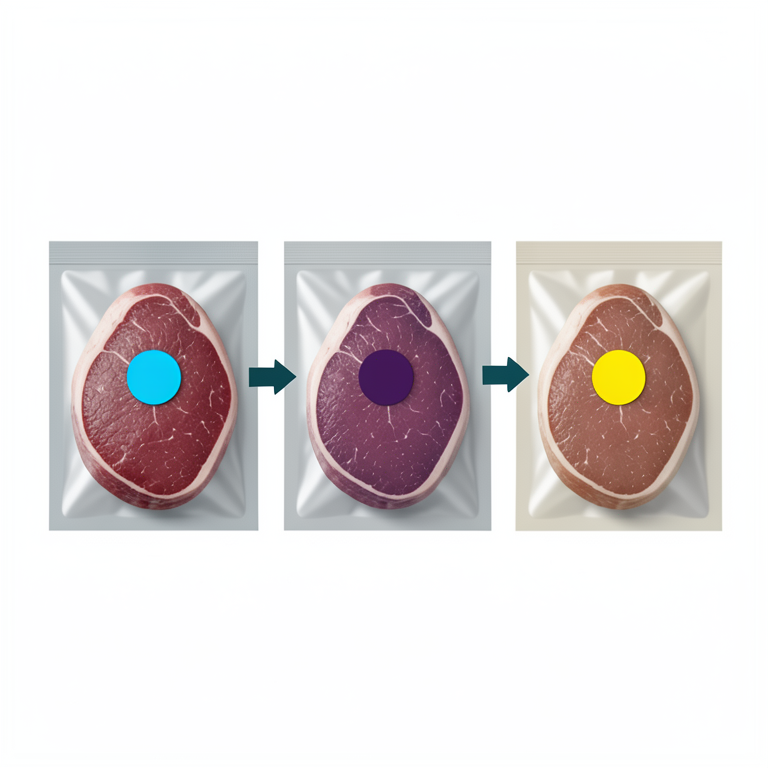
Types of Intelligent Packaging Indicators
AI-generated conceptual illustration (raw beef steaks in vacuum-sealed plastic packaging). It explains the idea and does not show study data.
View source evidence ↗Figures & tables
From the original paper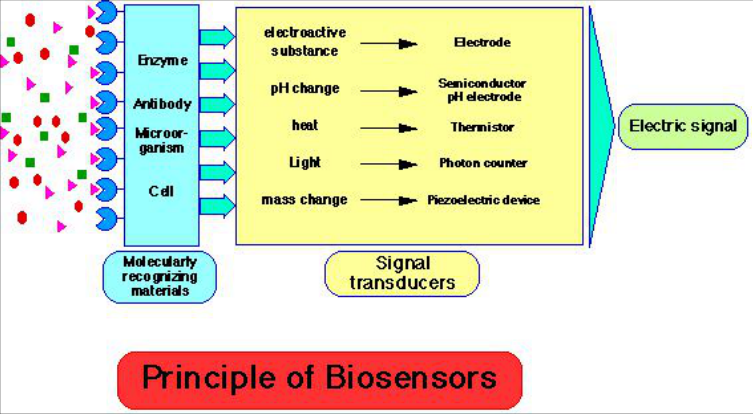 Figure 1
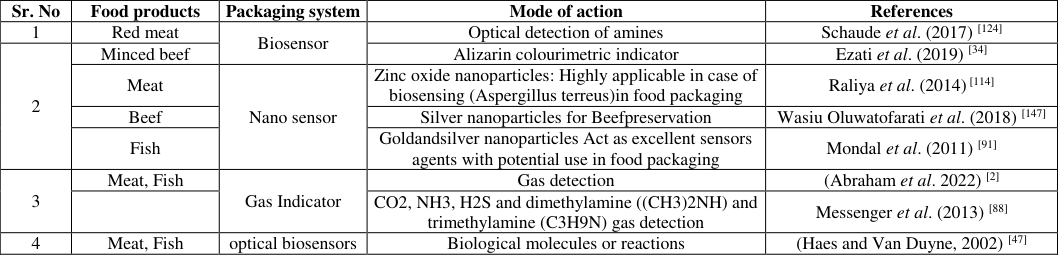 Table 1
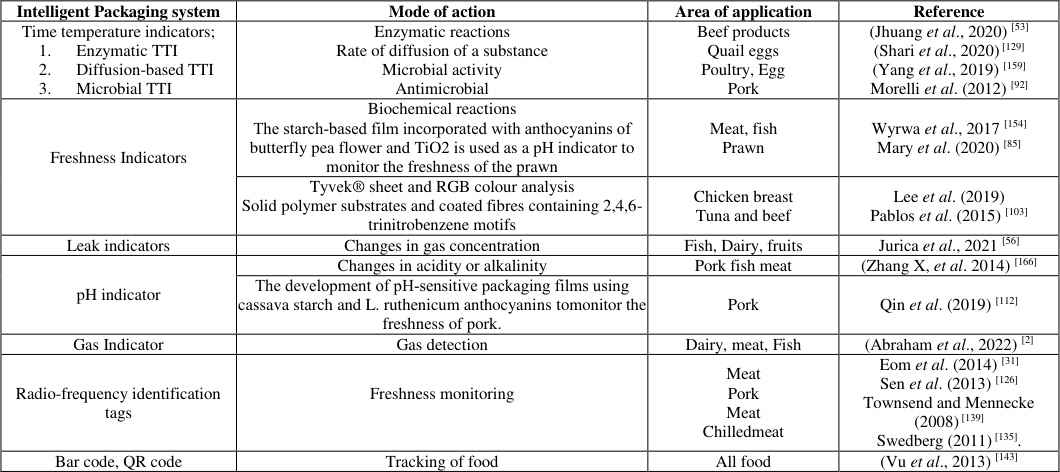 Table 2
Introduction
Every time we throw away food, we're not just wasting a meal-we're wasting the effort of the farmer, the energy used in processing, the resources spent on transportation, and the opportunity to feed someone in need. Recent estimates reveal that nearly 30% of all food produced is lost somewhere between the farm and our plates (Parfitt et al., 2010) [107] . In a country like India, known for its rich culinary heritage and diverse food culture, this loss hits especially hard. Despite being a land of abundant flavors, India faces a heartbreaking contradiction: around 23 crore people still go hungry, while an estimated ₹50,000 crore worth of food goes to waste each year, according to the Ministry of Agriculture. The FSSAI has also reported that nearly one-third of all food produced in the country is wasted before it ever reaches a plate (Nath, 2021) [96] . This isn't just about carelessness-it's a systemic issue involving poor handling, inefficient transportation, inadequate storage, and a widespread lack of awareness. The tragedy of food wastage in India isn't just a matter of lost meals-it's about lost potential, especially when millions still sleep hungry each night (Awlqadr et al., 2024) [4] . A significant amount of food goes bad simply because of preventable issues during storage, transport, or even at home. In light of this, researchers and technologists are stepping up, working on innovative solutions like smart food sensors. These small but powerful devices can detect the freshness, quality, and even contamination of food-and then communicate that information to consumers. One area that shows great promise is the use of these sensors within food packaging. Proper packaging doesn't just keep food clean-it protects it from damage, extends shelf life, and ensures quality throughout the supply chain (Cribb, 2010) [23] . But here's the puzzle: despite the urgent need and the availability of technology, these food sensors haven't yet become mainstream. Why? That's a question researchers are trying to answer. Colourimetric, optical, and electrical sensors, in particular, offer fast, affordable, and reliable ways to monitor food-and they're perfect for integration into packaging systems (Ha, 2025) [46] . This review focuses on the application and future potential of colourimetric, optical, and nanosensors in ensuring food quality and safety across different food types. With more people demanding transparency and safety in what they eat, traditional methods of food analysis-though accurate-are often slow and tedious. The modern food system is complex, involving everyone from producers and transporters to retailers and consumers, all of whom are asking for better packaging that gives real-time updates about food quality. This is where intelligent packaging comes in. This new approach to packaging doesn't just protect food-it communicates with the user, offering updates on freshness, tracking its journey from farm to table, and even alerting when something has gone wrong (Xiaoxuan et al., 2023). In some systems, the packaging itself can record and show key information like manufacture date, storage conditions, and expiration. Some advanced labels even change color or display words like "STOP" or "OPENED" when tampered with (Bagchi, 2012; Vanderroost et al., 2014) [7] . These innovations are not science fiction-they are real, tangible advancements being tested and improved every day. Intelligent packaging systems, powered by embedded sensors, offer a promising way to extend shelf life, reduce waste, ensure safety, and ultimately, make food more accessible and secure for all (Realini & Marcos, 2014) [118] . Based on the information provided above, modern consumers' demands are constantly changing to include more natural bioactive ingredients with beneficial health effects and new muscle food items with minimal amounts of artificial additives. Meat, poultry, and fish products are examples of muscle foods that are high in nutrients including protein, fat, and minerals. (McWilliams, 2012; Keeton, 2017) [86] , However, post-mortem changes that result in the production of spoiling substances including organic acids, aldehydes and ketones, alcohols, sulphides, and biogenic amines make them extremely perishable (Kuley et al., 2017) [62] . Muscle product quality identification has always depended on sensory assessment and physicochemical index evaluation. The decline of muscle foods' flavour, colour, texture, and nutritional content during processing or storage affects how acceptable they are. (Lorenzo et al., 2014, Falowo, 2014) [79,35] of these indices, one of the most significant elements influencing consumers' purchasing decisions is the muscle food's odor quality. For decades, sensors have been created to detect the quality of muscle foods in a fast, accurate, easy-to-use, and even online manner. This review's primary goals are to offer some perspectives on the sensors already in use for muscle meals and to make recommendations for potential directions for future research.
Intelligent packaging technology
Intelligent packaging is an emerging technology that's transforming the food packaging industry. These systems are designed to sense and share information about changes in the environment inside or outside the package. They hold great promise for improving food safety, traceability, and real-time quality monitoring. One of the key factors that influences consumer choices-especially when it comes to muscle foods like meat and fish-is odor quality. For many years, gas sensors have been developed to quickly and accurately detect changes in odor, helping ensure freshness and prevent spoilage. This review focuses on current gas sensor technologies used in monitoring the quality of muscle foods and explores how this field can evolve in the future. Generally, intelligent packaging systems operate in two main ways. The first type uses sensors or indicators embedded in the packaging to monitor environmental conditions such as temperature, gas composition, or microbial activity. The second type includes data carriers like barcodes and RFID (radio-frequency identification) tags that store and transmit information throughout the supply chain (Bagchi et al., 2012) [7] .
Sensor
Gas Sensors: When food begins to spoil due to microbial activity, it often releases gases that cause unpleasant odors. These gases serve as early warning signs of spoilage, and scientists have developed special sensors that can detect them. Inspired by how our nose works, these sensors are added to food packaging to monitor gas levels and help determine the freshness of the food inside. Some of the key gases that are monitored include carbon dioxide (CO₂), oxygen (O₂), volatile organic compounds (VOCs), and biogenic amines (BAs). Usually, a small sticker-like label is placed on the packaging that changes color when these gases are detected, especially CO₂, O₂, or ethylene (C₂H₄), indicating whether the food is still fresh (Jong et al., 2005) [27] . Spoilage in muscle-based foods like meat and fish can lead to bad flavors. For example, in fish, a compound called trimethylamine oxide (TMAO) breaks down into trimethylamine (TMA) and dimethylamine (DMA), both of which have strong, fishy odors. These chemicals are often used as freshness indicators (Messenger et al., 2013; Wu et al., 2019; Niizeki et al., 2002) [88,153,97] . Another common measurement is TVB-N (Total Volatile Basic Nitrogen), a standard test used worldwide to check how spoiled fish is. However, this traditional test takes time and needs careful handling.
To make this process faster, researchers like Mani et al. (2015) [83] have developed special sensors using nanotechnology. They created metal oxide sensors, using materials like cobalt-doped zinc oxide (ZnO), to quickly detect ammonia gas -another sign of spoilage. Similarly, Chang et al. (2017) [16] developed a new type of organic gas sensor using a material called P3HT, which responds to gases by changing its electrical properties.
Detecting food fraud is also critical. A famous example is the 2013 European horse meat scandal, where cheaper horse meat was sold as beef. This incident highlighted the need for fast and reliable methods to detect adulteration (Tian et al., 2019) [137] . Some advanced packaging technologies now include smart films that react to changes in gas levels inside the package. For instance, CO₂-sensitive films can change color when CO₂ builds up, giving a clear visual cue about the food's freshness (Baek et al., 2018; Lee et al., 2019; Lyu et al., 2019) [6] . These smart indicators can track gases like CO₂, ammonia (NH₃), hydrogen sulfide (H₂S), DMA, and TMA. Although they are very helpful, not many research studies have been published on their use for everyday food quality monitoring. One simple and effective method is the use of colorchanging indicators based on redox reactions. These often use compounds like sodium or potassium hydroxide. To detect oxygen, which also plays a role in spoilage, a combination of methylene blue and a reducing agent like glucose is used (Putr et al., 2022; Won et al., 2021) [111,152] . There are also many types of gas sensors available, including: Oxygen sensors (amperometric) CO₂ sensors (potentiometric) Metal oxide sensors Piezoelectric sensors Sensors made from conductive organic materials (Müller et al., 2019; Chowdhury et al., 2019) [93,21] .
Interestingly, CO₂ can pass more easily through packaging materials than oxygen. Because of this, it can get absorbed into the food, which may change the pressure inside the package and cause it to deform. To manage this, carbon dioxide regulators are sometimes used to maintain the right levels and prevent package damage (Han et al., 2018) [48] .
Other advanced devices use infrared, ultrasonic, laser, or electrochemical systems to detect gas changes and help keep food safe and fresh (Pandey et al., 2007; Park et al., 2015) [105, 108] .
Biosensors
The biological sensor was defined by Fracchiolla et al.
(2013) [37] as follow: "Biosensors are devices that are capable of detecting specific biological analyses and converting their presence or concentration into some electrical, thermal, optical or other signals that can be easily analyzed". Biosensor sensor in which a biological analyte plays the role of detection of a change, further converted into an electric signal using a transducer, is a biosensor. Biosensors generally are made up of mainly two components, firstly bioreceptors and secondly a transducer (Müller et al., 2019) [93] . [49] , optical biosensors (Haes & Van Duyne, 2002) [47] , immobilized biosensors (Sassolas et al., 2012) [123] , piezoelectric sensors (Zhou et al., 2002), microbial biosensors (Su et al., 2011) [134] , and those based on nanomaterials.
For example, one innovative biosensor was designed specifically to monitor the freshness of protein-rich foods like beef and chicken. This sensor detects spoilage by changing color-from green (fresh) to red-after 9 days for beef and 10 days for chicken, effectively showing the product's spoilage history (Fang et al., 2017) [36] .
The basic working principle of a biosensor starts with the bioreceptor, which detects the specific substance (analyte). Then, a transducer converts this biological interaction into an electrical signal. This signal is often very weak, so an amplifier boosts it, maintaining the original pattern. Finally, the signal processor interprets the signal and displays it for analysis or recording. Among all types, electrochemical biosensors are especially promising for food packaging because they continuously monitor food quality and provide signals directly related to the concentration of a substance (Park et al., 2015) [108] . Many of these biosensors use enzymes, which makes them simple, cost-effective, compact, and easy to integrate into packaging without needing extra equipment. Enzymes are naturally selective and specific to certain molecules, so there's often no need to prepare or separate food samples beforehand (Ronkainen et al., 2010) [121] . However, most biosensors only show the current freshness status-they can't provide a full history of quality over time (Park et al., 2015) [108] . In recent years, biosensors have also been developed to detect food contaminants like pathogens and toxins ( [40,131,162] . These sensors can directly measure spoilage-related compounds inside sealed packagingwithout the need to open or process the food sample. Some of the most successful applications involve detecting volatile compounds like ethylene (Esser et al., 2012; Weber et al., 2009) [32,148] , alcohols (Bekmezci et al., 2020; Schlangen et al., 2012) [8,125] , and amines (Verma et al., 2020) [142] , which often signal food spoilage.
A research group led by Tai Hyun Park has developed biosensors that use olfactory receptors-similar to those in the human nose-to identify specific smells. These sensors can detect even tiny amounts of odor compounds such as amyl butyrate (Kim et al., 2009; Jin, 2012) [61,55] , octanal (Lee, 2009; Yang, 2017) [69,158] , geraniol and citronellol (Lee, 2018) [68] , bourgeonal, β-citronellol (Lee, 2015) [70,71] , and cadaverine. Although many of these biosensors show great potential, they are still in the design and testing stages. More development is needed to make them commercially ready and compliant with safety and regulatory standards (Mustafa & Andreescu, 2018) [94] .
Nanosensors
Nanosensors are advanced tools developed using bionanocomposite polymer materials, strengthened with tiny particles known as nanofillers. These fillers can include substances like silica nanoparticles (SiO₂), clay nanoplatelets, starch nanocrystals, carbon nanotubes, graphene, chitin or chitosan nanoparticles, cellulose nanofibers, and various metal oxides (such as silver, copper, zinc oxide, and titanium dioxide) (Ranjan et al., 2016) [116] . The primary aim of these nanosensors is to detect and measure harmful chemicals-such as allergens, pesticides, toxins (both chemical and microbial), and spoilage byproducts-as well as environmental changes like humidity, temperature, and gas levels (Kim et al., 2013) [60] . Just like regular sensors, nanosensors consist of two main parts: a receptor and a transducer. The receptor interacts specifically with the target substance (called the analyte), while the transducer converts this interaction into a measurable signal, which could be electrical, electrochemical, or optical. In the dairy industry, nanosensors are used to detect harmful microorganisms with impressive accuracy. For instance, they help identify Mycobacterium avium subsp. paratuberculosis using surface-enhanced Raman scattering, detect Brucella abortus antibodies in milk via fluorescent silica nanoprobes, and sense Escherichia coli O157:H7 using gold nanoparticles applied to special carbon electrodes (Yakes et al., 2008; Vyas et al., 2015; Lin et al., 2008) [155,144,75] . More broadly, these nanosensors are incorporated into food packaging systems to continuously monitor the internal and external conditions surrounding the food (Ramachandraiah et al., 2015) [115] . A key goal, especially from a microbiological perspective, is to drastically cut down the time it takes to detect pathogens-from several days to just hours or even minutes. Researchers have explored various applications of nanosensors in food safety. For example: They can detect gases and molecules using surfaceenhanced Raman spectroscopy (Duncan et al., 2011) [30] . In raw meat packaging, nanosensors help detect oxygen levels. "Electronic tongues" made from arrays of nanosensors can pick up gases released from spoiled food, offering clear visual cues about freshness. Fluorescent nanoparticles can identify pathogens and toxins in food and crops (Burris et al., 2012) [14] . These include bacteria like Salmonella typhimurium, Shigella flexneri, and E. coli O157:H7 in foods such as milk and juice (Zhao et al., 2009) [168] . Some nanosensors are designed to detect temperature or humidity changes that could signal spoilage ( [52,66] . Food companies like Kraft are even exploring nanosensors that can assess consumer preferences, allergies, and nutritional deficiencies (Meetoo, 2011) [87] . Detection of pesticide residues like organophosphates is also possible (Liu et al., 2008).
In another innovative approach, nanowires coated with fluorescent antibodies can detect harmful bacteria. For instance, when Salmonella bacteria are present in a food sample, the fluorescent signal changes upon binding, providing a clear and quick detection method (Dingman, 2008) [28] . Lastly, even natural materials are being used in nanosensor technology. For example, silver nanoparticles derived from tea leaf extract have shown strong antibacterial activity, and they are now being used in packaging meat products to prevent contamination from harmful Gram-negative bacteria (Loo et al., 2018) [78] . [124] 2 Minced beef Alizarin colourimetric indicator Ezati et al. (2019) [34] Meat Nano sensor Zinc oxide nanoparticles: Highly applicable in case of biosensing (Aspergillus terreus)in food packaging Raliya et al. (2014) [114] Beef Silver nanoparticles for Beefpreservation Wasiu Oluwatofarati et al. (2018) [147] Fish Goldandsilver nanoparticles Act as excellent sensors agents with potential use in food packaging Mondal et al. (2011) [91] 3 Meat, Fish Gas Indicator Gas detection (Abraham et al. 2022) [2] CO2, NH3, H2S and dimethylamine ((CH3)2NH) and trimethylamine (C3H9N) gas detection Messenger et al. (2013) [88] 4 Meat, Fish optical biosensors Biological molecules or reactions (Haes and Van Duyne, 2002) [47] For instance, Wanihsuksombat, Hongtrakul, and Suppakul (2010) [146] developed a chemical-based TTI using a mixture of bromothymol blue and methyl red, which shifted from bright green to red when exposed to increasing levels of lactic acid vapors. This approach proved effective in tracking food quality over time. Mixing multiple dyes has also shown to enhance the range and clarity of color change compared to using single indicators alone (Lim et al., 2014) [74] . TTIs based on microbial activity have also been explored. Lim et al. (2014) [74] developed a microbial TTI using Weissella koreensis that could track spoilage by mimicking the temperature sensitivity of certain food products. This microbial system proved useful for monitoring food quality when the activation energy (Ea) of the TTI closely matched that of the food being monitored. Giannoglou et al. (2019) [41] tested enzymatic TTIs on smoked seafood products like European eel, rainbow trout, and salmon. These TTIs worked by enzyme-driven hydrolysis, resulting in a gradual drop in pH and a corresponding color shift from green to red. Quality control was ensured by measuring lipase activity using a spectrophotometric method with p-nitrophenyl as a substrate. In another study, Hsiao and Chang (2017) [50] designed a microbial TTI for vacuum-packed giant grouper fish fillets (Epinephelus lanceolatus), using Lactobacillus sakei, a common spoilage bacterium, to simulate realistic spoilage conditions. One key advantage of TTIs is their ease of interpretation by consumers and handlers. A simple color change provides an immediate visual cue about the freshness or potential spoilage of a product. By tailoring these indicators to specific food products and temperature sensitivities, TTIs help strengthen quality control throughout the cold chain, thereby enhancing food safety and reducing waste. [53] (Shari et al., 2020) [129] (Yang et al., 2019) [159] Morelli et al. (2012) [92] Freshness Indicators
Indicators
Indicators
Biochemical reactions
The starch-based film incorporated with anthocyanins of butterfly pea flower and TiO2 is used as a pH indicator to monitor the freshness of the prawn Meat, fish Prawn Wyrwa et al., 2017 [154] Mary et al. (2020) [85] Tyvek® sheet and RGB colour analysis Solid polymer substrates and coated fibres containing [103] Leak indicators Changes in gas concentration Fish, Dairy, fruits Jurica et al., 2021 [56] pH indicator
Changes in acidity or alkalinity Pork fish meat (Zhang X, et al. 2014) [166] The development of pH-sensitive packaging films using cassava starch and L. ruthenicum anthocyanins tomonitor the freshness of pork.
Pork
Qin et al. (2019) [112] Gas Indicator Gas detection Dairy, meat, Fish (Abraham et al., 2022) [2] Radio-frequency identification tags
Freshness monitoring Meat Pork Meat Chilledmeat Eom et al. (2014) [31] Sen et al. (2013) [126] Townsend and Mennecke (2008) [139] Swedberg (2011) [135] . Bar code, QR code Tracking of food All food (Vu et al., 2013) [143] 2.2 Freshness indicators: Freshness indicators are special tools placed inside food packages that help us understand whether the food inside is still good to eat. They work by changing color based on what's happening inside the package-like detecting spoilage, harmful microbes, or chemical changes in the food. Because they offer a simple visual signal, they are becoming increasingly popular with food companies, retailers, and safety regulators. Everyone wants methods that are fast, reliable, low-cost, and nondestructive to ensure food is fresh in real-time.
One of the main reasons food loses its freshness is due to poor storage conditions or microbial contamination.
International Journal of Agriculture and Food Science https://www.agriculturaljournals.com
Microorganisms not only reduce the shelf life of food but also increase the risk of foodborne illnesses. During spoilage, foods can release gases like carbon dioxide and amines or produce byproducts like acids. All these internal activities can be detected using freshness indicators placed in direct contact with the food. For example, in fish products, an increase in total volatile basic nitrogen (TVB-N) indicates spoilage. Similarly, in meats, the presence of compounds like lactic acid, acetic acid, or n-butyrate signals microbial activity and loss of freshness. These indicators often rely on color-changing dyes that respond to pH changes. Natural dyes from sources like turmeric (curcumin), grape peel, and beetroot have been tested successfully in this role. For example, a sensor using bromocresol purple embedded in an absorbent pad can detect spoilage in chicken breasts by monitoring pH changes.
Advanced systems combine different dyes (like methyl red and bromocresol purple) to create dual sensors for beef freshness. These color changes provide a visual cue that is easy for consumers and sellers to interpret (Kim et al., 2017; Kuswandi & Nurfawaidi, 2017) [64] .
Leak Indicators: Ensuring Packaging Integrity
Leak indicators help detect if the packaging has been compromised. This is especially important in Modified Atmosphere Packaging (MAP), where the gases inside the package are carefully controlled to extend shelf life. Any leak can disturb the gas balance, affecting the food's taste, safety, and texture. Some packaging solutions use materials sensitive to moisture, pressure, or gas levels. For instance, in vacuum packaging, an air pressure indicator can detect CO₂ buildup due to leaks using a pH-sensitive dye like o-cresolphthalein. This dye changes color based on gas concentration and is embedded in a simple ethyl cellulose solution (Yusufu et al., 2019) [164] . Innovations have also led to UV-activated oxygen indicators. These use a redox dye (like methylene blue), a photocatalyst (such as TiO₂), and a sacrificial electron donor to respond to oxygen exposure. The indicator can be printed on packaging films using inkjet printersmaking it low-cost and scalable (Vu & Won, 2013; Lawrie et al., 2005; Khankaew et al.) [143,65] . [10] . Such materials not only monitor freshness effectively but are also environmentally friendly, biodegradable, and suitable for sustainable packaging (Liu et al., 2020; Patricia et al., 2019) [77,109] .
Data Carriers: Smart Packaging for the Digital Age
Data carrier devices like barcodes and RFID tags help track and manage food items throughout the supply chain. They carry important product information like origin, batch number, expiry date, and even real-time freshness data. These devices support inventory control, reduce labor, prevent theft, and help trace back any safety issues. Barcodes are the most common and economical form of data carriers. They come in two types: 1D barcodes (the familiar vertical black bars), 2D barcodes (like QR codes) which store more information.
New ideas are exploring combining QR codes with colorchanging dyes to also reflect freshness. Some researchers have tried encoding these in geometric shapes using microbeads and attaching them to tape or filter paper to act as both data carriers and freshness indicators. Though these technologies are promising, their adoption may face challenges due to user complexity, especially among consumers not familiar with mobile apps or scanning tools.
Quick Response (QR) Codes
Quick Response (QR) codes, which look like patterns of squares or dots, are widely used on all levels of packagingprimary, secondary, and tertiary. Like barcodes, they store data, but in a much more compact and versatile format. Though barcodes are cheaper, they require a clear line of sight to be scanned, unlike RFID tags, which can be read from a distance and even in bulk.
Compared to barcodes, RFID systems offer extended range and allow multiple tags to be scanned at once. This enables smooth automation of product handling from warehouse storage to retail shelves. RFID also proves useful for sensitive products like fresh produce and dairy, where shipping conditions must be tightly controlled. For example, RFID models can monitor apple freshness by detecting changes in ethylene, ethanol, and acetaldehyde levels (Lee et al., 2015) [70,71] . RFID technology now supports a wide array of applications in the food industry-from tracking and tracing goods to estimating shelf life, managing the cold chain, overseeing livestock, and even regulating feeding processes (Singh et al., 2022) [130] . Some RFID tags are paired with responsive materials in smart labels to offer real-time insights into food quality. When embedded into polymers, RFID tags can detect the presence of biogenic amines (spoilage indicators), changing the electromagnetic signal and alerting handlers or consumers (Grant et al., 2023) [43] .
Conclusion
Traditional methods used to assess food safety and quality can be slow, labor-intensive, and require skilled professionals. Moreover, they can't prevent problems caused by improper handling or storage-issues that can lead to food spoilage or even poisoning. Smart sensors and automated monitoring systems offer a reliable solution to these challenges. This is where intelligent packaging steps in. By using simple, low-power devices like RFID tags and QR codes, packaging can do more than just store food-it can communicate vital information about freshness, temperature, and hygiene during transport and storage. This helps ensure safety and traceability and even addresses regulatory concerns like food fraud or trafficking. Furthermore, non-destructive indicators and sensors with user-friendly designs can be added to commercial packaging to boost shelf life and storage stability. As food technology continues to evolve, these innovations are reshaping how we think about packaging-transforming it into an interactive tool that protects, informs, and reassures both producers and consumers alike.
Figures and tables from the paper
| Sr. No | Food products | Packaging system | Mode of action | References |
|---|---|---|---|---|
| 1 | Red meat | Biosensor | Optical detection of amines | Schaude et al. (2017) [124] |
| 2 | Minced beef | Alizarin colourimetric indicator | Ezati et al. (2019) [34] | |
| Meat | Nano sensor | Zinc oxide nanoparticles: Highly applicable in case of biosensing (Aspergillus terreus)in food packaging | Raliya et al. (2014) [114] | |
| Beef | Silver nanoparticles for Beefpreservation | Wasiu Oluwatofarati et al. (2018) [147] | ||
| Fish | Goldandsilver nanoparticles Act as excellent sensors agents with potential use in food packaging | Mondal et al. (2011) [91] | ||
| 3 | Meat, Fish | Gas Indicator | Gas detection | (Abraham et al. 2022) [2] |
| CO2, NH3, H2S and dimethylamine ((CH3)2NH) and trimethylamine (C3H9N) gas detection | Messenger et al. (2013) [88] | |||
| 4 | Meat, Fish | optical biosensors | Biological molecules or reactions | (Haes and Van Duyne, 2002) [47] |
Table text extracted from the original PDF; superscript letters are shown inline. The original table image is below.
View original table image
References
160 in the original paper- Abad E, Palacio F, Nuin M, Zarate AG de, Juarros A, Gomez JM, et al. RFID smart tag for traceability and cold chain monitoring of foods: Demonstration in an intercontinental fresh fish logistic chain. Journal of Food Engineering. 2009;93(4):394-399. doi:10.1016/j.jfoodeng.2009.02.004.
- Abraham J. Future of food packaging: intelligent packaging. In: Nanotechnology in intelligent food packaging. 2022. p. 383-417.
- Awlqadr FH, Altemimi AB, Qadir SA, Salih TAH, Alkanan ZT, AlKaisy QH, et al. Emerging trends in nano-sensors: A new frontier in food safety and quality assurance. Heliyon. 2024.
- Babu PJ. Nanotechnology mediated intelligent and improved food packaging. International Nano Letters. 2022;12(1):1-14.
- Baek S, Maruthupandy M, Lee K, Kim D, Seo J. Preparation and characterization of a poly(ether-blockamide) film-based CO₂ indicator for monitoring kimchi quality. Reactive and Functional Polymers. 2018;131:75-83. doi:10.1016/j.reactfunctpolym.2018.07.007.
- Bagchi A, He T. Intelligent sensing and packaging of foods for enhancement of shelf life: Concepts and applications. International Journal of Scientific and Engineering Research. 2012;3:1-13.
- Bekmezci SA, Soylemez S, Yilmaz G, Udum YA, Yagci Y, Toppare L. A new ethanol biosensor based on polyfluorene-g-poly(ethylene glycol) and multiwalled carbon nanotubes. European Polymer Journal. 2020;122:109300. doi:10.1016/j.eurpolymj.2019.109300.
- Beshai H, Sarabha GK, Rathi P, Alam AU, Deen MJ. Freshness monitoring of packaged vegetables. Applied Sciences. 2020;10(21):7937.
- Bhadra S, Narvaez C, Thomson DJ, Bridges GE. Nondestructive detection of fish spoilage using a wireless basic volatile sensor. Talanta. 2015;134:718-723.
- Bibi F, Guillaume C, Gontard N, Sorli B. Food packaging sensors: A review. Trends in Food Science & Technology. 2017;62:91-103. doi:10.1016/j.tifs.2017.01.013.
- Boarca B, Lungu II, Holban AM. Bioactive packaging for modern beverage industry. Trends in Beverage Packaging. 2019;60:51-71. doi:10.1016/B978-0-12816683-3.00003-7.
- Brink B, Damink C, Joosten H, Veld JHJ. Occurrence and formation of biologically active amines in foods. International Journal of Food Microbiology. 1990;11:73-84.
- Burris KP, Stewart CN Jr. Fluorescent nanoparticles: Sensing pathogens and toxins in foods and crops. Trends in Food Science & Technology. 2012;28(2):143-152. doi:10.1016/j.tifs.2012.08.004.
- Casaburi A, Piombino P, Nychas GJ, Villani F, Ercolini D. Bacterial populations and the volatilome associated with meat spoilage. Food Microbiology. 2015;45:83102.
- Chang LY, Chuan MY, Zan HW, Meng HF, Lu CJ, Yeh PH, et al. One-minute fish freshness evaluation by testing the volatile amine gas with an ultrasensitive porous-electrode-capped organic gas sensor system. ACS Sensors. 2017;2(4):531-539.
- Chen HZ, Zhang M, Bhandari B, Yang CH. Novel pHsensitive films containing curcumin and anthocyanins to monitor fish freshness. Food Hydrocolloids. 2020;100:105438.
- Chen HZ, Zhang M, Bhandari B, Guo Z. Applicability of a colourimetric indicator label for monitoring freshness of fresh-cut green bell pepper. Postharvest Biology and Technology. 2018;140:85-92. doi:10.1016/j.postharvbio.2018.02.018.
- Chen RS, Chen CC, Yeh KC, Chen YC, Kuo CW. Using RFID technology in food produce traceability. WSEAS Transactions on Information Science and Applications. 2008;5(11):1551-1560.
- Choi I, Lee JY, Lacroix M, Han J. Intelligent pH indicator film composed of agar/potato starch and anthocyanin extracts from purple sweet potato. Food Chemistry. 2017;218:122-128. doi:10.1016/j.foodchem.2016.09.050.
- Chowdhury EU, Morey A. Intelligent packaging for poultry industry. Journal of Applied Poultry Research. 2019;28:791-800.
- Costa C, Antonucci F, Pallottino F, Aguzzi J, Sarria D, Menesatti P. A review on agri-food supply chain traceability by means of RFID technology. Food and Bioprocess Technology. 2013;6(2):353-366. doi:10.1007/s11947-012-0958-7.
- Cribb J. The coming famine: the global food crisis and what we can do to avoid it. University of California Press; 2010.
- Danchuk AI, Komova NS, Mobarez SN, Doronin SY, Burmistrova NA, Markin AV, Duerkop A. Optical sensors for determination of biogenic amines in food. Analytical and Bioanalytical Chemistry. 2020;412:4023-4036.
- Daş E, Gürakan GC, Bayindirli A. Effect of controlled atmosphere storage, modified atmosphere packaging and gaseous ozone treatment on the survival of Salmonella Enteritidis on cherry tomatoes. Food Microbiology. 2006;23(5):430-438. doi:10.1016/j.fm.2005.08.002.
- Das R, Bej S, Hirani H, Banerjee P. Trace-level humidity sensing from commercial organic solvents and food products by an AIE/ESIPT-triggered piezochromic luminogen and ppb-level "OFF-ON-OFF" sensing of Cu²⁺: a combined experimental and theoretical outcome. ACS Omega. 2021;6(22):14104-14121.
- De Jong AR, Boumans H, Slaghek T, Van Veen J, Rijk R, Van Zandvoort M. Active and intelligent packaging for food: Is it the future? Food Additives and Contaminants. 2005;22(10):975-979. doi:10.1080/02652030500336254.
- Dingman J. Guest commentary: nanotechnology: its impact on food safety. Journal of Environmental Health. 2008;70(6):47-50.
- Dodero A, Escher A, Bertucci S, Castellano M, Lova P. Intelligent packaging for real-time monitoring of foodquality: Current and future developments. Applied Sciences. 2021;11(8):3532.
- Duncan TV. Applications of nanotechnology in food packaging and food safety: Barrier materials, antimicrobials and sensors. Journal of Colloid and Interface Science. 2011;363(1):1-24.
- Eom KH, Hyun KH, Lin S, Kim JW. The meat freshness monitoring system using the smart RFID tag. International Journal of Distributed Sensor Networks. 2014;10:591812.
- Esser B, Schnorr JM, Swager TM. Selective detection of ethylene gas using carbon nanotube-based devices: Utility in determination of fruit ripeness. Angewandte Chemie International Edition. 2012;51(23):5752-5756.
- Ezati P, Rhim JW. pH-responsive chitosan-based film incorporated with alizarin for intelligent packaging applications. Food Hydrocolloids. 2020;102:105629. doi:10.1016/j.foodhyd.2019.105629.
- Ezati P, Tajik H, Moradi M. Fabrication and characterization of alizarin colourimetric indicator based on cellulose-chitosan to monitor the freshness of minced beef. Sensors and Actuators B: Chemical. 2019;285:519-528.
- Falowo AB, Fayemi PO, Muchenje V. Natural antioxidants against lipid-protein oxidative deterioration in meat and meat products: A review. Food Research International. 2014;64:171-181.
- Fang Z, Zhao Y, Warner RD, Johnson SK. Active and intelligent packaging in meat industry. Trends in Food Science & Technology. 2017;61(2):60-71. doi:10.1016/j.tifs.2017.01.002.
- Fracchiolla N, Artuso S, Cortelezzi A. Biosensors in clinical practice: Focus on oncohematology. Sensors. 2013;13(5):6423-6447. doi:10.3390/s130506423.
- Gaikwad KK, Singh S, Ajji A. Moisture absorbers for food packaging applications. Environmental Chemistry Letters. 2019;17(2):609-628.
- Ganjali MR. FRET-based aptamer biosensor for selective and sensitive detection of aflatoxin B1 in peanut and rice. Food Chemistry. 2017;220:527-532. doi:10.1016/j.foodchem.2016.10.004.
- Gaudin V. Electrochemical biosensors. In: Sabet FS, Hosseini M, Khabbaz H, Dadmehr M, editors. Elsevier; 2019. p. 307-365. doi:10.1016/B978-0-12-8164914.00011-5.
- Giannoglou M, Evangelopoulou AM, Perikleous N, Baclori C, Tsironi T, Taoukis P. Time temperature integrators for monitoring the shelf life of ready-to-eat chilled smoked fish products. Food Packaging and Shelf Life. 2019;22:100403. doi:10.1016/j.fpsl.2019.100403.
- Goodarzi M, Moradi M, Tajik H, Forough M, Ezati P, Kuswandi B. Development of an easy-to-use colourimetric pH label with starch and carrot anthocyanins for milk shelf life assessment. International Journal of Biological Macromolecules. 2020;153:240-247. doi:10.1016/j.ijbiomac.2020.03.014.
- Grant MJ, Wolfe KM, Harding CR, Welch GC. Biogenic amine sensors using organic π-conjugated materials as active sensing components and their commercialization potential. Journal of Materials Chemistry C. 2023;11(29):9749-9767.
- Guo J, Zhang H, Chen L, Ding L, Hu F, Pei L, et al. A visual detection film based on waterborne polyurethane for real-time monitoring of yogurt freshness. Dyes and Pigments. 2023;210:110995. doi:10.1016/j.dyepig.2022.110995.
- Gustavsson J, Cederberg C, Sonesson U, van Otterdijk R, Meybeck A. Global food losses and food waste: Extent, causes and prevention. Rome: Food and Agriculture Organization of the United Nations; 2011. International Journal of Agriculture and Food Science https://www.agriculturaljournals.com
- Ha Y. Advancements in gaseous sensor technology for ensuring food safety: a review. International Journal of Food Science and Technology. 2025;60(1):vvae026.
- Haes AJ, Van Duyne RP. A nanoscale optical biosensor: sensitivity and selectivity of an approach based on the localized surface plasmon resonance spectroscopy of triangular silver nanoparticles. Journal of the American Chemical Society. 2002;124(35):10596-10604.
- Han JW, Ruiz-Garcia L, Qian JP, Yang XT. Food packaging: A comprehensive review and future trends. Comprehensive Reviews in Food Science and Food Safety. 2018;17(4):860-877.
- Hansen JA, Wang J, Kawde AN, Xiang Y, Gothelf KV, Collins G. Quantum-dot/aptamer-based ultrasensitive multi-analyte electrochemical biosensor. Journal of the American Chemical Society. 2006;128(7):2228-2229.
- Hsiao HI, Chang JN. Developing a microbial timetemperature indicator to monitor total volatile basic nitrogen change in chilled vacuum-packed grouper fillets. Journal of Food Processing and Preservation. 2017;41(5):e13158. doi:10.1111/jfpp.13158.
- Hutton T. Food packaging: An introduction. Key Topics in Food Science and Technology Number 7. Gloucestershire, UK: Campden and Chorleywood Food Research Association Group; 2003. p. 108.
- Iliadis AA, Ali HA. Properties of fast response room temperature ZnO-Si heterojunction gas nanosensors. IEEE Transactions on Nanotechnology. 2010;10(3):652-656.
- Jhuang JR, Lou SN, Lin SB, Chen SH, Chen LC, Chen HH. Immobilizing laccase on electrospun chitosan fiber to prepare time-temperature indicator for food quality monitoring. Innovative Food Science & Emerging Technologies. 2020;63:102370.
- Jia R, Tian W, Bai H, Zhang J, Wang S, Zhang J. Amine-responsive cellulose-based ratiometric fluorescent materials for real-time and visual detection of shrimp and crab freshness. Nature Communications. 2019;10:1-8. doi:10.1038/s41467-019-09950-1.
- Jin HJ, Lee SH, Kim TH, Park J, Song HS, Park TH, Hong S. Nanovesicle-based bioelectronic nose platform mimicking human olfactory signal transduction. Biosensors and Bioelectronics. 2012;35(1):335-341.
- Jurica K, Karačonji IB, Lasić D, Kovačević DB, Putnik P. Unauthorized food manipulation as a criminal offense: Food authenticity, legal frameworks, analytical tools and cases. Foods. 2021;10(10):2570. doi:10.3390/foods10102570.
- Kalpana S, Priyadarshini SR, Leena MM, Moses JA, Anandharamakrishnan C. Intelligent packaging: Trends and applications in food systems. Trends in Food Science & Technology. 2019;93:145-157. doi:10.1016/j.tifs.2019.09.008.
- Keeton JT, Dikeman ME. 'Red' and 'white' meatsTerms that lead to confusion. Animal Frontiers. 2017;7(4):29-33. doi:10.2527/af.2017.0432.
- Kerry JP, O'Grady MN, Hogan SA. Past, current and potential utilization of active and intelligent packaging systems for meat and muscle based products: A review. Meat Science. 2006;74:113-130. doi:10.1016/j.meatsci.2006.04.024.
- Kim E, Choi DY, Kim HC, Kim K, Lee SJ. Calibrations between the variables of microbial TTI response and ground pork qualities. Meat Science. 2013;95(2):362367. doi:10.1016/j.meatsci.2013.04.050.
- Kim TH, Lee SH, Lee J, Song HS, Oh EH, Park TH, et al. Single-carbon-atomic-resolution detection of odorant molecules using a human olfactory receptorbased bioelectronic nose. Advanced Materials. 2009;21:91-94.
- Kuley E, Durmus M, Balikci E, Ucar Y, Regenstein JM, Özoğul F. Fish spoilage bacterial growth and their biogenic amine accumulation: Inhibitory effect of olive by-products. International Journal of Food Properties. 2017;20(Sup1):S1029-S1043. https://doi.org/10.1080/10942912.2017.1313262
- Kumar J, Akhila K, Gaikwad KK. Recent developments in intelligent packaging systems for food processing industry: A review. Journal of Food Processing & Technology. 2021;12:895.
- Kuswandi B, Nurfawaidi A. On-package dual sensors label based on pH indicators for real-time monitoring of beef freshness. Food Control. 2017;82:91-100. https://doi.org/10.1016/j.foodcont.2017.06.028
- Lawrie K, Mills A, Hazafy D. Simple inkjet-printed, UV-activated oxygen indicator. Sensors and Actuators B: Chemical. 2013;176:1154-1159.
- Lee J, Mubeen S, Hangarter CM, Mulchandani A, Chen W, Myung NV. Selective and rapid room temperature detection of H₂S using gold nanoparticle chain arrays. Electroanalysis. 2011;23(11):2623-2628.
- Lee K, Baek S, Kim D, Seo J. A freshness indicator for monitoring chicken-breast spoilage using a Tyvek® sheet and RGB colour analysis. Food Packaging and Shelf Life. 2019;19:40-46. https://doi.org/10.1016/j.fpsl.2018.11.016
- Lee M, Yang H, Kim D, Yang M, Park TH, Hong S. Human-like smelling of a rose scent using an olfactory receptor nanodisc-based bioelectronic nose. Scientific Reports. 2018;8:13945. https://doi.org/10.1038/s41598018-32155-1
- Lee SH, Ko HJ, Park TH. Real-time monitoring of odorant-induced cellular reactions using surface plasmon resonance. Biosensors and Bioelectronics. 2009;25:55-60.
- Lee SH, Oh EH, Park TH. Cell-based microfluidic platform for mimicking human olfactory system. Biosensors and Bioelectronics. 2015;74:554-561.
- Lee SY, Lee SJ, Choi DS, Hur SJ. Current topics in active and intelligent food packaging for preservation of fresh foods. Journal of the Science of Food and Agriculture. 2015;95(14):2799-2810. https://doi.org/10.1002/jsfa.7218
- Lee SK, Sheridan M, Mills A. Novel UV-activated colourimetric oxygen indicator. Chemistry of Materials. 2005;17(11):2744-2751.
- Liang T, Wang L. [Title not provided]. Polymers. 2017;10:13.
- Lim SH, Choe WY, Son BH, Hong KW. Development of a microbial time-temperature integrator system using lactic acid bacteria. Food Science and Biotechnology. 2014;23(2):483-487. https://doi.org/10.1007/s10068014-0066-8
- Lin YH, Chen SH, Chuang YC, Lu YC, Shen TY, Chang CA, et al. Disposable amperometric immune sensing strips fabricated by Au nanoparticles-modified screen-printed carbon electrodes for the detection of International Journal of Agriculture and Food Science https://www.agriculturaljournals.com foodborne pathogen Escherichia coli O157:H7. Biosensors and Bioelectronics. 2008;23(12):1832-1837. https://doi.org/10.1016/j.bios.2008.02.030
- Liu D, Zhang C, Pu Y, Chen S, Li H, Zhong Y. Novel colourimetric films based on polyvinyl alcohol/sodium carboxymethyl cellulose doped with anthocyanins and betacyanins to monitor pork freshness. Food Chemistry. 2023;404:134426. https://doi.org/10.1016/j.foodchem.2022.134426
- Liu XL, Xu YX, et al. Development and properties of new kojic acid and chitosan composite biodegradable films for active packaging materials. International Journal of Biological Macromolecules. 2020;144:483490. https://doi.org/10.1016/j.ijbiomac.2019.12.083
- Loo YY, Rukayadi Y, Nor-Khaizura MA, Kuan CH, Chieng BW, Nishibuchi M, et al. In vitro antimicrobial activity of green synthesized silver nanoparticles against selected gram-negative foodborne pathogens. Frontiers in Microbiology. 2018;9:1555. https://doi.org/10.3389/fmicb.2018.01555
- Lorenzo JM, Batlle R, Gomez M. Extension of the shelf-life of foal meat with two antioxidant active packaging systems. LWT -Food Science and Technology. 2014;59:181-188. https://doi.org/10.1016/j.lwt.2014.04.057
- Lorite GS, Selkälä T, Sipola T, Palenzuela J, Jubete E, Viñuales A, et al. Novel, smart and RFID-assisted critical temperature indicator for supply chain monitoring. Journal of Food Engineering. 2017;193:2028. https://doi.org/10.1016/j.jfoodeng.2016.08.003
- Loutfi S, Coradeschi DGK, Mani P, Shankar JBB, Rayappan J. [Title not provided]. Journal of Food Engineering. 2015;144:103.
- Lu L, Zheng W, Lv Z, Tang Y. Development and application of time-temperature indicators used on food during the cold chain logistics. Packaging Technology and Science. 2012;26:80-90. https://doi.org/10.1002/pts.1955
- Mani GK, Rayappan JBB. A highly selective and wide range ammonia sensor-Nanostructured ZnO:Co thin film. Materials Science and Engineering: B. 2015;191:41-50.
- Manthou V, Vlachopoulou M. Bar-code technology for inventory and marketing management systems: A model for its development and implementation. International Journal of Production Economics. 2001;71:157-164. https://doi.org/10.1016/S09255273(00)00117-8
- Mary SK, Koshy RR, Daniel J, Koshy JT, Pothen LA, Thomas S. Development of starch-based intelligent films by incorporating anthocyanins of butterfly pea flower and TiO₂ and their applicability as freshness sensors for prawns during storage. RSC Advances. 2020;10:39822-39830. https://doi.org/10.1039/D0RA05986B
- McWilliams M. Meats, poultry, and fish. In: Foods: Experimental perspectives. 7th ed. California State University, Los Angeles; 2012.
- Meetoo DD. Nanotechnology and the food sector: from the farm to the table. Emirates Journal of Food and Agriculture. 2011;23(5):387.
- Messenger J, Clark S, Massick S, Bechtel M. A review of trimethylaminuria: (fish odor syndrome). The Journal of Clinical and Aesthetic Dermatology. 2013;6(11):45.
- Mills A. Oxygen indicators and intelligent inks for packaging food. Chemical Society Reviews. 2005;34(12):1003-1011. https://doi.org/10.1039/b406634k
- Mills A, Hazafy D. Nanocrystalline SnO₂-based, UVBactivated, colourimetric oxygen indicator. Sensors and Actuators B: Chemical. 2009;136(2):344-349. https://doi.org/10.1016/j.snb.2008.11.033
- Mondal S, Roy N, Laskar RA, Sk I, Basu S, Mandal D, et al. Biogenic synthesis of Ag, Au and bimetallic Au/Ag alloy nanoparticles using aqueous extract of mahogany (Swietenia mahogani JACQ.) leaves. Colloids and Surfaces B: Biointerfaces. 2011;82(2):497-504. https://doi.org/10.1016/j.colsurfb.2010.10.036
- Morelli E, Noel V, Rosset P, Poumeyrol G. Performance and conditions of use of refrigerated display cabinets among producer/vendors of foodstuffs. Food Control. 2012;26(2):363-368. https://doi.org/10.1016/j.foodcont.2012.01.014
- Müller P, Schmid M. Intelligent packaging in the food sector: A brief overview. Foods. 2019;8(1):16. https://doi.org/10.3390/foods8010016
- Mustafa F, Andreescu S. Chemical and biological sensors for food-quality monitoring and smart packaging. Foods. 2018;7(10):168. https://doi.org/10.3390/foods7100168
- Nair R, Perret E, Tedjini S, Barron T. A humidity sensor for passive chipless RFID applications. In: 2012 IEEE International Conference on RFID-Technologies and Applications (RFID-TA); 2012 Nov 5-7; pp. 29-33. IEEE. https://doi.org/10.1109/RFIDTA.2012.6401747
- Nath P. Challenges and opportunities in food, agriculture and humanity. In: The basics of human civilization. 2021. p. 565-667.
- Niizeki N, Daikoku T, Hirata T, El-Shourbagy I, Song XA, Sakaguchi M. Mechanism of biosynthesis of trimethylamine oxide from choline in the teleost tilapia, Oreochromis niloticus, under freshwater conditions. Comp Biochem Physiol B Biochem Mol Biol. 2002;131(2):371-386.
- Nopwinyuwong A, Trevanich S, Suppakul P. Development of a novel colourimetric indicator label for monitoring freshness of intermediate-moisture dessert spoilage. Talanta. 2010;81(3):1126-1132. https://doi.org/10.1016/j.talanta.2010.02.008
- Nopwinyuwong A, Trevanich S, Suppakul P. Development of a novel colourimetric indicator label for monitoring freshness of intermediate-moisture dessert spoilage. Talanta. 2010;81(3):1126-1132. https://doi.org/10.1016/j.talanta.2010.02.008
- Nurjuliana M, Man YBC, Hashim DM, Mohamed AKS. Rapid identification of pork for halal authentication using the electronic nose and gas chromatography mass spectrometer with headspace analyzer. Meat Sci. 2011;88(4):638-644. https://doi.org/10.1016/j.meatsci.2011.03.010
- O'Grady MN, Kerry JP. Smart packaging technologies and their application in conventional meat packaging systems. In: Meat Biotechnology. Springer; 2008. p. 491-511. https://doi.org/10.1007/978-0-387-793825_19 International Journal of Agriculture and Food Science https://www.agriculturaljournals.com
- Occhiuzzi C, D'Uva N, Nappi S, Amendola S, Giallucca C, Chiabrando V, et al. Radio-frequency-identification-based intelligent packaging: Electromagnetic classification of tropical fruit ripening. IEEE Antennas Propag Mag. 2020;62:64-75. https://doi.org/10.1109/MAP.2020.3003212
- Pablos JL, Vallejos S, Muñoz A, Rojo MJ, Serna F, García FC, et al. Solid polymer substrates and coated fibers containing 2,4,6-trinitrobenzene motifs as smart labels for the visual detection of biogenic amine vapors. Chem Eur J. 2015;21(25):8733-8736. https://doi.org/10.1002/chem.201500473
- Pan SJ, Chen SX, Hao XQ, Yang X. Effect of lowtemperature preservation on quality changes in Pacific white shrimp, Litopenaeus vannamei: A review. J Sci Food Agric. 2019;99(13):6121-6128.
- Pandey SK, Kim KH. The relative performance of NDIR-based sensors in the near real-time analysis of CO₂ in air. Sensors. 2007;7(7):1683-1696. https://doi.org/10.3390/s7071683
- Panea B, Ripoll G, González J, Fernández-Cuello Á, Albertí P. Effect of nanocomposite packaging containing different proportions of ZnO and Ag on chicken breast meat quality. J Food Eng. 2014;123:104112. https://doi.org/10.1016/j.jfoodeng.2013.09.010
- Parfitt J, Barthel M, Macnaughton S. Food waste within food supply chains: Quantification and potential for change to 2050. Philos Trans R Soc Lond B Biol Sci. 2010;365(1554):3065-3081. https://doi.org/10.1098/rstb.2010.0126
- Park YW, Kim SM, Lee JY, Jang W. Application of biosensors in smart packaging. Mol Cell Toxicol. 2015;11(3):277-285. https://doi.org/10.1007/s13273015-0027-1
- Patricia C, Gonzalo V, Manuel V. Characterization of bacterial cellulose films combined with chitosan and polyvinyl alcohol: Evaluation of mechanical and barrier properties. Carbohydr Polym. 2019;216:72-85. https://doi.org/10.1016/j.carbpol.2019.04.001
- Poyatos-Racionero E, Ros-Lis JV, Vivancos JL, Martínez-Mañez R. Recent advances on intelligent packaging as tools to reduce food waste. J Clean Prod. 2018;172:3398-3409. https://doi.org/10.1016/j.jclepro.2017.11.075
- Putra BTW, Kuswandi B. Smart food sensing and IoT technologies. In: Bio-and nano-sensing technologies for food processing and packaging. Royal Society of Chemistry; 2022. p. 129-150.
- Qin Y, Liu Y, Yong H, Liu J, Zhang X, Liu J. Preparation and characterization of active and intelligent packaging films based on cassava starch and anthocyanins from Lycium ruthenicum Murr. Int J Biol Macromol. 2019;134:80-90. https://doi.org/10.1016/j.ijbiomac.2019.05.029
- Quintero AV, Molina-Lopez F, Smits ECP, Danesh E, van den Brand J, Persaud K, et al. Smart RFID label with a printed multisensor platform for environmental monitoring. Flex Print Electron. 2016;1(2):025003. https://doi.org/10.1088/2058-8585/1/2/025003
- Raliya R, Tarafdar J. Biosynthesis and characterization of zinc, magnesium and titanium nanoparticles: An ecofriendly approach. Int Nano Lett. 2014;4(1):93. https://doi.org/10.1007/s40089-014-0093-6 115. Ramachandraiah K, Han SG, Chin KB. Nanotechnology in meat processing and packaging: Potential applications-A review. Asian-Australas J Anim Sci. 2015;28(2):290-302. https://doi.org/10.5713/ajas.14.0602
- Ranjan S, Dasgupta N, Lichtfouse E, editors. Nanoscience in food and agriculture 2. 1st ed. Springer International Publishing; 2016. https://doi.org/10.1007/978-3-319-39303-2
- Raymana A, Demirdövenb A, Baysala T. Use of indicators in intelligent food packaging. In: IEEE Conference on Intelligent Transaction System. 2016. p. 1256-2010.
- Realini CE, Marcos B. Active and intelligent packaging systems for a modern society. Meat Sci. 2014;98(3):404-419. https://doi.org/10.1016/j.meatsci.2014.06.031
- Reshmy R, Philip E, Madhavan A, Sindhu R, Pugazhendhi A, Binod P, et al. Advanced biomaterials for sustainable applications in the food industry: Updates and challenges. Environ Pollut. 2021;283:117071. https://doi.org/10.1016/j.envpol.2021.117071
- Reta N, Saint CP, Michelmore A, Prieto-Simón B, Voelcker NH. Recent advances in biosensor technologies for foodborne pathogen detection. ACS Appl Mater Interfaces. 2018;10(7):6055-6072. https://doi.org/10.1021/acsami.7b20137
- Ronkainen NJ, Halsall HB, Heineman WR. Electrochemical biosensors. Chem Soc Rev. 2010;39(5):1747-1763. https://doi.org/10.1039/B714449K
- Roy S, Rhim JW. [Title not provided]. Crit Rev Food Sci Nutr. 2020;1. [Check citation details].
- Sassolas A, Blum LJ, Leca-Bouvier BD. Immobilization strategies to develop enzymatic biosensors. Biotechnol Adv. 2012;30(3):489-511. https://doi.org/10.1016/j.biotechadv.2011.09.003
- Schaude C, Meindl C, Frohlich E, Attard J, Mohr GJ. Developing a sensor layer for the optical detection of amines during food spoilage. Talanta. 2017;170:481487.
- Schlangen C, Hämmerle M, Moos R. Amperometric enzyme electrodes for the determination of volatile alcohols in the headspace above fruit and vegetable juices. Microchim Acta. 2012;179(1-2):115-121. https://doi.org/10.1007/s00604-012-0867-5
- Sen L, Hyun KH, Kim JW, Shin JW, Eom KH. The design of smart RFID system with gas sensor for meat freshness monitoring. Adv Sci Technol Lett. 2013;41:17-20.
- Shaodong W, Liu X, Yang M, Zhang Y, Xiang K, Tang R. [Title not provided]. Packag Technol Sci. 2015;28:839.
- Sharifi K, Pirsa S. Electrochemical sensors, types and applications in the food industry. Chem Rev Lett. 2020;3(4):192-201. https://doi.org/10.22034/crl.2020.108842
- Singh A, Poshtiban S, Evoy S. Recent advances in bacteriophage based biosensors for food-borne pathogen detection. Sensors. 2013;13(2):1763-1786. https://doi.org/10.3390/s130201763
- Smolander M. Freshness indicators for food packaging. In: Butler P, Kerry J, editors. Smart packaging technologies for fast-moving consumer goods. Chichester: John Wiley & Sons; 2008. p. 112-115.
- Su L, Jia W, Hou C, Lei Y. Microbial biosensors: A review. Biosens Bioelectron. 2011;26(5):1788-1799. https://doi.org/10.1016/j.bios.2010.09.005
- Swedberg C. Norwegian group tracks super-chilled meat. RFID J. 2011. http://www.rfidjournal.com/articles/view?9022
- Taoukis PS, Labuza TP. Time-temperature indicators for monitoring food safety and quality. J Food Sci. 1989;54(3):783-788. https://doi.org/10.1111/j.13652621.1989.tb04690.x
- Tian X, Wang J, Ma Z, Li M, Wei Z. Combination of an E-nose and an E-tongue for adulteration detection of minced mutton mixed with pork. J Food Qual. 2019;2019:4342509. https://doi.org/10.1155/2019/4342509
- Tichoniuk M, Radomska N, Cierpiszewski R. The application of natural dyes in food freshness indicators designed for intelligent packaging. Stud Oecon Posnaniensia. 2017;5(7):19-34. https://doi.org/10.18559/SOEP.2017.7.2
- Townsend A, Mennecke B. Application of radio frequency identification (RFID) in meat production: Two case studies. CAB Rev Perspect Agric Vet Sci Nutr Nat Resour. 2008;3:1-10.
- Trebar M, Lotrič M, Fonda I. Use of RFID temperature monitoring to test and improve fish packing methods in Styrofoam boxes. J Food Eng. 2015;159:66-75.
- United Nations. Transforming our world: The 2030 agenda for sustainable development. United Nations; 2015.
- Verma N, Hooda V, Gahlaut A, Gothwal A, Hooda V. Enzymatic biosensors for the quantification of biogenic amines: A literature update. Crit Rev Biotechnol. 2020;40(1):1-14.
- Vu CHT, Won K. Bioinspired molecular adhesive for water-resistant oxygen indicator films. Biotechnol Prog. 2013;29:513-519.
- Vyas SS, Jadhav SV, Majee SB, Shastri JS, Patravale VB. Development of immune chromatographic strip test using fluorescent, micellar silica nanosensors for rapid detection of Brucella abortus antibodies in milk samples. Biosens Bioelectron. 2015;70:254-260. https://doi.org/10.1016/j.bios.2015.03.045
- Wang S, Liu X, Yang M, Zhang Y, Xiang K, Tang R. Review of time temperature indicators as quality monitors in food packaging. Packag Technol Sci. 2015;28(10):839-867. https://doi.org/10.1002/pts.2148
- Wanihsuksombat C, Hongtrakul V, Suppakul P. Development and characterization of a prototype of a lactic acid-based time-temperature indicator for monitoring food product quality. J Food Eng. 2010;100(3):427-434. https://doi.org/10.1016/j.jfoodeng.2010.04.027
- Wasiu Oluwatofarati S, Akeem Olayemi R, Rahman A. Effects of silver bio-nanoparticle treatment on the wet preservation, technological, and chemical qualities of meat. Food Qual Saf. 2018;2:159-164.
- Weber W, Luzi S, Karlsson M, Fussenegger M. A novel hybrid dual-channel catalytic-biological sensor system for assessment of fruit quality. J Biotechnol. 2009;139(4):314-317. https://doi.org/10.1016/j.jbiotec.2009.01.002
- Weston M, Geng S, Chandrawati R. Food sensors: Challenges and opportunities. Adv Mater Technol. 2021;6:2001242. https://doi.org/10.1002/admt.202001242
- Weston M, Kuchel RP, Ciftci M, Boyer C, Chandrawati R. [Title not provided]. J Colloid Interface Sci. 2020;572:31. https://doi.org/10.1016/j.jcis.2020.03.040
- Won S, Won K. Self-powered flexible oxygen sensors for intelligent food packaging. Food Packag Shelf Life. 2021;29:100713. https://doi.org/10.1016/j.fpsl.2021.100713
- Wu LL, Pu HB, Sun DW. Novel techniques for evaluating freshness quality attributes of fish: A review of recent developments. Trends Food Sci Technol. 2019;83:259-273.
- Wyrwa J, Barska A. Innovations in the food packaging market: Active packaging. Eur Food Res Technol. 2017;243:1681-1692.
- Yakes BJ, Lipert RJ, Bannantine JP, Porter MD. Detection of Mycobacterium avium subsp. paratuberculosis by a modified gold electrode for determination of melamine in milk product. Sens BioSens Res. 2008;4:16-22. https://doi.org/10.1016/j.sbsr.2015.02.003
- Yam KL. Intelligent packaging to enhance food safety and quality. In: Yam KL, Lee DS, editors. Emerging food packaging technologies: Principles and practice. Cambridge: Woodhead Publishing Limited; 2012. p. 139.
- Yam KL, Takhistov PT, Miltz J. Intelligent packaging: Concepts and applications. J Food Sci. 2005;70(1):R1R10. https://doi.org/10.1111/j.13652621.2005.tb09052.x
- Yang H, Kim D, Kim J, Moon D, Song HS, Lee M, et al. Nanodisc-based bioelectronic nose using olfactory receptor produced in Escherichia coli for the assessment of the death-associated odor cadaverine. ACS Nano. 2017;11(12):11847-11855.
- Yang K, Dang H, Liu L, Hu X, Li X, Ma Z, et al. Effect of syringic acid incorporation on the physical, mechanical, structural and antibacterial properties of chitosan film for quail eggs preservation. Int J Biol Macromol. 2019;141:876-884. https://doi.org/10.1016/j.ijbiomac.2019.08.060
- Ye M, Qian C, Sun W, He L, Jia J, Dong Y, et al. Dye colour switching by hydride-terminated silicon particles and its application as an oxygen indicator. J Mater Chem C. 2016;4(21):4577-4583. https://doi.org/10.1039/C6TC00559A
- Younis MR, Wang C, Younis MA, Xia XH. Use of biosensors for mycotoxins analysis in foodstuff. In: Nanobiosensors. Wiley; 2020. p. 171-201. https://doi.org/10.1002/9783527345137.ch8
- Yousefi H, Su HM, Imani SM, Alkhaldi K, Filipe CDM, Didar TF. Intelligent food packaging: A review of smart sensing technologies for monitoring food quality. ACS Sens. 2019;4(4):808-821.
- Yusufu D, Mills A. A colourimetric vacuum airpressure indicator. Analyst. 2019;144(17):5947-5952. https://doi.org/10.1039/C9AN01033G
- Zhang X, Lu S, Chen X. A visual pH sensing film using natural dyes from Bauhinia blakeana Dunn. Sens Actuators B Chem. 2014;198:268-273. https://doi.org/10.1016/j.snb.2014.03.052
- Zhang Z, Sun Y, Sang S, Jia L, Ou C. Emerging approach for fish freshness evaluation: Principle, application and challenges. Foods. 2022;11(13):1897. https://doi.org/10.3390/foods11131897
- Zhao Y, Ye M, Chao Q, Jia N, Ge Y, Shen H. Simultaneous detection of multifood-borne pathogenic bacteria based on functionalized quantum dots coupled with immunomagnetic separation in food samples. J Agric Food Chem. 2009;57(2):517-524. https://doi.org/10.1021/jf803196e
Cited by 1
From OpenAlex, OpenCitations and reference lists read by Scinovex
- Chicken spoilage mechanism and monitoring its quality during storage using intelligent films: A review ↗
K. T. Remisha Jahan, Swarup Roy, Jun Young Kim · Food Control · 2026
❝ 1