
Research article · 2025 · Full text
International Journal of Agriculture and Food ScienceChallenges facing poultry farming projects in Wasit Governorate and its relationship with independent variables
Volume 7(6) · Pages 276–282 · DOI: 10.33545/2664844x.2025.v7.i6d.468 ↗
Research areasLivestock and Poultry Management
Abstract
Author-writtenPoultry farming in Iraq is an important agricultural sector, especially in providing white meat and eggs to the local market. However, it suffers from numerous problems that may affect production methods and meeting local demand. The study aims to identify Challenges facing poultry farming projects. in Aziziya district/Wasit province in Iraq; also study the relationship between Independent variables with challenges facing poultry farming. The date was collected to achieve the objectives of study from 250 poultry farmers, the personal interview used to collected research date, the simple sample of 20%. the total sample size of 50 farmers. a variety of statistical methods were used including (percentages, mean, standard deviation, coefficient of simple correlation Pearson). The results showed that the production problems it has mean (30.47), after that technology problems it has mean (23.3) finally marketing problems it has mean (27). due to the production requirements that constitute a major obstacle to the success of poultry farming, as a result of the high costs of basic materials. Like feed and vaccines also not available in the right quantities. also the lack of specialization in monitoring and follow-up of production processes, by maintaining temperatures and also providing vaccines and diagnosing diseases that infect birds at the required speed. So the study recommended most of Poultry farmer believe that temperature is of very importance in preserving the life of birds in the field, which needs continuous monitoring, especially during the winter season. The location of the field is considered one of the important things in the success of Poultry farming, also it helps control the movement of air inside the field and maintain the change in temperature. It also facilitates the removal of gases resulting from adding bedding inside the field, which helps in easy disposal of waste and also controls the temperature of the field. the poultry market can be volatile, with prices fluctuating based on supply and demand, local competition, and external factors (like the import of cheaper poultry products). Researchers recommend that government organizations and agricultural extension organization to develop the skill of poultry farming to increase their ability to deal with production conditions. We also recommend the provision of subsidies on feed preparation tools and equipment by these stakeholders. These will help increase farmers’ efficiency in feed preparation and consequently help reduce their overhead costs.
Summary
Source-checkedPlain-language reading of the full paper, prepared with AI and checked against the text. Each point links to the authors' own words.
Why it matters
- Poultry farming is a critical agricultural sector in Iraq, primarily serving the local market's demand for eggs and white meat. View evidence ↗
- The sector supports national economic and social development by improving food security, creating jobs, and generating income. View evidence ↗
- Despite its importance, the industry faces various problems that can hinder production methods and the ability to meet local demand. View evidence ↗
The question
- The research aims to identify the challenges facing poultry farming projects in the Aziziya district of Wasit province, Iraq, and examine how independent variables relate to these challenges. View evidence ↗
What they did
- Data was collected during the 2022-2023 season from a stratified sample of 50 poultry farmers (20% of the 250 farmers in the area) across twelve villages. View evidence ↗
- The study used a descriptive survey design employing questionnaires and personal interviews to gather data. View evidence ↗
- Data analysis was performed using the SPSS statistical package, utilizing means, percentages, standard deviation, and multiple regressions. View evidence ↗
What they found
- Production problems were identified as the most significant challenge, ranking first with a mean score of 30.47. View evidence ↗
- Marketing problems were ranked as the least severe of the three main categories, with a mean score of 27. View evidence ↗
- Technical problems were also a key challenge, with a reported mean score between 23.3 and 23.47. View evidence ↗
- Among technical issues, maintaining a constant temperature according to a schedule was the most common practice, reported by 78% of farmers. View evidence ↗
- The most prominent production problem was the exposure of enclosures to floods, pollution, or winds, affecting 86% of the respondents. View evidence ↗
- The most common preventive measure against disease was the injection of Newcastle Met on day 16, practiced by 80% of farmers. View evidence ↗
What it means
- The authors recommend that government and agricultural extension organizations provide training to improve farmers' skills in managing production conditions. View evidence ↗
- The authors suggest providing subsidies for feed preparation equipment to increase efficiency and reduce overhead costs for farmers. View evidence ↗
Visual summary
2 visualsIllustrations explain the paper; charts are replotted from the paper's own table values.
Mean: Production Problems vs Technical Problems vs Marketing Problems
Replotted from Table 3 (page 3) of the original paper. Every bar is the paper's own table value.
View source evidence ↗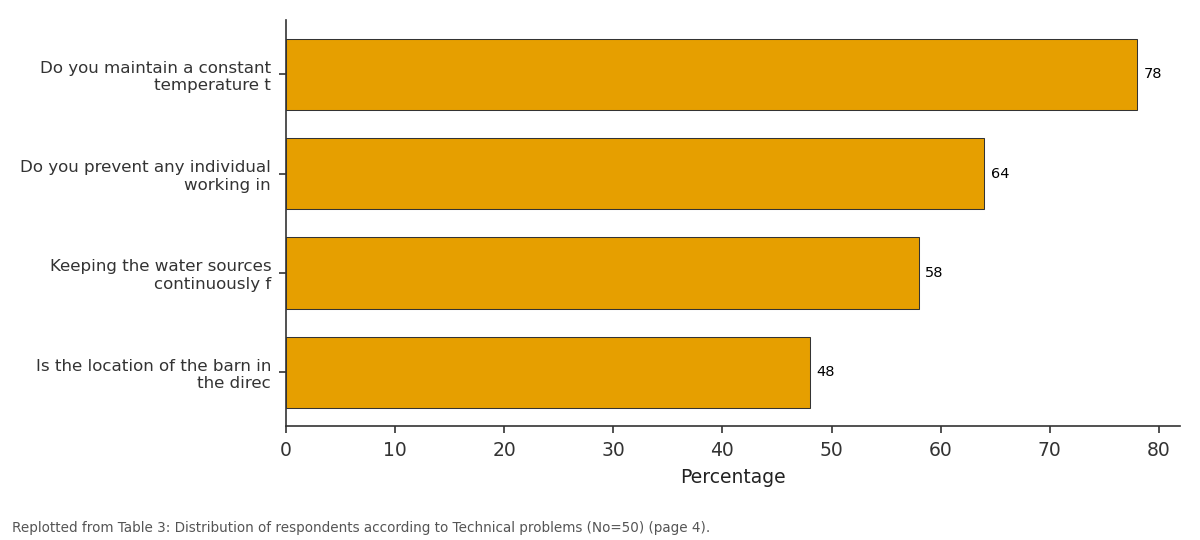
Percentage: Do you maintain a... vs Do you prevent any... vs Keeping the water... vs Is the location of the...
Replotted from Table 3 (page 4) of the original paper. Every bar is the paper's own table value.
View source evidence ↗Figures & tables
From the original paper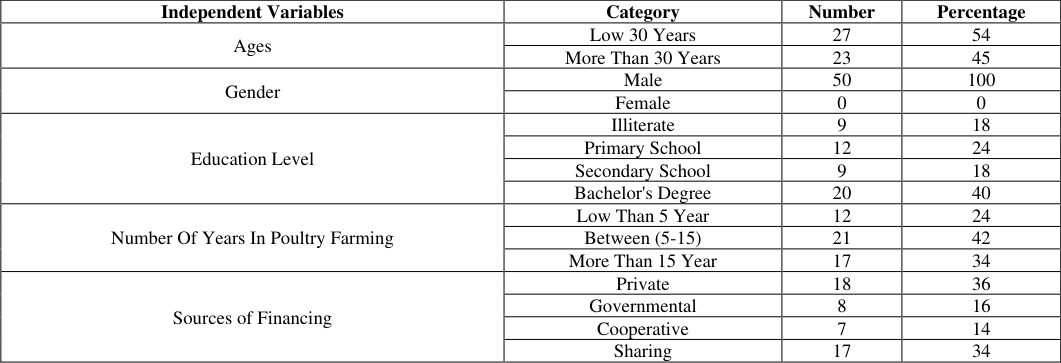 Table 1
 Table 3
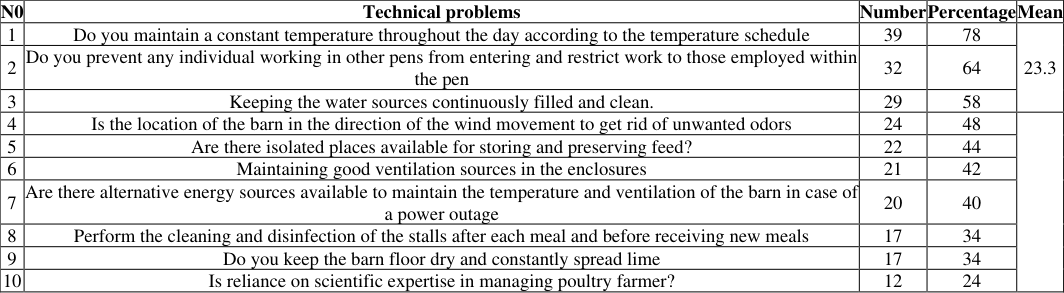 Table 3
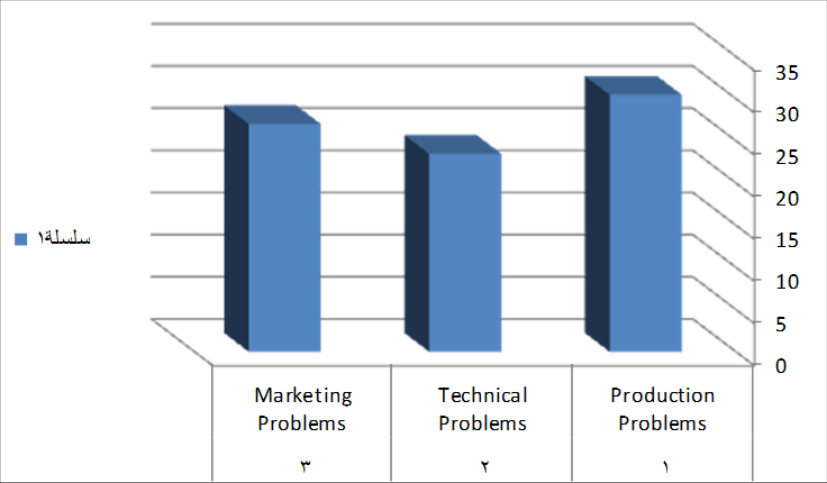 Figure 1
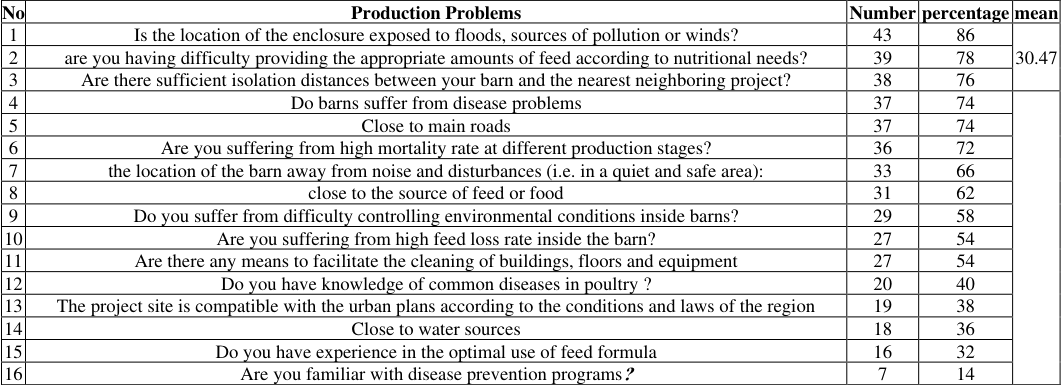 Table 4
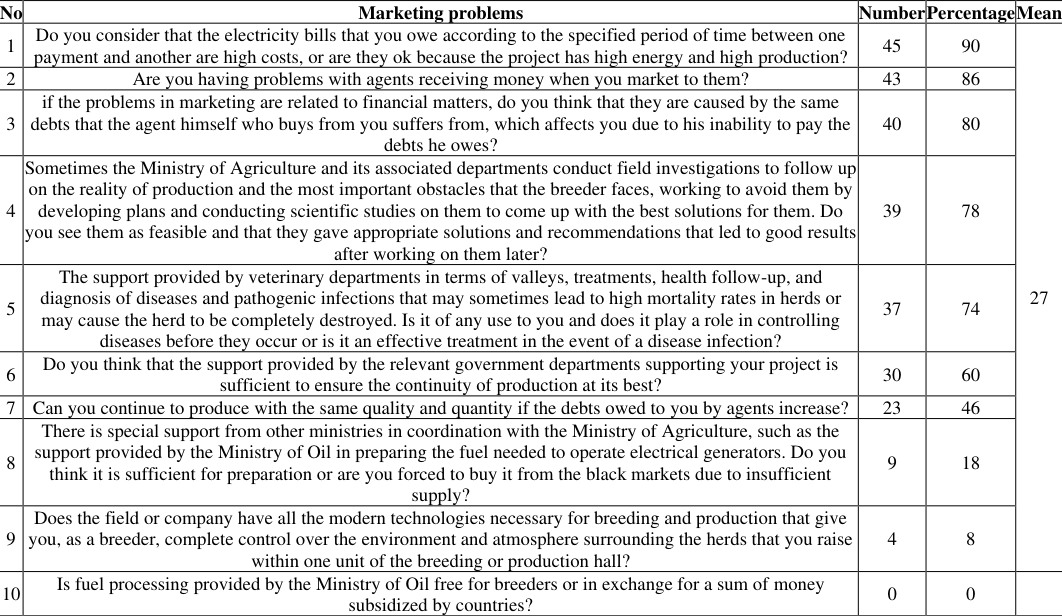 Table 5
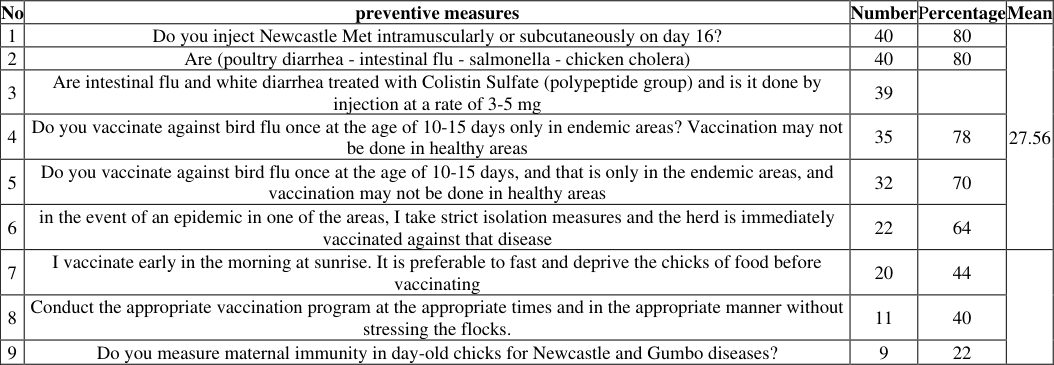 Table 6
Introduction
Poultry farming is considered an important project for many rural families because it contributes to increasing economic income and also provides basic needs of meat and eggs for local consumption. Poultry farming in Iraq is one of the most widely consumed sources of animal, with production n numbers constantly increasing to meet demand in the marketing. Poultry production as an aspect of livestock production is important to the economic and social development and biological needs of the people of any nation because it assists in alleviating food security, creates employment opportunities for the people who are engaged and creates incomes to the people who are engaged in the projects. It is a process that involves rearing of chicks from day one to the time they mature by using some farm inputs, capital, labour and entrepreneurial talen (Oladeebo & Ambe-Lamidi 2007) [6] the Poultry breeding sector leads to the activation of the local economy in urban areas by establishing small projects that fully adopt poultry farming in their inputs and processing, packaging, and marketing of outputs as well as the provision of services to the sector (Mutami, 2015) [9] .Poultry farming Iraq is an important economic activity if it covers the local need of meet and aggs. however in recent years there has been a decrease in the number of fields during the years 2011-2016, the total number of projects reached to1634, the number of sold chicken decreased too from 45,336,000 to 44,753,000 (Central Statistical Organization Iraq, 2017) [11] . One of the most prominent factors that led to the deterioration of poulty breeding is the import of large quantities of aggs and white meat at prices much lower than the price of local production, in addition to the lack of production supplies in appropriate quantities and prices, high feed costs and the lack of availability in the appropriate quantities and timings and the lack of a clear marketing policy (Kebede 2023) [10] . one of the environmental challenge facing poultry farming can be ascribed to the improper management of feces and urine from breeding and poultry, which contain nitrogen, phosphorus, heavy metals, and antibiotics (Groenestein et al., 2019) [8] . poultry farming is a difficult project, the farmers face many economic difficulties, in addition to changing weather conditions include temperatures in addition to the speed of the spread of diseases and the difficulty of controlling them. which caused the death of many birds (Central Statistical Organization Iraq. 2017) [11] The most important challenges facing poultry farming the factor of economic and the volume of demand for poultry products as well as the availability of high-quality feed and water, addition to sources of financing for productive projects. (Benabdeljelil et al. 2001) [2] . The diseases are one of the most important problems facing poultry farming. high input prices for the production process and the lack of necessary spaces for poultry breeding. which causes decrease in the number of birds and the difficulty of facing the increasing demand for poultry products in the market. also the weakness of funding for productive projects, which effects the use of modern technologies in poultry farming (Adei. 2012) [1] . the absence of legislation and laws that determine the policy of poultry farming and guaranteeing the rights of farmers to obtain inputs to the breeding process that directs the size of market demand for poultry products, which leads to high input prices, low expected profits for the product (Kebede 2023) [10] . One of the challenges facing poultry farming is traditional breeding methods that have led to the consumption of resources,water pollution, ammonia emission and antibiotic resistance. These flocks are most likely to persist in poorer countries, especially in places where they help to ensure financial stability for vulnerable groups and increase diversity of sources of income. In some countries, measures taken to control HPAI have already resulted in exclusion of some smaller producers from formal market chains. The agricultural extension plays an important role in poultry farming by addressing the productive, marketing and organizational problems facing farmers Jagalur et al. (2022) [5] . In addition to contributing to the transfer of modern technologies that contribute to raising the level of productivity and controlling diseases that affect birds within the farm. Extension serves as a unique and important 'conduit' between the source(s) and end-user of information and technology. Establishing strong contacts with allied industries, governmental agencies, domestic and international agencies and groups, various other institutions is essential for the depth and effectiveness of this system (Bilgili, 2025) [3] . The agricultural extension in last years has however played a significant role in improving poultry production in Iraq adequate information on improved techniques of production. Agricultural extension plays a pivotal role in ensuring the awareness and subsequent adoption of the contemporary methods of poultry management. The research highlights the most important problems facing poultry farmers, which may cause economic losses for producers due to the death of many birds, especially in the early stages of breeding. And work to address these problems as quickly as possible to ensure that there are no economic losses in the future.
The importance of research
The importance of poultry farming in Iraq through increasing the volume of demand for poultry products, meat and eggs. And for their increasing the level of income of farmers, this study comes to diagnose the most important problems facing poultry breeding in Aziziya district/Wasit province in Iraq, including productive, marketing, and technological problems through the role of agricultural extension in delivering these obstacles to government agencies for the purpose of addressing them at the required speed and ensuring the continuity of productivity by use of modern agricultural technologies to ensure correct management, reduce the size of doom in birds and increase farmers profits.
Research
Research
Methods and Materials
Research Methodology: This research adopted a descriptive survey research design through the use of a questionnaire. A more useful generalization that can be added to this formal definition is that qualitative research typically utilizes verbal data rather than numerical data (Busetto, and Gumbinger,, 2020) [4] . To measure the objectives of the research, use the descriptive approach, which is one of the most important methods to obtain adequate and accurate information from social reality and contribute to the analysis of its phenomena.
Research area
In order to achieve the objectives the study, the Aziziya district/Wasit province in Iraq was chosen. Because there are a large number of poultry farming and the climate in Aziziya can be suitable for poultry farming into account taking the necessary measures to avoid the effects of high temperatures and the region has the resources needed to raise poultry, the number of farmers (250) farmers who have bird breeding fields. the data was collected in the season 2022-2023, was selected stratified sample of 20% of the research community as the total sample size of 50 farmers distributed in twelve villages have been made to search.
Data collection
The questionnaire is one of the most widely used tools for collecting data. Challenges facing poultry farming projects in Wasit Governorate. The questionnaire is divided into three parts (Technical problems, production problems, marketing problems). It is given weights (1.0). to Challenges facing poultry farming projects in Wasit Governorate was divided to two categories (yes or no).
Statistical analysis
After completing the compilation the date, it was started to unload it and the required date was obtained from it, and the SPSS statistical package (mean, averages, frequently, percentages, standard deviation and multiple regressions) was adopted in analyzing the date
Face validity
The form has been presented to a group of experts in Animal Production and Agricultural extension areas to ensure the appropriateness of the paragraphs, all observations were recorded, reformulated, and adjustments made according to their suggestion to improve the study. Seven in agricultural extension exports have been recording their apparent validity of the instrument, such as the type of expressions, the style of writing, the extent of clarity, accuracy of their measurement, and the way to answer the paragraphs, as some paragraphs were removed from the form according to their suggestion.
Reliability
The reliability content means that "The degree of representation of the test of the content of the behavior and objectives" and gained the content has validated this name because it is related to the behavior content to be measured 12. And whenever the value approaches (100%) this indicates a degree of stability. The result of the Cronbach alpha test for the study scale was (0.95), so the tool can be described as stable and the data obtained were suitable for measuring varieties and were within a high degree of reliability. On 3/5/2023, a test has been recorded for the outside of the sample in the research
Results and Discussion
The first objective of the present study was to assess the socio -personal characters of Poultry farmer. the finding and discussion relating to this part of the study are being presented with respect to the variable namely (Age, Gender, Education Level, Number of Years in Poultry Farming and Sources of Financing). The frequency distribution of Poultry farmer respondents for each selected independent variable has been presented in Table (1). Table (1) depicts that the highest percentage (54%). With the first category (Ages of 30 years). age is an important variable in managing poultry farmer. Where young or middle ages have a major role in the management process. The highest percentage was (100%) percent with the first category (male) where a lot of service and management processes need males more than women. because it takes a lot of effort. so that took gender the highest percentage in the male category. The high percentage (40%) with the second category of the (Bachelor degree). Many operations need a high level of education for the purpose of controlling the conditions surrounding the breeding process and also using treatments to reduce diseases the occur to birds. The high percentage (42%) with the third category of the years of experience. The experience plays an important role in controlling working conditions within poultry fields. The high percentage 36%) with the first category (private). The private sector plays very important role in the development of poultry farming if it has a great ability in treatment many problems facing farmers.
The Second Objectives Study the Most Important Challenges Facing Poultry Farmers (Technical Problems, Production Problems, Marketing Problems)
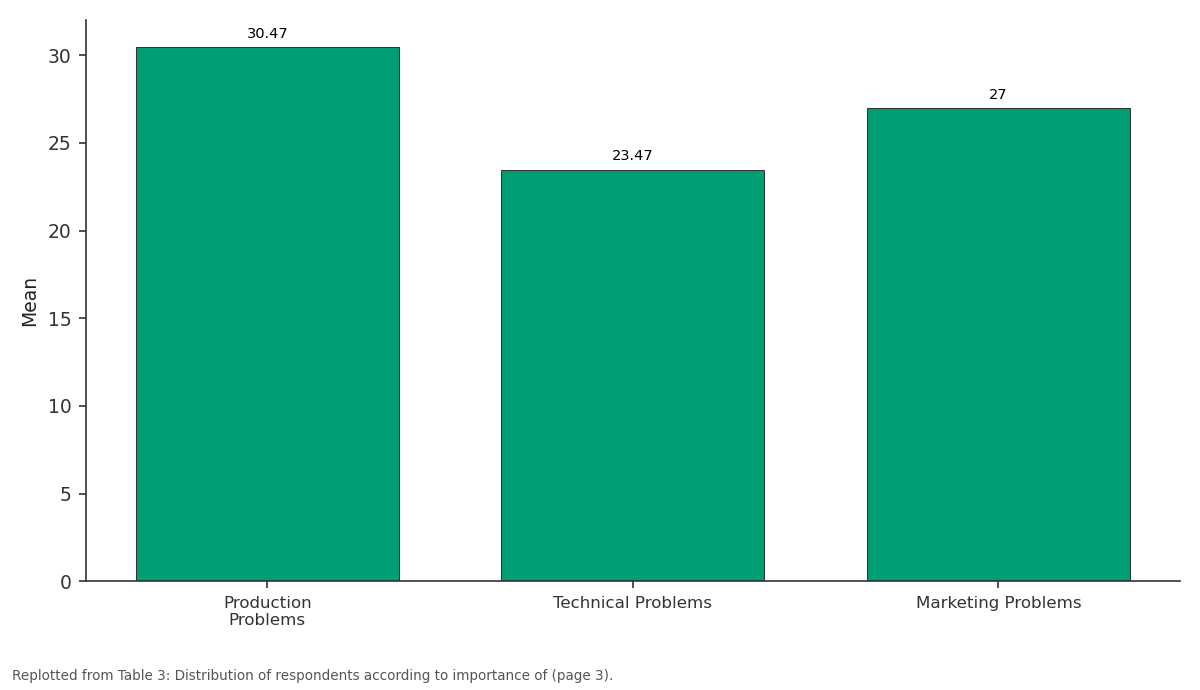
The determining the problems facing the poultry farming In order to determining the importance of the items studied and which is the most impact on the level of poultry farming in Al-Aziziyah district. the items were ranked according to their relative importance. it has been in table (2) Table 2 shows the order of the problems facing poultry farming. where the production problems took the first rank (30.47), due to the production requirements that constitute a major obstacle to the success of poultry farming, as a result of the high costs of basic materials. Like feed and vaccines also not available in the right quantities. also the lack of specialization in monitoring and follow-up of production processes, by maintaining temperatures and also providing vaccines and diagnosing diseases that infect birds at the required speed. The marketing problems took the lowest level (27) due to the instability of market prices that effect the volume of expected profits and the absence of the correct marketing policy.
Fig 1:
The figure shows the order of the problems facing poultry farming
Technical problems
In order to the determining the problems technical problems; To identify the impact of the technical problems facing Poultry farmer, the total number of Poultry farmer has been counted according to the percentages. The answer of the question it was by (yes or No) has been presented in Table 3. Table (3) indicates that the highest percentage order according to the number of Poultry farmer. It was(78%) and the mean (23.3) for technical problems, (Do you maintain a constant temperature throughout the day according to the temperature schedule). These problems an advanced level may be due to Most of Poultry farmer believe that temperature is of very importance in preserving the life of birds in the field, which needs continuous monitoring, especially during the winter season, and maintaining it within the ideal levels for breeding, as well as limiting the entry of people into Poultry farming in order to limit the transmission of pathogens and adopting preventive measures for workers inside the fields. On the other hand, the last percentage was (24%) with Is reliance on scientific expertise in managing poultry farmer. Due to that the management of farm depends on the number of the birds and also the period of their stay inside the farming.
| N0 | Technical problems | Number | Percentage | Mean |
|---|---|---|---|---|
| 1 | Do you maintain a constant temperature throughout the day according to the temperature schedule | 39 | 78 | 23.3 |
| 2 | Do you prevent any individual working in other pens from entering and restrict work to those employed within the pen | 32 | 64 | |
| 3 | Keeping the water sources continuously filled and clean. | 29 | 58 | |
| 4 | Is the location of the barn in the direction of the wind movement to get rid of unwanted odors | 24 | 48 | |
| 5 | Are there isolated places available for storing and preserving feed? | 22 | 44 | |
| 6 | Maintaining good ventilation sources in the enclosures | 21 | 42 | |
| 7 | Are there alternative energy sources available to maintain the temperature and ventilation of the barn in case of a power outage | 20 | 40 | |
| 8 | Perform the cleaning and disinfection of the stalls after each meal and before receiving new meals | 17 | 34 | |
| 9 | Do you keep the barn floor dry and constantly spread lime | 17 | 34 | |
| 10 | Is reliance on scientific expertise in managing poultry farmer? | 12 | 24 |
Table text extracted from the original PDF; superscript letters are shown inline. The original table image is below.
View original table image
| No | importance of problems facing poultry farming | Mean |
|---|---|---|
| 1 | Production Problems | 30.47 |
| 2 | Technical Problems | 23.47 |
| 3 | Marketing Problems | 27 |
Table text extracted from the original PDF; superscript letters are shown inline. The original table image is below.
View original table image
Production Problems
To identify the impact of the production problems facing Poultry farmer, the total number of Poultry farmer has been counted according to the percentages. The answer of the question it was by (Yes or No) has been presented in Table 4. Table (4) indicates that the highest percentage order according to the number of Poultry farmer. It was (86%) and the mean (30.47) for production problems, (Is the location of the enclosure exposed to floods, sources of pollution or winds). These questions an advanced level may be due to Most of Poultry farmer believe The location of the field is considered one of the important things in the success of Poultry farming, also it helps control the movement of air inside the field and maintain the change in temperature. It also facilitates the removal of gases resulting from adding bedding inside the field, which helps in easy disposal of waste and also controls the temperature of the field. Fodder materials are also considered important in obtaining the appropriate quantity and quality of feed at appropriate prices to reduce production costs. And inadequate infrastructure, including poor roads, limited access to electricity, and unreliable transportation networks, can hinder the supply of essential inputs (feed, vaccines, etc.) and market access. This can lead to inefficiencies in farming operations and increased costs. On the other hand, the last percentage was (14%) with Are you familiar with disease prevention programs.
| No | Production Problems | Number | percentage | mean |
|---|---|---|---|---|
| 1 | Is the location of the enclosure exposed to floods, sources of pollution or winds? | 43 | 86 | 30.47 |
| 2 | are you having difficulty providing the appropriate amounts of feed according to nutritional needs? | 39 | 78 | |
| 3 | Are there sufficient isolation distances between your barn and the nearest neighboring project? | 38 | 76 | |
| 4 | Do barns suffer from disease problems | 37 | 74 | |
| 5 | Close to main roads | 37 | 74 | |
| 6 | Are you suffering from high mortality rate at different production stages? | 36 | 72 | |
| 7 | the location of the barn away from noise and disturbances (i.e. in a quiet and safe area): | 33 | 66 | |
| 8 | close to the source of feed or food | 31 | 62 | |
| 9 | Do you suffer from difficulty controlling environmental conditions inside barns? | 29 | 58 | |
| 10 | Are you suffering from high feed loss rate inside the barn? | 27 | 54 | |
| 11 | Are there any means to facilitate the cleaning of buildings, floors and equipment | 27 | 54 | |
| 12 | Do you have knowledge of common diseases in poultry ? | 20 | 40 | |
| 13 | The project site is compatible with the urban plans according to the conditions and laws of the region | 19 | 38 | |
| 14 | Close to water sources | 18 | 36 | |
| 15 | Do you have experience in the optimal use of feed formula | 16 | 32 | |
| 16 | Are you familiar with disease prevention programs? | 7 | 14 |
Table text extracted from the original PDF; superscript letters are shown inline. The original table image is below.
View original table image
Marketing problems
To identify the impact of the marketing problems facing Poultry farmer, the total number of Poultry farmer has been counted according to the percentages. The answer of the question it was by (Yes or No) has been presented in Table 5. Sometimes the Ministry of Agriculture and its associated departments conduct field investigations to follow up on the reality of production and the most important obstacles that the breeder faces, working to avoid them by developing plans and conducting scientific studies on them to come up with the best solutions for them. Do you see them as feasible and that they gave appropriate solutions and recommendations that led to good results after working on them later? 39 78 5
The support provided by veterinary departments in terms of valleys, treatments, health follow-up, and diagnosis of diseases and pathogenic infections that may sometimes lead to high mortality rates in herds or may cause the herd to be completely destroyed. Is it of any use to you and does it play a role in controlling diseases before they occur or is it an effective treatment in the event of a disease infection?
Study the most important preventive measures taken by poultry breeders to reduce common diseases
The third objective: Study the most important preventive measures taken by poultry breeders to reduce common diseases.
To identify the important preventive measures taken by poultry breeders, the total number of Poultry farmer has been counted according to the percentages. The answer of the question it was by (yes or No) has been presented in Table (6). Table (5) indicates that the highest percentage order according to the number of Poultry farmer. It was (80%) and the mean (27.56) with the (Do you inject Newcastle Met intramuscularly or subcutaneously on day 16). These questions an advanced level may be due to Most of Poultry farmer believe. Through preventive measures such as regular vaccinations and periodic cleaning of cages, poultry can be reduced from exposure to diseases that may be fatal or affect egg and meat production. and Maintaining poultry health through prevention contributes to improving productivity, both in terms of egg quantity and poultry growth, which increases the profitability of the farm. On the other hand, the last percentage was (18%) with Do you measure maternal immunity in day-old chicks for Newcastle and Gumbo diseases.
Conclusions
1. Most of Poultry farmer believe that temperature is of very importance in preserving the life of birds in the field, which needs continuous monitoring, especially during the winter season. 2. The location of the field is considered one of the important things in the success of Poultry farming, also it helps control the movement of air inside the field and maintain the change in temperature. It also facilitates the removal of gases resulting from adding bedding inside the field, which helps in easy disposal of waste and also controls the temperature of the field. 3. The poultry market can be volatile, with prices fluctuating based on supply and demand, local competition, and external factors (like the import of cheaper poultry products). Farmers may struggle with price wars, often being unable to cover production costs during low price periods. Finding skilled labor in poultry farming can be a challenge. Many workers may lack proper training in animal husbandry, biosecurity measures, and efficient production practices 4. Through preventive measures such as regular vaccinations and periodic cleaning of cages, poultry can be reduced from exposure to diseases that may be fatal or affect egg and meat production. and Maintaining poultry health through prevention contributes to improving productivity, both in terms of egg quantity and poultry growth, which increases the profitability of the farm.
Figures and tables from the paper
| Independent Variables | Category | Number | Percentage |
|---|---|---|---|
| Ages | Low 30 Years | 27 | 54 |
| More Than 30 Years | 23 | 45 | |
| Gender | Male | 50 | 100 |
| Female | 0 | 0 | |
| Education Level | Illiterate | 9 | 18 |
| Primary School | 12 | 24 | |
| Secondary School | 9 | 18 | |
| Bachelor's Degree | 20 | 40 | |
| Number Of Years In Poultry Farming | Low Than 5 Year | 12 | 24 |
| Between (5-15) | 21 | 42 | |
| More Than 15 Year | 17 | 34 | |
| Sources of Financing | Private | 18 | 36 |
| Governmental | 8 | 16 | |
| Cooperative | 7 | 14 | |
| Sharing | 17 | 34 |
Table text extracted from the original PDF; superscript letters are shown inline. The original table image is below.
View original table image
| No | preventive measures | Number | Percentage | Mean |
|---|---|---|---|---|
| 1 | Do you inject Newcastle Met intramuscularly or subcutaneously on day 16? | 40 | 80 | 27.56 |
| 2 | Are (poultry diarrhea - intestinal flu - salmonella - chicken cholera) | 40 | 80 | |
| 3 | Are intestinal flu and white diarrhea treated with Colistin Sulfate (polypeptide group) and is it done by injection at a rate of 3-5 mg | 39 | ||
| 4 | Do you vaccinate against bird flu once at the age of 10-15 days only in endemic areas? Vaccination may not be done in healthy areas | 35 | 78 | |
| 5 | Do you vaccinate against bird flu once at the age of 10-15 days, and that is only in the endemic areas, and vaccination may not be done in healthy areas | 32 | 70 | |
| 6 | in the event of an epidemic in one of the areas, I take strict isolation measures and the herd is immediately vaccinated against that disease | 22 | 64 | |
| 7 | I vaccinate early in the morning at sunrise. It is preferable to fast and deprive the chicks of food before vaccinating | 20 | 44 | |
| 8 | Conduct the appropriate vaccination program at the appropriate times and in the appropriate manner without stressing the flocks. | 11 | 40 | |
| 9 | Do you measure maternal immunity in day-old chicks for Newcastle and Gumbo diseases? | 9 | 22 |
Table text extracted from the original PDF; superscript letters are shown inline. The original table image is below.
View original table image
References
11 in the original paper- Adei D, Asante BK. The challenges and prospects of the poultry industry in Dormaa district. Journal of Science and Technology (Ghana). 2012;32(1):104-116. Available from: http://dx.doi.org/10.4314/just.v32i1.11
- Benabdeljelil K, Arfaoui T, Karari E. Characteristics of Beldi chicken and turkeys in rural poultry flocks of Morocco: Current state and future outlook, constraints and possibilities. Animal Genetic Resources Information. 2001;31:1-10.
- Bilgili SF. Establishing a poultry extension/outreach program. Auburn, AL: Department of Poultry Science, Auburn University; 2025 [cited 2025 Sep 3]. Available from: https://cabidigitallibrary.org
- Busetto L, Wick W, Gumbinger C. How to use and assess qualitative research methods. Neurological Research and Practice. 2020;2:1-10. https://doi.org/10.1186/s42466-020-00059-z
- Jagalur VK, Manjula N, Anilkumar GK. Backyard poultry farmer's knowledge about poultry management practices. South Asi J Agri Sci. 2022;2(2):114-9.
- Oladeebo JO, Ambe-Lamidi AI. Profitability, input elasticity's and economic efficiency of poultry production among youth farmers in Osun State, Nigeria. International Journal of Poultry Science. 2007;6(12):994-998.
- Goran G, Pawlak A, Kaczmarek A, Lutek R, Lis A, Ociepa E, et al. Intensive poultry farming: A review of the impact on the environment and human health. Science of the Total Environment. 2023;858(Pt 3):160014.
- Groenestein CM, Hutchings NJ, Haenel HD, Amon B, Menzi H, Mikkelsen MH, et al. Comparison of ammonia emissions related to nitrogen use efficiency of livestock production in Europe. Journal of Cleaner Production. 2019;211:1162-1170. https://doi.org/10.1016/j.jclepro.2018.11.247
- Mutami C. Small-holder poultry production in Zimbabwe: A survey. Journal of Sustainable Development in Africa. 2015;13(1):18.
- Kebede IA. The characteristics, challenges and prospects of small scale poultry farming in developing countries. Journal of Animal Sciences and Livestock Production; 2023.
- Central Statistical Organization Iraq. Report of poultry for 2016. Baghdad: Central Statistical Organization Iraq; 2017. Available from: https://www.linkedin.com/pulse/what-all-challengesfaced-poultry-farms-solutions