
Research article · 2025 · Full text
International Journal of Biology SciencesA study to investigate the growth performance of fingerlings of common carp Catla (Catla catla) fed a diet containing sorghum and pearl millet
Volume 7(6) · Pages 56–60 · DOI: 10.33545/26649926.2025.v7.i6a.356 ↗
Research areasFish Biology and Ecology StudiesAquaculture Nutrition and GrowthAgricultural Systems and Practices
Abstract
Author-writtenThe nutritional effects of a mixed feed consisting of pearl millet (Pennisetum glaucum) and great millet sorghum (Sorghum bicolor) on the growth performance of Catla catla fingerlings were examined in this study. During the 60-day trial, experimental diets were created by replacing an equivalent amount of rice bran with flour from sorghum and pearl millet. A total of 15 glass tanks, each with a 75-liter capacity, were randomly assigned to 375 healthy Catla catla fingerlings, weighing an average of 16.52 ± 0.01g. These tanks were split into five treatments, each with three duplicates, including a control group. Throughout the 60 days, the fingerlings were fed 1% of their body weight twice daily, in the morning and the evening. In contrast to the control group, which was fed only rice bran, the experimental diets included sorghum and pearl millet in a 1:1 ratio at different inclusion levels (5%, 10%, 15%, and 20%). Weekly measurements were made of water quality parameters, including pH, dissolved oxygen (DO), electrical conductivity (EC), total alkalinity, hardness, nitrate, orthophosphate, and air and water temperature. The experimental fish fingerlings fed a diet consisting of sorghum and pearl millet showed better growth performance, according to the results. The group with a 15% inclusion rate (G3) saw the most weight gain of 41.200±0.145g, whereas the control group (G0) that did not receive sorghum and pearl millet experienced the lowest weight gain of 32.428±0.029g. Additionally, G3 had the lowest feed conversion ratio (FCR) at 3.158±0.012, whereas the control group had the highest at 3.876±0.078. The control group (G0) had the lowest specific growth rate (SGR) at 1.512±0.002%, whereas G3 had the highest at 1.985±0.003%. Results show that Catla catla fingerlings fed a 1:1 ratio of sorghum millet to pearl millet preserves the water quality and promotes healthy development.
Summary
Source-checkedPlain-language reading of the full paper, prepared with AI and checked against the text. Each point links to the authors' own words.
Why it matters
- Feed costs represent a major portion of the operating expenses in carp farming. View evidence ↗
- Traditional farm-made feeds are affordable but often lack balanced nutrition, leading to poor growth and high feed conversion ratios. View evidence ↗
- Millets are nutritious, gluten-free, and non-acid-forming, making them potential alternative feed ingredients. View evidence ↗
The question
- The study aimed to investigate how a mixed feed of sorghum and pearl millet affects the growth of Catla catla fingerlings. View evidence ↗
What they did
- The experiment used 375 healthy Catla fingerlings (average weight 16.52 ± 0.01g) distributed across fifteen 75-liter glass tanks. View evidence ↗
- Fingerlings were divided into a control group fed rice bran and four experimental groups (G1-G4) fed a 1:1 ratio of sorghum and pearl millet at inclusion levels of 5%, 10%, 15%, and 20%. View evidence ↗
- The fish were fed twice daily at 1% of their body weight over a 60-day trial period. View evidence ↗
- Data were analyzed using one-way ANOVA and Duncan's Multiple Range Tests to identify significant differences at the P<0.05 level. View evidence ↗
What they found
- The group with 15% millet inclusion (G3) achieved the highest final weight gain (41.200±0.145g), while the control group (G0) had the lowest (32.428±0.029g). View evidence ↗
- The specific growth rate (SGR) was highest in the G3 group (1.985±0.003%) and lowest in the control group (1.512±0.002%). View evidence ↗
- Visual inspection indicated that the highest survival rate at the end of the study was observed in group G3, followed by G2 and G4. View evidence ↗
- Water quality remained stable with average values of 27.6 °C temperature, 6.66 pH, and 7.47 mg/l dissolved oxygen. View evidence ↗
What it means
- The authors conclude that a 1:1 ratio of sorghum and pearl millet in the diet promotes healthy growth in Catla catla fingerlings while maintaining water quality. View evidence ↗
- The authors state that while these grains show potential as supplemental feed, further research is required. View evidence ↗
Visual summary
3 visualsIllustrations explain the paper; charts are replotted from the paper's own table values.
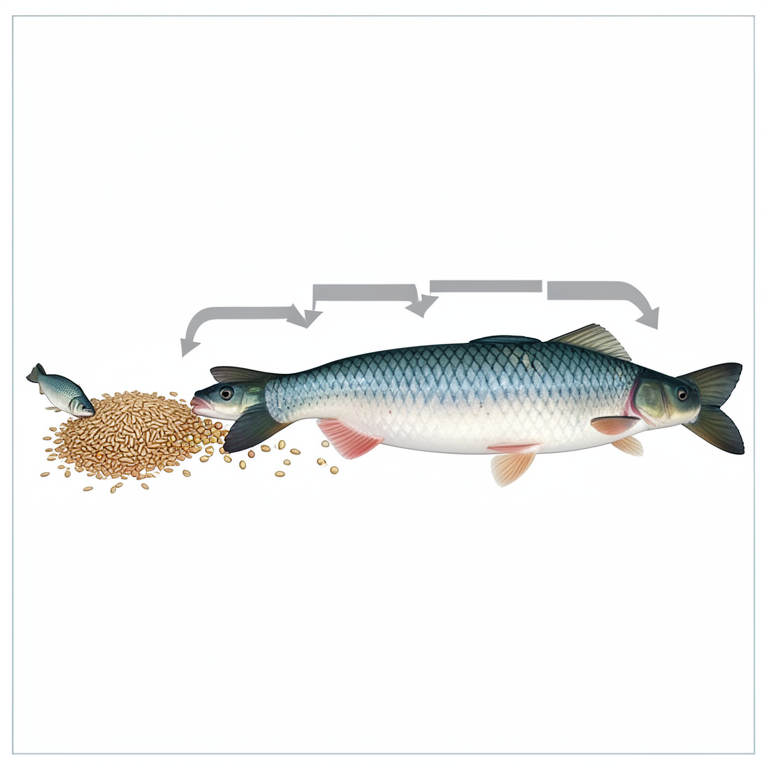
Dietary Inclusion vs Growth
AI-generated conceptual illustration (Catla catla fingerlings). It explains the idea and does not show study data.
View source evidence ↗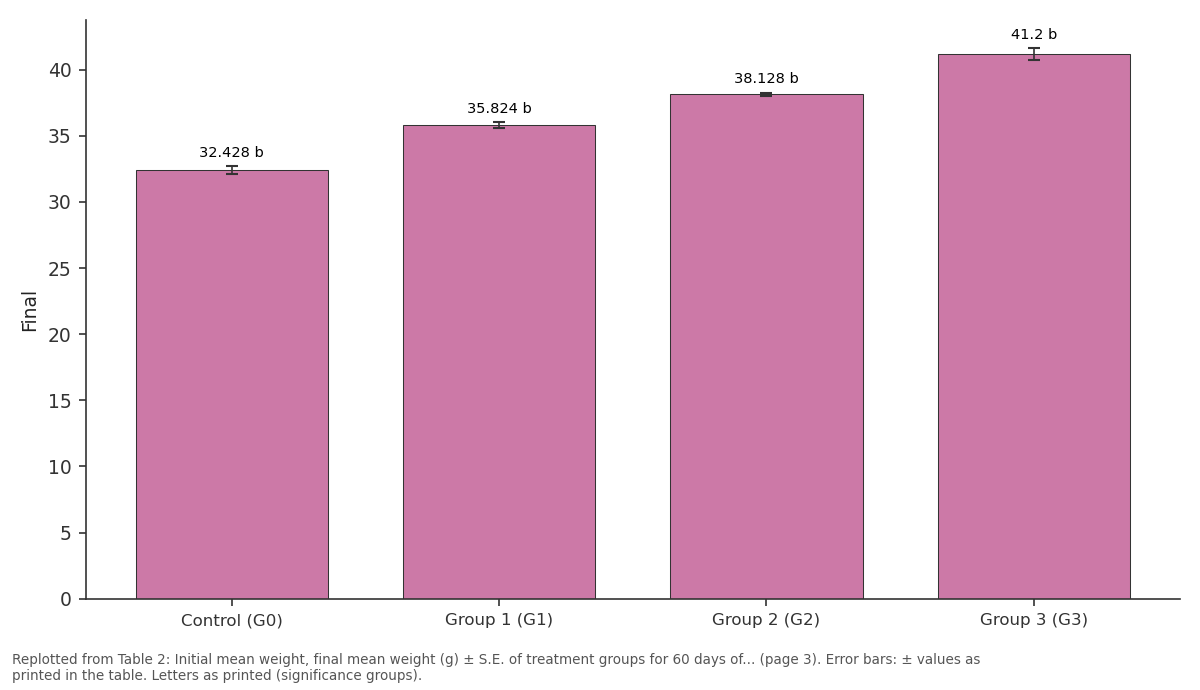
Final: Control (G0) vs Group 1 (G1) vs Group 2 (G2) vs Group 3 (G3)
Replotted from Table 2 (page 3) of the original paper. Every bar is the paper's own table value.
View source evidence ↗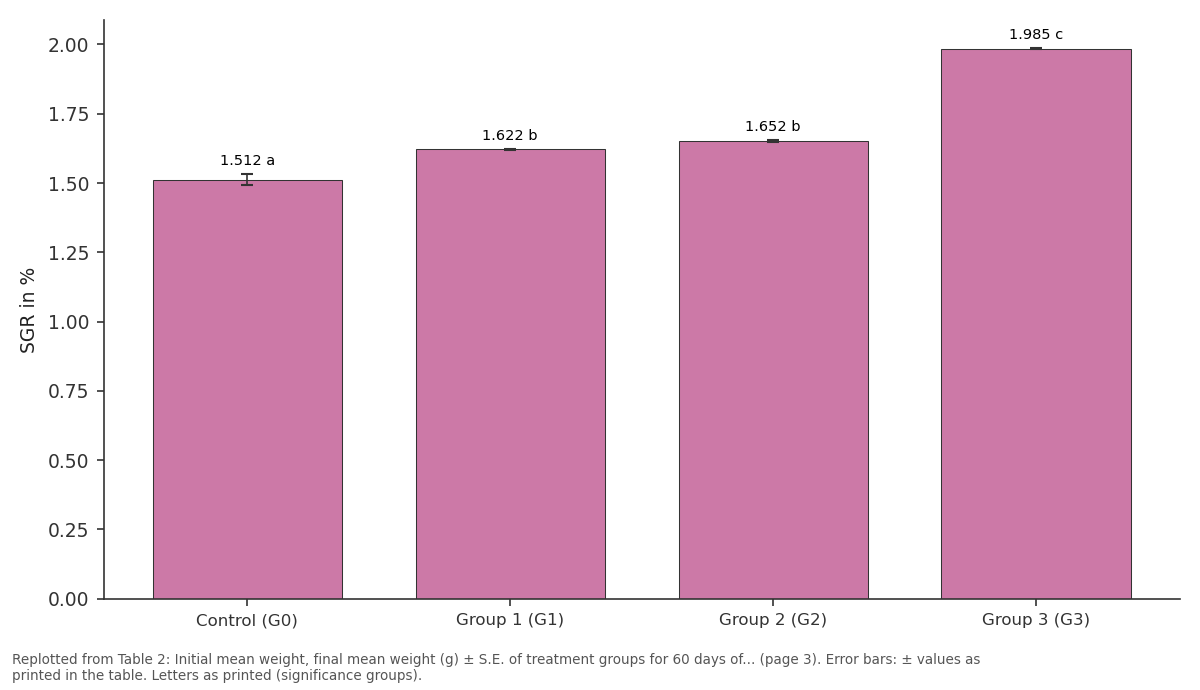
SGR in %: Control (G0) vs Group 1 (G1) vs Group 2 (G2) vs Group 3 (G3)
Replotted from Table 2 (page 3) of the original paper. Every bar is the paper's own table value.
View source evidence ↗Figures & tables
From the original paper Table 1
 Table 2
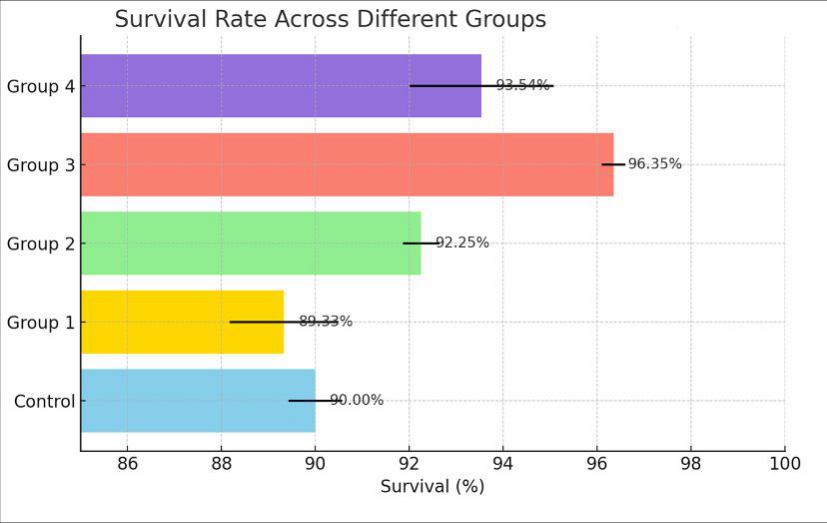 Figure 1
Introduction
India's freshwater aquaculture relies heavily on common carp (Cyprinus carpio), which makes a large contribution to the country's fish output. Because of its flexibility and compatibility with native species, common carp, which was introduced in the late 1950s together with other alien species including silver carp and grass carp, has proven essential to polyculture systems [1] . In India, common carp are frequently combined with native species including mrigal (Cirrhinus cirrhosus), rohu (Labeo rohita), and catla (Catla catla) in polyculture methods. By maximizing the use of various ecological niches within ponds, this method raises total output. For example, mrigal and common carp live in the bottom layers of the water, where they feed on detritus and benthic animals; rohu and grass carp use the intermediate strata, where they consume aquatic vegetation; and catla and silver carp live in the top strata, where they graze on plankton [2] . The output of common carp has been considerably increased by the introduction of better varieties. Notably, in 2010, Meghalaya saw the introduction of the Amur (Hungarian) breed of common carp. This strain reached maturity in around 14 months at mid-altitude, according to studies, and showed better growth performance than current local breeds [3] . Despite these developments, native species like catla and rohu, which fetch higher prices, are more popular in the Indian market than common carp. As a result, many farmers place a high priority on cultivating these indigenous plants. Common carp are now a crucial part of freshwater aquaculture in India, especially in polyculture systems. Its incorporation improves the use of resources and raises aquaculture operations' general productivity. India has several challenges when it comes to carp farming, especially when it comes to the price and accessibility of high-quality fish feed. A significant amount of carp farming's operating expenditures is related to feed. According to research that was published in the Indian Journal of Fisheries, the most sensitive element influencing the carp culture's economic viability was feed cost. Changes of ±10%, ±20%, and ±30% in feed costs led to variations in net present value (NPV) and internal rate of return (IRR) of 7% to 20% and 5% to 15%, respectively [4] . Indian carp farmers have historically depended on farmmade feeds, which are mostly made up of oil cakes and deoiled rice bran (DORB). Carp in polyculture systems are frequently given oil cake, DORB, or a blend of the two, usually at a cake-to-bran ratio of 10:90. Carp juveniles are first fed only DORB until they weigh 350 g, at which point they are given a combination of DORB and oil cake.
Despite their affordability, these feeds frequently have unbalanced nutrition, which results in less-than-ideal growth rates and elevated feed conversion ratios (FCRs) [5] .
Better nutritional profiles and increased water stability are provided by commercial pelleted feeds, particularly floating pellets. However, because they are more expensive and not always available, their use is restricted. For example, farmmade mash feeds cost about US$0.27 per kg, but floating pellets might cost up to US$0.50 per kg. Furthermore, feed producers frequently demand minimum orders of about 10 tons, which presents logistical difficulties for small-scale farms [6] . Combining commercial feeds with conventional farm-made feeds has shown promise as a solution to these issues. Research carried out in Andhra Pradesh's West Godavari area showed that using commercial sinking feeds in conjunction with de-oiled rice bran enhanced FCRs and decreased production costs. An FCR of 2.3 and a feed cost of Rs. 64.4 per kilogram of fish were attained using the ideal mix of 50% DORB and 50% commercial sinking feed [7] . One of the biggest obstacles to Indian carp farming is the high price and scarcity of good-quality fish food. Feed efficiency and financial returns for farmers can be increased by employing techniques like blending conventional and commercial feeds and improving feed compositions. Therefore, the current study examines the growth performance of common carp fingerlings (Catla catla) fed a diet that includes pearl millet and sorghum. This study aims to investigate the dietary effects of a mixed feed containing great millet sorghum (Sorghum bicolor) and pearl millet (Pennisetum glaucum) on the growth of C. catla fingerlings.
Materials and Methods
Materials and Methods
Experimental setup and design
Fifteen glass tanks, each with a 75-liter capacity, were randomly assigned to 375 healthy Catla fingerlings, weighing an average of 16.52 ± 0.01g. The experimental tanks' specifications are as follows: Volume: 75 liters; Dimensions (LxWxH): 60.9 x 32.2 x 40.6 cm; Filter Type: 5.5W Hang-on Filter; Filter Flowrate: 450 L/H; Lighting Type: 9.6W White Energy Saving LED. These tanks were split up into five treatments, each with three duplicates, including a control group.
The Test
The fingerlings utilized in the experiment were fed 30% protein diet before stocking after being acclimated for 15 days. There were four treatment groups in the trial, each in triplicate, along with a control group. The experimental feed was composed of soybean meal, sunflower oil, and a vitamin-mineral combination known as Rigmin-Aqua, and it had 30% protein and a 1:1 ratio of sorghum to pearl millet. The fingerlings were fed 1% of their body weight twice a day, in the morning and the evening, for the duration of the 60 days. The experimental diets contained sorghum and pearl millet in a 1:1 ratio at varying inclusion levels (5%, 10%, 15%, and 20%) as opposed to the control group, which was administered feed comprised of rice bran. Weekly measurements were made of water quality parameters, including pH, dissolved oxygen (DO), electrical conductivity (EC), total alkalinity, hardness, nitrate, orthophosphate, and air and water temperature.
Preparation of control diet
A control diet was prepared by mixing groundnut oil cake, rice bran, wheat flour, soya bean meal, sunflower oil, and vitamin-mineral mixture in a ratio of 40:30:14:10:3:2 following earlier publications [8] .
Preparation of the experimental diet
The control diet's equal parts of rice bran and wheat flour were changed out for a 1:1 mixture of sorghum and pearl millet flour to create the experimental diet. Treatments G1 (5%), G2 (10%), G3 (15%), and G4 (20%) used four different amounts of sorghum and pearl millet flour in their diets. All of the components for the fingerlings' diet, including grains, were purchased fresh from the local market. After mechanically grinding the sorghum, pearl millet was sieved through a sieve with pores that were 100 µm in diameter. After that, it was stored in a container and maintained at room temperature until it was used. To make a dough, a soybean meal, a vitamin and mineral mixture, and the appropriate quantity of dry materials from the diet were combined. The ingredients were autoclaved in powder form for 30 minutes at 150 pounds of pressure before creating dough. Following cooling and dough preparation, the paste was extruded through vermicelli a hand pelletizer machine. After that, it was crushed into pellets, allowed to air dry in the shade, and stored in airtight containers for later use.
Determination of fish growth parameters and survival
Fifteen fish (n =15) were sampled weekly from each treatment without being sacrificed to assess the growth performance of the fish involved in the experiment. The following formula was used to calculate the growth metrics, including weight gain %, feed conversion ratio (FCR), specific growth rate % (SGR), and survival %:
Statistical Analysis
The Statistical Package for Social Sciences (SPSS, version 16.0 for Windows) was used for all statistical analyses. To ascertain the variations among the mean values, analysis of variance (one way, or ANOVA) was conducted. Duncan's Multiple Range Tests (DMRT) were used to test for differences at the P<0.05 level.
Results
Results
Water quality parameters
Throughout the trial, weekly measurements of the water's physicochemical characteristics were made and are shown in Table 1 The experimental fish fingerlings fed a diet consisting of sorghum and pearl millet. The main components of sorghum and pearl millet are around 60-70% Carbohydrates and 10-12% proteins. To improve the protein component Fish feed prepared from sorghum and pearl millet, which have moderate protein contents (~10-12%), was supplemented with high-protein components, such as soybean meal (crude protein 44-48%), to improve its protein composition. The experimental fish fingerlings fed a diet consisting of sorghum and pearl millet showed better growth performance, according to the results as shown in Table 2. The group with a 15% inclusion rate (G3) saw the most weight gain (41.200±0.145g), whereas the control group (G₀) that did not receive sorghum and pearl millet experienced the lowest weight gain (32.428±0.029g). Additionally, G3 had the lowest feed conversion ratio (FCR) at 3.158±0.012, whereas the control group had the highest at 3.876±0.078. The control group (G₀) had the lowest specific growth rate (SGR) at 1.512±0.002%, whereas G3 had the highest at 1.985±0.003%. Catla fingerlings reared with experimental feed formulation show better growth performance and survival than the control. The survival percentage across the group is shown in Figure 1. There is a significant (P>.05) increase in final weight across the groups as shown in Table 2. SGR, and weight gain (%) across all the groups compared to the initial period are significantly high. FCR is found significantly (P<.01) lower in treatment groups compared to the control group. Among the treatments, the best FCR is found in the group three. The survival percentage was noticed daily by visual inspection and the best survival at the end of the experiment was noted in group three followed by groups two and four.
| Culture period | Control (G0) | Group 1 (G1) | Group 2 (G2) | Group 3 (G3) | Group 4 (G4) |
|---|---|---|---|---|---|
| Initial | 16.52 ± 0.08a | 16.12 ± 0.04a | 15.82 ± 0.05a | 15.78 ± 0.08a | 15.89 ± 0.06a |
| Final | 32.428 ± 0.29b | 35.824 ± 0.22b | 38.128±0.13b | 41.200±0.45b | 38.828 ± 0.79b |
| FCR | 3.876 ± 0.78a | 3.678 ± 0.087b | 3.778 ± 0.077c | 3.158±0.012d | 3.776 ± 0.056c |
| SGR in % | 1.512 ± 0.02a | 1.622 ± 0.001b | 1.652 ± 0.004b | 1.985±0.003c | 1.75 2 ± 0.001d |
Table text extracted from the original PDF; superscript letters are shown inline. The original table image is below.
View original table image
| Parameters | Control | Group 1 | Group 2 | Group 3 | Group 4 |
|---|---|---|---|---|---|
| Air Temperature (°C) | 28.8 ± 0.85 | ||||
| Water Temp (°C) | 27.5 ± 0.87 | 27.6 ± 0.75 | 27.8 ± 0.86 | 27.4 ± 0.88 | 27.7 ± 0.84 |
| pH | 6.65 ± 0.06 | 6.63 ± 0.05 | 6.72 ± 0.04 | 6.56 ± 0.06 | 6.78 ± 0.04 |
| Dissolved O2 (mg/l) | 7.85 ± 0.02 | 7.52 ± 0.04 | 7.25 ± 0.23 | 7.65 ± 0.02 | 7.12 ± 0.01 |
| Elect. conduct (μS/cm) | 161.5 ± 1.63 | 162.52 ± 20.60 | 160.4 ± 21.58 | 161.3 ± 20.60 | 162.7 ± 21.61 |
| Total Alkalinity (mg/l) | 138.5 ±1.54 | 138.2 ±1.50 | 135.8 ±1.49 | 139.4 ±1.55 | 138.7 ±1.54 |
| Total Hardness (mg/l) | 386.219 ± 2.15 | 385.29 ± 2.15 | 390.19 ± 2.15 | 384.129 ± 2.15 | 386.29 ± 2.15 |
Table text extracted from the original PDF; superscript letters are shown inline. The original table image is below.
View original table image
Discussion
One of the most crucial needs for fish aquaculture is water. Aquaculture depends on both the amount and quality of water [9][10] . Fish production is largely reliant on the physical, chemical, and biological characteristics of the water. Consequently, knowledge of water quality is necessary for effective pond management. Temperature, clarity, turbidity, color, carbon dioxide, pH, alkalinity, hardness, unionized ammonia, nitrite, nitrate, primary productivity, BOD, plankton population, and other factors all affect the quality of water. Fish species eliminate oxygen and particulate organic matter (plankton and bacterioplankton) from the environment while releasing a variety of waste products, including ammonium, carbon dioxide, and organic matter that contains nutrients. The physical and chemical state of the tank's water will be impacted by feeding 10 . Both directly and indirectly, feed will contaminate the water. Fish waste and leftover feed contributed organic matter to the water, which decomposed and released ammonia and oxygen. Poor water quality and lack of sufficient water supply pose the greatest threat to fish production. As recommended by Bhatnagar and Devi (2013) [11] , the experiment's range of water quality metrics, including pH and temperature, was determined to be within ideal bounds. Treatment groups performed noticeably better than controls in terms of growth performance. Overall, the results indicate that feeding Catla catla fingerlings a diet consisting of a 1:1 ratio of sorghum millet to pearl millet helps to preserve the quality of the water and encourage healthy growth. Despite being considered a major grain worldwide, millets are the least used of all the grains, according to Hassan et al., [12] . Because millet grain is high in nutrients and phenolic compounds that are beneficial to health, it is perfect for use as food and feed. Finger and pearl millet's variety of minerals and phenolic compounds are clear signs that selecting millet for use as food or feed needs careful thought. Millets include phenolic features, such as flavonoids, tannins, and phenolic acids, all of which are beneficial to human health [13] . Furthermore, the phenolic profile of finger millet differs from that of pearl millet in a major way and is richer and more diversified. Research has shown that the phenolic components of millet have a substantial antioxidant action. Both human and animal health benefit from the phytochemicals included in millet grains [12][13][14][15] . Millets have strong antioxidant activity because of their phenolic qualities. Millet grains' phytochemical content improves human health by reducing the body's levels of phytates and cholesterol. The hunt for substitute grains is justified due to the overwhelming demands placed on maize and its numerous applications in various sectors. When maize was replaced with finger and pearl millet in the diets of several animals, the animals' performance improved. In the present investigation, similar results were obtained. Consuming these grains might reduce the risk of illness and promote better health. It is possible to incorporate at least 50% pearl millet into broiler diets without hurting egg production or broiler performance. Recently, millet grain has been utilized to prepare traditional drinks and added to other dishes [12,16] .
There are not enough resources to feed everyone with wholesome food in the current situation due to shifting eating preferences, population growth, and unchecked exploitation of natural resources. Since natural plant resources are rapidly running out, other options must be investigated. Other underused crops have the potential to replace the staple crops wheat and rice. One of these significant underused crops with Nutri-cereal potential is millet. Millets have dietary qualities, are gluten-free, nonacid-forming, and are very nutritious. Due to a lack of knowledge about their nutritional benefits, millets are still only consumed by the traditional and impoverished, despite their high nutritional content. Millets are becoming more outdated because of a lack of processing technology, a lack of food subsidies, and difficulties with meal preparation. Rich in carbohydrates, dietary fiber, energy, essential fatty acids, proteins, vitamin B, and minerals like calcium, iron, magnesium, potassium, and zinc, millets are nutri-cereals that help prevent post-translational diseases like diabetes, cancer, cardiovascular, and celiac diseases, among others. Despite its beneficial effects on blood pressure, blood sugar, and thyroid function, millet is nevertheless becoming less and less popular [17][18][19][20] .
Conclusion
Feed accounts for about 80% of aquaculture's production input costs. Therefore, lowering feed costs by employing less expensive feed ingredients without compromising fish development is essential to achieve the definitive goal of high profits from carp production. The quality of the feed may be raised by employing different ingredients like pearl millet and sorghum are possible substitutes. Despite their importance, millets are the least exploited grain in the world. Millets are the main crops in the semi-arid tropical regions of Asia and Africa, particularly in India, where they are produced in over 97%. Different animals performed better when their diets were replaced with pearl millet and great millet instead of maize. Incorporating these grains into the diet may improve health and reduce disease risks. It can increase aquaculture production yields by improving feed digestibility. Sorghum and pearl millet have the potential to be used as supplemental feed for Catla catla, however further research is needed.
References
19 in the original paper- Carp polyculture in India -Responsible Seafood Advocate [Internet]. Global Seafood Alliance. 2024 [cited 2025 Apr 4]. Available from: https://www.globalseafood.org/advocate/carppolyculture-in-india/?utm_source=chatgpt.com
- Shriya S. Carp culture in India | Zoology [Internet]. Zoology Notes. 2017 [cited 2025 Apr 4]. Available from: https://www.notesonzoology.com/india/carpculture-in-indiazoology/6561?utm_source=chatgpt.com#google_vignet te
- Das SK. Performance of an improved breed of common carp -Amur (Hungarian strain) in the North-eastern hill state of Meghalaya, India. Indian Journal of Fisheries. 2017 Dec 26;64.
- Bag N, Moulick S, Mal BC. Evaluation of economic viability and sensitivity analysis of Indian major carp culture. Indian Journal of Fisheries. 2017 Sep 28;64(3).
- Giri SS. Sustainable aquaculture practices in South Asia: a comparative analysis of feed formulation and utilization. Animal Frontiers. 2024 Aug;14(4):6-16.
- Nandeesha MC, Sentilkumar V, Antony Jesu Prabhu P. Feed management of major carps in India, with special reference to practices adopted in Tamil Nadu. On-farm feeding and feed management in aquaculture. FAO Fisheries and Aquaculture Technical Paper. 2013;583:433-462.
- Vishnu Kiran M. Comparative analysis of feed conversion ratio in Indian major carps: traditional vs formulated feeding regimens. International Journal of Fisheries and Aquatic Studies. 2024 Nov 1;12(6):97102.
- Mousallamy A, Samir A. Effect of using dried fenugreek seeds as natural feed additives on growth performance, feed utilization, whole-body composition and enteropathogenic Aeromonas hydrophila challenge of monosex Nile tilapia O. niloticus (L.) fingerlings. Australian Journal of Basic and Applied Sciences. 2009;3(2):1234-1245.
- Naz S, Javed M, Tahir A, Azmat H. Impact of physicochemical variables of test media on growth performance of metal-stressed major carps. Pakistan Journal of Zoology. 2012 Oct 1;44(5).
- Goran SM, Omar SS, Anwer AY. Water quality and physiological parameters of common carp fingerlings fed on Jerusalem artichoke tubers. Polytechnic. 2016;6(3):502-516.
- Bhatnagar A, Devi P. Water quality guidelines for the management of pond fish culture. International Journal of Environmental Sciences. 2013;3(6):1980-2009.
- Hassan ZM, Sebola NA, Mabelebele M. The nutritional use of millet grain for food and feed: a review. Agriculture & Food Security. 2021 Dec;10:1-4.
- Tripathi G, Jitendrakumar PH, Borah A, Nath D, Das H, Bansal S, et al. A review on nutritional and health benefits of millets. International Journal of Plant & Soil Science. 2023;35(19):1736-1743.
- Jacob J, Krishnan V, Antony C, Bhavyasri M, Aruna C, Mishra K, et al. The nutrition and therapeutic potential of millets: an updated narrative review. Frontiers in Nutrition. 2024 Apr 30;11:1346869.
- Chauhan M, Sonawane SK, Arya SS. Nutritional and nutraceutical properties of millets: a review. Clinical Journal of Nutrition and Dietetics. 2018;1(1):1-10.
- Saini S, Saxena S, Samtiya M, Puniya M, Dhewa T. Potential of underutilized millets as nutri-cereal: an overview. Journal of Food Science and Technology. 2021 Dec 1:1-3.
- Ambati K, Sucharitha KV. Millets -review on nutritional profiles and health benefits. International Journal of Recent Scientific Research. 2019 Jul;10(7):33943-33948.
- Priya, Verma RK, Lakhawat S, Yadav VK, Gacem A, Abbas M, et al. Millets: sustainable treasure house of bioactive components. International Journal of Food Properties. 2023 Sep 22;26(1):1822-1840.
- Sabuz AA, Rana MR, Ahmed T, Molla MM, Islam N, Khan HH, Chowdhury GF, Zhao Q, Shen Q. Healthpromoting potential of millet: a review. Separations. 2023 Jan 24;10(2):80.
Cited by 1
From OpenAlex, OpenCitations and reference lists read by Scinovex
- Potential of Millets and Their By-Products as Feed Ingredients for Livestock, Poultry, and Fish ↗
M. S. Mahesh, Hujaz Tariq, Sudhir Kumar Rajpoot · Springer eBooks · 2026
❝ 1