
Research article · 2025 · Full text
International Journal of Biology SciencesChronic anti-inflammatory effect of methanolic extracts of leaf, bark and fruit of Averrhoa bilimbi on cotton pellet-induced chronic inflammation in rats
Volume 7(6) · Pages 29–33 · DOI: 10.33545/26649926.2025.v7.i6a.351 ↗
Research areasHibiscus Plant Research StudiesZiziphus Jujuba Studies and Applications
Abstract
Author-writtenInflammation is a complex biological response to harmful stimuli such as pathogens, damaged cells, or irritants. While acute inflammation is a protective mechanism, chronic inflammation is implicated in a variety of diseases. Medicinal plants have been used for centuries in managing inflammation. The present study aimed to evaluate anti-inflammatory potential of crude methanolic extract of leaf, bark and fruit of Averrhoa bilimbi Linn (Oxalidiaceae). The dried and powder leaves, stem barks and fruits of A. bilimbi Linn were extracted with methanol and the crude methanolic extracts were investigated for the evaluation of anti-inflammatory potential by cotton pellet-induced chronic inflammatory model in rats. The methanolic extracts of A. bilimbi leaves, stem barks and fruits were diminished inflammation as shown by lowered cotton pellet weight in cotton pellet-induced granuloma in rats. In this study, the results of leaves methanolic extract exhibited most significant anti-inflammatory action and results were comparable to diclofenac sodium, a standard NSAID. This research demonstrates that A. bilimbi has significant anti-inflammatory effects, indicating its potential as a source for isolating active compounds for treatment of inflammation.
Summary
Source-checkedPlain-language reading of the full paper, prepared with AI and checked against the text. Each point links to the authors' own words.
Why it matters
- Chronic inflammation is linked to various diseases, making it a significant biological problem. View evidence ↗
- Inflammatory disorders such as hepatitis, colitis, bronchial asthma, and rheumatoid arthritis are major causes of disability and death globally. View evidence ↗
- There is a need for safer natural anti-inflammatory alternatives because current NSAIDs and steroidal medications can cause hepatotoxicity, nephrotoxicity, and gastrointestinal issues like peptic ulcers. View evidence ↗
The question
- The study aimed to evaluate the anti-inflammatory potential of crude methanolic extracts from the fruit, bark, and leaves of Averrhoa bilimbi Linn. View evidence ↗
What they did
- Crude extracts were prepared by soaking 500 mg of powdered leaves, fruits, and stem barks separately in 3L of 95% methanol for seven days. View evidence ↗
- The researchers used Swiss albino rats weighing between 120-150g. View evidence ↗
- Rats were treated orally once daily for 7 days with either the extracts, a control vehicle (aqua, 10 ml/kg), or a standard drug (Diclofenac, 100 mg/kg). View evidence ↗
- On the eighth day, cotton pellets were removed and dried at 60 °C for 24 hours to measure the weight of the resulting granuloma. View evidence ↗
What they found
- Acute toxicity tests showed no lethality or toxic signs for any of the extracts at doses up to 4000 mg/kg over a 7-day observation period. View evidence ↗
- The standard drug Diclofenac sodium (100 mg/kg) was more effective than all plant extracts, achieving 74.73% inhibition of granuloma formation. View evidence ↗
- Phytochemical screening revealed that while leaf and bark extracts contained alkaloids and steroids, these were absent in the fruit extract. View evidence ↗
What it means
- The authors conclude that the findings provide a scientific basis for the traditional use of A. bilimbi in treating inflammatory disorders. View evidence ↗
- The study suggests that A. bilimbi is a potential source for isolating active compounds to treat inflammation. View evidence ↗
Visual summary
1 visualsIllustrations explain the paper; they do not show study data.
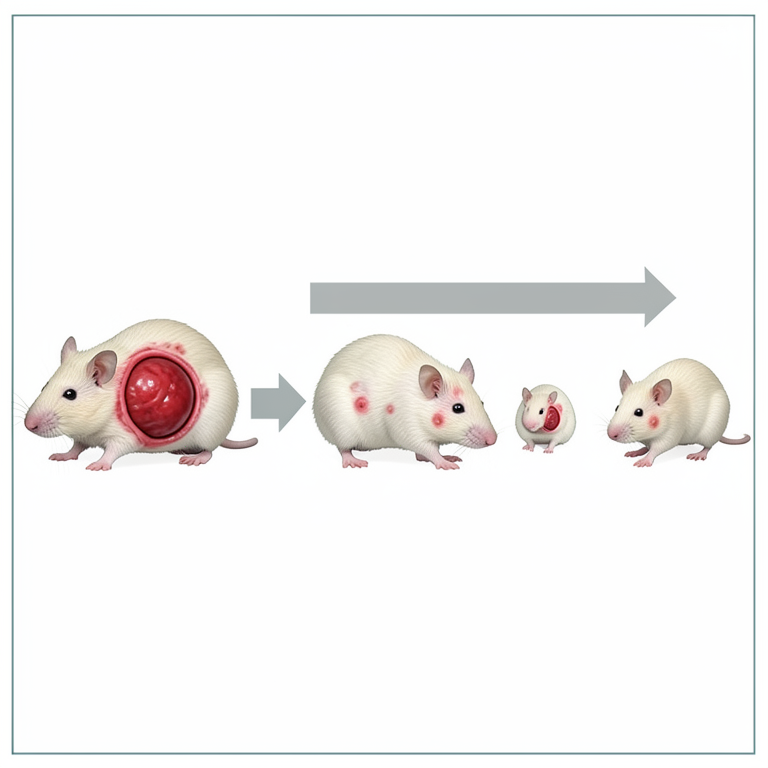
Comparative Anti-inflammatory Efficacy
AI-generated conceptual illustration (Wistar rats with cotton pellet-induced granulomas in the subcutaneous tissue). It explains the idea and does not show study data.
View source evidence ↗Figures & tables
From the original paper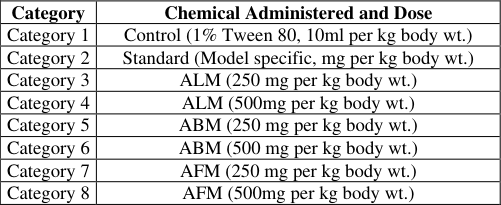 Table 1
 Table 2
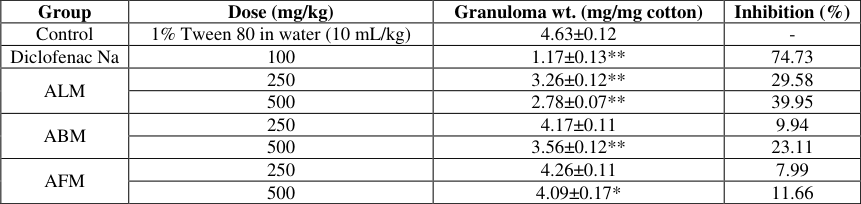 Table 3
Introduction
Inflammation is a disorder including localized rises in white blood cell count and a variety of mediators involving prostaglandins [1] . Diseases of inflammation are considered one of the major life threatening difficulties worldwide and are a main reason of mortality of the labour force across the globe. These are named the "King of Human Miseries" [2] . Disorders of inflammation like rheumatoid arthritis, bronchial asthma, colitis and hepatitis are amid the lead reasons of mortality and disablement in the earth [3][4][5] . Plants have been applied for treating different inflammatory disorders in human beings and animals from past to the present. Acetyl salicylic acid, also known as aspirin, is the most well-known and widely used drug in the world. It is derived from the plant genera Salix and Populus and is related to salicin [6] . About 30% of today's anti-inflammatory medications come from natural sources, either directly or indirectly, and the most potent of them all is aspirin, or acetyl salicylic acid, which is derived from plants. Over 70% are synthetic anti-inflammatory medications [7] . Many NSAIDs and steroidal medications are currently used in clinical settings to treat inflammatory diseases. However, they have serious adverse effects include nephrotoxicity, hepatotoxicity, and peptic ulcers or other gastrointestinal disorders. Many natural antiinflammatory chemicals have been found, however there are still a lot of new, safer natural anti-inflammatory molecules to be found. There is a high need for novel and cutting-edge medications with anti-inflammatory properties. According to current research, chemical variety, and ethnomedical data, plants are a great source of novel bioactive chemicals. Therefore, the goal of the current study is to quantify the anti-inflammatory properties of particular medicinal plants and to identify novel anti-inflammatory components from a powerful Averrhoa bilimbi Linn plant extract. The medicinal plant Averrhoa bilimbi Linn., belonging to the Oxalidaceae family, is also referred to as "Billimbi" or "Cucumber tree."
Due to its possible application in treating inflammatory conditions, the herb is utilized in folk medicine. Various parts of the plant are used for the treatment of inflammatory diseases, cough, cold, syphilis, hypertension, diabetes; piles and scurvy; Whitlows; hepatitis, diarrhoea, pyrexia, beriberi, biliousness, rectal bleeding, internal hemorrhoids, control obesity, itching, pimples, swellings of mumps, rheumatism, eruptions of skin, bites of toxic organism, rectal inflammations, cough and thrush [8][9][10][11][12][13][14][15] . Malaysia and Indonesia's Moluccas are the native land of the plant. All around the world, it is grown in tropical fields. It can be found all over Bangladesh; however, it is most common in Dhaka, Brahmanbaria, Cumilla, and Chattogram. Ascorbic acid, oxalic acid, tannins, and minerals abound in bilimbi fruits. Amino acids, citric acid, cyanidin-3-O-h-D-glucoside, phenolics, potassium ion, sugars, and vitamin A are among the chemical components of A. bilimbi Linn [16] . The plant has been reported to possess analgesic, antioxidant, antimicrobial, anticoagulant, anti-fertility, antimalarial, anthelmintics, cytotoxic, hepatoprotective, hypoglycaemic, hypolipidemic, nephrotoxic, pediculicidal, thrombolytic and wound healing properties . The secondary plant metabolites presence in A. bilimbi include alkaloids, flavonoids, glycosides, steroids, saponins and tannins [40][41][42][43] . Considering the conventional uses and shown potential medicinal characteristics of A. bilimbi, current research was undertaken to investigate its antiinflammatory potential in cotton pellet-induced granuloma in rats.
Materials and Methods
Materials and Methods
Collection and Identification of Sample
In March 2017, the plant was taken from the campuses of the Institute of Health Technology (IHT), located in Mohakhali, Dhaka, and the Central Medical Stores Depot (CMSD), located in Tajgaon, Dhaka. The taxonomist of the Bangladesh National Herbarium, located in Mirpur, Dhaka, Bangladesh, determined the identity of the medicinal plant to be A. bilimbi Linn.
Preparation of Plant Material
Collected leaves, fruits and stem barks were washed and dried. The dried plant materials were then ground into a coarse powder using a grinder. The plant components in powder form were stored in an airtight container with appropriate labeling.
Extraction of Plant Material
The powdered leaves, fruits, and stem barks (500 mg of each portion) of A. bilimbi Linn were each separately soaked in 3L of 95% methanol for seven days before being filtered. A concentrated crude extract was prepared by evaporating the filtrate at a low temperature of 40±2 °C and reducing pressure using a Buchii Rotavapour. Every concentrated extract was preserved for use in future research.
Animals for Experiment
For the experiment, 120-150g Swiss albino rats of either sex were obtained from the Pharmacy Department's animal house at Jahangirnagar University in Savar, Dhaka, Bangladesh. Standard conditions for the experimental animals included a 12-hour light/dark cycle, a temperature of 27.0±1.0°, and a relative humidity of 55-65%. They received an optimal food and unlimited supplies of water.
One week before to the exams, they were acclimated to the lab setting.
Acute Toxicity Test
Acute toxicity is the term used to describe the harmful effects of a chemical that might occur from one dose or several doses within a brief period of time, usually no more than 24 hours. The experimental specimens' LD50 values were determined using an acute toxicity test. The experimental specimens were administered orally to the experimental animals at different doses (0.1, 0.25, 0.5, 1.0, 2.0, 3.0, and 4.0 grams per kilogram body weight). Fatality or toxicity sign or any toxicity test parameter such as general appearance, activity, movement, stimulus response (sound, touch, light), lacrimation, salivation, piloerection, irritability, sedation, paw licking, convulsion etc. were observed for 1 hr, after administration of the test samples. The experimental animals were then watched every hour for the next five to six hours. Again the experimental animals were observed for one week [44] .
Design for Experiment
Eight categories, each with five animals, were created from the experimental animals (Table 1). For the administration of all dosages, the oral route is selected.
| Category | Chemical Administered and Dose |
|---|---|
| Category 1 | Control (1% Tween 80, 10ml per kg body wt.) |
| Category 2 | Standard (Model specific, mg per kg body wt.) |
| Category 3 | ALM (250 mg per kg body wt.) |
| Category 4 | ALM (500mg per kg body wt.) |
| Category 5 | ABM (250 mg per kg body wt.) |
| Category 6 | ABM (500 mg per kg body wt.) |
| Category 7 | AFM (250 mg per kg body wt.) |
| Category 8 | AFM (500mg per kg body wt.) |
Table text extracted from the original PDF; superscript letters are shown inline. The original table image is below.
View original table image
Animals Identification during Experiment
The test animals were divided into eight groups, each with five animals, making it challenging to recognize and observe one at a time. During the test, it is therefore crucial to identify a specific species within a category. The test animals were identified by their tail numbers, which were I, II, III, IIII, and none (for number five).
Cotton Pellet Induced Granuloma Model for Chronic Inflammation
Cotton pellet induced granuloma model is a technique for chronic inflammation 45 . Two sterile pellets of cotton (each weight10 ± 1mg) were aseptically implanted in subcutaneous route in the interscapular distance of the dorsal region of rats which were anaesthetized by Ketamine. Various categories of rats were treated with abovementioned experimental design chemical and doses (Table 1). From the day of pellet implantation the experimental chemical was given orally once daily for consecutive 7 days.
Here, standard category was taken Diclofenac (100 mg/kg, p.o.) and control category was taken vehicle (aqua, 10 ml/kg, p.o.). The experimental animals were immolated on the eighth day and the pellets of cotton were withdrawn and dried-up at 60 °C for a period of 24 hours. Weight was taken from both moist and dry cotton pellets. The difference between weight of dry cotton and cotton prior insertion was
thought as granuloma weight.
The percentage (%) inhibition of granuloma formation was estimated as follows:
Phytochemical screening of crude extract
The methanolic extracts of A. bilimbi Linn leaf, bark, and fruit were screened for different phytochemical constituents using standard screening assays following traditional phytochemical screening protocols like Alkaloids by Mayer's, Hager's and Dragendorff's reagent; Flavonoid (Shinoda test); Steroids (Salkowski'sTest); Tannin (Ferric chloride test) [46][47] .
Statistical Analysis
Statistical analysis for animal tests was completed by Independent-Sample T Test. The achieved results were compared with the vehicle control category and expressed as mean ± SEM. p values < 0.05, 0.01 and 0.001 were thought to be statistically important.
Results
Results
Phytochemical Screening
The different extracts of A. bilimbi were tested for preliminary plant constituents screening to find out the presence of different plant constituents are mentioned in table 2.
| Extract | Alkaloid | — | — | Steroids (Salkowski’s Test) | Tannin (Ferric chloride test) | Flavonoids (Shinoda test) | Saponin (Frothing test) |
|---|---|---|---|---|---|---|---|
| Mayer’s Test | Hager’s Test | Dragendorff’s Test | |||||
| ALM | + | + | + | + | + | + | + |
| ABM | + | + | + | + | + | + | + |
| AFM | - | - | - | - | + | + | + |
Table text extracted from the original PDF; superscript letters are shown inline. The original table image is below.
View original table image
Acute Toxicity Test
From this toxicity test no lethality or toxic sigh was found until 4000 mg/kg dose of all extracts during the period of the study (observation 7 days). In addition, no weight-loss, change of pellet consumption or visceral change (macroscopic) of treated animals were detected. The acute toxicity results were same for all extracts and doses. The methanolic extracts of A. bilimbi were thought to be safe with wide therapeutic range because median lethal dose (LD 50 ) was not found in this study. So, 250 mg/kg and 500 mg/kg dose of extracts were chosen for each in-vivo test models.
Cotton Pellet Induced Granuloma Formation
The methanolic extracts of the A. bilimbi were tested to estimate chronic antiinflammatory activity using Diclofenac as reference standard. The methanolic extracts of A. bilimbi inhibited granuloma formation which dependent on dose of extracts. It is notable from table 3, that methanolic extract of A. bilimbi leaf (250 mg/kg and 500 mg/kg) and bark (500 mg/kg) and diclofenac sodium presented significant (p<0.001) action in inhibiting granuloma formation. The A. bilimbi leaf methanolic extract (ALM) given at 500 mg/kg orally had a greater anti-granuloma (39.95%) action but lower than diclofenac sodium (74.73%). Granuloma inhibition activity decreased in the following order: Diclofenac sodium>ALM> ABM>AFM (Table 3).
| Group | Dose (mg/kg) | Granuloma wt. (mg/mg cotton) | Inhibition (%) |
|---|---|---|---|
| Control | 1% Tween 80 in water (10 mL/kg) | 4.63±0.12 | - |
| Diclofenac Na | 100 | 1.17±0.13** | 74.73 |
| ALM | 250 | 3.26±0.12** | 29.58 |
| 500 | 2.78±0.07** | 39.95 | |
| ABM | 250 | 4.17±0.11 | 9.94 |
| 500 | 3.56±0.12** | 23.11 | |
| AFM | 250 | 4.26±0.11 | 7.99 |
| 500 | 4.09±0.17* | 11.66 |
Table text extracted from the original PDF; superscript letters are shown inline. The original table image is below.
View original table image
Discussion
The crude methanolic extracts of A. bilimbi Linn leaf, bark, and fruit were subjected to different qualitative tests to identify the appearance of plant constituents and in-vivo pharmacologic research to assess their toxicity and antiinflammatory actions.
Various extracts of A. bilimbi have many phytochemical compounds such as alkaloid, glycosides, steroids, tannins and saponin. No alkaloid and steroid were detected in methanolic fruits extract. The phytochemical compounds appeared in the extracts may responsible for their diverse pharmacologic actions demonstrated in other in-vivo and invitro investigation [47] . Cotton pellet-induced granuloma is commonly used to evaluate the transudative and proliferative element of chronic inflammation [45] . So, Cotton pellet-induced granuloma model was used to measure the antiinflammatory action in chronic inflammation. Chronic inflammatory response mediated by subcutaneous implantation of cotton pellet are divided in to 3 phases: 1) transudative phase, happens during first 3 hr; 2) exudative phase, happening within 3 to 72 hr following implantation of pellets of cotton; 3) proliferative phase, estimated as the rise in dry granuloma weight that occurs within 3 to 6 days following implanting pellet [48] . Furthermore, inflammatory response is induced by implanted cotton pellet and inflammatory mediator release is also regulated by implanted materials that eventually generate tissue proliferation and granular production [49][50] . The inhibition of proliferative phase of chronic inflammation could result in reduce in the weight of granuloma formation. It is noted from current reports that NSAIDs viz acetyl salicylic acid reveal a little suppression contrariwise steroidal antiinflammation drugs have a powerful suppression on both transudative and proliferative phase of inflammation [51] .
The methanolic extracts of A. bilimbi showed a dose dependent suppression of granuloma production. Granuloma formation was most significantly reduced (p<0.001) by 250 mg/kg and 500 mg/kg oral doses of A. bilimbi leaf methanolic extract (ALM). The A. bilimbi bark methanolic extract (ABM) also exhibited most significant (p<0.001) result only at high dose 500 mg/kg orally. Fruit extract demonstrated significant result (p<0.05) at dose 500 mg/kg orally. Diclofenac, a nonsteroidal anti-inflammatory drug, exhibited high significant (p<0.001) inhibition (74.73%).
From the aforementioned investigation it is clear that methanolic extracts of A. bilimbi have anti proliferative action but lower than that of the standard drug.
Conclusion
In the current study, methanolic extracts exhibited significant anti-inflammatory potential representing that the plant extracts are biologically active. Methanolic crude extracts of various parts of the A. bilimbi were used to cotton pellet-induced granuloma formation test for probable anti-inflammatory action. In this experiment, leaf and bark methanolic extracts exhibited most significant antiinflammatory actions 39.95% and 23.11% respectively at the dose of 500 mg/kg while standard anti-inflammatory drug Diclofenac sodium showed 74.73% inhibition of edema with a dose of 100 mg/kg. On the other hand, fruits methanolic extract showed 11.66% reduction of weight of cotton pellet granuloma at the dose of 500 mg/kg. The current research finding supports the conventional claims and gives a scientific basis for anti-inflammatory action of A. in inflammatory disorders.
Acknowledgement
AcknowledgementsThe authors would like to acknowledge the University Grants Commission of Bangladesh for UGC PhD Fellowship; Pharmacology Laboratories, Department of Pharmacy, Jahangirnagar University for the use of their research facilities.
References
51 in the original paper- Mantri P, Witiak DT. Inhibition of cyclooxygenase and 5-lipoxygenase. Current Medicinal Chemistry. 1994;1:328-355.
- Chatterjee GK, Pal SP. Search for anti-inflammatory agents from Indian medicinal plants: a review. Indian Drugs. 1984;21:413-419.
- Cirino G, Fiorucci S, Sessa WC. Endothelial nitric oxide synthase: the Cinderella of inflammation. Trends in Pharmacological Sciences. 2003;24:91-102.
- Jiang Q, Ames BN. γ-Tocopherol, but not α-tocopherol, decreases pro-inflammatory eicosanoids and inflammation damage in rats. The FASEB Journal. 2003;17:816-822.
- Emery P. Treatment of rheumatoid arthritis. British Medical Journal. 2006;332:152-155.
- Strobel G, Daisy B, Castillo U, Harper J. Natural products from endophytic microorganisms. Journal of Natural Products. 2004;67(2):257-268.
- Cragg GM, Newman DJ, Snader KM. Natural products in drug discovery and development. Journal of Natural Products. 1997;60:52-60.
- Alhassan AM, Ahmed QU. Averrhoa bilimbi Linn.: a review of its ethnomedicinal uses, phytochemistry, and pharmacology. Journal of Pharmacy and Bioallied Sciences. 2016;8:265-271.
- Yusuf M, Chowdhury JU, Wahab MA, Bejom J. Medicinal Plants of Bangladesh. 1st ed. Chittagong: BCSIR Laboratories; 1994. p.31.
- Jayaweera DMA. Medicinal Plants (Indigenous and Exotic) Used in Ceylon. Part IV. Colombo: The National Science Council of Sri Lanka; 1982. p.166167.
- Kirtikar KR, Basu BD. Indian Medicinal Plants. Vol. 1. 2nd ed. Dehradun: International Book Distributors; 1935. p.443.
- Das SC, Sultana S, Roy S, Hassan SS. Antibacterial and cytotoxic activities of methanolic extracts of leaf and fruit parts of the plant Averrhoa bilimbi (Oxalidaceae). American Journal of Scientific and Industrial Research. 2011;2:531-536.
- Morton J. Fruits of Warm Climates. Miami, FL: Selfpublished; 1987. p.128-129.
- Abas F, Lajis NH, Israf DA, Khozirah S, Kalsom YU. Antioxidant and nitric oxide inhibition activities of selected Malay traditional vegetables. Food Chemistry. 2006;95:566-573.
- Chauhan JB, Kapfo W. Effect of traditional sun-drying on phenolic antioxidants of Averrhoa bilimbi Linn. International Journal of Applied Biology and Pharmaceutical Technology. 2013;4(2):26-34.
- Roy A, Geetha RV, Lakshmi T. Averrhoa bilimbi Linn. -nature's drug store: a pharmacological review. International Journal of Drug Development and Research. 2011;3(3):101-106.
- Sarker MAM, Chowdhury AYSFUA. Analgesic effect of methanolic extracts of leaf, bark and fruit of Averrhoa bilimbi Linn. Bangladesh Medical Research Council Bulletin. 2022;48:120-126.
- Sarker MAM, Chowdhury AYSFUA. Estimation of total phenolic content and antioxidant activity of methanolic extracts of leaf, bark and fruit of Averrhoa bilimbi Linn. Bangladesh Medical Research Council Bulletin. 2024;50:9-13.
- Zakaria ZA, Zaiton H, Henie EPH, Mat Jais AM, Engku Zainuddin ENH. In vitro antibacterial activity of Averrhoa bilimbi leaves and fruits extracts. International Journal of Tropical Medicine. 2007;2(3):96-100.
- Wahab NHBA, Wahid MEBA, Taib MB, Zain WZBWM, Anwar SAB. Phytochemical screening and antimicrobial efficacy of extracts from Averrhoa International Journal of Biology Sciences https://www.biologyjournal.net bilimbi (Oxalidaceae) fruits against human pathogenic bacteria. Pharmacognosy Journal. 2009;1(1):64-66.
- Aziz MA, Rahman S, Islam M, Begum AA. Comparative antimicrobial screening and cytotoxic potential of various extracts of leaves of Averrhoa bilimbi. International Journal of Pharmaceutical Sciences and Research. 2014;5(3):913-918.
- Mokhtar SI, Aziz NAA. Antimicrobial properties of Averrhoa bilimbi extracts at different maturity stages. Journal of Medical Microbiology and Diagnosis. 2016;5:233. doi:10.4172/2161-0703.1000233
- Daud N, Hashim H, Samsulrizal N. Anticoagulant activity of Averrhoa bilimbi Linn. in normal and alloxan-induced diabetic rats. Open Conference Proceedings Journal. 2013;4(Suppl-2, M6):21-26.
- Herrera CL, Cuasay PM, Ramos EV, Chavez EP, Dayap LA, Rabang BC. Preliminary studies on the antifertility activity of Averrhoa bilimbi Linn. Philippine Journal of Science. 1986;115(4):307-315.
- Mulia EPB, Tantular IS, Mughni A. In vitro antimalarial activity of belimbing wuluh (Averrhoa bilimbi) leaves extract on Plasmodium falciparum. Folia Medica Indonesiana. 2012;48(3):96-101.
- Chauhan JB. In vitro comparative study of bilimbi and star fruit extracts for anthelmintic activity. Discovery Biotechnology. 2015;6(15):5-8.
- Ali MR, Hossain M, Runa JF, Hasanuzzaman M. Preliminary cytotoxic activity of different extracts of Averrhoa bilimbi (fruits). International Current Pharmaceutical Journal. 2013;2(3):83-84.
- Nagmoti DM, Yeshwante SB, Wankhede SS, Juvekar AR. Hepatoprotective effect of Averrhoa bilimbi Linn. against carbon tetrachloride-induced hepatic damage in rats. Pharmacologyonline. 2010;3:1-6.
- Tan BKH, Tan CH, Pushparaj PN. Anti-diabetic activity of the semi-purified fractions of Averrhoa bilimbi in high fat diet fed-streptozotocin-induced diabetes rats. Life Sciences. 2005;76(24):2827-2839.
- Ambili S, Subramoniam A, Nagarajan NS. Studies on the antihyperlipidemic properties of Averrhoa bilimbi fruit in rats. Planta Medica. 2009;75(1):55-58.
- Pattamadilok D, Niumsakul S, Limpeanchob N, Ingkaninan K, Wongsinkongman P. Screening of cholesterol uptake inhibitor from Thai medicinal plant extracts. Journal of Thai Traditional and Alternative Medicine. 2010;8(2-3):146-151.
- Bipat R, Toelsie JR, Joemmanbaks RF, Gummels JM, Klaverweide J, Jhanjan N, et al. Effects of plants popularly used against hypertension on norepinephrinestimulated guinea pig atria. Pharmacognosy Magazine. 2008;4(13):12-19.
- Hernani, Winarti C, Marwati T. Effect of bilimbi leaf extracts on decrease blood pressure. J Pascapanen. 2009;6(1):54-61.
- Bakul G, Unni VN, Seethaleksmy NV, Mathew A, Rajesh R, Kurien G, et al. Acute oxalate nephropathy due to Averrhoa bilimbi fruit juice ingestion. Indian Journal of Nephrology. 2013;23(4):297-300.
- Nair S, George J, Kumar S, Gracious N. Acute oxalate nephropathy following ingestion of Averrhoa bilimbi juice. Case Reports in Nephrology. 2014;2014:240936.
- Rassami W, Soonwera M. In vitro pediculicidal activity of herbal shampoo base on Thai local plants against head louse (Pediculus humanus capitis De Geer). Parasitology Research. 2013;112(4):1411-1416. doi:10.1007/s00436-013-3292-8.
- Ali R, Hossain M, Runa JF, Hasanuzzaman M, Islam M. Evaluation of thrombolytic potential of three medicinal plants available in Bangladesh, as a potent source of thrombolytic compounds. Avicenna Journal of Phytomedicine. 2014;4(6):430-436.
- Mannan MM, Akhter R, Shahriar M, Bhuiyan MA. Evaluation of in vitro membrane stabilizing activity and thrombolytic activity of Averrhoa bilimbi leaf extracts. International Journal of Pharmacy. 2015;5(2):357-360.
- Hartini IGAA. Topical application of ethanol extract of starfruit leaves (Averrhoa bilimbi Linn.) increases fibroblasts in gingival wounds healing of white male rats. Indonesian Journal of Biomedical Sciences. 2012;6(1):35-39.
- Karon B, Ibrahim M, Mahmood A, Huq AKMM, Chowdhury MMU, Hossain MAH, Rashid MA. Preliminary antimicrobial, cytotoxic and chemical investigations of Averrhoa bilimbi Linn. and Zizyphus mauritiana Lam. Bangladesh Pharmaceutical Journal. 2011;14(2):127-131.
- Patil AG, Koli SP, Patil DA. Pharmacognostical standardization and HPTLC fingerprint of Averrhoa bilimbi (L.) fruits. Journal of Pharmacy Research. 2013;6:145-150.
- Chowdhury SS, Uddin GM, Mumtahana N, Hossain M, Hasan SMR. In-vitro antioxidant and cytotoxic potential of hydromethanolic extract of Averrhoa bilimbi Linn. fruits. International Journal of Pharmaceutical Sciences and Research. 2012;3(7):2263-2268.
- Siddique KI, Uddin MMN, Islam MS, Parvin S, Shahriar M. Phytochemical screenings, thrombolytic activity and antimicrobial properties of the bark extracts of Averrhoa bilimbi. Journal of Applied Pharmaceutical Science. 2013;3(3):94-96.
- Walum E. Acute oral toxicity. Environmental Health Perspectives. 1998;106(2):497-503.
- Winter CA, Porter CC. Effect of alterations in the side chain upon anti-inflammatory and liver glycogen activities of hydrocortisone esters. Journal of the American Pharmaceutical Association. 1957;46:515519.
- Trease GE, Evans WC. Pharmacognosy. 15th ed. London: Saunders Publishers; 2002.
- Ghani A. Medicinal Plants of Bangladesh. 2nd ed. Dhaka: The Asiatic Society of Bangladesh; 2003. p.115-116.
- Vittalrao AM, Shanbhag T, Kumari KM, Bairy KL, Shenoy S. Evaluation of anti-inflammatory and analgesic activities of alcoholic extract of Kaempferia galanga in rats. Indian Journal of Physiology and Pharmacology. 2011;55(1):13-24.
- Remes A, Williams DF. Immune response in biocompatibility. Biomaterials. 1992;13:731-743.
- Tang L, Eaton JW. Inflammatory responses to biomaterials. American Journal of Clinical Pathology. 1995;103:466-471.
- Swingle KF, Shideman FE. Phases of the inflammatory response to subcutaneous implantation of cotton pellet and their modification by certain anti-inflammatory agents. Journal of Pharmacology and Experimental Therapeutics. 1972;183(1):226-234.