
Research article · 2025 · Full text
International Journal of Biology SciencesPhytochemical analysis of Semecarpus Anacardium plant from Washim district
Volume 7(6) · Pages 117–120 · DOI: 10.33545/26649926.2025.v7.i6b.366 ↗
Research areasGinkgo biloba and Cashew ApplicationsNatural Antidiabetic Agents StudiesEthnobotanical and Medicinal Plants Studies
Abstract
Author-writtenThe present research work is conducted in order to search the qualitative analysis of the plant material of Semecarpus anacardium. Qualitative phytochemical evaluation was carried out to test the presence of alkaloids, flavonoids,carbohydrete, tannin, saponin, amino acid and phenol, glycoside in the methanol, petroleum ether and acetone extracts of plant material using msoxhlet extraction methods. The present effort is targeted on the evaluation of the phytochemicals.
Summary
Source-checkedPlain-language reading of the full paper, prepared with AI and checked against the text. Each point links to the authors' own words.
Why it matters
- There is a high demand for standardized herbal extracts and phytochemicals for both commercial applications and applied research. View evidence ↗
- Identifying biologically active compounds is necessary to ensure quality control and determine the correct dosage for plant-based medications. View evidence ↗
- Semecarpus anacardium is a deciduous tree that typically grows to a height of 12-15 meters and a girth of 1.25 meters. View evidence ↗
The question
- The study aims to perform a qualitative phytochemical analysis of the plant material from Semecarpus anacardium. View evidence ↗
What they did
- Fresh plant material was collected from various locations within the Washim district of Maharashtra, India. View evidence ↗
- The extraction process used 10 grams of plant powder in 250 ml of either methanol, petroleum ether, or acetone. View evidence ↗
- Soxhlet extraction was employed until the solvent became dark and the powder extract lost its color. View evidence ↗
- The researchers tested for the presence of alkaloids, flavonoids, carbohydrates, tannins, saponins, amino acids, phenols, and glycosides. View evidence ↗
What they found
- The methanol extract of the leaves tested positive for alkaloids, flavonoids, carbohydrates, glycosides, and phenols, but negative for all other metabolites. View evidence ↗
- The petroleum ether extract of the leaves tested positive for alkaloids, flavonoids, glycosides, and amino acids, while testing negative for others. View evidence ↗
- The acetone extract of the leaves tested positive for alkaloids, tannins, saponins, phenols, and amino acids. View evidence ↗
- The methanol extract of the stem tested positive for alkaloids, tannins, saponins, phenols, and amino acids. View evidence ↗
- The petroleum ether extract of the stem tested positive for alkaloids, saponins, phenols, carbohydrates, and glycosides. View evidence ↗
- The acetone extract of the stem tested positive for alkaloids, tannins, saponins, phenols, and glycosides. View evidence ↗
What it means
- The authors conclude that extracts using methanol, petroleum ether, and acetone show potential for various medicinal properties. View evidence ↗
- The plant is well-adapted to the Washim district and possesses good export potential for its extracted phytochemical constituents. View evidence ↗
Visual summary
1 visualsIllustrations explain the paper; they do not show study data.
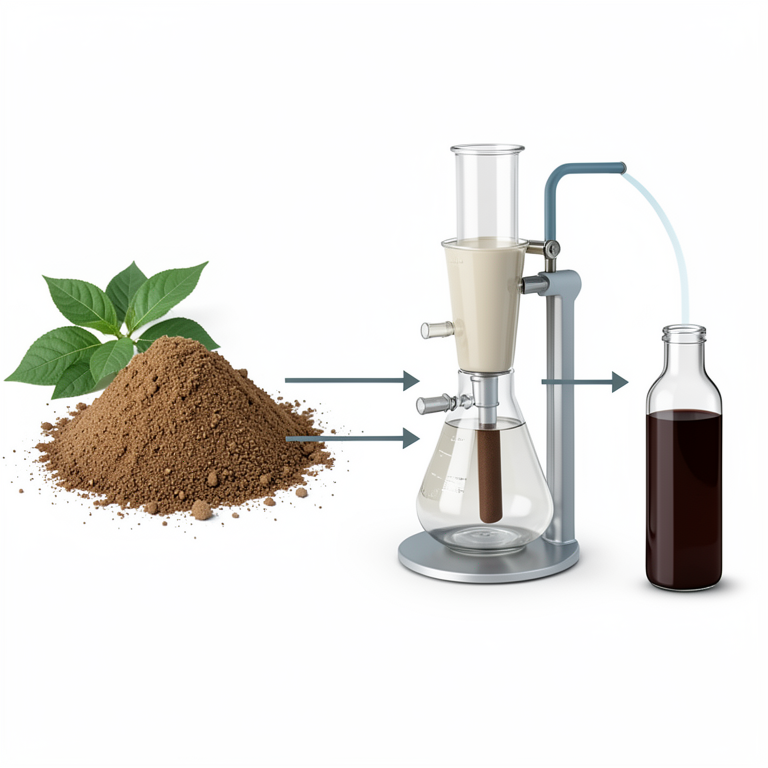
Extraction Process Flow
AI-generated conceptual illustration (Semecarpus anacardium plant leaves and a Soxhlet extraction apparatus). It explains the idea and does not show study data.
View source evidence ↗Figures & tables
From the original paper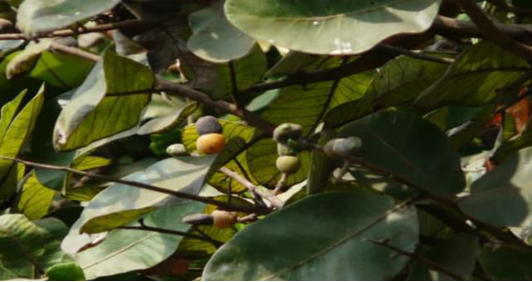 Figure 1
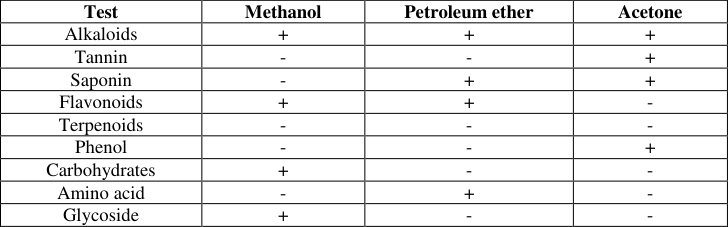 Table 1
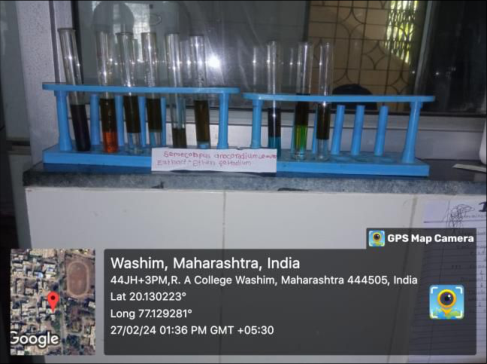 Figure 2
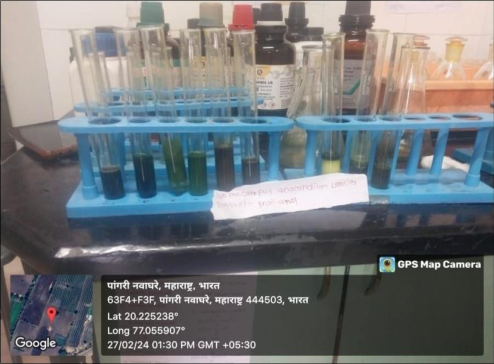 Figure 2
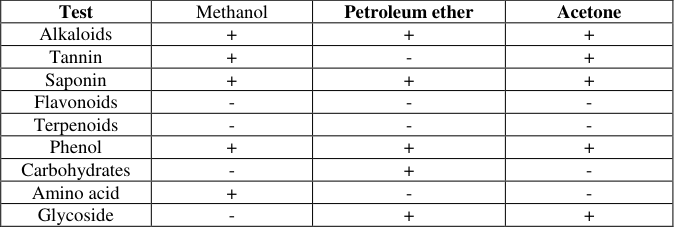 Table 2
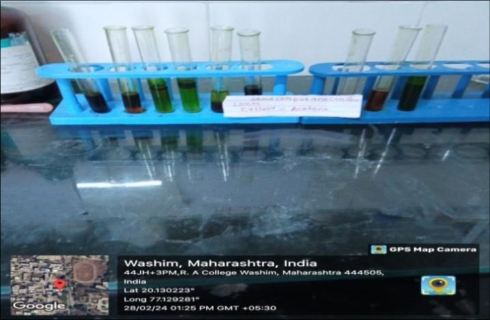 Figure 4
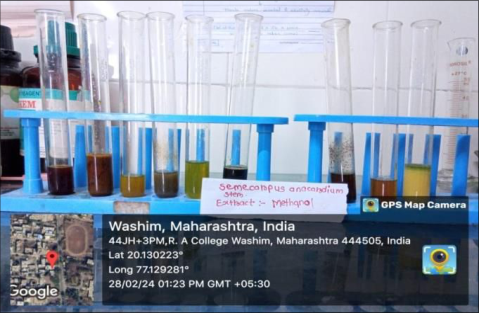 Figure 5
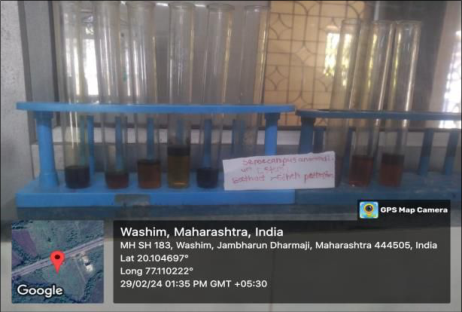 Figure 5
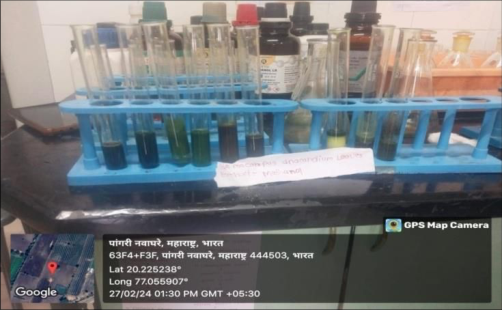 Figure 6
Introduction
Phytochemistry is defined as the study of chemical composition of medicinal plants or phytodrugs. Today we are witnessing a rapid growth of herbal drug industry and this growth story is accompanied by search of new herbal drugs. Standardized herbal extracts and phytochemicals are in huge demand for applied research as well as for commercial use. The identification of biologically active compounds is an essential requirement for quality control and dose determination of plant based drugs. The phytochemical analysis of the methanolic extracts of leaves of revealed the presence of flavonoids, alkaloids, steroids, phenols, carbohydrates and anthraquinones. While they belated other chemical compound such as tannins, saponins, terpenoids, amino acids and phytosterols Semecarpus anacardium is a moderately sized deciduous tree, reaching upto height of 12-15. Meter and girth of 1.25 meter. Bark is rough, dark brown in color. Leaves are large, simple, obviate-oblong and 9.0-30.0 cm long. Curvaceous covered with five pale pubescence. Plant is distributed in the various parts of Washim District Maharastrra. The tree is not found under cultivation but is common in forests often found occurring with soil climate and soil making nut tree is common throughout the hotters parts of India. Semi-arid climatic condition and light to medium gravelly soils with good drainage are most suitable for raising the plantation. Propagation material plant is propagated by seeds. The seed viability is 6 months. Lakhey, P. and Pathak, J (2021) [2] . In the present work of phytochemical analysis were carried out in to plant that is Semecarpus anacardium.
Material and Method
Collection of fresh plant material of Semecarpus anacardium is collected from different parts of Washim districit, maharashtra, India. It commonly occur in non cultivated land along Place with road side shady moist and material washed under tap water for 2-3 times to remove soil Particles and dust. The plant material Shaded for 12 days after drying Plant material grinded into fine powder and then transfer indo airtight container with proper labeling for further use. Qualitative phytochemical analysis of leaves and stem of Semecarpus anacardium.
Preparation of Solvent Extract: Shaded dreid leaves were used for prepration of powder with electric blender. These powder were stored in plastic container for further use. Around 10gm powder used for extraction in 250 ml methanol, petrolium ether and acetone solvent. Vijayalakshmi et al., (2012) [3] . The extraction was done by soxhlet extraction techniques till dark colouration of the solvent and discolouration of powder extract.
Test for Alkaloids
Wagner's test: Add 2 ml Wagner's reagent reddish brown pot was formed. Test for Tannins: Take sample extract test tube. Add solution of potassium dichromate yellow pot was formed detect presence of tannin Test for Saponins (foam test): A small quantity of the sample was taken in a test tube. Add amount of sodium bicarbonate honeycomb like foam formation absence. Detect the presence of Saponins. Test for Flavonoids: Take a sample extract in test tube. Add 5-10 drops of hydrochloric acid. Add small pieces of magnesium dichromate in test tube or lead acetate test (yellow). Test for Terpenoids: Extract was mix in 2ml of chloroform and concentration H2SO4 Formation of reddish brown coloration. Test for Phenol: Take equal volume of sample extract of add 5% frrrice chloride appereance of dark green of bluish green colour.
Test for Carbohydrates
Benedict's test: Take a small amount of plant extract in test tube add small quantity of a Benedict's solution and mix properly then boil the sample for 2 minute and cool it red pot format then presence of carbohydrate detected.
Test for Amino acid Millions test:
A small quantity of test sample was taken in a test tube at 3ml millions reagent the white pot change into pink colour. Test for Glycosides: To know volume of extract 0.5ml of Benzene and dilute ammonia solution was added and formation of Green and blue colour.
Figures and tables from the paper
| Test | Methanol | Petroleum ether | Acetone |
|---|---|---|---|
| Alkaloids | + | + | + |
| Tannin | - | - | + |
| Saponin | - | + | + |
| Flavonoids | + | + | - |
| Terpenoids | - | - | - |
| Phenol | - | - | + |
| Carbohydrates | + | - | - |
| Amino acid | - | + | - |
| Glycoside | + | - | - |
Table text extracted from the original PDF; superscript letters are shown inline. The original table image is below.
View original table image
| Test | Methanol | Petroleum ether | Acetone |
|---|---|---|---|
| Alkaloids | + | + | + |
| Tannin | + | - | + |
| Saponin | + | + | + |
| Flavonoids | - | - | - |
| Terpenoids | - | - | - |
| Phenol | + | + | + |
| Carbohydrates | - | + | - |
| Amino acid | + | - | - |
| Glycoside | - | + | + |
Table text extracted from the original PDF; superscript letters are shown inline. The original table image is below.
View original table image
References
10 in the original paper- P. Ganesan, Chandini S. Kumar, N. Bhaskar (2008) Antioxidant properties of methanol extract and its solvent fractions obtained from selected Indian red seaweeds. Bioresource Technology 99, 2717-2723.
- Lakhey, P. &Pathak, J. (2021). "Semecarpus anacardium". IUCN Red List of Threatened Species. 2021: e.T149846198A149853817. Retrieved 23 January 2023.
- Vijayalakshmi A, Ravichandiran V, Malarkodi V, Nirmala S, Jayakumari S. Screening of flavanoids "quercetin" from the rhizome of Smilax china Linn. for anti-psoriatic activity, Asian Pacific Journal of Tropical Biomedicine, 2012, 269-275.
- Singh R, Kakkar A, Mishra VK. Anti-tuberculosis activity and GCMS analysis of water extract of Semecarpus anacardium nuts. Der PharmaChemica. 2015; 7(2): 278-285.
- Upreti S, Anam MS, Rajendra SV, Das K, Dang R. Semecarpus anacardium-a wonderful plant with varied medicinal properties. Pharm Res. 2016; 15(4): 162-173.
- Joseph JP, Raval SK, Sadariya KA, Jhala M, Kumar P. Anti-cancerous efficacy of ayurvedic milk extract of Semecarpus anacardium nuts on hepatocellular carcinoma in wistar rats. Afr J Tradit Complement Altern Med. 2013; 10(5): 299-304.
- Venkatrao PU. A toxicological review of bhallataka (Semecarpus anacardium Linn). IntAyurvedic med j. 2015; 3(12): 2320-5091.
- Sahoo AK, Narayanana N, Sahanaa S, Rajanb SS, Mukherjee PK. In vitro antioxidant potential of Semecarpus anacardium L. Pharmacologyonline. 2008; 3: 327-335.
- Bhitre MJ, Patil S, Kataria M, Anwikar S, Kadri H. Antiinflammatory activity of the fruits of Semecarpus anacardium Linn. Asian J Chem. 2008;20:2047-2050.
- Solankar BM, Kadam RM, Mulani RM and Nandedkar PH. Phytochemical and antioxidant evaluation of leaves extracts of Semecarpus anacardium L The Pharma Innovation Journal 2018; 7(5): 602-606.