
Research article · 2025 · Full text
International Journal of Biology SciencesFormulation of herbal mosquito incense sticks by using Polianthes tuberosa (tuberose), Tagetes (marigold) and Petunia atkinsiana (Petunia) flowers oil
Volume 7(6) · Pages 95–98 · DOI: 10.33545/26649926.2025.v7.i6b.360 ↗
Research areasInsect Pest Control StrategiesAgricultural Practices and Plant Genetics
Abstract
Author-writtenThe present research was carried out to reduce harmful effects of chemical mosquito repellent products by developing natural mosquito repellent incense sticks. Herbal plants are safe and eco friendly to use for making mosquito repellent products. Tagetes (marigold), Petunia atkinsiana (Petunia), Polianthes tuberosa (tuberose) flowers and Azadirachta indica (Neem) oil was used. The plant material was collected and kept for shade drying. Oil was extracted from the marigold, petunia and tuberose flowers. Neem leaves oil was extracted and used as base oil for preparation of mosquito repellent incense sticks of marigold, petunia and tuberose. Different tests were performed to check the results of herbal mosquito repellent incense sticks. Marigold and petunia shown higher effects in repellency. Tuberose also shown high effects in mosquito repellency. However, the present study shown that there were no side effects caused by this herbal incense sticks.
Summary
Source-checkedPlain-language reading of the full paper, prepared with AI and checked against the text. Each point links to the authors' own words.
Why it matters
- Controlling mosquitoes is critical due to the increasing prevalence of mosquito-borne diseases. View evidence ↗
- Some commercial mosquito repellents containing DEET can cause health issues, including breathing disorders and skin allergies. View evidence ↗
- Repellents derived from natural sources are considered advantageous compared to synthetic alternatives. View evidence ↗
The question
- The study aimed to develop natural mosquito repellent incense sticks to reduce the harmful effects associated with chemical products. View evidence ↗
What they did
- The researchers used oils from marigold, petunia, tuberose flowers, and neem. View evidence ↗
- Neem oil was extracted using a soxhlet apparatus with ethanol, methanol, and acetone as solvents. View evidence ↗
- The incense sticks were formulated using a paste consisting of 30% wood powder, 10% flower oil (e.g., petunia), and 5% neem oil in boiling water. View evidence ↗
- The formulation included 20% starch powder added to 60ml of boiling tap water. View evidence ↗
- Repellency was tested in the evening and night at home, surrounding corners, and college/department areas. View evidence ↗
What they found
- The Petunia atkinsiana and neem oil formulation had the longest burning time at 1 hour and 10 minutes. View evidence ↗
- The Polianthes tuberosa and neem oil formulation had a burning time of 1 hour and 3 minutes. View evidence ↗
- The Tagetes and neem oil formulation had a burning time of 1 hour and 5 minutes. View evidence ↗
- Tests at home and surrounding corners showed that mosquitoes were repelled without causing irritation. View evidence ↗
- Marigold (Tagetes) and Petunia sticks were found to be more effective repellents than Tuberose (Polianthes tuberosa) sticks. View evidence ↗
- All three formulations (Tagetes, Polianthes tuberosa, and Petunia atkinsiana) resulted in sticks with 'strong' physical strength. View evidence ↗
What it means
- The authors concluded that Tagetes and Petunia atkinsiana sticks exhibited the strongest mosquito repellent activity. View evidence ↗
- The authors state that the formulation is an eco-friendly, inexpensive, and easy-to-use method that repels mosquitoes without side effects. View evidence ↗
Visual summary
1 visualsIllustrations explain the paper; they do not show study data.
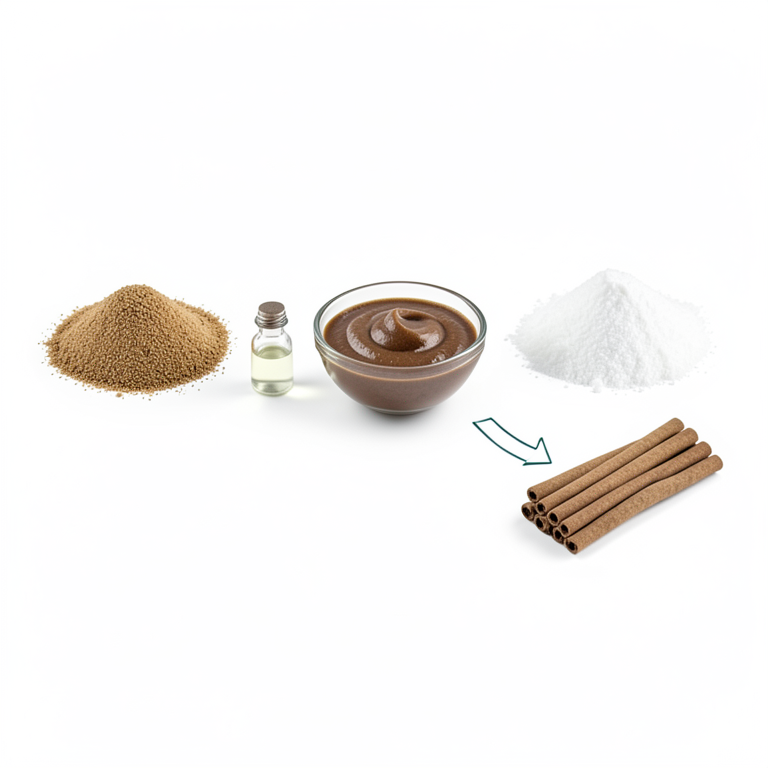
Incense Stick Composition
AI-generated conceptual illustration (Herbal mosquito incense sticks made from tuberose, marigold, and petunia flower oils). It explains the idea and does not show study data.
View source evidence ↗Figures & tables
From the original paper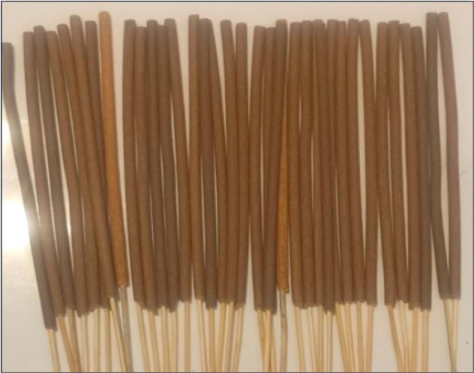 Figure 1
 Table 1
 Table 2
 Table 3
Introduction
Bio based mosquito repellents are pest management tools that are based on safe, biologically based active ingredients derived from plants. Benefits of bio-products include effective control of mosquito as well as human and environmental safety. The attraction of mosquitoes towards human beings is due to the lactic acid and CO 2 which is present in our sweat. The chemoreceptors present in the antennae of mosquitoes perceive the smell of the sweat. The role of natural mosquito repellent is to mask human scent. Controlling mosquitoes is of utmost important in the present day scenario with rising number of mosquito borne diseases (Shukla, et al;2017) [6] . There are various marketed preparation available such as cream, citronella oil, DEET and other products but some of those marketed products increases the demand of herbal content repellent because hazardous content in mosquito repellent such as DEET may cause skin allergy, breathing-related disorders and other health disorders. The repellent made from natural sources has the advantages over a synthesis repellent. The repellent stick has advantages such as: economically effective, easily formulated and maintained, least mechanical equipment, hard work and skill, fast responses, reducing bad smells in the environment, disease-causing bacteria and viruses (Bobde et al; 2023) [4] . A mosquito repellent is a substance that deters mosquitoes from approaching or settling. Repellents are formulated for use on bare skin. They are sold as aerosols, creams, solids (sticks), pump sprays and liquids. Nowadays majority of serious diseases or infections are caused by mosquitoes mainly female anopheles mosquito like Malaria, Dengue, Chikungunya, Lymphatic Filariasis, Zika, etc. (Patil et al;2023) [8] . Mosquito bites can cause staph bacteria to enter the skin, especially if the bite is itchy. The bacterium can lead to cellulitis, a skin infection that results in fever, red, inflamed skin and skin swelling. Even though many medicines and formulations are used for these diseases, certain people opt for natural remedies to prevent risk factors. Essential oil (limonene oil) obtained from orange peel has repellent potency against insects such as mosquitoes and shows antimicrobial activity against Staphylococcus aureus (Patel et al; 2025) [7] .
Materials and Method
The raw materials used for the production of the mosquito repellent stick were wood powder, potato starch, gum acacia & natural oils. (Home made oil). Azadirachta indica (Neem) oil, as a base was used. All the ingredients have different functions. Wood powder has good binding property.
Marigold, tuberose and petunia flowers has excellent insecticidal antiviral, antibacterial and anti-inflammatory properties. Potato starch is useful in preparation of repellents as it gives proper shape using moulder as rolling by hands. Wood powder is used as a base ingredient and gum acacia acts as an excellent binder.
Extraction of Oil
Fresh flowers of petunia were collected from garden of pune. Petals of this flowers were kept for shade drying. After drying, petals were placed in a vessel. 5 ml of Azadirachta indica (Neem oil) was added to it as base ingredient. It was mixed properly so that the petals are covered by oil. It was boiled for few minutes then the mixture was poured into the jar with a tight fitting lid and jar was shaked. Then the oil was strain from petals in clean glass jar. Same procedure was done for extraction of Polianthes tuberosa (tuberose) & Tagetes (marigold) oil. Neem oil was extracted by solvent extraction method by using three different solvents ethanol, methanol and acetone. In this process, soxhlet apparatus was used.
Preparation Method
Mosquito repellent sticks has mainly two parts of the ingredients. Part one contains the materials like acacia gum, potato starch, wood powder and part two contains the mixture of naturals oils. About 60ml of tap water was boiled and 20% starch powder was poured in hot boiling water. Wood powder 30%, petunia oil 10% and Azadirachta indica (Neem) oil 5 % was mixed in boiling water and paste was made which was not so thick & not so thin. Such paste was made so that mixture can be rolled properly with hands to make incense sticks. The mixture were then mixed uniformly on the wooden rolling board. With the help of hands the mixture was rolled in circular manner by placing the sticks in it. The incense sticks were kept for drying for 2-3 days. After drying, incense sticks were packed properly to disallow the moisture entrapment. This procedure was used for making Tagetes (marigold), Petunia (atkinsiana) and Polianthes tuberosa (tuberose) mosquito incense sticks.
Observation
Burning time-To observe the burning time of herbal sticks, the sticks were burnt. The time taken to burn the sticks completely and the total time of repellence was recorded. It was observed that the sticks were burnt at medium speed and capable to repel mosquitoes for longer time.
Figures and tables from the paper
| Sr. No | Oil | Burning time (Min/hr) | Irritability | Odour | Smoke Visibility |
|---|---|---|---|---|---|
| 1 | Petunia atkinsiana oil+Neem oil | 1 hour 10 min | No | Good | High |
| 2 | Polianthes tuberosa oil+Neem oil | 1 hour 3 min | No | Good | High |
| 3 | Tagetes oil+Neem oil | 1 hour 5 min | No | Good | High |
Table text extracted from the original PDF; superscript letters are shown inline. The original table image is below.
View original table image
| Sr.no | Areas | Reports given by people | Remarks |
|---|---|---|---|
| 1 | At house & surrounding corners | No irritation & Mosquitoes escaped | Mosquitoes are repelled |
| 2 | Department/ College corners | No irritation & mosquitoes escaped | Mosquitoes are repelled |
Table text extracted from the original PDF; superscript letters are shown inline. The original table image is below.
View original table image
| Oils | Composition | Strength of Sticks |
|---|---|---|
| Tagets oil | Wood powder 30%+ Potato Starch 20%+ Acacia gum 3%+ 60 ml. Water + Tagets oil 10%+ Neem oil 5% | Strong |
| Polianthes Tuberose oil | Wood powder 30%+ Potato Starch 20%+ Acacia gum 3%+ 60 ml. Water + Tuberose Oils 10% + Neem oil 5% | Strong |
| Petunia atkinsiana oil | Wood powder 30%+ Potato Starch 20%+ Acacia gum 3%+ 60 ml. Water + Petunia Oils 10%+ Neem oil 5 % | Strong |
Table text extracted from the original PDF; superscript letters are shown inline. The original table image is below.
View original table image
References
15 in the original paper- Adeniran OI, Fabiyi E. A cream formulation of an effective mosquito repellent: a topical product from lemongrass oil (Cymbopogon citratus Stapf). Int J Pharm Sci Rev Res. 2012;2(2):322-327.
- Bhat S, Shetty H. Formulation and evaluation of herbal mosquito repellent in two forms used in folklore practice. J Ayurveda Integr Med Sci. 2023;8.
- Kalita B, Bora S, Sharma AK. Plant essential oils as mosquito repellent -A review. Int J Res Dev Pharm Life Sci. 2013; ISSN:2278-0238.
- Bobde KS, Devhare LD, et al. Formulation and evaluation of mosquito repellent stick. Int J Drug Deliv Technol. 2023;13(4):1283-1286.
- Phal D, Naik R, Deobhankar K, Vitonde S, Ghatpande N. Laboratory evaluation of herbal mosquito coils against Aedes aegypti mosquito. Bull Environ Pharmacol Life Sci. 2012;1. ISSN:2277-1808.
- Shukla D, Wijayapala S, et al. Evaluation of herbal mosquito repellents. Int J Mosq Res. 2017;5(1):19-24. ISSN:2348-5906.
- Patel HB, Jogadiya CN, et al. Citrus shield: Formulating mosquito repellent stick from orange peels. Int J Creat Res Thoughts. 2025 Mar;13(3). ISSN:23202882.
- Patil JR, Nalawade SM, et al. Preparation and evaluation of herbal mosquito repellent cream. Int J Herb Mosq Rep Cream. 2023;8(9). ISSN:2456-4184.
- Sharma Baruah P, Borthakur SK. Formulation of an herbal mosquito repellent. Ann Plant Sci. 2016; ISSN:2287-688X.
- Sanoji RY, Zalte A, Guleccha V. Preparation of incense stick using marigold floral waste from Nasik region. J Pharm Sci Res. 2021;13(10):635-7. ISSN:0975-1459. International Journal of Biology Sciences https://www.biologyjournal.net
- Ranasingh MSN, Arambewala L, Samarsingh S. Development of herbal mosquito repellent formulations. Int J Collab Res Intern Med Public Health. 2016;7(9):3643-8. E-ISSN:0975-8232; PISSN:2320-5148.
- Susilowati RP, Darmanto W, Aminah NS. The effectiveness of herbal mosquito coils "Morizena" against Aedes aegypti death. Indones J Trop Infect Dis. 2018;Vol. No.2.
- Kamble S, Kale V, Nilakhe K, et al. Extraction of neem oil with different methods and applications in different fields. Int J Creat Res Thoughts. 2022 Dec;10(12). ISSN:2320-2882.
- Bhat KS, Aravind G. Evolution, current status and prospects of phyto-repellents against mosquitoes. Int J Pharm Phytochem Ethnomed. 2017;8:54-73. ISSN:2297-6922.
- Onyema CT, Okonisa OI, Egwuata IC, Ogbuagu AS, Ohaekenyem EC, Ekwueme IJ, Sokwaible CE. Phytocoil production from the leaves of Azadirachta indica (neem) and Hyptis suaveolens (bush mint). AASCIT J Chem. 2014;1(1).