
Research article · 2025 · Full text
International Journal of Biology SciencesAssessment of Plant Biodiversity in Mokhada, Palghar district, Maharashtra
Volume 7(6) · Pages 145–150 · DOI: 10.33545/26649926.2025.v7.i6c.367 ↗
Research areasAgricultural Economics and PracticesEthnobotanical and Medicinal Plants Studies
Abstract
Author-writtenMokhada located in Maharashtra's Palghar district, is home to a variety of vulnerable and indigenous species. This study intends to explore the plant biodiversity through analysis of floristic composition, particularly in Mokhada region of Palghar district to document its floral richness. Floristic composition was evaluated by means of field surveys in Suryamal, Deharje and Khodala village in Mokhada region. A total of 90 species belonging to 72 genera and 39 plant families were reported in the region. Out of the identified species in the selected region, Tectona grandis and Aegle marmelos have been described as an endangered and near threatened species respectively. as per IUCN red list. The current study highlights the significance of localised conservation initiatives and advance our understanding of the ecosystems connected with the Western Ghats.
Summary
Source-checkedPlain-language reading of the full paper, prepared with AI and checked against the text. Each point links to the authors' own words.
Why it matters
- Biodiversity in the Palghar district is essential for maintaining climate stability, water regulation, soil conservation, and ecological balance. View evidence ↗
- Local tribal communities depend on the region's forest resources for their traditional practices, medicine, and food. View evidence ↗
- Forest loss in the area is being driven by infrastructural developments, encroachments, and agricultural growth. View evidence ↗
The question
- The study aims to document the floral richness of the Mokhada region in the Palghar district by analyzing its floristic composition. View evidence ↗
What they did
- Field surveys were conducted in February across three villages in the Mokhada region: Khodala, Deharje, and Suryamal. View evidence ↗
- The researchers recorded various plant species and categorized them into three groups: herbs, shrubs, and trees. View evidence ↗
- Plant identification was performed using regional floras, specifically The Flora of the Presidency of Bombay and the Flora of Maharashtra. View evidence ↗
What they found
- The analysis identified a total of 90 plant species from 39 families and 72 genera across the surveyed villages. View evidence ↗
- The most dominant plant families in the region were Asteraceae and Leguminosae, with 8 species each. View evidence ↗
- Nineteen different plant families were represented by only a single species each. View evidence ↗
- According to the IUCN red list, Aegle marmelos is near threatened and Tectona grandis is endangered. View evidence ↗
What it means
- The authors conclude that the study provides essential baseline data for conservation and demonstrates the botanical richness of the Mokhada ecosystem. View evidence ↗
- The authors suggest that future research should assess ecological threats and document medicinal and endemic species in Mokhada. View evidence ↗
Visual summary
1 visualsIllustrations explain the paper; they do not show study data.
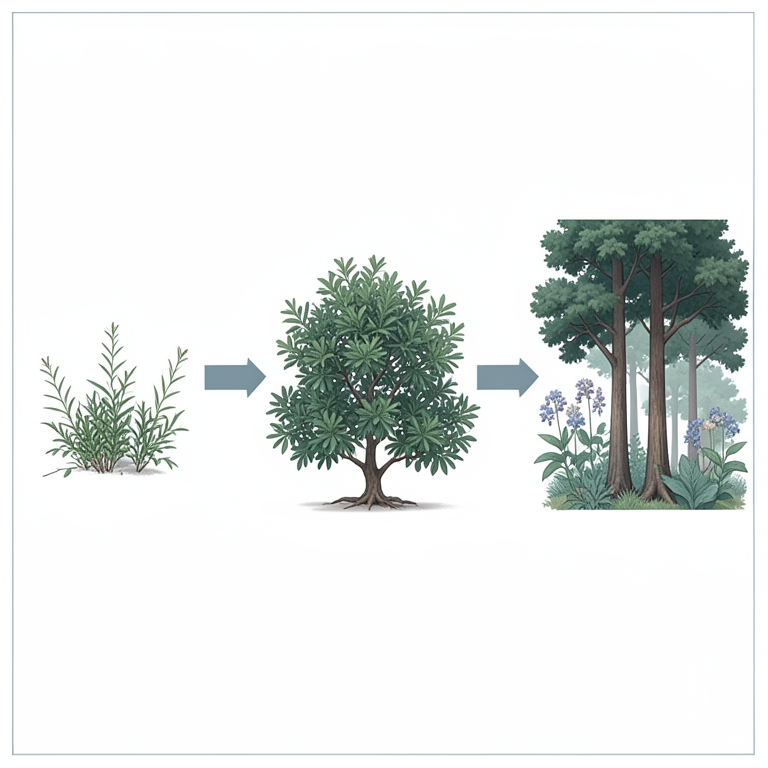
Plant Biodiversity Distribution
AI-generated conceptual illustration (diverse wild flora of Mokhada, Maharashtra, including herbs, shrubs, and trees). It explains the idea and does not show study data.
View source evidence ↗Figures & tables
From the original paper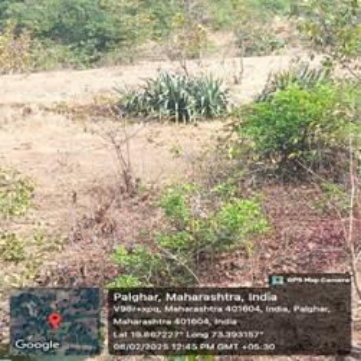 Figure 1
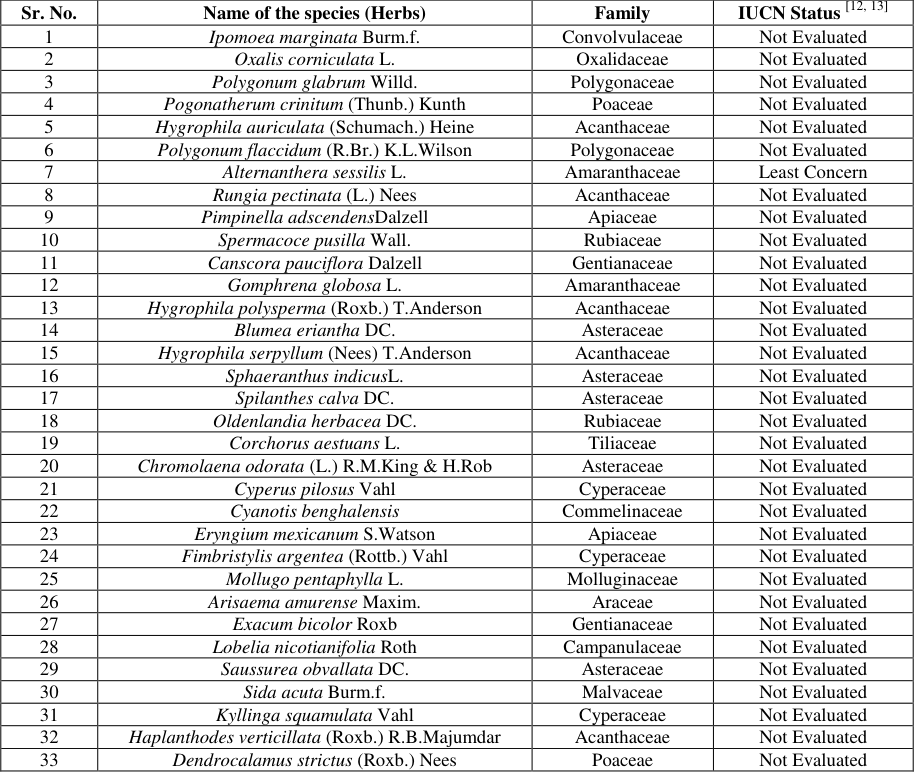 Table 1
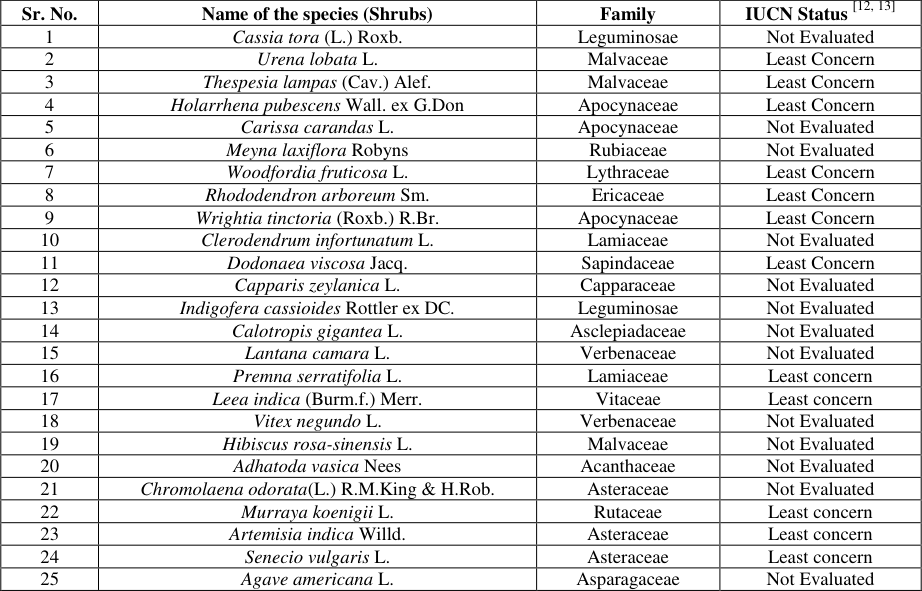 Table 2
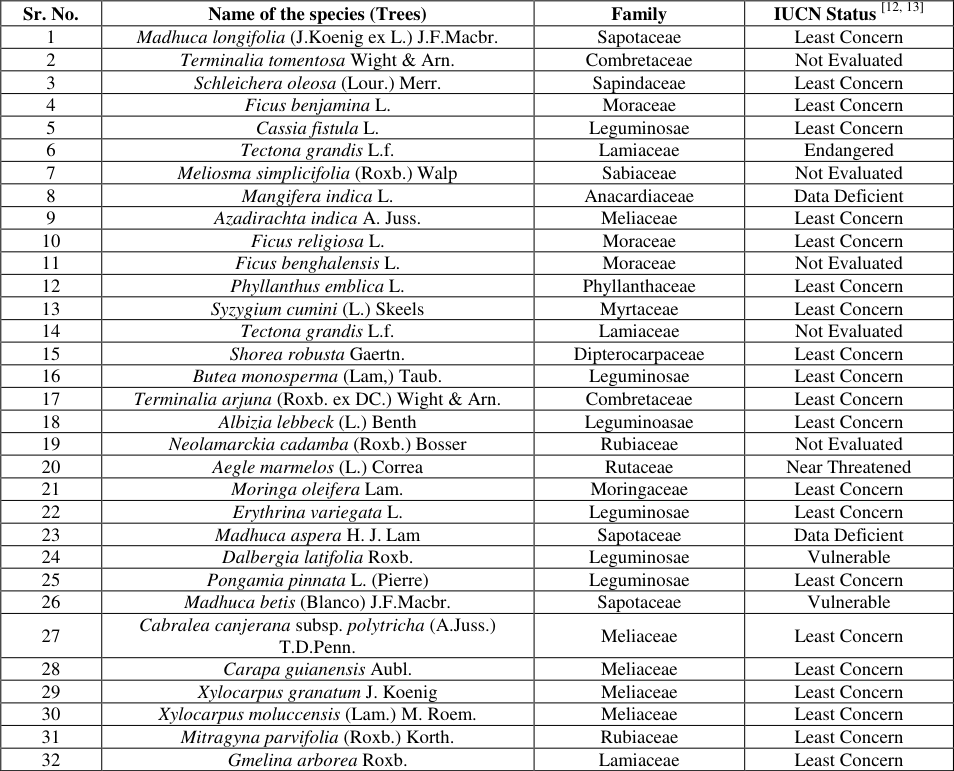 Table 3
Introduction
Palghar district of Maharashtra hosts diverse ecosystems, including deciduous forests, grasslands, and wetlands, supporting a variety of flora and fauna. The biodiversity of this region plays a crucial role in ecological balance, soil conservation, water regulation, and climate stability. The forests here provide habitat to several plant and animal species, including medicinal plants, pollinators, and endemic species. Biodiversity also supports the livelihood of local tribal communities, who rely on forest resources for food, medicine, and traditional practices.
Palghar in the northern Western Ghats holds rich plant diversity. Most deciduous species like Tectona grandis, Terminalia arjuna, and Mitragynaparvifolia dominate. Tribal groups like the Warlis use herbs such as Adhatodavasica and Canscora pauciflora. Invasive plants like Lantana camara and Chromolaena odorata threaten native species [1, 2, 3].
Valsad lies in the Western Ghats region, near Dharampur and Wilson Hill’s rich forest areas. Species like Cassia fistula, Mangifera indica, and Azadirachta indica are common [4]. Raigad lying to the south of Palghar exhibits coastal and forested terrain that supports over 700 plant species in areas like Phansad Sanctuary. Notable species include Saussureaobvallata, Woodfordiafruticosa, and mangroves like Xylocarpus granatum.
Traditional use of forest plants remains strong among local communities [5]. East of Palghar which is Thane which is a mix of urban and forest zones includes parts of Sanjay Gandhi National Park. Plant species like Careya arborea, Syzygiumcumini, and Aegle marmelos thrive here. Tribal communities still rely on native herbs for traditional medicine.
Ficus benghalensis and Terminalia arjuna are protected in sacred groves [6]. Mokhada is a taluka in the Palghar district, known for its rich natural landscapes, tribal communities, and proximity to the Western Ghats. The region is characterized by dense forests, rivers, and hilly terrains, making it an ecologically significant area. Mokhada region, located at approximately 19.88°N latitude and 73.38°Elongitude, lies at an elevation of average 1,198 ft above sea level [7].
It experiences a tropical monsoon climate with an average annual rainfall of around 2458 m [8]. The predominant soil types found in the area are sandy loam soil, black coloured, lighter coloured soil which support a rich diversity of plant life [9]. Agricultural growth, encroachments as well as infrastructural developments are contributing to the loss of these forests and forest areas. The study of floristic composition is crucial for procuring information on diversity of forests for forest management purpose and understanding its ecology.
NAAS Rating: 4.82 IJBS 2025; 7(6): 145-150 Deepali Mhapsekar Assistant Professor, Sathaye College (Autonomous), Vile Parle (East), Mumbai, Maharashtra, India Ankita More M.Sc. student, Sathaye College (Autonomous), Vile Parle (East), Mumbai, Maharashtra, India Nilesh Sharma M.Sc. student, Sathaye College (Autonomous), Vile Parle (East), Mumbai, Maharashtra, India Deepali Mhapsekar Assistant Professor, Sathaye College (Autonomous), Vile Parle (East), Mumbai, Maharashtra, India https://www.biologyjournal.net Hence, the present study is carried out to assess the plant biodiversity through analysis of floristic composition, particularly in Mokhada region of Palghar district.
Materials And Methods
Field visit was conducted in Suryamal, Deharje and Khodala village in Mokhada region of Palghar district in the month of February to record floristic composition. A detailed field survey was carried out to record the various species and categorising them as trees, shrubs and herbs. Plant specimens were collected from selected sites and the identification was performed using regional floras such as Flora of Maharashtra [10] and The Flora of the Presidency of Bombay [11]. Ipomoea marginata Oxalis corniculata Polygonum glabrum Meliosmasimplicifolia Cassia fistula Meynalaxiflora Carrissacarandus Agave americana Mitragynaparvifolia Fig 1: Some plant species in the selected Mokhada region
Results And Discussion
https://www.biologyjournal.net 3 Graph 1: Families of plants with total number of plant species Floristic composition analysis conducted in Suryamal, Deharje and Khodala village of Mokhada region of Palghar revealed the presence of total of 90 species belonging to 72 genera and 39 plant families comprising herbs, shrubs and trees, showcasing its rich botanical diversity (Graph 1). This distribution pattern reflects a mix of dominant vegetation alongside rare or habitat-specific plant groups, underlining the ecological significance of Mokhada’s flora. Leguminosae and Asteraceae were the most dominant families, each with 8 species whereas, nineteen plant families, such as Sabiaceae, Anacardiaceae, Phyllanthaceae, Dipterocarpaceae, Moringaceae, Lythraceae, Myrtaceae, Ericaceae, Capparaceae, Asclepiadaceae, Vitaceae, Asparagaceae, Convolvulaceae, Oxalidaceae, Tiliaceae, Commelinaceae, Molluginaceae, Araceae and Campanulaceae, represented single species each. The graph indicates a high diversity of plant families, but with most families having low species representation (Graph 1).
Table 1: List of Herb species with their family and IUCN status Sr. No. Name of the species (Herbs) Family IUCN Status [12, 13] 1 Ipomoea marginata Burm.f. Convolvulaceae Not Evaluated 2 Oxalis corniculata L.
| Sr. No. | Name of the species (Herbs) | Family | IUCN Status [12, 13] |
|---|---|---|---|
| 1 | Ipomoea marginata Burm.f. | Convolvulaceae | Not Evaluated |
| 2 | Oxalis corniculata L. | Oxalidaceae | Not Evaluated |
| 3 | Polygonum glabrum Willd. | Polygonaceae | Not Evaluated |
| 4 | Pogonatherum crinitum (Thunb.) Kunth | Poaceae | Not Evaluated |
| 5 | Hygrophila auriculata (Schumach.) Heine | Acanthaceae | Not Evaluated |
| 6 | Polygonum flaccidum (R.Br.) K.L.Wilson | Polygonaceae | Not Evaluated |
| 7 | Alternanthera sessilis L. | Amaranthaceae | Least Concern |
| 8 | Rungia pectinata (L.) Nees | Acanthaceae | Not Evaluated |
| 9 | Pimpinella adscendensDalzell | Apiaceae | Not Evaluated |
| 10 | Spermacoce pusilla Wall. | Rubiaceae | Not Evaluated |
| 11 | Canscora pauciflora Dalzell | Gentianaceae | Not Evaluated |
| 12 | Gomphrena globosa L. | Amaranthaceae | Not Evaluated |
| 13 | Hygrophila polysperma (Roxb.) T.Anderson | Acanthaceae | Not Evaluated |
| 14 | Blumea eriantha DC. | Asteraceae | Not Evaluated |
| 15 | Hygrophila serpyllum (Nees) T.Anderson | Acanthaceae | Not Evaluated |
| 16 | Sphaeranthus indicusL. | Asteraceae | Not Evaluated |
| 17 | Spilanthes calva DC. | Asteraceae | Not Evaluated |
| 18 | Oldenlandia herbacea DC. | Rubiaceae | Not Evaluated |
| 19 | Corchorus aestuans L. | Tiliaceae | Not Evaluated |
| 20 | Chromolaena odorata (L.) R.M.King & H.Rob | Asteraceae | Not Evaluated |
| 21 | Cyperus pilosus Vahl | Cyperaceae | Not Evaluated |
| 22 | Cyanotis benghalensis | Commelinaceae | Not Evaluated |
| 23 | Eryngium mexicanum S.Watson | Apiaceae | Not Evaluated |
| 24 | Fimbristylis argentea (Rottb.) Vahl | Cyperaceae | Not Evaluated |
| 25 | Mollugo pentaphylla L. | Molluginaceae | Not Evaluated |
| 26 | Arisaema amurense Maxim. | Araceae | Not Evaluated |
| 27 | Exacum bicolor Roxb | Gentianaceae | Not Evaluated |
| 28 | Lobelia nicotianifolia Roth | Campanulaceae | Not Evaluated |
| 29 | Saussurea obvallata DC. | Asteraceae | Not Evaluated |
| 30 | Sida acuta Burm.f. | Malvaceae | Not Evaluated |
| 31 | Kyllinga squamulata Vahl | Cyperaceae | Not Evaluated |
| 32 | Haplanthodes verticillata (Roxb.) R.B.Majumdar | Acanthaceae | Not Evaluated |
| 33 | Dendrocalamus strictus (Roxb.) Nees | Poaceae | Not Evaluated |
Table text extracted from the original PDF; superscript letters are shown inline. The original table image is below.
View original table image
Oxalidaceae Not Evaluated 3 Polygonum glabrum Willd. Polygonaceae Not Evaluated 4 Pogonatherum crinitum (Thunb.) Kunth Poaceae Not Evaluated 5 Hygrophila auriculata (Schumach.) Heine Acanthaceae Not Evaluated 6 Polygonum flaccidum (R.Br.) K.L.Wilson Polygonaceae Not Evaluated 7 Alternanthera sessilis L. Amaranthaceae Least Concern 8 Rungia pectinata (L.) Nees Acanthaceae Not Evaluated 9 Pimpinella adscendensDalzell Apiaceae Not Evaluated 10 Spermacoce pusilla Wall. Rubiaceae Not Evaluated 11 Canscora pauciflora Dalzell Gentianaceae Not Evaluated 12 Gomphrena globosa L.
Amaranthaceae Not Evaluated 13 Hygrophila polysperma (Roxb.) T.Anderson Acanthaceae Not Evaluated 14 Blumea eriantha DC. Asteraceae Not Evaluated 15 Hygrophila serpyllum (Nees) T.Anderson Acanthaceae Not Evaluated 16 Sphaeranthus indicusL. Asteraceae Not Evaluated 17 Spilanthes calva DC. Asteraceae Not Evaluated 18 Oldenlandia herbacea DC.
Rubiaceae Not Evaluated 19 Corchorus aestuans L. Tiliaceae Not Evaluated 20 Chromolaena odorata (L.) R.M.King & H.Rob Asteraceae Not Evaluated 21 Cyperus pilosus Vahl Cyperaceae Not Evaluated 22 Cyanotis benghalensis Commelinaceae Not Evaluated 23 Eryngium mexicanum S.Watson Apiaceae Not Evaluated 24 Fimbristylis argentea (Rottb.) Vahl Cyperaceae Not Evaluated 25 Mollugo pentaphylla L. Molluginaceae Not Evaluated 26 Arisaema amurense Maxim. Araceae Not Evaluated 27 Exacum bicolor Roxb Gentianaceae Not Evaluated 28 Lobelia nicotianifolia Roth Campanulaceae Not Evaluated 29 Saussurea obvallata DC.
Asteraceae Not Evaluated 30 Sida acuta Burm.f. Malvaceae Not Evaluated 31 Kyllinga squamulata Vahl Cyperaceae Not Evaluated 32 Haplanthodes verticillata (Roxb.) R.B.Majumdar Acanthaceae Not Evaluated 33 Dendrocalamus strictus (Roxb.) Nees Poaceae Not Evaluated https://www.biologyjournal.net Graph 2: Families of plants with total number of herb species Graph 2 reveals that Acanthaceae and Asteraceae exhibited highest number of herb species with each represented by five species. Eight families including Convovulaceae, Oxalidaceae, Tiliaceae, Commelinaceae, Molluginaceae, Araceae, Campanulaceae and Malvaceae showed single herb species (Table 1). Table 2: List of Shrub species with their family and IUCN status Sr.
| Sr. No. | Name of the species (Shrubs) | Family | IUCN Status [12, 13] |
|---|---|---|---|
| 1 | Cassia tora (L.) Roxb. | Leguminosae | Not Evaluated |
| 2 | Urena lobata L. | Malvaceae | Least Concern |
| 3 | Thespesia lampas (Cav.) Alef. | Malvaceae | Least Concern |
| 4 | Holarrhena pubescens Wall. ex G.Don | Apocynaceae | Least Concern |
| 5 | Carissa carandas L. | Apocynaceae | Not Evaluated |
| 6 | Meyna laxiflora Robyns | Rubiaceae | Not Evaluated |
| 7 | Woodfordia fruticosa L. | Lythraceae | Least Concern |
| 8 | Rhododendron arboreum Sm. | Ericaceae | Least Concern |
| 9 | Wrightia tinctoria (Roxb.) R.Br. | Apocynaceae | Least Concern |
| 10 | Clerodendrum infortunatum L. | Lamiaceae | Not Evaluated |
| 11 | Dodonaea viscosa Jacq. | Sapindaceae | Least Concern |
| 12 | Capparis zeylanica L. | Capparaceae | Not Evaluated |
| 13 | Indigofera cassioides Rottler ex DC. | Leguminosae | Not Evaluated |
| 14 | Calotropis gigantea L. | Asclepiadaceae | Not Evaluated |
| 15 | Lantana camara L. | Verbenaceae | Not Evaluated |
| 16 | Premna serratifolia L. | Lamiaceae | Least concern |
| 17 | Leea indica (Burm.f.) Merr. | Vitaceae | Least concern |
| 18 | Vitex negundo L. | Verbenaceae | Not Evaluated |
| 19 | Hibiscus rosa-sinensis L. | Malvaceae | Not Evaluated |
| 20 | Adhatoda vasica Nees | Acanthaceae | Not Evaluated |
| 21 | Chromolaena odorata(L.) R.M.King & H.Rob. | Asteraceae | Not Evaluated |
| 22 | Murraya koenigii L. | Rutaceae | Least concern |
| 23 | Artemisia indica Willd. | Asteraceae | Least concern |
| 24 | Senecio vulgaris L. | Asteraceae | Least concern |
| 25 | Agave americana L. | Asparagaceae | Not Evaluated |
Table text extracted from the original PDF; superscript letters are shown inline. The original table image is below.
View original table image
No. Name of the species (Shrubs) Family IUCN Status [12, 13] 1 Cassia tora (L.) Roxb. Leguminosae Not Evaluated 2 Urena lobata L. Malvaceae Least Concern 3 Thespesia lampas (Cav.) Alef.
Malvaceae Least Concern 4 Holarrhena pubescens Wall. ex G.Don Apocynaceae Least Concern 5 Carissa carandas L. Apocynaceae Not Evaluated 6 Meyna laxiflora Robyns Rubiaceae Not Evaluated 7 Woodfordia fruticosa L. Lythraceae Least Concern 8 Rhododendron arboreum Sm. Ericaceae Least Concern 9 Wrightia tinctoria (Roxb.) R.Br.
Apocynaceae Least Concern 10 Clerodendrum infortunatum L. Lamiaceae Not Evaluated 11 Dodonaea viscosa Jacq. Sapindaceae Least Concern 12 Capparis zeylanica L. Capparaceae Not Evaluated 13 Indigofera cassioides Rottler ex DC.
Leguminosae Not Evaluated 14 Calotropis gigantea L. Asclepiadaceae Not Evaluated 15 Lantana camara L. Verbenaceae Not Evaluated 16 Premna serratifolia L. Lamiaceae Least concern 17 Leea indica (Burm.f.) Merr.
Vitaceae Least concern 18 Vitex negundo L. Verbenaceae Not Evaluated 19 Hibiscus rosa-sinensis L. Malvaceae Not Evaluated 20 Adhatoda vasica Nees Acanthaceae Not Evaluated 21 Chromolaena odorata(L.) R.M.King & H.Rob. Asteraceae Not Evaluated 22 Murraya koenigii L.
Rutaceae Least concern 23 Artemisia indica Willd. Asteraceae Least concern 24 Senecio vulgaris L. Asteraceae Least concern 25 Agave americana L. Asparagaceae Not Evaluated https://www.biologyjournal.net Graph 3: Families of plants with total number of shrub species Malvaceae, Apocynaceae and Asteraceae recorded the highest number of shrub species with each having three species.
Ten plant families including Rubiaceae, Lythraceae, Ericaceae, Sapindaceae, Capparaceae, Asclepiadaceae, Vitaceae, Acanthaceae, Rutaceae and Asparagaceae were each represented by one shrub species (Graph 3) (Table 2). Table 3: List of Tree species with their family and IUCN status Sr. No. Name of the species (Trees) Family IUCN Status [12, 13] 1 Madhuca longifolia (J.Koenig ex L.) J.F.Macbr.
| Sr. No. | Name of the species (Trees) | Family | IUCN Status [12, 13] |
|---|---|---|---|
| 1 | Madhuca longifolia (J.Koenig ex L.) J.F.Macbr. | Sapotaceae | Least Concern |
| 2 | Terminalia tomentosa Wight & Arn. | Combretaceae | Not Evaluated |
| 3 | Schleichera oleosa (Lour.) Merr. | Sapindaceae | Least Concern |
| 4 | Ficus benjamina L. | Moraceae | Least Concern |
| 5 | Cassia fistula L. | Leguminosae | Least Concern |
| 6 | Tectona grandis L.f. | Lamiaceae | Endangered |
| 7 | Meliosma simplicifolia (Roxb.) Walp | Sabiaceae | Not Evaluated |
| 8 | Mangifera indica L. | Anacardiaceae | Data Deficient |
| 9 | Azadirachta indica A. Juss. | Meliaceae | Least Concern |
| 10 | Ficus religiosa L. | Moraceae | Least Concern |
| 11 | Ficus benghalensis L. | Moraceae | Not Evaluated |
| 12 | Phyllanthus emblica L. | Phyllanthaceae | Least Concern |
| 13 | Syzygium cumini (L.) Skeels | Myrtaceae | Least Concern |
| 14 | Tectona grandis L.f. | Lamiaceae | Not Evaluated |
| 15 | Shorea robusta Gaertn. | Dipterocarpaceae | Least Concern |
| 16 | Butea monosperma (Lam,) Taub. | Leguminosae | Least Concern |
| 17 | Terminalia arjuna (Roxb. ex DC.) Wight & Arn. | Combretaceae | Least Concern |
| 18 | Albizia lebbeck (L.) Benth | Leguminoasae | Least Concern |
| 19 | Neolamarckia cadamba (Roxb.) Bosser | Rubiaceae | Not Evaluated |
| 20 | Aegle marmelos (L.) Correa | Rutaceae | Near Threatened |
| 21 | Moringa oleifera Lam. | Moringaceae | Least Concern |
| 22 | Erythrina variegata L. | Leguminosae | Least Concern |
| 23 | Madhuca aspera H. J. Lam | Sapotaceae | Data Deficient |
| 24 | Dalbergia latifolia Roxb. | Leguminosae | Vulnerable |
| 25 | Pongamia pinnata L. (Pierre) | Leguminosae | Least Concern |
| 26 | Madhuca betis (Blanco) J.F.Macbr. | Sapotaceae | Vulnerable |
| 27 | Cabralea canjerana subsp. polytricha (A.Juss.) T.D.Penn. | Meliaceae | Least Concern |
| 28 | Carapa guianensis Aubl. | Meliaceae | Least Concern |
| 29 | Xylocarpus granatum J. Koenig | Meliaceae | Least Concern |
| 30 | Xylocarpus moluccensis (Lam.) M. Roem. | Meliaceae | Least Concern |
| 31 | Mitragyna parvifolia (Roxb.) Korth. | Rubiaceae | Least Concern |
| 32 | Gmelina arborea Roxb. | Lamiaceae | Least Concern |
Table text extracted from the original PDF; superscript letters are shown inline. The original table image is below.
View original table image
Sapotaceae Least Concern 2 Terminalia tomentosa Wight & Arn. Combretaceae Not Evaluated 3 Schleichera oleosa (Lour.) Merr. Sapindaceae Least Concern 4 Ficus benjamina L. Moraceae Least Concern 5 Cassia fistula L.
Leguminosae Least Concern 6 Tectona grandis L.f. Lamiaceae Endangered 7 Meliosma simplicifolia (Roxb.) Walp Sabiaceae Not Evaluated 8 Mangifera indica L. Anacardiaceae Data Deficient 9 Azadirachta indica A. Juss.
Meliaceae Least Concern 10 Ficus religiosa L. Moraceae Least Concern 11 Ficus benghalensis L. Moraceae Not Evaluated 12 Phyllanthus emblica L. Phyllanthaceae Least Concern 13 Syzygium cumini (L.) Skeels Myrtaceae Least Concern 14 Tectona grandis L.f.
Lamiaceae Not Evaluated 15 Shorea robusta Gaertn. Dipterocarpaceae Least Concern 16 Butea monosperma (Lam,) Taub. Leguminosae Least Concern 17 Terminalia arjuna (Roxb. ex DC.) Wight & Arn. Combretaceae Least Concern 18 Albizia lebbeck (L.) Benth Leguminoasae Least Concern 19 Neolamarckia cadamba (Roxb.) Bosser Rubiaceae Not Evaluated 20 Aegle marmelos (L.) Correa Rutaceae Near Threatened 21 Moringa oleifera Lam.
Moringaceae Least Concern 22 Erythrina variegata L. Leguminosae Least Concern 23 Madhuca aspera H. J. Lam Sapotaceae Data Deficient 24 Dalbergia latifolia Roxb.
Leguminosae Vulnerable 25 Pongamia pinnata L. (Pierre) Leguminosae Least Concern 26 Madhuca betis (Blanco) J.F.Macbr. Sapotaceae Vulnerable 27 Cabralea canjerana subsp. polytricha (A.Juss.) T.D.Penn. Meliaceae Least Concern 28 Carapa guianensis Aubl. Meliaceae Least Concern 29 Xylocarpus granatum J.
Koenig Meliaceae Least Concern 30 Xylocarpus moluccensis (Lam.) M. Roem. Meliaceae Least Concern 31 Mitragyna parvifolia (Roxb.) Korth. Rubiaceae Least Concern 32 Gmelina arborea Roxb.
Lamiaceae Least Concern https://www.biologyjournal.net Graph 4: Families of plants with total number of tree species 4. Patel HM, Adhvaryu M. Ethno-botanical dimension of sacred groves in Valsad District, Gujarat, India. J Biodivers Environ Sci. 2022;21(1):108-125. 5.
Botanical Survey of India. Flora of Raigad District, Maharashtra State. Kolkata: Botanical Survey of India; 1993. 6. Joshi A, Kalgutkar A, Joshi N.
Value of floral diversity of the Sanjay Gandhi National Park. Ann Plant Sci. 2016;5(2):1276-1279. 7. Mokhada topographic map, elevation, terrain [Internet]. Available from: https://en-us.topographic- map.com/map-4bgvgp/Mokhada/ 8.
Palghar District Administration. Geographical information [Internet]. Government of Maharashtra. Available from: https://palghar.gov.in/en/geographical- information-2/ 9.
Central Ground Water Board. Aquifer Mapping and Management and Ground water resources. Palghar district, Maharashtra. Department of Water Resources, RD & GR.
Ministry of Jal Shakti, Government of India; 2022-2023 [Internet]. Available from: https://cgwb.gov.in/cgwbpnm/public/uploads/document s/1681291430758308073file.pdf 10. Almeida MR. Flora of Maharashtra.
Vols. 1-5. Mumbai: Blatter Herbarium, St. Xavier’s College; 1996-2003. 11. Cooke T.
The Flora of the presidency of Bombay. Vols. 1-3. London: Taylor and Francis; 1901-1908. 12. Vie JC, Hilton-Taylor C, Stuart SN, editors.
Wildlife in a Changing World: An Analysis of the 2008 IUCN Red List of Threatened Species. Gland, Switzerland: IUCN; 2009. 13. International Union for Conservation of Nature (IUCN) [Internet]. Available from: https://www.iucn.org Leguminosae showed the highest number of tree species, represented by eight species.
Eight families including Sapindaceae, Sabiaceae, Anacardiaceae, Phyllanthaceae, Myrtaceae, Dipterocarpaceae, Rutaceae and Moringaceae comprised of single species each (Graph 4) (Table 3) (Figure 1). The biodiversity of the study area is essential for the preservation of native and endemic species. As per IUCN red list, Tectona grandis and Aegle marmelosrecorded in the regionhave been described as an endangered and near threatened species respectively.
Conclusion
The present study highlights the botanical richness of Mokhada's ecosystem and contributes to baseline data for biodiversity conservation. Future studies on Mokhada's plant biodiversity should focus on documenting endemic and medicinal species while assessing ecological threats.
Acknowledgement
The authors express their sincere thanks to the Principal, PTVA’s Sathaye college (Autonomous) for constant encouragement and support. The authors gratefully acknowledge Smt. Jayashree Gaikwad, Head and Associate Professor, Department of Botany, Sathaye College (Autonomous) for her guidance and support. Special thanks to Paresh Pandharinath Bhalekar, Ph.D. scholar at Department of Botany, Dapoli Urban Bank Senior Science College, Dapoli and Dasharath Atmaram Rajapkar, Ph.D. scholar, Department of Botany, Arts, Commerce and Science College, Mokhada, Palghar for their valuable taxonomic guidance.
References
3 in the original paper- Shivprasad M, Rane M, Manik P. Traditional uses of some wild edible fruits from Palghar district. J Nat Prod Plant Resour. 2016;6(6):8-11.
- Roy A, Janbandhu S. An ethnobotanical analysis on flora-medicine continuum among the tribal inhabitants of Ratnagiri and Palghar district, Maharashtra, India. Ethnobot Res Appl. 2020;20:43:1-23.
- Satvi VK, Marathe CL. Wild edible plants used as vegetable by rural communities of Palghar District, Maharashtra, India. Rev Res. 2018;8(3):1-5.