
Research article · 2025 · Full text
International Journal of Biology SciencesEffect of fermented Wild Plant Leaf Extract on Seed Germination and Growth of Okra (Abelmoschus esculentus. (L.)Moench
Volume 7(6) · Pages 151–152 · DOI: 10.33545/26649926.2025.v7.i6c.368 ↗
Research areasAgricultural Practices and Plant GeneticsAgricultural pest management studiesAgricultural Science and Fertilization
Abstract
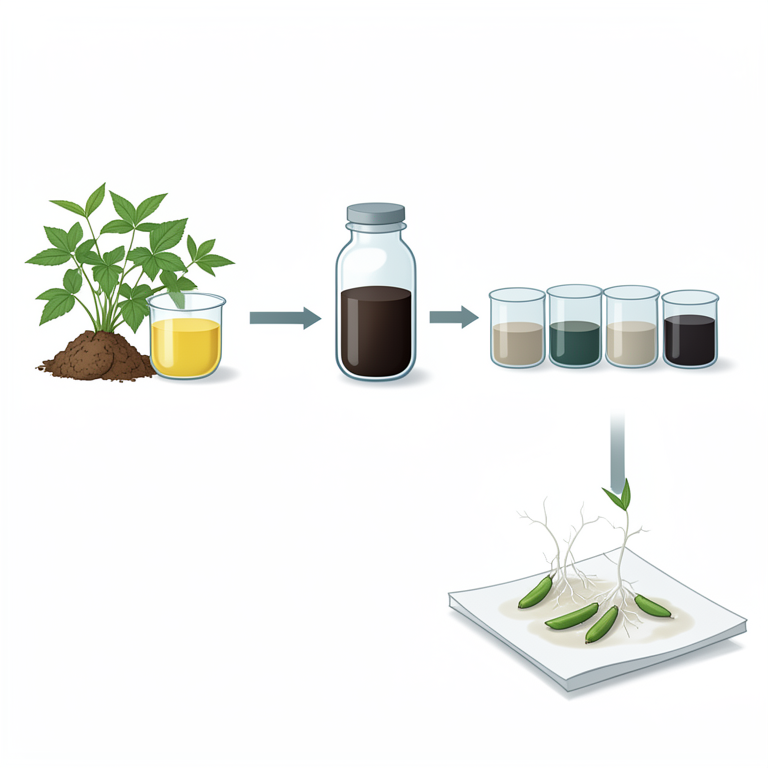
Author-writtenEight different wild plant leaves (Neem - Azardirachta indica, Ricinus communis, Annona squamosa, Pongamia pinnata, Datura innoxia, Carica papaya, Nerium olender,Lantana camara were collected and brought to the laboratory and washed with distilled water, blought to dry and 100 gram of each selected wild plant leaves were taken along with 1 K.G. Cow dung and 1 litre Cow Urine all these kept for fermentation in a vial for 30 days. After fermentation the filtrate was collected and various concentrations with distilled water were made (20%, 40%, 60%, 80%, 100% and control).The Okara seeds were soaked in these concentrations separately for overnight on next day the seeds were taken out washed with distilled water and placed on germination paper for further study. The germination count and seedling growth were recorded (R.L. Agerwal 1976).
Summary
Source-checkedPlain-language reading of the full paper, prepared with AI and checked against the text. Each point links to the authors' own words.
Why it matters
- There is an increasing consumer demand for safer agricultural products, leading to a rise in the popularity of organic farming practices. View evidence ↗
- Medicinal plants produce various secondary metabolites, such as alkaloids and steroids, which possess antioxidant, antimicrobial, and insecticidal properties. View evidence ↗
- Okra seeds often exhibit poor germination rates when sown in the early spring due to low temperatures. View evidence ↗
The question
- The study aimed to identify an effective formulation of fermented wild plant leaf extract that could improve the germination percentage and growth of Okra seedlings. View evidence ↗
What they did
- The researchers collected leaves from eight different wild plant species, including Neem, Ricinus communis, and Carica papaya. View evidence ↗
- Fermentation was conducted for 30 days using 100 grams of each plant leaf mixed with 1 kg of cow dung and 1 liter of cow urine. View evidence ↗
- The resulting filtrate was diluted with distilled water to create concentrations of 20%, 40%, 60%, 80%, and 100%, alongside a control group. View evidence ↗
- Okra seeds were soaked overnight in the various extract concentrations, washed, and then placed on germination paper. View evidence ↗
What they found
- After 21 days, the 100% concentration yielded the greatest root length (24 cm) and shoot length (23 cm), with the 80% concentration following at 22 cm and 21 cm, respectively. View evidence ↗
What it means
- The authors concluded that fermented wild plant leaf extracts at 100% and 80% concentrations are effective for enhancing the germination percentage and seedling growth of Okra. View evidence ↗
Visual summary
3 visualsIllustrations explain the paper; charts are replotted from the paper's own table values.
Fermentation and Treatment Process
AI-generated conceptual illustration (Okra seeds (Abelmoschus esculentus) and wild plant leaves). It explains the idea and does not show study data.
View source evidence ↗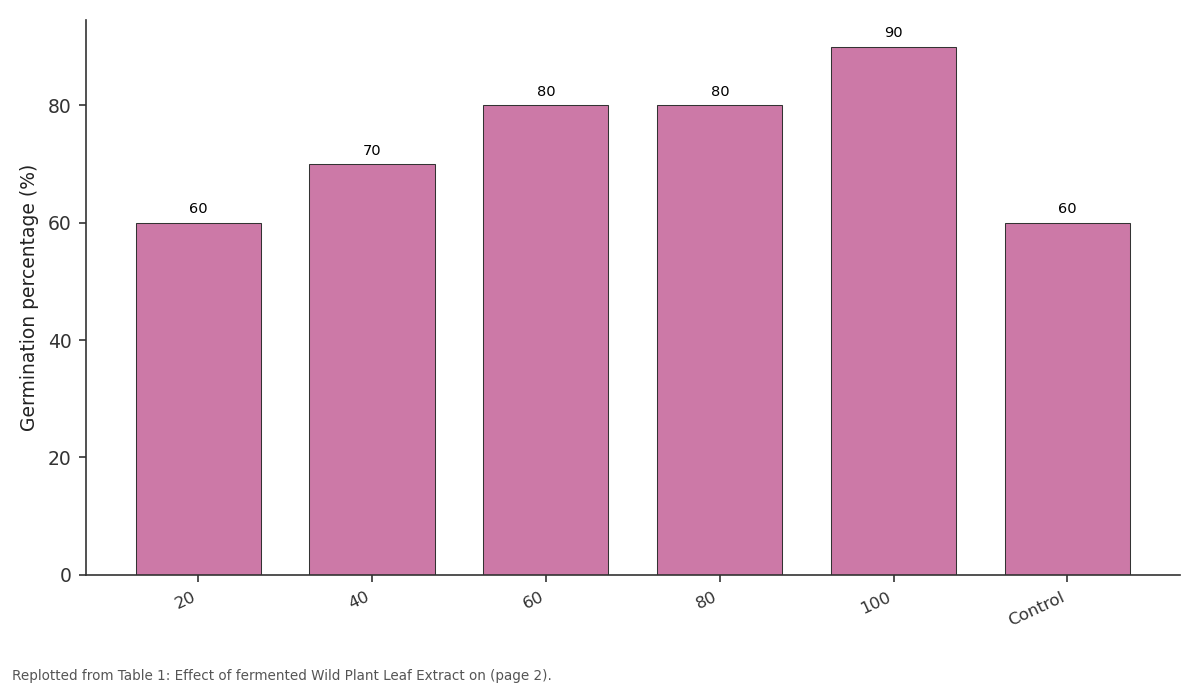
Germination percentage (%): 20 vs 40 vs 60 vs 80 vs 100
Replotted from Table 1 (page 2) of the original paper. Every bar is the paper's own table value.
View source evidence ↗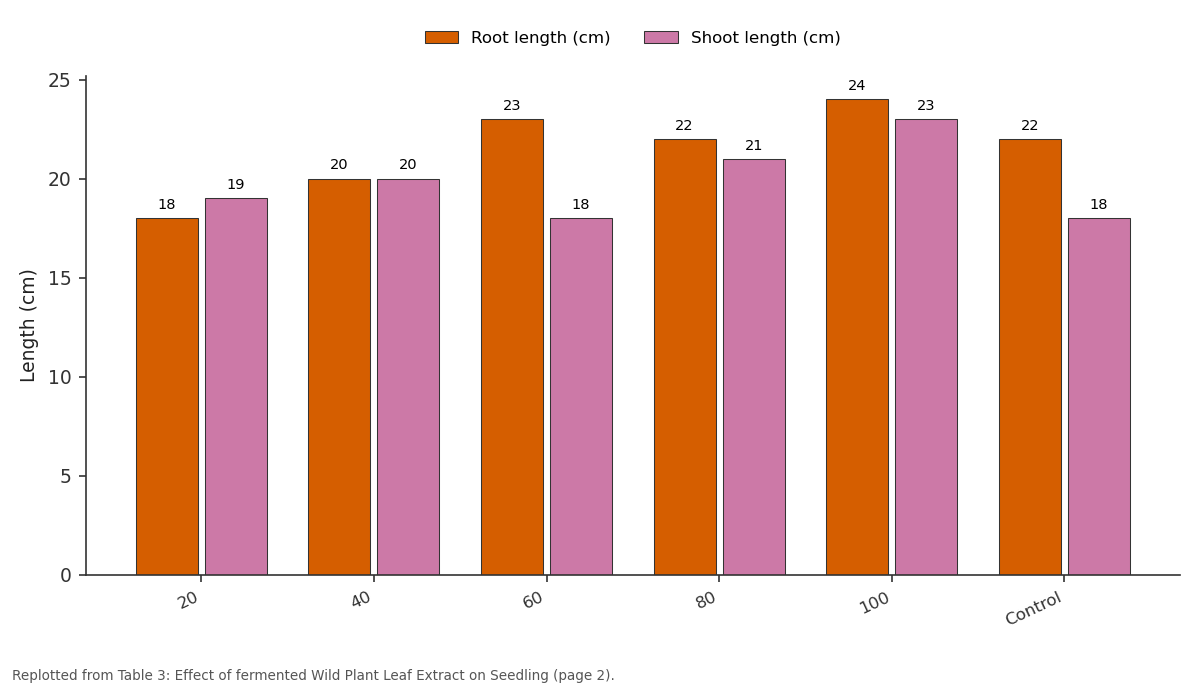
Root length (cm) and Shoot length (cm): 20 vs 40 vs 60 vs 80 vs 100
Replotted from Table 3 (page 2) of the original paper. Every bar is the paper's own table value.
View source evidence ↗Figures & tables
From the original paper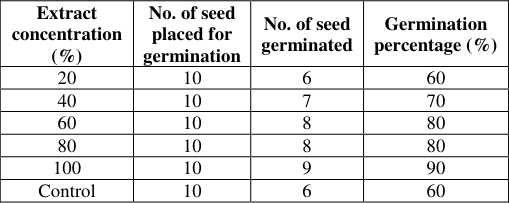 Table 1
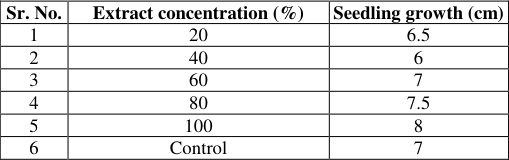 Table 2
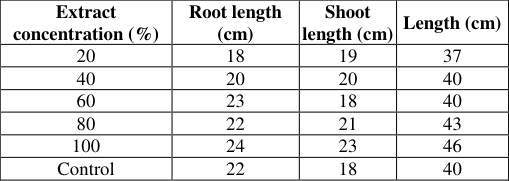 Table 3
Introduction
Organic agricultural practices are becoming more popular because of consumers interested in and demand for safer agricultural products. Medicinal plant are rich in secondary metabolites, alkaloid, glycosides, steroid, etc., are the secondary metabolites found in medicinal plants. These plants synthesis hundred of chemical that have allelopathic, insecticidal, antifungal, antimicrobial and antioxidant properties. All these chemical properties help to increase seed germination, plant growth and development also help defend insect, pest and diseases etc.
Okra is one of the most widely known and utilized species of the family Malvaceae. Okra seeds are sown in early spring season, they show poor germination due to low temperature. High quality protein can be found okra seeds because it has a higher concentration of essential amino acid. Okra fruit also contains some of the antioxidant flavonoid like carotene, xanthein and lutein.
Okra fruit is a rich source of iodine. Therefore efforts were made to find out efficient formulation of wild plant leaf extract to enhance the percent seed germination and seedling growth in Okra.
Materials And Methods
Eight different wild plant leaves (Neem - Azardirachta indica, Ricinus communis, Annona squamosa,Pongamia pinnata,Datura innoxia, Carica papaya, Nerium olender,Lantana camara were collected and brought to the laboratory and washed with distilled water, blought to dry and 100 gram of each selected wild plant leaves were taken along with 1 K.G.Cow dung and 1 litre Cow Urine all these kept for fermentation in a vial for 30 days. After fermentation the filtrate was collected and various concentrations with distilled water were made (20%, 40%, 60%, 80%, 100% and control).The Okara seeds were soaked in these concentrations separately for overnight on next day the seeds were taken out washed with distilled water and placed on germination paper for further study. The germination count and seedling growth were recorded. NAAS Rating: 4.82 IJBS 2025; 7(6): 151-152 Nirmal Ankita Post-Graduate Department of Botany and Research Centre, Padmashri Vikhe Patil College of Art’s Science and Commerce, Pravaranagar, Maharashtra, India Kalpana Palghadmal Post-Graduate Department of Botany and Research Centre, Padmashri Vikhe Patil College of Art’s Science and Commerce, Pravaranagar, Maharashtra, India Nirmal Ankita Post-Graduate Department of Botany and Research Centre, Padmashri Vikhe Patil College of Art’s Science and Commerce, Pravaranagar, Maharashtra, India https://www.biologyjournal.net
Results And Discussion
Table 1: Effect of fermented Wild Plant Leaf Extract on Seed germination of Okra after 4 Days No. of seed germinated Germination percentage (%) Extract concentration (%) No. of seed placed for germination 20 10 6 60 40 10 7 70 60 10 8 80 80 10 8 80 100 10 9 90 Control 10 6 60 From the result tabulated in table no.1 it was proved that 90% seed germination observed in 100% conc. followed by 80% seed germination in 60% and 80% conc. Table 2: Effect of fermented Wild Plant Leaf Extract on Seedling growth of Okra after 7 days 3. Antony S, Benny PJ. Allelopathic effect of Flacourtia inermis on seed germination of selected crop plants found in India.
| Sr. No. | Extract concentration (%) | Seedling growth (cm) |
|---|---|---|
| 1 | 20 | 6.5 |
| 2 | 40 | 6 |
| 3 | 60 | 7 |
| 4 | 80 | 7.5 |
| 5 | 100 | 8 |
| 6 | Control | 7 |
Table text extracted from the original PDF; superscript letters are shown inline. The original table image is below.
View original table image
| Extract concentration (%) | No. of seed placed for germination | No. of seed germinated | Germination percentage (%) |
|---|---|---|---|
| 20 | 10 | 6 | 60 |
| 40 | 10 | 7 | 70 |
| 60 | 10 | 8 | 80 |
| 80 | 10 | 8 | 80 |
| 100 | 10 | 9 | 90 |
| Control | 10 | 6 | 60 |
Table text extracted from the original PDF; superscript letters are shown inline. The original table image is below.
View original table image
Int J Adv Sci Eng Technol. 2016;4:59- 61. 4. Babu GP, Hooda V. Allelopathic effects of Cyperus rotundus L. and Cynodon dactylon L. on germination and growth responses of lettuce (Lactuca sativa). Int Conf Agric For. 2016;2:47-50. 5.
Jose PMP, Santos BM, Stall WM. Effect of increasing purple nutsedge (Cyperus rotundus L.) densities on cilantro (Coriandrum sativum) yield. Proc Fla State Hort Soc. 1997;110:318-20. 6. Kandro MN, Memon HR, Mahmood L, Baloch AW, Ansari MA.
Allelopathic impact of sorghum and sunflower on germinability and seedling growth of cotton (Gossypium hirsutum L.). J Basic Appl Sci. 2016;12:98-102. 7. Kowthar GE, El-Din SAA, Sharara FAA. Allelopathic behaviour of Cyperus rotundus L. on both Corchorus olitorius (broad-leaved weed) and Echinochloa crus- galli (grassy weed) associated with soybean.
J Plant Prot Res. 2010;50(3):274-9. 8. Kumar L, Varshney JG. Allelopathic effect of sesame root exudates against purple nutsedge. Indian J Weed Sci. 2008;40(1-2):32-6.
Sr. No. Extract concentration (%) Seedling growth (cm) 1 20 6.5 2 40 6 3 60 7 4 80 7.5 5 100 8 6 Control 7 From the result tabulated in table no.2 it was proved that highest seedling growth (8 cm) observed in 100% conc. followed by 80 % conc. (7.5 cm.) Table 3: Effect of fermented Wild Plant Leaf Extract on Seedling growth of Okra after 21 Days Shoot length (cm) Length (cm) Extract concentration (%) Root length (cm) 20 18 19 37 40 20 20 40 60 23 18 40 80 22 21 43 100 24 23 46 Control 22 18 40 From the result tabulated in table no.3 it was proved that highest root length (24 cm) and shoot length (23) were observed in 100% conc. followed by 80 % conc.(root length (22 cm) and shoot length (21cm)
| Extract concentration (%) | Root length (cm) | Shoot length (cm) | Length (cm) |
|---|---|---|---|
| 20 | 18 | 19 | 37 |
| 40 | 20 | 20 | 40 |
| 60 | 23 | 18 | 40 |
| 80 | 22 | 21 | 43 |
| 100 | 24 | 23 | 46 |
| Control | 22 | 18 | 40 |
Table text extracted from the original PDF; superscript letters are shown inline. The original table image is below.
View original table image
Conclusion
From the present investigation it was proved that fermented Wild Plant Leaf Extract 100% and 80% extract conc. was proved satisfactory to enhance % seed germination and plant seedling growth of Okra
References
2 in the original paper- Ahmed SA, Messiha NK, El-Masry RR, El-Rokick KG. Allelopathic potentiality of the leaf powder of Morus alba and Vitis vinifera on the growth and propagative capacity of purple nutsedge (Cyperus rotundus L.) and maize (Zea mays L.). J Appl Sci Res. 2012;8(8):4744- 51.
- Ameena M, Geethakumari VL, George S. Allelopathic effect of root exudates of purple nutsedge (Cyperus rotundus L.) on growth of field crops. J Crop Weed. 2015;11(Special Issue):142-5.