
Research article · 2025 · Full text
International Journal of Biology SciencesEvaluation of Cicer arietinum L. exudate on seed germination in Glycine max Merr.
Volume 7(6) · Pages 233–237 · DOI: 10.33545/26649926.2025.v7.i6d.382 ↗
Research areasGenetic and Environmental Crop StudiesAgricultural pest management studiesBotanical Research and Chemistry
Abstract
Author-writtenThe present study investigates the influence of Cicer arietinum L. (chickpea) exudates on the seed germination of Glycine maxMerr. with the objective of enhancing germination efficiency through natural biochemical interactions. exudates, known for containing various organic compounds such as amino acids, sugars, phenolics, and phytohormones, can play a significant role in plant-plant interactions and may act as natural biostimulants. In this study, exudates were collected from hydroponically grown Cicer arietinum plants. Different concentrations (5%, 10%, 15%,) of the exudate solutions were prepared and used to treat Glycine max seeds for a period of 2 hours prior to germination trials. The treated seeds were then incubated under controlled laboratory conditions, and germination rates were recorded over a period of seven days. Among the treatments, the 5% concentration of Cicer arietinum exudate showed the most significant effect, resulting in the highest germination percentage compared to other concentrations and the control group. The results suggest that compounds present in chickpea exudates at optimal concentrations may stimulate enzymatic or hormonal responses in soybean seeds, leading to improved germination. However, higher concentrations beyond 5% did not yield further benefits and may potentially inhibit germination due to phototoxic effects. This study highlights the potential of using natural plant exudates as a sustainable and eco-friendly approach to improve seed germination in legumes like soybean. Further research on the biochemical components of the exudates and their specific roles could pave the way for innovative applications in agricultural practices.
Summary
Source-checkedPlain-language reading of the full paper, prepared with AI and checked against the text. Each point links to the authors' own words.
Why it matters
- Legumes are essential to global agriculture because they contribute to environmental sustainability, animal feed, and human nutrition. View evidence ↗
- Chickpea is a major pulse crop that provides a critical protein source for vegetarians, especially in developing nations. View evidence ↗
- Allelopathy occurs when plants release biochemicals that affect nearby plants, which can be used to improve crops or manage weeds. View evidence ↗
The question
- The study aimed to determine if chickpea exudates could improve the germination efficiency of soybean seeds through natural biochemical interactions. View evidence ↗
What they did
- Exudates were collected from mature chickpea plants using a muslin cloth rotated around the plant in the early morning and stored at room temperature. View evidence ↗
- Soybean seeds were surface-sterilized using a 0.1% mercuric chloride solution for 2 minutes to prevent contamination. View evidence ↗
- Soybean seeds (100 per group) were treated with chickpea exudate concentrations of 5%, 10%, and 15% for durations ranging from 2 to 12 hours. View evidence ↗
- Germination was conducted in a chamber with a relative humidity of approximately 90% and temperatures between 25°C and 30°C. View evidence ↗
- Seed germination counts were recorded at two intervals: the 8th day and the 10th day after treatment. View evidence ↗
What they found
- Concentrations above 5% provided no additional benefits and may inhibit germination due to potential phototoxic effects. View evidence ↗
- The 15% concentration was associated with irregular seedling growth or slower germination, possibly caused by inhibitory compounds or osmotic stress. View evidence ↗
What it means
- The study suggests that natural plant exudates offer a sustainable and eco-friendly alternative for improving legume seed germination. View evidence ↗
- The authors state that future research is needed to identify the specific allelochemicals in the exudates and determine their exact mode of action. View evidence ↗
Visual summary
2 visualsIllustrations explain the paper; charts are replotted from the paper's own table values.
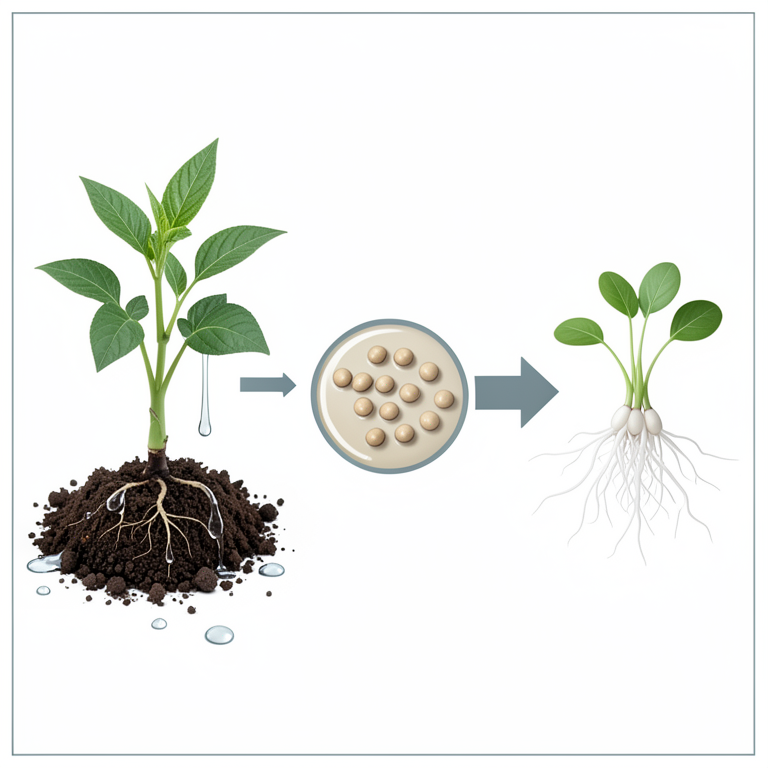
Experimental Workflow
AI-generated conceptual illustration (Chickpea (Cicer arietinum) and Soybean (Glycine max) seeds). It explains the idea and does not show study data.
View source evidence ↗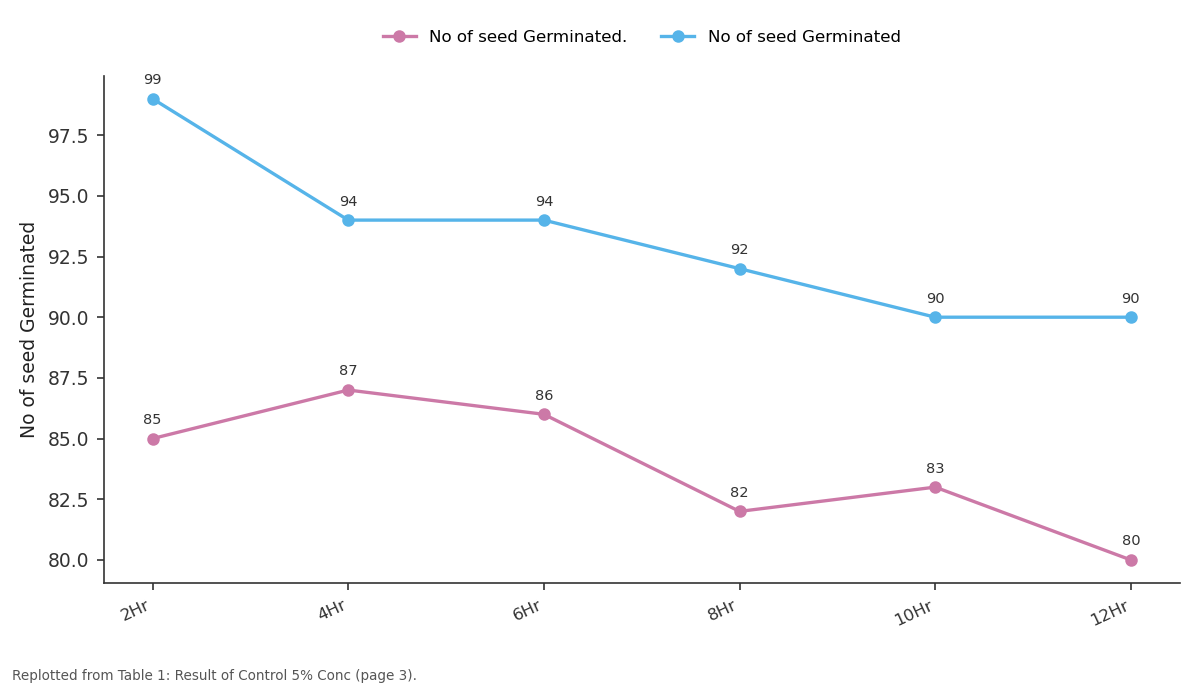
No of seed Germinated. and No of seed Germinated: 2Hr vs 4Hr vs 6Hr vs 8Hr vs 10Hr
Replotted from Table 1 (page 3) of the original paper. Every bar is the paper's own table value.
View source evidence ↗Figures & tables
From the original paper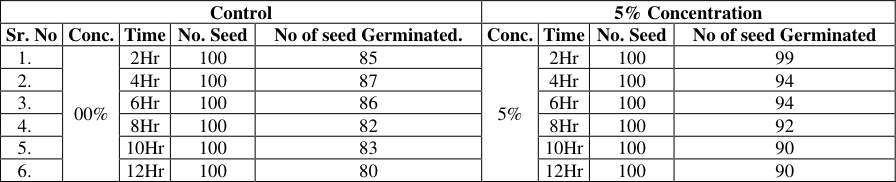 Table 1
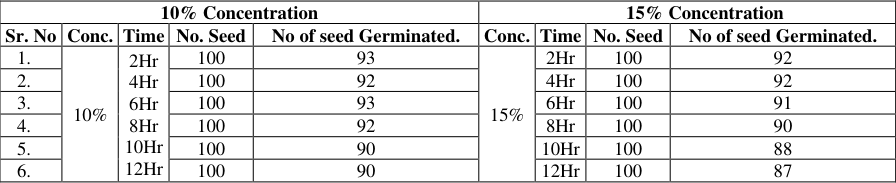 Table 2
Introduction
Legumes represent a vital component of global agriculture, offering significant contributions to human nutrition, animal feed, and environmental sustainability (Akinyosoye et al., 2023; Haq, 2011) [1,8] . Among the diverse array of legumes, chickpea (Cicer arietinum L.) and soybean (Glycine max Merr.) stand out as two of the most economically and nutritionally important crops worldwide (Samal et al., 2023) [15] . Chickpea (Cicer arietinum L.) holds a prominent position as a major pulse crop, particularly in developing countries, where it serves as a crucial source of protein for vegetarian populations (Patel et al., 2018; Sarmah et al., 2012) [11,16] . In addition to its nutritional value, chickpea plays a vital role in enhancing soil fertility through symbiotic nitrogen fixation, contributing to sustainable agricultural practices (Verma et al., 2020) [21] . Soybean, on the other hand, is a dominant oilseed crop with a multitude of applications in the food, feed, and industrial sectors. Its high protein content, coupled with its versatility in processing, has propelled soybean to the forefront of global agricultural production (Deshmukh et al., 2020) [5] . Understanding the intricate interactions between different plant species is crucial for optimizing crop production and developing sustainable agricultural systems. Allelopathy, the phenomenon by which one plant releases biochemicals that influence the growth of neighboring plants, has garnered considerable attention in recent years as a potential tool for weed management and crop improvement. Allelochemicals, the bioactive compounds responsible for allelopathic effects, can either stimulate or inhibit plant growth, depending on their concentration and the sensitivity of the target species. Exploring the allelopathic potential of chickpea exudates on soybean germination could provide valuable insights into plant-plant interactions and offer novel strategies for enhancing soybean productivity. The study of plant exudates, the complex mixture of compounds released from plant roots and shoots, has emerged as a promising area of research in plant physiology and ecology. Plant exudates contain a wide range of organic acids, sugars, amino acids, and secondary metabolites that can influence soil microbial communities, nutrient availability, and plant-plant interactions. Investigating the impact of chickpea exudates on soybean germination can shed light on the potential allelopathic effects and provide a basis for developing innovative agricultural practices. There is growing global urge to switch from an animal-based protein diet to a vegetarian-based protein diet has accelerated the demand of legumes (Samal et al., 2023) [15] . This has increased the significance of research on legumes for nutritional improvement (Ansari et al., 2014) [3] .
Materials and Methods
Plantation of Cicer arietinum L. to the open field in winter season for the collection of exudates and, further procedures like preparation of the field, seed sowing, and irrigation were followed. After complete maturity of plant, exudates were collected with the help of muslin cloth. at early in morning the muslin cloth is to rotate on plant of Cicer arietinum L. and exudates were extracted and stored in room temperature.
Collection of seeds of Glycine max Merr. From the local market. Surface sterilization of seeds was done with the help of 0.1% mercuric chloride solution for 2 minutes to remove any fungal or bacterial contamination. Different concentration of plant exudates were prepared by using the distilled water.
In order to perform the germination test, the towel germination paper used to seed germination testing with different concentration of plant exudates with different concentration gradients with three replications. The numbers of germinated seeds were counted and the germination percentage was calculated. The data obtained from the experiment was statistically analyzed using Analysis of variance by adopting appropriate statistical methods (Renuka et al., 2020) [14] .
Methodology
In this research endeavor, we adopt a meticulous and comprehensive methodology to evaluate the allelopathic effects of Cicer arietinum L. exudates on the seed germination of Glycine max Merr. Initially, Cicer arietinum L. plants will be cultivated in meticulously controlled environmental conditions, ensuring uniformity in growth and development. The exudates produced by these plants will be meticulously collected using established techniques, involving the gentle washing of plant surfaces with sterile distilled water, followed by filtration and concentration. Subsequently, Glycine max Merr. Seeds will be subjected to a rigorous surface sterilization protocol to eliminate any potential fungal or bacterial contaminants, ensuring the integrity of the germination process. These sterilized seeds will then be imbibed in a series of carefully prepared solutions, each containing a different concentration of Cicer arietinum L. exudate. To assess the impact of these exudates on seed germination, we will employ a standardized germination assay, conducted under precisely controlled environmental conditions, including temperature, humidity, and light intensity. Germination will be defined as the emergence of the radical, and the number of germinated seeds will be meticulously recorded at regular intervals over a defined period. In this method, paper towels were used as a medium for seed germination. The seeds of Glycine max were arranged in a 10 × 10 grid (i.e., 100 seeds in total) on moistened towel paper to ensure uniform spacing and facilitate accurate observation of germination parameters. The paper towels were carefully rolled or folded in a way that allowed the seeds to remain in contact with moisture while still receiving adequate air circulation. Once prepared, the towel papers containing the seeds were placed inside a seed germination chamber.
The chamber was maintained at a controlled temperature ranging from 25°C to 30°C, with a relative humidity of approximately 90%. These environmental conditions were chosen to closely mimic optimal germination settings for soybean seeds and to assess the influence of Cicer arietinum exudates on germination performance under standardized conditions. The chamber was equipped with proper lighting and airflow regulation to avoid fungal growth and ensure consistent conditions throughout the experiment.
Observations were made at regular intervals to record germination percentage, root and shoot length, and any visible physiological changes. This method provided a reliable and reproducible approach for evaluating the effects of different treatments on seed germination and early seedling development. The fist count are taken after the 8 days & second count are taken after the 10 days.
Results
In this study, two separate observations were made to assess the germination progress of Glycine max seeds. The first germination count was recorded on the 8th day after treatment, while the final count was taken on the 10th day. This approach allowed for monitoring both early and complete germination responses across different treatment groups. The dual observations helped to capture not only the rate but also the uniformity and consistency of seed germination over time.
To evaluate the specific impact of Cicer arietinum exudates on seed germination, a control group was also maintained under identical environmental conditions. The control seeds were not exposed to any exudate treatment and were germinated using distilled water only. This control setup was essential for establishing a baseline against which the efficacy of various concentrations and exposure times of the exudate could be accurately compared. By analyzing the germination performance of the treated seeds against the control group, it became clear that the exudate had a positive influence on the germination of Glycine max, particularly at the 5% concentration with a 2hour exposure time. The use of both treated and untreated seeds under the same germination conditions ensured the reliability and validity of the experimental outcomes. This methodological approach strengthens the conclusion that Cicer arietinum exudates have the potential to enhance soybean seed germination under controlled conditions. The results of the experiment indicated that the treatment with 5% Cicer arietinum exudate for 2 hours yielded the highest germination rate among all the tested conditions. Specifically, 99% of the Glycine max seeds germinated under this treatment, demonstrating its effectiveness in promoting seed germination. This result suggests that a lower concentration combined with moderate exposure time creates a favorable environment for initiating the germination process. In comparison, other treatments involving higher concentrations (10% and 15%) and varying exposure durations also supported seed germination, but the germination percentages were slightly lower and, in some cases, delayed. For instance, while the 10% concentration resulted in good germination, a slight reduction in overall seed vigor was observed. Similarly, the 15% concentration sometimes led to slower germination or irregular seedling growth, possibly due to the higher osmotic stress or presence of certain inhibitory compounds at elevated levels. These findings suggest that both the concentration of the exudate and the duration of seed exposure play critical roles in influencing seed germination outcomes. Therefore, based on the current study, the most effective treatment for promoting rapid and uniform germination of Glycine max seeds was found to be the 5% Cicer arietinum exudate applied for duration of 2 hours.
Discussion
The results of this study will be discussed in relation to existing literature on allelopathy and plant-plant interactions, providing insights into the potential use of chickpea exudates as a natural herbicide or bio-stimulant in soybean cultivation. Future studies could explore the specific allelochemicals present in chickpea exudates and their mode of action on soybean germination. Plant growth and development can be severely hampered by abiotic stressors such as drought, extreme temperatures, and nutritional imbalances, which can lead to unreliable yields and poor seed quality. Researching the characteristics of plant-associated bacteria and how they affect host plants' responses to stress is essential to developing more resilient agricultural systems (Mukherjee et al., 2020) [10] . Underutilized legumes are essential for ensuring nutritional security, battling hunger, and alleviating malnutrition in human and animal diets (Samal et al., 2023) [15] . Advanced breeding strategies can reduce or eliminate these characteristics, making legumes more nourishing and simpler to utilize in food products, even though they may
International Journal of Biology Sciences https://www.biologyjournal.net have anti-nutritional qualities that restrict their usage (Samal et al., 2023) [15] . The findings of this study have significant implications for sustainable agriculture. By elucidating the allelopathic potential of Cicer arietinum L. exudates on Glycine max Merr. Seed germination, we contribute to a deeper understanding of plant-plant interactions in agro ecosystems. This knowledge can be harnessed to develop innovative weed management strategies, reducing the reliance on synthetic herbicides, which pose environmental and health risks.
Incorporating underutilized crop species into people's diets and food habits, as well as encouraging biodiversity, is a useful strategy for addressing this issue. In light of the world's growing population and the rising demand for sustainable food production, it is imperative to investigate novel strategies for enhancing crop yields and ensuring food security. Grain legume research has greatly benefited from biotechnology breakthroughs; nevertheless, climate change poses a serious threat to the cultivation of these crops, which are crucial for the sustainable livelihoods of the world's poorest people (Bhatnagar-Mathur et al., 2012) [4] . Further research should focus on identifying and characterizing the specific allelochemicals responsible for the observed effects, as well as their mode of action on soybean germination and seedling development.
Neglected and underutilized grain legumes are essential for bolstering food and protein security, significantly replenishing the soil, and possessing inherent traits and capabilities to withstand the effects of abiotic stress and climate change (Popoola et al., 2019) [13] . It is imperative to conduct comprehensive research on these crops to unlock their full potential and promote their integration into mainstream agricultural systems (Haq, 2011; Samal et al., 2023) [8,15] . Legume genetics, genomics, and biology studies are crucial for understanding the constraints on legume crop yield and for supporting legume breeding programs (Varshney & Kudapa, 2013) [20] . More emphasis should be placed on the use of grain legumes in cropping systems, particularly in areas where fertilizer accessibility and affordability are problematic, given the rising need for plant products for human consumption and the financial limitations of applying fertilizer to cereal crops (Sinclair &Vadez, 2012) [18] . Research on legume crops will significantly impact nutritional security and soil fertility because of the diverse roles that grain legume crops play in farming systems and nutritional security (Merga& Haji, 2019) [9] . Conservation agriculture, which is a production method that is ecologically sustainable, may encourage the use of grain legumes in both large-and small-scale agriculture (Stagnariet al., 2017) [19] . Food legumes have the potential to address global food security issues, especially in developing nations (Shunmugam et al., 2018) [17] . Increasing crop diversity and lowering the use of external inputs can be accomplished by including legumes into contemporary cropping systems because of their environmental and socioeconomic benefits (Stagnariet al., 2017) [19] . More investigation is required to identify and use untapped genetic resources in the gene pools of minor crops. Furthermore, farmers' acceptance of novel crops might be enhanced by highlighting the significance of underutilized crops, especially legumes, in addressing malnutrition and enhancing sustainable agricultural systems (Guiguitantet al., 2020; Haq, 2011;
Samal et al., 2023) [7,8,15] . Legumes have a substantial impact on conservation agriculture because they function as growing crops or as crop residue; they also thrive in conservation systems and intercropping systems, which are highly important in developing countries and low-input, low-yield farming systems (Ananda et al., 2022; Stagnariet al., 2017) [2,19] . Underutilized legumes have a great deal of genetic potential, and genetic erosion, or the loss of significant genetic resources, is a serious issue. There is mounting evidence that underutilized legumes can play a substantial role in efforts to achieve long-term nutritional security in light of the global population's rapid expansion and the shift in attention to agricultural systems that are both sustainable and ecologically sound. Legumes are essential for ensuring nutritional security, battling hunger, and alleviating malnutrition in both human and animal diets (Popoola et al., 2023; Samal et al., 2023) [12,15] . Even though they may have antinutritional qualities that restrict their usage, advanced breeding strategies can lessen or eliminate these characteristics, making legumes more nourishing and simpler to utilize in food products (Gowda et al., 2007; Haq, 2011) [6,8] .
Figures and tables from the paper
| Control | — | — | — | — | 5% Concentration | — | — | — |
|---|---|---|---|---|---|---|---|---|
| Sr. No | Conc. | Time | No. Seed | No of seed Germinated. | Conc. | Time | No. Seed | No of seed Germinated |
| 1. | 00% | 2Hr | 100 | 85 | 5% | 2Hr | 100 | 99 |
| 2. | 4Hr | 100 | 87 | 4Hr | 100 | 94 | ||
| 3. | 6Hr | 100 | 86 | 6Hr | 100 | 94 | ||
| 4. | 8Hr | 100 | 82 | 8Hr | 100 | 92 | ||
| 5. | 10Hr | 100 | 83 | 10Hr | 100 | 90 | ||
| 6. | 12Hr | 100 | 80 | 12Hr | 100 | 90 |
Table text extracted from the original PDF; superscript letters are shown inline. The original table image is below.
View original table image
| 10% Concentration | — | — | — | — | 15% Concentration | — | — | — |
|---|---|---|---|---|---|---|---|---|
| Sr. No | Conc. | Time | No. Seed | No of seed Germinated. | Conc. | Time | No. Seed | No of seed Germinated. |
| 1. | 10% | 2Hr 4Hr 6Hr 8Hr 10Hr 12Hr | 100 | 93 | 15% | 2Hr | 100 | 92 |
| 2. | 100 | 92 | 4Hr | 100 | 92 | |||
| 3. | 100 | 93 | 6Hr | 100 | 91 | |||
| 4. | 100 | 92 | 8Hr | 100 | 90 | |||
| 5. | 100 | 90 | 10Hr | 100 | 88 | |||
| 6. | 100 | 90 | 12Hr | 100 | 87 |
Table text extracted from the original PDF; superscript letters are shown inline. The original table image is below.
View original table image
References
21 in the original paper- Akinyosoye ST, Agbeleye OA, Adetumbi JA, Ukachukwu PC, Amusa OD. Genotype-genotype × environment (GGE) biplot analysis of winged bean for grain yield. Acta Hortic Regiotect. 2023;26(1):53. https://doi.org/10.2478/ahr-2023-0009
- Ananda MR, Vaiahnav S, Naide PR, Aruna NV, Vishwanath V. Long term benefits of legume-based cropping systems on soil health and productivity: An overview. Int J Environ Clim Change. 2022;12(9):299. https://doi.org/10.9734/ijecc/2022/v12i930767
- Ansari MF, Tipre DR, Dave SR. Efficiency evaluation of commercial liquid biofertilizers for growth of Cicer arietinum in pot and field study. Biocatal Agric Biotechnol. 2014;4(1):17. https://doi.org/10.1016/j.bcab.2014.09.010
- Bhatnagar-Mathur P, Palit P, Kumar CS, Reddy DS, Sharma KK. Grain legumes: Biotechnological interventions in crop improvement for adverse environments. In: Biotechnological Approaches for Sustainable Development. 2012:381. https://doi.org/10.1002/9783527665334.ch16
- Deshmukh SN, Kolhe PN, Kale M, Varne MD, Pawar KD. Evaluation of drought effect on soybean genotypes mediated through PEG-6000 (Polyethylene Glycol). Int J Curr Microbiol Appl Sci. 2020;9(9):726. https://doi.org/10.20546/ijcmas.2020.909.092
- Gowda CLL, Upadhyaya HD, Ghaffar MA. Importance of under-utilized indigenous legumes in Asia-Pacific region. Acta Hortic. 2007;752:95. https://doi.org/10.17660/actahortic.2007.752.11
- Guiguitant J, Vile D, Ghanem ME, Wéry J, Marrou H. Evaluation of pulse crops' functional diversity supporting food production. Sci Rep. 2020;10(1). https://doi.org/10.1038/s41598-020-60166-4
- Haq N. Underutilized food legumes: Potential for multipurpose uses. 2011.
- Merga B, Haji J. Economic importance of chickpea: Production, value, and world trade. Cogent Food Agric. International Journal of Biology Sciences https://www.biologyjournal.net 2019;5(1):1615718. https://doi.org/10.1080/23311932.2019.1615718
- Mukherjee A, Singh BK, Verma JP. Harnessing chickpea (Cicer arietinum L.) seed endophytes for enhancing plant growth and biocontrol against Fusarium sp. Microbiol Res. 2020;237:126469. https://doi.org/10.1016/j.micres.2020.126469
- Patel JV, Antala DK, Dalsaniya AN. Influence of different packaging materials on the seed quality parameters of chickpea. Int J Curr Microbiol Appl Sci. 2018;7(12):2458. https://doi.org/10.20546/ijcmas.2018.712.279
- Popoola JO, Ojuederie OB, Aworunse OS, et al. Nutritional, functional, and bioactive properties of African underutilized legumes. Front Plant Sci. 2023;14. https://doi.org/10.3389/fpls.2023.1105364
- Popoola JO, Ojuederie OB, Omonhinmin CA, Adegbite AE. Neglected and underutilized legume crops: Improvement and future prospects. In: IntechOpen eBooks. IntechOpen; 2019. https://doi.org/10.5772/intechopen.87069
- Renuka R, Kumar V, Vyakaranahal BS. Effect of polymer coating, plant biocides and insecticide on seed quality of fodder cowpea during storage. Int J Curr Microbiol Appl Sci. 2020;9(3):962. https://doi.org/10.20546/ijcmas.2020.903.113
- Samal I, Bhoi TK, Raj MN, et al. Underutilized legumes: Nutrient status and advanced breeding approaches for qualitative and quantitative enhancement. Front Nutr. 2023;10. https://doi.org/10.3389/fnut.2023.1110750
- Sarmah BK, Acharjee S, Sharma HC. Chickpea: Crop improvement under changing environmental conditions. In: Biotechnological Approaches for Sustainable Development. 2012:361. https://doi.org/10.1002/9783527665334.ch15
- Shunmugam A, Kannan U, Jiang Y, Daba K, Gorim LY. Physiology-based approaches for breeding of nextgeneration food legumes. Plants. 2018;7(3):72. https://doi.org/10.3390/plants7030072
- Sinclair TR, Vadez V. The future of grain legumes in cropping systems. Crop Pasture Sci. 2012;63(6):501. https://doi.org/10.1071/cp12128
- Stagnari F, Maggio A, Galieni A, Pisante M. Multiple benefits of legumes for agriculture sustainability: An overview. Chem Biol Technol Agric. 2017;4(1). https://doi.org/10.1186/s40538-016-0085-1
- Varshney RK, Kudapa H. Legume biology: The basis for crop improvement. Funct Plant Biol. 2013;40(12). https://doi.org/10.1071/fpv40n12_fo
- Verma G, Yadav DD, Kumar A, et al. Impact of fertility levels and biofertilizers on root architecture, yield and nutrient uptake of chickpea (Cicer arietinum L.) crop. Int J Curr Microbiol Appl Sci. 2020;9(2):2018. https://doi.org/10.20546/ijcmas.2020.902.230