
Research article · 2025 · Full text
International Journal of Biology SciencesQualitative phytochemical screening of some crude drugs from bhimashankar wildlife sanctuary, Pune, MS. India
Volume 7(6) · Pages 304–307 · DOI: 10.33545/26649926.2025.v7.i6e.390 ↗
Research areasEthnobotanical and Medicinal Plants Studies
Abstract
Author-writtenCrude drugs are rich in bioactive components that are utilized to treat various human ailments. They play crucial role in human beings’ life. The medicinal qualities of plant species belong to their phytochemical elements. Phytochemical screening is an important step in identifying bioactive compounds present in particular crude drugs. Hence, in this present work, phytochemical screening of some crude drugs extract, namely Gymnema sylvestre (Retz.) R.Br. ex-Schultes, Terminalia chebula Retz., Holarrhena pubescens Buch. Ham.) Wall. ex G. Don, Phyllanthus emblica L., Terminalia cuneata Roth was carried out. The solvent extracts of the leaves, Rhizome, stem, whole plant of respective crude drugs were prepared using cold extraction method with methanol, ethanol, acetone, chloroform, petroleum ether, and aqueous solvents. Qualitative phytochemical analysis of plants included tests for alkaloids, starch, flavonoids, steroids, saponins, tannins, terpenoids, lipids. In all solvent extracts, all eight phytoconstituents that were examined present in all five plants. Preliminary phytochemical screening in all five plants methanolic extract showed the active compounds presence in high concentration, such as alkaloid, steroids, terpenoids, starch, lipids flavonoids, tannin compounds and tannins. Also, the active compounds presence in low concentration in aqueous extracts, such as saponins.
Summary
Source-checkedPlain-language reading of the full paper, prepared with AI and checked against the text. Each point links to the authors' own words.
Why it matters
- Crude drugs are important because they contain bioactive components used to treat various human illnesses. View evidence ↗
- Phytochemical screening is a necessary process to identify the specific bioactive compounds within crude drugs. View evidence ↗
- The Bhimashankar Wildlife Sanctuary in Maharashtra's northern Western Ghats is a region rich in diverse flora, including medicinal plants. View evidence ↗
The question
- The study aimed to perform qualitative phytochemical analysis on five specific plant species from the Bhimashankar Wildlife Sanctuary in Pune. View evidence ↗
What they did
- The researchers screened five plants: Gymnema sylvestre, Terminalia chebula, Holarrhena pubescens, Phyllanthus emblica, and Terminalia cuneata. View evidence ↗
- Plant parts including leaves, rhizomes, stems, and whole plants were processed using a cold extraction method with six different solvents: methanol, ethanol, acetone, chloroform, petroleum ether, and water. View evidence ↗
- The extraction process utilized 10g of crude drug powders for each sample. View evidence ↗
- The study tested for the presence of eight phytoconstituents: alkaloids, starch, flavonoids, steroids, saponins, tannins, terpenoids, and lipids. View evidence ↗
What they found
- All eight examined phytoconstituents were found to be present across all five plant species in the various solvent extracts. View evidence ↗
- Methanolic extracts of all five plants showed high concentrations of alkaloids, steroids, terpenoids, starch, lipids, flavonoids, and tannins. View evidence ↗
- Aqueous extracts showed a low concentration of active compounds, specifically saponins. View evidence ↗
- In Gymnema sylvestre leaf extracts, saponins were only detected in the aqueous extract. View evidence ↗
- In Holarrhena pubescens bark extracts, tannins were only present in methanol and ethanol extracts. View evidence ↗
- Saponins were not detected in any of the solvent extracts of Phyllanthus emblica fruit. View evidence ↗
What it means
- The authors conclude that the extracts from these five plants are promising sources for the development of useful drugs. View evidence ↗
- The authors strongly recommend the traditional medicinal use of these plants. View evidence ↗
- The authors state that future research is needed to isolate, purify, and characterize the specific active constituents responsible for the plants' biological activity. View evidence ↗
Visual summary
1 visualsIllustrations explain the paper; they do not show study data.
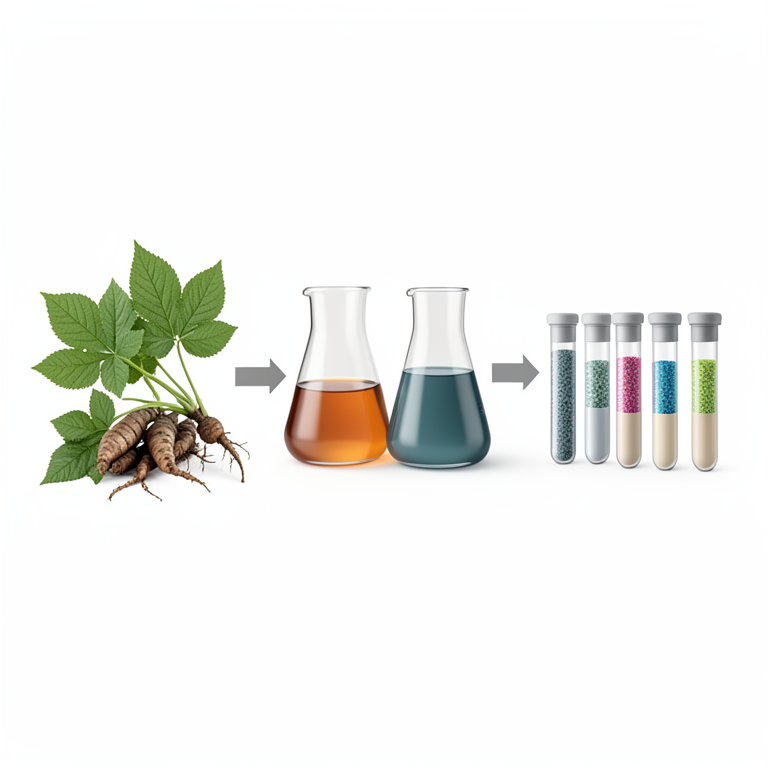
Phytochemical Screening Workflow
AI-generated conceptual illustration (Wild plants from Bhimashankar wildlife sanctuary (leaves, rhizomes, and stems)). It explains the idea and does not show study data.
View source evidence ↗Figures & tables
From the original paper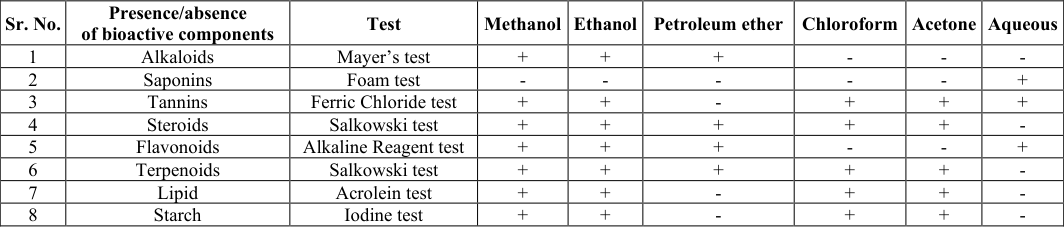 Table 1
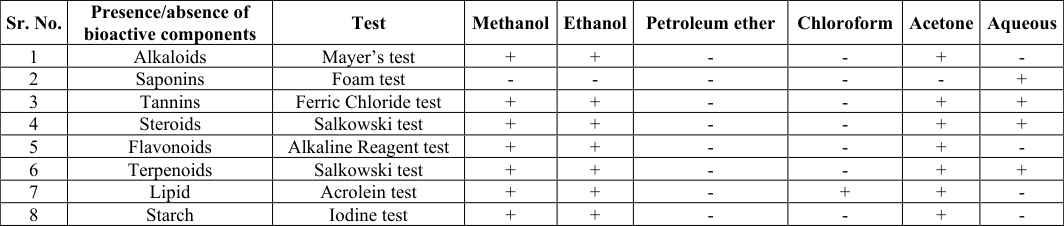 Table 2
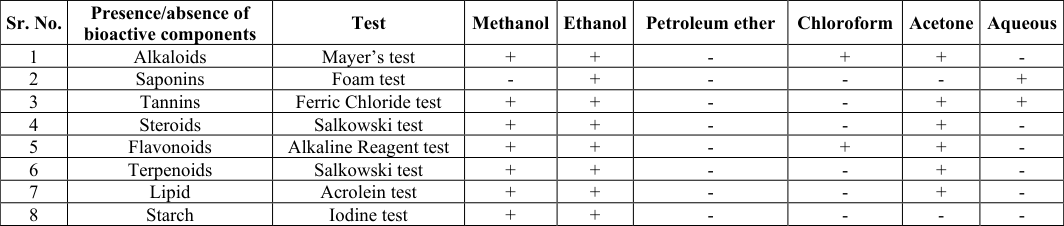 Table 3
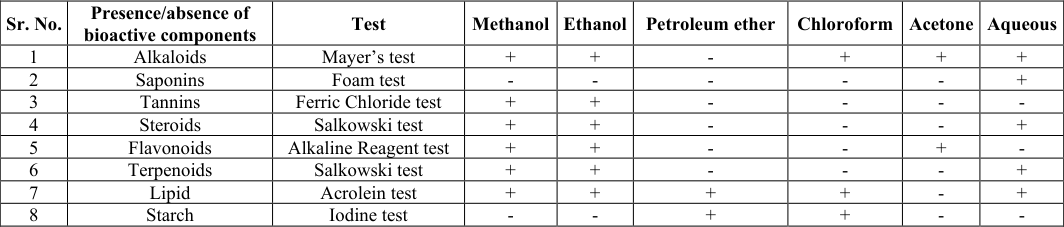 Table 4
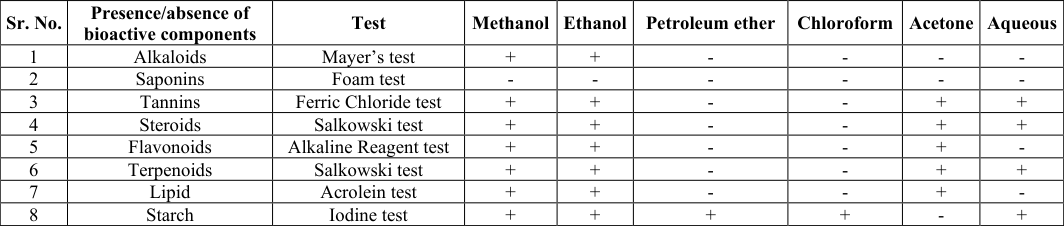 Table 5
Introduction
The Bhimashankar Wildlife Sanctuary (BWS) is one of the wildlife sanctuaries located along the northern Western Ghats in Maharashtra. It was notified on 10 October 1985 by the Government of Maharashtra (1985) as a step to conserve the state animal, the Giant Squirrel Ratufa indica spp. elphinstonii. The sanctuary is named after the Bhimashankar temple (one of the twelve jyotir-linga (self-emerged) Shiva temples in the country) located inside the sanctuary and surrounded by a sacred grove. It is rich in Flora (Herb, Shrubs, Climbers, trees, Medicinal Plants) as well as Fauna. Jagdale (1994) studied the ecology of the BWS area and concluded the ecosystem of the sanctuary is unique and very fragile, so it requires priority for conservation and minimize local use of natural resources and documentation of some ethnomedicinal plants of BWS area. Rahangdal et al., (2017) focus on Florristic diversity of Bhimashankar Wildlife Sanctuary. Medicinal plants contain some organic compounds which provide definite physiological action on the human body and these bioactive substances include tannins, alkaloids, carbohydrates,terpenoids, steroids and flavonoids [5,11] . These bioactive compounds are synthesized by primary and secondary metabolism of living organisms. Secondary metabolites are chemotaxonomically diverse compounds with obscure function. They are widely used in the human therapy, veterinary, agriculture, scientific research and countless other areas [17] . A large number of phytochemicalsbelonging to several chemical classes have been shown to have inhibitory effects on all types of microorganisms in vitro [3] . Bioactive compounds can be derived from barks, leaves, flowers, roots, fruits, seeds [8] . Knowledge about phyto constituents of plants is desirable because such information will be value for synthesis of chemical substances present in plants. [9,10,11] . In the present work, qualitative and phytochemical analysis were carried out in five plants of Bhimashankar Wildlife Sanctuary, pune.
Materials and Methods
Collection of Plant Materials: Crude drugs samples were collected from tribes of Bhimashankar wildlife sanctuary in different seasons of 2024 year. Some tribal communities marketed crude drugs Near Bhimashankar Jyotirlinga Temple, BWS, Pune. The samples were identified by botanist.
Extraction of Plant Material:
Various organic solvents such as methanol, ethanol, petroleum ether, acetone, chloroform and water were used for the extraction of bioactive compounds. The crude drugs powders (10g) of selected crude drugs extracted with organic solvents by cold extraction method. The extracts obtained were completely evaporated by using vacuum rotary evaporator. The concentrated extracts were subjected to qualitative test for the identification of various phytochemical constituents as per standard procedures (Brindha et al., 1981) [1] .
Phytochemical screening
The prepared extract of all the plants was used to test various phytoconstituents present in them. Different chemical reagents were prepared and specific test, for specific phytochemicals was done. These various tests were qualitative and hence termed phytochemical screening. The tests were done by following standard procedures based on journal articles.
Test for alkaloids: Meyer's test: Take 2 mL of plant extract, 1 mL of Meyer's reagent was added. The presence of pale yellow precipitate indicated the presence of alkaloids.
Test for saponins: 2 g of powdered sample was boiled in 20 mL of distilled water. 10 mL of filtrate, 5 mL of distilled water were quivered vigorously. The appearance of frothing indicated the presence of saponins.
Test for tannin / polyphenol:
To the diluted extract, 3-4 drops of 10% FeCl3 were added, blue color was seen for Gallic tannins and the presence of catechol tannin turned the solution green.
Test for steroids: Dissolve 1 ml plant extract in 2 ml chloroform. Carefully add few drops of concentrated sulfuric acid along the sides of the test tube, allowing it to form a layer below the chloroform layer. A reddish-brown color at the interface between the two layers indicates the presence of steroids.
Test for flavonoids: Take 1-2 mL of the plant extract. Add a few drops of dilute sodium hydroxide (NaOH) solution. Observe the color change. Add a few drops of dilute hydrochloric acid (HCl). Observe the color change again. An intense yellow color appears upon adding NaOH, and this color becomes colorless upon adding HCl.
Test for terpenoids: 0.2 g of each sample was mixed with 2 ml chloroform, 3 ml conc. H2SO4. Reddish-brown coloration indicated the presence of terpenoids.
Test for Starch: Take 1 ml of plant extract. add drops of iodine solution for some time. If it turns blue-black afterwards, it contains starch. Test for Lipid: Take a small amount of the sample in a test tube. Add a few crystals of potassium bisulfate (KHSO4). Heat the mixture gently and then strongly. A pungent, irritating odour of acrolein indicates the presence of glycerol or fats.
Results
Preliminary phytochemical screening in all five plants methanolic extract showed the active compounds presence in high concentration, such as alkaloid, steroids, terpenoids, starch, lipids flavonoids, tannin compounds and tannins. Also, the active compounds presence in low concentration in aqueous extracts, such as saponins shown in Table no
Figures and tables from the paper
| Sr. No. | Presence/absence of bioactive components | Test | Methanol | Ethanol | Petroleum ether | Chloroform | Acetone | Aqueous |
|---|---|---|---|---|---|---|---|---|
| 1 | Alkaloids | Mayer’s test | + | + | + | - | - | - |
| 2 | Saponins | Foam test | - | - | - | - | - | + |
| 3 | Tannins | Ferric Chloride test | + | + | - | + | + | + |
| 4 | Steroids | Salkowski test | + | + | + | + | + | - |
| 5 | Flavonoids | Alkaline Reagent test | + | + | + | - | - | + |
| 6 | Terpenoids | Salkowski test | + | + | + | + | + | - |
| 7 | Lipid | Acrolein test | + | + | - | + | + | - |
| 8 | Starch | Iodine test | + | + | - | + | + | - |
Table text extracted from the original PDF; superscript letters are shown inline. The original table image is below.
View original table image
| Sr. No. | Presence/absence of bioactive components | Test | Methanol | Ethanol | Petroleum ether | Chloroform | Acetone | Aqueous |
|---|---|---|---|---|---|---|---|---|
| 1 | Alkaloids | Mayer’s test | + | + | - | - | + | - |
| 2 | Saponins | Foam test | - | - | - | - | - | + |
| 3 | Tannins | Ferric Chloride test | + | + | - | - | + | + |
| 4 | Steroids | Salkowski test | + | + | - | - | + | + |
| 5 | Flavonoids | Alkaline Reagent test | + | + | - | - | + | - |
| 6 | Terpenoids | Salkowski test | + | + | - | - | + | + |
| 7 | Lipid | Acrolein test | + | + | - | + | + | - |
| 8 | Starch | Iodine test | + | + | - | - | + | - |
Table text extracted from the original PDF; superscript letters are shown inline. The original table image is below.
View original table image
| Sr. No. | Presence/absence of bioactive components | Test | Methanol | Ethanol | Petroleum ether | Chloroform | Acetone | Aqueous |
|---|---|---|---|---|---|---|---|---|
| 1 | Alkaloids | Mayer’s test | + | + | - | + | + | - |
| 2 | Saponins | Foam test | - | + | - | - | - | + |
| 3 | Tannins | Ferric Chloride test | + | + | - | - | + | + |
| 4 | Steroids | Salkowski test | + | + | - | - | + | - |
| 5 | Flavonoids | Alkaline Reagent test | + | + | - | + | + | - |
| 6 | Terpenoids | Salkowski test | + | + | - | - | + | - |
| 7 | Lipid | Acrolein test | + | + | - | - | + | - |
| 8 | Starch | Iodine test | + | + | - | - | - | - |
Table text extracted from the original PDF; superscript letters are shown inline. The original table image is below.
View original table image
| Sr. No. | Presence/absence of bioactive components | Test | Methanol | Ethanol | Petroleum ether | Chloroform | Acetone | Aqueous |
|---|---|---|---|---|---|---|---|---|
| 1 | Alkaloids | Mayer’s test | + | + | - | + | + | + |
| 2 | Saponins | Foam test | - | - | - | - | - | + |
| 3 | Tannins | Ferric Chloride test | + | + | - | - | - | - |
| 4 | Steroids | Salkowski test | + | + | - | - | - | + |
| 5 | Flavonoids | Alkaline Reagent test | + | + | - | - | + | - |
| 6 | Terpenoids | Salkowski test | + | + | - | - | - | + |
| 7 | Lipid | Acrolein test | + | + | + | + | - | + |
| 8 | Starch | Iodine test | - | - | + | + | - | - |
Table text extracted from the original PDF; superscript letters are shown inline. The original table image is below.
View original table image
| Sr. No. | Presence/absence of bioactive components | Test | Methanol | Ethanol | Petroleum ether | Chloroform | Acetone | Aqueous |
|---|---|---|---|---|---|---|---|---|
| 1 | Alkaloids | Mayer’s test | + | + | - | - | - | - |
| 2 | Saponins | Foam test | - | - | - | - | - | - |
| 3 | Tannins | Ferric Chloride test | + | + | - | - | + | + |
| 4 | Steroids | Salkowski test | + | + | - | - | + | + |
| 5 | Flavonoids | Alkaline Reagent test | + | + | - | - | + | - |
| 6 | Terpenoids | Salkowski test | + | + | - | - | + | + |
| 7 | Lipid | Acrolein test | + | + | - | - | + | - |
| 8 | Starch | Iodine test | + | + | + | + | - | + |
Table text extracted from the original PDF; superscript letters are shown inline. The original table image is below.
View original table image
References
17 in the original paper- Brindha P, Sasikala B, Purushothaman KK. Pharmacognostic studies on Merugan kizhangu. Bull Med Eth Bot Res. 1981;3:84-96.
- Bruneton J. Pharmacognosy, phytochemistry, medicinal plants. Paris: Lavoisier Publishing; 1995.
- Cowan MM. Plant products as antimicrobial agents. Clin Microbiol Rev. 1999;12:564-82.
- Craigg GM, David JN. Natural product drug discovery in the next millennium. J Pharm Biol. 2001;39:8-17.
- Edoga HO, Okwu DE, Mbaebie BO. Phytochemicals constituents of some Nigerian medicinal plants. Afr J Biotechnol. 2005;4(7):685-688.
- Fransworth NR. Biological and phytochemical screening of plants. J Pharm Sci. 1996;55:225-7.
- Rangari VD. Pharmacognosy and phytochemistry. Nasik: Carrier Publication; 2002. p.132.
- Harborne JB. Phytochemical methods. London: Chapman and Hall; 1998. p.117-9.
- Jagdale RP. Ecology of Bhimashankar Forest Western Ghats, Maharashtra State [PhD thesis]. Pune: University of Pune; 1994.
- Janardhanan KP. An enumeration of the medicinal plants of Khed Taluka (Maharashtra State). Bull Bot Surv India. 1963;5(3&4):363-374.
- Mace MD. Histochemical localization of phenols in healthy and diseased tomato roots. Phytopathology. 1963;16:915-25.
- Mann J. Secondary metabolism. London: Oxford University Press; 1978. p.154.
- Mojab F, Kamalinejad M, Ghaderi N, Vanidipour HR. Phytochemicals screening of some species of Iranian plants. Iran J Pharm Res. 2003;3:77-82.
- Parekh J, Chanda S. Antibacterial and phytochemical studies on twelve species of Indian medicinal plants. Afr J Biomed Res. 2007;10:175-181.
- Parekh J, Chanda S. Phytochemicals screening of some plants from western region of India. Plant Arch. 2008;8:657-662.
- Upadhye AS, Vartak VD, Kumbhojkar MS. Ethnomedico-botanical studies in western Maharashtra, India. Ethnobotany. 1994;6(1/2):25-31.
- Vasu K, Goud JV, Suryam A, Singara Chary MA. Biomolecular and phytochemical analyses of three aquatic angiosperms. Afr J Microbiol Res. 2009;3(8):418-421.