
Research article · 2025 · Full text
International Journal of Biology SciencesStudy of avian diversity and nesting ecology of Pimpaldari forest, Hingoli District (M.S.)
Volume 7(6) · Pages 223–226 · DOI: 10.33545/26649926.2025.v7.i6d.379 ↗
Research areasAvian ecology and behaviorLivestock and Poultry ManagementWildlife Ecology and Conservation
Abstract
Author-writtenThe Pimaldari forest area is rich in bird diversity. The Pimpaldari forest provide vital role for present avian fauna and flora with great place to eat rest and breed. This forest are the part of the ecosystem and environment birds are the great way to monitor the environment for the conservation and protection of bird species and their ecology is to important to understand their life cycle, habitat and ecosystem. This study was conducted to explore the bird diversity and nesting ecology of Pimpaldari forest area of Hingoli district of Maharashtra. Observations were made in the Pimpaldari forest and its surrounding areas from January 2023 to January 2024 for 2 hours after sunrise and 2 hours before sunset at each location in the Pimpaldari forest and its surrounding areas. During the study period, 68 species of birds belonging to 34 different families were recorded and a total of 86 nests were recorded. The highest numbers of nests were made by the House Sparrow16, followed by Common Myna 09, Baya weavers 07 Rose Ringed Parakeet 6 and Jungle Crow 5, etc. Apart from this, it was observed that the birds used the trees and shrubs adjacent to the forest area for nesting. Maximum birds species were sighted during the winter season some were found to be migratory and most being resident. The species recorded include 36 Residential common, 9 Residential uncommon, 6 Residential, 3 Winter migrant common, 3 Winter migrant, 2 Migratory, 3 Residential migrant common, 1 Migrant uncommon, 1 Resident common rare and 2 Residential rare are observed.
Summary
Source-checkedPlain-language reading of the full paper, prepared with AI and checked against the text. Each point links to the authors' own words.
Why it matters
- The Pimpaldari forest is a critical habitat providing essential resources for birds to feed, rest, and breed. View evidence ↗
- Studying bird ecology is important because birds serve as effective indicators for monitoring the environment and supporting conservation efforts. View evidence ↗
- Prior to this study, there was no available scientific data regarding the avian fauna and nesting ecology of the Pimpaldari forest. View evidence ↗
The question
- The objective of the research was to explore the diversity of bird species and their nesting ecology within the Pimpaldari forest area of the Hingoli district in Maharashtra. View evidence ↗
What they did
- Field observations were conducted from January 2023 to January 2024, with sampling occurring for two hours after sunrise and two hours before sunset at each location. View evidence ↗
- The study focused on selected sites within a 5 km radius of the organization for Pimpaldari village and forest. View evidence ↗
- Researchers used 10X50 binoculars and digital cameras to identify species via standard literature and employed a direct count method to record diversity and nesting ecology. View evidence ↗
What they found
- The study recorded a total of 68 bird species from 34 different families. View evidence ↗
- A total of 86 bird nests were identified during the observation period. View evidence ↗
- The recorded species were categorized by habitat status, including 36 residential common, 9 residential uncommon, 6 residential, and various migrant and rare categories. View evidence ↗
- Terrestrial birds in the area generally prefer nesting in thorny bushes or large canopy trees, likely as a strategy to avoid predation. View evidence ↗
What it means
- The authors concluded that birds utilize both the forest and the adjacent trees and shrubs for their nesting needs. View evidence ↗
- The authors note that because no prior scientific data existed, the biodiversity of birds and nests in this area is still currently being studied. View evidence ↗
Visual summary
2 visualsIllustrations explain the paper; charts are replotted from the paper's own table values.
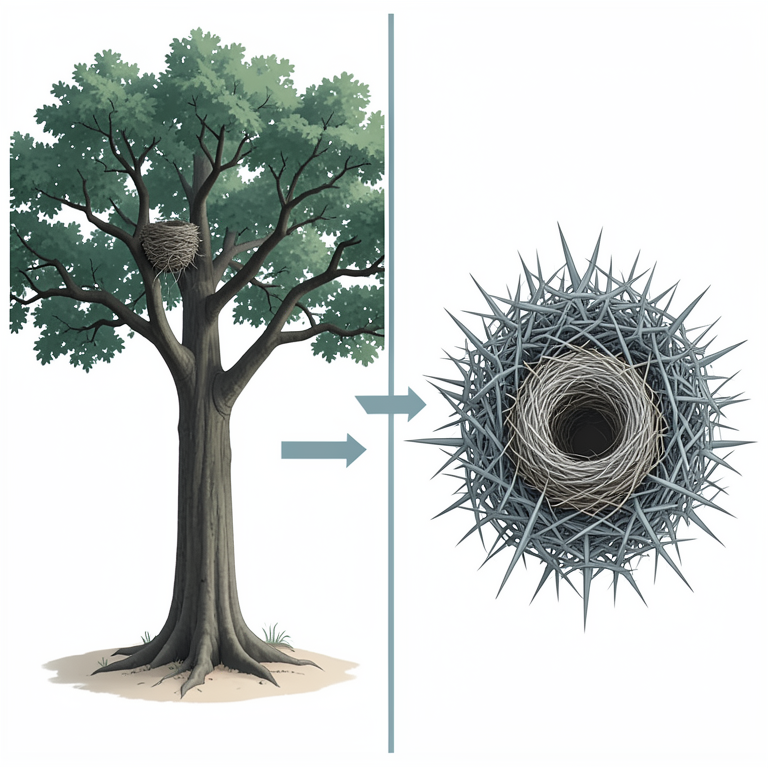
Nesting Site Preferences
AI-generated conceptual illustration (various tropical forest birds and native vegetation of Pimpaldari forest). It explains the idea and does not show study data.
View source evidence ↗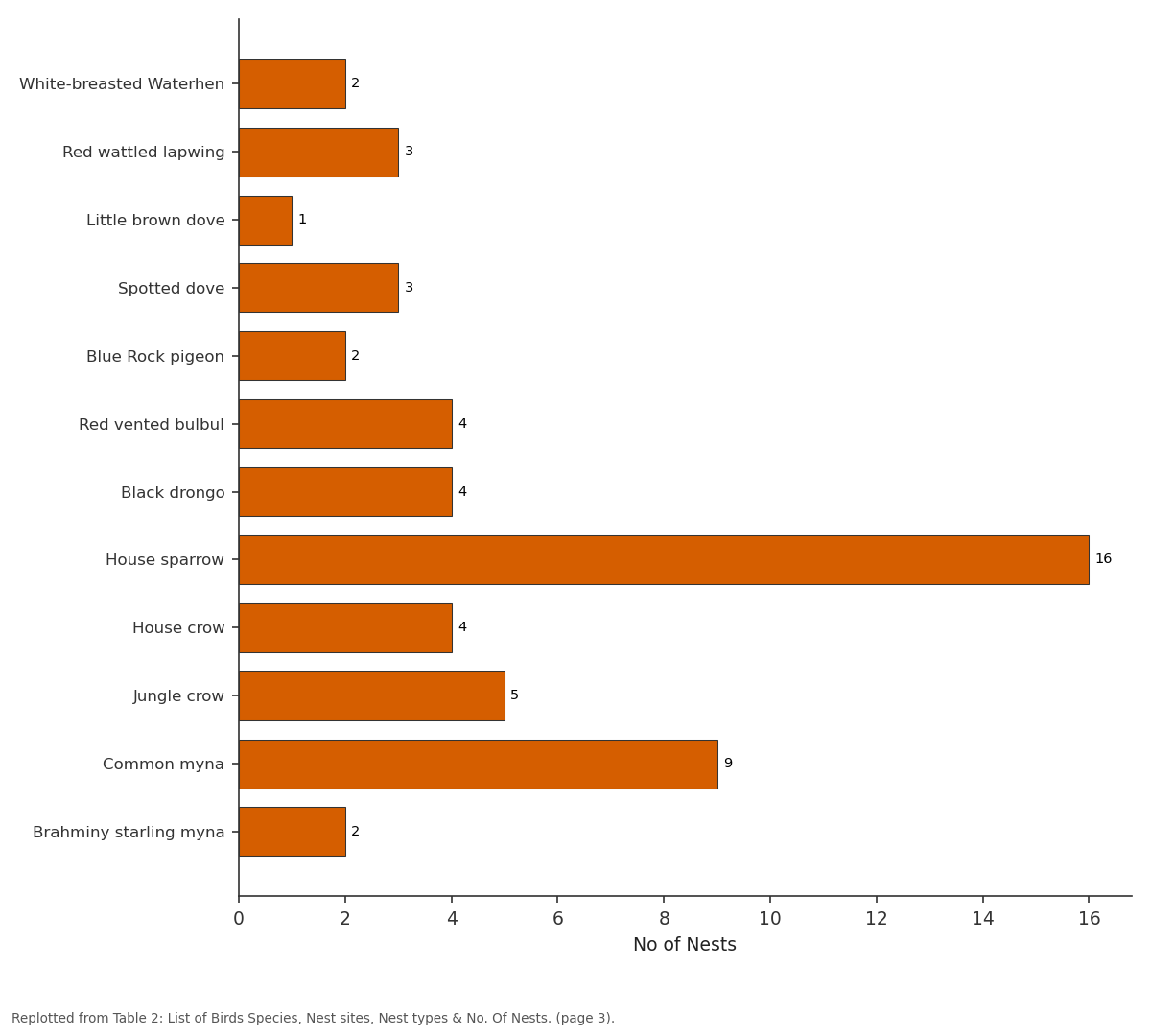
No of Nests: White-breasted Waterhen vs Red wattled lapwing vs Little brown dove vs Spotted dove vs Blue Rock pigeon
Replotted from Table 2 (page 3) of the original paper. Every bar is the paper's own table value.
View source evidence ↗Figures & tables
From the original paper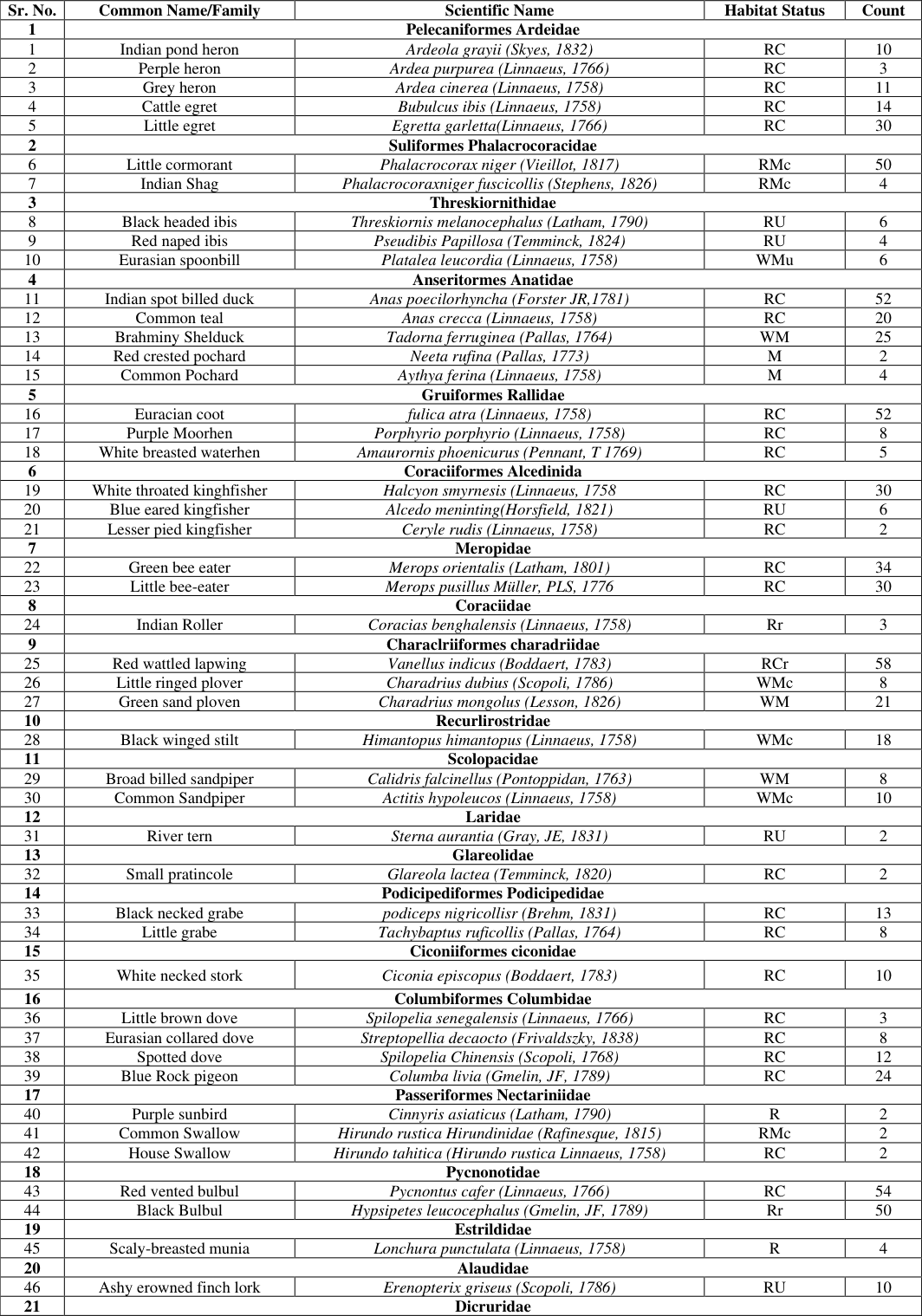 Table 1
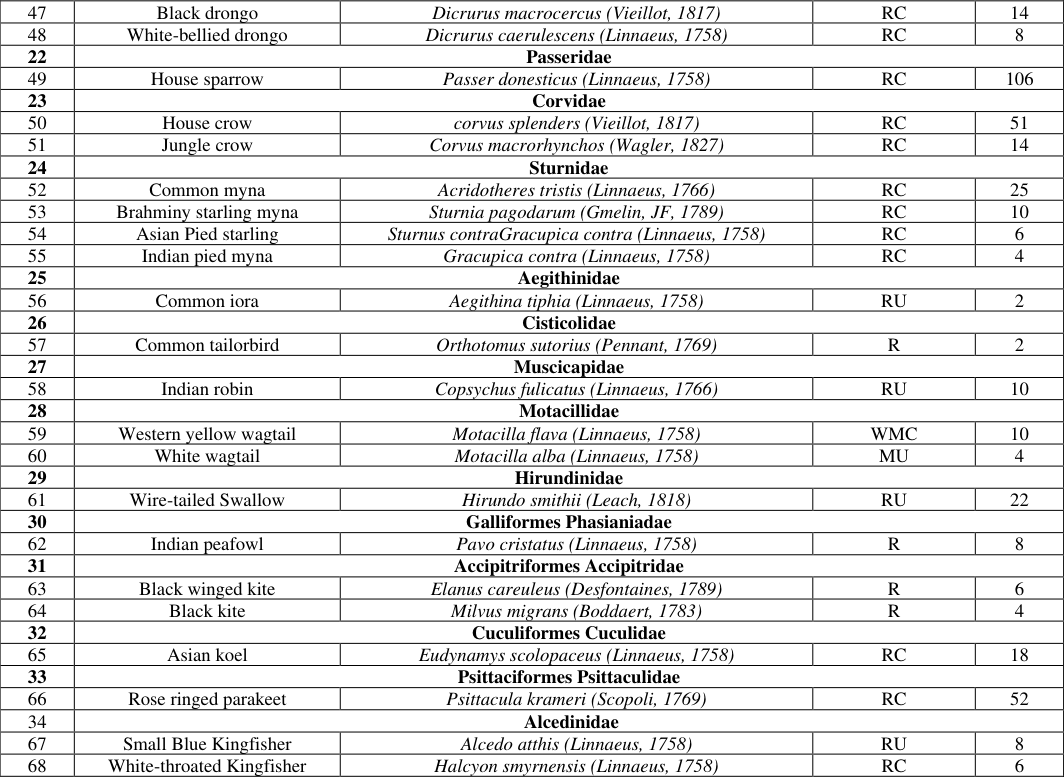 Table 2
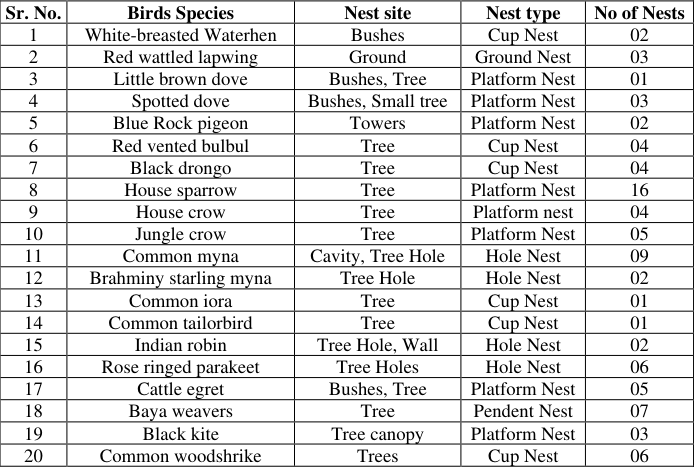 Table 2
Introduction
Hingoli district in Maharashtra has a forest area of approximately 2.32% of its total geographical area, which is about 4.827sq km and approximately 275 sq km of forest area. The major forest area in the district is in Aundha taluka which is about 10432 hectares Aundha Nagnath is one of the taluka of Hingoli district (M.S.) is 25 k.m.away from Hingoli and pimpaldari village and forest area located in the Aundha taluka of Hingoli district of Maharashtra. The present study served part chosen sides at pimpledari forest within 5 km radius of the organisation for pimpaldari village and forest the selected spots and sites are largely fully covered by different trees like teak trees, fruits trees small different types of buses, grasses, dry decirus area Present many type of trees available for the nesting of birds. Besides area mixed agriculture, plots, fields, native vegetation.
Forest provide the essential resources necessary for the completion of life cycle including food for adult nesting and nesting sides their demands for food are higher and are likely to be more sensitive to changes in forest resources Jeffery. A. et al 2015 we represent in this paper Avian diversity and nesting ecology of pimpaldari forest district Hingoli There is a no scientific data available on the Avian fauna and nesting ecology of pimpaldari forest
Materials And Methods
The observation was carried out by using a field binocular, digital photo camera which is later analyse and identified to bird species with the help of standard literature and direct count method was used to record the avian diversity and nesting ecology monitored by using a pair of 10X50 binocular. Fieldwork was carried out during the time period January 2023 to January 2024 also direct observation and species noting was made by walking on grassland, tracking on road sides in and around forest areas and behaviour and nesting ecology observed during the study period The plant species also identified and recorded. NAAS Rating: 4.82 IJBS 2025; 7(6): 223-226 Pradnya Ramchandra Mujmule Department of Zoology, Adarsh College, Hingoli, Maharashtra, India Dr. BS Salve Department of Zoology, Adarsh College, Hingoli, Maharashtra, India Pradnya Ramchandra Mujmule Department of Zoology, Adarsh College, Hingoli, Maharashtra, India https://www.biologyjournal.net Table 1: Check list of Birds recording in and around Pimpaldari Forest area.
| Sr. No. | Common Name/Family | Scientific Name | Habitat Status | Count |
|---|---|---|---|---|
| 1 | Pelecaniformes Ardeidae | |||
| 1 | Indian pond heron | Ardeola grayii (Skyes, 1832) | RC | 10 |
| 2 | Perple heron | Ardea purpurea (Linnaeus, 1766) | RC | 3 |
| 3 | Grey heron | Ardea cinerea (Linnaeus, 1758) | RC | 11 |
| 4 | Cattle egret | Bubulcus ibis (Linnaeus, 1758) | RC | 14 |
| 5 | Little egret | Egretta garletta(Linnaeus, 1766) | RC | 30 |
| 2 | Suliformes Phalacrocoracidae | |||
| 6 | Little cormorant | Phalacrocorax niger (Vieillot, 1817) | RMc | 50 |
| 7 | Indian Shag | Phalacrocoraxniger fuscicollis (Stephens, 1826) | RMc | 4 |
| 3 | Threskiornithidae | |||
| 8 | Black headed ibis | Threskiornis melanocephalus (Latham, 1790) | RU | 6 |
| 9 | Red naped ibis | Pseudibis Papillosa (Temminck, 1824) | RU | 4 |
| 10 | Eurasian spoonbill | Platalea leucordia (Linnaeus, 1758) | WMu | 6 |
| 4 | Anseritormes Anatidae | |||
| 11 | Indian spot billed duck | Anas poecilorhyncha (Forster JR,1781) | RC | 52 |
| 12 | Common teal | Anas crecca (Linnaeus, 1758) | RC | 20 |
| 13 | Brahminy Shelduck | Tadorna ferruginea (Pallas, 1764) | WM | 25 |
| 14 | Red crested pochard | Neeta rufina (Pallas, 1773) | M | 2 |
| 15 | Common Pochard | Aythya ferina (Linnaeus, 1758) | M | 4 |
| 5 | Gruiformes Rallidae | |||
| 16 | Euracian coot | fulica atra (Linnaeus, 1758) | RC | 52 |
| 17 | Purple Moorhen | Porphyrio porphyrio (Linnaeus, 1758) | RC | 8 |
| 18 | White breasted waterhen | Amaurornis phoenicurus (Pennant, T 1769) | RC | 5 |
| 6 | Coraciiformes Alcedinida | |||
| 19 | White throated kinghfisher | Halcyon smyrnesis (Linnaeus, 1758 | RC | 30 |
| 20 | Blue eared kingfisher | Alcedo meninting(Horsfield, 1821) | RU | 6 |
| 21 | Lesser pied kingfisher | Ceryle rudis (Linnaeus, 1758) | RC | 2 |
| 7 | Meropidae | |||
| 22 | Green bee eater | Merops orientalis (Latham, 1801) | RC | 34 |
| 23 | Little bee-eater | Merops pusillus Müller, PLS, 1776 | RC | 30 |
| 8 | Coraciidae | |||
| 24 | Indian Roller | Coracias benghalensis (Linnaeus, 1758) | Rr | 3 |
| 9 | Characlriiformes charadriidae | |||
| 25 | Red wattled lapwing | Vanellus indicus (Boddaert, 1783) | RCr | 58 |
| 26 | Little ringed plover | Charadrius dubius (Scopoli, 1786) | WMc | 8 |
| 27 | Green sand ploven | Charadrius mongolus (Lesson, 1826) | WM | 21 |
| 10 | Recurlirostridae | |||
| 28 | Black winged stilt | Himantopus himantopus (Linnaeus, 1758) | WMc | 18 |
| 11 | Scolopacidae | |||
| 29 | Broad billed sandpiper | Calidris falcinellus (Pontoppidan, 1763) | WM | 8 |
| 30 | Common Sandpiper | Actitis hypoleucos (Linnaeus, 1758) | WMc | 10 |
| 12 | Laridae | |||
| 31 | River tern | Sterna aurantia (Gray, JE, 1831) | RU | 2 |
| 13 | Glareolidae | |||
| 32 | Small pratincole | Glareola lactea (Temminck, 1820) | RC | 2 |
| 14 | Podicipediformes Podicipedidae | |||
| 33 | Black necked grabe | podiceps nigricollisr (Brehm, 1831) | RC | 13 |
| 34 | Little grabe | Tachybaptus ruficollis (Pallas, 1764) | RC | 8 |
| 15 | Ciconiiformes ciconidae | |||
| 35 | White necked stork | Ciconia episcopus (Boddaert, 1783) | RC | 10 |
| 16 | Columbiformes Columbidae | |||
| 36 | Little brown dove | Spilopelia senegalensis (Linnaeus, 1766) | RC | 3 |
| 37 | Eurasian collared dove | Streptopellia decaocto (Frivaldszky, 1838) | RC | 8 |
| 38 | Spotted dove | Spilopelia Chinensis (Scopoli, 1768) | RC | 12 |
| 39 | Blue Rock pigeon | Columba livia (Gmelin, JF, 1789) | RC | 24 |
| 17 | Passeriformes Nectariniidae | |||
| 40 | Purple sunbird | Cinnyris asiaticus (Latham, 1790) | R | 2 |
| 41 | Common Swallow | Hirundo rustica Hirundinidae (Rafinesque, 1815) | RMc | 2 |
| 42 | House Swallow | Hirundo tahitica (Hirundo rustica Linnaeus, 1758) | RC | 2 |
| 18 | Pycnonotidae | |||
| 43 | Red vented bulbul | Pycnontus cafer (Linnaeus, 1766) | RC | 54 |
| 44 | Black Bulbul | Hypsipetes leucocephalus (Gmelin, JF, 1789) | Rr | 50 |
| 19 | Estrildidae | |||
| 45 | Scaly-breasted munia | Lonchura punctulata (Linnaeus, 1758) | R | 4 |
| 20 | Alaudidae | |||
| 46 | Ashy erowned finch lork | Erenopterix griseus (Scopoli, 1786) | RU | 10 |
| 21 | Dicruridae |
Table text extracted from the original PDF; superscript letters are shown inline. The original table image is below.
View original table image
Sr. No. Common Name/Family Scientific Name Habitat Status Count 1 Pelecaniformes Ardeidae 1 Indian pond heron Ardeola grayii (Skyes, 1832) RC 10 2 Perple heron Ardea purpurea (Linnaeus, 1766) RC 3 3 Grey heron Ardea cinerea (Linnaeus, 1758) RC 11 4 Cattle egret Bubulcus ibis (Linnaeus, 1758) RC 14 5 Little egret Egretta garletta(Linnaeus, 1766) RC 30 2 Suliformes Phalacrocoracidae 6 Little cormorant Phalacrocorax niger (Vieillot, 1817) RMc 50 7 Indian Shag Phalacrocoraxniger fuscicollis (Stephens, 1826) RMc 4 3 Threskiornithidae 8 Black headed ibis Threskiornis melanocephalus (Latham, 1790) RU 6 9 Red naped ibis Pseudibis Papillosa (Temminck, 1824) RU 4 10 Eurasian spoonbill Platalea leucordia (Linnaeus, 1758) WMu 6 4 Anseritormes Anatidae 11 Indian spot billed duck Anas poecilorhyncha (Forster JR,1781) RC 52 12 Common teal Anas crecca (Linnaeus, 1758) RC 20 13 Brahminy Shelduck Tadorna ferruginea (Pallas, 1764) WM 25 14 Red crested pochard Neeta rufina (Pallas, 1773) M 2 15 Common Pochard Aythya ferina (Linnaeus, 1758) M 4 5 Gruiformes Rallidae 16 Euracian coot fulica atra (Linnaeus, 1758) RC 52 17 Purple Moorhen Porphyrio porphyrio (Linnaeus, 1758) RC 8 18 White breasted waterhen Amaurornis phoenicurus (Pennant, T 1769) RC 5 6 Coraciiformes Alcedinida 19 White throated kinghfisher Halcyon smyrnesis (Linnaeus, 1758 RC 30 20 Blue eared kingfisher Alcedo meninting(Horsfield, 1821) RU 6 21 Lesser pied kingfisher Ceryle rudis (Linnaeus, 1758) RC 2 7 Meropidae 22 Green bee eater Merops orientalis (Latham, 1801) RC 34 23 Little bee-eater Merops pusillus Müller, PLS, 1776 RC 30 8 Coraciidae 24 Indian Roller Coracias benghalensis (Linnaeus, 1758) Rr 3 9 Characlriiformes charadriidae 25 Red wattled lapwing Vanellus indicus (Boddaert, 1783) RCr 58 26 Little ringed plover Charadrius dubius (Scopoli, 1786) WMc 8 27 Green sand ploven Charadrius mongolus (Lesson, 1826) WM 21 10 Recurlirostridae 28 Black winged stilt Himantopus himantopus (Linnaeus, 1758) WMc 18 11 Scolopacidae 29 Broad billed sandpiper Calidris falcinellus (Pontoppidan, 1763) WM 8 30 Common Sandpiper Actitis hypoleucos (Linnaeus, 1758) WMc 10 12 Laridae 31 River tern Sterna aurantia (Gray, JE, 1831) RU 2 13 Glareolidae 32 Small pratincole Glareola lactea (Temminck, 1820) RC 2 14 Podicipediformes Podicipedidae 33 Black necked grabe podiceps nigricollisr (Brehm, 1831) RC 13 34 Little grabe Tachybaptus ruficollis (Pallas, 1764) RC 8 15 Ciconiiformes ciconidae 35 White necked stork Ciconia episcopus (Boddaert, 1783) RC 10 16 Columbiformes Columbidae 36 Little brown dove Spilopelia senegalensis (Linnaeus, 1766) RC 3 37 Eurasian collared dove Streptopellia decaocto (Frivaldszky, 1838) RC 8 38 Spotted dove Spilopelia Chinensis (Scopoli, 1768) RC 12 39 Blue Rock pigeon Columba livia (Gmelin, JF, 1789) RC 24 17 Passeriformes Nectariniidae 40 Purple sunbird Cinnyris asiaticus (Latham, 1790) R 2 41 Common Swallow Hirundo rustica Hirundinidae (Rafinesque, 1815) RMc 2 42 House Swallow Hirundo tahitica (Hirundo rustica Linnaeus, 1758) RC 2 18 Pycnonotidae 43 Red vented bulbul Pycnontus cafer (Linnaeus, 1766) RC 54 44 Black Bulbul Hypsipetes leucocephalus (Gmelin, JF, 1789) Rr 50 19 Estrildidae 45 Scaly-breasted munia Lonchura punctulata (Linnaeus, 1758) R 4 20 Alaudidae 46 Ashy erowned finch lork Erenopterix griseus (Scopoli, 1786) RU 10 21 Dicruridae https://www.biologyjournal.net 47 Black drongo Dicrurus macrocercus (Vieillot, 1817) RC 14 48 White-bellied drongo Dicrurus caerulescens (Linnaeus, 1758) RC 8 22 Passeridae 49 House sparrow Passer donesticus (Linnaeus, 1758) RC 106 23 Corvidae 50 House crow corvus splenders (Vieillot, 1817) RC 51 51 Jungle crow Corvus macrorhynchos (Wagler, 1827) RC 14 24 Sturnidae 52 Common myna Acridotheres tristis (Linnaeus, 1766) RC 25 53 Brahminy starling myna Sturnia pagodarum (Gmelin, JF, 1789) RC 10 54 Asian Pied starling Sturnus contraGracupica contra (Linnaeus, 1758) RC 6 55 Indian pied myna Gracupica contra (Linnaeus, 1758) RC 4 25 Aegithinidae 56 Common iora Aegithina tiphia (Linnaeus, 1758) RU 2 26 Cisticolidae 57 Common tailorbird Orthotomus sutorius (Pennant, 1769) R 2 27 Muscicapidae 58 Indian robin Copsychus fulicatus (Linnaeus, 1766) RU 10 28 Motacillidae 59 Western yellow wagtail Motacilla flava (Linnaeus, 1758) WMC 10 60 White wagtail Motacilla alba (Linnaeus, 1758) MU 4 29 Hirundinidae 61 Wire-tailed Swallow Hirundo smithii (Leach, 1818) RU 22 30 Galliformes Phasianiadae 62 Indian peafowl Pavo cristatus (Linnaeus, 1758) R 8 31 Accipitriformes Accipitridae 63 Black winged kite Elanus careuleus (Desfontaines, 1789) R 6 64 Black kite Milvus migrans (Boddaert, 1783) R 4 32 Cuculiformes Cuculidae 65 Asian koel Eudynamys scolopaceus (Linnaeus, 1758) RC 18 33 Psittaciformes Psittaculidae 66 Rose ringed parakeet Psittacula krameri (Scopoli, 1769) RC 52 34 Alcedinidae 67 Small Blue Kingfisher Alcedo atthis (Linnaeus, 1758) RU 8 68 White-throated Kingfisher Halcyon smyrnensis (Linnaeus, 1758) RC 6 Abbreviation in Habitat Status R= Resident, RC= Resident Common, RMc = Residential Migrant Common, RU = Resident Uncommon, WMu = Winter Migrant Uncommon, WM = Winter Migrant, M = Migrant, MU = Migrant Uncommon, WMr = Winter Migrant Rare, RCr = Resident Common Rare, Rr = Resident Rare, WMc = Winter Migrant Common. Table 2: List of Birds Species, Nest sites, Nest types & No.
| Sr. No. | Birds Species | Nest site | Nest type | No of Nests |
|---|---|---|---|---|
| 1 | White-breasted Waterhen | Bushes | Cup Nest | 02 |
| 2 | Red wattled lapwing | Ground | Ground Nest | 03 |
| 3 | Little brown dove | Bushes, Tree | Platform Nest | 01 |
| 4 | Spotted dove | Bushes, Small tree | Platform Nest | 03 |
| 5 | Blue Rock pigeon | Towers | Platform Nest | 02 |
| 6 | Red vented bulbul | Tree | Cup Nest | 04 |
| 7 | Black drongo | Tree | Cup Nest | 04 |
| 8 | House sparrow | Tree | Platform Nest | 16 |
| 9 | House crow | Tree | Platform nest | 04 |
| 10 | Jungle crow | Tree | Platform Nest | 05 |
| 11 | Common myna | Cavity, Tree Hole | Hole Nest | 09 |
| 12 | Brahminy starling myna | Tree Hole | Hole Nest | 02 |
| 13 | Common iora | Tree | Cup Nest | 01 |
| 14 | Common tailorbird | Tree | Cup Nest | 01 |
| 15 | Indian robin | Tree Hole, Wall | Hole Nest | 02 |
| 16 | Rose ringed parakeet | Tree Holes | Hole Nest | 06 |
| 17 | Cattle egret | Bushes, Tree | Platform Nest | 05 |
| 18 | Baya weavers | Tree | Pendent Nest | 07 |
| 19 | Black kite | Tree canopy | Platform Nest | 03 |
| 20 | Common woodshrike | Trees | Cup Nest | 06 |
Table text extracted from the original PDF; superscript letters are shown inline. The original table image is below.
View original table image
| 47 | Black drongo | Dicrurus macrocercus (Vieillot, 1817) | RC | 14 |
|---|---|---|---|---|
| 48 | White-bellied drongo | Dicrurus caerulescens (Linnaeus, 1758) | RC | 8 |
| 22 | Passeridae | |||
| 49 | House sparrow | Passer donesticus (Linnaeus, 1758) | RC | 106 |
| 23 | Corvidae | |||
| 50 | House crow | corvus splenders (Vieillot, 1817) | RC | 51 |
| 51 | Jungle crow | Corvus macrorhynchos (Wagler, 1827) | RC | 14 |
| 24 | Sturnidae | |||
| 52 | Common myna | Acridotheres tristis (Linnaeus, 1766) | RC | 25 |
| 53 | Brahminy starling myna | Sturnia pagodarum (Gmelin, JF, 1789) | RC | 10 |
| 54 | Asian Pied starling | Sturnus contraGracupica contra (Linnaeus, 1758) | RC | 6 |
| 55 | Indian pied myna | Gracupica contra (Linnaeus, 1758) | RC | 4 |
| 25 | Aegithinidae | |||
| 56 | Common iora | Aegithina tiphia (Linnaeus, 1758) | RU | 2 |
| 26 | Cisticolidae | |||
| 57 | Common tailorbird | Orthotomus sutorius (Pennant, 1769) | R | 2 |
| 27 | Muscicapidae | |||
| 58 | Indian robin | Copsychus fulicatus (Linnaeus, 1766) | RU | 10 |
| 28 | Motacillidae | |||
| 59 | Western yellow wagtail | Motacilla flava (Linnaeus, 1758) | WMC | 10 |
| 60 | White wagtail | Motacilla alba (Linnaeus, 1758) | MU | 4 |
| 29 | Hirundinidae | |||
| 61 | Wire-tailed Swallow | Hirundo smithii (Leach, 1818) | RU | 22 |
| 30 | Galliformes Phasianiadae | |||
| 62 | Indian peafowl | Pavo cristatus (Linnaeus, 1758) | R | 8 |
| 31 | Accipitriformes Accipitridae | |||
| 63 | Black winged kite | Elanus careuleus (Desfontaines, 1789) | R | 6 |
| 64 | Black kite | Milvus migrans (Boddaert, 1783) | R | 4 |
| 32 | Cuculiformes Cuculidae | |||
| 65 | Asian koel | Eudynamys scolopaceus (Linnaeus, 1758) | RC | 18 |
| 33 | Psittaciformes Psittaculidae | |||
| 66 | Rose ringed parakeet | Psittacula krameri (Scopoli, 1769) | RC | 52 |
| 34 | Alcedinidae | |||
| 67 | Small Blue Kingfisher | Alcedo atthis (Linnaeus, 1758) | RU | 8 |
| 68 | White-throated Kingfisher | Halcyon smyrnensis (Linnaeus, 1758) | RC | 6 |
Table text extracted from the original PDF; superscript letters are shown inline. The original table image is below.
View original table image
Of Nests. ringed parakeet 6, Jungle crow 5, Red vented bulbul 4, House crow 4, Black drongo 4, Spotted dove 3, Red wattled lapwing 3, Indian robin 2, Brahminy starling myna 2, Blue Rock pigeon 2, White breasted Waterhen 2, Common tailorbird 1, Common iora 1 & Little brown dove 1. Also, during the study period, 4 types of nests of different birds Sr. No. Birds Species Nest site Nest type No of Nests 1 White-breasted Waterhen Bushes Cup Nest 02 2 Red wattled lapwing Ground Ground Nest 03 3 Little brown dove Bushes, Tree Platform Nest 01 4 Spotted dove Bushes, Small tree Platform Nest 03 5 Blue Rock pigeon Towers Platform Nest 02 6 Red vented bulbul Tree Cup Nest 04 7 Black drongo Tree Cup Nest 04 8 House sparrow Tree Platform Nest 16 9 House crow Tree Platform nest 04 10 Jungle crow Tree Platform Nest 05 11 Common myna Cavity, Tree Hole Hole Nest 09 12 Brahminy starling myna Tree Hole Hole Nest 02 13 Common iora Tree Cup Nest 01 14 Common tailorbird Tree Cup Nest 01 15 Indian robin Tree Hole, Wall Hole Nest 02 16 Rose ringed parakeet Tree Holes Hole Nest 06 17 Cattle egret Bushes, Tree Platform Nest 05 18 Baya weavers Tree Pendent Nest 07 19 Black kite Tree canopy Platform Nest 03 20 Common woodshrike Trees Cup Nest 06
Results And Discussion
In total 68 birds species belonging to 34 families were recorded during the study period (table 01) of these 20 species were observed nesting in the areas (table 02) in total 86 nests were recorded the highest number of nests were by House sparrow16, Common myna 09,Baya weaver 07 Rose https://www.biologyjournal.net 10. Jaikrishna R. Legislative framework for the protection of wetlands. J Environ. 2008. 11.
Kulkarni AN, Kanwate VS, Deshpande VD. Birds in and around Nanded city, Maharashtra. Zoos Print J. 2005;20(11):2076-8. 12. Kulkarni AN, Kanwate VS.
Piscivorous birds of Dongarheda irrigation tank, Dist. Hingoli (M.S.). J Aqua Biol. 2006;21(1):86-7. 13. Gajera N, Dharaiya NA, Dave S.
Nesting patterns of some terrestrial birds in Danta Forest Range, northern Gujarat, India. 2009. 14. Palmes P, Briggs C. Crab-plovers Dromas ardeola in the Gulf of Kutch. Forktail. 1986;1:21-2. 15.
Parasharya BM. Studies on the coastal birds and their marine habitat with special emphasis on the biology of the Indian Reef Heron Egretta gularis [PhD thesis]. Rajkot: Saurashtra University; 1984. 16. Pentewar MS.
Conservation of avian diversity at Sikara Dam near Mukhed, Dist. Nanded, MS, India. Int J Life Sci. 2018;Special Issue A10:17-20. 17. Pawar RT, Pathan TS, Bhosale YM.
Avifaunal study of Majalgaon Reservoir and their tributaries, District Beed, Marathwada region of Maharashtra, India. Int J Sci Res Biol Sci. 2019;6(4):51-5. 18. Rodgers WA, Panwar HS. Planning a Wildlife Protected Area Network in India.
Vol 1. Dehra Dun: Wildlife Institute of India; 1988. 19. Pawar SS, Wanjari AJ. Diversity of avian fauna in Nanded city.
Int J Sci Res (IJSR). 2015;4(2):1419-21. 20. Soni VC, Sharma P, Dave SM, Bhalodia K, Vijaykumar V. Nesting ecology of some terrestrial birds in Rajkot city (Gujarat). J Curr Biosci. 2004;2(1):97-104. 21.
Stewart RE. Wetlands as bird habitat. US Geol Surv Water Supply Pap. 2007;2425. 22. Yardi D, Patil SS, Auti RG.
Diversity of avian fauna from Salim Ali Lake of Aurangabad. Paper presented at: 21st Meet of Bird Lovers of Maharashtra; 2004 Apr 3-4; Nanded, India. were observed, including these: Platform Nest 46, Hole Nest 19, Cup Nest 18 & Ground Nests 3 are observed and recorded during field work. In generally the nesting behaviour of the birds in Pimpaldari forest area indicates that most of the terrestrial birds prefer either large canopy trees are thorny bushes for nesting, probably to avoid predation. Since the Pimpaldari forest is rich in bird diversity, no scientific data is available on nests and hence the biodiversity of birds and nests is currently being studied.
Apart from this, the trees and shrubs adjacent to the forest area include Neem (Azadirachta indica), Mango (Mangifera Indica), Chinch (Tamarindus indica), Palas (Butea moncspema), Jambhul (Syzygium cumin), Banyan (Ficus benghalensis), Ber (Ziziphus mauritiana), Kauth (Limonia acidissima), Bael (Aegle marmelos), Mahua (Madhuca longifolia), Guava (Psiclum guajava), (Psidium guajava), Ashoka (Saraca asoca), Karanja (Millettia pinnata), Lemon (Citrus limon), Gulmohar (Delonix regia), Amla (Phyllanthus emblica), Almond (Terminalia catappa), Babul (Vachellia nilotica), Eucalypt (Eucalyptus obliqua) etc. Various bird nests were found on the trees. Also, agriculture was seen around the Pimpaldari forest. Farmers were found to be growing various types of seasonal crops in these fields are include Kalachana (Cicer arietinum), Wheat (Triticum aestivum), Bajara (Pennisetum glaucum), Jawar (Sorghum bicolor), Cotton (Gossypium arboretum), Tur (Cajanus cajan), Turmeric (Curcuma longa), Vigna radiate (Mung bean), lady's fingers (Abelmoschus esculentus), Black eye pea (Vigna unguiculata), Brinjal (Solanum melongena) and Chillies (Capsicum annuum) etc.
Acknowledgment
I am grateful to Dr. B. S. Salve for his guidance and
Discussion
that encouraged me during research work. I am thankful to Mr. Prakash Mujmule and Mr. Suresh Kolhe, also every people who help me and giving efforts during the field work.
References
9 in the original paper- Ali S, Ripley SD. Handbook of the Birds of India and Pakistan (compact edition). New Delhi: Oxford University Press; 1983. p. 737.
- Abdulali H. An ornithological trip to the Gulf of Kutch. J Bombay Nat Hist Soc. 1962;59:655-8.
- Abdulali H. Checklist of birds of Maharashtra. Mumbai: Bombay Natural History Society; 1981. 16 p.
- Ali S. The Birds of Kutch. Bombay: Oxford University Press; 1945. 190 p.
- Ali S. The Book of Indian Birds. Bombay: Bombay Natural History Society; 1996. p. 354.
- Ali S, Fatehali L. Bhartiya Pakshi. New Delhi: National Book Trust, India; 2003.
- Balkhande JV, Bhowate CS, Kulkarni AN. Checklist of birds of river Godavari, Dhangar Takli near Purna, Dist. Parbhani, Maharashtra. Bionano Frontier. 2012;5(2):266-8.
- Wagh GA, Tiwari P. On the diversity and abundance of avian species from grassland and wetland areas of an industrial zone of tropical Maharashtra. Biosci Biotech Res Commun. 2020;13(2):770-80.
- Himmatsinhji MK. Some interesting migrants in the Kutch. J Bombay Nat Hist Soc. 1968;65:225.